
Retiring on a fixed income requires stretching your dollars without sacrificing your quality of life. With the 2026 Social Security cost-of-living adjustment at just 2.8% and the standard Medicare Part B premium rising to $202.90 per month, relocating to an affordable, tax-friendly area is a highly effective way to protect your wealth. The American South offers a rare combination of lower living costs, warm climates, and significant retiree tax breaks. Many Southern states completely exempt Social Security benefits while offering massive deductions on pension and 401(k) income. From coastal gems with minimal property taxes to mountain retreats offering top-tier healthcare, here are 10 small towns in the South where your retirement savings go much further.
The Hidden Power of Tax-Friendly Retirement Towns
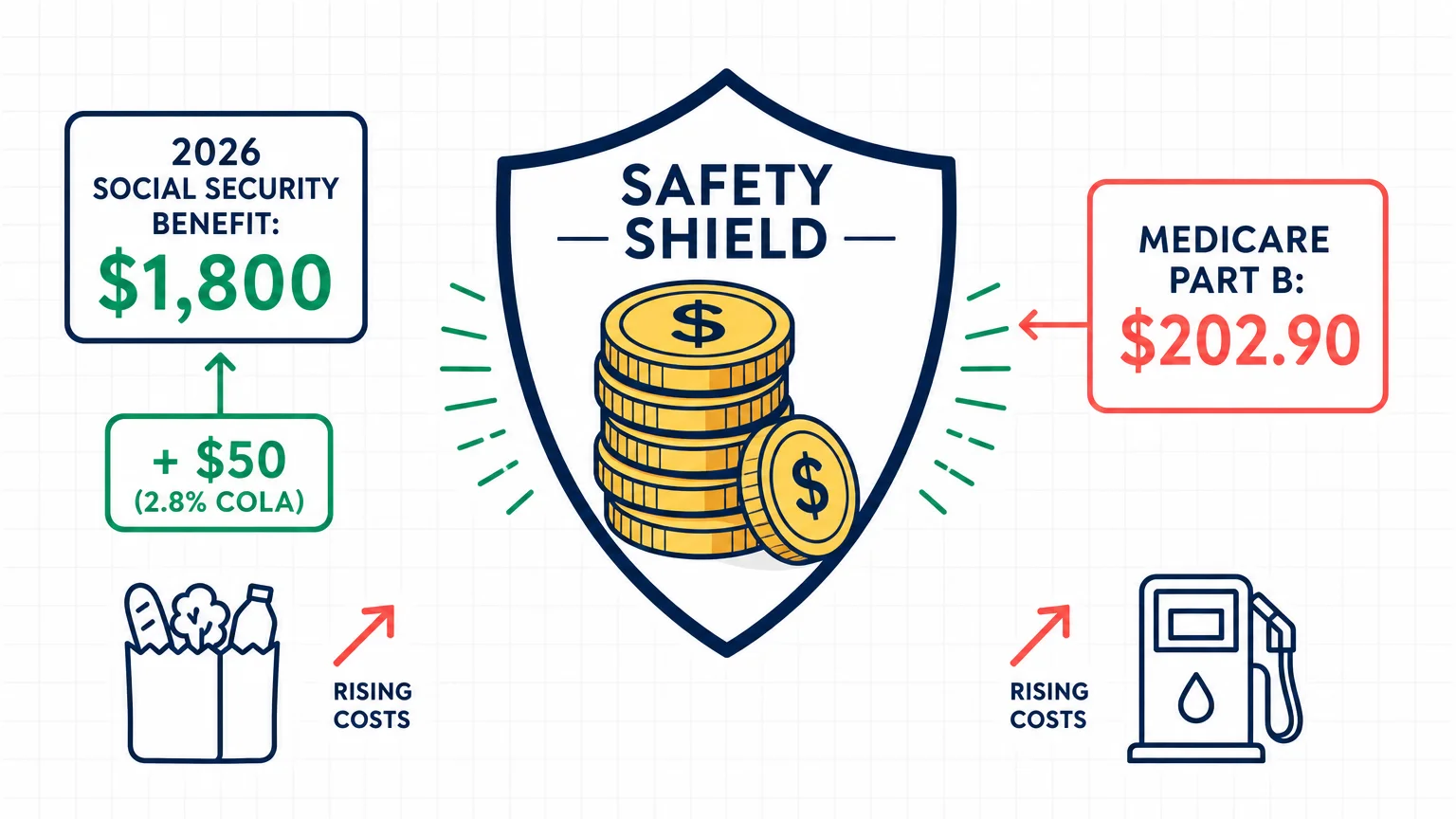
Moving to a lower-cost area is not just about finding cheaper groceries; it is a defensive strategy to protect your lifetime savings from taxation. A 2026 survey by AARP revealed that 37% of older adults feel financially insecure due to rising costs. By relocating to a state that actively shields your income, you take direct control over your financial stability.
“Taxes will be the single biggest factor that separates people from their retirement dreams.” — Ed Slott, CPA and IRA Expert
Every dollar you save on state taxes is a dollar you can redirect toward travel, healthcare, or family. If your monthly Social Security benefit is $1,800, the 2.8% COLA for 2026 adds roughly $50 per month according to the Social Security Administration (SSA). While helpful, that minor increase rarely covers the surging costs of daily life. Optimizing your tax strategy by moving to one of these ten Southern towns provides a much larger financial cushion.

1. Beaufort, South Carolina: Coastal Charm with Generous Tax Breaks
Beaufort combines stunning antebellum architecture with beautiful coastal views. The town offers a rich history, excellent local dining, and high-quality medical access through the local Naval hospital and regional health systems. Financially, South Carolina caters heavily to seniors. According to the South Carolina Department of Revenue (2026), the state utilizes a flat 5% income tax rate. More importantly, the state completely exempts Social Security benefits from taxation and offers a generous $15,000 retirement income deduction for residents age 65 and older. Furthermore, primary residences are assessed at just 4% of market value, keeping your property tax bills remarkably low.

2. Fairhope, Alabama: Low Property Taxes by the Bay
Nestled on the eastern shoreline of Mobile Bay, Fairhope is a boutique coastal town known for its floral-lined streets, mild winters, and walkable downtown. It offers a relaxed, resort-style atmosphere without the massive crowds found in other Gulf Coast destinations. According to the Alabama Department of Revenue, the state completely exempts Social Security benefits and all defined benefit pension payouts from state income taxes. This provides a massive financial advantage for retired teachers, government workers, and corporate pensioners. Additionally, Alabama boasts one of the lowest property tax rates in the nation, making it incredibly cost-effective to own a home near the water.

3. Hendersonville, North Carolina: Mountain Living with Flat Taxes
Located just south of Asheville in the Blue Ridge Mountains, Hendersonville offers stunning scenery, apple orchards, and a charming, historic Main Street. You gain access to world-class medical care at nearby Mission Hospital, but you avoid the higher housing costs and traffic of Asheville proper. According to the North Carolina Department of Revenue (2026), the state dropped its flat individual income tax rate to 3.99%. While North Carolina taxes withdrawals from 401(k)s and IRAs at this rate, it completely exempts Social Security benefits from state taxation. This straightforward tax code makes it easy to project your annual expenses.

4. Mount Dora, Florida: Zero State Income Tax
Nicknamed the “New England of the South,” Mount Dora sits on the shores of Lake Dora in Central Florida. It is famous for its towering oak trees, antique shops, and annual arts festivals. Because it is located inland, housing costs and property insurance rates tend to be much more manageable than those found in Florida’s coastal cities. From a tax perspective, Florida remains one of the premier retirement destinations in the country. The state levies zero individual income tax. You can pull money from your traditional IRA or pension without ever filing a state income tax return, leaving you with substantially more disposable income.

5. Oxford, Mississippi: Fully Tax-Exempt Retirement Income
Oxford provides the quintessential Southern college town experience. Home to the University of Mississippi, you get access to collegiate sporting events, extensive cultural activities, and high-quality healthcare facilities. The cost of living in Mississippi consistently ranks among the lowest in the nation. The tax code is equally inviting. According to the Mississippi Department of Revenue (2026), the state completely exempts all forms of qualified retirement income from taxation. Whether your money comes from Social Security, a pension, a 401(k), or an IRA, Mississippi will not touch it. This allows you to withdraw the exact funds you need without triggering surprise state tax bills.

6. Abingdon, Virginia: Appalachian Beauty and High-Quality Care
Abingdon is a historic gem tucked into the Blue Ridge Mountains of southwest Virginia. It serves as the trailhead for the famous Virginia Creeper Trail and hosts the renowned Barter Theatre. The town offers a slow, peaceful pace of life alongside excellent regional healthcare facilities. According to the Virginia Department of Taxation, the state completely exempts Social Security benefits from state income taxes. Additionally, Virginia offers a generous age deduction. If you are 65 or older in 2026, you can deduct up to $12,000 of income on your state tax return, subject to certain income limits. This deduction significantly reduces the tax burden on your standard retirement distributions.

7. Berea, Kentucky: Artistic Flair and Massive Tax Exemptions
Known as the Folk Arts and Crafts Capital of Kentucky, Berea offers a vibrant, creative community anchored by Berea College. The town provides a quiet, intellectual atmosphere without the steep price tag of a major city. Kentucky is heavily recruiting retirees through aggressive tax incentives. According to the Kentucky Department of Revenue (2026), the state lowered its flat income tax rate to 3.5%. Even more impressive, Kentucky allows a massive $41,110 exemption on qualified retirement income for 2026. Furthermore, if you own your home, the state provides a $49,100 homestead exemption for seniors age 65 and older. This powerful combination of tax breaks means many middle-income retirees effectively pay zero state taxes.

8. Fredericksburg, Texas: Hill Country Wine and No Income Tax
Fredericksburg puts you right in the heart of the Texas Hill Country, offering a rich German heritage, dozens of local wineries, and a thriving arts scene. The town features a highly rated local hospital and is situated close enough to San Antonio for any specialized medical needs. Financially, Texas is famous for having zero state income tax. Your Social Security, pension, and investment withdrawals are yours to keep. While Texas relies heavily on property taxes to fund local services, the state allows homeowners age 65 and older to freeze their school district property taxes. Once you qualify for this freeze, the school taxes on your primary residence cannot increase as long as you own and live in the home.

9. Aiken, South Carolina: Equestrian Elegance on a Budget
Aiken is a historic equestrian town located near the Georgia border. Known for its massive oak canopy, polo fields, and the beautiful Hitchcock Woods, it offers a refined, outdoor-centric lifestyle. Housing in Aiken is remarkably affordable, especially when compared to coastal South Carolina destinations. Residents enjoy the same fantastic South Carolina tax benefits mentioned earlier. You pay zero state tax on your Social Security benefits, and if you are 65 or older, you can utilize the $15,000 deduction against other forms of retirement income. With low housing costs and top-notch medical facilities nearby in Augusta, Aiken is a quiet financial powerhouse for retirees.

10. Eureka Springs, Arkansas: Affordable Ozark Retreat
Eureka Springs is a visually stunning town built into the steep hillsides of the Ozark Mountains. Known for its winding streets, Victorian architecture, and natural hot springs, it is a haven for nature lovers and artists alike. The cost of living in Arkansas is exceptionally low, and housing remains highly affordable compared to the national average. According to the Arkansas Department of Finance and Administration, the state completely exempts Social Security benefits from taxation. Furthermore, Arkansas allows you to exclude up to $6,000 of income from an employer-sponsored pension or an IRA. With low property taxes and a highly favorable tax code, Eureka Springs lets you stretch your retirement dollars.
Comparing State Taxes for Southern Retirees
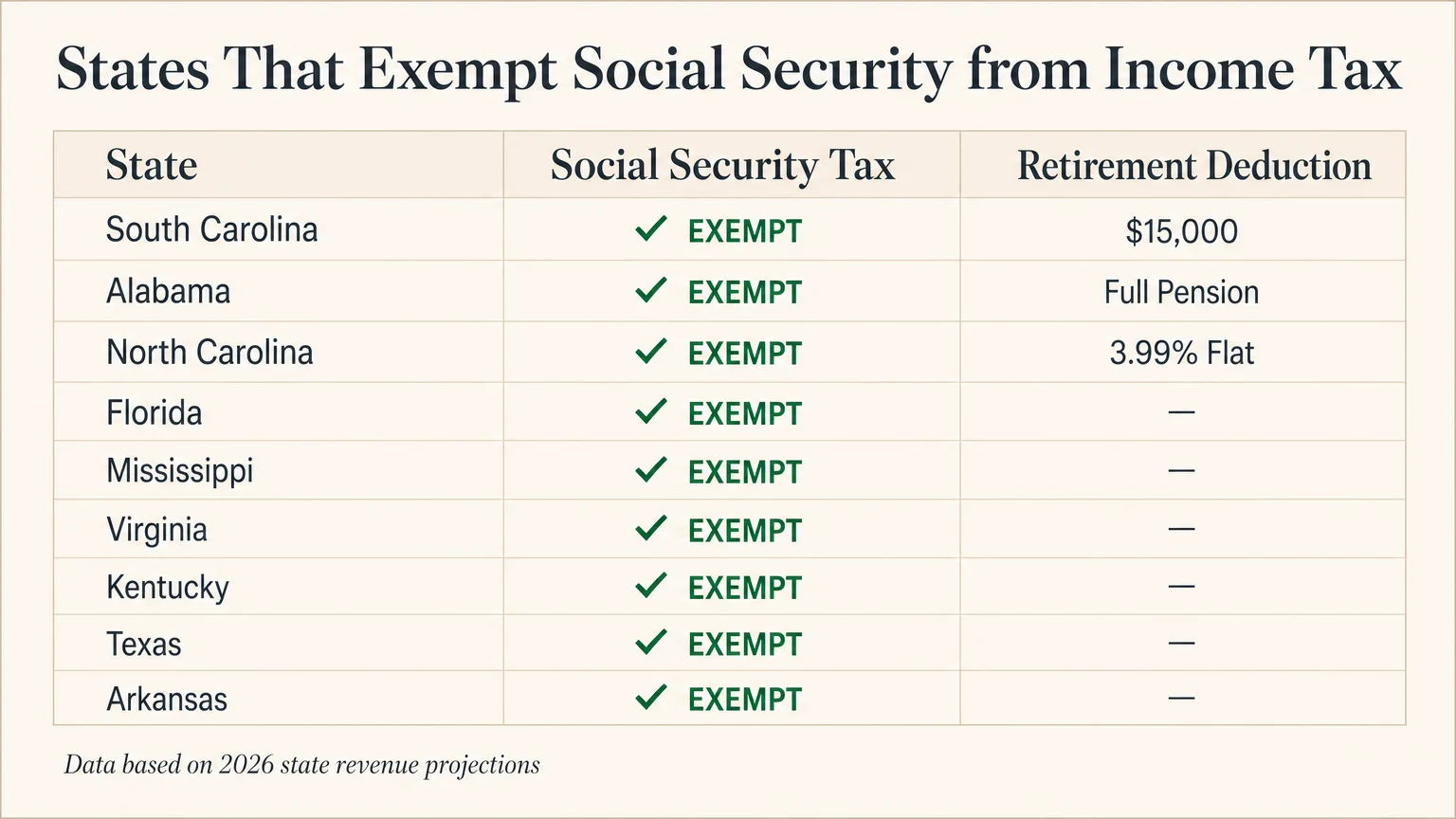
When planning your relocation, visualizing how different states treat your income makes it easier to evaluate your options. Use this quick comparison table to understand the baseline tax rules across these popular Southern destinations for 2026.
| State | 2026 Income Tax Rate | Social Security Taxed? | Key Senior Tax Benefit |
|---|---|---|---|
| South Carolina | 5.0% (Flat) | No | $15,000 deduction at age 65+ |
| Alabama | 2.0% – 5.0% | No | Exempts defined benefit pensions |
| North Carolina | 3.99% (Flat) | No | Fully exempts Social Security |
| Florida | 0% | No | Zero state income tax |
| Mississippi | 4.4% (Flat) | No | Exempts ALL retirement income |
| Virginia | 2.0% – 5.75% | No | Up to $12,000 age deduction |
| Kentucky | 3.5% (Flat) | No | $41,110 retirement income exemption |
| Texas | 0% | No | Zero state income tax; property tax freeze |
| Arkansas | 3.9% (Top Rate) | No | $6,000 retirement income exemption |

What Can Go Wrong: Common Mistakes When Moving South
Relocating across state lines involves more than just packing boxes. Failing to update your financial and medical plans can lead to expensive missteps. Here are a few common mistakes to avoid:
- Losing your Medicare Advantage network: Medicare Advantage (Part C) and Part D prescription drug plans are heavily tied to your specific county and state. When you move, you typically trigger a Special Enrollment Period. If you fail to update your plan through Medicare.gov, you could end up paying out-of-network costs for all your routine care. According to the Centers for Medicare & Medicaid Services (2025), standard Part B premiums for 2026 sit at $202.90, making it critical to avoid extra network penalties.
- Ignoring local property taxes: States like Texas and Florida boast zero state income tax, but they fund their municipal services through higher property taxes and sales taxes. Always calculate your total estimated tax burden rather than focusing solely on income tax brackets.
- Forgetting to file for your homestead exemption: Many Southern states offer substantial property tax reductions for seniors, but these exemptions do not apply automatically. You must actively file paperwork with your new county tax assessor to secure your discount.

When to Consult a Professional
Moving your life to a new state changes your legal and financial footprint entirely. Consider speaking with a professional in these specific scenarios:
- Establishing a new tax domicile: If you are moving from a high-tax state like New York or California, your former state may try to claim you are still a resident and audit your tax returns. A CPA can help you definitively establish your new legal domicile and navigate the rules on IRS.gov.
- Updating your estate plan: Probate laws, power of attorney documents, and advanced healthcare directives vary significantly by state. An estate planning attorney in your new town should review your documents to ensure they remain legally binding.
- Managing an out-of-state pension: If you worked as a state employee or teacher in your former state, your pension payouts might be subject to different tax withholding rules once you cross state lines. A financial advisor can help you optimize these distributions.
Frequently Asked Questions
Which Southern state is the most tax-friendly for retirees?
Mississippi, Florida, and Texas frequently rank at the top. Florida and Texas have no state income tax whatsoever. Mississippi has a flat state income tax but completely exempts all forms of qualified retirement income, meaning most seniors pay nothing in state income taxes.
Do I need to change my Medicare plan if I move to a new state?
Yes, in most cases. While Original Medicare (Part A and Part B) is a federal program that works nationwide, Medicare Advantage and Medicare Part D prescription drug plans are location-specific. Moving triggers a Special Enrollment Period, giving you a chance to select a new plan in your new town.
Will moving to the South affect my Social Security monthly benefit?
No. Your base Social Security benefit is a federal program and remains exactly the same regardless of where you live in the United States. However, moving to a state that does not tax Social Security can increase your actual take-home amount if you were previously living in a state that taxed your benefits.
Ready to Plan Your Next Move?
Choosing the right small town for your retirement involves balancing your lifestyle preferences with hard financial facts. Take the time to visit these towns during different seasons to ensure the climate and community fit your goals. If you need help coordinating local services or finding transportation in your new destination, the Eldercare Locator is a free service provided by the U.S. Administration on Aging to connect seniors with community resources.
This article provides general financial education and information only. Everyone’s financial situation is unique—what works for others may not work for you. For personalized advice tailored to your retirement needs, consider consulting a qualified financial professional such as a CFP or CPA.
Last updated: June 2026. Benefit amounts, tax rules, and program details change annually—verify current figures with official government sources.