
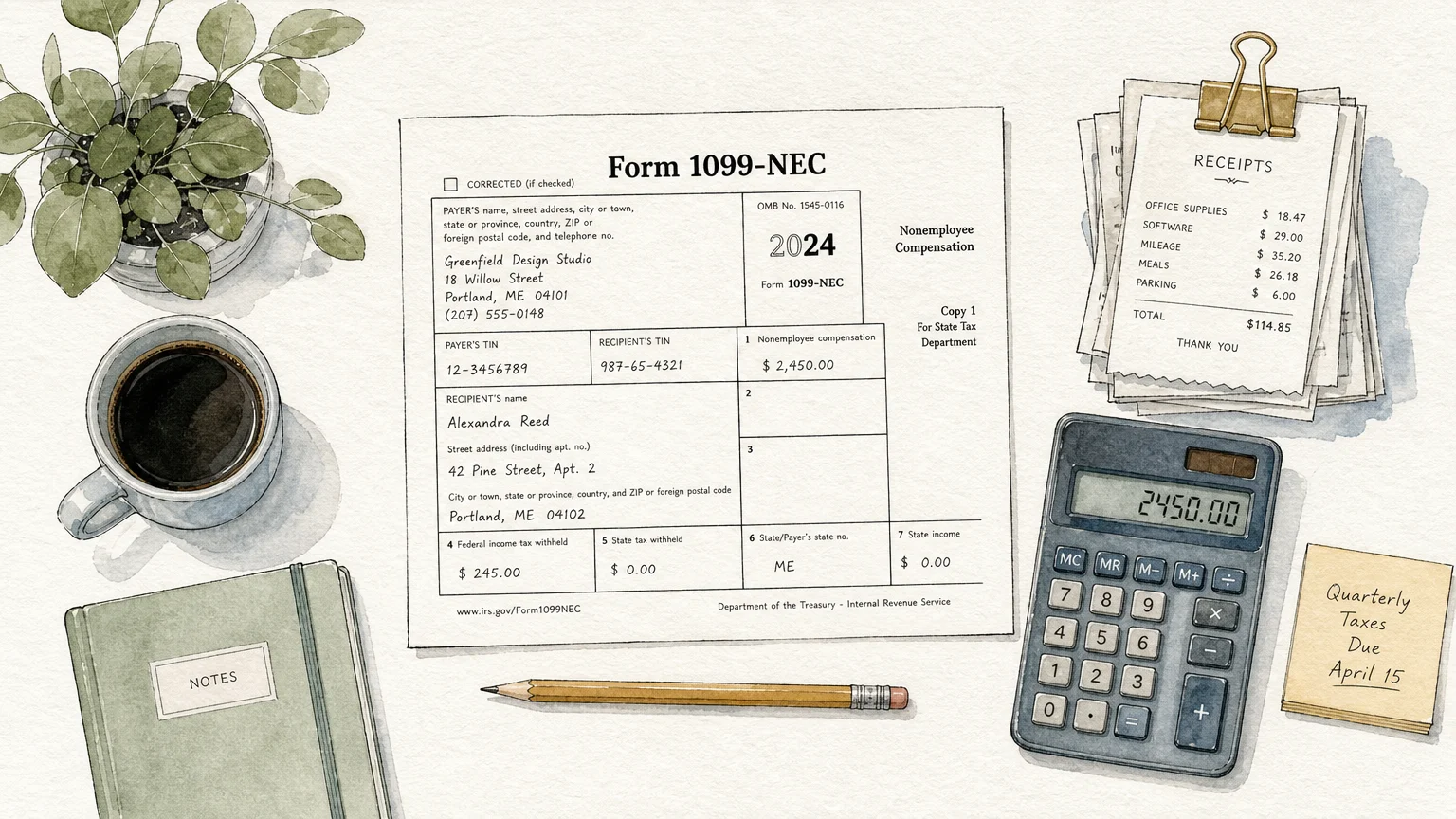
Important Tax Rules for Independent Contractors
When you work a traditional job, your employer automatically deducts taxes from your paycheck. When you work from home as a freelancer, consultant, or gig worker, you are usually classified as an independent contractor (receiving a 1099 form instead of a W-2). This shift introduces new tax responsibilities.
First, you must pay the self-employment tax. This is a 15.3% tax that covers your Medicare and Social Security contributions. Normally, an employer pays half of this, but as an independent contractor, you are responsible for the entire amount. You must set this money aside from every payment you receive.
Second, you need to understand your deductions. You can deduct legitimate business expenses—like internet service, a new laptop, or a dedicated home office space—from your gross income, lowering your overall tax burden. Make sure you keep meticulous receipts and track your business expenses separately from your personal spending.
Finally, consider how the standard deduction impacts your overall tax picture. For the 2026 tax year, the IRS standard deduction for a single filer is $16,100. However, if you are 65 or older, you receive an additional standard deduction of $2,050, bringing your baseline deduction to $18,150.
Married couples filing jointly where both spouses are 65 or older receive a massive total standard deduction of $35,500. Furthermore, temporary tax provisions active from 2025 through 2028 offer an additional enhanced deduction of up to $6,000 for qualifying seniors, depending on your income.
Always review the IRS website or speak with a tax professional to ensure you claim every deduction you deserve.










3 Responses
Thank you. I’ll be pursuing some of these leads.
I’m a very fast typist, which helped as a computer programmer. But now I’d rather
transcribe than think.
Interested in focus participant or customer service
Thank you, looking forward to the rewarding opportunity to help