

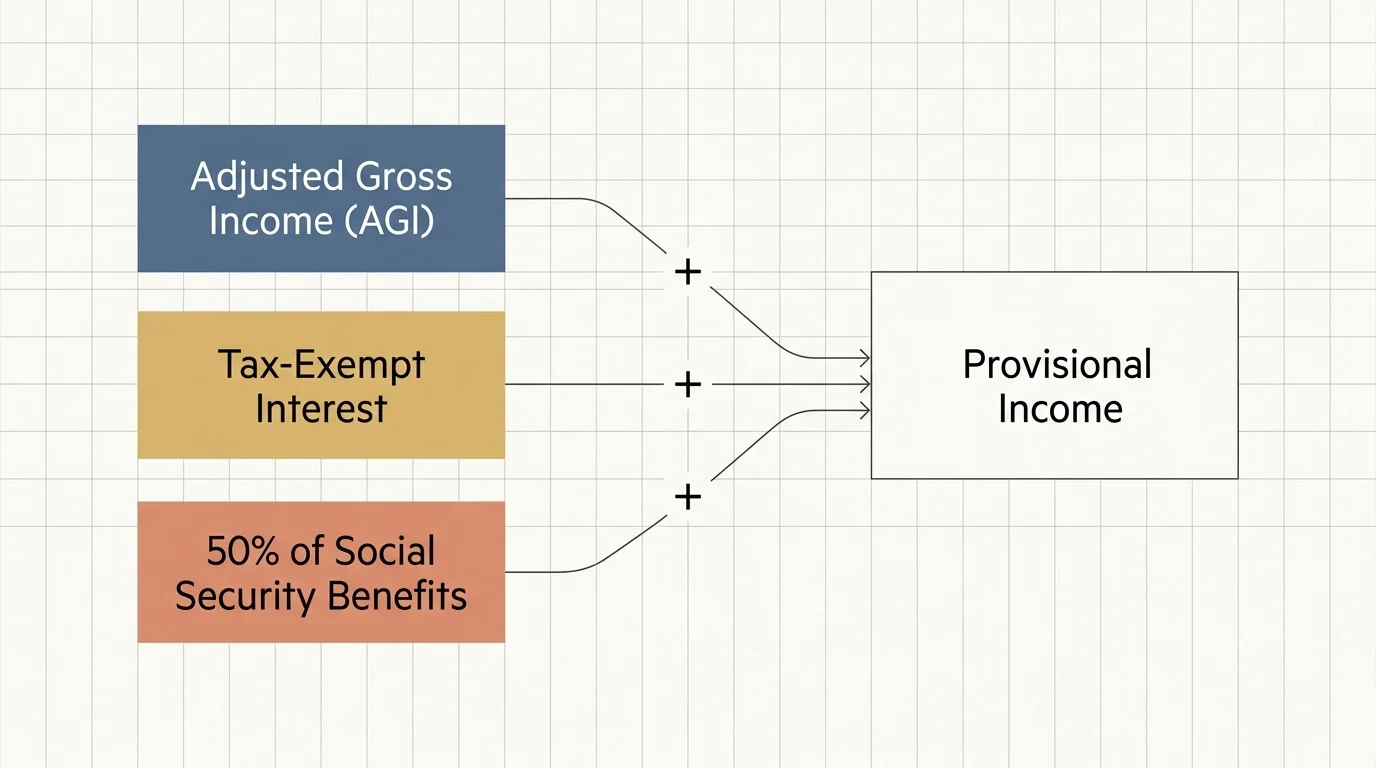
Many retirees face an unexpected tax bill on their Social Security benefits because the Internal Revenue Service uses a specific formula called provisional income to determine taxability. When your provisional income crosses federal limits, you could owe federal income taxes on up to 85% of your Social Security benefits. Knowing exactly which revenue streams trigger these thresholds helps you make smarter withdrawal decisions and shield your hard-earned retirement savings. According to the Internal Revenue Service (2026), your provisional income consists of your Adjusted Gross Income, non-taxable interest, and half of your annual Social Security benefits combined.
How the IRS Calculates Your Provisional Income
The IRS uses provisional income—frequently called combined income on federal tax forms—to decide how much of your retirement benefit is subject to federal income tax. Calculating this figure requires adding three distinct numbers from your annual tax return:
- Your Adjusted Gross Income (AGI), excluding your Social Security benefits;
- All tax-exempt interest income you received during the tax year;
- Exactly 50% of your total gross Social Security benefit for the year.
Mathematically, the calculation looks like this:
Provisional Income = AGI + Tax-Exempt Interest + 50% of Social Security Benefits
If your combined calculation total falls below federal thresholds, your benefits remain completely tax-free. However, if your total exceeds the base amount for your filing status, a portion of your monthly check becomes subject to income tax. Understanding the exact line items that build your AGI is critical for every retiree.
“It’s not what you make that counts; it’s what you keep after taxes. Understanding how different income streams stack together on your tax return is the single most powerful tool you have in retirement.” — Ed Slott, CPA and Founder of IRAHelp.com

1. Wages, Salaries, and Self-Employment Earnings
If you choose to work during retirement—whether through part-time employment, consulting, or running a small business—your earnings count fully toward your Adjusted Gross Income. Every dollar of gross wages reported on Form W-2 or net self-employment earnings reported on Schedule C increases your AGI dollar-for-dollar.
For example, if you earn $12,000 from a part-time job, that full $12,000 flows directly into your AGI calculation. When added to your other retirement funds and half of your Social Security, these wages can easily push your overall income into a bracket where your benefits face federal taxation. If you have not yet reached Full Retirement Age, working can also trigger the Social Security earnings test, potentially withholding benefits while simultaneously increasing your tax obligations.

2. Taxable Pension and Annuity Distributions
Pensions from former employers and monthly payouts from commercial annuities represent standard income sources for many older Americans. Unless you purchased an annuity strictly using post-tax dollars with a documented cost basis, the IRS treats pension payments and annuity distributions as ordinary income.
These distributions appear directly on Form 1040 and form a major pillar of your AGI. A retiree receiving a $24,000 annual pension payout adds $24,000 straight to their provisional income baseline before even looking at investment returns or IRA withdrawals. Because pension payments remain fixed, you must adjust other variable income sources to prevent crossing tax thresholds.

3. Traditional IRA and 401(k) Distributions (Including RMDs)
Withdrawals from pre-tax retirement accounts—such as Traditional IRAs, 401(k)s, 403(b)s, and 457(b) plans—count entirely as ordinary income. Every time you withdraw money from these tax-deferred accounts to pay for living expenses, you increase your AGI and your provisional income total.
This dynamic becomes particularly challenging when you turn 73 or 75 and face Required Minimum Distributions (RMDs). IRS rules mandate that you take minimum withdrawals from pre-tax accounts each year, regardless of whether you actually need the cash. For many retirees, forced RMDs create a tax spike that automatically subjects 85% of their Social Security benefits to federal taxation.
4. Taxable Interest and Dividend Income
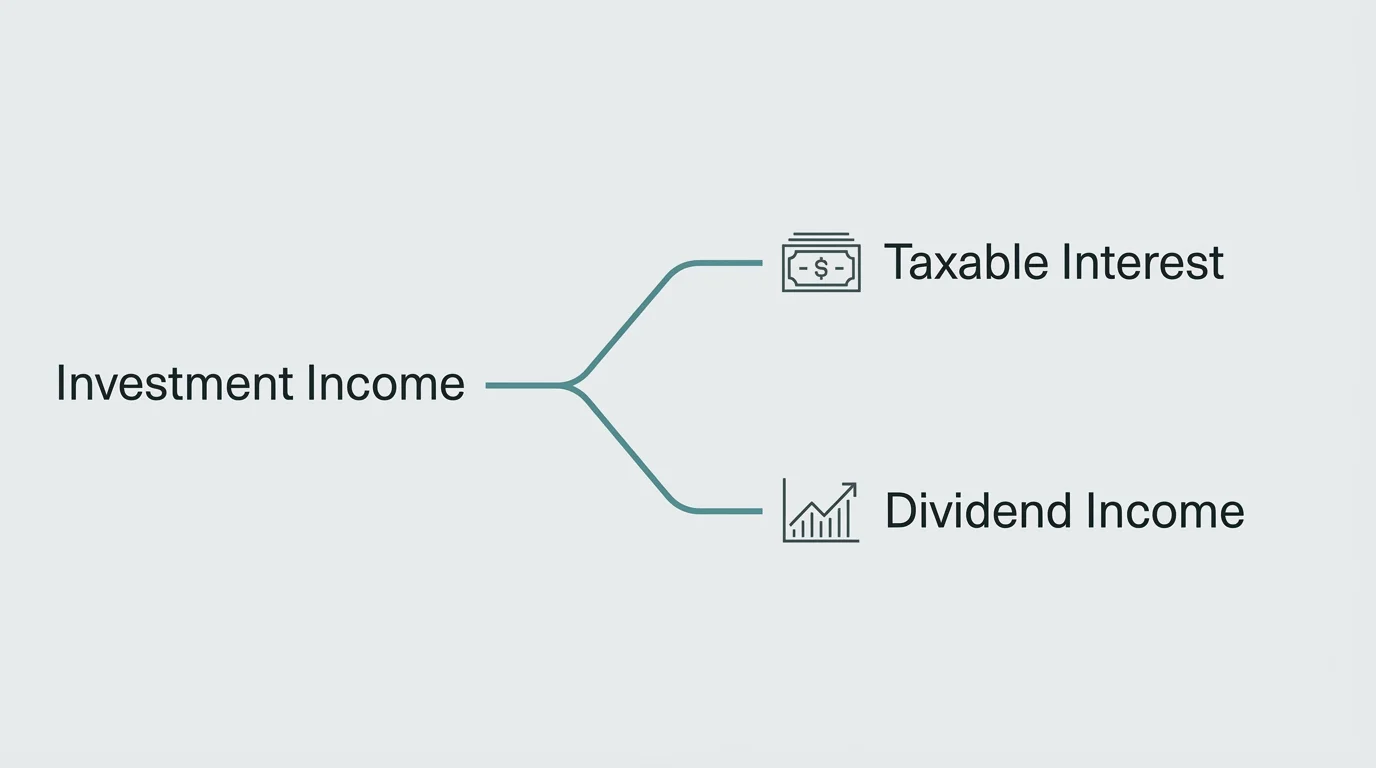
Yields generated from conventional bank accounts, high-yield savings accounts, certificates of deposit (CDs), corporate bonds, and taxable brokerage accounts count toward provisional income. Even if you reinvest dividends and interest payouts automatically into the same account, the IRS taxes those earnings in the year you receive them.
If your high-yield savings account generates $2,500 in interest and your brokerage portfolio generates $3,000 in taxable dividends, you must report $5,500 on your tax return. That $5,500 gets added directly to your AGI, raising your provisional income total and potentially elevating the tax percentage applied to your Social Security benefits.

5. Capital Gains, Net Rental Income, and Business Income
Selling assets for a profit or earning income through real estate holdings directly impacts your Social Security taxability. Capital gains—both short-term and long-term—are included in your AGI calculation. Realizing a large capital gain, such as selling a rental house or liquidating appreciated stock to fund a vacation, can cause a single-year spike in provisional income.
Similarly, net rental income reported on Schedule E and pass-through business profits reported on Schedule K-1 represent taxable income streams. If you rent out a vacation home and net $10,000 after allowable deductions, that $10,000 raises your provisional income total just like regular earnings would.

6. Tax-Exempt Interest (Municipal Bonds)
One of the most surprising tax rules for retirees involves tax-exempt interest, primarily from municipal bonds and municipal bond funds. While interest from state and local government bonds is exempt from federal income tax on your regular tax return, the tax code explicitly requires you to add this income back when calculating provisional income.
According to tax rules enforced by the IRS, municipal bond interest cannot be shielded when determining Social Security benefit taxability. If you earn $6,000 in tax-exempt municipal bond interest, that full $6,000 is added directly to your AGI and 50% of your Social Security benefits during the calculation process. While you will not pay direct income tax on the bond interest itself, that interest can force your Social Security benefits into a taxable threshold.
7. Half of Your Total Social Security Benefits
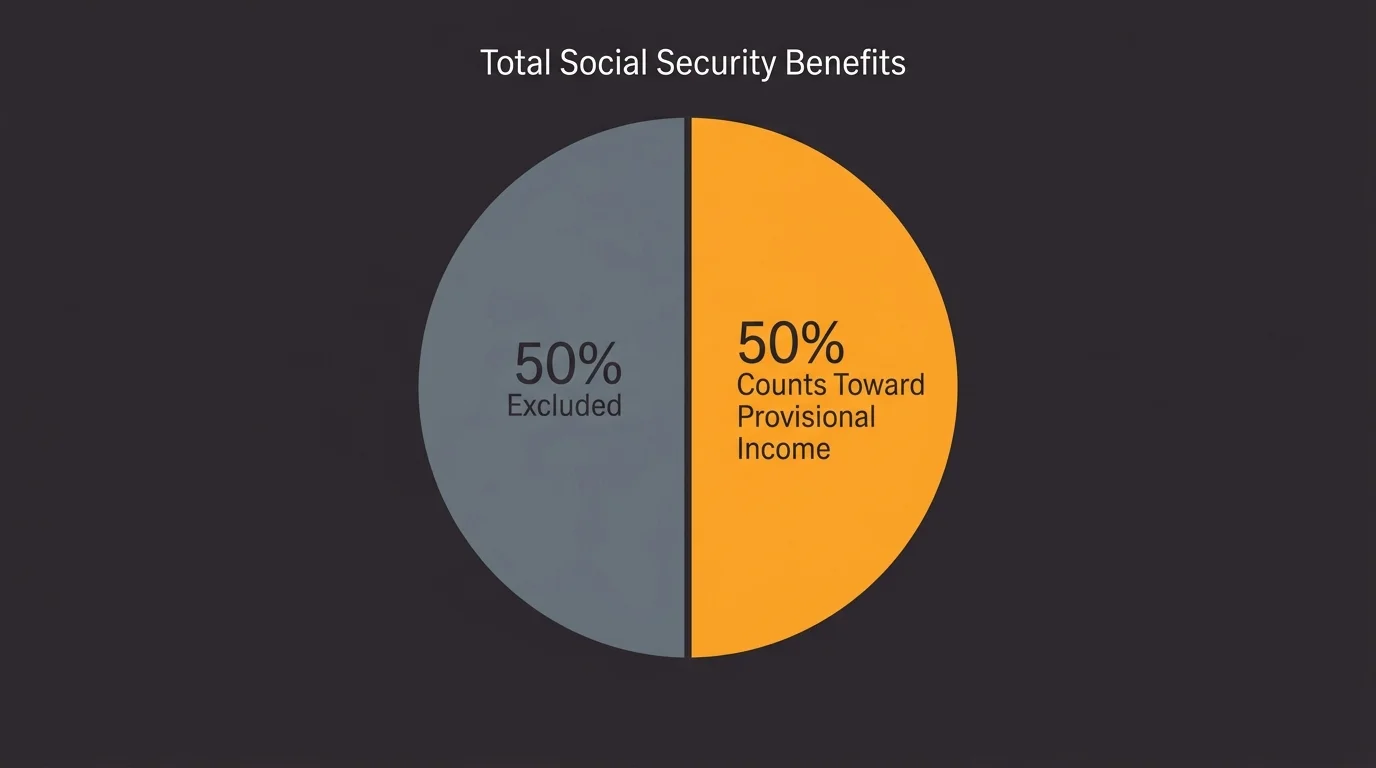
The final component of the provisional income equation is 50% of your total Social Security benefit payments. At the end of each year, the Social Security Administration sends you Form SSA-1099 showing the total benefit amount paid to you in Box 5.
You take exactly half of the amount listed in Box 5 and add it to your AGI plus any tax-exempt interest. For example, if you receive $24,000 annually from Social Security, you add $12,000 to your other combined income figures. The resulting total determines whether you owe federal taxes on zero, up to 50%, or up to 85% of your benefits.
Understanding the Social Security Tax Thresholds
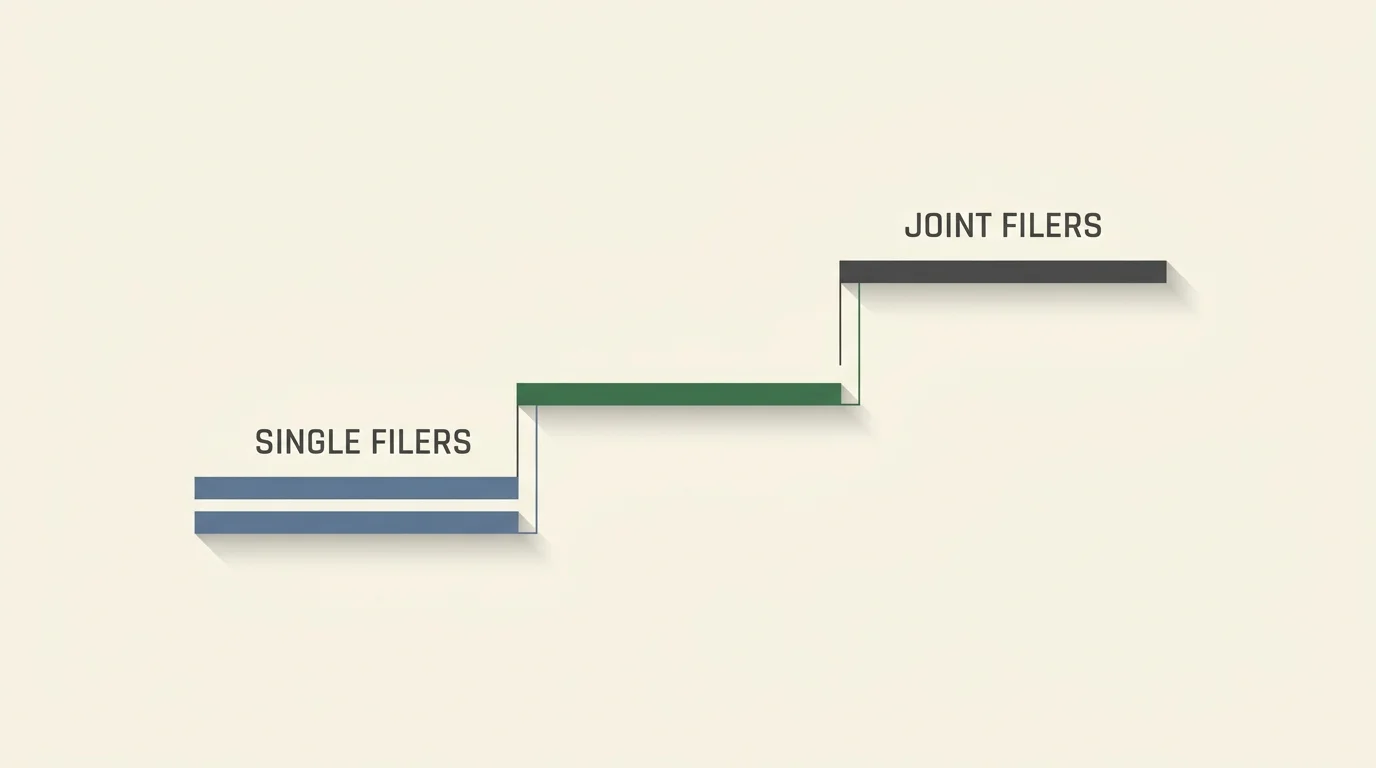
Once you sum these seven income streams to find your provisional income, you compare the total against federal income limits. These thresholds depend entirely on your legal tax filing status.
| Tax Filing Status | Provisional Income Threshold | Percentage of Benefits Subject to Tax |
|---|---|---|
| Single, Head of Household, or Qualifying Surviving Spouse | Under $25,000 | 0% (Tax-Free) |
| $25,000 to $34,000 | Up to 50% | |
| Over $34,000 | Up to 85% | |
| Married Filing Jointly | Under $32,000 | 0% (Tax-Free) |
| $32,000 to $44,000 | Up to 50% | |
| Over $44,000 | Up to 85% | |
| Married Filing Separately (and living together at any time during the year) | Over $0 | Up to 85% starting at $1 of income |
These federal thresholds were established in 1983 for the $25,000 and $32,000 limits, while the $34,000 and $44,000 upper tiers were added in 1993. Because Congress never indexed these figures for inflation, annual Cost-of-Living Adjustments (COLAs)—such as the 2.8% benefit increase in 2026—gradually push more retirees above the brackets every year.

Income Sources Excluded from Provisional Income
Fortunately, certain income streams do not count toward your AGI or provisional income. Strategic use of these tax-free accounts gives you significant control over your annual tax obligations:
- Roth IRA and Roth 401(k) Distributions: Qualified withdrawals from Roth accounts are completely tax-free and do not appear in AGI or tax-exempt interest totals.
- Health Savings Account (HSA) Distributions: Withdrawals used for qualified medical expenses remain entirely tax-exempt and outside the provisional income calculation.
- Life Insurance Proceeds and Loans: Death benefit payouts and tax-free loans taken against cash-value life insurance policies do not count as taxable income.
- Reverse Mortgage Proceeds: Funds received from a reverse mortgage are loan advances rather than income, leaving them completely free from taxation.

Smart Strategies to Lower Your Provisional Income
Managing your income sources carefully allows you to keep your provisional income below key brackets. Implementing proactive tax planning strategies ensures you retain a larger portion of your benefits.
Consider completing partial Roth conversions during early retirement years before claiming Social Security. Moving funds from a Traditional IRA to a Roth IRA creates taxable income upfront, but future withdrawals from the Roth account will not trigger taxation on your Social Security benefits later in life.
If you have reached age 70½, utilize Qualified Charitable Distributions (QCDs) from your Traditional IRA. A QCD allows you to transfer up to $108,000 annually (adjusted for inflation) directly from your IRA to a qualified charity. This distribution counts toward your Required Minimum Distribution requirement without adding a single dollar to your AGI.

Common Mistakes to Avoid
Avoiding frequent tax errors helps prevent accidental benefit taxation and unexpected liabilities at tax time:
- Assuming Municipal Bonds Are Completely Risk-Free: Many retirees invest heavily in municipal bonds believing the interest is invisible to the IRS. While it avoids direct income tax, municipal bond interest counts fully toward the provisional income equation.
- Ignoring the Impact of Forced RMDs: Waiting until age 73 or 75 to manage pre-tax retirement accounts often creates massive forced withdrawals that spike provisional income into the 85% tax bracket.
- Filing Separately While Married: Couples who file taxes separately while living together lose access to the $25,000 and $32,000 baseline exemptions, making up to 85% of their benefits taxable from the very first dollar.
- Confusing Gross Benefits with Net Benefits: When calculating provisional income, you must use your gross Social Security benefit figure from Box 5 of Form SSA-1099, before Medicare Part B premiums are deducted.

Finding the Right Advisor
Navigating provisional income calculations involves managing multiple tax codes simultaneously. Working with a qualified fiduciary financial planner or Certified Public Accountant (CPA) can help you design an optimal withdrawal schedule. You should seek specialized guidance under several specific circumstances:
- You own substantial assets in tax-deferred accounts that will trigger large Required Minimum Distributions within the next few years.
- You plan to work part-time or operate a consulting practice while claiming Social Security benefits.
- You hold significant taxable brokerage assets or real estate investments that generate variable capital gains and dividend payouts.
- You are considering major strategic moves like large-scale Roth IRA conversions or establishing structured charitable gifting plans.
Frequently Asked Questions
Does selling my primary residence increase my provisional income?
If your capital gain on the home sale falls within the federal primary residence exclusion ($250,000 for single filers, $500,000 for married couples filing jointly), the tax-free gain does not enter your AGI or provisional income. Any gain exceeding those limits adds directly to your taxable income.
Do veteran disability benefits count toward provisional income?
No, disability compensation and pension benefits paid by the U.S. Department of Veterans Affairs are non-taxable and completely excluded from the provisional income equation.
Is my Social Security taxed by my home state based on provisional income?
State tax rules vary widely. While the vast majority of states do not tax Social Security benefits at all, a small number of states impose state-level tax using their own specific income exemptions and guidelines independent of federal provisional income calculations.
Next Steps for Your Retirement Tax Plan
Understanding which income sources count toward your provisional income gives you the power to control your tax exposure in retirement. Review your income streams annually, organize your withdrawals across tax-deferred, taxable, and Roth accounts, and calculate your estimated provisional income before taking large discretionary distributions.
The information in this guide is meant for educational purposes. Your specific circumstances—including income, benefits, tax situation, and health needs—may require different approaches. When in doubt, consult a licensed financial advisor or tax professional.
Last updated: February 2026. Benefit amounts, tax rules, and program details change annually—verify current figures with official government sources.









Leave a Reply