

Part-time tax preparation jobs offer flexible winter schedules, steady hourly wages, and engaging work without a year-round commitment. Offices nationwide actively recruit older adults because your life experience translates directly into trustworthy customer service.
Whether you want to file returns, welcome nervous clients, or organize paperwork, seasonal positions fit varied skill sets. Many roles require no prior tax background and provide comprehensive paid training.
Knowing your options helps you boost your retirement income while safeguarding your Social Security benefits. Let us explore eight practical roles hiring now for the upcoming tax season.

Why Tax Preparation Offices Eagerly Hire Older Workers
Tax season generates intense demand for dependable workers between January and mid-April. Tax preparation firms prize maturity, patience, and strong communication skills above almost everything else.
Older workers bring emotional stability to an environment where clients often feel anxious about money. Your lived experience helps de-escalate tension and reassure filers facing confusing paperwork.
Firms also value schedule reliability. Retirees and empty nesters frequently offer the flexible daytime and evening availability that retail offices desperately need during peak filing weeks.
Furthermore, seasonal tax work aligns neatly with retirement lifestyles. You can earn solid income for three to four months, then enjoy complete freedom during the spring and summer.
“Retirement isn’t the end of work; it is often the start of working on your own terms.” — Jean Chatzky, Personal Finance Author and Journalist
1. Front Desk Receptionist and Client Greeter
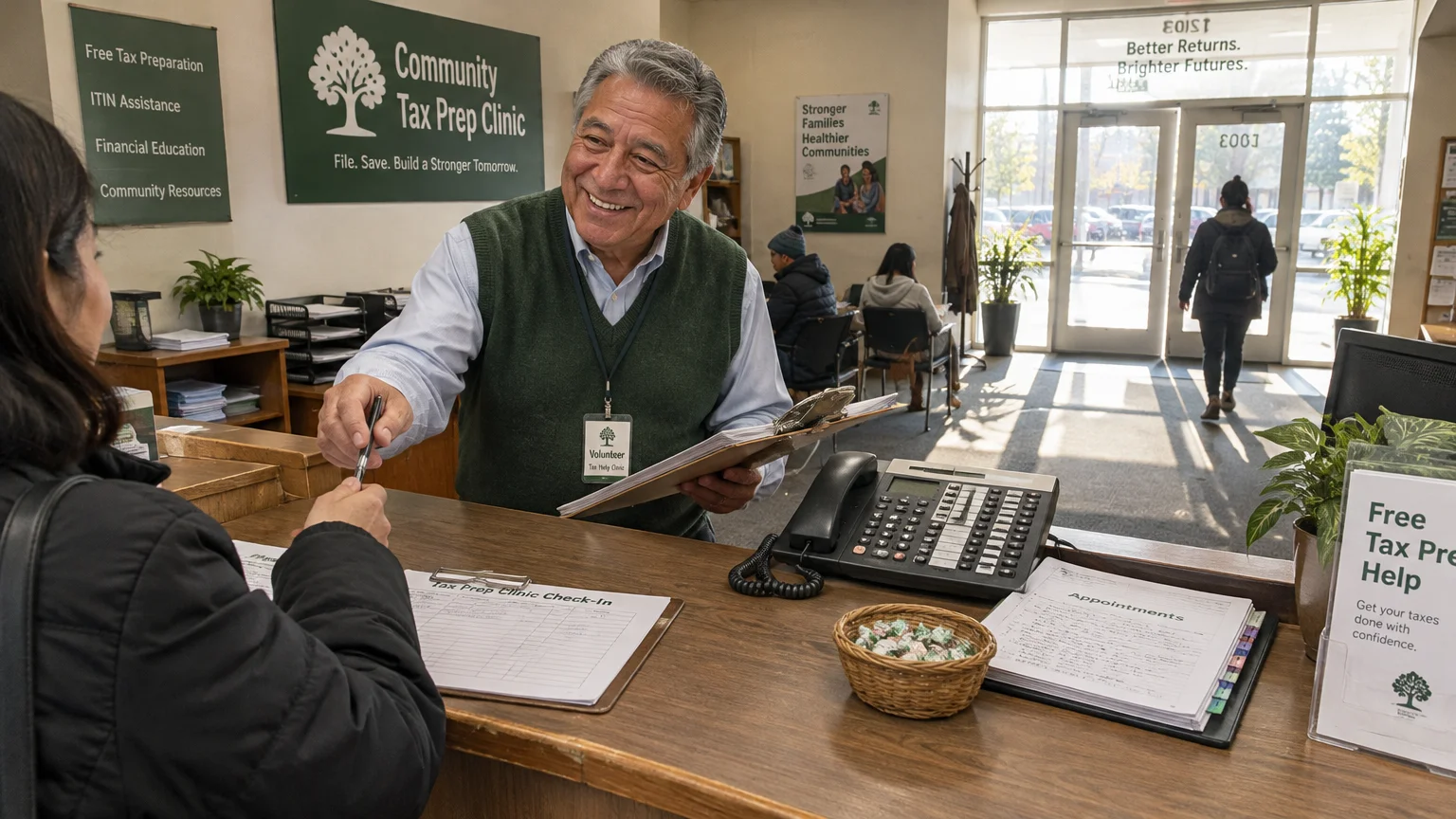
Front desk greeters serve as the welcoming face of the tax office. You set a reassuring tone for clients who walk through the door feeling apprehensive about their finances.
Your primary duties include checking in taxpayers, verifying photo identification, and managing the daily appointment calendar. You also answer incoming phone calls and route urgent messages to preparers.
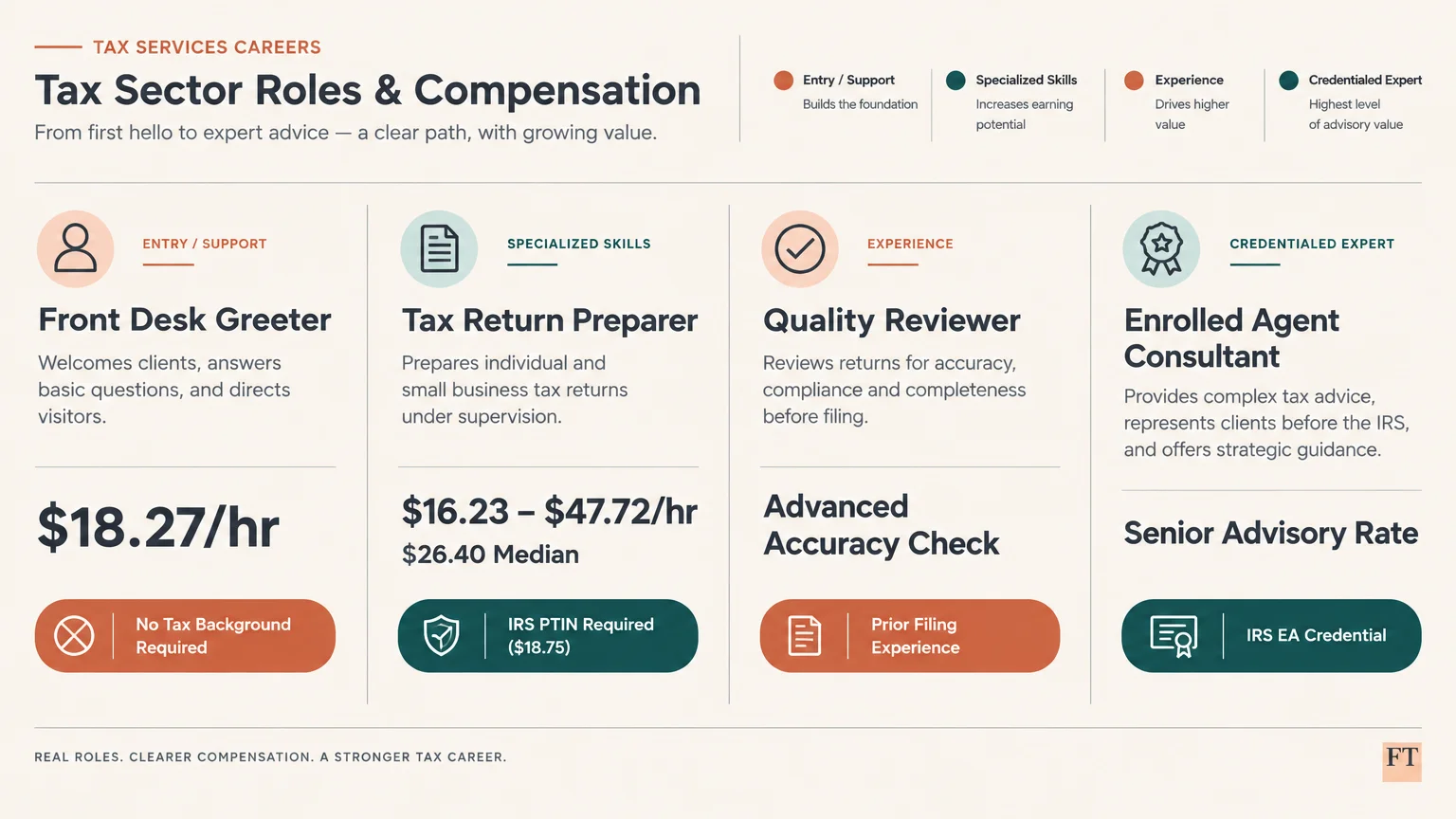
According to the Bureau of Labor Statistics (BLS), receptionists and information clerks earn a median annual wage of $38,010, which works out to approximately $18.27 per hour.
This role does not require any background in taxation or accounting. If you possess a warm personality, basic computer literacy, and an organized mindset, you already qualify.
Most offices offer four- to six-hour shifts, allowing you to stay active without enduring exhausting days. The position keeps you socially connected while shielding you from complex tax law calculations.
2. Seasonal Tax Return Preparer
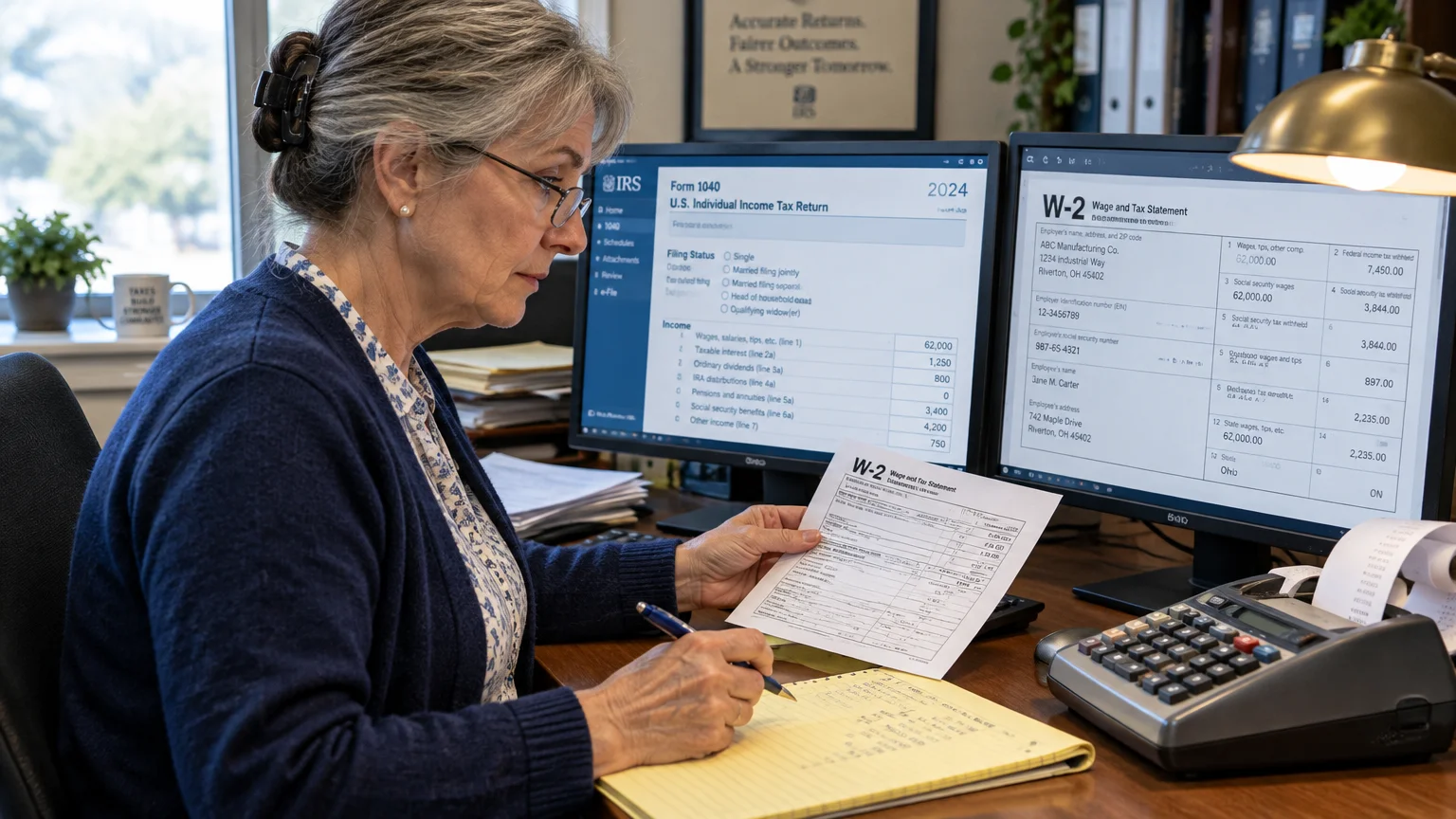
Seasonal tax preparers conduct one-on-one client interviews and enter financial data into specialized filing software. You calculate deductions, claim credits, and submit completed returns directly to state agencies and the IRS.
BLS wage data indicates that tax preparers earn a national median wage of $26.40 per hour ($54,920 annually). Entry-level and first-year seasonal preparers earn around $16.23 per hour, while experienced filers command up to $47.72 per hour.
Employment for tax preparers is projected to grow 4.7% through 2035, generating roughly 9,400 open positions each year. This steady expansion guarantees consistent seasonal demand across communities nationwide.
To prepare returns for compensation, the Internal Revenue Service (IRS) requires you to obtain a Preparer Tax Identification Number (PTIN). The non-refundable PTIN fee is $18.75 for the 2026 and 2027 tax filing seasons.
Major commercial chains like H&R Block and Jackson Hewitt offer beginner tax courses starting between August and November. Passing these courses enables you to secure an interview and hit the ground running by January.

3. Tax Document Scanner and Intake Specialist
Modern tax offices operate largely in digital formats, creating high demand for meticulous document specialists. In this role, you scan physical receipts, W-2s, and 1099 statements into secure digital management archives.
You also verify that incoming client files contain every necessary form before handing them over to the preparation staff. Missing forms create delays, making your thoroughness essential to office profitability.
The BLS classifies this work under general office clerks, who earn a median hourly wage of $21.64 ($45,010 annually). Entry-level positions start around $30,310 annually, while top earners make up to $64,680.
The BLS projects approximately 249,000 annual openings in general office roles through 2035. This steady turnover creates dependable seasonal openings every autumn and winter.
This role appeals strongly to older adults who prefer independent work over constant customer interaction. You can sit comfortably, focus on accurate organization, and avoid the pressures of direct client tax negotiations.

4. Quality Reviewer and Proofreader
Quality reviewers inspect completed tax returns before managers transmit them to the IRS. You check client Social Security numbers, bank routing numbers, and documented deduction amounts to catch costly errors.
Firms understand that filing mistakes trigger IRS audits and damage business reputations. Therefore, branch managers eagerly entrust review responsibilities to detail-oriented older workers with analytical backgrounds.
Compensation for quality reviewers typically mirrors experienced preparer pay, ranging from $22.00 to $30.00 per hour depending on regional living costs. Many firms award production bonuses to reviewers who maintain perfect accuracy rates.
You will need a firm grasp of standard Form 1040 rules and basic tax schedules. Retired schoolteachers, administrative assistants, legal secretaries, and bookkeepers excel in this systematic environment.
The work provides deep intellectual stimulation. You solve puzzles, spot discrepancies, and protect filers from filing inaccuracies—all while seated at a comfortable desk.

5. Remote Tax Customer Support Specialist
If you prefer avoiding icy winter commutes, consider working as a remote tax support specialist. Major software developers hire thousands of remote representatives to support taxpayers using do-it-yourself online software.
You answer inbound inquiries through telephone, email, and live video chat. Typical questions involve account password resets, navigation assistance, filing status checks, and billing inquiries.
According to the BLS, customer service representatives earn a national median wage of $21.53 per hour ($44,770 annually), with an overall mean hourly wage of $22.40. Top customer service performers earn over $30.00 per hour.
Employers provide paid virtual training throughout November and December to familiarize you with their proprietary software. They also ship computer hardware, secure monitors, and headsets directly to your home.
To succeed, you need reliable high-speed home internet and a quiet workspace. This role grants complete geographical flexibility, making it an exceptional choice for snowbirds spending winter months in warmer climates.
6. Office Bookkeeper and Records Assistant
A busy tax preparation office generates hundreds of client invoices, merchant fees, and daily operating expenses. Seasonal bookkeepers record these transactions, reconcile cash drawers, and track delinquent client payments.
BLS data shows that bookkeeping, accounting, and auditing clerks earn a median wage of $24.36 per hour ($50,670 annually). Wages typically range from $17.31 per hour at the 10th percentile to $35.84 per hour at the 90th percentile.
Although office automation continues to reshape the profession, the BLS projects 144,100 annual job openings for bookkeeping clerks through 2035. Most openings stem from replacing departing workers and retirees.
This position requires familiarity with accounting spreadsheets or software platforms like QuickBooks. If you managed business ledgers or personal enterprise books during your career, your background translates seamlessly.
Bookkeepers enjoy structured hours and predictable task lists. You maintain internal financial order while the tax preparers focus entirely on filing client returns.

7. Paid VITA Site Coordinator
The Volunteer Income Tax Assistance (VITA) program offers free tax help to low-to-moderate-income families, persons with disabilities, and limited-English-speaking taxpayers. While frontline preparers are usually volunteers, sponsoring organizations hire paid seasonal coordinators.
Nonprofit agencies, community colleges, and local municipal authorities hire site coordinators to manage daily clinic operations. You oversee volunteer schedules, monitor IRS quality control standards, and manage client flow.
Paid VITA site coordinators typically earn between $20.00 and $28.00 per hour, funded by federal IRS partnership grants and municipal budgets. Recruitment and screening take place between October and January.
You must pass online IRS volunteer tax certifications at the Advanced level before the clinic opens. The IRS provides all study materials, training modules, and testing materials free of charge on their website.
This job provides immense personal satisfaction. You use your managerial talents to deliver vital refunds to struggling families and seniors in your local community.

8. Senior Tax Analyst or Enrolled Agent Consultant
Retired certified public accountants (CPAs), corporate controllers, and Enrolled Agents (EAs) can earn premium wages as seasonal senior tax analysts. Offices rely on senior consultants to tackle complex business returns, rental depreciation schedules, and IRS dispute notices.
The BLS reports that accountants and auditors earn a median hourly wage of $40.23, which equates to $83,680 annually. The field is projected to grow 5% between 2025 and 2035, adding thousands of openings.
Experienced tax consultants can earn between $35.00 and $60.00 per hour during peak filing weeks. Many offices also offer generous referral commissions for attracting new commercial clients.
If you wish to earn the elite Enrolled Agent credential, you must pass the three-part Special Enrollment Examination (SEE). The IRS transitioned SEE testing administration to PSI Services, LLC, which offers both in-person and remotely proctored testing.
The exam fee is $317 per part for the 2026–2027 testing cycle running through February 28, 2027. Submitting your formal enrollment application on IRS Form 23 costs an additional $140.
“Knowledge of the tax code is the single most valuable financial asset you can possess.” — Ed Slott, CPA and IRA Specialist
Comparing Roles: Wages, Duties, and Credential Needs
Choosing the right tax office role depends on your technical comfort, desired income, and appetite for client interaction. Review this breakdown to identify the best fit for your retirement routine.
| Role | Median Hourly Wage | Required Credentials | Ideal Older Worker Profile |
|---|---|---|---|
| Client Greeter / Receptionist | $18.27 (BLS) | None | Sociable individuals seeking active daytime community interaction. |
| Seasonal Tax Preparer | $26.40 (BLS) | IRS PTIN ($18.75 fee) | Good communicators with basic math literacy and computer skills. |
| Document Intake Specialist | $21.64 (BLS) | None | Methodical thinkers who enjoy quiet, organized office environments. |
| Quality Reviewer | $24.00 – $30.00 | PTIN preferred; Tax testing | Former teachers and administrators with sharp proofreading skills. |
| Remote Tax Customer Support | $21.53 (BLS) | None | Tech-comfortable retirees wanting to work from home in winter. |
| Office Bookkeeper | $24.36 (BLS) | None (QuickBooks helpful) | Detail-focused workers experienced with ledger reconciliation. |
| Paid VITA Site Coordinator | $20.00 – $28.00 | IRS Advanced Certification | Natural leaders passionate about nonprofit community service. |
| Senior Analyst / Enrolled Agent | $40.23 (BLS) | EA credential or CPA license | Semi-retired financial professionals seeking high hourly pay. |

How Seasonal Tax Earnings Affect Your Social Security Benefits
Working part-time during tax season generates welcome spending cash, but you must monitor how earnings interact with Social Security. The impact depends entirely on your exact age relative to Full Retirement Age (FRA).
Under rules from the Social Security Administration (SSA), your FRA is 67 if you were born in 1960 or later. Once you reach FRA, you can earn an unlimited amount of money without any reduction to your monthly benefit checks.
However, if you collect benefits before reaching your FRA, the annual Retirement Earnings Test applies. Earning too much money from January through April could trigger temporary benefit withholding.
If you are under your FRA for the entire year, the earnings limit is $24,480 in 2026 ($2,040 per month). The SSA withholds $1 in benefits for every $2 you earn above that annual threshold.
For the 2027 calendar year, the earnings limit for workers under FRA all year rises to $25,560 ($2,130 per month). Keep these limits in mind when choosing your weekly work hours.
A higher limit applies during the calendar year you reach your Full Retirement Age. In 2026, you can earn up to $65,160 ($5,430 per month) before your birthday month before penalties kick in.
Above the 2026 limit of $65,160, the SSA withholds $1 for every $3 earned. In 2027, this threshold increases to $67,920 ($5,660 per month) for the months leading up to your FRA.
Fortunately, withheld benefits are not permanently lost. When you reach Full Retirement Age, the SSA recalculates your monthly benefit upward to credit you for any months benefits were withheld.
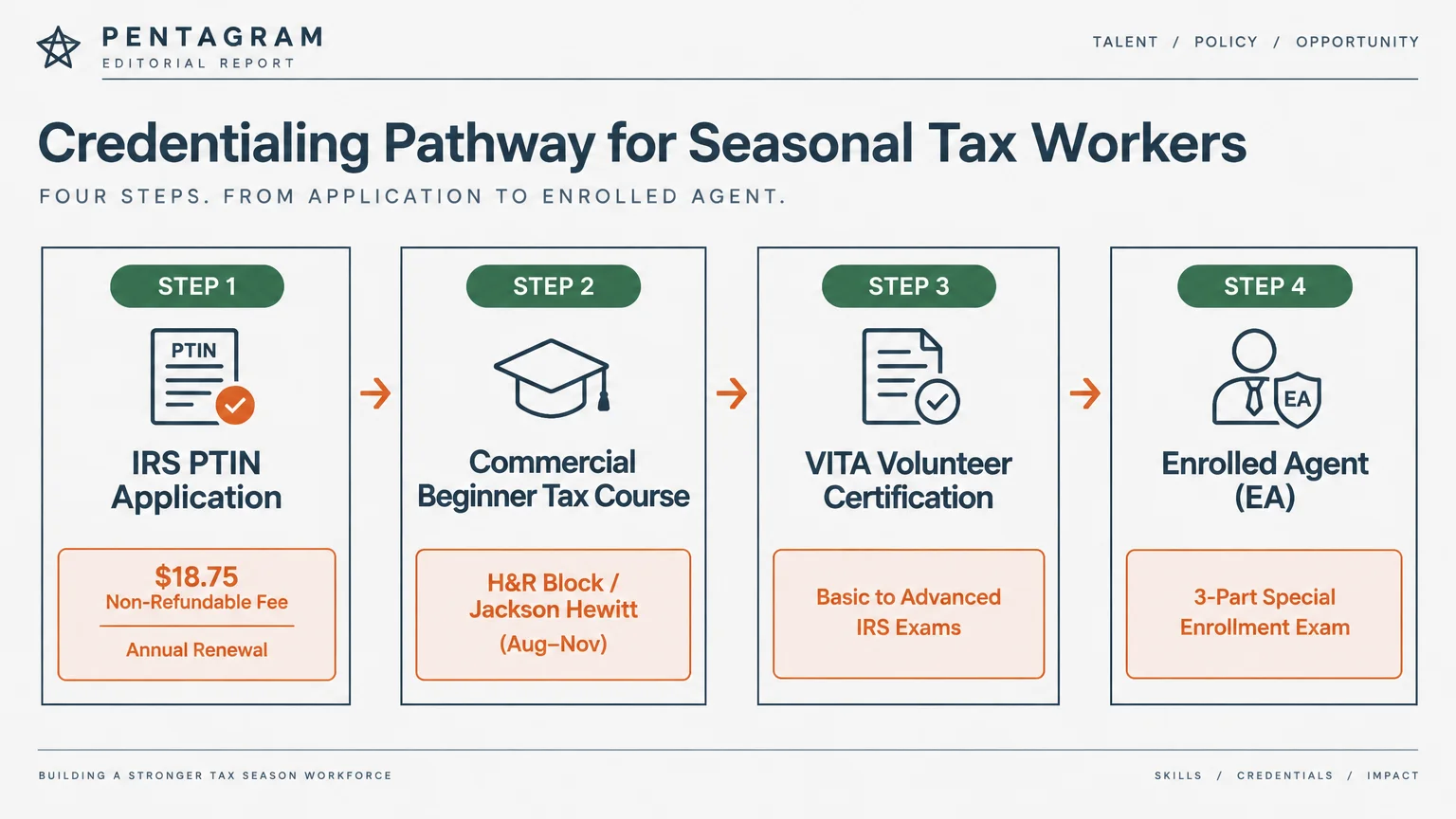
IRS Credentials and Training Requirements Explained
Understanding official certification rules ensures you stay fully compliant with federal standards before taking client appointments. The IRS strictly regulates anyone who prepares federal returns for compensation.
Every paid preparer must register for an active Preparer Tax Identification Number (PTIN). The annual non-refundable application fee is $18.75 for both 2026 and 2027.
PTIN registrations expire every year on December 31. The IRS opens the annual renewal window in mid-October, allowing you to prepare credentials ahead of the January filing rush.
When applying for or renewing your PTIN, you must legally attest that you maintain a Written Information Security Plan (WISP). This plan outlines how you safeguard sensitive client financial data and identity records from cyber threats.
Non-credentialed seasonal preparers can boost their professional standing by participating in the voluntary Annual Filing Season Program (AFSP). This program awards an annual Record of Completion that distinguishes you in public IRS directories.
The AFSP requires completing 18 hours of approved continuing education, including a six-hour Annual Federal Tax Refresher course. You must complete all educational requirements and renew your PTIN by December 31.
Major corporate chains, local accounting firms, and community organizations like AARP provide structured training pathways. Exploring these programs early in the fall sets you up for a smooth transition into the tax office.

What Can Go Wrong: 4 Costly Mistakes Seasonal Workers Make
Working a seasonal job should improve your financial well-being, not create unexpected headaches. Watching out for common administrative and tax pitfalls protects your hard-earned wages.
- Blowing Past Social Security Limits: Working overtime in March can inadvertently push your seasonal earnings past the annual earnings threshold. Calculate your expected hours in advance to keep total annual earnings safely under the SSA limits.
- Neglecting Income Tax Withholding: Seasonal employers issue standard W-2s or 1099-NEC forms for your wages. Failing to adjust your federal tax withholding could leave you with an unexpected balance due on April 15.
- Overlooking Data Security Protocols: Handling tax documents on an unencrypted home computer violates IRS security requirements. Always adhere strictly to your employer’s Written Information Security Plan to protect client privacy.
- Missing Autumn Training Windows: Many seniors wait until January to look for tax season employment. Major tax preparation companies hire and train between October and December, meaning late applicants miss out on the best shifts.

When to Consult a Professional Financial Advisor
Adding earned income to your retirement portfolio alters your broader financial picture in subtle ways. Certain situations warrant personalized guidance from a credentialed expert.
Consult a Certified Financial Planner (CFP) if your extra seasonal income threatens to push your total earnings into a higher Medicare premium tier. The Income-Related Monthly Adjustment Amount (IRMAA) increases Part B and Part D premiums if your income exceeds strict statutory limits.
You should also seek professional counsel if you are currently taking Required Minimum Distributions (RMDs) from traditional IRAs or 401(k) accounts. Combining RMDs with seasonal wages could unexpectedly elevate your marginal tax bracket.
Finally, talk to an advisor if you plan to launch an independent tax consulting practice rather than working as a W-2 employee. An advisor helps you set up deductible business expenses, manage self-employment taxes, and establish solo retirement plans.
Frequently Asked Questions
Do I need an accounting degree to work at a tax preparation office?
No, you do not need a degree in accounting or finance for most entry-level seasonal roles. Administrative positions require general office skills, while preparer roles rely on company-provided software and seasonal training courses.
Will working a seasonal tax job reduce my Medicare benefits?
Part-time wages do not reduce Medicare health coverage. However, if your earnings significantly increase your modified adjusted gross income, you might trigger higher income-adjusted premiums under IRMAA rules two years later.
Can I work remotely for a tax office during the winter?
Yes, many major tax firms and software companies hire seasonal customer service agents, intake specialists, and experienced preparers for remote work. You simply need a quiet workspace, a computer, and reliable internet access.
When should I apply for seasonal tax positions?
The optimal window to apply is between September and November. Most firms complete hiring and conduct certified employee training in November and December so branches are fully operational by January.
Does working after Full Retirement Age reduce my Social Security?
No, once you reach your Full Retirement Age, the Social Security Administration imposes no limits on your earnings. You can earn an unlimited amount of money while receiving 100% of your monthly benefit.
Taking Your Next Step This Tax Season
Seasonal tax employment combines dependable pay, intellectual stimulation, and strong social camaraderie. You can make a meaningful difference for filers while building your retirement savings account.
Begin by assessing which role aligns with your background, then check job boards and local tax offices between September and November. Planning ahead ensures you secure the ideal position and preferred work schedule.
This article provides general financial education and information only. Everyone’s financial situation is unique—what works for others may not work for you. For personalized advice tailored to your retirement needs, consider consulting a qualified financial professional such as a CFP or CPA.
Last updated: October 2026. Benefit amounts, tax rules, and program details change annually—verify current figures with official government sources.









Leave a Reply