

Your retirement budget is getting a noticeable boost as multiple government agencies and financial programs adjust their schedules for early 2027. A verified 3.6% cost-of-living adjustment (COLA) and calendar shifts mean several payments will arrive earlier and larger than usual.
Knowing exactly when and how these funds reach your bank account helps you avoid cash flow surprises during expensive winter months. Here is your definitive guide to the eight payments you could receive as 2027 begins.
Checking these distribution dates now ensures you capture every dollar you have rightfully earned. Let us examine the timeline, benefit formulas, and crucial rules governing your early 2027 income.
1. Social Security Retirement and Survivor Benefits
Social Security remains the cornerstone of income for millions of American retirees. In October 2026, the Social Security Administration officially announced a 3.6% cost-of-living adjustment taking effect for 2027.
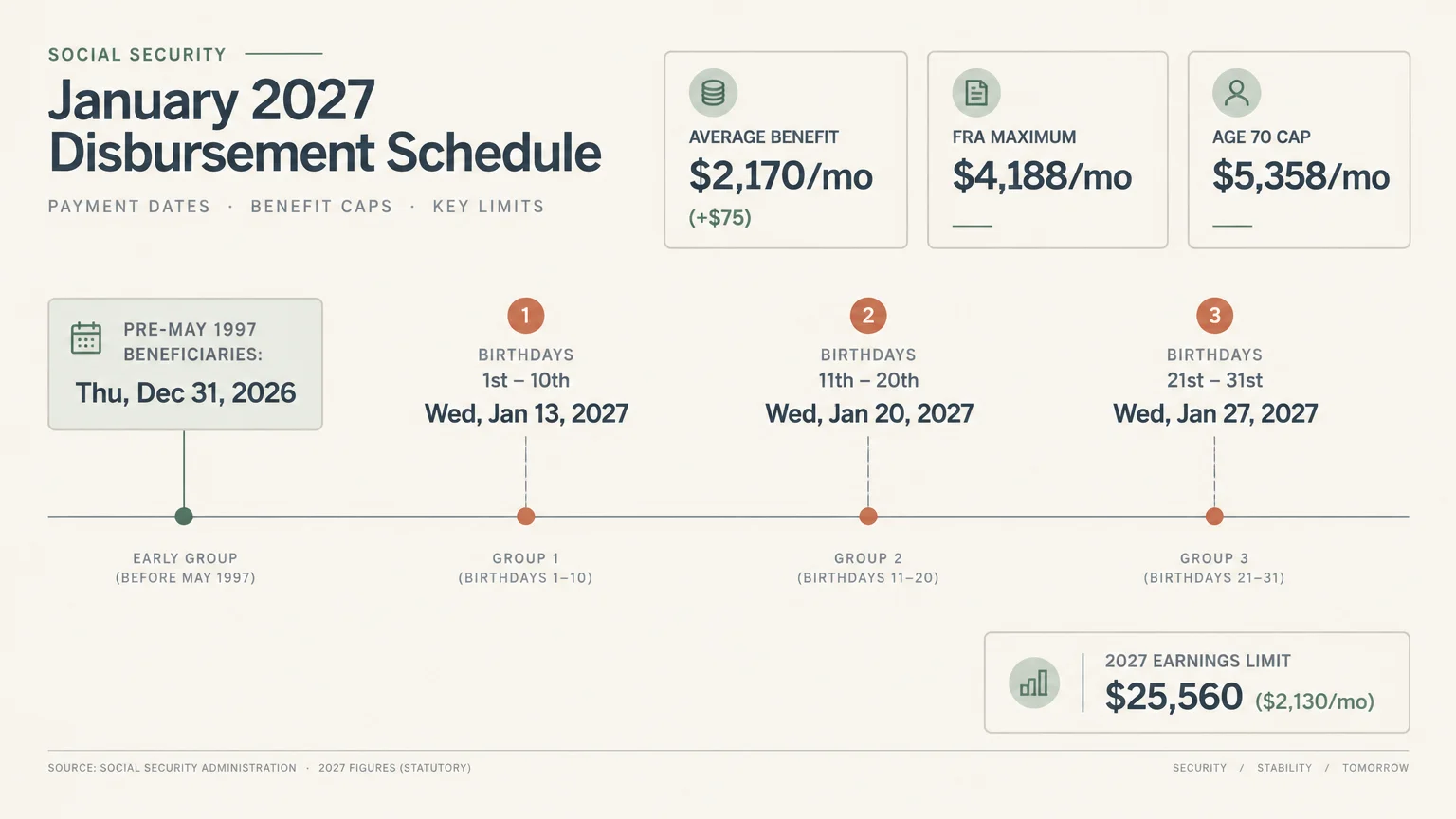
This adjustment provides welcome relief against persistent household inflation. It raises the average monthly benefit check for retired workers by roughly $75, lifting typical monthly benefits to approximately $2,170.
Higher earners who delayed claiming will see even larger payments in their accounts. For workers reaching full retirement age in 2027, the maximum monthly payout climbs to $4,188.
If you waited until age 70 to maximize your benefits, your monthly cap reaches $5,358. These figures represent gross gains before accounting for standard healthcare deductions.
The January 2027 payment calendar includes an important shift due to the federal holiday on New Year’s Day. Beneficiaries who started receiving benefits before May 1997 receive their funds on Thursday, December 31, 2026.
For all other retirees, payments arrive on Wednesdays based on your birth date:
- Birthdays 1st–10th: Wednesday, January 13, 2027
- Birthdays 11th–20th: Wednesday, January 20, 2027
- Birthdays 21st–31st: Wednesday, January 27, 2027
If you choose to work while receiving early benefits, monitor the updated retirement earnings test limits closely. In 2027, you can earn up to $25,560 ($2,130 monthly) before the agency withholds $1 for every $2 earned above the limit.
If you reach full retirement age during 2027, the earnings threshold increases to $67,920 ($5,660 monthly) for months prior to your birthday. Once you reach full retirement age, all earnings caps disappear entirely.
“A cost-of-living adjustment is not extra spending money; it is your shield against inflation.” — Suze Orman, Personal Finance Author and Expert

2. Supplemental Security Income (SSI) Early Distributions
Supplemental Security Income provides critical financial support to eligible seniors aged 65 and older who have limited income and resources. This federal program also receives the standard 3.6% cost-of-living increase for 2027.
The maximum federal monthly payout rises to $1,029 for an eligible individual, up from $994 in 2026. For an eligible married couple, the maximum federal monthly benefit climbs to $1,544.
If you qualify as an essential person who provides necessary care to an SSI recipient, your payment increases to $516 monthly. Many states also add a small supplemental payment on top of these federal baselines.
SSI recipients must prepare for an unusual schedule quirk at the beginning of 2027. Because January 1 is a federal holiday, the Social Security Administration pays January benefits on Thursday, December 31, 2026.
February 2027 also brings a calendar shift because February 1 falls on a Sunday. Consequently, your February SSI payment arrives on Friday, January 29, 2027.
This means eligible seniors will see two separate SSI deposits land in their bank accounts during the month of January 2027. Careful budgeting is essential so you do not run short before March funds arrive.
Resource limits for SSI remain strictly capped at $2,000 for individuals and $3,000 for couples. You can verify your specific eligibility requirements directly through Benefits.gov.

3. Veterans Affairs Disability and DIC Compensation
Disabled military veterans and surviving spouses receive higher monthly compensation starting with their first 2027 check. By law, Congress ties VA compensation increases directly to the annual Social Security COLA percentage.
The Veterans’ Compensation Cost-of-Living Adjustment Act guarantees a 3.6% boost across all disability compensation tiers. Surviving family members receiving Dependency and Indemnity Compensation (DIC) will also receive this full 3.6% raise.
These benefit payments remain entirely exempt from federal, state, and local income taxes. That tax-free status preserves the full purchasing power of your annual increase.
The payment timeline mirrors other federal benefits impacted by the New Year holiday. While the rate adjustment takes effect on December 1, 2026, the government pays benefits in arrears.
Because January 1 is New Year’s Day, the U.S. Department of Veterans Affairs delivers your January payment on Thursday, December 31, 2026. Check your direct deposit account before the holiday weekend to verify receipt.

4. Federal Civil Service Pensions (CSRS and FERS)
Retired federal employees covered under civil service retirement programs will notice larger annuity payments arriving in early January 2027. However, the exact percentage increase depends entirely on which retirement system covers you.
Retirees enrolled in the older Civil Service Retirement System (CSRS) receive the full 3.6% adjustment. This matches the full increase granted to Social Security and military beneficiaries.
Retirees under the Federal Employees Retirement System (FERS) receive a reduced adjustment known as a “diet COLA.” When the consumer price index rises above 3%, federal law limits the FERS adjustment to the inflation rate minus 1%.
As a result, eligible FERS retirees aged 62 and older receive a 2.6% increase in 2027. Most FERS retirees under age 62 receive no adjustment unless they retired on disability.
The Office of Personnel Management applies these adjustments effective December 1, 2026. Your first increased annuity check arrives on Monday, January 4, 2027, which marks the first business day of the month.
5. Military Retired Pay and Survivor Benefit Plan (SBP)
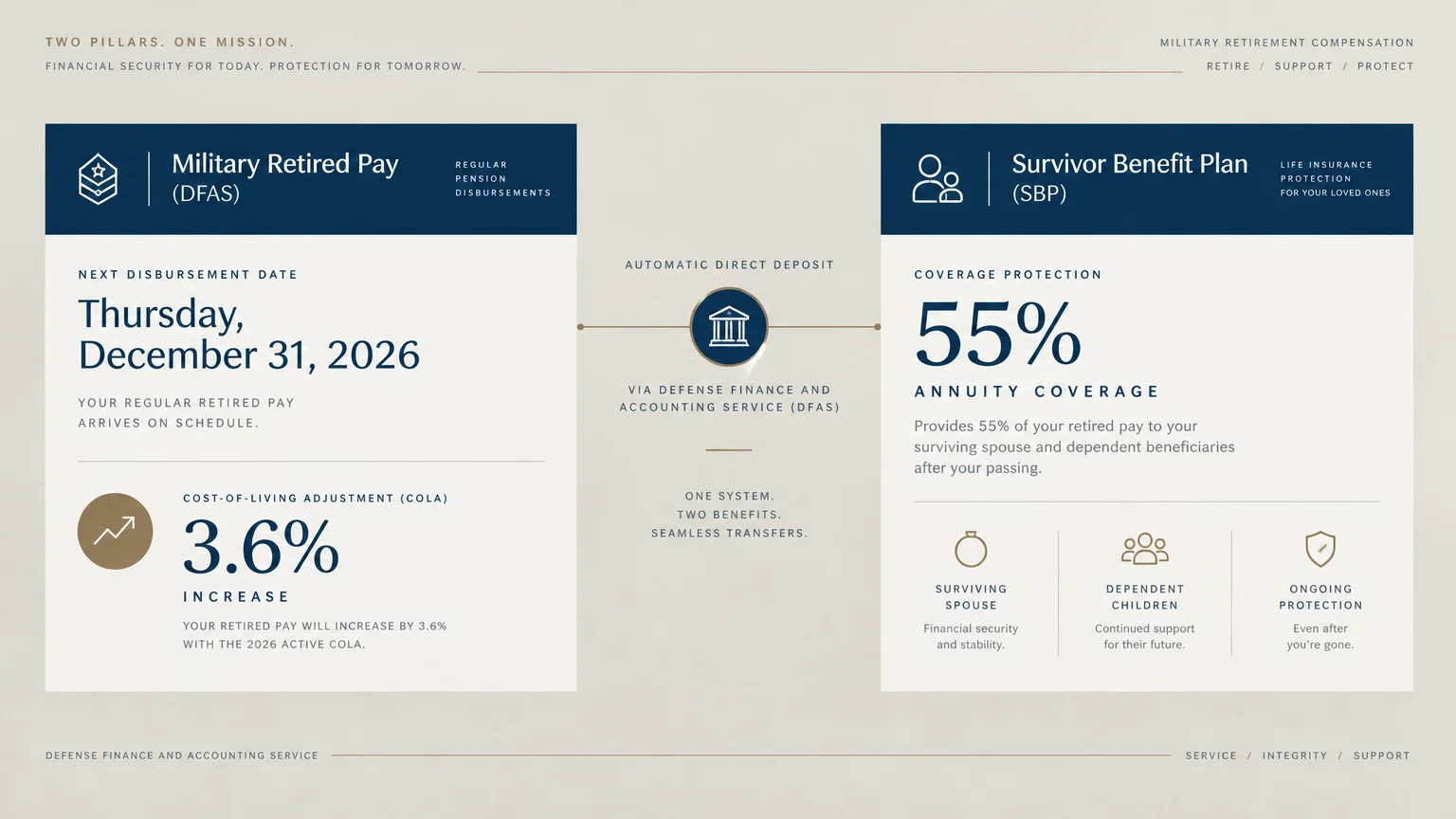
Career military retirees will see their monthly retirement pensions rise by 3.6% heading into 2027. This adjustment applies equally to regular retired pay, disability retirement pay, and Survivor Benefit Plan (SBP) annuities.
For an enlisted retiree receiving an average monthly pension of $2,500, the 3.6% bump adds approximately $90 each month. That increase amounts to over $1,080 in additional gross income across the entire calendar year.
Military pensions follow the standard military pay schedule managed by the Defense Finance and Accounting Service (DFAS). The increased rate becomes effective December 1, 2026.
DFAS deposits monthly retirement pay on the final business day of the month. As a result, your first adjusted military retirement payment will arrive on Thursday, December 31, 2026.

6. Railroad Retirement Board (RRB) Annuities
Railroad workers who earned industry retirement benefits receive two distinct benefit components each month. Both components see automatic adjustments entering 2027, but they follow different statutory formulas.
Tier I benefits correspond to traditional Social Security and increase by the full 3.6% COLA rate. Tier II benefits, which represent an employer-financed pension, increase by 32.5% of the overall inflation rate.
For 2027, the Tier II portion increases by 1.2%. When combined, these increases create substantial monthly gains for career railroad families.
The average regular railroad retirement employee annuity increases by $106 a month to $3,761 starting in January 2027. For married couples, the average combined employee and spouse benefit climbs by $149 to $5,407 each month.
Aged surviving spouses also receive higher support. The average railroad widow or widower annuity rises by $67 per month to an average of $2,218.
These adjusted payments arrive through direct deposit on the first business day of the year. You can expect your initial 2027 railroad retirement funds on Monday, January 4, 2027.
7. Delayed First-Year Required Minimum Distributions (RMDs)
If you reached age 73 during 2026, an important federal deadline may bring a mandatory payout into your accounts. Under current rules outlined by the Internal Revenue Service, mandatory distributions begin at age 73.
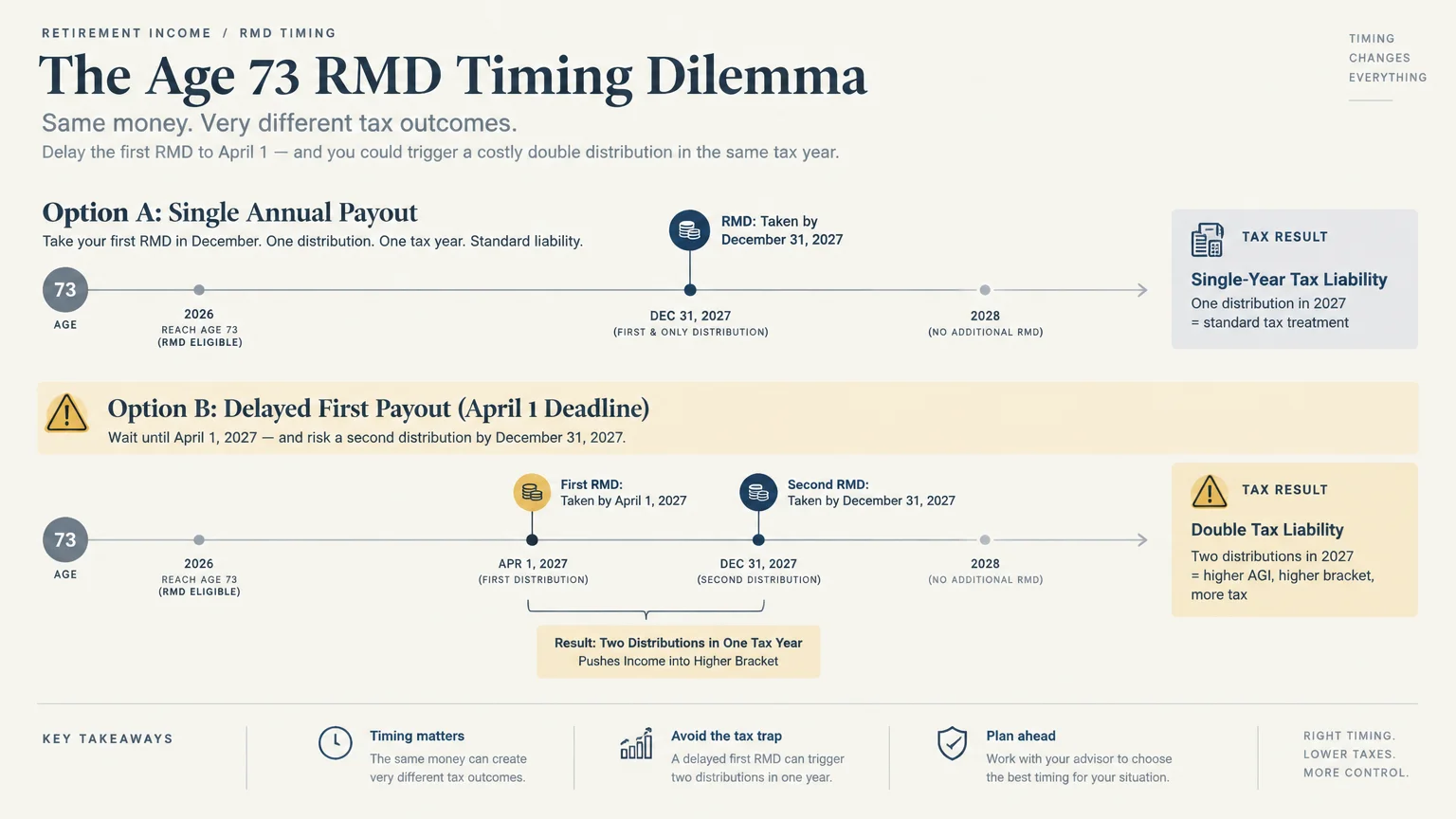
Seniors born in 1953 turned 73 in 2026 and faced their first required distribution year. Tax law allows you to delay that very first RMD until April 1, 2027.
If you chose to delay your initial distribution, you must transfer that money out of your accounts by April 1, 2027. This distribution sends retirement cash straight to your checking account, though it triggers ordinary income tax.
Taking your first RMD in early 2027 requires careful tax planning. If you delay your initial withdrawal, you must still take your second regular RMD by December 31, 2027.
Taking two RMDs in a single tax year can push your annual income into a higher tax bracket. It may also subject more of your Social Security benefits to taxation.
“The biggest mistake retirees make with distributions is treating the calendar as an afterthought.” — Ed Slott, CPA and Retirement Distribution Specialist

8. The New SECURE 2.0 Federal Saver’s Match Direct Payouts
The beginning of 2027 introduces an innovative federal program established under the SECURE 2.0 Act. Taking effect for tax years starting after December 31, 2026, the federal government officially launches the Saver’s Match.
This program replaces the older, nonrefundable Saver’s Credit with a direct federal matching contribution. If you are semi-retired and earn modest wages, this program can inject real cash directly into your retirement portfolio.
Under this initiative, the federal government matches 50% of your retirement plan contributions up to $2,000 annually. This structure delivers a maximum federal matching deposit of $1,000 per individual, or $2,000 for married couples filing jointly.
Unlike old tax credits that simply reduced tax bills, this match is paid as a direct cash deposit into your retirement account. Even individuals who owe zero federal income taxes qualify to receive the full matching contribution.
Working retirees contributing to an individual retirement account (IRA) or workplace retirement plan qualify based on modified adjusted gross income. Phase-out ranges apply for single filers earning between $20,500 and $35,500, and couples earning between $41,000 and $71,000.
Contributing early in 2027 allows you to maximize compounding growth on both your principal and the upcoming federal match. This new match represents an outstanding financial incentive for seniors working part-time jobs.
Early 2027 Retiree Payment Schedule and Adjustments
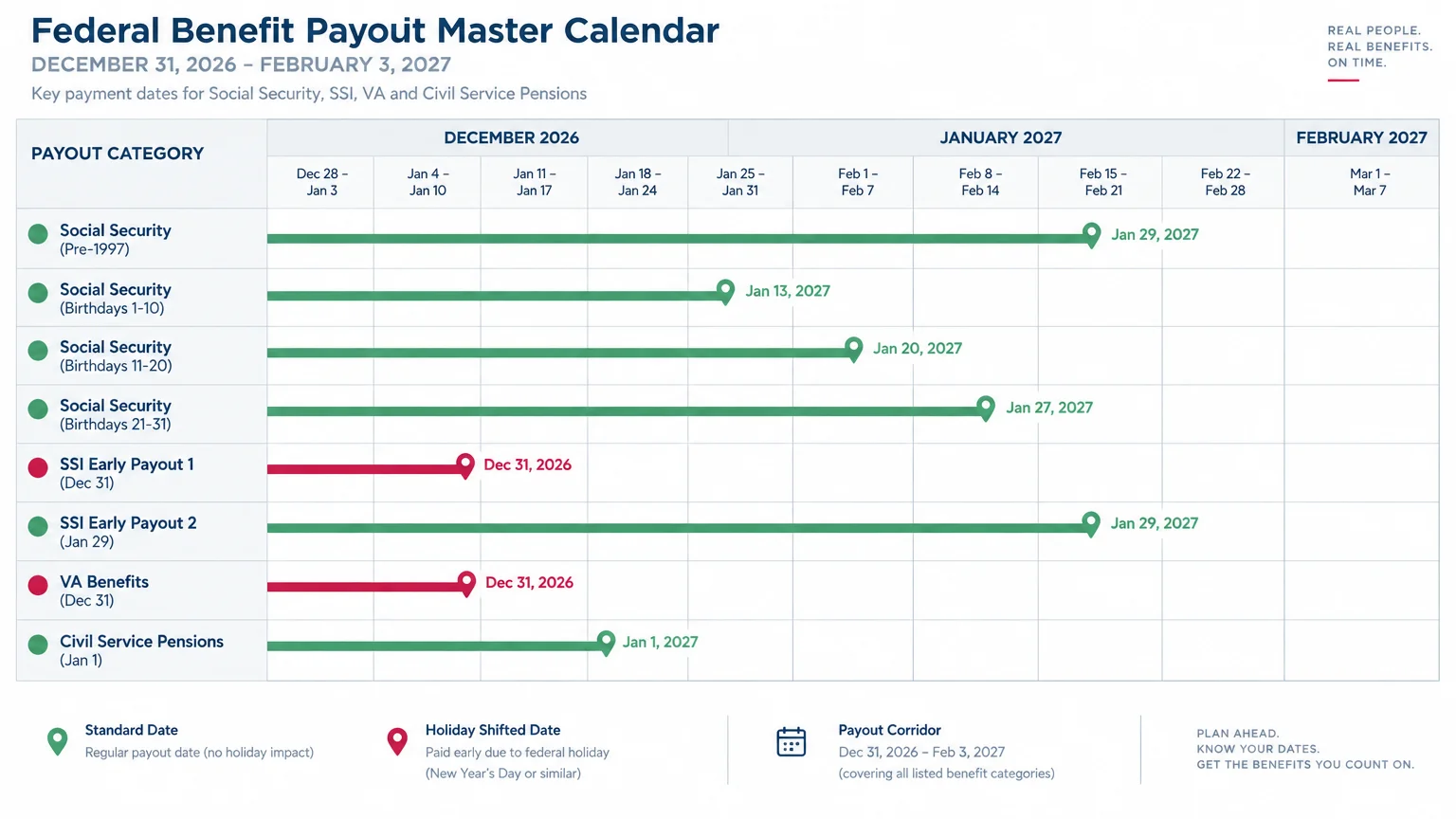
To help you track these incoming funds, here is a consolidated overview of early 2027 adjustments and delivery dates. Review this summary to coordinate your monthly bill payments effectively.
| Payment Program | 2027 Adjustment | First Payment Date | Key Notes |
|---|---|---|---|
| Social Security Retirement | 3.6% COLA | Dec 31, 2026 or Jan 13–27, 2027 | Dates depend on your birth date and claim date. |
| Supplemental Security Income | 3.6% COLA | December 31, 2026 | February payment also arrives early on Jan 29. |
| VA Disability & DIC | 3.6% COLA | December 31, 2026 | Completely tax-free monthly compensation. |
| Federal Civil Service (CSRS) | 3.6% COLA | January 4, 2027 | Receives full CPI inflation matching. |
| Federal Civil Service (FERS) | 2.6% COLA | January 4, 2027 | Subject to the statutory diet COLA formula. |
| Military Retired Pay & SBP | 3.6% COLA | December 31, 2026 | Paid on the final business day of the month. |
| Railroad Retirement Annuities | 3.6% Tier I / 1.2% Tier II | January 4, 2027 | Combined benefits for employee and spouse rise $149. |
| Delayed First RMD | Formula-based | Deadline: April 1, 2027 | Applies to seniors who turned 73 during 2026. |
| SECURE 2.0 Saver’s Match | Up to 50% ($1,000 max) | Starts January 1, 2027 | Direct federal deposit for working retirees. |
How Medicare Part B Deductions Impact Your Net Payment
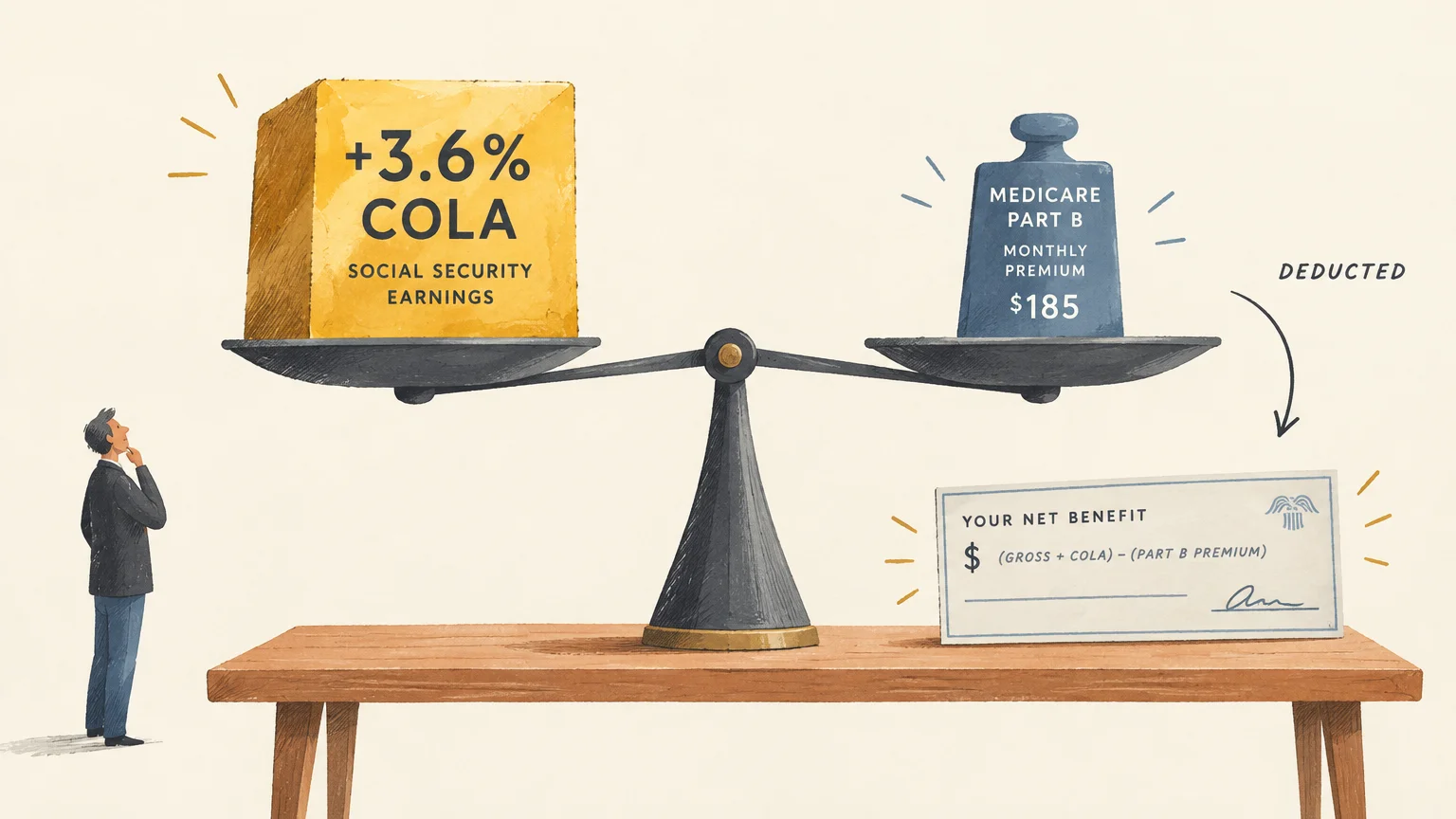
While a 3.6% boost increases your gross Social Security check, your actual take-home deposit may look slightly different. The federal government automatically deducts monthly premiums for Medicare Part B from your Social Security payment.
According to projections from Medicare.gov, standard Part B premiums are estimated to rise by approximately $6.60 per month for 2027. This modest premium increase offsets a small portion of your gross cost-of-living raise.
For example, if your monthly benefit check increases by $75, the higher Medicare premium deduction leaves you with an extra $68.40 in net cash. This still represents a solid financial gain that bolsters your monthly budget.
High-income retirees subject to the Income-Related Monthly Adjustment Amount (IRMAA) face larger monthly premium deductions. Checking your annual Social Security COLA notice online reveals your exact net payment amount.
What Can Go Wrong: 4 Costly Retiree Mistakes
Navigating benefit shifts in early 2027 requires precision. Avoid these four common missteps to protect your income and keep your retirement plan on track.
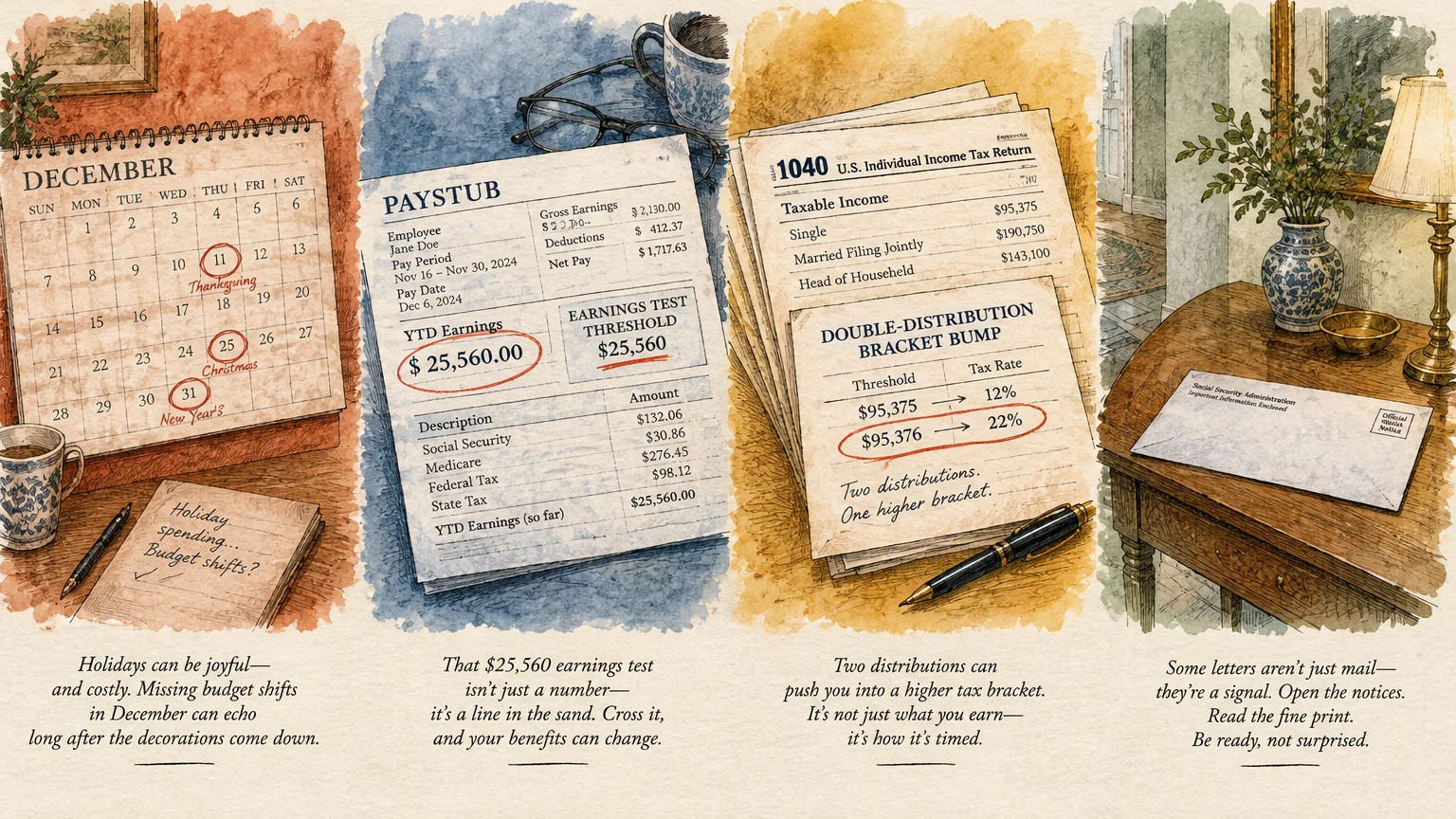
1. Over-earning while collecting early benefits: Working retirees under full retirement age who exceed the $25,560 annual earnings limit will see benefit checks withheld. Keep your monthly wages below $2,130 if you wish to avoid triggering unexpected withholdings.
2. Falling into the double-RMD tax trap: Delaying your first RMD to April 1, 2027, creates two mandatory taxable distributions in one single year. This spike in reportable income can push you into a higher tax bracket and elevate Medicare IRMAA surcharges.
3. Violating SSI strict asset caps: Because January 2027 brings two SSI deposits—one on December 31 and another on January 29—your bank balance could temporarily surge. If your total countable liquid resources exceed $2,000 on the first of the month, your benefits could be suspended.
4. Forgetting to update your direct deposit details: Switching banks without updating your payment profiles across federal portals can delay your initial COLA payments by weeks. Always make direct deposit updates through official government portals at least 30 days before payments disburse.

When to Consult a Professional
While government payment adjustments happen automatically, optimizing your overall retirement strategy often requires tailored guidance. You should consider meeting with a credentialed financial advisor or tax specialist under several specific conditions.
First, seek professional help if you turned 73 in 2026 and are weighing whether to take your first RMD by April 1, 2027. A certified public accountant (CPA) can calculate whether taking two distributions in 2027 harms your tax status.
Second, consult an advisor if you work part-time and want to leverage the new SECURE 2.0 Saver’s Match. A planner can help you time IRA contributions to claim the maximum $1,000 federal match without overcomplicating your taxes.
Third, talk to a specialist if you receive a federal civil service pension and wonder how it interacts with Social Security. Complex rules surrounding the Windfall Elimination Provision (WEP) and Government Pension Offset (GPO) can dramatically alter your retirement checks.
Frequently Asked Questions
Why do some retirees receive their January 2027 payment in December 2026? Federal regulations state that when a scheduled payment date falls on a weekend or federal holiday, payments must be issued on the preceding business day. Because January 1 is New Year’s Day, funds arrive on Thursday, December 31, 2026.
Do I need to apply for the 2027 cost-of-living adjustment? No, you do not need to apply. Cost-of-living adjustments apply automatically to your Social Security, VA, military, railroad, and civil service retirement payments starting with your first eligible check.
Can I receive both the Saver’s Match and Social Security at the same time? Yes, you can receive both. If you work a part-time job during retirement, you can contribute your earned wages to an IRA and receive the federal match, regardless of your Social Security status.
How will I know the exact dollar amount of my early 2027 payment? The Social Security Administration sends mailed notices outlining your new benefit rate each December. You can also view and print your personalized COLA notice online through your personal account on the SSA website.
Taking a proactive stance with your retirement cash flow gives you greater peace of mind throughout the entire year. Mark these key deposit dates on your calendar and review your deductions to ensure your early 2027 finances stay balanced.
This article provides general financial education and information only. Everyone’s financial situation is unique—what works for others may not work for you. For personalized advice tailored to your retirement needs, consider consulting a qualified financial professional such as a CFP or CPA.
Last updated: November 2026. Benefit amounts, tax rules, and program details change annually—verify current figures with official government sources.









Leave a Reply