

You can retire near the water without draining your nest egg on overcrowded resort markets. Finding the right undiscovered coastal spot gives you scenic waterfront views, lower living costs, and lasting financial security.
Many traditional beach towns price out retirees through expensive property taxes and inflated real estate values. Fortunately, lesser-known coastal retirement destinations offer quiet sandy shores and welcoming communities at manageable prices.
Real estate experts highlight several hidden coastal towns that balance affordability, healthcare access, and favorable state tax laws. Here are eight standout coastal communities where your retirement dollars stretch significantly further.
Why Retirees Are Rethinking Traditional Coastal Hotspots
For decades, retirees flocked almost exclusively to South Florida and coastal California. Soaring insurance premiums, heavy traffic, and crowded beaches now push many older adults toward quieter alternatives.
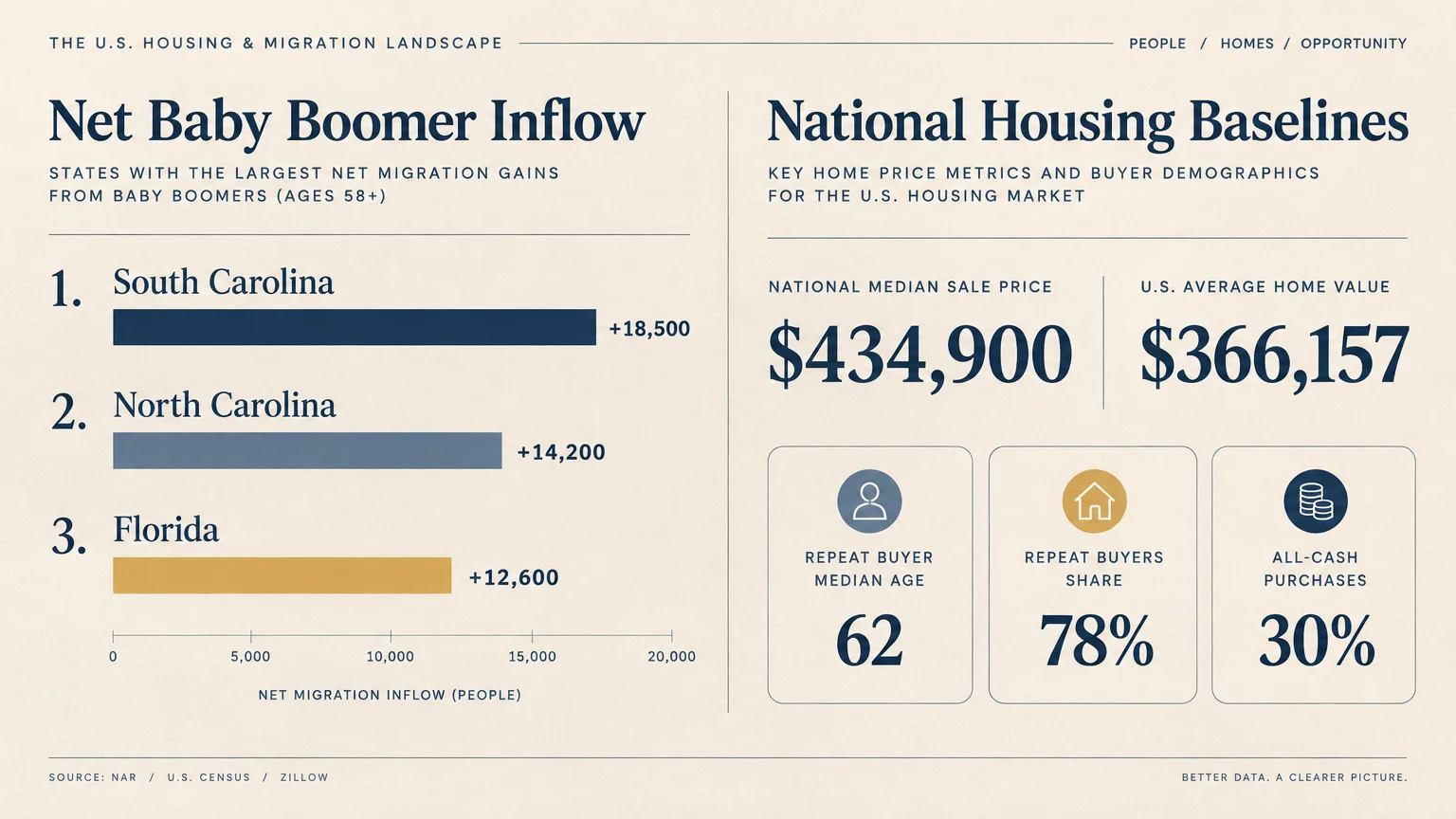
Recent relocation patterns reflect this growing financial migration. According to U-Haul’s midyear migration report, South Carolina and North Carolina ranked first and second for net gains of Baby Boomer movers, pushing Florida down to third place.
Real estate dynamics also favor experienced buyers who relocate strategically. Data from the National Association of Realtors shows repeat buyers have a median age of 62 and account for 78% of all home purchases.
Furthermore, 30% of these repeat buyers pay entirely in cash. Selling an appreciated suburban home allows you to purchase a coastal property with zero mortgage interest burden.
National housing numbers highlight the stark affordability divide across coastal regions. The average U.S. home value stands at $366,157 according to the Zillow Home Value Index; the national median existing single-family home sale price reached $434,900.
In high-profile coastal markets, median sales numbers regularly double or triple those national baselines. In contrast, five of the eight secret towns examined below sit well below the national median sale price.

How State Taxes Impact Your Coastal Nest Egg
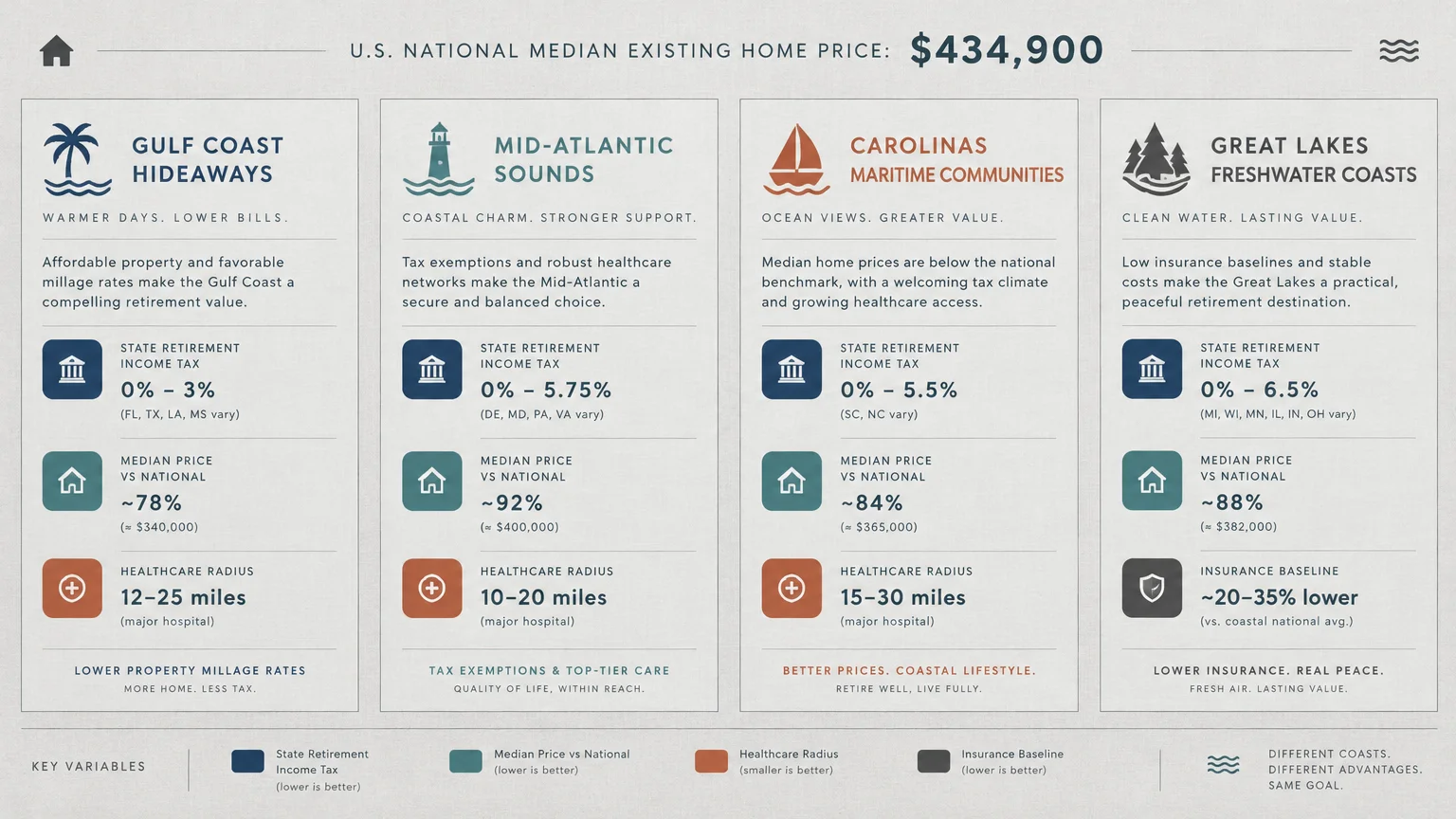
Your geographic destination shapes how far your retirement savings will last. State income taxes, pension exemptions, and property millage rates directly determine your monthly discretionary cash flow.
Currently, 13 states do not tax standard retirement distributions. Nine states levy no personal state income tax at all, while four states specifically exempt qualifying retirement income from taxation.
Texas does not impose a personal state income tax. In practical terms, that means your distributions from a 401(k), traditional IRA, or private pension remain completely exempt from state-level income levies.
Mississippi also treats retirees favorably by exempting all qualifying retirement income from state income tax. This exemption covers your Social Security benefits, employer pensions, and retirement account withdrawals.
For any earned income above $10,000, Mississippi applies a flat 4% income tax rate. That rate drops to 3.75% under enacted legislation, easing the burden for retirees who work part-time.
Virginia exempts Social Security benefits entirely from state taxation. The state also permits residents aged 65 and older to deduct up to $12,000 per person in other qualifying retirement income, subject to state income phase-outs.
Michigan similarly leaves Social Security benefits untaxed. The state has completed its multi-year phase-in of the Lowering MI Costs Plan, which restores broad state tax exemptions on both public and private pensions.
Before purchasing coastal real estate, research how moving affects your total state tax liability. You can verify your federal tax thresholds and filing rules directly through the Internal Revenue Service.

8 Undiscovered Retirement Beach Towns for 2026
The following hidden gems provide scenic waterfronts, slower paces of life, and lower real estate acquisition costs. Each location features distinctive advantages for your retirement lifestyle.
1. Palacios, Texas: Gulf Coast Serenity at an Unbeatable Price
Palacios sits quietly along Matagorda Bay, halfway between Houston and Corpus Christi. It offers a relaxed, unhurried atmosphere far removed from noisy tourist corridors.
The average home price in Palacios is $190,149, making it the most affordable destination on this list. Ben Mizes, President of Clever Real Estate, recommends the town as a quiet Gulf Coast destination offering year-round sun and manageable living costs.
Because the town borders Matagorda Bay rather than the open ocean, it features calm waters and breezy shorelines. A 1.5-mile lighted seawall offers a safe, paved path where you can walk daily and enjoy scenic water views.
Water enthusiasts spend their mornings fishing for redfish, birdwatching along the central flyway, or launching small boats. The town hosts community festivals throughout the year, fostering deep ties among local residents.
From a tax perspective, Texas levies zero personal income tax on your retirement income. That policy leaves your distributions from IRAs, pensions, and Social Security entirely untouched at the state level.
Prospective buyers must evaluate local property taxes and windstorm insurance coverage before making an offer. Matagorda County’s property tax rates require careful budgeting despite the low purchase price.
2. Waveland, Mississippi: Untouched Shores and Protected Beaches
Waveland sits at the western edge of the Mississippi Gulf Coast, just under an hour from New Orleans. The community prides itself on offering quiet residential living directly against the water.
With an average home price of $220,496, Waveland sits well below the national median existing home price. Ben Mizes points out that Waveland features roughly eight miles of Gulf Coast beaches without the commercial clutter seen in competing towns.
Strict local zoning ordinances prohibit hotels and commercial businesses from building directly on the beachfront. As a result, you enjoy unobstructed views of the shoreline without high-rise condominium shadows.
Retirees spend their mornings walking the quiet sands or cycling the flat streets under moss-draped live oaks. Garfield Ladner Pier provides a gathering place where anglers fish for flounder and speckled trout.
Mississippi offers extraordinary tax advantages for retirees. The state exempts all qualifying retirement income, allowing you to withdraw from your 401(k) or pension without paying state income tax.
Healthcare access remains convenient for residents. Memorial Hospital at Gulfport and multiple regional clinics sit within a short 25-minute drive, giving you dependable access to medical specialists.
3. Onancock, Virginia: Historic Harbor Living on the Eastern Shore
Onancock sits along an inlet of the Chesapeake Bay on Virginia’s Eastern Shore. Established in 1680, this historic harbor town features tree-lined avenues and 19th-century Victorian homes.
The average home price in Onancock stands at $299,876. Daniel Yoon, a real estate advisor at eXp Realty, highlights Onancock as an ideal, quiet harbor haven for budget-conscious coastal retirees.
Yoon advises prospective retirees to visit Onancock in February rather than July. Exploring the area during the winter allows you to experience its tranquil off-season pace before purchasing property.
The town’s deep-water harbor accommodates sail and power vessels while serving as the launch point for ferries to historic Tangier Island. You can dock your boat, stroll to local bakeries, or attend performances at the North Street Playhouse.
Virginia treats your retirement distributions gently. The commonwealth exempts Social Security benefits from state taxation and offers age-based deductions on other retirement withdrawals.
Medical care is anchored by Riverside Shore Memorial Hospital, located just minutes away in nearby Onley. Having an updated, regional healthcare facility close at hand provides immense security as you age.
4. Colonial Beach, Virginia: Golf Carts and Riverside Sands
Colonial Beach occupies a scenic peninsula between the Potomac River and Monroe Bay in Virginia’s historic Northern Neck. It ranks among Virginia’s most relaxed waterfront communities.
The average home price in Colonial Beach is $326,232, remaining significantly below the national median sale price. The town sits along the wide, brackish Potomac River rather than the Atlantic Ocean, offering gentle sandy beaches and a classic boardwalk.
Residents navigate the community using street-legal golf carts rather than full-sized passenger cars. This golf-cart-friendly infrastructure makes trips to grocery stores, beach cafes, and the marina simple and stress-free.
Boaters and anglers benefit from sheltered marinas along Monroe Bay. You can cruise downriver toward the Chesapeake Bay or drop anchor at quiet coves along the shoreline.
You can review housing protections and community loan resources through the U.S. Department of Housing and Urban Development. Understanding federal housing guidelines helps you secure fair financing for coastal property.
Colonial Beach lies roughly 65 miles south of Washington, D.C., and 60 miles north of Richmond. This positioning allows you to access world-class metropolitan medical centers when regional care falls short.
5. Cape Charles, Virginia: Bay Breezes and Golf-Centric Relaxation
Cape Charles sits near the southern tip of Virginia’s Eastern Shore, directly overlooking the Chesapeake Bay. It features pastel-colored Victorian architecture, manicured fairways, and calm bay waters.
The average home price in Cape Charles is $407,291. Recommended by Daniel Yoon, this town appeals to retirees who value walkable historic districts paired with modern recreational amenities.
The local shoreline faces west, delivering spectacular sunset views over the Chesapeake Bay. Because the shallow waters remain free of heavy ocean surf, retirees can paddleboard, kayak, or swim safely.
Golfers appreciate the Bay Creek development, which hosts championship courses designed by Arnold Palmer and Jack Nicklaus. Walking trails, nature preserves, and private marinas surround these planned neighborhoods.
Yoon stresses the importance of checking flood zone maps and flood insurance rates before submitting an offer in Cape Charles. Coastal elevation levels vary significantly across the historic district and waterfront parcels.
Virginia’s state tax code provides a favorable environment for sustaining your retirement budget. Social Security benefits remain exempt from state taxes, preserving your monthly checks for everyday living costs.
6. Deltaville, Virginia: The Chesapeake’s Premier Boating Haven
Deltaville sits at the eastern tip of Middlesex County, framed by the Rappahannock and Piankatank Rivers. It serves as an intimate maritime sanctuary for passionate boaters.
The average home price in Deltaville is $446,606. Daniel Yoon recommends the community for retirees seeking an active coastal lifestyle centered on sailing, powerboating, and marine camaraderie.
With more than 25 commercial marinas and boatyards packed into its borders, Deltaville earned the title of Boating Capital of the Chesapeake Bay. Marine mechanics, supply shops, and sailmakers operate throughout the village.
If you prefer a quiet, marine-focused lifestyle, Deltaville eliminates tourist congestion. The community centers on community suppers, volunteer associations, and days spent navigating the open water.
Living on a peninsula requires thoughtful logistical planning. While local clinics handle primary care, major surgical hospitals in Richmond or Newport News require an hour of travel.
You can assess long-term healthcare accessibility and caregiver support programs through the Eldercare Locator. Planning ahead for care coordination protects your independence in rural coastal settings.
7. Suttons Bay, Michigan: Freshwater Coastline Near Urban Healthcare
Suttons Bay sits along the western arm of Grand Traverse Bay on Michigan’s scenic Leelanau Peninsula. It delivers breathtaking coastal scenery without salt spray or ocean hurricane risks.
The average home price in Suttons Bay is $652,616. Sander Scott, broker at Net Real Estate, highlights Suttons Bay as an exceptional freshwater community that combines natural beauty with sophisticated cultural dining.
The village features sandy beaches, a sheltered public marina, and a historic downtown with independent bookstores and art galleries. Surrounding hills harbor cherry orchards and celebrated vineyards that produce award-winning wines.
Bicycle enthusiasts enjoy the Leelanau Trail, a 17-mile paved multi-use pathway connecting Suttons Bay to Traverse City. The trail provides a flat, safe corridor for walking, running, and cross-country skiing.
Proximity to Traverse City represents a significant healthcare benefit for older adults. Munson Healthcare, a premier regional medical network, sits only 16 miles away and provides comprehensive cardiac, orthopedic, and emergency care.
Michigan’s tax environment has improved considerably for seniors. The state exempts Social Security benefits and restored broad exemptions for public and private retirement pensions under the Lowering MI Costs Plan.
8. Northport, Michigan: Four-Season Coastal Charm on the Leelanau Peninsula
Northport occupies the northernmost tip of the Leelanau Peninsula, affectionately known as the pinky finger of Michigan’s mitt. It offers panoramic water views across Grand Traverse Bay and Lake Michigan.
The average home price in Northport is $857,523, reflecting its exclusive location and premium shoreline real estate. Sander Scott recommends Northport to retirees who desire privacy, four-season living, and rich maritime heritage.
Northport Harbor hosts a modern marina that provides transient and seasonal dockage for visiting vessels. Nearby, Leelanau State Park features wooded walking paths and the historic Grand Traverse Lighthouse.
Life in Northport requires an appreciation for distinct seasons. Warm summers offer sailing and freshwater swimming, while crisp winters bring snowshoeing, quiet village streets, and cozy wood fires.
The community supports a vibrant local arts center, a boutique grocery market, and civic volunteer groups. Retirees actively shape the village by serving on local non-profit boards and library committees.
While home prices in Northport trend higher than Southern options, freshwater living avoids ocean-driven corrosion and destructive hurricanes. Michigan’s retirement income tax deductions help offset local property holding expenses.
Comparing the Top Secret Coastal Retirement Towns
Comparing home values, bodies of water, and tax rules helps clarify which community matches your retirement goals. The table below outlines key metrics for all eight destinations.
| Town and State | Average Home Value | Primary Body of Water | State Tax Advantage |
|---|---|---|---|
| Palacios, Texas | $190,149 | Matagorda Bay | No state personal income tax |
| Waveland, Mississippi | $220,496 | Gulf of Mexico | Total exemption on retirement income |
| Onancock, Virginia | $299,876 | Chesapeake Bay Inlet | No tax on Social Security; senior deductions |
| Colonial Beach, Virginia | $326,232 | Potomac River | No tax on Social Security; senior deductions |
| Cape Charles, Virginia | $407,291 | Chesapeake Bay | No tax on Social Security; senior deductions |
| Deltaville, Virginia | $446,606 | Rappahannock / Piankatank Rivers | No tax on Social Security; senior deductions |
| Suttons Bay, Michigan | $652,616 | Grand Traverse Bay (Lake Michigan) | Broad pension exemptions; no tax on Social Security |
| Northport, Michigan | $857,523 | Lake Michigan / Grand Traverse Bay | Broad pension exemptions; no tax on Social Security |
Notice how home values vary across these eight locations. Five of these communities allow you to purchase a home well below the national median existing home price of $434,900.

Expert Perspectives on Coastal Downsizing
Downsizing your primary residence to move to the coast requires careful financial deliberation. Financial experts emphasize that lifestyle choices should never compromise your long-term liquidity.
“A successful retirement is built on intentional trade-offs. Finding an affordable location that matches your lifestyle priorities allows your nest egg to thrive without constant financial anxiety.” — Jean Chatzky, Financial Journalist and CEO of HerMoney
Prioritizing total housing costs over postcard views preserves your peace of mind. A smaller home with lower taxes leaves more discretionary income for travel, hobbies, and family visits.
What Can Go Wrong: Avoiding Hidden Coastal Living Traps
Relocating to a coastal community introduces unique financial and practical challenges. Being aware of these pitfalls prevents costly surprises after you finalize a home purchase.
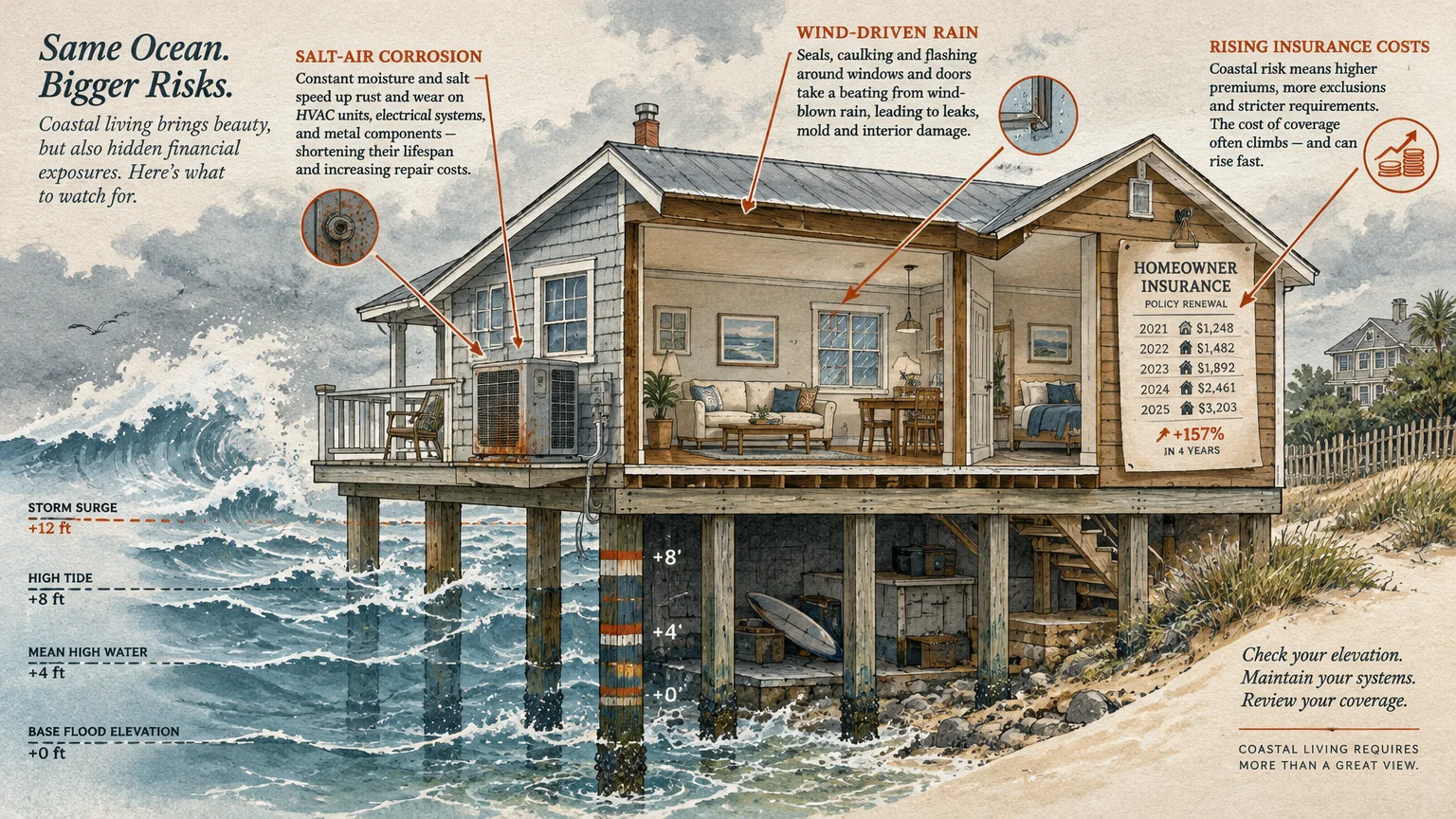
- Overlooking windstorm and flood insurance premiums: Standard homeowner policies never cover flood damage. High-risk coastal flood zones require federal flood insurance policies, which can add hundreds of dollars to your monthly expenses.
- Visiting only during peak summer sunshine: Beach towns change dramatically once warm-weather visitors depart. Winter months can bring shuttered restaurants, reduced business hours, and biting coastal winds that surprise unprepared buyers.
- Underestimating distance to advanced medical care: Rural coastal peninsulas often lack specialized cardiology, oncology, or memory care centers. Needing to drive 90 minutes for medical procedures complicates daily life as you age.
- Ignoring salt-air maintenance costs: Salt water and high coastal humidity corrode exterior paint, outdoor air conditioning condensers, and roofing materials. Budget higher annual maintenance funds for a coastal home than an inland residence.
To avoid unexpected financial shortfalls, establish a dedicated reserve fund for home repairs. You can review debt and mortgage resources through the Consumer Financial Protection Bureau.

When to Consult a Professional
Relocating to an unfamiliar coastal town often impacts your long-term estate and financial plan. Certain situations demand experienced professional guidance before you sign a binding contract.
First, speak with a certified public accountant if you are moving across state lines. State-specific domicile rules dictate when your former state stops taxing your income distributions.
Second, consult an independent insurance broker licensed in your prospective state. They can evaluate elevation certificates and request accurate quotes for wind, hail, and flood coverage.
Third, consult an estate planning attorney to update your wills, trusts, and healthcare directives. Each state enforces unique statutory requirements for medical powers of attorney and probate proceedings.
Frequently Asked Questions
Are these hidden coastal towns vulnerable to severe hurricanes?
Gulf Coast and Mid-Atlantic communities face periodic tropical storms and hurricanes. In contrast, Michigan freshwater towns avoid hurricanes entirely, though they encounter severe winter snowstorms.
Does Social Security cover the cost of living in these towns?
Communities like Palacios, Waveland, and Onancock feature housing costs that align well with modest retirement incomes. You can verify your projected monthly benefit directly through the Social Security Administration.
Can I find walkable neighborhoods in these coastal communities?
Yes, towns like Colonial Beach, Cape Charles, and Suttons Bay feature walkable historic centers. Colonial Beach also permits street-legal golf carts, making daily errands exceptionally easy without driving a car.
How do property tax rates compare between the South and the Midwest?
Texas has higher property tax rates to offset its lack of an income tax. Mississippi and Virginia offer moderate property tax assessments, while Michigan provides targeted homestead property tax credits for qualifying seniors.
Take time to visit prospective retirement communities during both warm and cold seasons before relocating. Renting a furnished home for a month allows you to test grocery access, healthcare travel, and local community life firsthand.
This is educational content based on general financial principles for seniors. Individual results vary based on your situation. Always verify current benefit amounts, tax rules, and program eligibility with official government sources.
Last updated: November 2026. Benefit amounts, tax rules, and program details change annually—verify current figures with official government sources.









Leave a Reply