
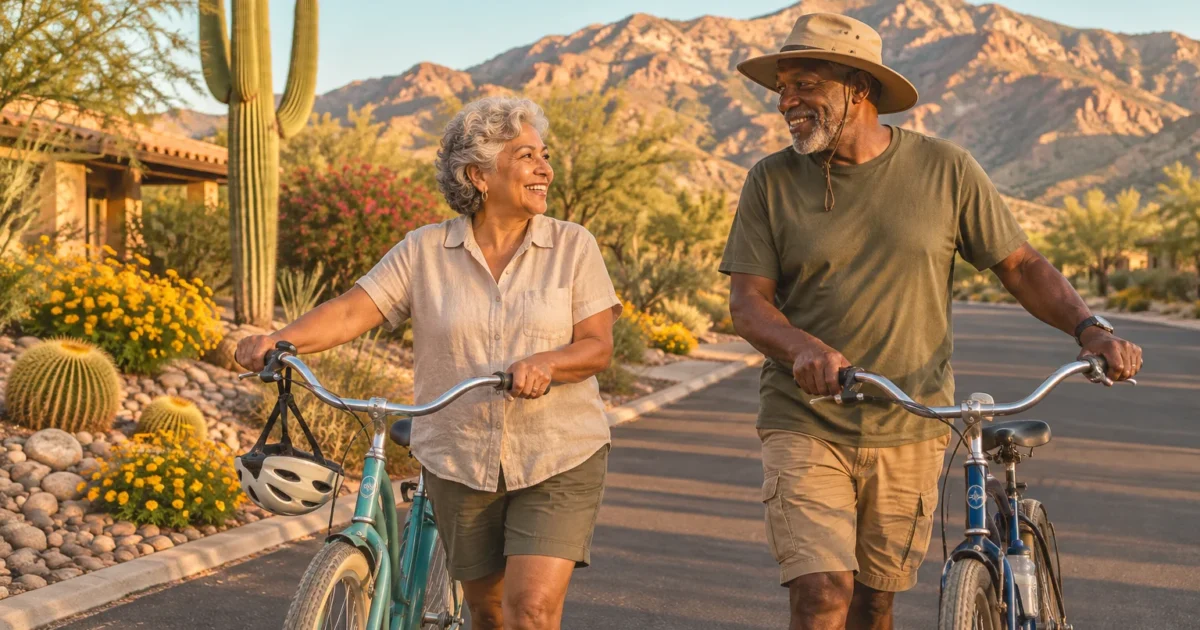
Trading snow shovels for year-round sunshine draws millions of older Americans to the Southwest. Across the country, 55.8 million residents age 65 and older now represent one in six Americans, fueling steady demand for warm, dry retirement destinations.
Yet bright skies come with real financial trade-offs in late 2026. With 30-year fixed mortgage rates at 7.28% and desert home prices ranging from $264,000 to $998,000, choosing the right town protects both your comfort and your budget.
Here are 10 standout desert towns for retirees—along with the tax rules, summer heat realities, and 2027 water cuts you should weigh before packing.
How These 10 Desert Towns Compare at a Glance
Southwest retirement towns vary dramatically in housing costs, summer highs, and state taxes on your income. Comparing them side by side helps you narrow your shortlist before booking a scouting trip.
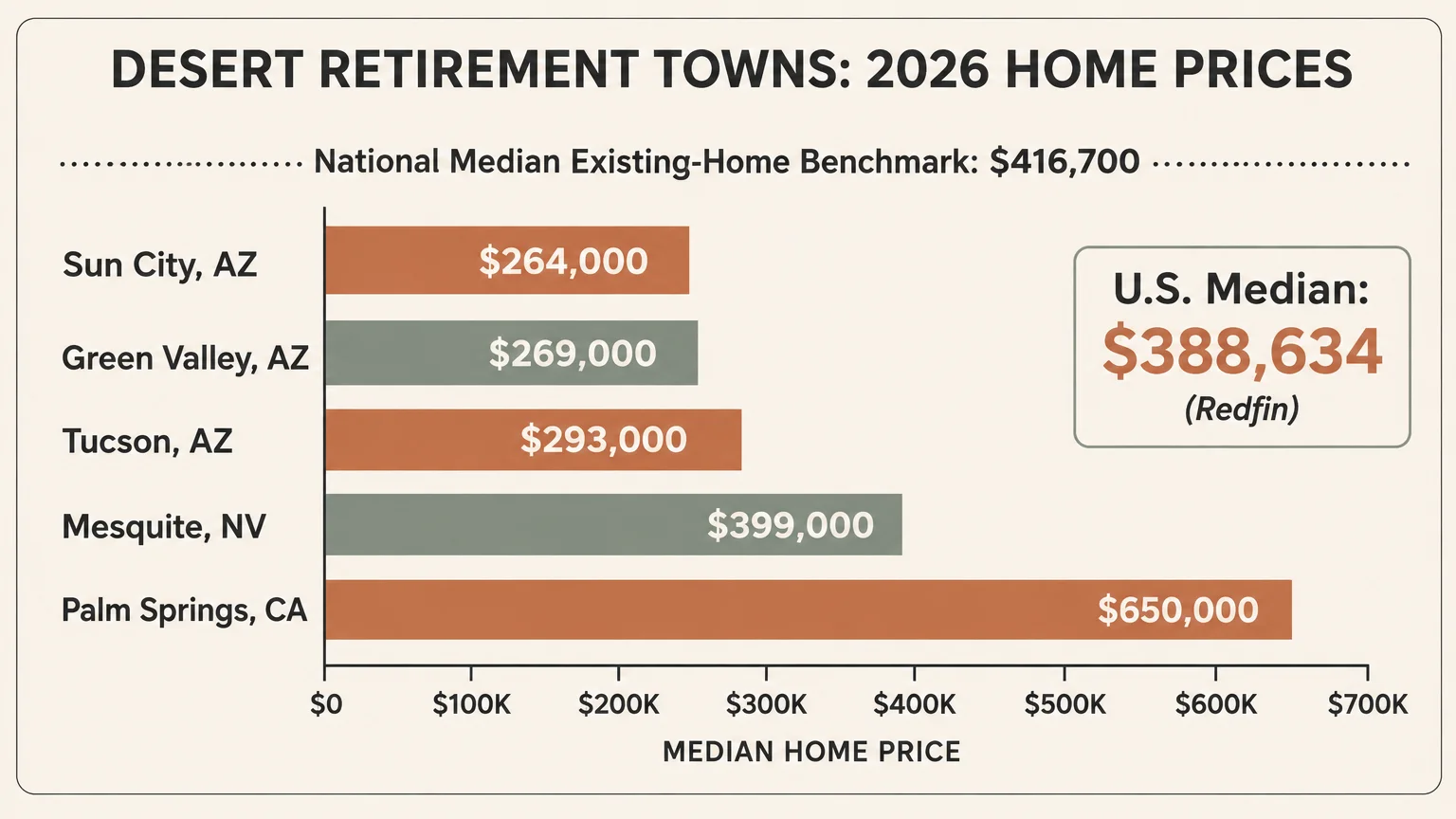
Across the U.S., Redfin reports a median sale price of $388,634 in October 2026, while the National Association of Realtors places the existing-home median at $416,700. Five of the 10 towns below still sell well below both national benchmarks.
| Town & State | 2026 Home Price (Redfin) | State Tax on Social Security | Climate Highlight | Best Fit For |
|---|---|---|---|---|
| Sun City, AZ | $264,000 (avg) | Exempt | 296 days with sun; 37% humidity | 55+ clubs and lowest entry price |
| Green Valley, AZ | $269,000 (median) | Exempt | Dry foothills; cooler than Phoenix | Quiet, slower-paced community living |
| Tucson, AZ | $293,000 (avg) | Exempt | 284 days with sun; July avg high 100.2°F | Arts, healthcare, and college energy |
| Yuma, AZ | $297,000 (median) | Exempt | 313 days with sun; 2.65 in. rain | Maximum sunshine and winter snowbirds |
| Las Cruces, NM | $317,779 (median) | Exempt under $100K/$150K AGI | 39% humidity; June avg high 96°F | Overall cost 10% below U.S. average |
| Mesquite, NV | $399,000 (median) | No state income tax | Dry Mojave Desert sun year-round | Tax-free IRA and pension withdrawals |
| Lake Havasu City, AZ | $498,000 (avg) | Exempt | 24% humidity; extreme summer heat | Boating, desert trails, mild winters |
| St. George, UT | $530,000 (median) | Taxed (credit available) | Dry red-rock desert; four mild seasons | Active outdoor and golf lifestyles |
| Santa Fe, NM | $597,817 (median) | Exempt under $100K/$150K AGI | High desert; July avg high 88.5°F | Cooler summers, galleries, mountain air |
| Palm Springs, CA | $650,000 (avg) | Exempt (high IRA taxes) | Jan avg high 70.5°F; July 108.6°F | Resort amenities and walkable dining |
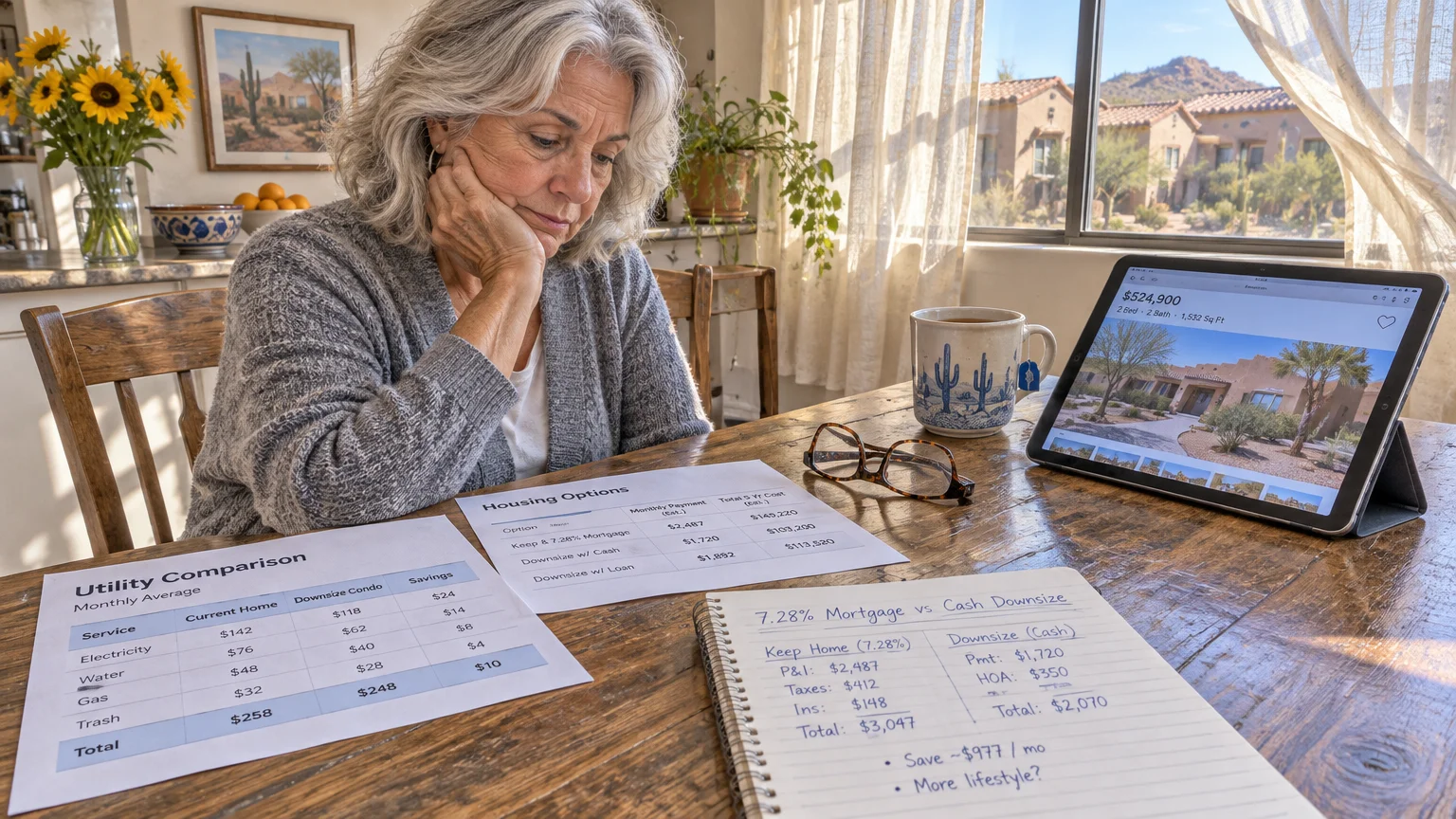
Keep financing costs in mind if you plan to carry a mortgage into retirement. Freddie Mac reported on November 19, 2026, that 30-year fixed rates averaged 7.28% and 15-year fixed rates averaged 6.66%.
With borrowing costs elevated and pending U.S. home sales hitting a record low in October 2026, downsizing with cash often gives you stronger negotiating power. Paying cash also keeps your monthly retirement housing overhead predictable.
10 Best Places to Retire in the Southwest for Dry, Sunny Weather
Each of these sunny retirement towns offers dry air and bright winters, yet daily life feels very different from one valley to the next. Here is how your money and comfort hold up in all 10 locations.
1. Sun City, Arizona: Classic 55+ Affordability
Sun City remains one of the most budget-friendly desert towns for retirees anywhere in the country. Redfin puts the average home price at $264,000 in October 2026, even after a 5.5% rise over the past year.
Located in the Phoenix metro area, Sun City shares a climate averaging 211 sunny days and 85 partly sunny days annually—85% sunshine—with 37% relative humidity. Summers regularly top 110°F, so residents rely heavily on indoor recreation centers from June through September.
Because it sits in Arizona, your Social Security benefits are free from state income tax, and other income faces a flat 2.50% rate. That low tax bite stretches modest pensions and retirement withdrawals further.
2. Green Valley, Arizona: Quiet Foothills Living
Just south of Tucson, Green Valley offers dedicated 55+ neighborhoods surrounded by open Sonoran Desert and mountain views. Redfin reports a median sale price of $269,000 over the three months ending October 2026, down 2.8% year-over-year.
Homes here spent an average of 75 days on the market, giving you breathing room to compare floor plans and inspect roofs or cooling units. Sitting higher than Phoenix brings slightly gentler summer afternoons and crisp desert mornings.
Green Valley is a strong fit for Arizona New Mexico retirement shoppers who want low homeowner fees and easy access to Tucson’s medical centers. You get small-town calm without giving up specialist healthcare.
3. Tucson, Arizona: University Energy and Desert Culture
If you want full city amenities without Phoenix-level housing prices, Tucson stands out among the best places to retire in the Southwest. Average home prices sit at $293,000 as of October 2026, marking a 7.0% decline from a year earlier.
National Climatic Data Center records show Tucson averages 193 sunny days and 91 partly sunny days per year. NOAA 1991–2020 normals list pleasant January highs of 66.5°F and lows of 40.8°F, while July warms to an average high of 100.2°F.
Tucson receives 10.61 inches of annual rain, with summer monsoons delivering 2.21 inches in July and 1.98 inches in August. Those afternoon storms cool the air briefly and keep desert trails vibrant.
4. Yuma, Arizona: The Sunniest Spot in America
No U.S. city beats Yuma if your main goal is pure dry climate retirement. NOAA climate normals rank Yuma #1 in the nation for sunshine, delivering 90% annual sunshine across 242 sunny days and 71 partly sunny days.
Rain rarely interrupts your calendar here, totaling just 2.65 inches across 17 rainy days per year. Redfin lists Yuma’s median sale price at $297,000 for the three months ending October 2026, down 7.0% year-over-year with homes averaging 67 days on market.
Because winter residents swell the population every fall, local shops and medical clinics cater directly to older adults. Many buyers start by renting for one winter season before committing year-round.
5. Las Cruces, New Mexico: Low Living Costs and Mountain Views
Framed by the Organ Mountains, Las Cruces combines college-town vitality with genuine affordability. Redfin places the median sale price at $317,779 over the three months ending October 2026, up 5.9% year-over-year with homes selling in an average of 52 days.
Redfin notes that Las Cruces home prices run 20% below the national average, while its overall cost of living sits 10% below the U.S. benchmark. That cushion leaves more room in your budget for travel, hobbies, or healthcare.
Weather data from 1992–2021 shows 39% average annual humidity, with January highs near 58°F and July highs around 95°F. New Mexico also lets residents age 65 and older deduct up to $8,000 from taxable income.
6. Mesquite, Nevada: Zero State Income Tax Near Red Rock Canyons
Perched along the Virgin River near the Utah border, Mesquite draws retirees looking to shelter every dollar of retirement income. Redfin reports a median sale price of $399,000 over the three months ending September 2026, up 2.3% year-over-year.
Nevada levies no individual income tax at all, meaning your Social Security, pensions, and traditional IRA or 401(k) withdrawals stay completely untaxed by the state. For households taking larger required minimum distributions, those annual savings can offset higher home prices.
You get dry desert mornings, golf courses carved into red mesas, and quick highway access to St. George or Las Vegas airports. Just plan errands early during peak summer afternoons.
7. Lake Havasu City, Arizona: Desert Boating and Mild Winters
If water recreation matters as much to you as dry skies, Lake Havasu City delivers both along the Colorado River. Redfin reports an average home price of $498,000 in October 2026, dipping 1.5% from a year ago.
Climate averages from nearby Needles Airport show bone-dry 24% annual humidity, with January highs of 66°F and July highs of 110°F. Lake Havasu City also holds Arizona’s all-time heat record of 128°F, set in June 1994.
That extreme summer peak makes home energy efficiency and shaded parking essential here. Still, winter months feel glorious for boating, pickleball, and lakeside walks.
8. St. George, Utah: Red Cliffs and Active Outdoor Living
Surrounded by sandstone canyons near Zion National Park, St. George appeals to active retirees who want paved trails and mild winters. Redfin lists the median sale price at $530,000 over the three months ending October 2026, down 3.7% year-over-year.
Utah charges a flat 4.45% individual income tax and maintains a low 0.48% effective property tax rate on owner-occupied homes. However, Utah is one of only eight states that still taxes Social Security benefits in 2026, offering a nonrefundable credit rather than a full exemption.
Before moving to St. George, run your projected retirement income through Utah’s tax credit rules. Your combined state and local sales tax will also average 7.19%.
9. Santa Fe, New Mexico: High-Desert Art and Four Gentle Seasons
Santa Fe proves that desert living does not require triple-digit summer heat. Redfin places the median sale price at $597,817—or $352 per square foot—over the three months ending October 2026, up 2.1% year-over-year with homes averaging 71 days on market.
In the Southwest, temperatures drop up to 5.5°F for every 1,000 feet of elevation gain. NOAA 1991–2020 normals give Santa Fe mild July highs of 88.5°F and cool 57.7°F nights, alongside brisk January highs of 44.3°F and freezing 19.9°F nights.
University of Arizona CLIMAS notes Santa Fe averages roughly 5 inches of monsoon rain and 4 inches of cool-season precipitation annually. You enjoy crisp mountain air, world-class galleries, and true four-season variety without heavy snowstorms.
10. Palm Springs, California: Iconic Resort Living at a Premium
Palm Springs blends mid-century architecture, walkable restaurants, and warm winters in the Coachella Valley. Redfin reports an average home price of $650,000 in October 2026, climbing 13.0% year-over-year.
NOAA 1991–2020 normals show balmy January highs of 70.5°F and lows of 47.6°F, while July surges to 108.6°F. If you love desert luxury and want to compare similar resort towns, Scottsdale, Arizona, averaged $998,000 in October 2026 after jumping 17.1% year-over-year.
Palm Springs delivers unmatched winter comfort, yet California’s tax structure demands careful planning. Higher home prices and steep state taxes on retirement account withdrawals can squeeze fixed incomes quickly.
Comparing Southwest Retirement Taxes: Keep More of Your Income
State tax rules can quietly add or subtract thousands of dollars from your annual retirement budget. Even when two towns share identical weather, crossing a state line changes how your Social Security, pensions, and savings are treated.
At the federal level, up to 85% of your Social Security benefits may be taxed depending on your combined income, using thresholds set in 1983 and 1993 that never adjust for inflation. You can review official federal benefit and tax rules at the Social Security Administration and the Internal Revenue Service.
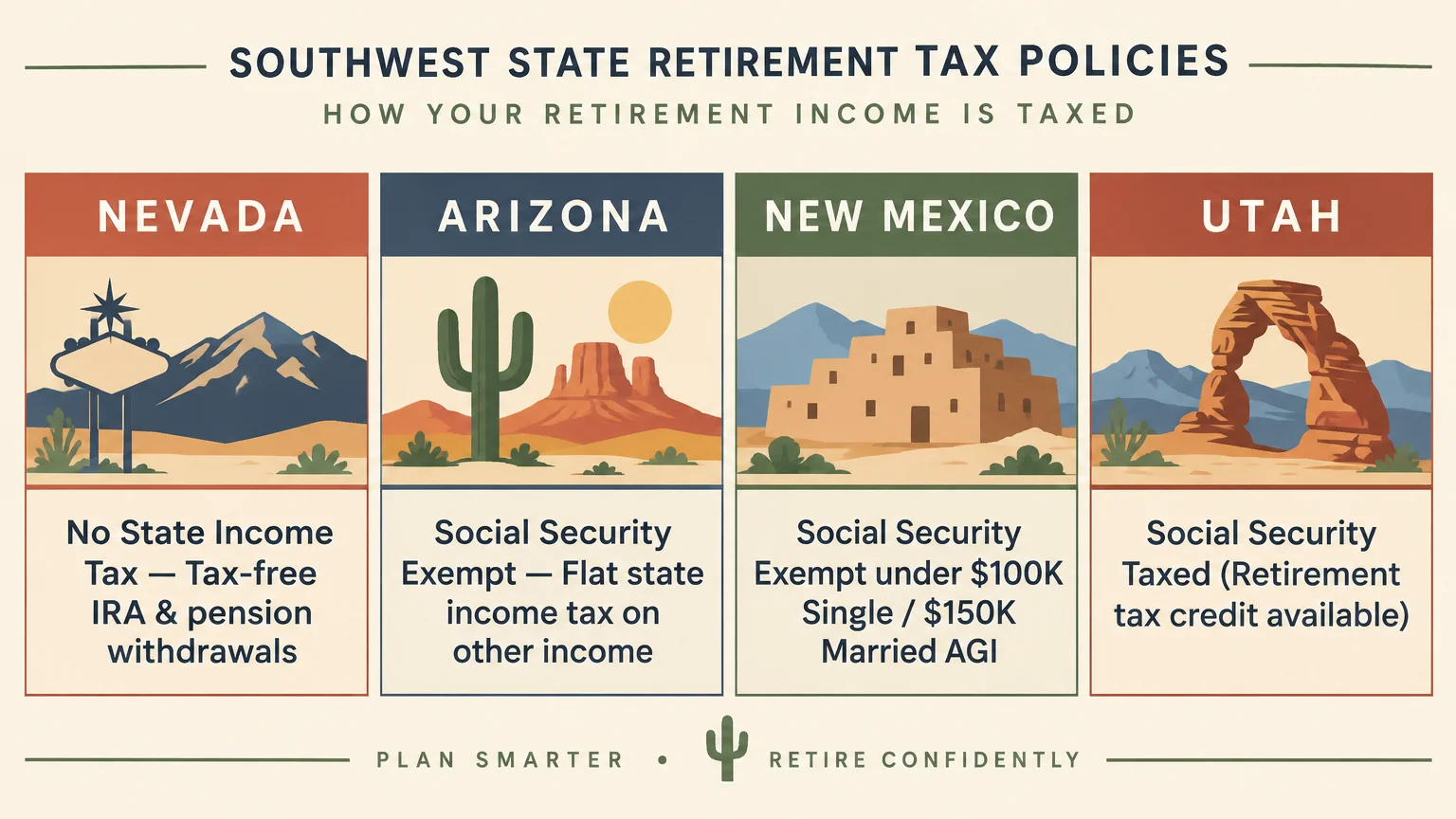
At the state level, only eight states tax Social Security in 2026—including New Mexico and Utah—while Arizona, Nevada, and California exempt those checks. Looking closely at all five Southwest states reveals major differences beyond Social Security:
- Nevada: Charges zero individual income tax, leaving Social Security, pensions, 401(k)s, and IRAs untaxed at the state level.
- Arizona: Uses a 2.50% flat income tax rate—tied for lowest among income-taxing states—plus a 0.48% effective property tax rate, no estate tax, and an 8.52% average combined sales tax.
- New Mexico: Taxes income from 1.5% to 5.9%, exempts Social Security below $100,000 AGI for single filers or $150,000 joint, and offers an $8,000 deduction at age 65 and older.
- Utah: Applies a 4.45% flat income tax, a 0.48% effective property tax rate, no estate tax, a 7.19% average combined sales tax, and a partial tax credit on Social Security.
- California: Exempts Social Security but imposes the nation’s highest top marginal rate of 13.3% on ordinary income, including traditional IRA and 401(k) withdrawals, while ranking #49 overall on the Tax Foundation’s 2027 index.
Your real cost of living in a desert town depends as much on how your retirement withdrawals are taxed as on the sticker price of your house.
Before you move, estimate your total annual tax bill across income, property, and sales taxes rather than focusing on a single headline rate. A town with zero income tax can still carry higher sales taxes, while low property taxes in Arizona or Utah help keep long-term holding costs modest.
Budgeting for Desert Realities: Heat, Utilities, and the 2027 Water Cuts
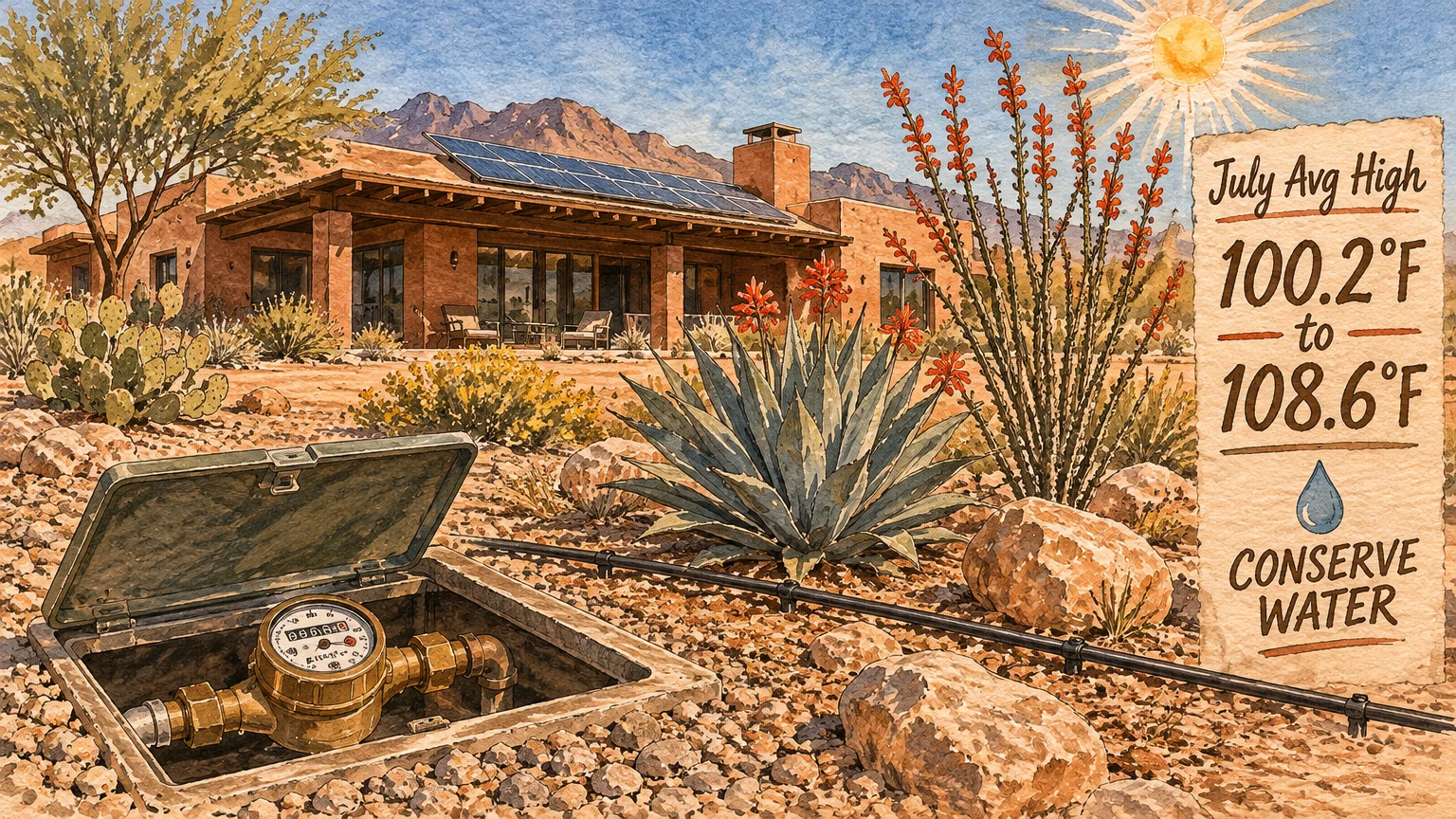
Dry air creates dramatic temperature swings that catch many newcomers off guard. Under clear desert skies, nighttime temperatures often drop 50°F to 60°F below daytime highs, making winter evenings chilly even in sunny southern valleys.
Summer heat is also climbing steadily across the region. Arizona statewide temperatures have risen roughly 2.5°F since the early 20th century, warming at 0.7°F per decade during the 1991–2020 climate period.
University of Arizona CLIMAS cautions that extreme summer heat raises serious health risks for older adults and people with chronic conditions, especially when delayed summer monsoons stretch heat waves longer. Rural desert communities can also face cooling-center barriers such as volunteer staffing shortages, pet restrictions, and limited public transit.
Water supply rules are tightening across the Southwest as well. The Lower Colorado River Basin remains in a Tier 1 shortage through December 31, 2026, with Lake Powell and Lake Mead sitting near 27% capacity each—just 34% combined storage.
Following an August 21, 2026 federal decision establishing 2027–2028 operating guidelines, larger water cuts of 1.25 million acre-feet take effect on January 1, 2027. Arizona faces a 760,000 acre-foot cut, California faces 440,000 acre-feet, and Nevada faces 50,000 acre-feet.
To protect your health and budget in a dry climate, walk through this practical pre-move checklist:
- Inspect cooling systems and insulation: Verify the age of air conditioners, window shading, and attic insulation before making an offer, and ask the seller for 12 months of electric bills.
- Check municipal water sources: Ask your city utility or homeowners association how 2027 Colorado River reductions affect local water rates and desert landscaping rules.
- Verify healthcare networks: Confirm your doctors, pharmacies, and nearby hospitals accept your plan using Medicare.gov, since moving across county lines can trigger plan changes.
- Test summer living in person: Visit your top town in July or August—not just January—to see how you handle triple-digit afternoons and local indoor amenities.
Taking these four steps before signing a purchase contract prevents costly surprises after moving day. You can also explore local senior transit and community support resources through AARP as you compare neighborhoods.
What Can Go Wrong When Retiring to the Desert
Even savvy retirees make avoidable mistakes when falling in love with winter sunshine. Watching out for four common traps protects your savings and keeps your move stress-free.
- Buying during peak winter weather: Touring homes in February gives no hint of July heat; if triple-digit afternoons leave you housebound for four months, higher-elevation Santa Fe or coastal-access towns may suit you better.
- Underestimating utility and HOA spikes: Constant summer air conditioning, pool pumps, and HOA landscaping conversions from turf to desert rock can raise monthly bills more than retirees expect.
- Missing rural healthcare gaps: Lower-priced desert towns sometimes sit an hour or more from specialized hospitals, forcing long drives in summer heat when you need urgent care.
- Stretching for a mortgage at 7.28%: Taking on a large loan at late-2026 interest rates can strain fixed income; scaling down to a $264,000–$318,000 home or paying cash preserves emergency reserves.
Reviewing your housing budget alongside guidance from the Consumer Financial Protection Bureau helps ensure a mortgage or reverse mortgage fits your long-term cash flow. Never let warm winter breezes rush you into an oversized payment.
When to Consult a Professional
Relocating across state lines in retirement touches taxes, estate documents, healthcare, and real estate all at once. Speaking with a qualified specialist pays off in four specific situations:
- You plan to take large IRA or 401(k) withdrawals: A fee-only financial planner or CPA can model whether moving from a high-tax state like California to Nevada or Arizona cuts your lifetime tax bill.
- You are unsure about residency rules: If you keep a second home up north as a snowbird, a tax advisor can help you establish legal domicile properly and avoid dual-state tax disputes.
- You have complex Medicare or VA needs: A licensed Medicare counselor or benefits specialist can verify provider networks and prescription coverage before you leave your current county.
- You are buying into an HOA or 55+ community: A local real estate attorney can review association reserve funds, special assessments, and water-restriction covenants before closing.
You can also look up housing counseling resources through the U.S. Department of Housing and Urban Development if you want an unbiased review of buying versus renting. Getting expert eyes on the paperwork early helps prevent expensive fixes later.
Frequently Asked Questions About Sunny Retirement Towns
Which desert town has the lowest home prices for retirees in 2026?
Among the 10 towns above, Sun City, Arizona, offers the lowest average price at $264,000 in October 2026, followed closely by Green Valley at $269,000 and Tucson at $293,000. Las Cruces, New Mexico, also stands out with a $317,779 median and overall living costs 10% below the U.S. average.
Do Arizona and New Mexico tax Social Security benefits?
Arizona does not tax Social Security benefits at all, while other retirement income faces a flat 2.50% state rate. New Mexico taxes Social Security only for higher earners, keeping benefits exempt below $100,000 adjusted gross income for single filers and $150,000 for joint filers.
How can you stay safe and keep utility bills low during desert summers?
Schedule outdoor errands early in the morning, stay hydrated, and choose a home with modern air conditioning, dual-pane windows, and shaded patios. Reviewing 12 months of prior electric bills before buying gives you an accurate picture of peak summer cooling costs.
Should you rent before buying in a Southwest retirement town?
Renting for six to twelve months lets you experience both winter visitors and intense summer heat before paying closing costs or committing to a 7.28% mortgage. With homes in Green Valley, Yuma, and Santa Fe averaging 67 to 75 days on the market, patient buyers have time to choose wisely.
Taking Your Next Step Toward Sunny Living
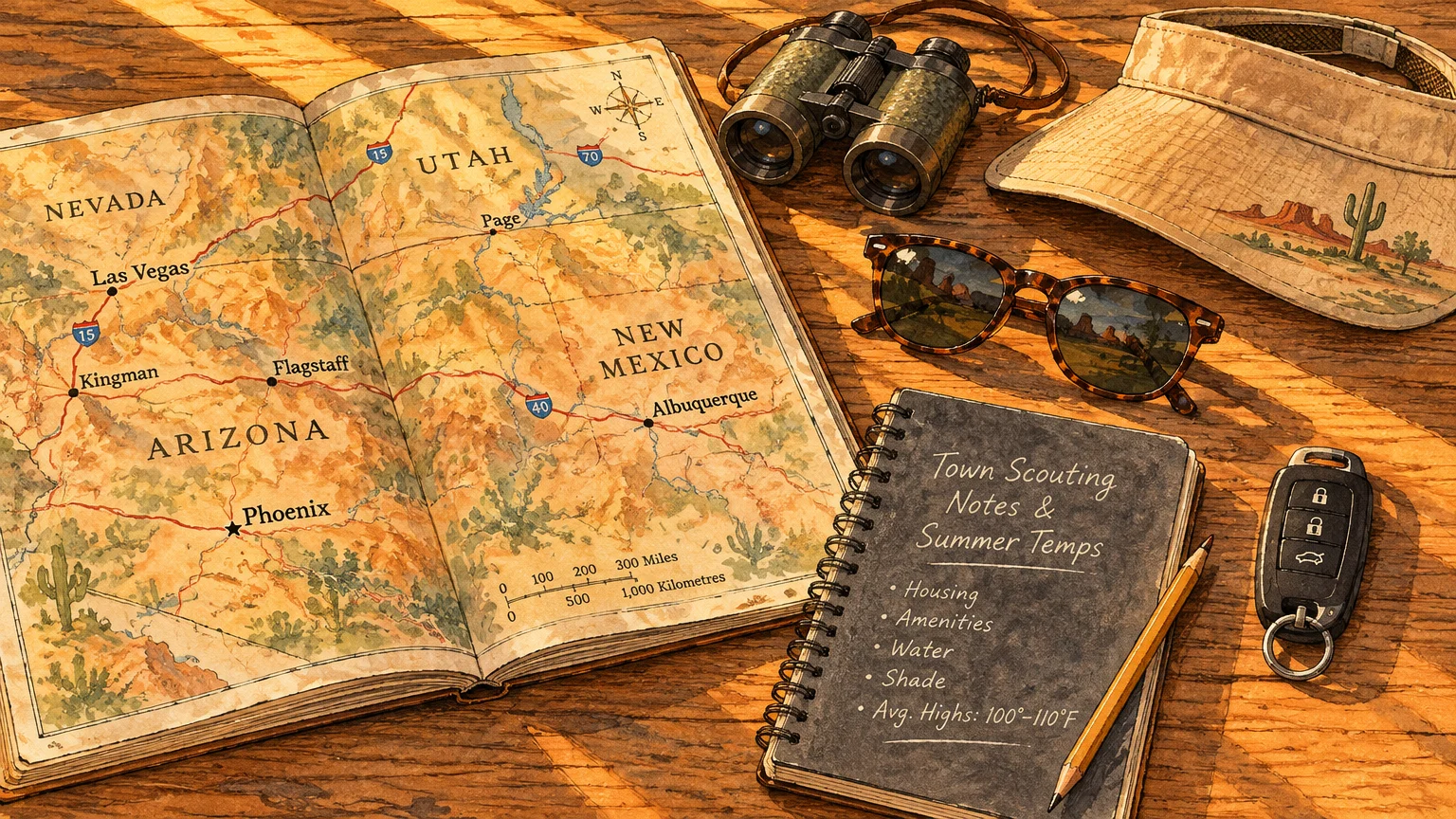
Start by picking two or three desert towns that match your housing budget and tax picture, then visit during both winter and late summer to test daily life firsthand. Compare your projected healthcare access, utility costs, and state taxes side by side before putting an offer on paper.
This is educational content based on general financial principles for seniors. Individual results vary based on your situation. Always verify current benefit amounts, tax rules, and program eligibility with official government sources.
Last updated: November 2026. Benefit amounts, tax rules, and program details change annually—verify current figures with official government sources.





Leave a Reply