

Retirement often hands you more than 40 extra hours every week, yet roughly one-third of retirees admit they do not feel happier. The difference rarely comes down to having a bigger bank account.
The happiest older adults thrive because they deliberately drop outdated rules about status, productivity, and aging. Current research shows that letting go of these specific pressures protects both your wallet and your long-term health.
These 10 happy retirement habits reveal what satisfied seniors stop caring about—and the practical financial and lifestyle steps you can copy right away.
1. Keeping Up With Neighbors and Status Symbols
During your working years, a newer car or a prestigious job title often signals success. Once you leave the workforce, chasing appearances drains cash without adding real joy.
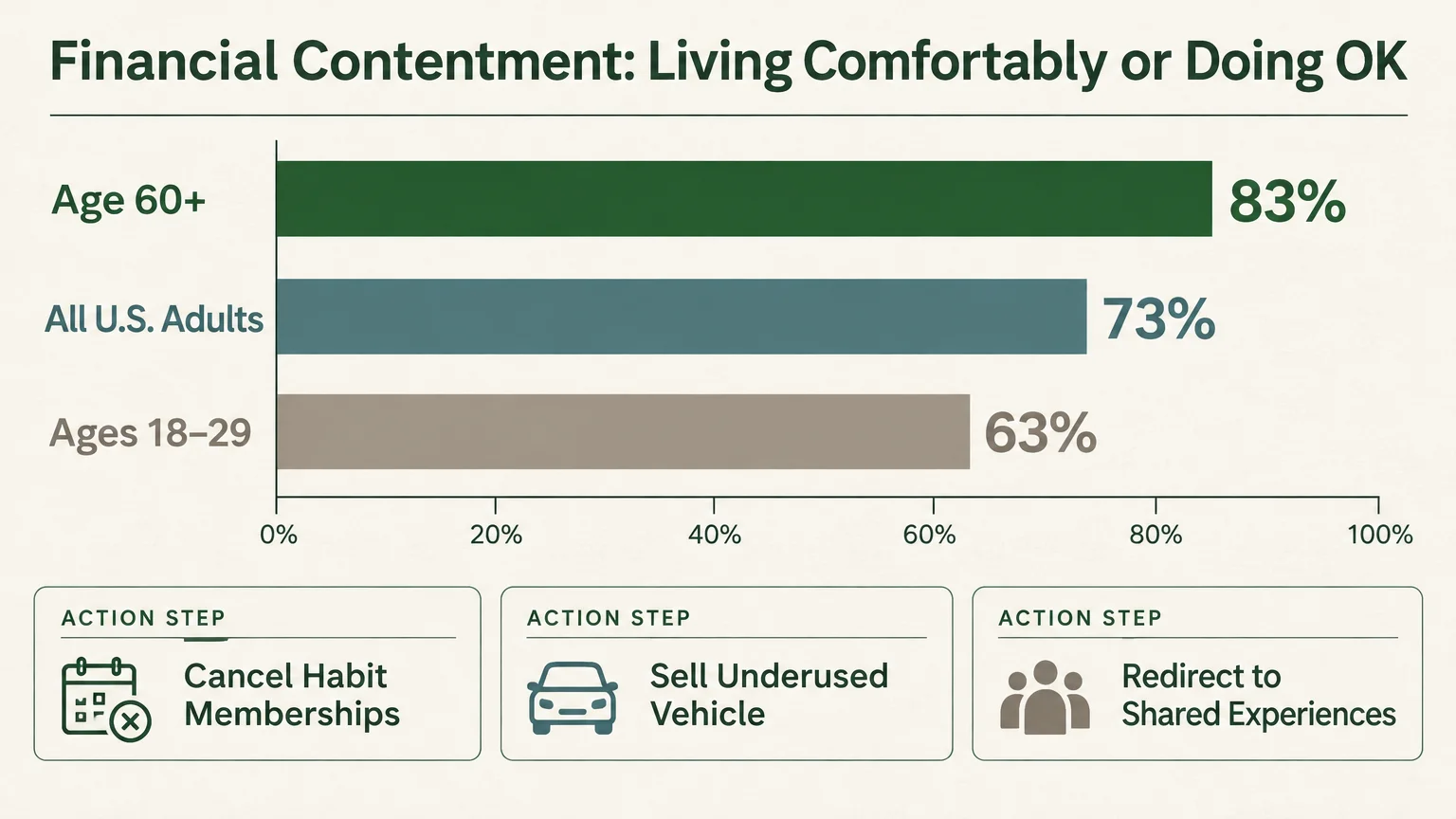
Older adults actually report the highest financial contentment of any age group. In the Federal Reserve’s 2025 Survey of Household Economics and Decisionmaking, released in May 2026, 83% of U.S. adults aged 60 and older reported living comfortably or doing okay financially.
That compares with 73% of all U.S. adults and just 63% of those aged 18 to 29. Stanford University psychologist Laura Carstensen’s Socioemotional Selectivity Theory explains why this retirement mindset shift happens naturally.
Her 10-year research shows that as people recognize a shorter time horizon, they stop chasing status or novelty. Instead, they invest in emotionally meaningful ties and present-moment satisfaction, which builds stronger emotional stability.
Put this habit to work by auditing three status-driven expenses this week:
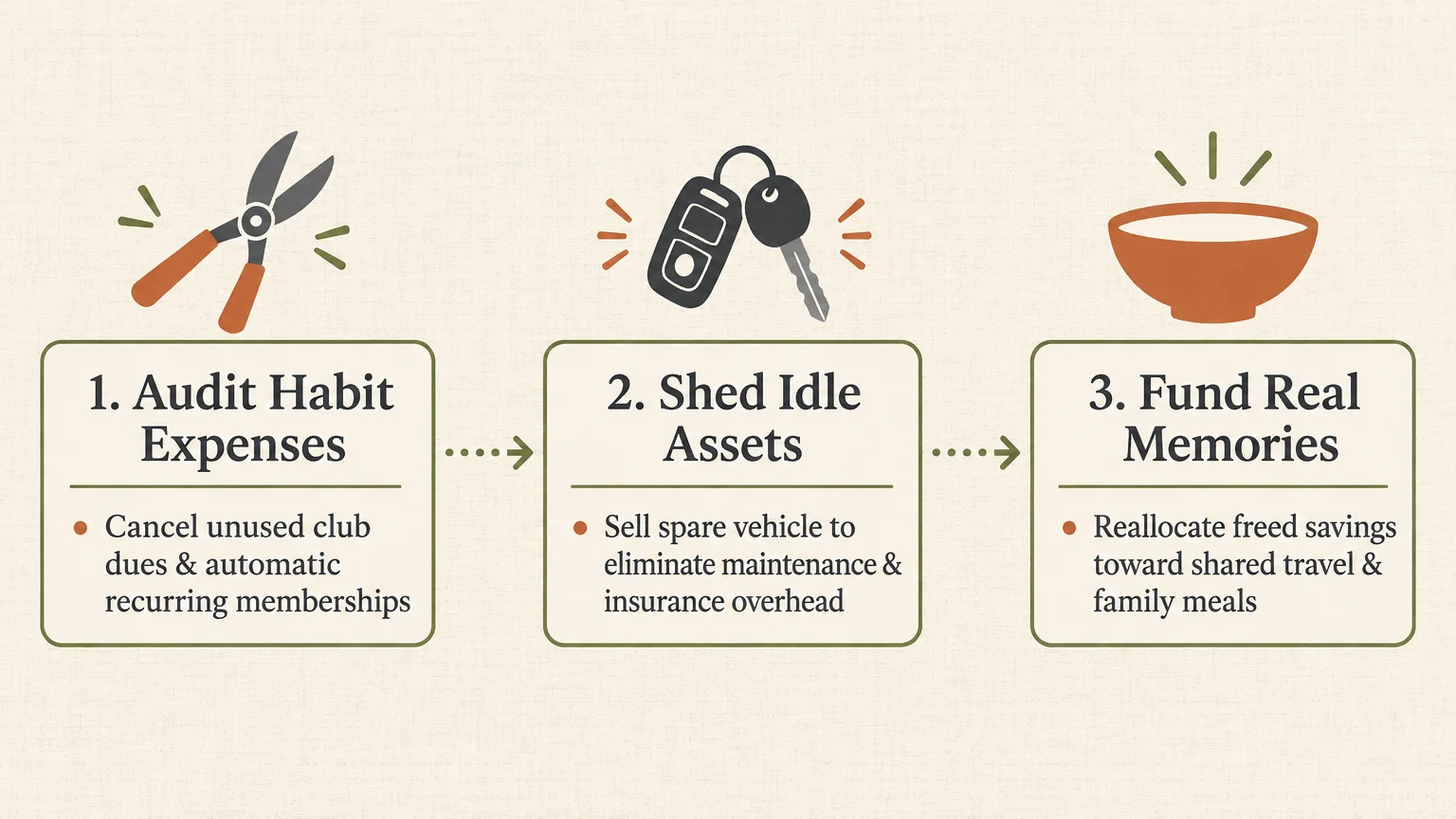
- Cancel memberships, subscriptions, or country-club dues you keep mainly out of habit or pride.
- Sell an extra vehicle you rarely drive and pocket the savings on insurance and maintenance.
- Redirect those freed dollars toward shared meals, local classes, or family trips that create lasting memories.
2. Dressing or Living by Outdated Age Rules
Many people assume turning 65 means slowing down, dressing invisibly, and sticking only to familiar routines. Happy retirees ignore those expectations completely.
How you think about aging directly affects your body and mind. A Yale University study of 660 adults aged 50 and older found that people with positive views of aging lived an average of 7.5 years longer than peers with negative views.
Those longevity gains held steady even after accounting for baseline health, income, and loneliness. The same study noted that adults over 60 who believed negative age stereotypes were more than 30% more likely to experience memory decline.
Feeling younger than your birth certificate is actually normal. Research cited by the National Institutes of Health shows that 50-year-olds typically feel about 5 years younger, while 70-year-olds feel 15% to 20% younger than their calendar age.
Replace outdated age labels with a curiosity test before saying no to something new. Ask yourself whether an activity genuinely harms your joints or budget—or whether you are only hesitating because of your age.
3. Working Until an Arbitrary Magic Age
Many pre-retirees fixate on age 65 or 70 as the only responsible time to stop working. Happy retirees let go of rigid timelines and plan for flexibility instead.
According to the 2026 EBRI/Greenwald Retirement Confidence Survey, current workers expect to retire at a median age of 65, and 74% plan to work for pay in retirement. Actual experience looks quite different.
Real-world retirees left the workforce at a median age of 62, with 46% retiring earlier than planned due to health issues, disability, or job changes. Only 31% of current retirees actually work for pay.
If you leave work earlier—or take a low-stress part-time role—verify how earnings affect your benefits. For beneficiaries under full retirement age, the Social Security Retirement Earnings Test limit rises from $24,480 per year in 2026 to $25,560 per year in 2027.
Once you reach the month of your full retirement age, that earnings limit disappears completely. Check your personal earnings record and claiming options on the Social Security Administration website before making a transition.

4. Checking Stock Market Headlines Every Day
Watching market swings every morning turns retirement into a stressful second job. Content retirees accept that markets rise and fall, focusing instead on reliable monthly cash flow.
Market nerves are understandable right now. The 2026 EBRI survey found that 73% of retirees feel confident they will have enough money to live comfortably, down from 78% in 2025, while consumer inflation ran at 3.8% year-over-year in April 2026.
Rather than panicking over daily headlines, build a steady income floor first. Starting in January 2027, Social Security benefits receive a 3.6% cost-of-living adjustment (COLA), lifting the average retired-worker check by roughly $75 per month—from about $2,095 to $2,170.
Always factor healthcare deductions into your net raise. The standard Medicare Part B monthly premium climbs from $202.90 in 2026 to $209.40 in 2027, leaving an average net COLA gain near $68.50 per month.
| Key Federal Retirement Figure | 2026 Amount | 2027 Amount | Why It Matters to Your Budget |
|---|---|---|---|
| Social Security COLA | 2.8% | 3.6% | Helps offset grocery and utility inflation |
| Average Retired-Worker Benefit | ~$2,095/month | ~$2,170/month | Adds roughly $75/month before deductions |
| Max Benefit at Full Retirement Age | $4,152/month | $4,188/month | Sets the ceiling for career high earners |
| Standard Medicare Part B Premium | $202.90/month | $209.40/month | Usually deducted directly from Social Security |
| Medicare Part B Annual Deductible | $283 | $292 | Increases out-of-pocket medical threshold by $9 |
| Earnings Limit (Under Full Retirement Age) | $24,480/year | $25,560/year | Allows more part-time pay without withholding |
Verify your annual Part B costs and plan choices on Medicare.gov each fall during open enrollment. Keeping one to two years of living expenses in safe cash reserves also stops you from selling stocks during a downturn.
Financial peace in retirement rarely comes from chasing a higher net worth; it comes from matching your guaranteed income to the relationships, movement, and routines that genuinely matter to you.
5. Tracking Every Penny With a Rigid Budget
Spreadsheets help you save for retirement, yet obsessing over every $4 coffee can steal joy once you arrive. Letting go in retirement means trading micromanagement for simple guardrails.
Many seniors overestimate how much they will spend in their late 70s and 80s. Bureau of Labor Statistics Consumer Expenditure Survey data shows annual household spending drops roughly 15% from early to later retirement.
Households headed by someone aged 65 to 74 spend an average of $65,354 per year, compared with $55,834 for households aged 75 and older. Transportation costs fall around 40%, though healthcare grows from 11.8% to 14.2% of total spending.
Tax rules can also give your budget unexpected breathing room. Fidelity noted in November 2026 a new senior tax deduction of up to $6,000 per person for taxpayers aged 65 and older.
Confirm current income thresholds and deduction rules directly on IRS.gov before filing. Then simplify your cash flow into two buckets: automated essentials (housing, food, medical premiums) and guilt-free monthly spending money.
6. Filling Every Free Hour Just to Look Busy
After decades of rushing to meetings, an empty calendar can feel unsettling. Yet packing every afternoon with errands—or drifting into endless television—leaves many retirees feeling restless.
The 2024 MassMutual Retirement Happiness Study found that 64% of retirees gain more than 40 hours of free time per week, while only about half expected that much. Without a plan, screens quickly fill that gap.
According to the Bureau of Labor Statistics 2025 American Time Use Survey, adults aged 65 and older average 7.11 hours of leisure and sports daily. Television consumes 4.30 hours per day, absorbing roughly 81% of the extra leisure time gained after mid-career.
By contrast, adults 65 and older spend an average of just 32 minutes a day reading for personal interest. MassMutual’s data shows that the happiest retirees replace passive screen time with four deliberate retirement lifestyle tips:
- Spending regular time with loved ones (76% of the happiest retirees vs. 58% of less happy peers).
- Exercising consistently (70% vs. 47%).
- Practicing hands-on hobbies (63% vs. 44%).
- Traveling when health and budget allow (62% vs. 44%).
You do not need a rigid hour-by-hour agenda. Simply anchoring three mornings a week with a walk, a hobby group, or a coffee date prevents days from blurring together.

7. Pleasing Everyone and Keeping Draining Ties
Saying yes to every committee, favor, or high-drama acquaintance eats up energy you cannot get back. Happy retirees guard their peace and invest only in relationships that feel mutual.
Science strongly backs this boundary. The Harvard Study of Adult Development—an 87-year project tracking 724 original participants and more than 2,500 family members—found that close relationship quality is the strongest predictor of late-life health and happiness.
Wealth, fame, and past career prestige ranked far behind supportive friendships. Meanwhile, loneliness and high-conflict relationships speed up both physical and cognitive decline.
Social isolation hits harder than many new retirees expect. MassMutual found that 31% of retirees feel lonely at times, and only 7% reached out to their social circles while planning for retirement.
If your weekday circle shrank after leaving work, try structured volunteering. An AmeriCorps study of 1,200 first-time Senior Corps volunteers found that 84% reported improved or stable health after two years, and 88% of lonely participants felt less isolated.
8. Chasing Extreme Gym Standards
You do not need marathon times or heavy barbell records to protect your independence. Content retirees forget flashy gym trends and focus on steady movement and restorative sleep.
The payoff starts well before your last workday. In MassMutual’s survey, 49% of the happiest retirees prepared for their health before retiring, while 13% of retirees overall regretted neglecting their health.
The Centers for Disease Control and Prevention recommends at least 150 minutes per week of moderate aerobic exercise—such as a brisk 30-minute walk five days a week—plus muscle-strengthening work on two or more days and balance training. Currently, fewer than 15% of Americans aged 65 and older meet those targets.
Sleep deserves just as much respect as daytime movement. The CDC recommends 7 to 8 hours of sleep per night for adults aged 65 and older, and a 2025 Scientific Reports study linked roughly 7.2 hours to the lowest risk of cognitive decline.
Skipping extreme routines makes consistency much easier. A daily neighborhood walk, gentle resistance bands in your living room, and a steady bedtime will outperform an ambitious gym membership you stop using by February.
9. Handling Every Chore and Caregiving Duty Alone
Pride often convinces older adults that asking for help is a sign of weakness. Happy retirees know that outsourcing exhausting chores frees up energy for the people and hobbies they love.
Bureau of Labor Statistics data shows Americans aged 65 and older spend an average of 2.7 hours every day on household activities. When caregiving enters the picture, exhaustion multiplies fast.
More than 32 million Americans provide financial caregiving to adults aged 65 and older, according to October 2026 Edward Jones research. In the 2026 EBRI survey, only 36% of unpaid caregivers rated their health as excellent or very good, compared with 45% of non-caregivers.
Before burnout catches up with you, identify one heavy chore you can trade away—such as gutter cleaning, lawn mowing, or deep seasonal scrubbing. If you care for a spouse or aging parent, search local respite services and caregiver grants through the Eldercare Locator.

10. Other People’s Opinions About Your Spending or Legacy
Adult children, siblings, and friends often hold strong views about whether you should downsize, travel less, or preserve every dollar for an inheritance. Happy retirees listen politely, then spend their money on their own terms.
More than 61 million U.S. adults were aged 65 or older in 2025, and no two households share the exact same health needs or family goals. Only you know how much cushion helps you sleep soundly at night.
That confidence matters even more as financial confidence fluctuates. EBRI’s 2026 survey noted that 69% of retirees believe their savings will last a lifetime, down from 74% the year before.
Protect your plan by updating your will, powers of attorney, and account beneficiaries once a year. Review practical scam-prevention and estate checklists on the Consumer Financial Protection Bureau website so your choices stay protected.
Quick Shift Guide: Old Habits vs. Happy Retirement Mindset
Changing decades of instincts takes a clear starting point. Use this side-by-side table to spot which pressure you can release first and replace it with a concrete action.
| What Unhappy Retirees Hold Onto | What Happy Retirees Let Go Of | Actionable Step You Can Take This Week |
|---|---|---|
| Comparing cars, homes, and status | Needing to impress neighbors | Cut one status expense and fund a shared experience |
| Treating 65 as a strict cliff | Rigid timelines and all-or-nothing work | Check your 2027 Social Security earnings limit |
| Watching market tickers daily | Short-term portfolio panic | Keep 1–2 years of spending gaps in safe cash |
| Defaulting to 4+ hours of daily TV | Passive boredom and screen drift | Schedule three active mornings with friends or hobbies |
| Handling every chore and caregiving task | Refusing outside help out of pride | Outsource one heavy chore or contact respite support |
Common Mistakes to Avoid When Letting Go
Dropping unnecessary stress works best when you keep solid financial and health guardrails in place. Watch out for these four common traps as you adjust your routine:
- Letting go of preventive healthcare too: Skipping routine checkups, dental visits, or balance training saves little money today and often triggers higher medical bills later, especially as healthcare grows to 14.2% of spending after age 75.
- Ignoring net COLA after Medicare deductions: Spending your full 3.6% Social Security raise before subtracting the $209.40 monthly Part B premium in 2027 can quietly squeeze a tight monthly budget.
- Waiting for friends to call first: Stepping back from exhausting acquaintances is healthy, yet failing to replace work friendships leaves many retirees isolated during their first two years out of the office.
- Skipping tax planning on withdrawals: Relaxing your daily budget should not mean overlooking tax-saving breaks like the senior deduction of up to $6,000 per person for taxpayers aged 65 and older.
Frequently Asked Questions About Retiree Happiness
How long does it take to feel happy after retiring?
Many new retirees experience a short honeymoon followed by restlessness once the novelty of 40-plus free weekly hours wears off. Building steady routines around exercise, hobbies, and close friendships helps stabilize retiree happiness.
Do I need to be wealthy to stop worrying about money in retirement?
No—long-term research shows strong relationships and steady health habits outweigh wealth when predicting late-life satisfaction. Matching predictable monthly bills to Social Security and safe cash reserves brings peace of mind at modest income levels.
Can I work part-time in retirement without losing Social Security benefits?
Yes, though timing matters if you claim early. In 2027, beneficiaries under full retirement age can earn up to $25,560 per year without withholding, and there is no earnings limit starting the month you reach full retirement age.
What is the biggest regret retirees report?
In national retirement happiness surveys, 13% of retirees say they regret not taking better care of their health before leaving work. Starting brisk walks, strength work, and 7 to 8 hours of nightly sleep pays off at any age.
Your Next Step Toward a Lighter Retirement
You do not need to overhaul your entire life overnight to feel lighter and more secure. Pick just one outdated expectation from this list—whether it is daily market-watching, passive television hours, or an exhausting chore—and release it this week.
Replacing quiet pressure with meaningful friendships, brisk movement, and clear financial guardrails turns extra hours into years you genuinely enjoy. Note that benefit figures, tax deductions, and Medicare premiums update each year, so verify current numbers before making big changes.
The information in this guide is meant for educational purposes. Your specific circumstances—including income, benefits, tax situation, and health needs—may require different approaches.
When in doubt, consult a licensed financial advisor or tax professional.
Last updated: November 2026. Benefit amounts, tax rules, and program details change annually—verify current figures with official government sources.





Leave a Reply