

More than 700,000 American retirees collect Social Security while living in a foreign country. Trading high American living costs for sunshine and cultural adventure offers incredible lifestyle rewards; however, life abroad brings unexpected twists.
Many new expats quickly discover that relocation changes their daily financial reality, their medical access, and their ongoing U.S. tax obligations. Preparing for these shifts early protects your hard-earned nest egg.
Here are the twelve biggest financial and lifestyle surprises shared by retirees who moved overseas. Learn what to expect before you book your one-way flight.
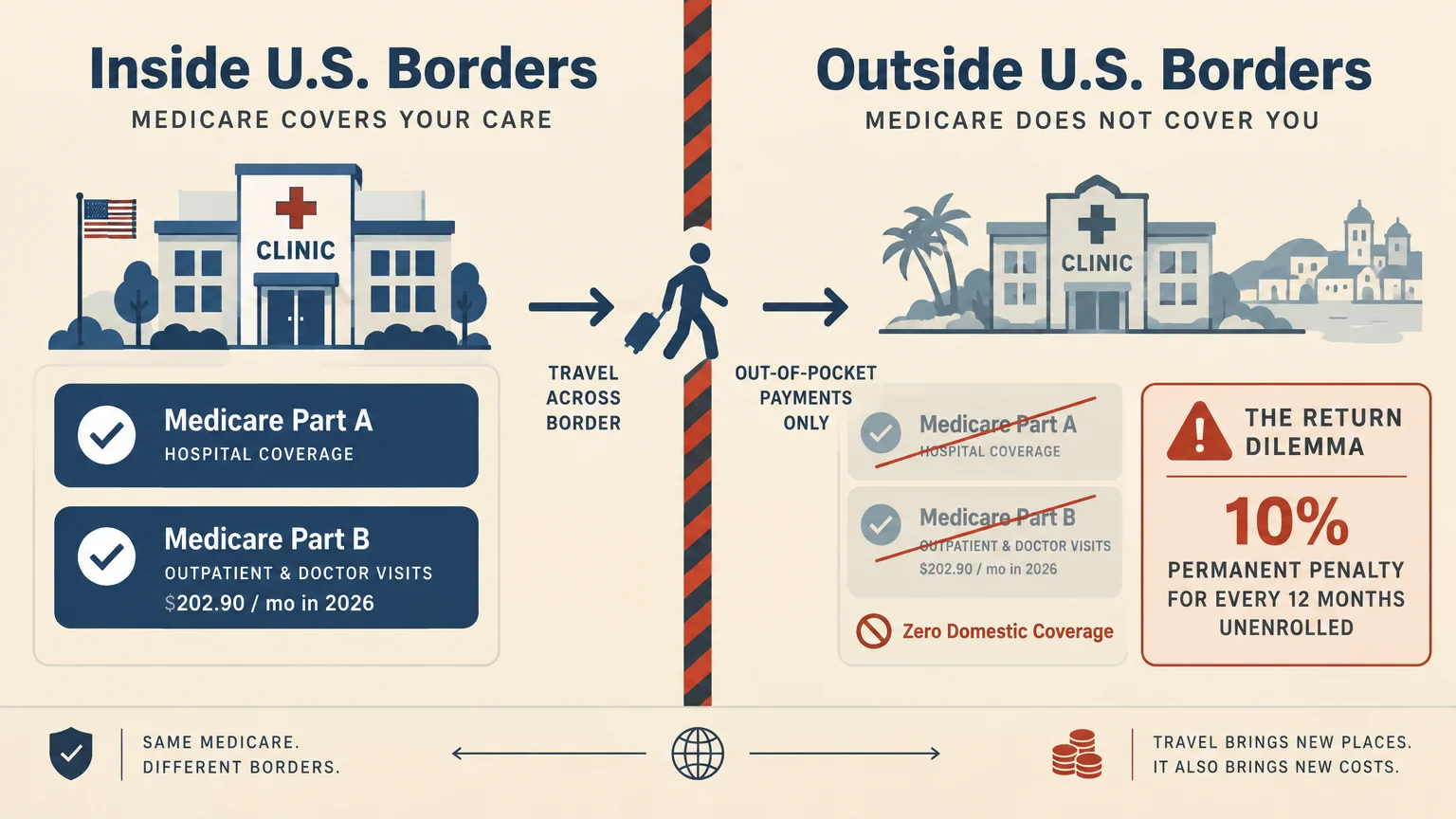
1. Medicare Stops Working the Moment You Leave the Country
Many retirees assume their domestic healthcare coverage travels with them across borders. Unfortunately, traditional Medicare Parts A and B do not cover medical care outside the United States.
If you visit a doctor or suffer an emergency abroad, you must pay out of pocket or rely on private international insurance. You can research program details directly through Medicare.gov before you move.
Retirees face a tough financial choice regarding Medicare Part B premiums. In 2026, the standard monthly Part B premium is $202.90.
You might feel tempted to cancel Part B to save money each month while living overseas. Doing so carries severe, permanent penalties if you ever return home.
The federal government assesses a permanent 10% premium penalty for every full 12-month period you were eligible for Part B but did not enroll. Most expat advisors recommend keeping Part B active so you can return to the States for major medical treatments.
2. Uncle Sam Still Taxes Your Worldwide Retirement Income
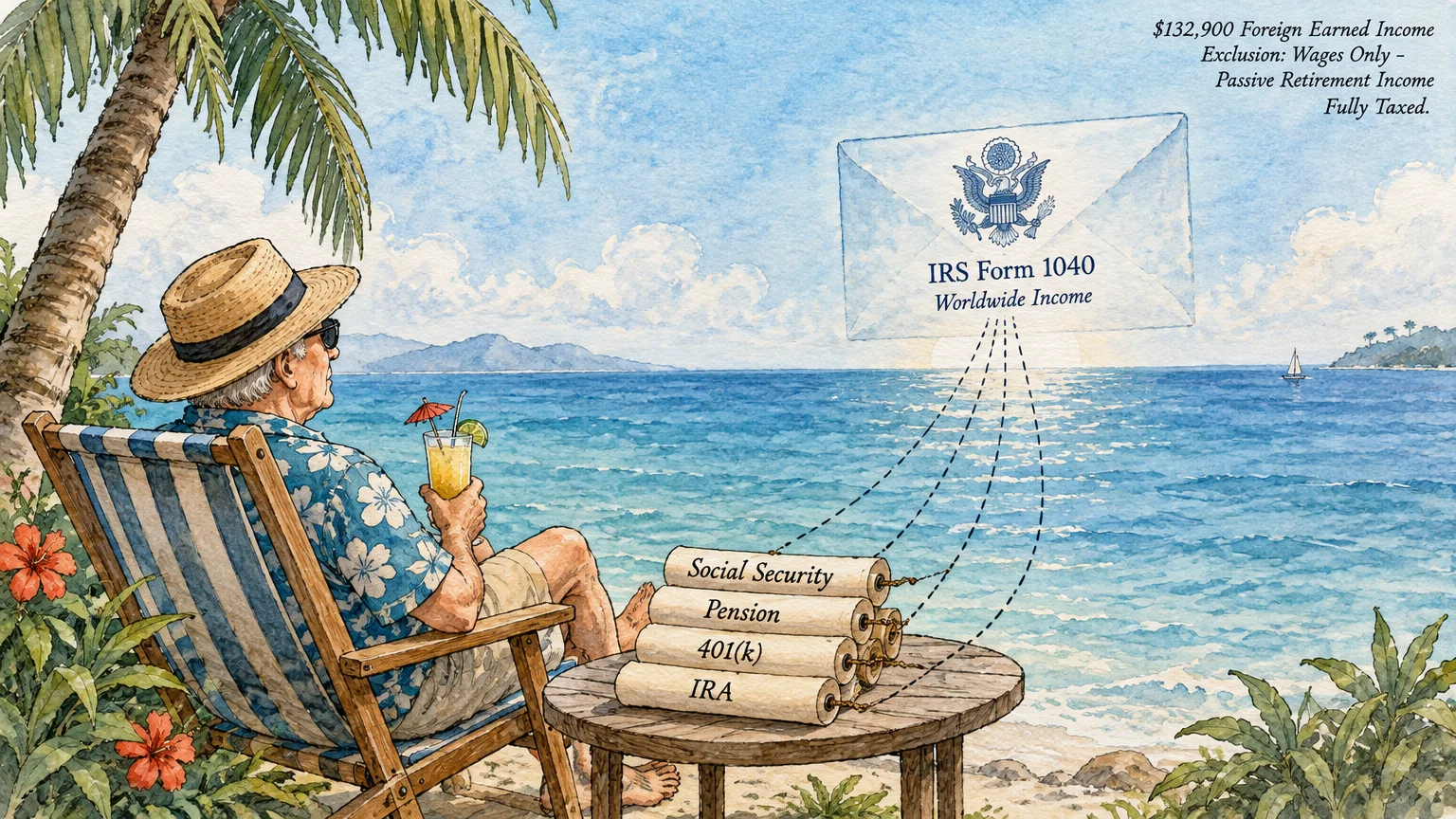
The United States is one of only two nations taxing citizens on worldwide income, regardless of where they live. Moving to a tropical paradise does not eliminate your duty to file annual federal tax returns.
You must report your global earnings annually to the Internal Revenue Service. Many retirees mistakenly believe the Foreign Earned Income Exclusion shields all their income abroad.
For the 2026 tax year, the Foreign Earned Income Exclusion allows eligible expatriates to exclude up to $132,900 of earned income. However, this tax break applies exclusively to wages and self-employment pay.
The exclusion does not apply to passive retirement income. Your Social Security benefits, pension payouts, traditional 401(k) withdrawals, traditional IRA distributions, and investment capital gains remain fully taxable by the IRS.
Additionally, your new host country might also attempt to tax those same retirement funds. You must review local double-taxation treaties to prevent paying tax twice on the same dollars.
3. Foreign Bank Accounts Trigger Steep IRS Reporting Penalties
Managing daily expenses abroad requires opening a local foreign bank account for rent, utilities, and groceries. Retirees often do not realize that simple foreign bank balances trigger aggressive federal disclosure laws.
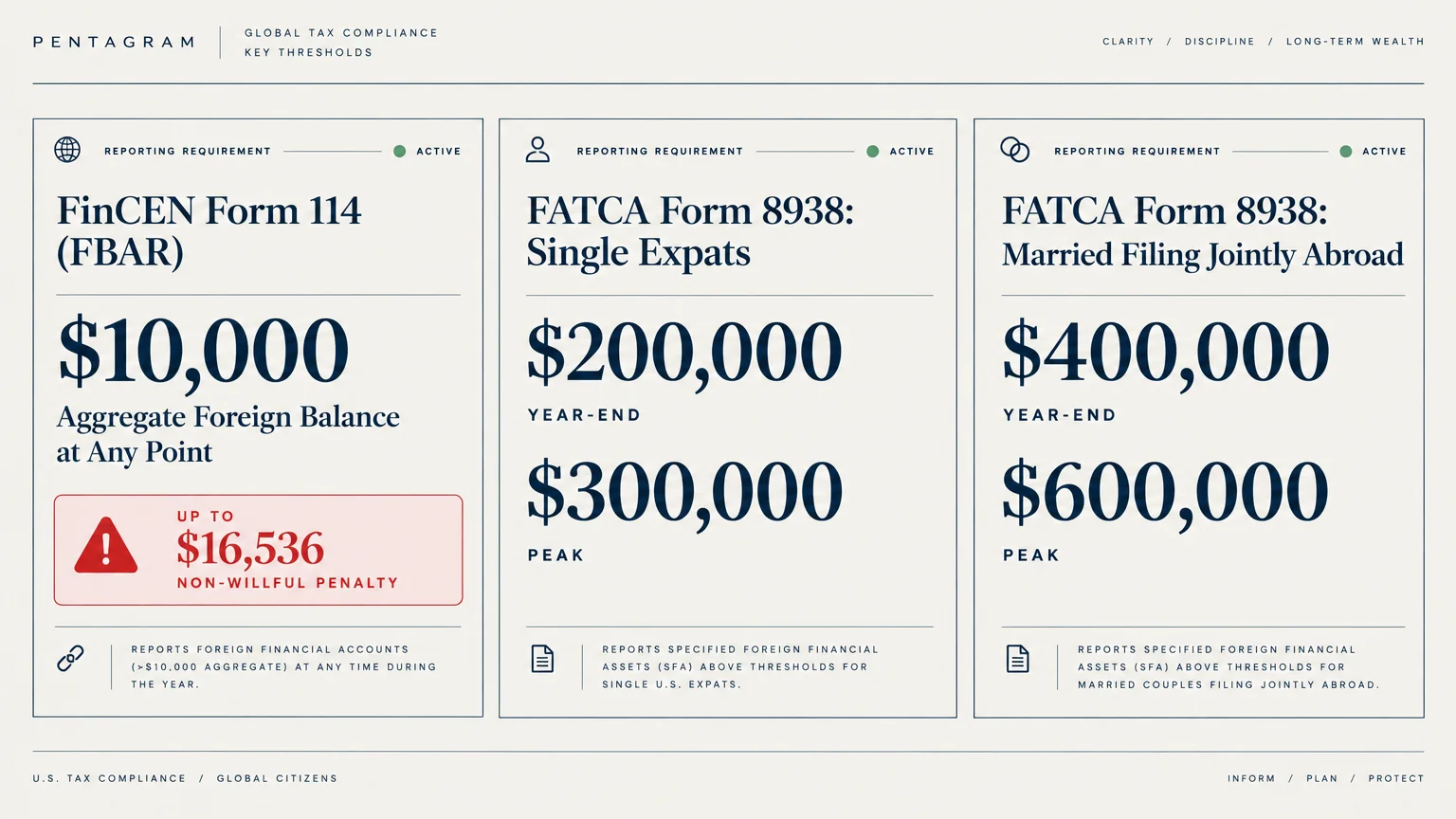
If the combined value of all your foreign financial accounts exceeds $10,000 at any point during the calendar year, you must file FinCEN Form 114. This document is known as the Report of Foreign Bank and Financial Accounts, or FBAR.
Failing to file an annual FBAR brings catastrophic financial consequences. For non-willful violations, inflation-adjusted civil penalties can reach up to $16,536 per report.
Larger accounts trigger additional reporting under the Foreign Account Tax Compliance Act, known as FATCA. Expats filing as single taxpayers must submit IRS Form 8938 if foreign assets exceed $200,000 at year-end or $300,000 at any point.
For married couples filing jointly abroad, that reporting threshold rises to $400,000 at year-end or $600,000 at any point. You must track daily foreign balances carefully to maintain strict IRS compliance.
4. Overseas Financial Institutions Often Refuse American Clients
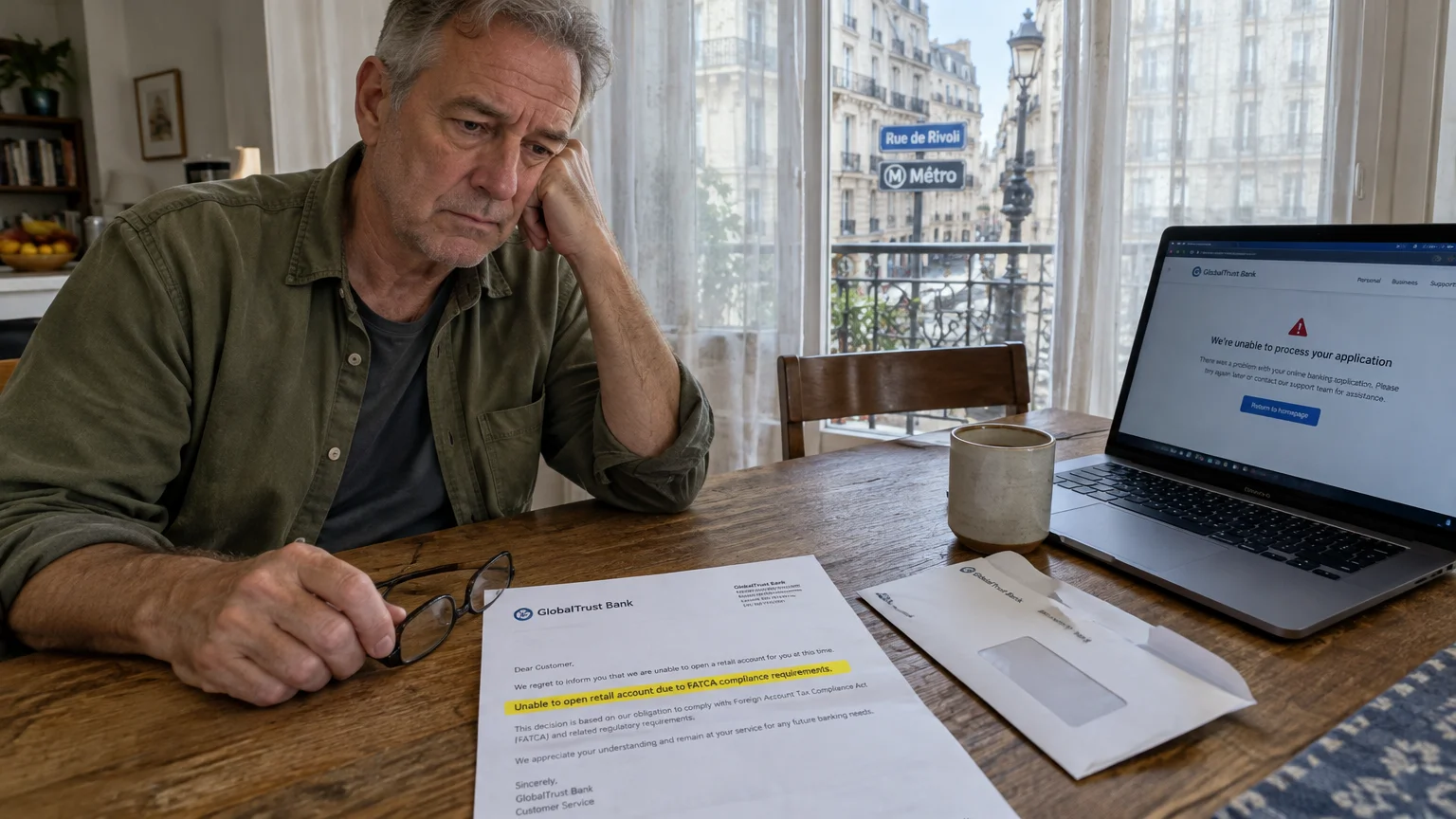
Because FATCA forces foreign banks to report American account details directly to the IRS, many international institutions refuse American clients altogether. Foreign banks find compliance burdens expensive and legally risky.
You may walk into a neighborhood bank in Europe or Latin America only to face immediate rejection. Some institutions decline mortgages, brokerage services, and simple checking accounts once they see a U.S. passport.
To avoid sudden financial paralysis, keep your primary domestic bank and investment accounts open before departing. You can review cross-border consumer protections through the Consumer Financial Protection Bureau to understand your rights.
Maintain an active U.S. residential mailing address using a trusted family member or dedicated expat mail service. Many American brokerages liquidate investment portfolios if clients update their residential address to a foreign country.
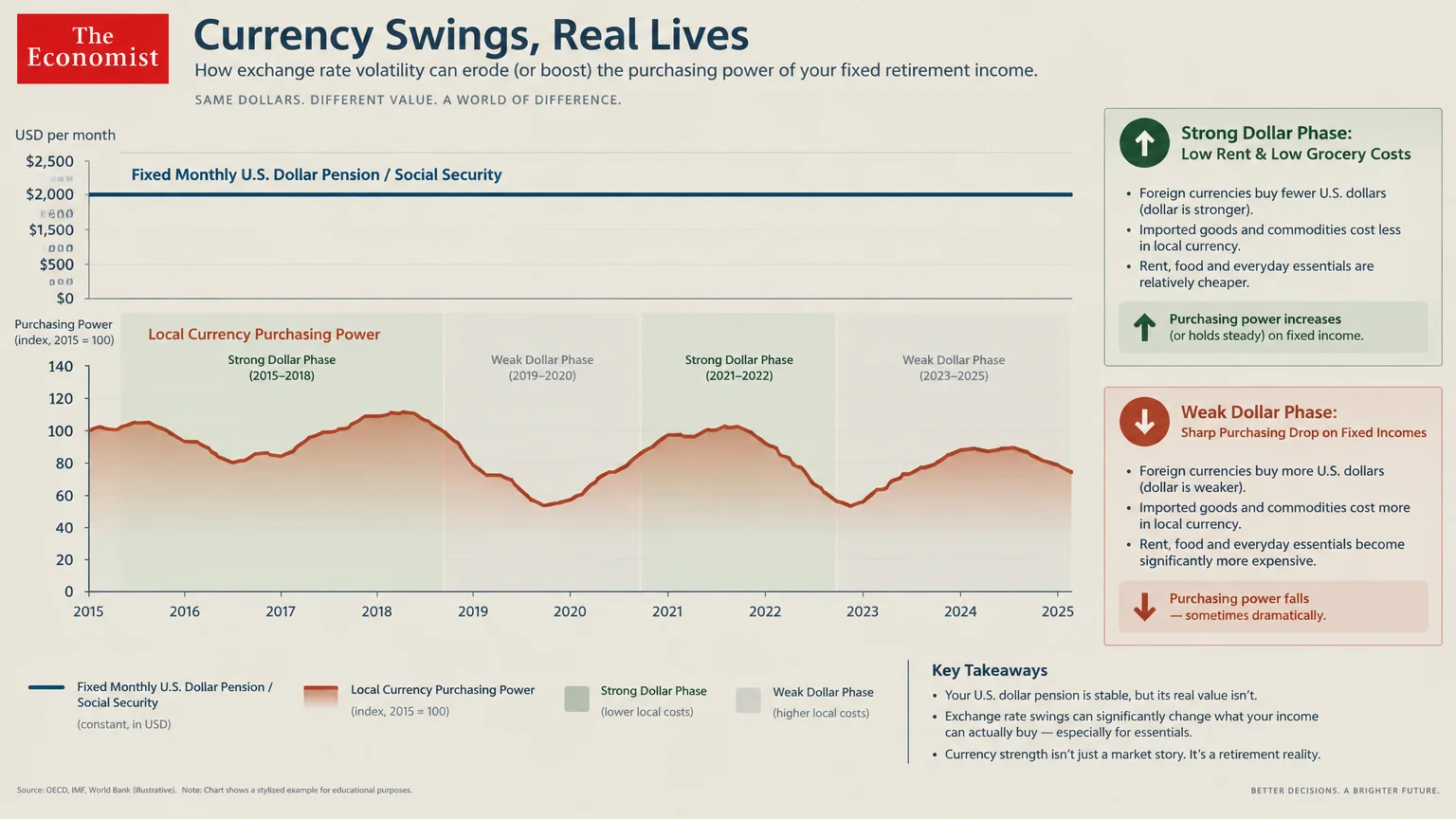
5. Currency Swings Can Quietly Shrink Your Purchasing Power
Social Security provides steady, reliable baseline income for hundreds of thousands of American retirees abroad. According to the Social Security Administration, 711,778 beneficiaries, including 463,480 retired workers, receive monthly payments overseas.
These international payments total roughly $8.39 billion annually across dozens of nations. You can manage foreign direct deposit accounts by checking guidance on SSA.gov.
The average monthly Social Security benefit for a retired worker ranges from $2,089 to $2,095. For 2027, the Social Security Administration announced a 3.6% Cost-of-Living Adjustment, raising the estimated average benefit to $2,170.
While annual COLA raises protect you against domestic inflation, they do not shield you from foreign currency swings. If the U.S. dollar weakens against your host currency, your purchasing power drops immediately.
A sudden 10% currency swing can wipe out several years of COLA adjustments within weeks. Note that the U.S. Treasury strictly prohibits sending Social Security benefit checks to residents living in Cuba or North Korea.
“Retirement planning isn’t just about accumulating wealth; it is about preserving your purchasing power and peace of mind wherever you plant your roots.” — Jean Chatzky, Financial Journalist and Author

6. Foreign Tax Perks and Visa Rules Change Without Warning
Many retirees plan their international move around generous foreign tax incentives, only to watch local governments eliminate those perks. Portugal provides a prime example of this shifting regulatory landscape.
For years, American retirees flocked to Portugal under the popular Non-Habitual Resident tax regime, which taxed foreign pensions at a flat 10%. Portugal closed the NHR program to new applicants in 2024, shutting final transition windows by early 2025.
Portugal introduced a replacement framework called IFICI, often called NHR 2.0. However, this new program strictly targets specialized professional workers and completely excludes retirees and passive pension income.
New American retirees settling in Portugal now face standard progressive income tax rates reaching up to 48% after 183 days of residency. Meanwhile, qualifying for Portugal’s popular D7 passive-income visa requires proving minimum stable income of €920 per month for an individual, plus 50% for a spouse.
Never base your entire overseas retirement budget on temporary foreign tax breaks. Always calculate whether your retirement savings can handle standard local income tax brackets.
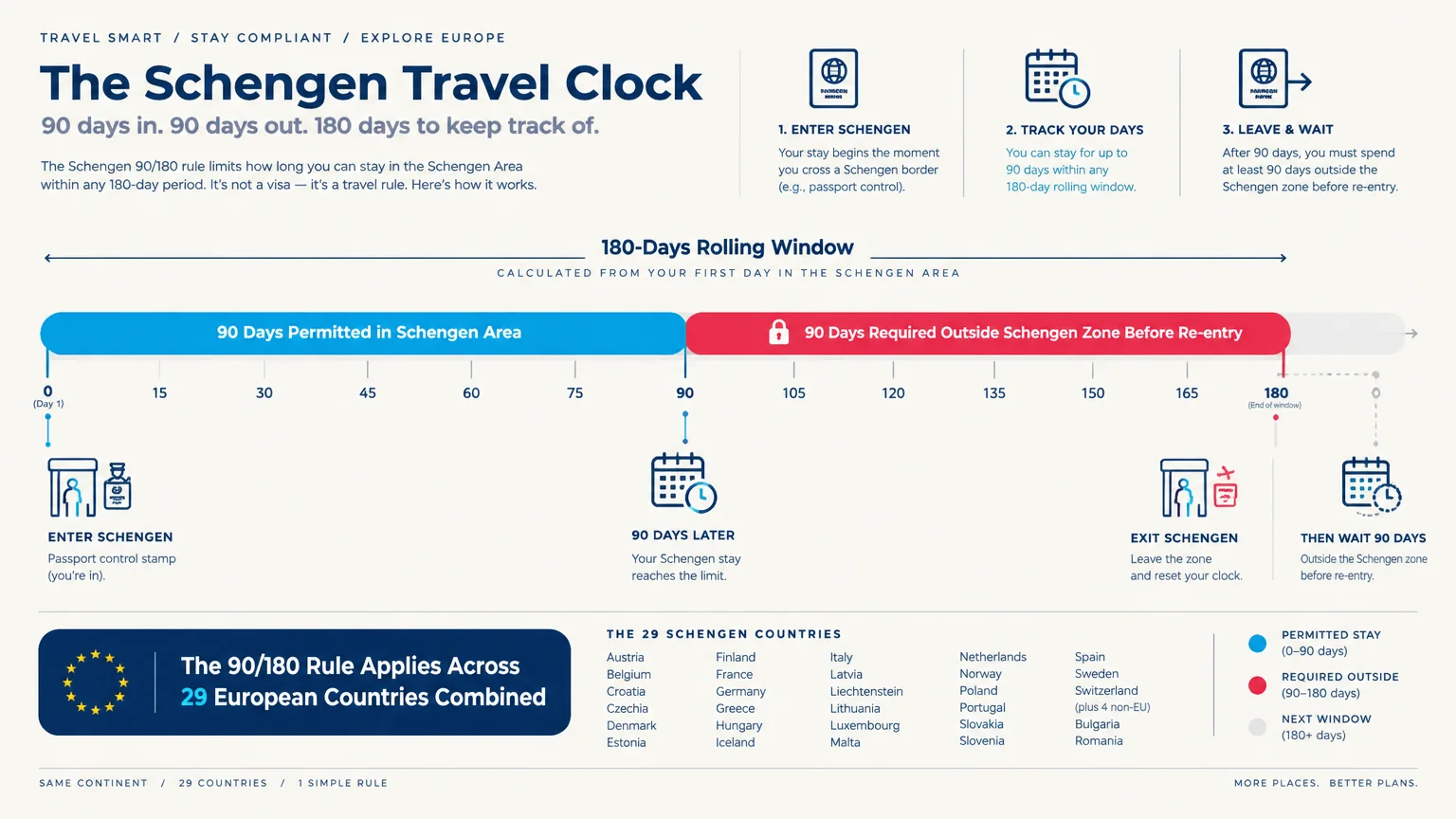
7. Strict Travel Clocks Limit Your European Nomadic Dreams
Retirees often dream of roaming freely across Europe, spending months wandering between France, Italy, and Spain. They are shocked to discover the rigid enforcement of the Schengen Area 90/180-day rule.
Under Schengen regulations, American tourists can stay across 30 European member nations for only 90 days within any rolling 180-day window. Overstaying this strict limit brings heavy fines, formal deportation, and multi-year entry bans.
Spending a month in Spain, a month in France, and a month in Italy completely exhausts your legal allotment. You must then exit the entire Schengen zone for 90 consecutive days before returning.
Additionally, the European Union has delayed its planned European Travel Information and Authorization System into 2027 following Entry/Exit System technical rollouts. The €20 ETIAS pre-travel screening will create another administrative hoop for non-visa travelers visiting Europe.
If you want to live in Europe full-time, you must secure a formal long-stay residency visa in a specific country. You cannot rely on casual tourist entries to build a permanent life abroad.

8. Foreign Bureaucracy Moves at an Unfamiliar Pace
Accustomed to efficient online government portals in the United States, retirees abroad frequently encounter staggering administrative red tape. Securing residency permits, driver’s licenses, and local health cards often demands months of paperwork.
Most foreign immigration offices require original birth certificates, marriage certificates, and FBI background checks authenticated with state-issued apostille stamps. A single missing stamp or an expired document can restart your entire application process.
Language barriers amplify these procedural delays. Official government business is rarely conducted in English, requiring you to hire licensed translators or local immigration fixers.
Daily routines also demand patience. In many cultures, businesses and government bureaus close for afternoon breaks, national holidays, or summer vacations without advance notice.

9. Buying Foreign Real Estate Carries Hidden Legal Traps
Falling in love with charming European villas or beachfront condos in Central America prompts many expats to purchase property immediately. Real estate veterans universally agree that buying home property prematurely is a dangerous financial mistake.
Foreign property laws rarely mirror American real estate rules. Some nations restrict foreign land ownership within coastal borders, forcing expats to use complicated bank trusts or corporate shells.
Furthermore, many civil law nations enforce forced heirship rules. These statutory inheritance mandates dictate who receives your property upon death, often overriding your American last will and testament.
Title searches in foreign jurisdictions can prove unreliable, exposing buyers to disputed ownership claims or unrecorded historical tax liens. Retiree advocacy groups such as AARP recommend renting for at least twelve months before considering a purchase.

10. Emotional Culture Shock Strikes Harder Than Expected
Retiring abroad feels like an extended vacation during your initial honeymoon phase. However, once novelty fades into routine life, emotional culture shock often settles in unexpectedly.
Simple daily tasks—like navigating a pharmacy, paying an electric bill, or scheduling a plumber—can induce anxiety when conducted in another language. Small miscommunications accumulate over time and create cognitive fatigue.
Social isolation presents another genuine hurdle. While making casual expat acquaintances is simple, building deep, dependable friendships takes deliberate time and emotional investment.
Missing family milestones, such as grandchildren’s birthdays, holiday dinners, and family weddings, strains emotional connections. You must evaluate your personal resilience and comfort with distance before making a permanent move.
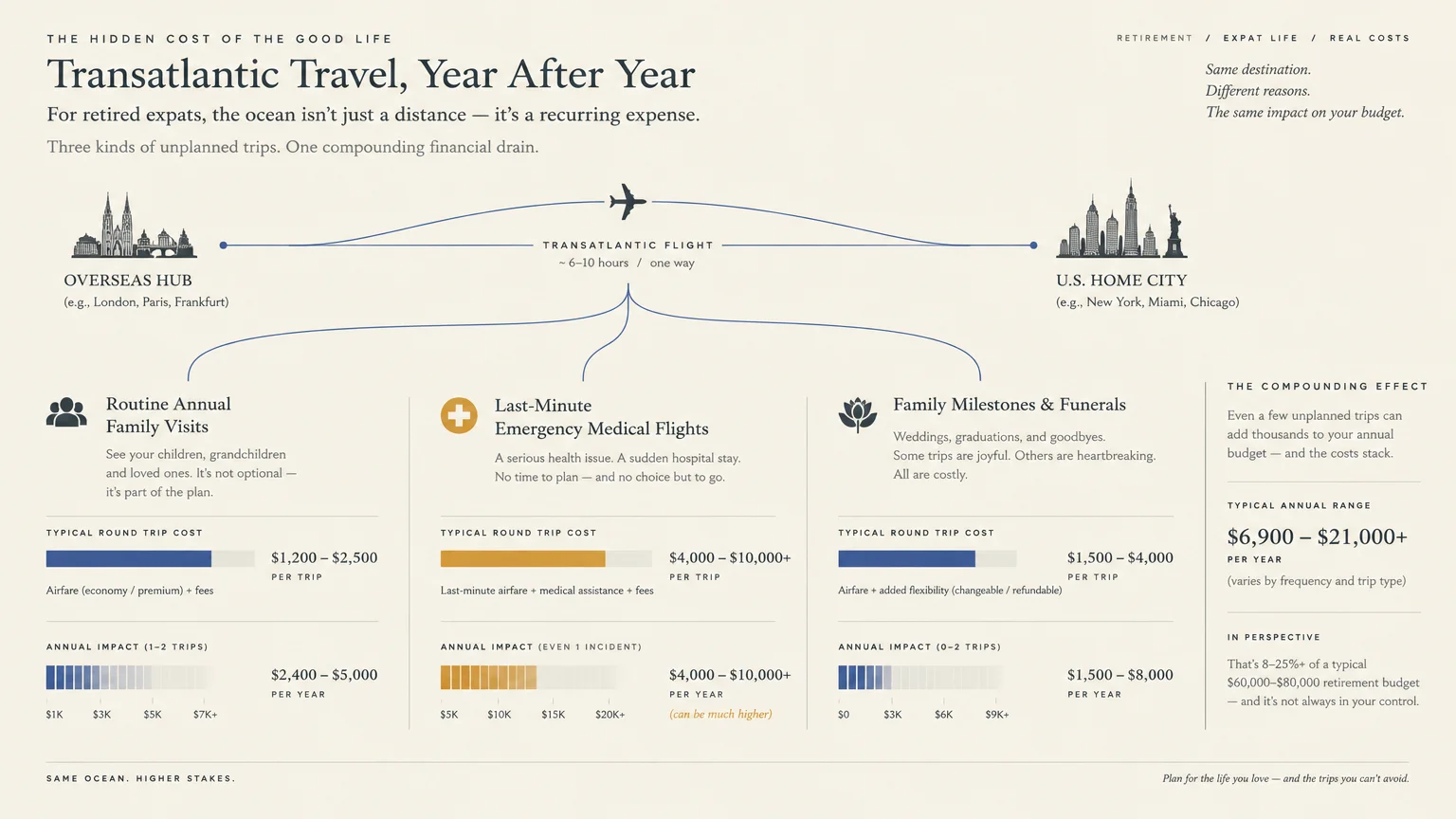
11. Flights Back Home Drain More Savings Than Planned
When drafting initial retirement budgets, most expats dramatically underestimate annual travel expenditures. Retirees frequently assume they will only return to the United States once a year during off-peak seasons.
Real-life family emergencies, unexpected medical consultations, and milestone events disrupt those tidy financial assumptions. Booking last-minute transatlantic or transpacific flights during peak holiday travel periods can cost thousands of dollars per ticket.
As you age, long-haul economy flights become physically demanding. Upgrading to premium economy or business class seats to manage back pain or mobility issues quickly inflates your annual travel outlay.
A couple making two unexpected trips home in a year can easily spend $8,000 to $12,000 on airfare, rental cars, and domestic lodging. Ensure your annual cash flow contains a dedicated reserve specifically allocated for unexpected domestic travel.

12. Moving Back to the United States Proves Complicated and Costly
Studies suggest that a notable portion of American retirees abroad eventually return home within five to seven years. Health declines, the death of a spouse, or a desire to be near growing grandchildren frequently prompt relocation back to America.
Repatriating to the United States can prove just as complex and expensive as moving overseas in the first place. Returning expats often suffer severe reverse culture shock as they adjust to American commercial rhythms and costs.
Re-establishing domestic life creates immediate logistical hurdles. Without recent domestic credit activity, securing an apartment lease, purchasing an automobile, or setting up utility accounts requires substantial cash deposits.
Additionally, you must navigate domestic healthcare re-entry. If you canceled Medicare Part B years earlier, you must wait for open enrollment windows and pay lifelong premium penalties.
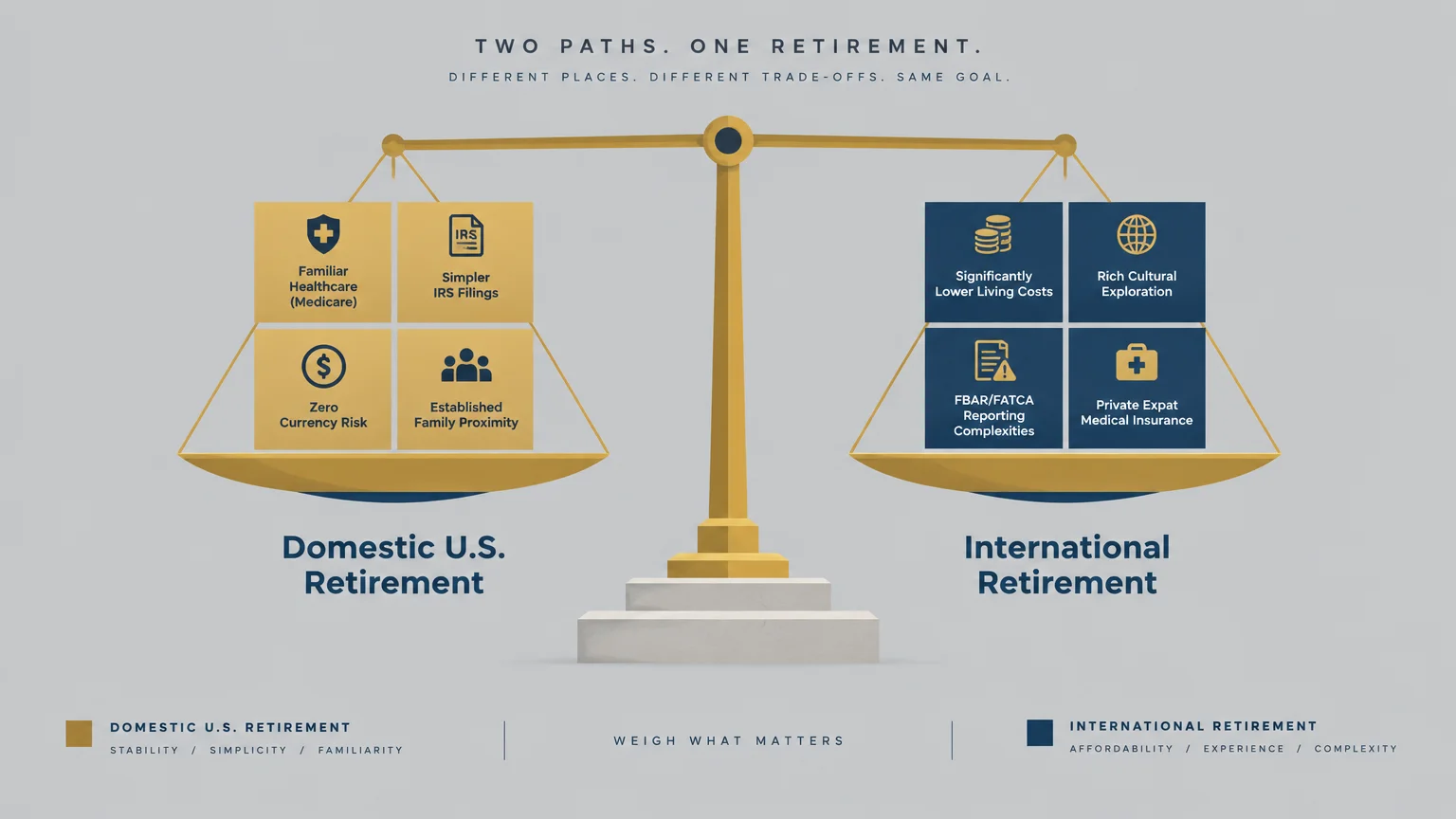
Comparing Domestic vs. International Retirement Realities
Evaluating an international retirement requires weighing trade-offs between lower day-to-day living costs and added administrative burdens. This comparison highlights essential operational differences across five key retirement areas.
| Retirement Dimension | Retiring in the United States | Retiring Abroad as an Expat |
|---|---|---|
| Healthcare Coverage | Medicare Parts A and B provide standardized national coverage starting at age 65. | Medicare does not pay foreign claims; private international insurance or local public care is required. |
| Federal Tax Filings | Standard Form 1040 federal and state tax filings based on domestic income. | Worldwide IRS reporting remains mandatory; FEIE excludes earned income but excludes pensions and Social Security. |
| Banking Compliance | Standard domestic bank accounts with direct FDIC insurance protections. | Mandatory annual FBAR reporting for aggregate balances over $10,000; FATCA Form 8938 for larger assets. |
| Currency Exposure | Income and living expenses remain aligned in U.S. Dollars; zero currency volatility. | Social Security income paid in USD fluctuates against local currencies, impacting monthly purchasing power. |
| Residency & Visas | Full constitutional right to live and move freely across all fifty states. | Must maintain valid long-stay visas, meet minimum income thresholds, and track Schengen rolling clocks. |
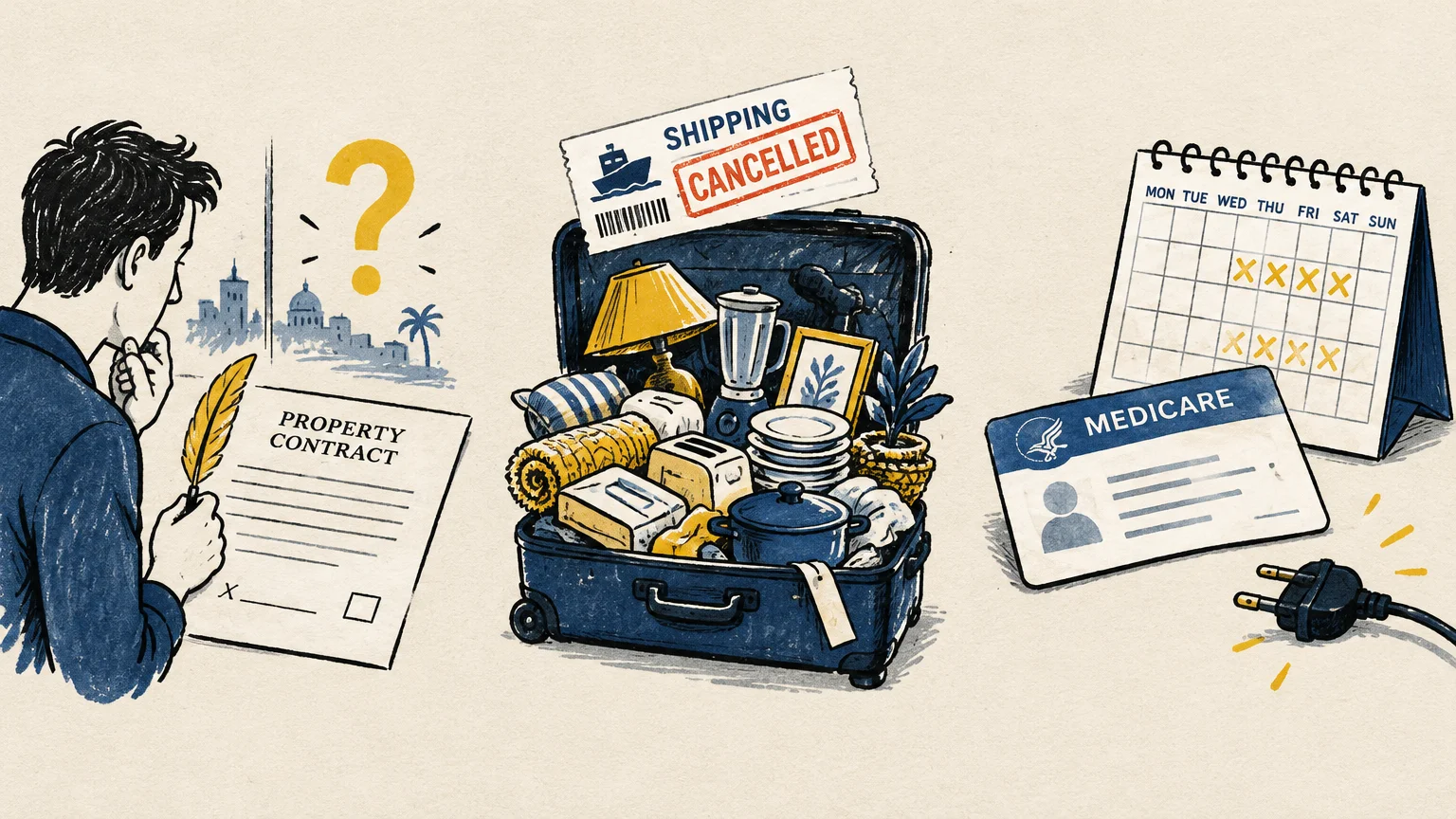
Common Mistakes to Avoid When Moving Overseas
Avoiding critical administrative errors protects your retirement savings from costly penalties and stress. Retirees commonly make four avoidable mistakes when transitioning to life abroad.
- Dropping Medicare Part B: Terminating Part B to save the $202.90 monthly premium creates permanent 10% annual late-enrollment penalties if you repatriate later.
- Assuming Foreign Exclusions Cover Pensions: Believing the $132,900 Foreign Earned Income Exclusion applies to passive income leaves retirees unprepared for substantial IRS tax bills on 401(k) and Social Security payouts.
- Ignoring Annual FBAR Filings: Failing to report foreign bank accounts exceeding $10,000 in aggregate triggers civil non-willful penalties reaching up to $16,536 per report.
- Buying Real Estate Immediately: Purchasing a home before living in a neighborhood through all seasons risks buying property with unresolvable legal, structural, or inheritance defects.

Finding the Right Advisor for an International Move
Cross-border financial logistics require specialized professional guidance that standard domestic advisors rarely possess. You must build a professional advisory team tailored to international tax and estate regulations.
Consider seeking targeted professional support across three specific transition scenarios:
Scenario 1: Cross-Border Tax Strategy: Hire a licensed CPA or Enrolled Agent specializing in expatriate taxation. They will evaluate international double-tax treaties, structure your pension withdrawals efficiently, and ensure full FBAR and FATCA compliance.
Scenario 2: Multi-Jurisdiction Estate Planning: Work with an estate planning attorney familiar with international private law. They will coordinate your American trusts with local foreign wills to prevent statutory forced heirship laws from overriding your estate wishes.
Scenario 3: Expat Wealth Management: Partner with a fee-only fiduciary financial planner who manages cross-border accounts. They will ensure your domestic brokerage accounts remain open and prevent accidental investments in penalized Passive Foreign Investment Companies.
Frequently Asked Questions About Retiring Abroad
Can I deposit my Social Security benefits directly into a foreign bank account?
Yes, the Social Security Administration maintains international direct deposit agreements with dozens of foreign countries. However, payments are converted to local currency using international exchange rates, subjecting your monthly benefit to currency fluctuations.
Does Medicare cover medical care if I return to the U.S. for visits?
Yes, traditional Medicare continues to cover eligible medical treatments within the United States, provided you maintain your monthly Part B premium payments. Many expat retirees schedule routine domestic visits around specialist checkups and major elective procedures.
Do I still have to file a state tax return after moving abroad?
It depends on the state where you lived before departing. Strict states like California, Virginia, and New York often consider you a continuing tax resident unless you sever all legal, property, and banking ties before relocating overseas.
What is the safest way to test life abroad before committing permanently?
Rent furnished housing for six to twelve months in your chosen destination. Living as a long-term renter lets you experience local healthcare, grocery shopping, winter weather, and community rhythms without risking your capital.
Next Steps for Your International Retirement Journey
Retiring abroad offers incredible personal enrichment, lower living expenses, and extraordinary cultural adventures. Turning that dream into a successful reality requires disciplined preparation and thorough financial research.
Audit your healthcare needs, evaluate international insurance policies, and consult a qualified cross-border tax specialist before selling your home. With thoughtful planning, you can navigate foreign surprises smoothly and enjoy a secure retirement overseas.
The information in this guide is meant for educational purposes. Your specific circumstances—including income, benefits, tax situation, and health needs—may require different approaches. When in doubt, consult a licensed financial advisor or tax professional.
Last updated: October 2026. Benefit amounts, tax rules, and program details change annually—verify current figures with official government sources.









Leave a Reply