
Aging in your family home should never become an unsafe or unaffordable burden. Government agencies and non-profit organizations offer legitimate home repair grants that you never have to pay back.
These valuable programs finance critical roof replacements, wheelchair ramps, and energy-saving improvements for older adults. You can protect your independence and keep your housing safe without draining your retirement nest egg.
Discover the top ten home repair grants available to older homeowners today, along with current funding limits, eligibility rules, and practical application steps.
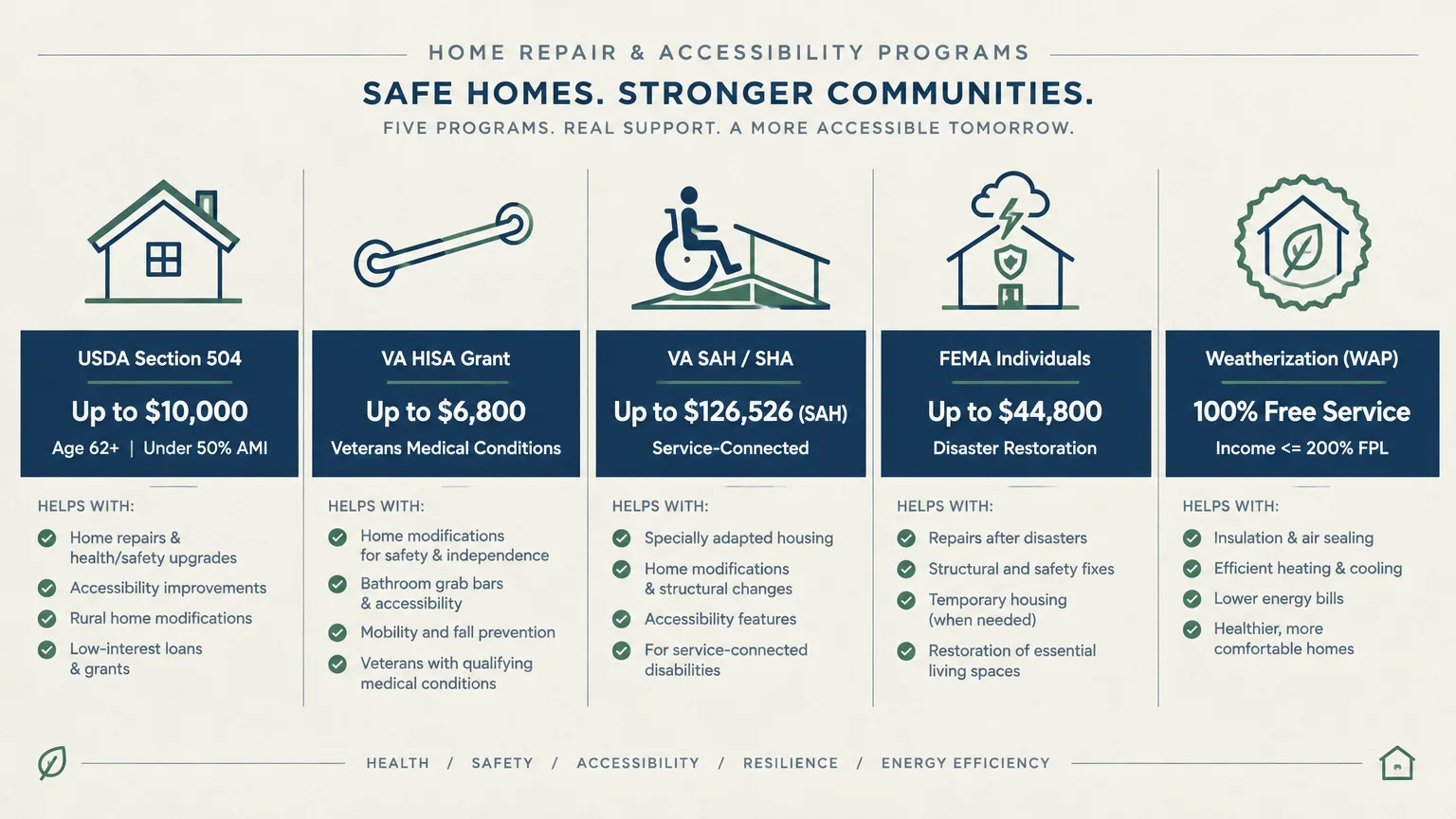
Summary of Senior Home Repair Grant Programs
Navigating home repair assistance programs can feel overwhelming when contractors demand quick decisions. The table below outlines key details for the top repair programs available to older Americans.
| Program Name | Maximum Grant Amount | Key Eligibility Criteria | Primary Repairs Covered |
|---|---|---|---|
| USDA Section 504 Grant | Up to $10,000 | Age 62+, rural area, income under 50% AMI | Health, safety, and accessibility hazards |
| HUD OAHMP | Varies by local grantee | Age 62+, household income at or below 80% AMI | Low-cost, high-impact fall prevention modifications |
| Weatherization Assistance (WAP) | 100% free service | Income at or below 200% FPL; priority for age 60+ | Insulation, air sealing, heating and cooling tune-ups |
| LIHEAP Emergency Repair | Varies by state | Income at or below 150% FPL or 60% SMI | Failing furnace and air conditioner replacement |
| HUD CDBG Local Grants | Varies by municipality | Income at or below 80% AMI | Roofing, plumbing, code violations, structural repairs |
| VA HISA Grant | Up to $6,800 | Veterans with qualifying medical conditions | Roll-in showers, entrance ramps, bathroom widening |
| VA SAH and SHA Grants | Up to $126,526 (SAH) / $25,350 (SHA) | Veterans with qualifying service-connected disabilities | Comprehensive barrier-free home construction or remodeling |
| Older Americans Act (Title III) | Varies by Area Agency on Aging | Age 60+; prioritized by social and economic need | Grab bars, minor carpentry, safety modifications |
| FEMA Individuals & Households | Up to $44,800 | Homeowners in presidentially declared disaster areas | Disaster-related structural and safety restoration |
| Rebuilding Together | 100% free volunteer repairs | Low-income seniors, veterans, and individuals with disabilities | Critical home repairs, weatherization, aging-in-place updates |
Every grant operates under strict federal, state, or organizational guidelines. Review the specific parameters below to find the best match for your situation.
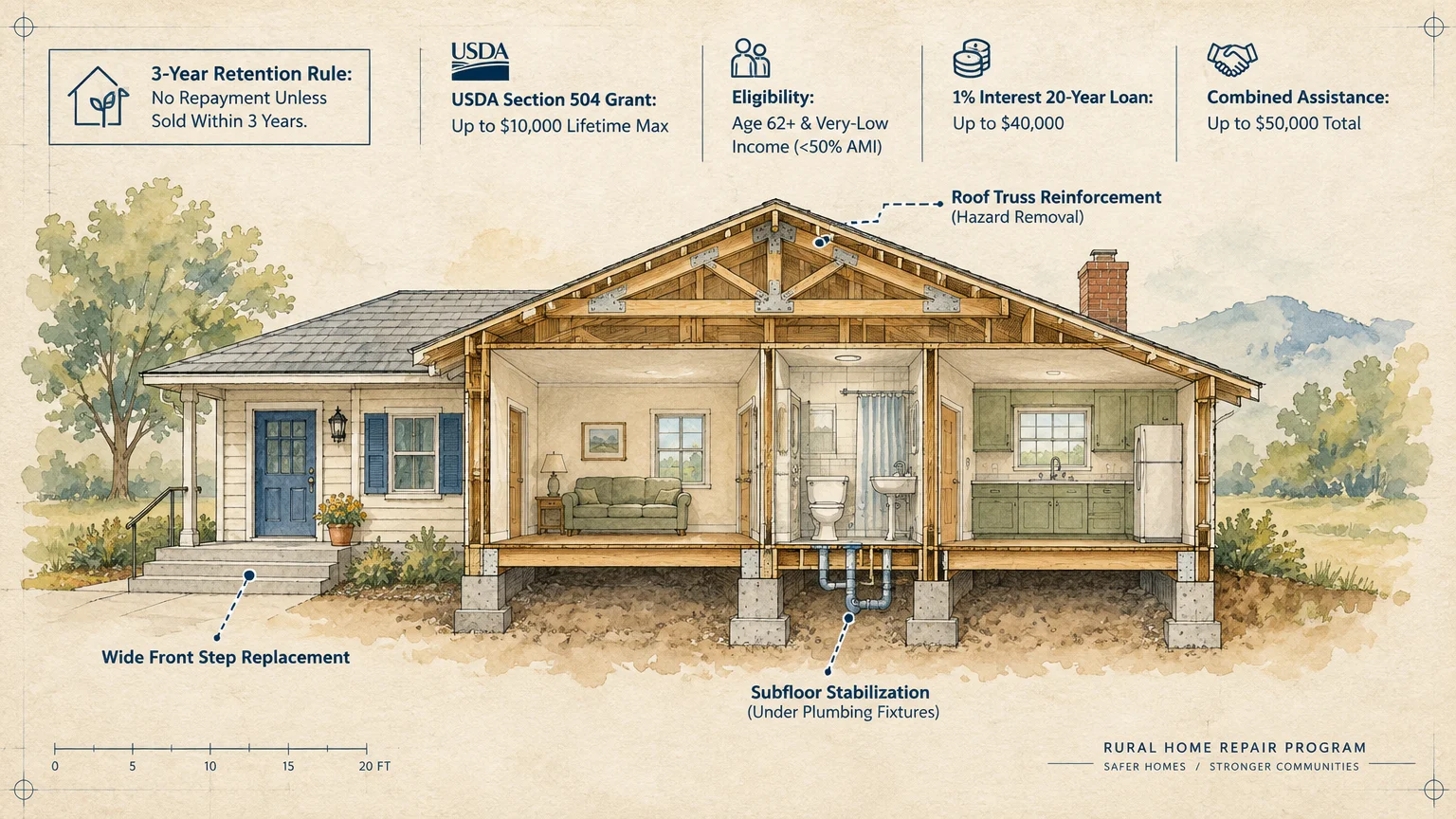
1. USDA Section 504 Single Family Housing Repair Grants
The United States Department of Agriculture administers the Section 504 program to assist very-low-income rural homeowners. This initiative helps older residents eliminate immediate hazards from their living environments.
If you are 62 or older, you may qualify for a lifetime grant of up to $10,000. You do not repay this grant unless you sell your home within three years of receiving the funds.
The USDA also offers 20-year home repair loans of up to $40,000 at a fixed 1% interest rate. You can combine a grant and loan for up to $50,000 in total repair support.
To qualify, your household income must fall below 50% of your county’s Area Median Income (AMI). You must also reside in a federally recognized rural area, typically defined as an open rural town with 35,000 or fewer residents.
The government only requires full title clearance services if your loan balance exceeds $25,000. You can submit your preliminary inquiry through your regional USDA Rural Development field office.
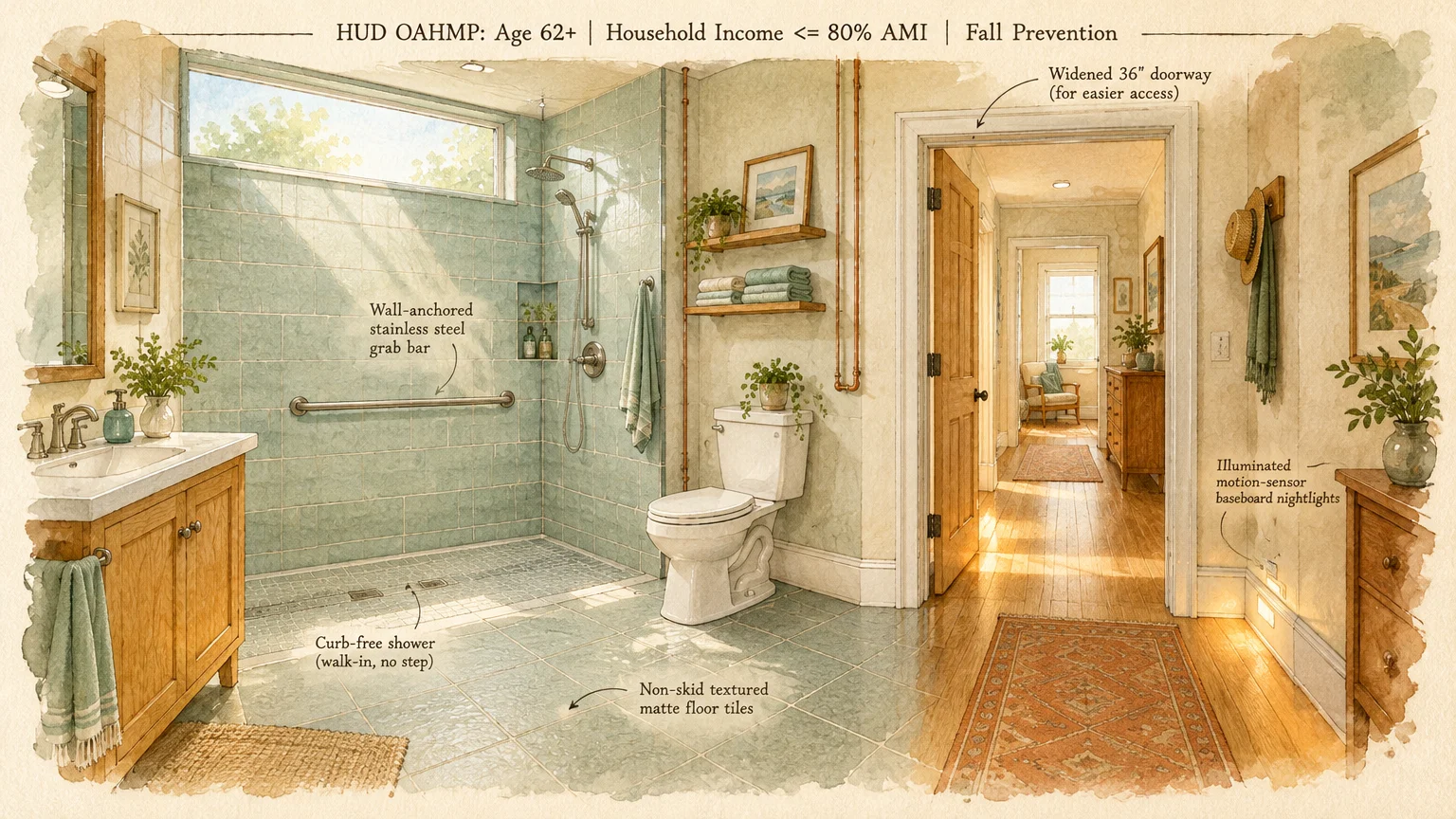
2. HUD Older Adults Home Modification Grant Program (OAHMP)
The U.S. Department of Housing and Urban Development funds the Older Adults Home Modification Grant Program. This initiative helps older homeowners avoid premature nursing home placement through targeted physical renovations.
HUD distributes multi-million dollar allocations to municipal housing authorities, tribal entities, and community non-profit organizations. These local groups perform the home assessments and direct contractor modifications at no cost to you.
Modifications focus on high-impact safety solutions rather than luxury remodels. Common projects include installing heavy-duty grab bars, threshold ramps, anti-slip flooring, lever-style door handles, and adaptive lighting.
You must be at least 62 years old to participate in this modification initiative. Your annual household income cannot exceed 80% of your Area Median Income.
Because funding flows through community grantees, you do not apply to HUD headquarters directly. Instead, contact your municipal housing department or local community development agency to locate active OAHMP providers.
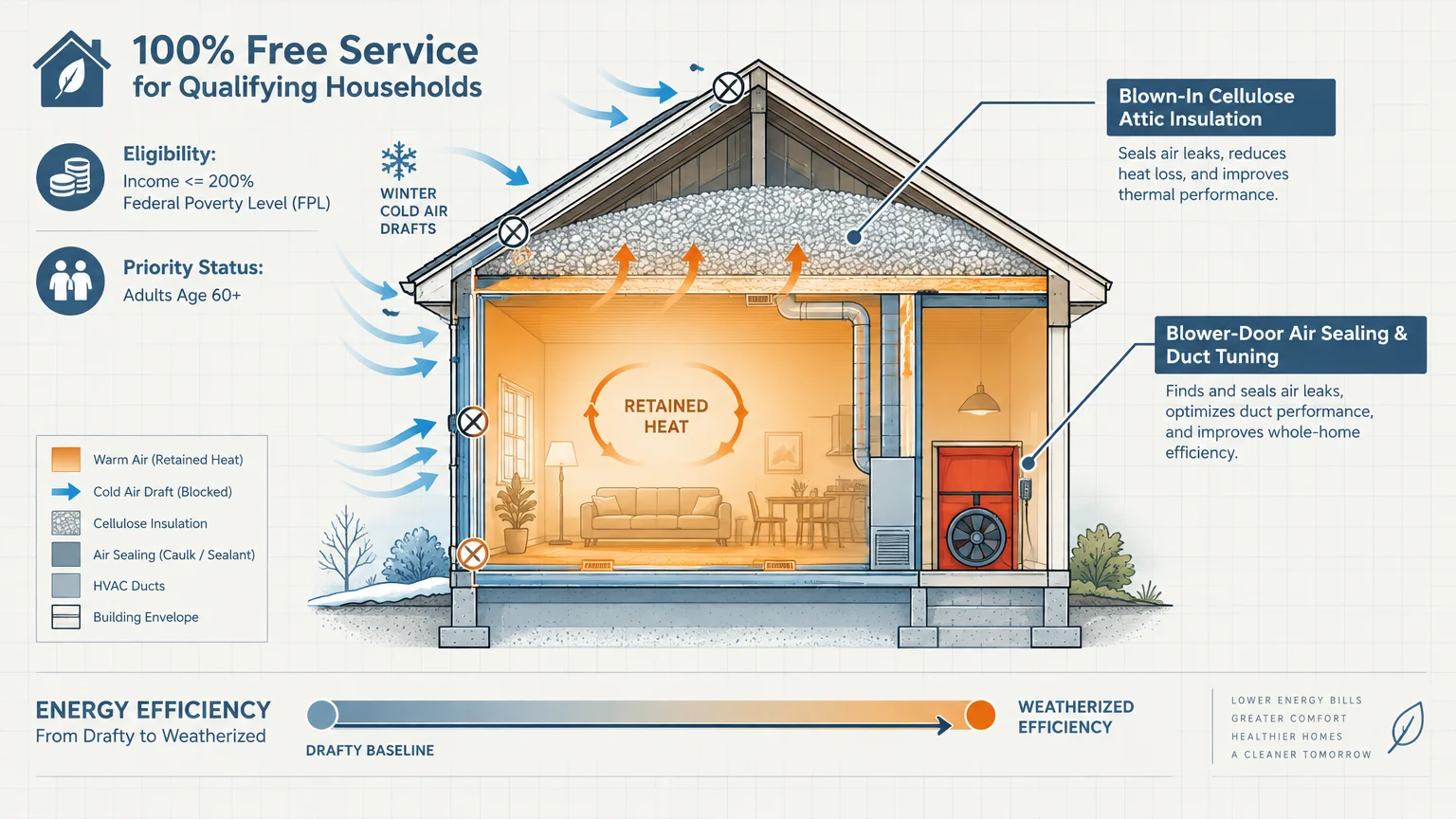
3. Weatherization Assistance Program (WAP)
The U.S. Department of Energy oversees the Weatherization Assistance Program to upgrade household energy performance. This federal initiative provides comprehensive energy efficiency upgrades completely free of charge.
According to the Department of Energy, participating households save an average of $372 per year on utility costs. These permanent energy reductions free up precious cash flow for medical and grocery expenses.
A certified energy auditor visits your home to identify heating loss, inadequate ventilation, and air leaks. Crews will then install blown-in insulation, seal leaky ductwork, and repair or replace inefficient heating systems.
Eligibility requires a household income at or below 200% of the federal poverty guidelines. States also have the administrative flexibility to set income cutoffs at 80% of the Area Median Income.
If you already receive Supplemental Security Income (SSI) or Supplemental Nutrition Assistance Program (SNAP) benefits, you are automatically income-eligible. Federal regulations instruct program administrators to prioritize homeowners aged 60 and older.
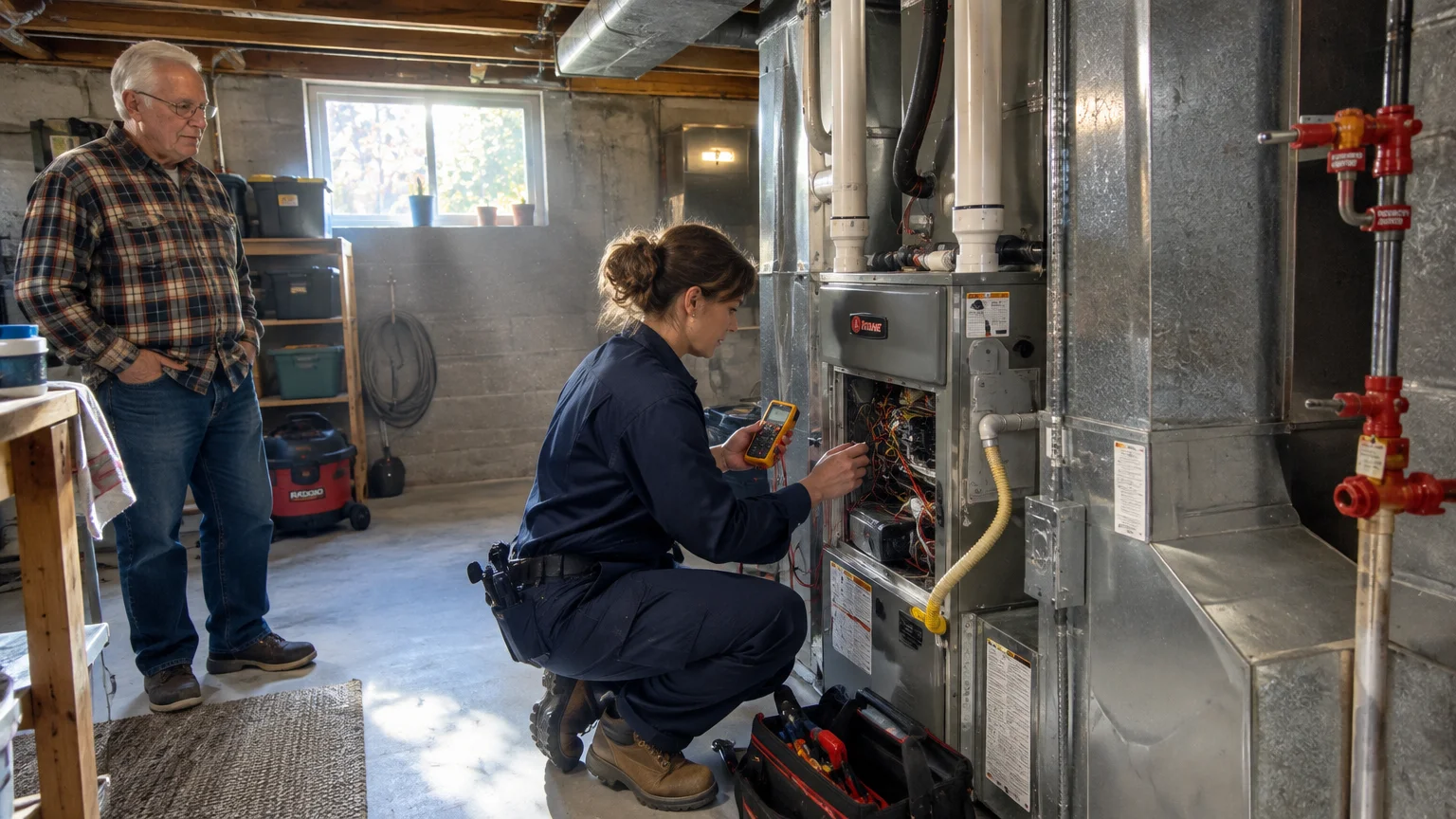
4. LIHEAP Emergency Heating and Cooling Repair
The Low Income Home Energy Assistance Program primarily helps low-income families manage monthly utility bills. However, this program also includes an essential emergency home repair component that many homeowners overlook.
Federal guidelines permit individual states to allocate up to 15% of their total LIHEAP funds for weatherization and equipment repairs. States can request a federal waiver to raise that allocation to 25%.
When winter storms crack your furnace or summer heatwaves break your central air conditioner, emergency LIHEAP funds step in. The program provides rapid grant funding to repair or replace dangerous, non-functioning temperature systems.
Income limits generally require households to earn at or below 150% of the federal poverty level. States may also benchmark eligibility to 60% of their state median income.
You can locate your county application agency through the national Benefits.gov directory. When applying during a weather crisis, state that your heating or cooling system presents an immediate health risk.
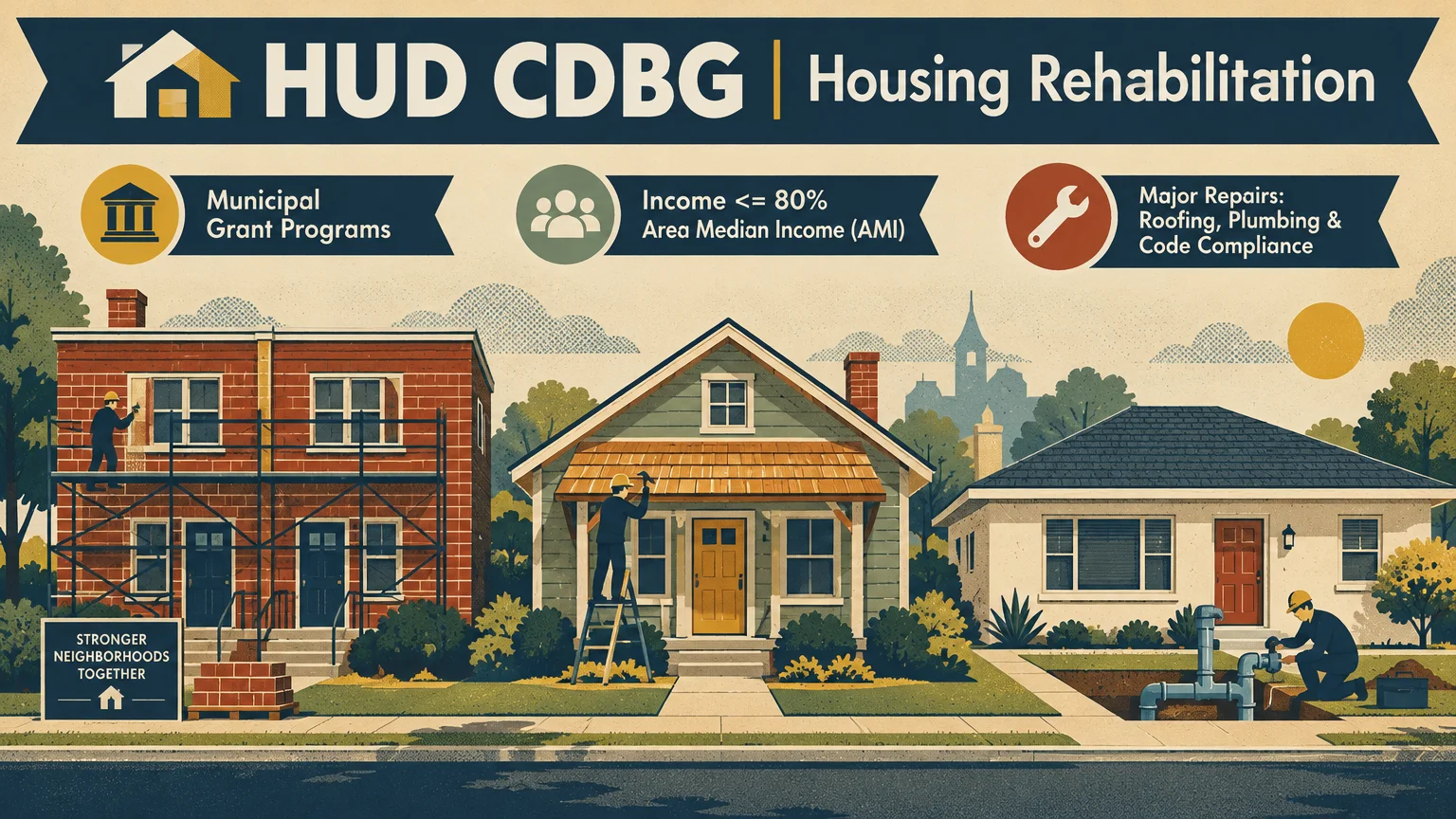
5. HUD Community Development Block Grants (CDBG)
HUD distributes billions of dollars annually through Community Development Block Grants to local cities and counties. Local governments use these flexible block funds to preserve aging housing stock for vulnerable residents.
Municipal housing departments frequently establish emergency senior repair programs with CDBG dollars. These programs offer zero-interest forgivable loans or outright grants to complete major structural work.
CDBG programs routinely fund expensive projects such as roof replacements, electrical rewiring, plumbing overhauls, and foundation repairs. Cities often forgive the entire balance after you live in the property for three to five years.
Eligibility strictly follows federal income thresholds, capping household income at 80% of the Area Median Income. Municipalities typically give priority ranking to seniors living on fixed incomes.
Because every town operates under its own charter, grant caps and requirements vary widely by zip code. Call your local municipal housing authority or city hall to request application packets for local CDBG repairs.
“A comfortable retirement is about feeling secure in your home without constant fear of costly maintenance surprises.” — Suze Orman, Personal Finance Expert
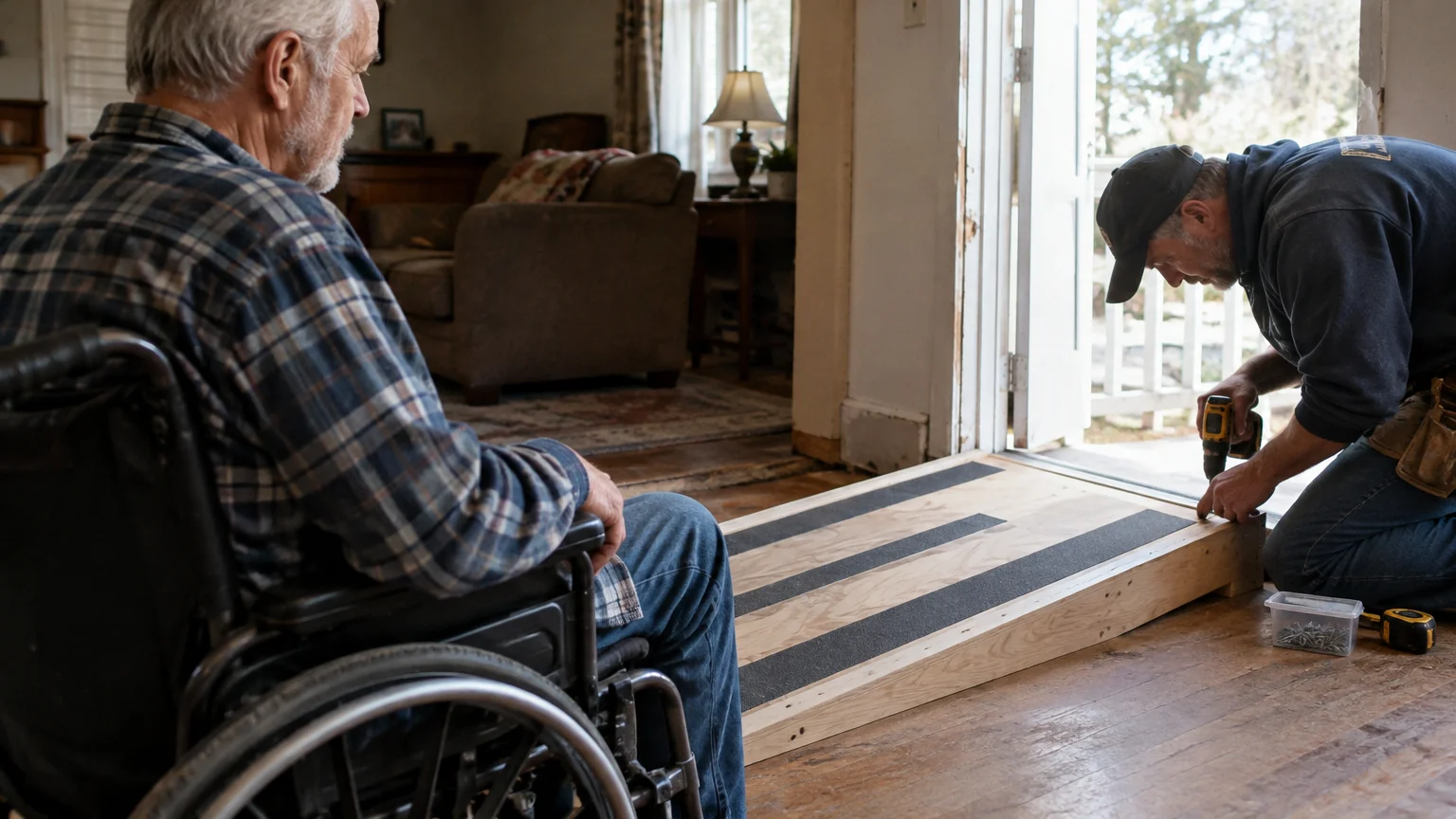
6. VA Home Improvements and Structural Alterations (HISA) Grants
The U.S. Department of Veterans Affairs offers HISA grants to military veterans needing home accessibility improvements. This program operates through the Veterans Health Administration rather than the standard VA mortgage branch.
Veterans with a service-connected medical disability can receive a lifetime HISA grant of up to $6,800. Veterans with non-service-connected conditions rated at 50% or higher also qualify for this maximum amount.
If your medical condition is not service-connected, you can still receive up to $2,000 in structural assistance. HISA grants do not require repayment and do not alter your existing veteran disability compensation.
Eligible projects include widening exterior doors, building permanent wheelchair access ramps, and adding roll-in shower stalls. The funds can also improve electrical connections required to power home medical gear.
To begin the process, you must obtain a formal medical referral from your primary VA physician. Submit VA Form 10-0103 alongside your contractor’s written estimate to the Prosthetics Department at your nearest VA medical center.
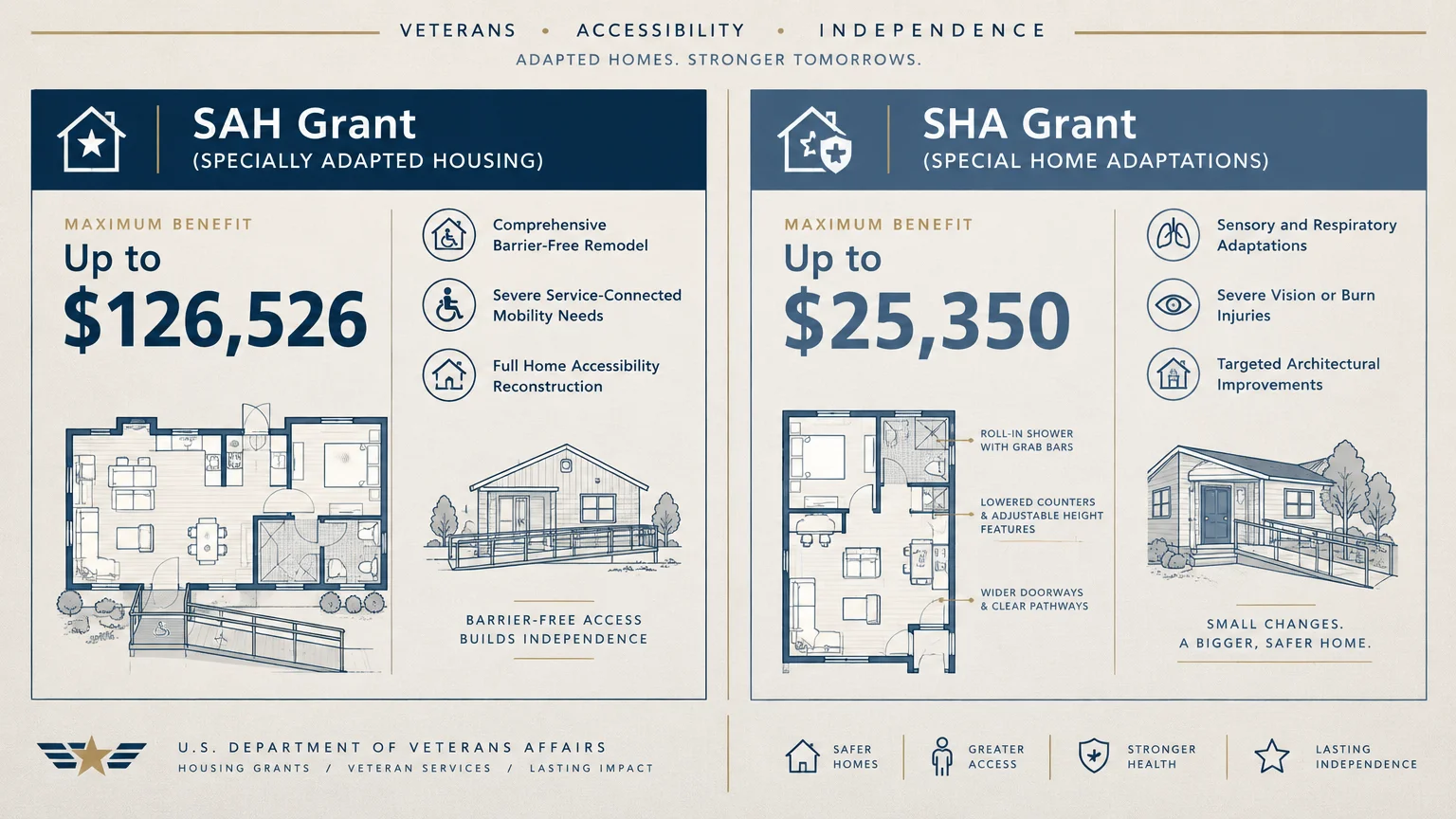
7. VA Specially Adapted Housing (SAH) and SHA Grants
Veterans with catastrophic service-connected mobility limitations can access much larger adaptations through the VA loan guaranty division. These programs construct fully accessible homes or modernize existing residential properties.
The Specially Adapted Housing (SAH) grant provides up to $126,526 for qualifying service-connected conditions. These severe impairments include the loss of multiple limbs, severe burn injuries, or permanent blindness.
The Special Home Adaptation (SHA) grant provides up to $25,350 to veterans with qualifying anatomical or respiratory injuries. Both SAH and SHA grants permit you to draw funds across up to six separate applications over your lifetime.
If you are temporarily staying with family, the Temporary Residence Adaptation (TRA) grant offers up to $50,961 for essential accessibility changes. Keep in mind that under Public Law 119-103, statutory authorization for TRA grants expires on December 11, 2026, unless extended by Congress.
You can check your eligibility and submit your digital grant request through your VA.gov benefits portal. A dedicated VA adaptive housing coordinator will guide you through the architectural review and contractor approval steps.
8. Older Americans Act (Title III) Supportive Services
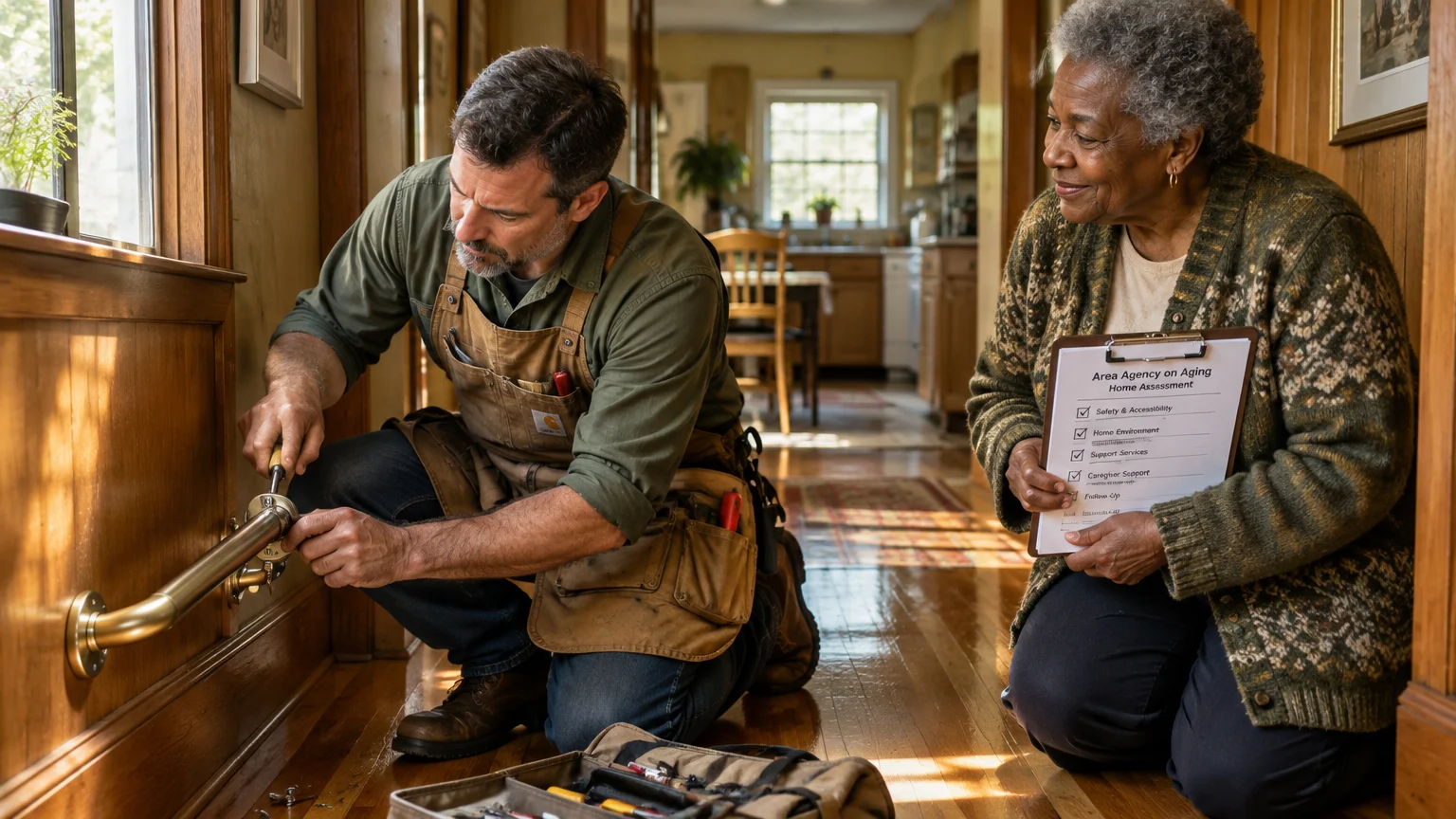
Congress passed the Older Americans Act to provide comprehensive community support for vulnerable adults aged 60 and older. Title III-B and Title III-E authorize federal funding for home modifications and residential safety initiatives.
Local Area Agencies on Aging (AAAs) manage these federal funds across regional multi-county districts. These agencies coordinate local contractors and skilled volunteers to complete vital home safety updates.
Services generally address minor repairs, installation of bathroom grab bars, doorway widening, and outdoor handrail repairs. Agencies also connect clients with local chore programs for gutter cleaning and yard maintenance.
Under federal statute, Title III programs cannot enforce a strict income means test on older participants. However, federal regulations instruct agencies to direct resources toward older adults experiencing the greatest economic and social need.
You can identify your local Area Agency on Aging by visiting the national Eldercare Locator directory. A community case manager will evaluate your living space to determine which local repair services fit your needs.
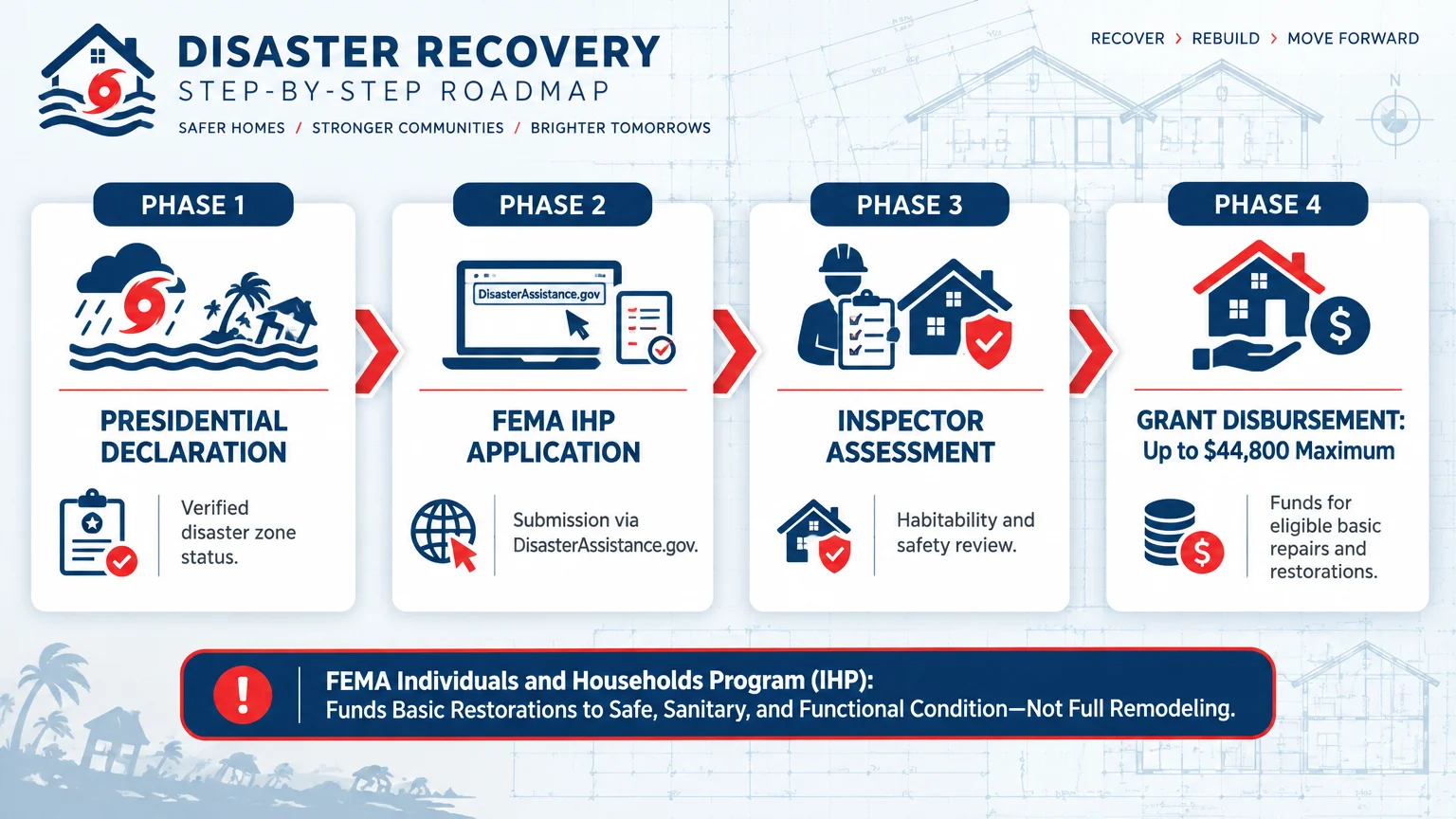
9. FEMA Disaster Home Repair Grants
Natural catastrophes can devastate a family residence in minutes, leaving older adults vulnerable to catastrophic displacement. The Federal Emergency Management Agency provides financial relief through its Individuals and Households Program (IHP).
When the President declares a major federal disaster, older homeowners can receive up to $44,800 for basic home repair or replacement. FEMA also offers an additional maximum of $44,800 for Other Needs Assistance to replace ruined personal property.
FEMA assistance does not pay for cosmetic upgrades or pre-existing structural issues. Instead, grants cover the exact costs required to return your home to a clean, safe, and sanitary condition.
You must submit your initial registration within 60 days of the presidential disaster declaration date. You must also verify homeownership and show that your homeowner insurance settlement failed to cover essential repair needs.
FEMA grant payments are completely exempt from federal and state income taxes. Furthermore, federal rules prohibit these disaster funds from reducing your eligibility for SSI, Medicaid, or other public benefits.
“Protecting your home environment ensures you preserve both your physical safety and your financial longevity.” — Jean Chatzky, Financial Journalist and Author
10. Rebuilding Together and Habitat for Humanity Programs
Private non-profit organizations deliver tremendous repair assistance when government programs carry long waiting lists. Two national non-profits provide outstanding aging-in-place repairs for older Americans.
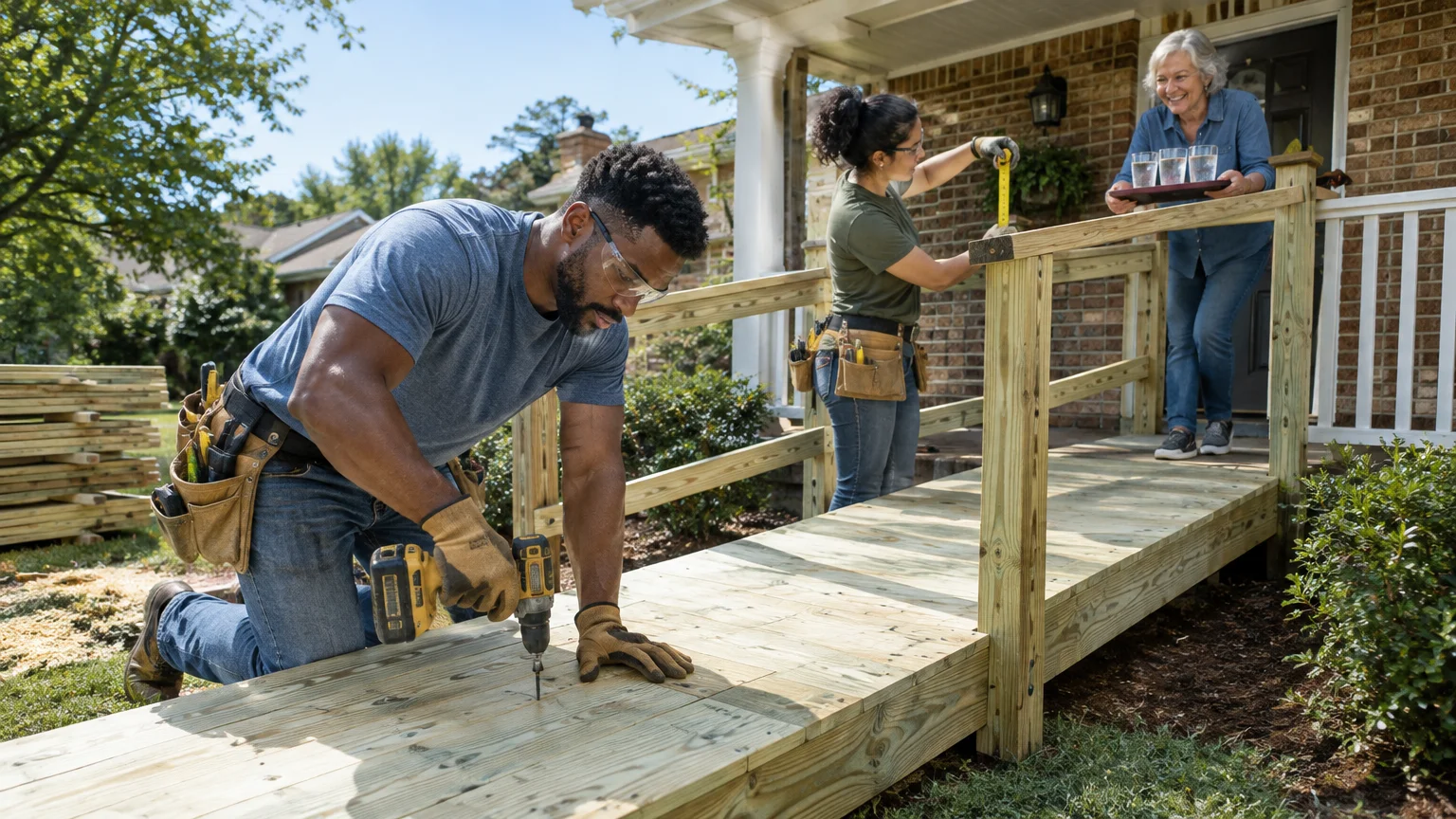
Rebuilding Together operates its dedicated “Safe at Home” initiative through hundreds of local community affiliates. This program delivers 100% free home repairs and safety modifications designed to eliminate fall hazards for older adults and veterans.
Habitat for Humanity manages an expansive Critical Home Repair and “Aging in Place” initiative across the country. Local chapters dispatch skilled builders to repair structural issues, install entry ramps, and weatherize older residences.
Habitat programs generally serve homeowners earning at or below 80% of their local Area Median Income. Depending on your local chapter’s grant reserves, assistance comes as an outright grant or a zero-interest, sliding-scale repayment plan.
Explore additional private grant opportunities through the National Council on Aging resource library. You can contact your regional Habitat for Humanity or Rebuilding Together affiliate directly to join their repair intake cycles.
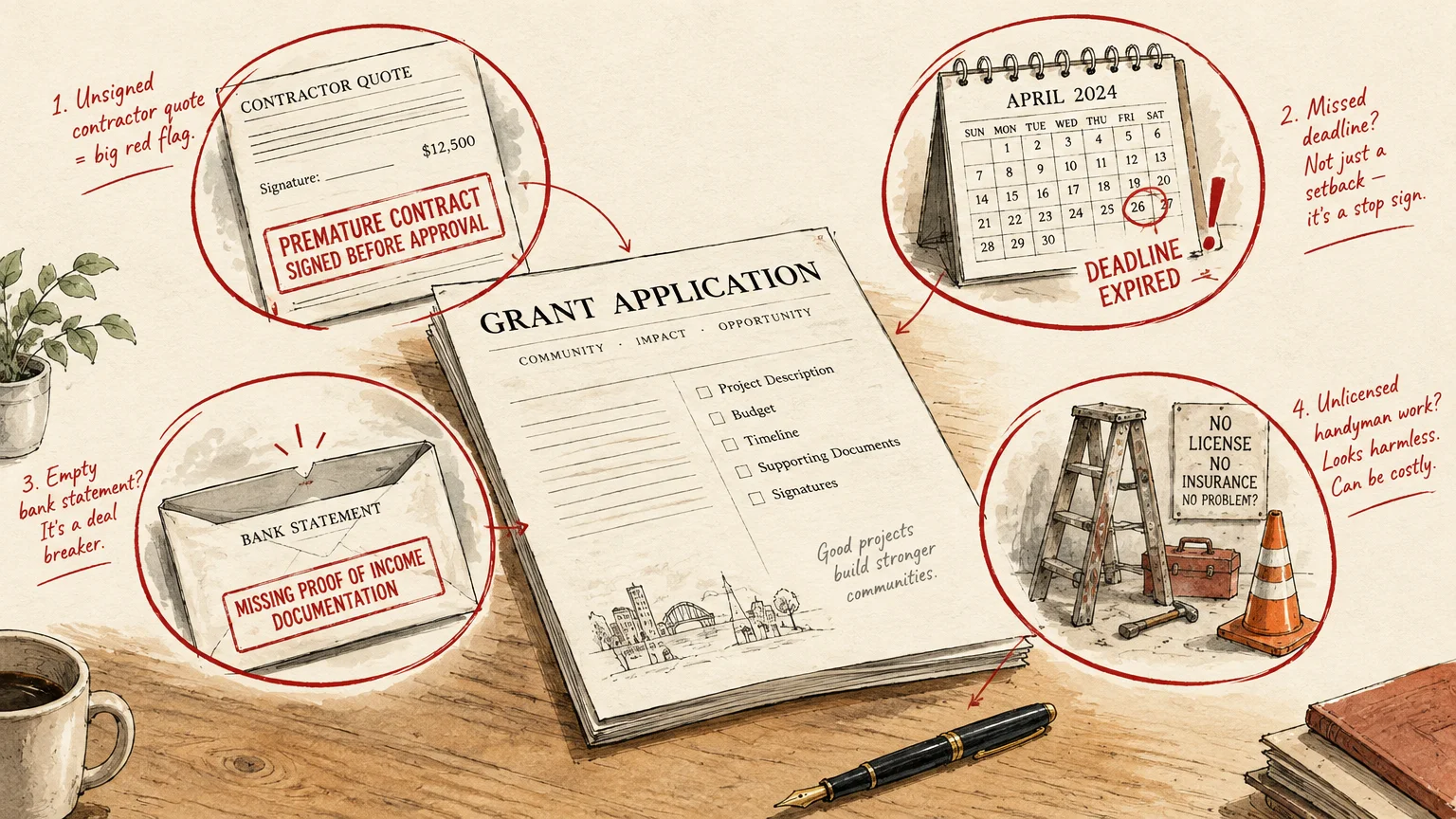
Costly Errors to Sidestep When Applying for Repair Grants
Securing home repair grants requires careful documentation and steady patience. Avoiding several common mistakes will ensure your application moves smoothly through the approval pipeline.
- Paying Upfront Application Fees: Legitimate government and charitable home repair grants never charge processing fees. Any entity demanding upfront payments, gift cards, or administrative retainers is running a home repair scam.
- Hiring Contractors Before Grant Approval: Almost every grant program requires formal written approval before any hammers swing. If you begin structural repairs prior to program authorization, the agency will automatically reject your funding claim.
- Violating Property Resale Timelines: Programs like the USDA Section 504 grant enforce a strict three-year occupancy restriction. If you sell your home before that window closes, you must repay the full grant amount to the government.
- Ignoring Local City and County Programs: Many seniors focus exclusively on high-profile federal websites and miss local municipal funds. City housing offices often have shorter waitlists and simpler application processes than massive federal agencies.
Taking time to read program fine print shields you from unexpected financial clawbacks. Always secure written confirmation from grant administrators before signing agreements with local repair contractors.

When DIY Isn’t Enough: Knowing When to Seek Professional Support
Minor adjustments like changing cabinet hardware or testing smoke detectors are simple weekend projects. However, complex renovations demand certified professional expertise to prevent severe physical injury or costly property damage.
Handling electrical rewiring, outdated breaker boxes, or main plumbing repairs without licensing presents extreme hazards. Attempting amateur structural repairs can compromise your home’s integrity and void your homeowner insurance coverage.
Navigating multiple income verification documents, contractor bids, and municipal building permits can also prove exhausting. When paperwork becomes confusing, ask a trusted family member or local certified housing counselor for hands-on assistance.
Organizations like the Eldercare Locator can connect you with licensed case managers who specialize in senior housing programs. These advocates help you coordinate contractor estimates, submit applications, and monitor construction quality from start to finish.
Frequently Asked Questions About Senior Home Repair Assistance
Do I have to pay federal income taxes on home repair grants?
No, genuine government home repair grants are not considered taxable income by the Internal Revenue Service. Programs like USDA 504 and FEMA disaster assistance are classified as public welfare benefits, meaning you do not report them on your tax return.
Can I apply for more than one home repair grant at the same time?
Yes, you can layer multiple independent grant programs to cover different household repair needs. For instance, you can use a Weatherization Assistance Program grant for insulation while utilizing a USDA Section 504 grant to replace your roof.
What happens if I sell my house shortly after receiving a grant?
Many grant programs enforce occupancy clauses to ensure public funds assist long-term community residents. For example, the USDA Section 504 grant requires full repayment if you sell your home within three years of receiving the funds.
How do I verify if my town is eligible for USDA rural grants?
The USDA Rural Development website hosts an address verification portal where you can enter your exact street address. Most suburban and rural towns with populations below 35,000 residents meet the geographic requirements for Section 504 assistance.
Securing Your Independence at Home
Maintaining a safe, accessible home is essential for preserving your physical independence and your financial well-being. Home repair grants provide the vital financial bridge you need to conquer expensive structural repairs without accumulating unmanageable debt.
Take action today by identifying two or three programs from this guide that fit your household income and repair priorities. Contact your local housing authority, Area Agency on Aging, or non-profit repair affiliate to start your intake assessment.
This article provides general financial education and information only. Everyone’s financial situation is unique—what works for others may not work for you. For personalized advice tailored to your retirement needs, consider consulting a qualified financial professional such as a CFP or CPA.
Last updated: October 2026. Benefit amounts, tax rules, and program details change annually—verify current figures with official government sources.





Leave a Reply