
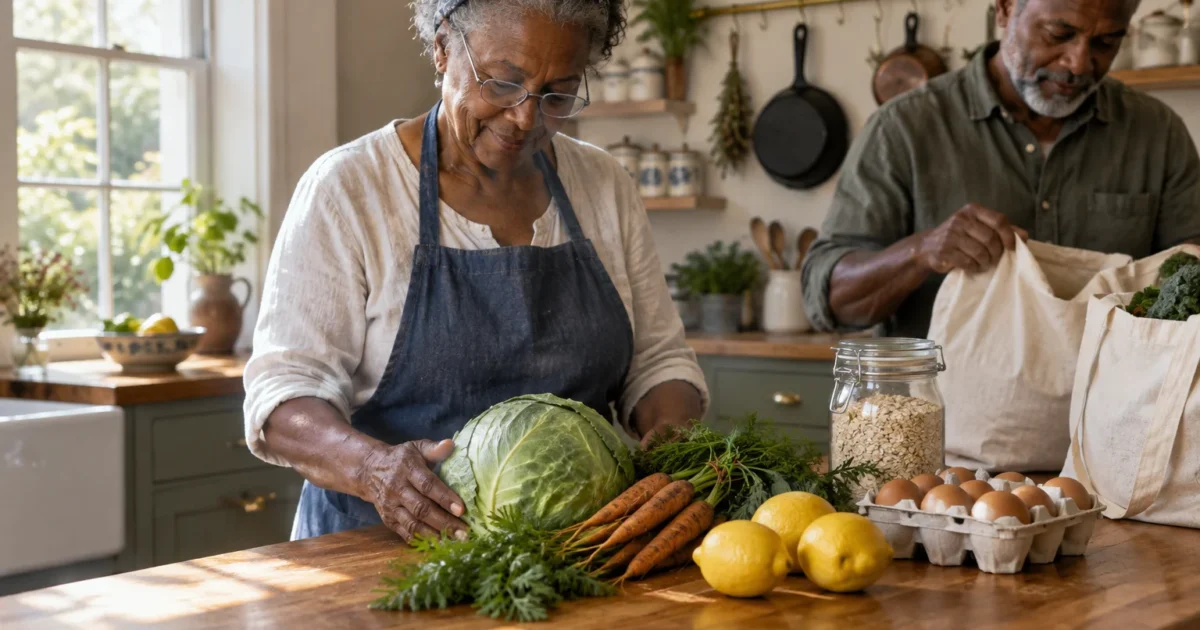
Grocery prices in 2026 sit roughly 30% higher than in 2019, according to the Bureau of Labor Statistics (BLS). Every trip down the supermarket aisle stretches your retirement paycheck a little thinner.
Households led by someone aged 65 or older spend an average of $5,251 per year—about $438 per month—on food at home, BLS data shows. Skipping six specific grocery items can protect both your wallet and your health.
You do not need extreme couponing to save money on groceries. Practical shopping expert tips help you dodge steep markups, cut food waste, and lower hidden health risks right away.
Why Your Grocery Budget Feels Tighter in 2026
Supermarket prices have stopped climbing at pandemic speed, yet everyday staples remain expensive. Compounding annual hikes—including 11.4% in 2022 and 5.0% in 2023—pushed typical grocery baskets sharply higher over the past several years.
Recent inflation reports show prices are still creeping upward. The BLS reported that food-at-home prices rose 0.4% in October 2026 after edging up 0.1% in September 2026.
That put September 2026 grocery prices 1.8% higher than in September 2025. Restaurant and takeout prices climbed even faster at 3.5% year-over-year, making home cooking essential for a steady grocery budget for seniors.
Looking at the full year, the USDA Economic Research Service (ERS) October 23, 2026 Food Price Outlook forecasts 2026 grocery inflation at 2.3%. That prediction sits within a 1.9% to 2.7% range, just below the 20-year annual average of 2.6%.
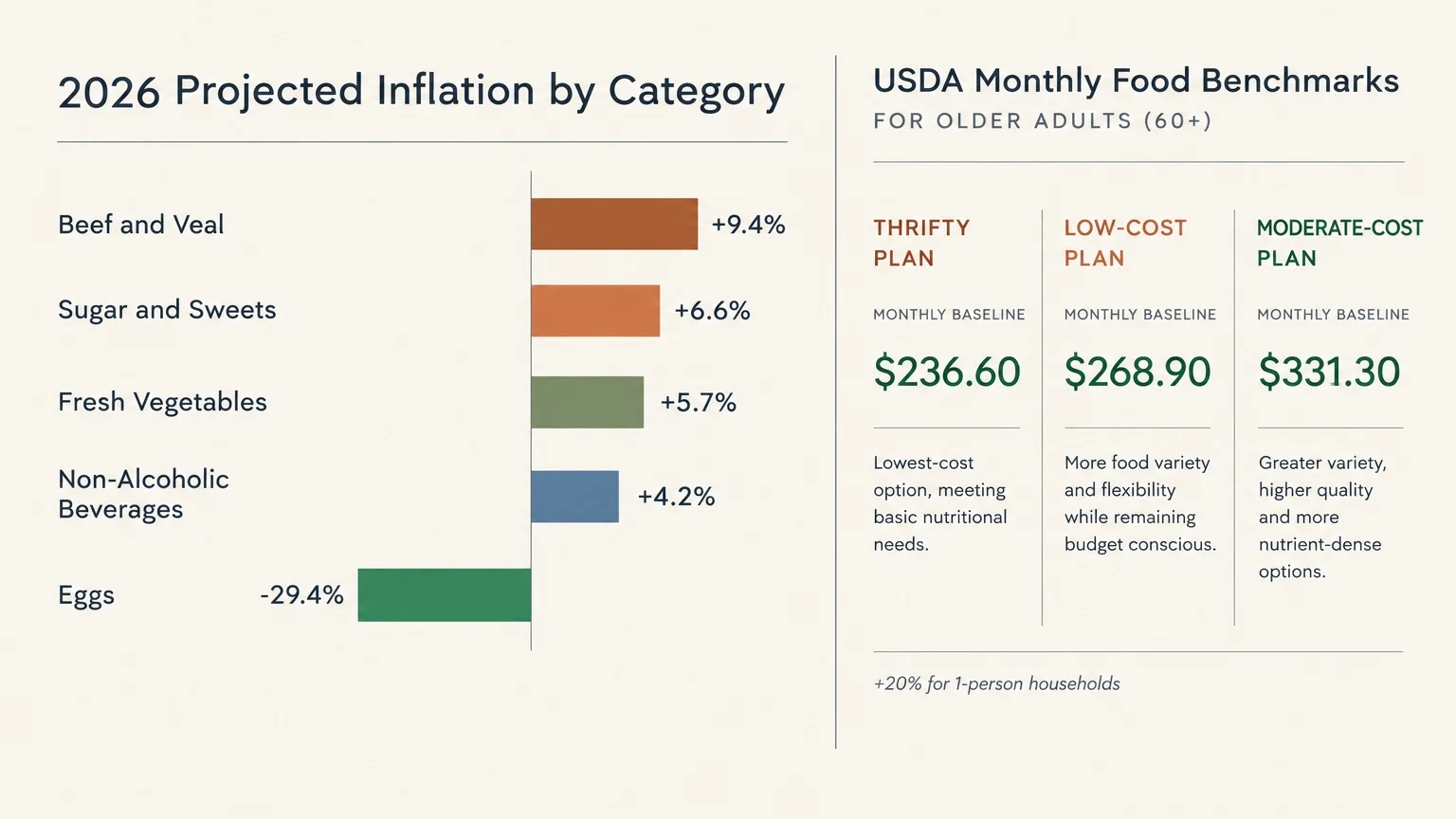
Not every aisle moves at the same pace, however. The September 2026 USDA outlook projected steep increases for beef and veal at 9.4%, sugar and sweets at 6.6%, fresh vegetables at 5.7%, and non-alcoholic beverages at 4.2%.
On the bright side, eggs were forecast to drop 29.4% across 2026. Smart retiree grocery tips focus on shifting your cart away from high-markup categories and toward better-value staples.
Rising food bills directly affect how far your retirement income stretches. On October 14, 2026, the Social Security Administration (SSA) announced a 3.6% Cost-of-Living Adjustment (COLA) for 2027, up from 2.8% in 2026.
When that adjustment takes effect in January 2027, the average retired-worker monthly benefit is estimated to rise from $2,095 to $2,170—an extra $75 per month. For an aged couple both receiving benefits, the average estimate rises from $3,238 to $3,355.
If your monthly grocery bill runs near the $438 senior household average, trimming unnecessary items frees up real cash. You can redirect those savings toward utility bills, medications, or emergency reserves.
The USDA publishes monthly food plan benchmarks to help older adults gauge reasonable spending. The table below shows individual monthly baselines from September and October 2026 for people in a four-person household preparing all meals at home.
| Age and Gender Group | Thrifty Plan (Oct. 2026) | Low-Cost Plan (Sept. 2026) | Moderate-Cost Plan (Sept. 2026) |
|---|---|---|---|
| Women 51–70 | $236.60 | $268.90 | $331.30 |
| Women 71+ | $261.40 | $268.20 | $329.80 |
| Men 51–70 | $281.70 | $299.40 | $374.90 |
| Men 71+ | $268.70 | $296.30 | $364.30 |
Because smaller households buy smaller packages, the USDA recommends adding 20% to these figures if you live alone. If you live in a two-person household, add 10% to your combined baseline.
Even with a 20% adjustment, hitting these targets requires skipping items that drain your budget without adding nutrition. Here are the six grocery items to avoid on your next trip.
1. Name-Brand Groceries When Store Brands Match Quality
Sticking out of habit to familiar national labels is one of the fastest ways to overspend at the register. A 2024 eMarketer survey cited by AARP found that 76% of baby boomers stick with brand loyalty on groceries and household goods, compared with 66% of all adults.
That loyalty carries a heavy price tag in 2026. Choosing store brands saves shoppers an average of 25% to 27% on groceries, according to Consumer Reports.
Even better, Consumer Reports found that nearly 60% of tested store-brand foods rated at least as good as national brands. A CNET price comparison cited by AARP in June 2026 showed that generic items can cost up to 40% less.
Millions of shoppers have already made the switch. The Private Label Manufacturers Association (PLMA), citing Circana scanner data, estimates U.S. shoppers saved roughly $35 billion in 2025 by buying store brands instead of national brands.
Through November 1, 2026, store brands reached a record 23.7% unit share and 21% dollar share. Store-brand unit sales edged up 0.1% while national-brand unit sales fell 0.9%, even though national-brand dollar sales climbed 1.9% due to higher prices.
If your household spends $438 per month on groceries, saving 25% on just half your cart trims roughly $55 every month. Over a year, that single change keeps about $660 in your bank account.
Start by swapping single-ingredient items where manufacturers use identical processing standards. Look for store-brand savings on these everyday basics:
- Canned beans, diced tomatoes, and low-sodium broths
- Flour, sugar, oats, spices, and baking staples
- Milk, plain yogurt, butter, and block cheese
- Frozen vegetables and plain frozen fruit
- Olive oil, canola oil, and vinegar
Run a simple two-week taste test with three staple items in your kitchen. If you cannot tell the difference in a side-by-side comparison, drop the national brand permanently.
2. Bulk and Oversized Perishables That Spoil First
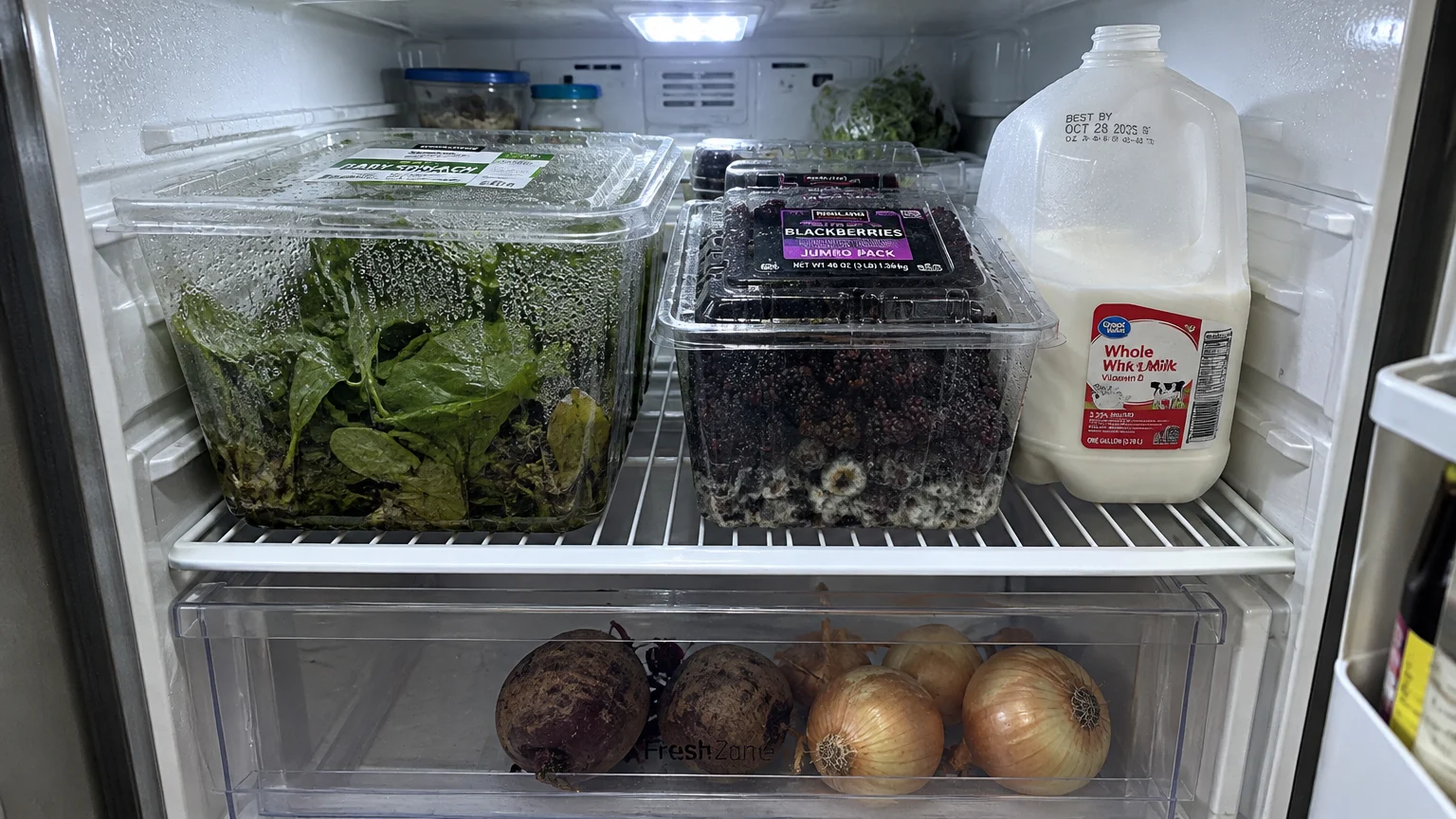
Warehouse clubs and bulk value packs look tempting when unit prices appear low. For one- or two-person retirement households, however, giant packages of fresh food often turn into expensive garbage.
The USDA estimates that 30% to 40% of the U.S. food supply goes uneaten. In its April 2026 U.S. Food Waste Report, ReFED recorded 70 million tons of surplus food in 2024—about 29% of the entire U.S. supply.
Those tossed leftovers hit your household budget harder than you might realize. In its 2025 report Estimating the Cost of Food Waste to American Consumers, the U.S. EPA estimated that wasted food costs the average American $728 per year.
Using 2023 retail prices, that loss equals more than 11% of average food spending. Meat alone represents the single costliest waste category at roughly $133.48 per person annually.
A big pack of chicken breasts or a two-pound tub of spring mix is never a bargain if a third of it spoils before Friday. With beef and veal projected up 9.4% in 2026, throwing out meat hurts your wallet twice.
Many shoppers also toss safe food too early because they misread package stamps. The USDA notes that manufacturer best-by and similar dates generally indicate peak quality rather than food safety.
To cut waste without sacrificing variety, adjust how you buy perishables:
- Shop the meat counter for exact portions rather than pre-packed family trays.
- Divide large meat or bread purchases into single-meal freezer bags the day you buy them.
- Reserve bulk warehouse buys for shelf-stable items like paper towels, rice, and coffee.
- Choose smaller bags of apples, potatoes, or salad greens even when the per-pound tag looks slightly higher.
Check your trash bin for two weeks to spot patterns. Whatever you throw out most often is the exact item you should buy in smaller amounts.
3. Pre-Cut and Pre-Washed Produce
Plastic clamshells of cubed pineapple, sliced onions, and trimmed green beans save a few minutes at the cutting board. Yet convenience produce carries some of the steepest markups in the entire supermarket.
Pre-washed and pre-cut fruits and vegetables carry an average 40% markup, according to inventory software firm Finale Inventory cited in 2025. Depending on the item, prepped produce can cost up to three times more than whole equivalents.
A ShopSmart national price-per-pound comparison by Consumer Reports illustrated just how dramatic that gap gets. Pre-cut onions cost 370% more than whole onions, while washed and trimmed kale cost 317% more.
Pre-cut green beans ran 192% higher, foil-wrapped oven-ready potatoes cost 147% more, and pre-cut pineapple cost 55% more. Fresh vegetables were already projected to climb 5.7% in 2026, so paying triple for knife work drains your budget fast.
Notably, ShopSmart found one clear exception: pre-cut broccoli florets cost 12% less by edible weight because you do not pay for thick discarded stems. Outside of rare exceptions like broccoli florets, whole produce wins on price.
Price is only half the story when it comes to pre-cut fruit and vegetables. Food safety guidance from the CDC and FoodSafety.gov flags cut melon and unwashed produce as items more likely to carry harmful germs.
Bacteria grow easily on moist, cut plant surfaces once the protective rind or peel is removed. The CDC advises shoppers to buy pre-cut produce only if the store keeps it refrigerated or surrounded by ice.
If arthritis or reduced grip strength makes chopping whole melons or winter squash difficult, skip high-risk fresh tubs and check the freezer aisle instead. Plain frozen berries, diced onions, and squash cubes are flash-frozen at peak ripeness, cost far less, and last for months.
4. Cold Deli Meats, Cold Cuts, and Unheated Hot Dogs
The deli counter offers quick sandwich fillings, yet cold cuts deserve special caution once you pass age 65. Both food safety risks and high sodium make unheated deli meats a smart category to skip.
Immune defenses naturally shift as you grow older, making foodborne bacteria far more dangerous. According to the CDC, nearly half of adults aged 65 and older who contract a lab-confirmed illness from Salmonella, Campylobacter, Listeria, or E. coli require hospitalization.
Listeria poses an especially severe threat in retirement. Adults 65 and older are four times more likely to contract listeriosis than the general population, and Listeria carries a 20% to 30% case-fatality rate in clinical CDC data.
Unlike many germs that stop multiplying in the cold, Listeria monocytogenes can grow even at refrigerator temperatures of 40 degrees Fahrenheit or below. Keeping packaged turkey or ham on a cold shelf does not neutralize the risk.
For that reason, the CDC and FoodSafety.gov classify unheated deli meat, cold cuts, hot dogs, fermented or dry sausages, and refrigerated meat spreads as higher-risk foods for adults 65 and older. Official guidance advises seniors to skip these items or reheat them to 165 degrees Fahrenheit—until steaming hot—before eating.
Deli meats also strain your budget and your blood pressure. Buying sliced deli turkey or roast beef often costs far more per pound than roasting a whole chicken breast at home.
On top of that, the CDC reports that deli meat sandwiches rank among the top sources of excess sodium in American diets. Swap cold cuts for safer, budget-friendly sandwich proteins:
- Homemade sliced chicken or turkey breast cooked and chilled for two to three days
- Hard-boiled or scrambled eggs, taking advantage of 2026 egg prices forecast down 29.4%
- Canned low-sodium tuna or salmon mixed with plain yogurt and lemon
- Hummus or nut butter spread over whole-grain toast with sliced tomato
If you still crave an occasional hot dog or deli slice, treat heating as mandatory. Use a microwave or skillet until the meat steams all the way through.
5. High-Sodium Processed and Ultra-Cheap Packaged Meals
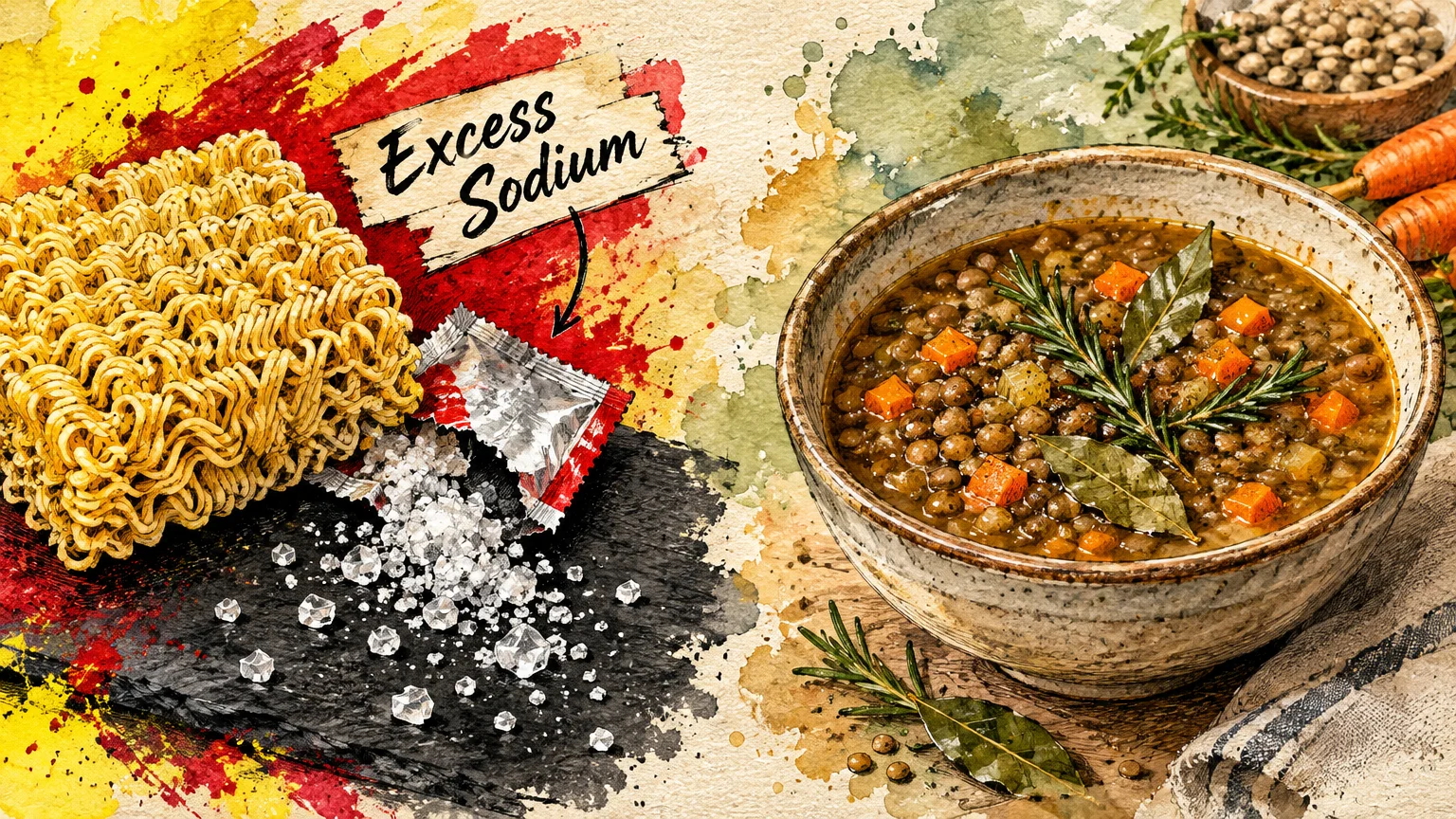
Canned soups, boxed pasta dinners, and frozen pizzas promise easy weeknight meals for one or two people. Unfortunately, convenience boxes pack staggering amounts of salt and chemical additives behind low sticker prices.
The Dietary Guidelines for Americans and FDA Daily Value cap adult sodium intake at less than 2,300 milligrams per day—roughly 1 teaspoon of table salt. The American Heart Association (AHA) also recommends no more than 2,300 milligrams and sets an ideal limit of 1,500 milligrams daily for most adults, especially anyone managing high blood pressure.
Most Americans consume far more than those limits allow. According to the FDA, average daily sodium intake reaches 3,400 milligrams—nearly 50% above the 2,300-milligram cap—with 70% coming from packaged and restaurant foods.
The CDC reports that roughly 40% of U.S. sodium intake comes from just 10 food categories, led by deli meat sandwiches, pizza, burritos and tacos, and soups. Sample figures from the USDA Agricultural Research Service show how quickly one quick meal eats up your entire daily allowance:
- One slice of typical frozen pizza contains roughly 900 milligrams of sodium.
- One serving of a boxed meal with prepackaged flavorings can exceed 900 milligrams.
- One tablespoon of soy sauce delivers about 1,000 milligrams of sodium.
Chasing rock-bottom bargain brands in the center aisles can introduce another hidden downside. A March 2026 joint study by Yuka and Harvard Law School’s Food Law and Policy Clinic examined over 800 U.S. foods across 12 processed categories.
Researchers found that products in the lowest price quartile contained 2.6 times more additives on average than items in the highest-priced quartile—6.6 additives versus 2.7 per item. Lowest-priced processed foods also contained over three times more high-risk additives.
Managing blood pressure or heart health becomes much harder when cheap boxed meals dominate your pantry. Instead of relying on salty mixes, cook a double batch of homemade vegetable-and-bean soup on Sunday and freeze individual jars for effortless weekday lunches.
6. Single-Serve and Multipack Bottled Water
Carrying heavy plastic cases of water from your car trunk to the kitchen hurts both your back and your grocery budget. Bottled water is one of the highest-markup items in the entire store, especially with non-alcoholic beverages forecast up 4.2% in 2026.
U.S. municipal tap water typically costs less than 1 cent per gallon—roughly $0.004 per gallon. By contrast, bottled water costs roughly $0.80 to $4.00 per gallon when bought in multipacks or large jugs.
Grabbing an individual 16- to 16.9-ounce bottle at $1 pushes your cost to $7.57 to $8.00 per gallon. That means bottled water runs roughly 500 to 2,000 times more expensive than turning on your kitchen faucet.
Spending $15 a week on bottled water quietly drains $780 every year. That single habit wipes out more than 10 months of the estimated $75 monthly boost from the 2027 Social Security COLA.
Many shoppers assume bottled water faces stricter purity rules than tap water, yet federal oversight actually works the opposite way. Municipal tap water is regulated by the U.S. EPA under the Safe Drinking Water Act.
EPA rules require certified operators, certified-lab testing, mandatory public violation notices, and annual Consumer Confidence Reports sent to residents. Bottled water is regulated by the FDA as a packaged food product without public annual reports or federal filtration and disinfection mandates.
Water-quality analyses note that roughly 25% of bottled water starts out as municipal tap water anyway. One cited study also detected microplastics in 93% of tested bottled water samples.
Switch to a reusable stainless-steel bottle paired with a simple charcoal pitcher or faucet filter if you dislike your tap water’s taste. You save hundreds of dollars each year and spare your joints from hauling 24-packs indoors.
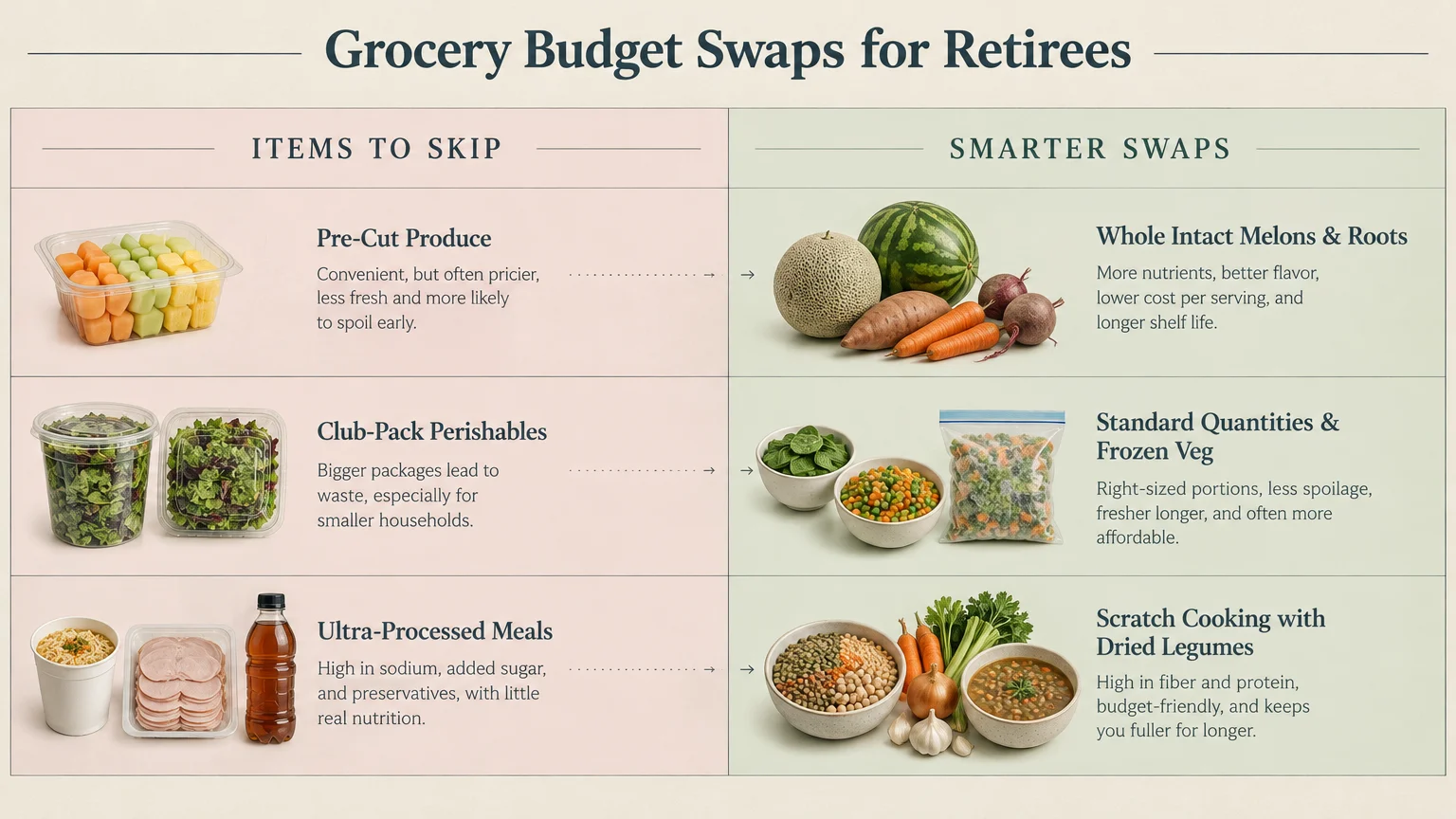
Quick Guide: 6 Grocery Items to Skip and Smarter Swaps
Keeping track of prices, unit marks, and food safety rules gets easier when you see the whole picture side by side. Use this summary table before writing your next shopping list.
| Item to Skip | Cost or Health Drawback | Smart Retiree Swap |
|---|---|---|
| Name-brand staples | Store brands cost 25% to 40% less with similar quality | Store-brand pantry goods, dairy, and frozen produce |
| Bulk perishables | Food waste costs $728/year on average; meat waste hits $133.48/person | Single-meal meat portions and smaller produce bags |
| Pre-cut produce | Average 40% markup (up to 370% higher); higher germ risk if unchilled | Whole produce or plain frozen vegetables and fruit |
| Cold deli meats | High Listeria hospitalization risk for 65+ plus heavy sodium | Home-roasted chicken, eggs, or low-sodium canned fish |
| High-sodium boxed meals | 900+ mg sodium per serving; 2.6x more additives in cheapest options | Batch-cooked homemade soups seasoned with herbs and citrus |
| Bottled water | 500 to 2,000 times pricier than tap water; fewer public test reports | Filtered tap water in a reusable insulated bottle |
Shop the perimeter for whole, unprepped foods, test store brands across your pantry, and protect your retirement paycheck from convenience markups that add cost without adding nutrition.
Pitfalls to Watch For at the Supermarket
Even disciplined shoppers run into subtle traps inside the grocery store. Watch for these four common mistakes that quietly inflate retiree food bills.
- Throwing food out at the best-by date: Best-by labels mark peak flavor rather than safety for most shelf-stable items and many refrigerated foods. Inspect food for off smells or mold instead of tossing safe groceries automatically.
- Shopping without checking unit prices: Package sizes often shrink while prices stay flat. Always check the tiny price-per-ounce or price-per-pound number on the shelf tag rather than trusting big sale signs.
- Relying on prepared hot bars and takeout: Food away from home rose 3.5% year-over-year in September 2026 compared with 1.8% for groceries. Grabbing ready-made rotisserie sides or deli salads turns a routine errand into restaurant-level spending.
- Overlooking community food assistance: If fixed expenses leave your pantry thin, check whether you qualify for grocery help through the National Council on Aging (NCOA). Screening tools can connect older adults with local nutrition programs and food benefits.
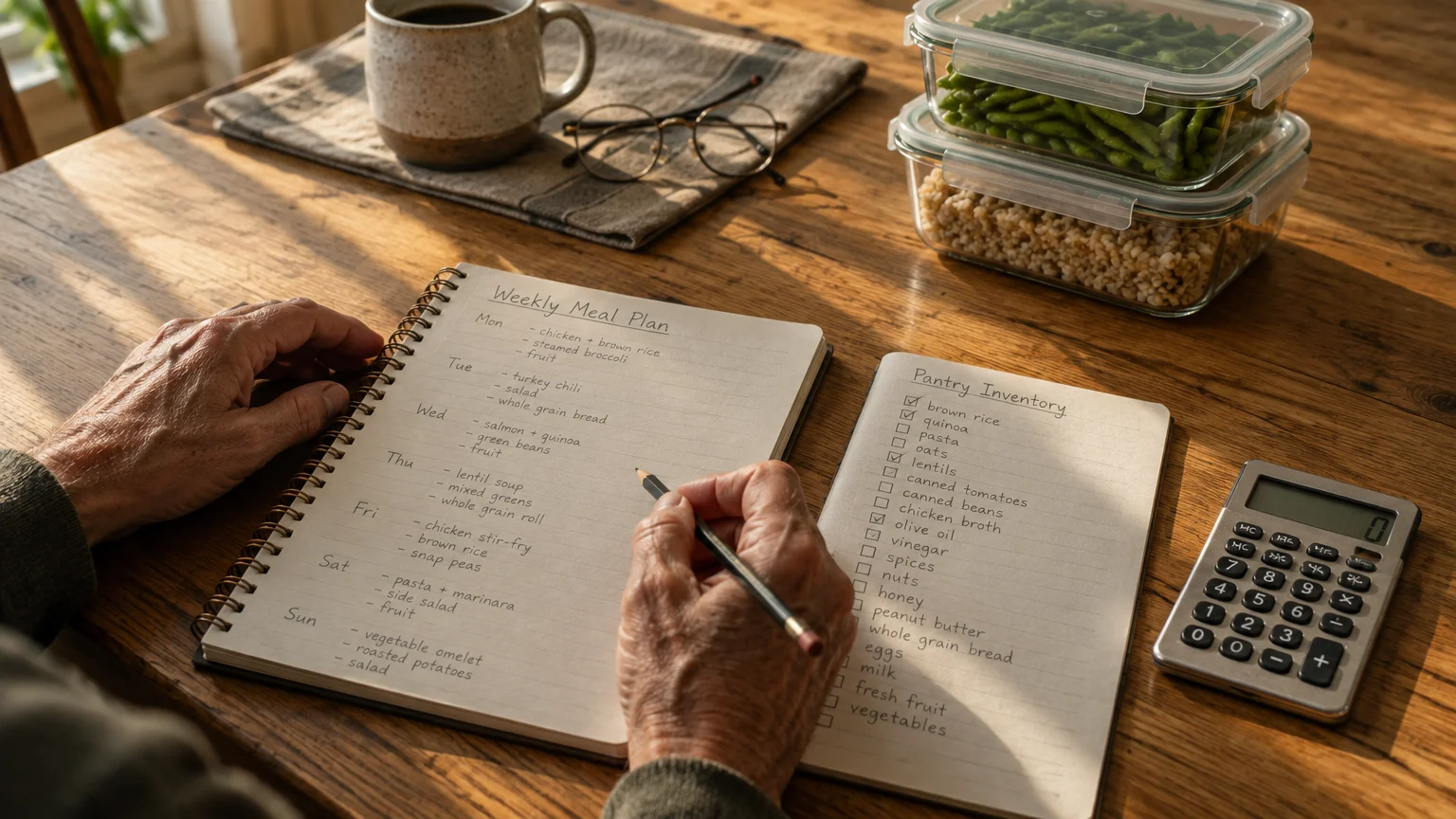
Practical Shopping Expert Tips to Trim Your Next Grocery Bill
Turning good intentions into lower receipts takes a repeatable weekly routine. Follow these steps before and during your next supermarket run.
- Inventory your fridge and freezer first: Build three meals around ingredients you already own before adding anything new to your list.
- Set a realistic monthly ceiling: Use the USDA Low-Cost or Moderate-Cost plan for your age, then add 20% if shopping for one or 10% for two.
- Swap three brands per trip: Pick three national-brand items on your list and intentionally buy the store-brand version to pocket an immediate 25% to 40% discount.
- Read two numbers on packaged labels: Check milligrams of sodium per serving—aiming well under your 1,500 to 2,300 milligram daily target—and count the additive list.
- Verify safe cold storage: Confirm your home refrigerator sits at or below 40 degrees Fahrenheit, and never buy pre-cut fruit sitting unchilled on an open display.
Frequently Asked Questions
How much does the average retiree spend on groceries each month?
According to BLS Consumer Expenditure Survey data released in December 2025, households headed by someone aged 65 or older spent an average of $5,251 per year on food at home. That works out to roughly $438 per month.
Individual targets vary by household size and appetite. Using the September 2026 USDA Low-Cost plan with a 20% single-person adjustment puts a reasonable baseline around $322 per month for a woman 71+ and $356 for a man 71+.
Are store-brand groceries really as good as national brands?
Yes, for most everyday staples. Consumer Reports testing found nearly 60% of store-brand foods performed at least as well as national brands while saving shoppers an average of 25% to 27%.
Keeping an open mind on canned goods, baking supplies, and dairy lets you save money on groceries without feeling deprived.
Is cold deli meat safe for seniors if it has not passed its sell-by date?
No, because Listeria bacteria can grow slowly even inside a properly chilled refrigerator at 40 degrees Fahrenheit or below. Adults aged 65 and older face four times the risk of listeriosis compared with the general population.
The CDC advises seniors either to skip cold deli meats, cold cuts, and unheated hot dogs or to heat them to 165 degrees Fahrenheit until steaming hot right before eating.
Will the 2027 Social Security COLA cover higher grocery prices?
The 3.6% Social Security COLA taking effect in January 2027 adds an estimated $75 per month to the average retired worker’s benefit, lifting it from $2,095 to $2,170. That increase outpaces the USDA’s 2.3% overall 2026 grocery inflation forecast.
However, specific categories like beef, sweets, and fresh vegetables rose faster than 3.6% in 2026 projections. Skipping marked-up convenience foods helps ensure your COLA goes toward priorities you actually enjoy rather than checkout waste.
Your Next Step at the Grocery Store
You do not need to overhaul your entire diet overnight to stretch your retirement dollars. Pick two items from this list—such as swapping bottled water for filtered tap water and trading national brands for store labels—on your very next trip.
Watch your receipt total drop while keeping wholesome, safe meals on your table. This article provides general financial education and information only. Everyone’s financial situation is unique—what works for others may not work for you. For personalized advice tailored to your retirement needs, consider consulting a qualified financial professional such as a CFP or CPA.
Last updated: November 2026. Benefit amounts, tax rules, and program details change annually—verify current figures with official government sources.




Leave a Reply