

Securing an affordable rental home on a fixed retirement income requires knowing exactly where your monthly dollars stretch furthest. Shifting market trends have created surprising budget-friendly opportunities across the country heading into 2027.
While coastal metropolitan areas continue to set record high lease rates, a historic apartment construction wave now offers older renters genuine bargaining power in several growing regions.
Whether you plan to downsize locally or relocate across state lines, this comprehensive guide examines the cheapest cities, priciest markets, and actionable financial steps to protect your retirement savings.
The 2027 Rental Reality for Retirees
Housing remains the largest single expenditure in retirement; managing this cost dictates your long-term financial independence. Balancing monthly lease rates against predictable income streams requires careful math.
On October 14, 2026, the Social Security Administration announced a 3.6% cost-of-living adjustment (COLA) for 2027. This marks an increase from the 2.8% adjustment implemented in 2026.
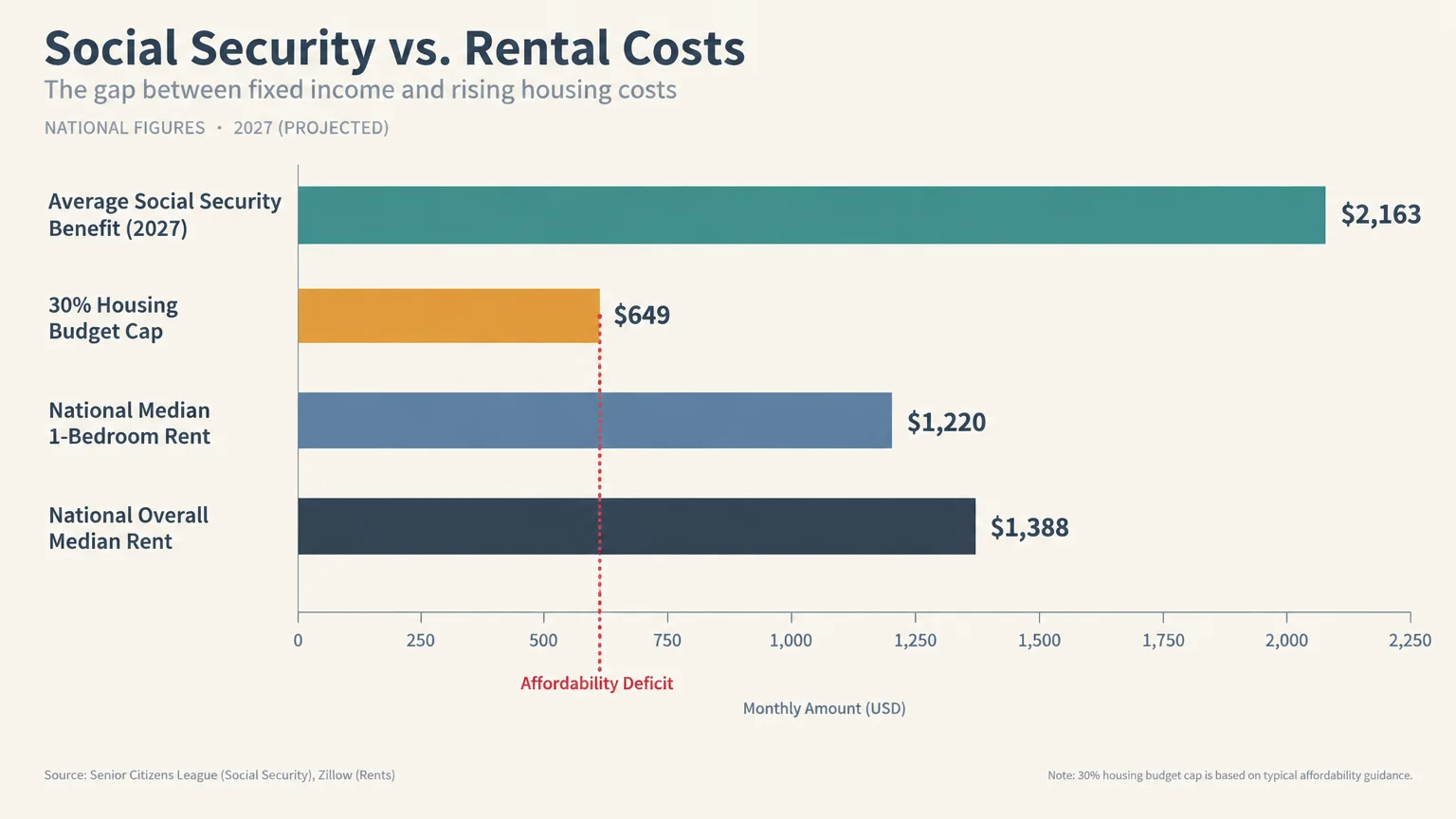
That 3.6% boost raises the typical retired worker benefit by roughly $75 per month, or $900 annually. As a result, the national average monthly Social Security benefit climbs from $2,088 in 2026 to $2,163 in 2027.
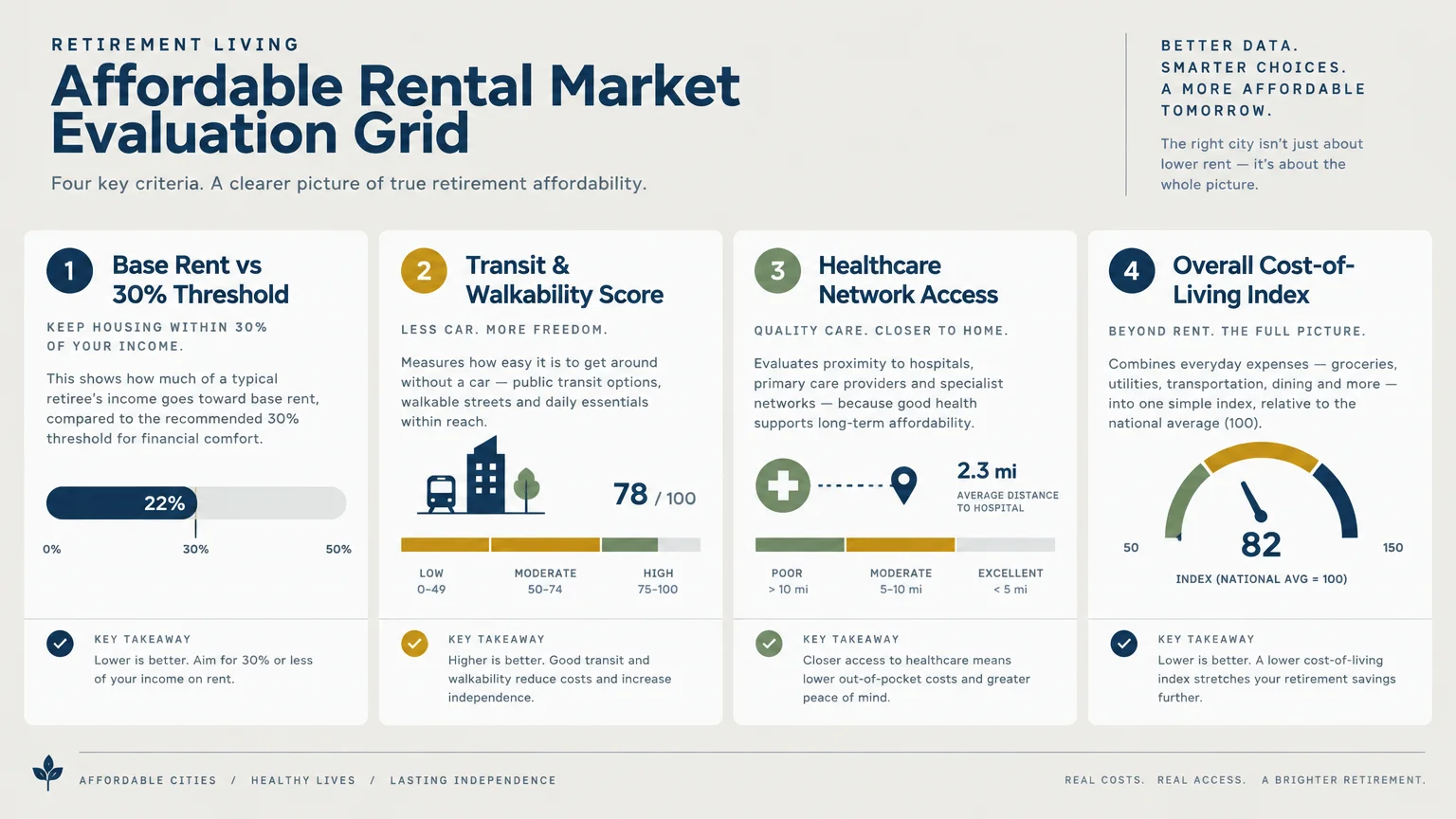
Financial planners recommend spending no more than 30% of your gross monthly income on housing expenses. Adhering to this threshold prevents housing costs from cannibalizing essential healthcare, nutrition, and emergency funds.
If you rely solely on the average 2027 Social Security check of $2,163, your target rental budget is approximately $649 per month. However, market prices in many cities run significantly higher than this baseline.
According to Apartment List data from September 2026, the overall national median rent sits at $1,388 per month across all bedroom sizes. That reflects a slight year-over-year decline of 0.4%.
The median rent for a one-bedroom apartment nationwide is $1,220, while two-bedroom units average $1,374. Meanwhile, Zumper reports asking rents across the 100 largest cities at $1,518 for one-bedroom units and $1,903 for two-bedroom layouts.
Broad market indexes like Zillow’s Observed Rent Index place the overall asking rate near $1,962 per month when factoring in single-family homes. Despite that sticker price, renting remains roughly $1,066 per month cheaper than buying a comparable property.
A massive apartment building surge delivered 590,000 multifamily units in 2024 and 470,000 units in 2025. This historic supply surge keeps landlords competitive heading into 2027.
The national multifamily vacancy rate stands at 7.0%, with vacant apartments taking an average of 34 days to lease. Furthermore, 21% of large apartment communities now offer concessions like a month or more of free rent.
The Senior Renter Landscape in America
More older adults are choosing to rent today than at any point in modern history. Selling a family home eliminates property tax headaches, costly roof replacements, and yard maintenance.
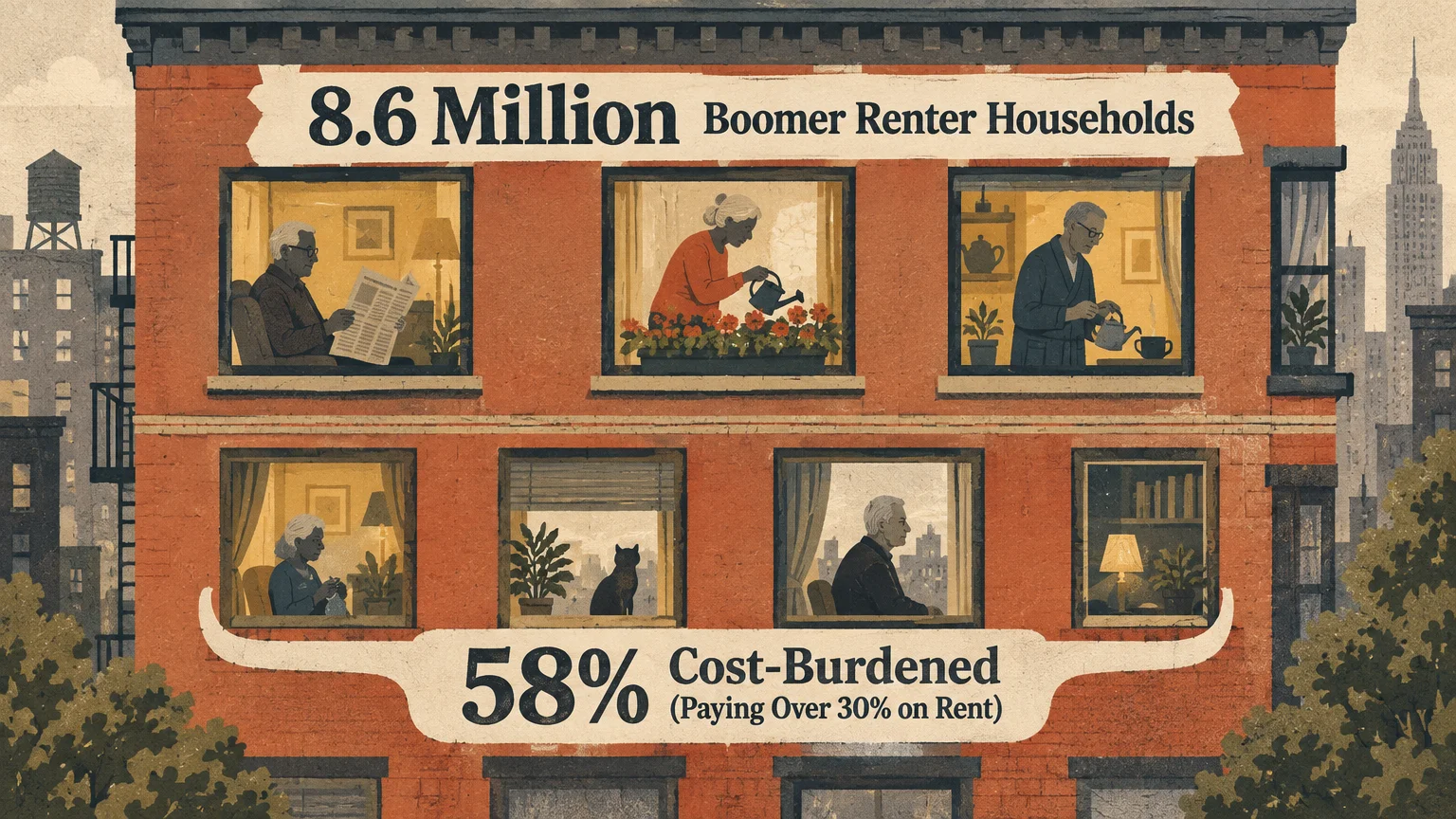
According to research from the Harvard Joint Center for Housing Studies, Baby Boomers head 8.6 million renter households. That number accounts for nearly 20% of all renters nationwide.
Many older adults face serious budgetary friction when relying on fixed checks. The same Harvard findings show that 31% of all low-income renter households earning under $30,000 annually are headed by someone age 65 or older.
A staggering 58% of older renter households—totaling 4.5 million families—are cost-burdened by paying over 30% of their income toward rent. The majority of these households are severely cost-burdened, surrendering over half their income for housing.
In total, 5.8 million older adults currently live in rent-burdened environments. Finding markets where rent aligns with your income can preserve your lifestyle and prevent financial exhaustion.
“Housing is your single biggest expense in retirement, and shrinking that one bill can instantly rescue an entire budget.” — Jean Chatzky, Financial Journalist and Author
The Most Affordable Cities for Retiree Renters
Finding an affordable rental market often means looking toward the Midwest, the Great Plains, or select southern hubs. These regions offer reasonable living costs alongside established medical infrastructure.
Toledo, Ohio leads the nation among major cities for overall rental affordability. Apartment List reports Toledo’s median rent across all property types at just $916 per month.
Toledo also ranks first nationwide in budget-friendly availability. According to Zillow, 42.6% of all rental listings in Toledo are priced under $1,000 per month.
Wichita, Kansas stands out as another premier haven for cost-conscious retirees. Overall median rent sits at $1,029 per month, with 38.8% of available apartments priced under $1,000.
One-bedroom units in Wichita offer some of the lowest asking rents in the nation. Zumper data shows median one-bedroom asking rents ranging between $725 and $740 per month.
Cleveland, Ohio provides strong metropolitan amenities with an overall median rent of $1,025 per month. Just down the road, Akron, Ohio features one-bedroom asking rents between $800 and $812.
Shreveport, Louisiana delivers exceptional southern value, with one-bedroom asking rents averaging $790 per month. Detroit, Michigan also remains affordable for renters, posting an overall median rent of $1,057.
For retirees seeking mild winters without coastal price tags, Tucson, Arizona offers an attractive option. The median rent in Tucson stands at $1,047 per month, remaining far cheaper than Phoenix or Scottsdale.
Rent-to-income ratios also highlight incredible stability across the Upper Midwest. A 2026 WalletHub study of 182 cities found that renters spend the smallest portion of their household earnings on rent in these specific locations:
- Bismarck, North Dakota: Rent consumes only 15.29% of median household income.
- Sioux Falls, South Dakota: Typical renters commit 16.35% of their monthly earnings to housing.
- Cedar Rapids, Iowa: Housing costs account for just 16.48% of median income.
- Charleston, West Virginia: Renters spend an average of 16.56% of household income on rent.
- Fargo, North Dakota: Rent consumes 16.94% of local median household earnings.
These northern markets pair low housing overhead with high-quality healthcare networks. That combination makes them excellent targets for budget-conscious seniors who enjoy four distinct seasons.

Cooling Sun Belt and Mountain Markets Offering Deals
Several pandemic-era boomtowns experienced unsustainable price spikes between 2020 and 2023. However, an aggressive construction pipeline has reversed that trajectory, giving you fresh leverage heading into 2027.
Austin, Texas built thousands of new multifamily properties to keep pace with growth. That supply wave caused asking rents to drop nearly 18% from peak levels, stabilizing at approximately $1,421 per month.
Zillow data shows that Austin, Raleigh, North Carolina, and Salt Lake City, Utah all share a low rent-to-income ratio of 18.3%. That sits well below the national median of 26.6%.
Colorado’s Front Range has also turned significantly friendlier toward prospective tenants. In Denver, one-bedroom asking rents dropped 7.3% year-over-year, with 25% of large buildings offering move-in concessions.
Nearby Aurora saw rents decline 7.7% over the past year, while Colorado Springs rents fell 5.4%. These softening markets allow retirees to secure mountain vistas and vibrant cultural scenes without paying peak bubble prices.

The Least Affordable Rentals and High-Risk Markets
High lease rates can quickly erode your retirement savings if you settle in an overpriced market. Coastal hubs and restricted housing markets present immense risks for retirees on fixed pensions.
San Francisco, California remains the most expensive major rental market in the country. Apartment List data reveals an overall median rent of $3,878 per month across the city.
Asking rents for one-bedroom apartments in San Francisco hit an all-time high of $4,400 per month on Zumper’s index. Fuelled by artificial intelligence investments, local rents surged between 25.4% and 28.2% year-over-year.
New York City leads the nation in raw one-bedroom asking prices, averaging an eye-watering $4,580 per month. Renting in Manhattan or prime Brooklyn neighborhoods requires substantial independent wealth.
California dominates the list of cost-prohibitive cities for older renters. San Jose posts a median rent of $3,154, Irvine averages $3,132, and Fremont sits at $2,983 per month.
On the East Coast, Arlington, Virginia commands a steep median rent of $2,610 per month. In Virginia Beach, rapid demand pushed one-bedroom asking rents up 16.4% year-over-year to $1,770.
According to federal housing data, 13 states now post median market rents above $2,000 per month. California leads at $2,895, followed closely by Hawaii at $2,869, Massachusetts at $2,595, and New York at $2,592.
High nominal rents are dangerous, but severe rent-to-income burdens can be even more destructive. In Miami, Detroit, and Newark, renters commit between 33.8% and 36% of their household earnings to basic shelter.
Bridgeport, Connecticut ranks as the least affordable market nationwide relative to local pay. A 2026 Brightplace study showed typical renters spending 60% of their household income on a one-bedroom apartment plus basic utilities.
Comparing Housing Options: Standard Rentals vs. Senior Living
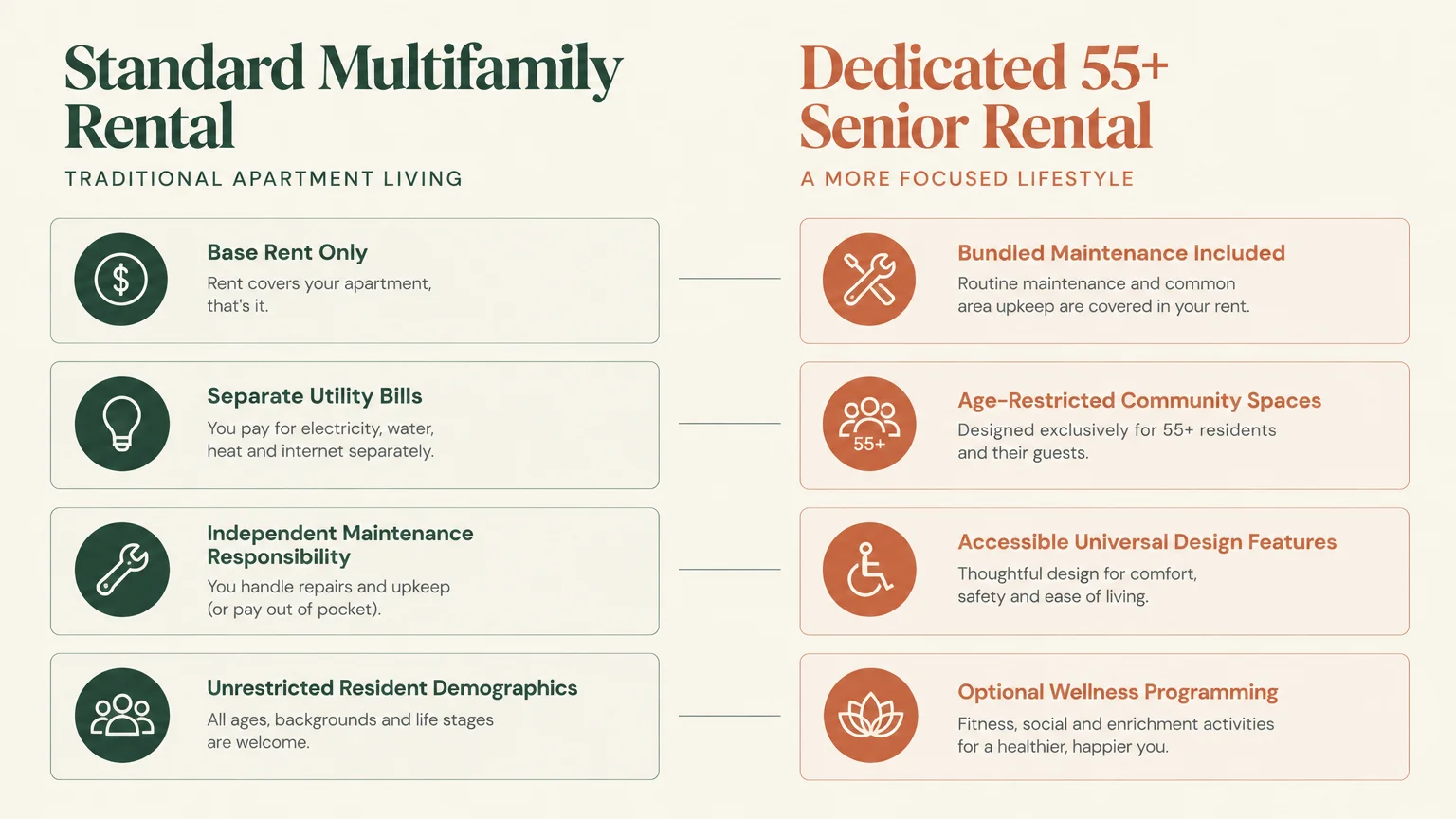
Choosing where to live involves deciding between an independent rental apartment and specialized senior living facilities. Understanding the wide gap in cost structures protects you from unpleasant surprises.
Standard apartments allow you to maintain complete privacy while paying only for shelter and routine maintenance. You control your budget, cook your own meals, and arrange community services as needed.
In contrast, independent living communities provide congregate dining, social programming, and light housekeeping. SeniorLiving.org data shows independent living costs between $3,065 and $3,200 per month—more than double the $1,388 national apartment median.
Assisted living facilities add personal care support, including medication management, bathing assistance, and round-the-clock staffing. The 2026 CareScout Cost of Care Survey places the national median assisted living rate at $6,200 per month, or $74,400 annually.
If you prefer living in a private rental while receiving targeted help, hiring an in-home caregiver offers flexibility. The national median hourly rate for non-medical home care is $35 per hour.
Hiring an aide for 20 hours per week adds roughly $3,030 per month to your standard rental expenses. Full-time care at 44 hours per week costs $6,670 per month, reaching $80,080 each year.
| Housing Option | National Monthly Median | Included Services | Ideal Candidate |
|---|---|---|---|
| Standard 1-Bedroom Apartment | $1,220 | Shelter, exterior maintenance, trash removal | Fully independent seniors seeking minimal overhead |
| Independent Living Community | $3,065 – $3,200 | Shelter, utilities, dining plans, social activities | Active older adults wanting community connection without cooking |
| Assisted Living Facility | $6,200 | Shelter, 24/7 staffing, medication management, meals | Seniors needing daily assistance with personal routines |
| Rental Apartment + Part-Time Care | $4,250 ($1,220 rent + $3,030 care) | Shelter plus 20 hours weekly of home care aid | Retirees needing targeted support while preserving privacy |
Carefully evaluating your current mobility and expected care needs prevents you from overpaying for services you do not use. It also keeps you from remaining in a private apartment that lacks necessary safety modifications.
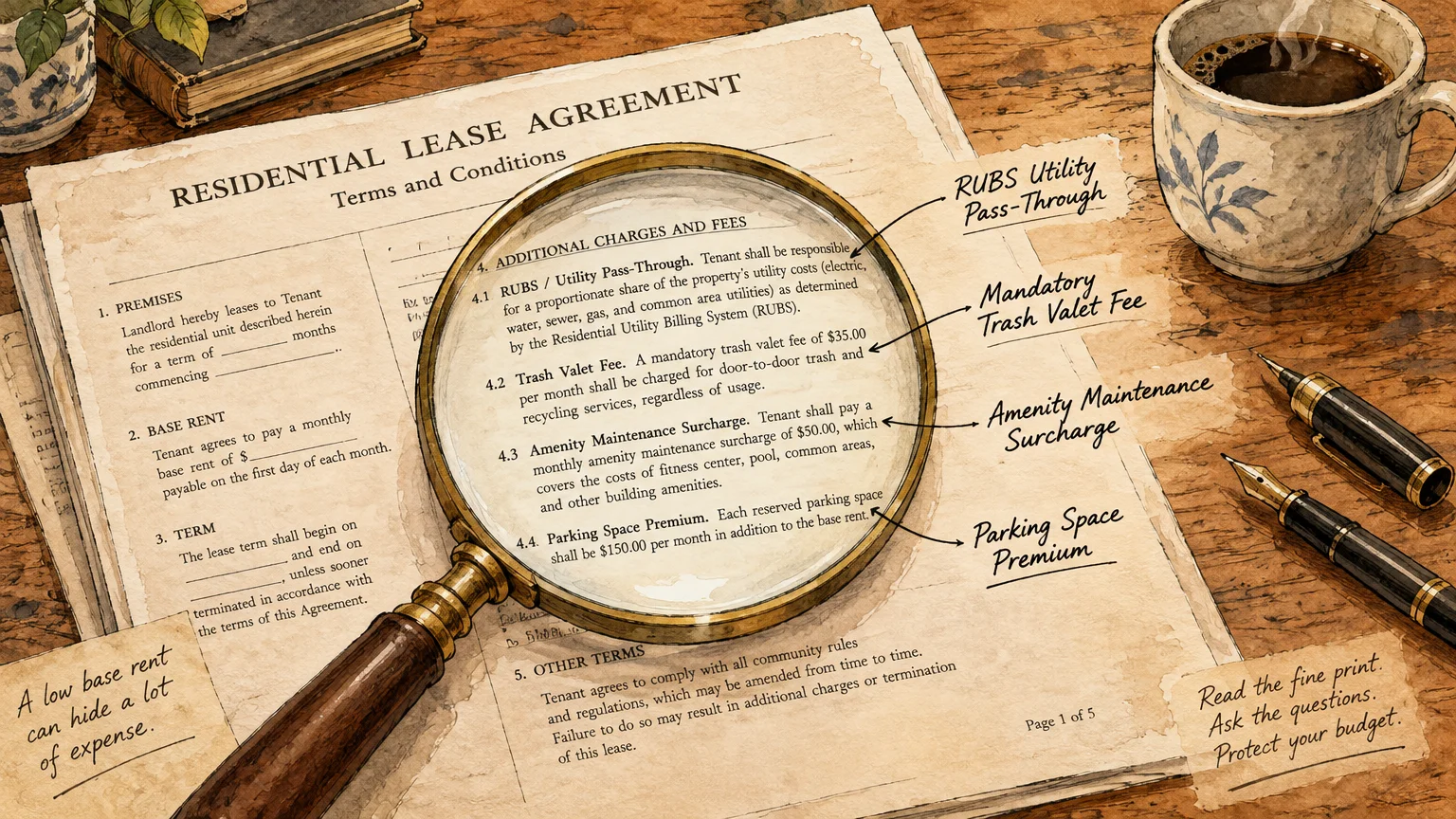
Hidden Costs That Turn Cheap Leases Into Expensive Traps
A bargain rent figure on paper can quickly become unaffordable when secondary expenses spiral out of control. Evaluating the full cost of living in any prospective city protects your checking account.
Heating and cooling expenses vary widely depending on geography, building age, and window insulation. A cheap rental in North Dakota or Kansas can easily produce $250 monthly winter heating bills.
Transportation expenses represent another major hidden cost for retirees. In car-dependent cities lacking transit, maintaining a vehicle adds hundreds of dollars in insurance premiums, gas, and repair bills.
Healthcare access also influences your overall financial bottom line. Relocating to an inexpensive rural county may seem thrifty until you realize your specialist visits require expensive long-distance travel.
Renters insurance is an essential, yet often overlooked, expense that protects your personal belongings and liability. While generally affordable at $15 to $25 monthly, rates climb in storm-prone regions along the Gulf or Atlantic coasts.

What Can Go Wrong: Critical Rental Mistakes to Avoid
Moving during retirement involves significant legal, logistical, and financial commitments. Avoiding common leasing missteps will keep your nest egg intact and your living environment stable.
The first common mistake involves ignoring lease renewal escalation clauses. Landlords in unregulated markets can raise rents by hundreds of dollars after your initial lease term expires.
Always review lease documents for rent caps or clear renewal language before committing. Inquire directly about the community’s historical renewal rate increases over the prior two years.
A second major error is relocating without verifying nearby healthcare provider networks. A cheap apartment provides little comfort if your primary specialists do not accept your insurance plan locally.
Use online provider directories or state health exchanges to confirm doctor availability before moving. Ensuring local clinic networks accept your coverage prevents catastrophic out-of-pocket medical bills.
The third misstep is failing to thoroughly document property conditions upon moving in. Landlords frequently withhold deposits for pre-existing wear and tear that you did not cause.
Take dated photos and high-definition video of every room, appliance, and fixture before unpacking. File a written condition checklist with the property management office within 48 hours of collecting keys.
A fourth critical mistake is depleting your emergency cash reserves to pay upfront move-in fees. First month’s rent, last month’s rent, security deposits, and moving trucks can rapidly consume $5,000 or more.
Never strip your emergency savings account below a three-month cushion simply to secure a lease. Maintain liquid cash reserves to handle sudden prescription changes, dental procedures, or unexpected travel.
Actionable Strategies to Lower Your Rent in 2027
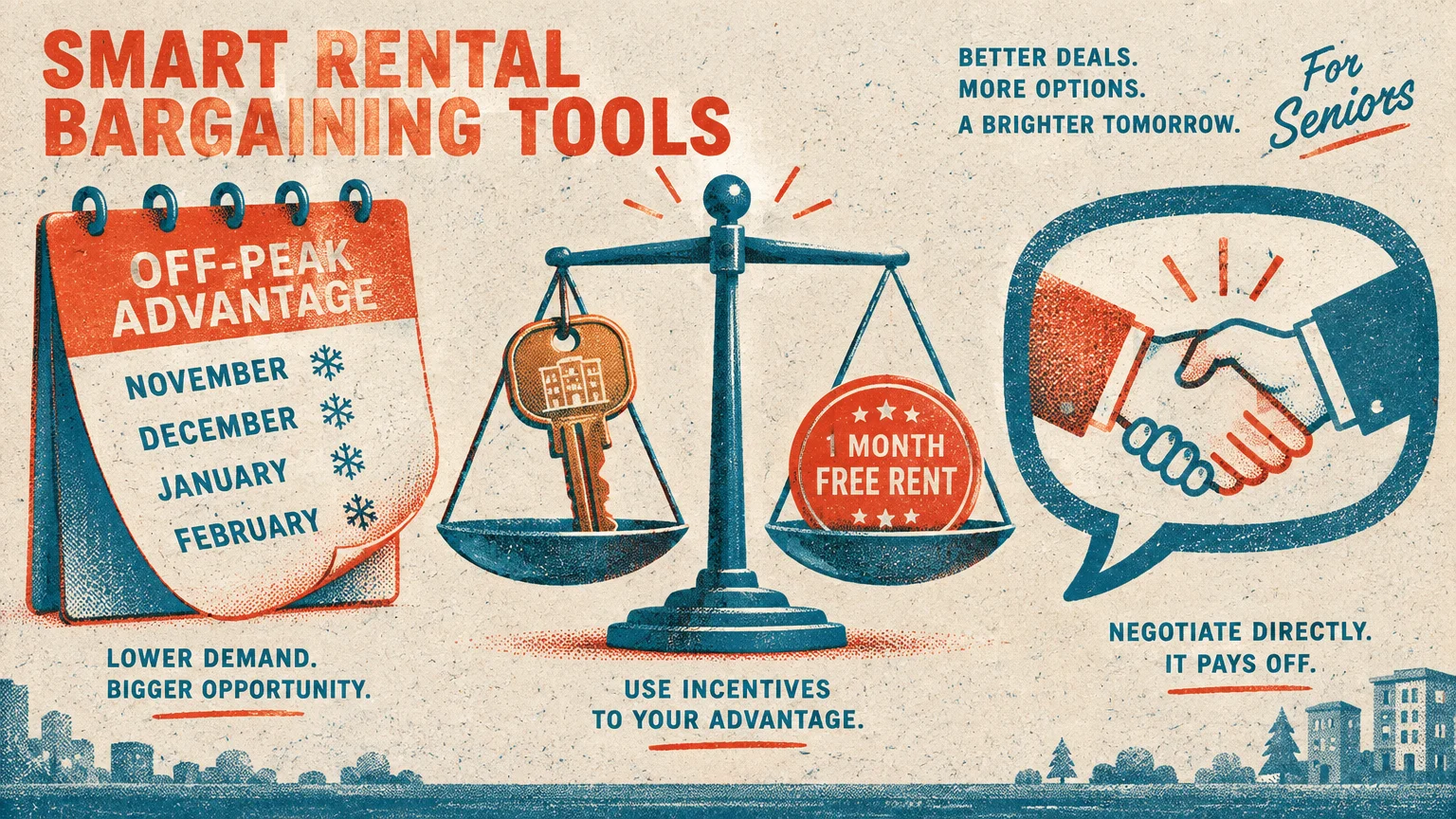
Taking a proactive stance when searching for housing gives you the best chance of securing terms below advertised rates. Landlords facing elevated vacancies are frequently open to reasonable negotiations.
Take full advantage of current market dynamics where 21% of large properties offer concessions. Ask property managers directly for a free month of rent or waived parking and pet fees.
Time your move strategically during the late fall or winter months whenever possible. Rental turnover slows dramatically between November and February, making property managers far more motivated to strike a deal.
Explore subsidized housing programs designed specifically for older adults. The U.S. Department of Housing and Urban Development funds Section 202 Supportive Housing for the Elderly, capping rent at 30% of your adjusted income.
Consider non-traditional leasing arrangements like home-sharing with another retiree. Sharing a two-bedroom apartment in a city like Wichita cuts your individual monthly housing obligation to under $400.
“You must live within your means, and that means choosing a home that lets you sleep peacefully at night without draining your principal.” — Suze Orman, Personal Finance Author
Check consumer protection resources through the Consumer Financial Protection Bureau to understand tenant rights regarding credit reports and background check fees. Knowing your legal protections prevents exploitative application charges.
Finally, connect with community resources through the Eldercare Locator. This public service connects older adults directly with local area agencies on aging that maintain lists of vetted, income-restricted senior housing complexes.

When to Consult a Professional
Navigating housing decisions often intersects with tax laws, investment management, and public benefits. Reaching out to qualified advisors ensures your next move supports your broader retirement goals.
Consult a certified financial planner or tax professional if you plan to sell your home and transition into renting. Managing large capital gains requires careful structuring to avoid surprise tax brackets or higher Medicare premiums.
Speak with an elder law attorney if you anticipate needing Medicaid long-term care benefits within the next five years. Liquidating home equity can violate strict look-back rules if the money is not repositioned properly.
Seek advice from a benefits counselor through AARP or your local Area Agency on Aging if you struggle on a fixed income. They can help you apply for Supplemental Security Income, SNAP benefits, or energy assistance programs.
Engage a licensed real estate broker or tenant rights advocate if a property manager presents an unusually restrictive or confusing long-term lease. Reviewing contract clauses before signing protects you from unlawful fees and predatory terms.
Frequently Asked Questions About Senior Renting in 2027
Can private landlords raise rent without limits on older tenants?
In most states, private landlords can raise rents by any percentage once a lease expires, provided they deliver proper legal notice. Only a few states and municipalities enforce formal rent control ordinances that restrict annual price hikes.
How much income do I need to rent a $1,000 apartment comfortably?
Following the standard 30% affordability guideline, you need a gross monthly income of roughly $3,333, or $40,000 annually, to support a $1,000 rent payment. Most property managers require proof that your gross earnings equal at least three times the monthly rent.
Is renting really cheaper than owning a home during retirement?
National real estate data from Zillow confirms that renting is currently an average of $1,066 per month cheaper than owning a home. Renting shields you from escalating property taxes, homeowners insurance hikes, special assessments, and expensive home repair bills.
How can I identify apartment complexes offering move-in concessions?
Search online rental platforms like Zillow or Zumper using filter terms like “specials” or “concessions.” In addition, touring properties during mid-winter and asking leasing agents directly about promotional terms often uncovers unadvertised rent discounts.
Final Steps for Your Retirement Housing Plan
Finding the ideal balance between lifestyle comfort and rental affordability can redefine your retirement years. Start researching prospective cities early, request fee sheets in writing, and build a realistic budget that accommodates healthcare and utility needs.
The information in this guide is meant for educational purposes. Your specific circumstances—including income, benefits, tax situation, and health needs—may require different approaches. When in doubt, consult a licensed financial advisor or tax professional.
Last updated: October 2026. Benefit amounts, tax rules, and program details change annually—verify current figures with official government sources.









Leave a Reply