
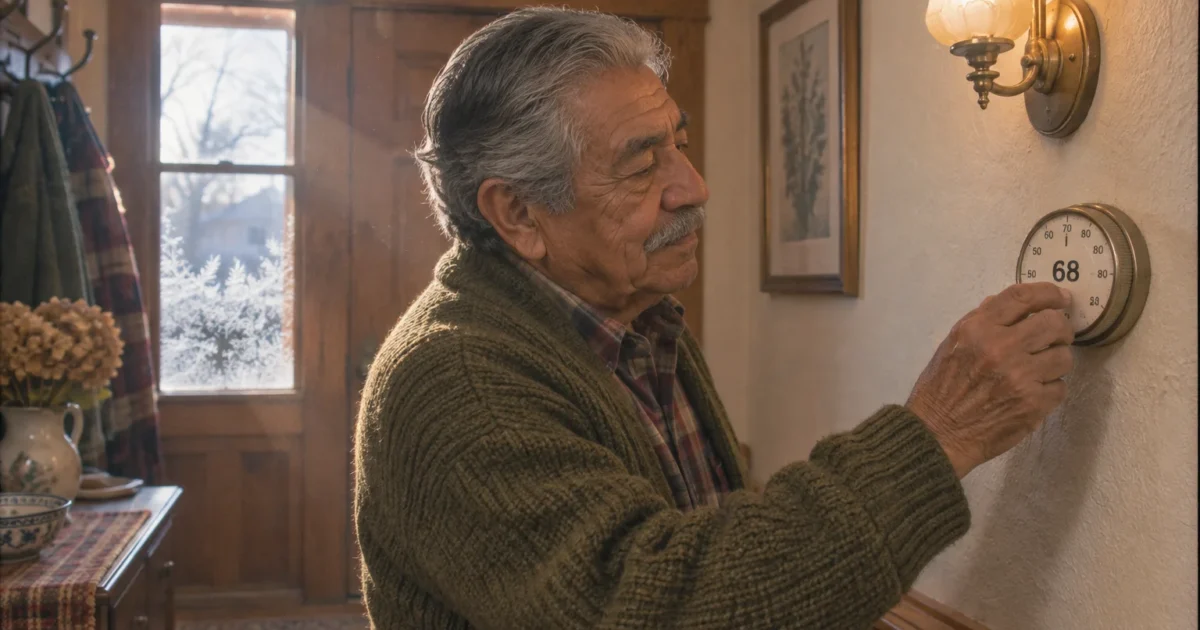
High winter energy bills can quickly squeeze a fixed retirement budget when your home needs steady heat. Through the federal LIHEAP program, millions of households receive direct winter heating help, and adults age 60 and older receive priority consideration nationwide.
Because every state designs and runs its own utility assistance program, your income limits, grant amounts, and application dates depend heavily on where you live.
Knowing how your state handles eligibility, crisis shutoff relief, and benefit protections lets you claim energy bill help before seasonal funding runs out.
Why Winter 2026–2027 Energy Bills Strain Fixed Retirement Budgets
Cold weather drives up household expenses fastest for retirees living on fixed monthly checks. According to the National Energy Assistance Directors Association (NEADA), low-income households spend 8.1% to 8.6% of their income on energy bills, compared with 3.0% for higher-income households.
Across the country, roughly 21.5 million households—about 1 in 6—are already behind on their utility bills, per NEADA. Total household utility debt climbed from $17.5 billion in January 2023 to $21 billion by June 2025, while annual shutoffs rose from roughly 3.3 million in 2023 to 3.5 million in 2024.
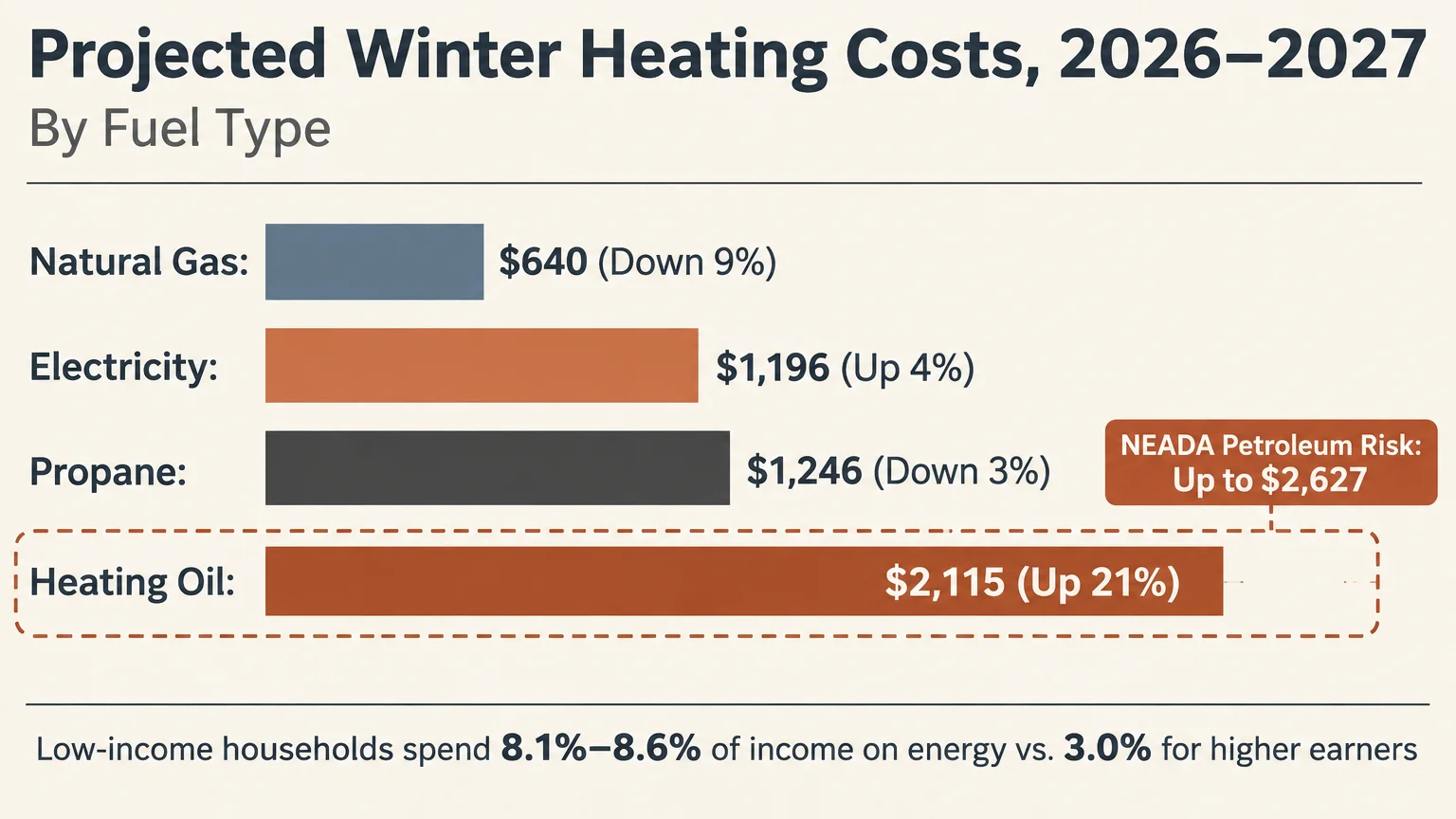
This winter, your heating costs depend largely on the fuel your home uses. In its Winter Fuels Outlook 2026–27 released on October 6, 2026, the U.S. Energy Information Administration (EIA) projected sharp cost differences across the four main heating fuels from November 2026 through March 2027.
| Primary Heating Fuel | Share of U.S. Homes | EIA Projected 2026–2027 Winter Cost | Projected Change vs. Prior Winter |
|---|---|---|---|
| Natural Gas | About 46% | $640 | Down 9% |
| Electricity | More than 40% | $1,196 | Up 4% |
| Propane | About 5% (mostly rural) | $1,246 | Down 3% |
| Heating Oil | About 3% (mostly Northeast) | $2,115 | Up 21% |
Natural gas users received encouraging news in the EIA’s November 2026 Short-Term Energy Outlook. Above-average storage of 3,810 billion cubic feet and mild early November temperatures pushed wholesale Henry Hub winter gas forecasts down further to $2.87 per MMBtu.
Heating oil customers—especially in the Northeast, where roughly 82% of U.S. heating oil is burned—face far steeper increases. While the EIA forecast a 21% jump to $2,115, NEADA warned in late September 2026 that petroleum market disruptions linked to the Iran and Ukraine wars could push seasonal heating oil bills up roughly 50% to $2,627.
By late September 2026, NEADA reported heating oil prices reaching $6.15 per gallon in Massachusetts and $6.27 per gallon in New York. Even before EIA revised gas and propane estimates downward, NEADA estimated in September 2026 that average winter heating costs across all fuels had risen 23.9% since the 2021–2022 winter.
Skipping heat to save money carries serious health risks as you age. The National Institute on Aging (NIA) recommends setting indoor thermostats to 68°F or warmer during winter, warning that indoor temperatures of just 60°F to 65°F can trigger hypothermia—a dangerous drop in core body temperature to 95°F or lower.
Older bodies lose heat faster due to slower metabolism, reduced cold perception, chronic conditions like diabetes or thyroid disorders, and common medications. Centers for Disease Control and Prevention (CDC) mortality data cited by the National Institutes of Health (NIH) showed that 49% of hypothermia deaths between 1999 and 2002 occurred among adults aged 65 and older.
How LIHEAP Works Across States—and Why Rules Vary Where You Live
LIHEAP stands for the Low Income Home Energy Assistance Program, a federal block grant created under Title XXVI of the Omnibus Budget Reconciliation Act of 1981. The Office of Community Services (OCS) inside the U.S. Department of Health and Human Services (HHS) Administration for Children and Families (ACF) oversees the money.
HHS never sends LIHEAP checks directly to your mailbox. Instead, the federal government distributes block grants to all 50 states, Washington, D.C., U.S. territories, and federally recognized Tribes, which run local programs under names like HEAP, EAP, or MEAP.
Because states design their own benefit formulas and filing calendars, two seniors with identical incomes in neighboring states can see very different grant amounts and deadlines. Roughly 80% of all LIHEAP dollars nationwide go directly toward winter heating assistance.
For fiscal year 2027, federal funding is flowing, though early planning matters more than ever. On October 9, 2026, HHS released $3,631,860,000 to states and territories plus $43,965,767 to tribal grantees—representing 90% of available funds under the Continuing Appropriations and Extensions Act, 2027 (Public Law 119-103), signed September 2, 2026.
Overall federal funding has tightened compared with recent years. In fiscal year 2026, ACF released a total of $4,135,400,000 to states and territories, including $100 million from the Bipartisan Infrastructure Law, while regular annual appropriations stood at $4.045 billion—down sharply from $6.1 billion in fiscal year 2023, according to NEADA.
Administrative staffing shifts in Washington also make early applications wise. NEADA noted in 2026 that federal LIHEAP program staff dismissed on April 1, 2025, remained unrehired and that recent administration budget justifications proposed eliminating LIHEAP, warning that local offices could face processing delays even while Congress keeps funding the block grant.
Demand consistently outpaces available dollars every winter. The National Council on Aging (NCOA) reported in February 2026 that LIHEAP helps roughly 6.7 million households per year, yet NEADA estimates that available funding reaches only about 1 in 5—or 20%—of eligible households.
Who Qualifies for Heating Assistance Seniors Can Rely On
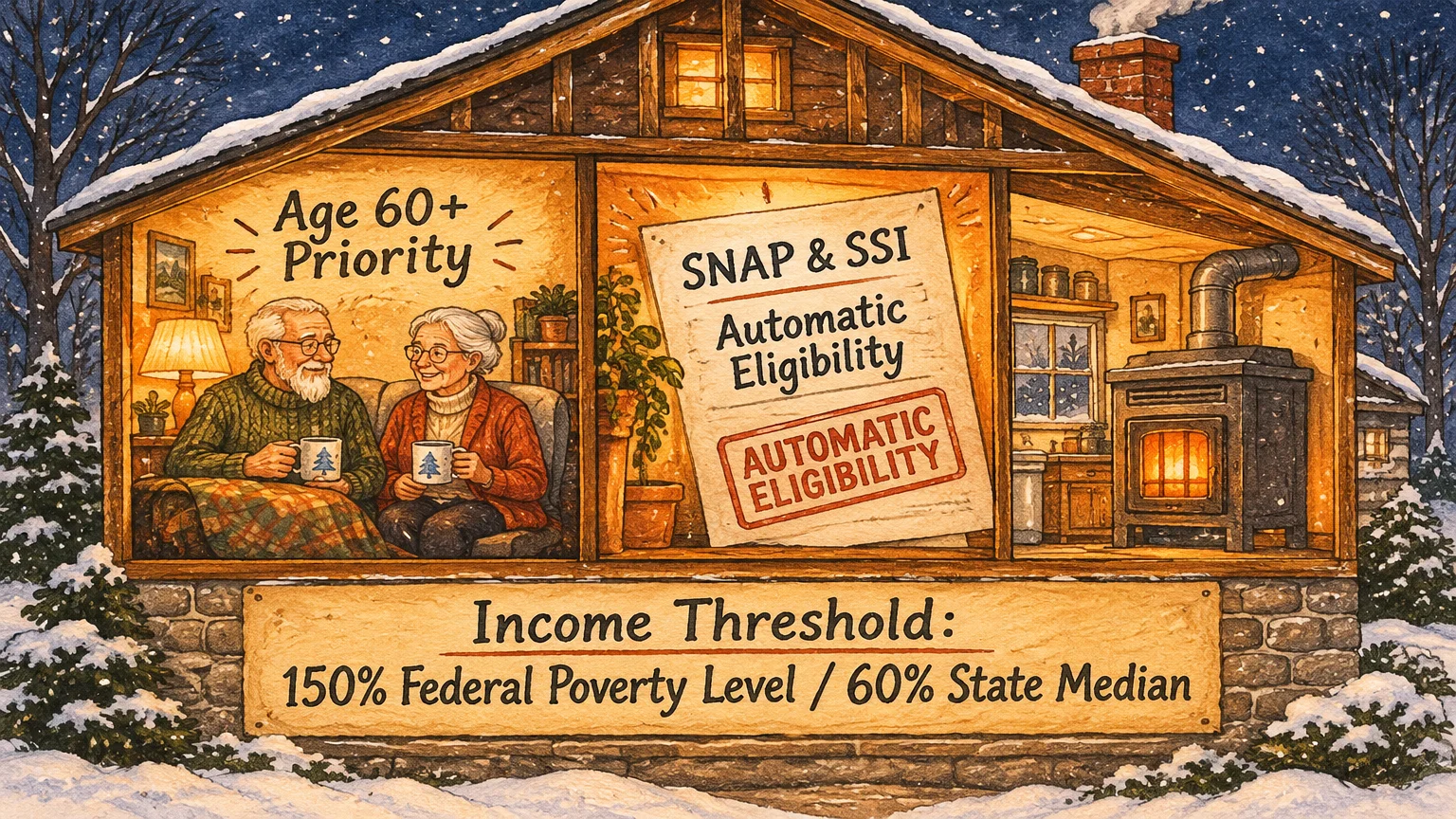
Each state sets its own income cutoff within strict boundaries written into federal law. Under Section 2605(b)(2)(B) of Public Law 97-35, a state cannot set its income ceiling higher than the greater of 150% of the Federal Poverty Guidelines (FPG) or 60% of State Median Income (SMI), and cannot set it lower than 110% of FPG.
On January 15, 2026, HHS published the 2026 Federal Poverty Guidelines that govern fiscal year 2027 LIHEAP programs starting October 1, 2026. For a one-person household, 100% of the poverty guideline equals $15,960 per year in the 48 contiguous states and D.C., $19,950 in Alaska, and $18,360 in Hawaii.
States that use the 60% State Median Income rule often allow significantly higher incomes than states tied strictly to the poverty line. For example, Ohio sets its fiscal year 2027 HEAP ceiling at 175% of the poverty guidelines—allowing up to $27,930 per year for a one-person household and $37,870 for a two-person household.
For larger multi-generational households in the 48 contiguous states, 150% of the 2026 poverty guideline works out to roughly $49,500 for a family of four. Checking your specific state’s table is essential because your retirement income might qualify under a state median income rule even if you think you earn too much.
You can also qualify automatically—known as categorical eligibility—in participating states without proving every dollar of household income. Many states grant automatic eligibility when anyone living in your home receives one of the following programs:
- Supplemental Nutrition Assistance Program (SNAP)
- Supplemental Security Income (SSI)
- Temporary Assistance for Needy Families (TANF)
- Certain means-tested Veterans’ assistance benefits
Both homeowners and renters can receive heating assistance seniors depend on during cold snaps. Even if your landlord includes heat in your monthly rent, many states award grants to help offset rent-embedded energy costs, though residents of public or subsidized housing face state-specific rules.
Best of all, accepting LIHEAP help will never shrink your other safety-net checks or raise your tax bill. Federal law under Section 2605(f)(1) prohibits agencies from counting LIHEAP payments as income or resources for federal taxes, SNAP, SSI, or other public benefit programs.
LIHEAP utility assistance is legally protected from reducing your SNAP food benefits or SSI payments, and you never owe federal income tax on the energy grant you receive.
Priority Access and Extra Protections for Adults Age 60 and Older
Federal LIHEAP rules instruct states to prioritize households with high home energy burdens and vulnerable residents. The statute explicitly designates adults aged 60 and older, people with disabilities, and households with young children as top-priority groups—and roughly 70% of recipient households include at least one of these members.
States turn that federal mandate into real-world advantages for older applicants in different ways. Depending on where you live, your state may offer one or more of these senior-friendly shortcuts:
- Early application windows: Several states open applications exclusively for older adults and disabled residents up to 90 days before general enrollment begins.
- Pre-printed renewal packets: States like Montana mail pre-printed applications to returning older recipients in September or October to simplify yearly reapplication.
- Automatic preauthorization: States like Oklahoma preauthorize eligible senior households automatically without requiring a fresh application each winter.
- Higher benefit points: States like California award extra points on their benefit-calculation matrix for households with seniors, increasing total grant amounts.
Open dates and maximum grant caps vary dramatically from state to state. For fiscal year 2027, Pennsylvania proposed accepting cash and crisis grant applications from November 2, 2026, through April 23, 2027.
Connecticut structured its fiscal year 2027 plan to provide up to $1,995 in total energy bill help for vulnerable low-income households facing crisis conditions. That total combines a $705 base benefit with up to three crisis payments of $430 each.
Beyond direct payments, many states enforce utility disconnection moratoriums that protect older residents from winter shutoffs. Many state rules forbid electric or gas utilities from disconnecting service during freezing weather or when a household holds a physician-certified medical condition—policies you can look up by state on the federal LIHEAP Clearinghouse.
Beyond Monthly Bills: Crisis Relief, Furnace Repairs, and Weatherization
Standard heating grants usually pay a portion of your seasonal fuel bill directly to your utility company or fuel dealer, which takes several weeks to process. If your heat is already off or your fuel tank is nearly empty, ask specifically for LIHEAP crisis assistance.
Under federal law (42 U.S.C. § 8623(c)), every state must keep crisis assistance funds open until at least March 15 each program year. Once you qualify for crisis help, your state must resolve the emergency within 48 hours—or within 18 hours if you face a life-threatening situation, such as no heat in freezing weather or lost power for essential medical equipment.
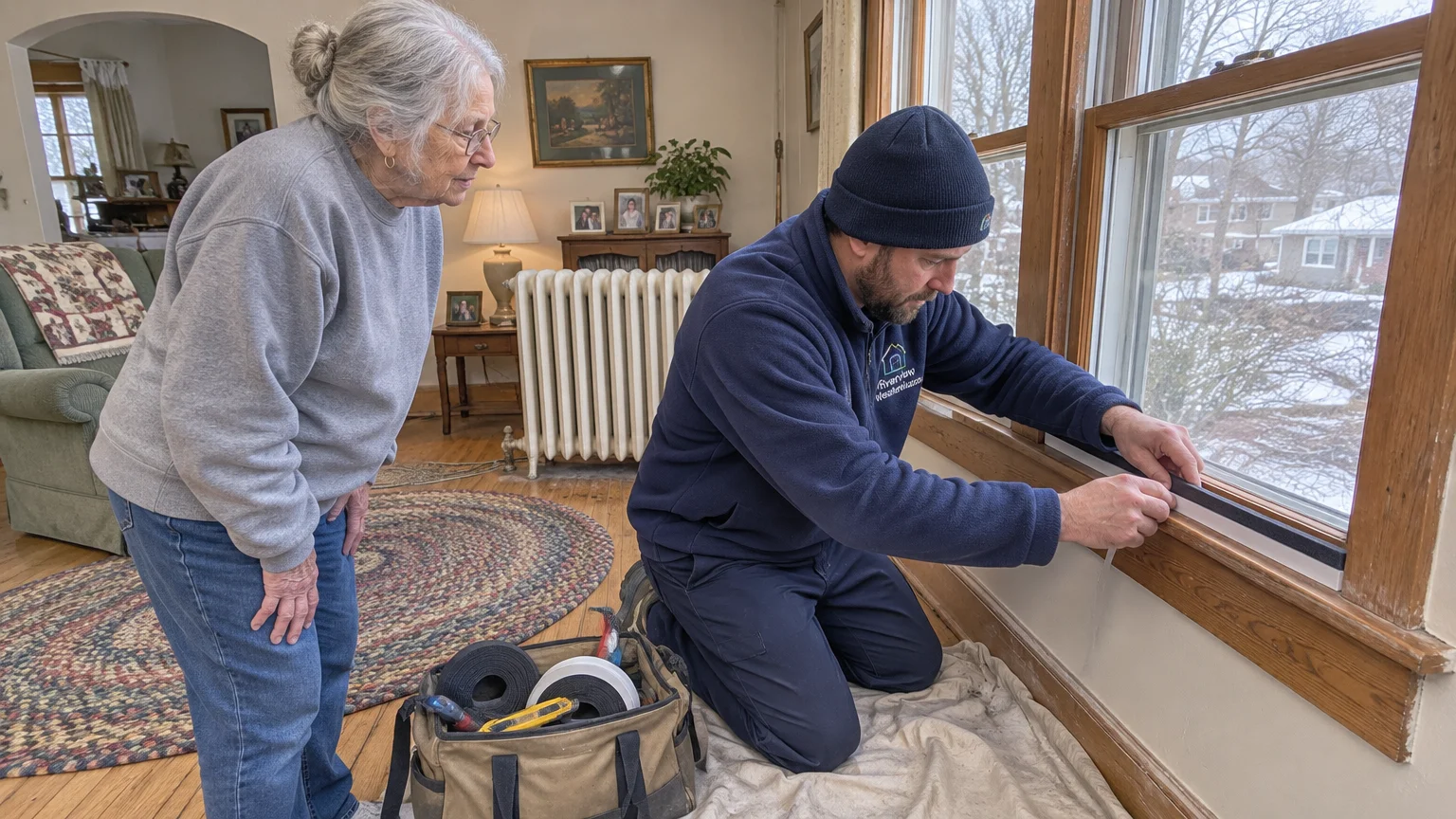
LIHEAP can also help keep warm air inside your home permanently. States have the option to direct up to 15% of their federal LIHEAP grant—or up to 25% with an HHS waiver—toward low-cost weatherization and emergency heating repairs, assisting roughly 50,000 households in fiscal year 2024.
These repairs often cover furnace tune-ups, broken heater replacement, attic insulation, and window caulking. If your state’s LIHEAP repair funds run dry, ask about the separate U.S. Department of Energy (DOE) Weatherization Assistance Program, which serves households earning up to 200% of the poverty guidelines or receiving SSI.
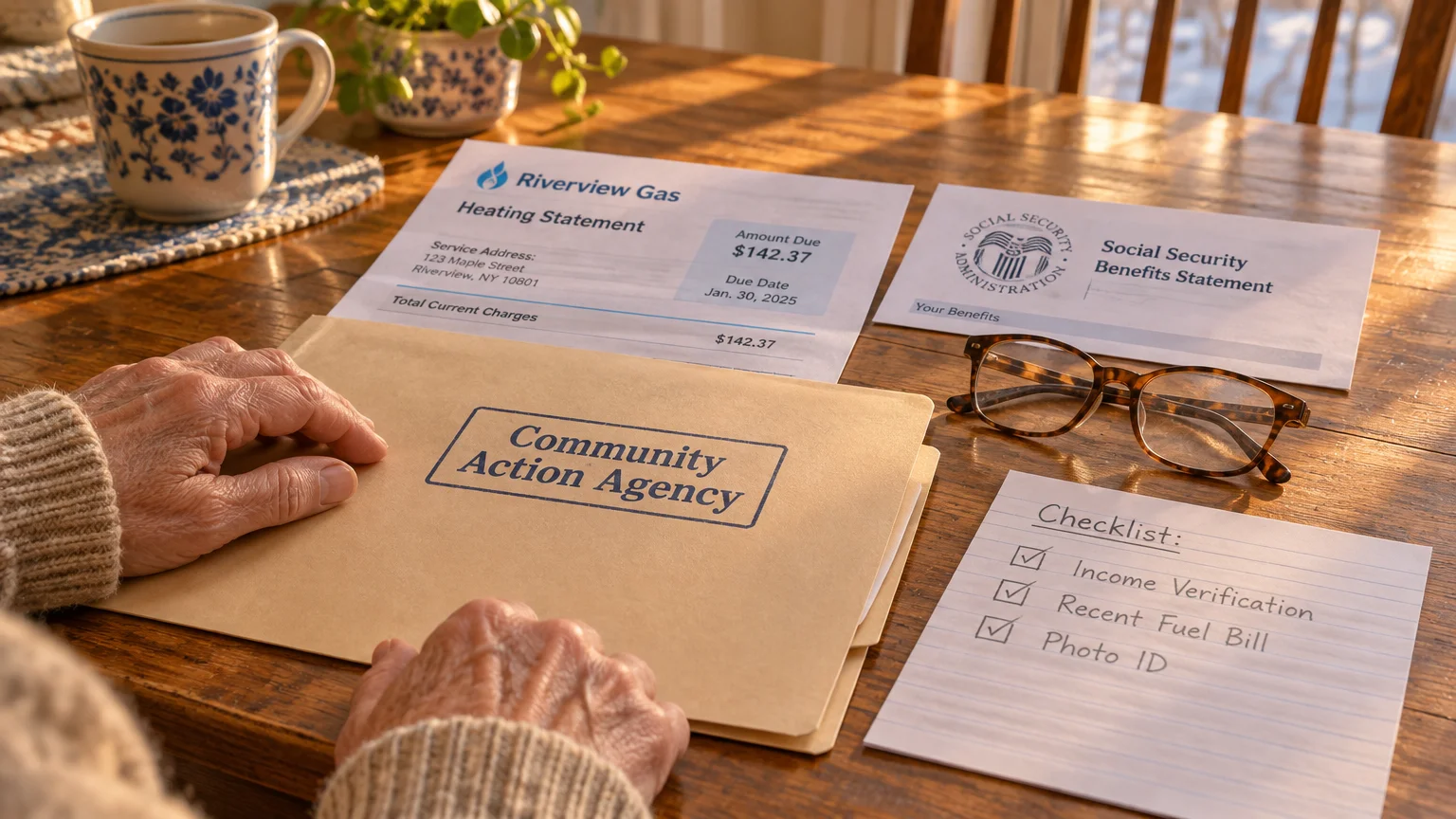
Preparing your paperwork before your state window opens speeds up approval and prevents missing documents from delaying your payment. Follow these practical steps when getting ready to apply:
- Verify your state’s exact application opening date and senior priority window before general enrollment starts.
- Gather your most recent utility bill or fuel delivery statement showing your account number, service address, and fuel type.
- Collect proof of household income—or your award letter for SNAP, SSI, or means-tested Veterans’ benefits if your state allows categorical eligibility.
- Check whether your utility or fuel vendor participates directly in your state’s LIHEAP payment network.
How to Apply for Energy Bill Help Safely and Avoid Scams
You do not have to guess which local agency runs LIHEAP in your county. To find your state intake office, local Community Action Agency, and application portal, contact the National Energy Assistance Referral (NEAR) service at 1-866-674-6327 or visit energyhelp.us.
You can also dial 211 from any phone to connect with local utility assistance coordinators who know your county’s open programs. For broader benefit screening alongside heating aid, explore Benefits.gov, the USA.gov Benefits portal, or the National Council on Aging website.
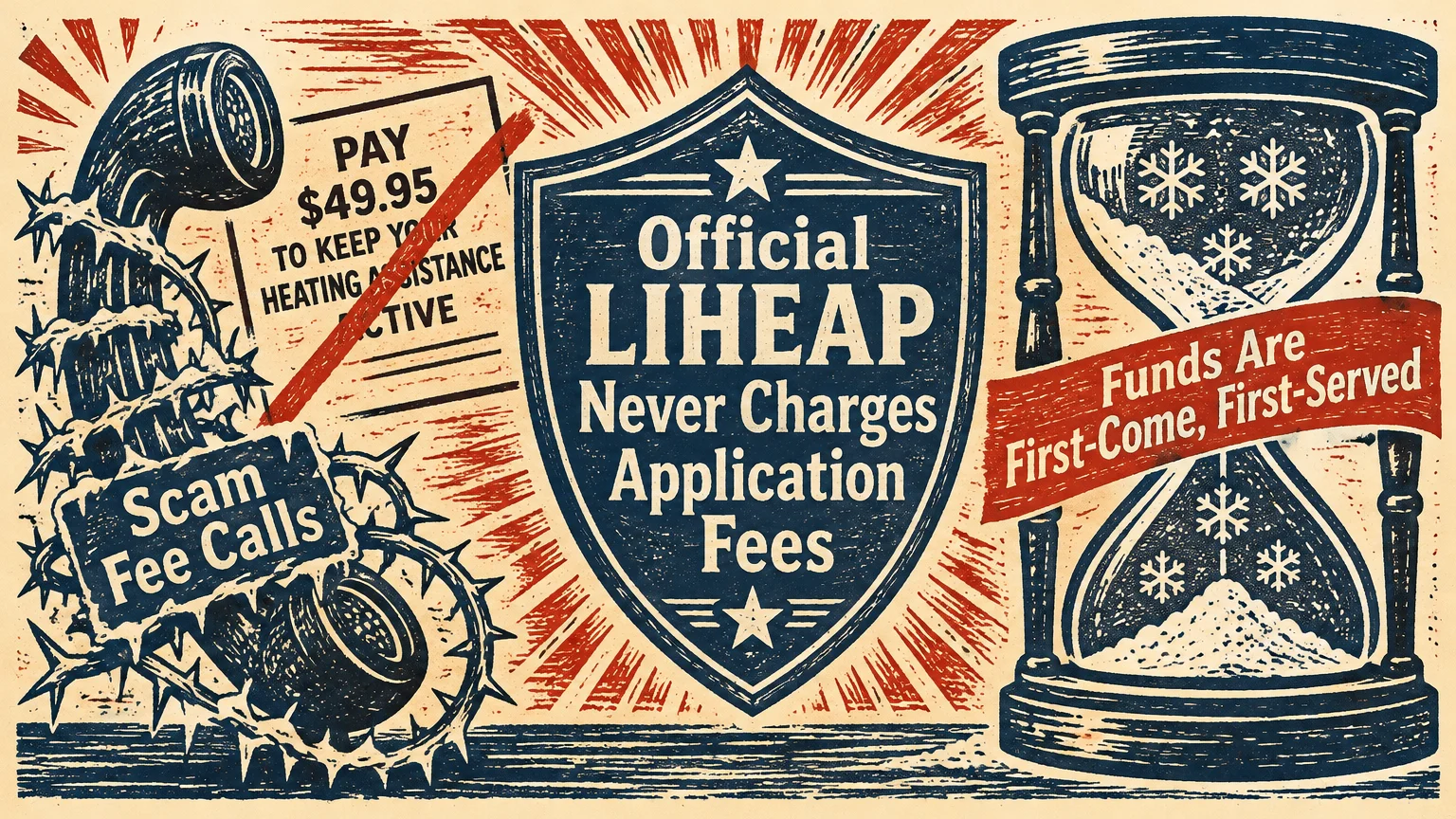
Watch closely for impostors posing as government energy workers during winter months. HHS emphasizes that legitimate LIHEAP offices never charge an application fee.
If anyone asks you to pay money to unlock winter heating help or demands sensitive financial details over an unsolicited call, hang up immediately. Report suspected energy-assistance fraud to the HHS Office of Inspector General fraud hotline at 1-800-447-8477.
Pitfalls to Watch For
Even eligible retirees frequently miss out on utility assistance or lose money unnecessarily due to a few avoidable mistakes. Keep these four common traps off your winter checklist:
- Waiting for a shutoff notice to apply: Because LIHEAP funds reach only about 1 in 5 eligible households, waiting until January or February can leave you facing an empty local budget. Apply during your state’s fall or senior priority window instead.
- Assuming renters cannot qualify: Renters—including many whose heat is built into monthly rent—qualify in participating states. Always check your state rules rather than disqualifying yourself because you do not own your home.
- Keeping your thermostat dangerously low: Dialing your heat down to 60°F or 65°F to stretch a small pension puts older adults at genuine risk of hypothermia. Keep living spaces at 68°F or warmer per NIA guidance and lean on LIHEAP or crisis aid to cover the bill.
- Skipping LIHEAP out of fear of benefit cuts: Some seniors worry an energy grant will count as taxable income or lower their SNAP food allotment. Federal law protects LIHEAP payments from counting against your taxes, SSI, or SNAP benefits.
Getting Expert Help
Navigating state energy rules is much easier when you lean on free, vetted local specialists rather than trying to interpret agency forms alone. Reach out for one-on-one help in these four situations:
- You receive a disconnect notice or run out of heating fuel: Contact your local LIHEAP crisis office or dial 211 immediately and state clearly if anyone in the home faces freezing indoor temperatures or relies on powered medical gear, which triggers 18-hour or 48-hour crisis rules.
- You have a chronic illness or powered medical device: Ask your physician about completing a medical certification form and check your state’s disconnection protections through the LIHEAP Clearinghouse or your state utility commission.
- You struggle with online portals or paperwork: Contact your local Area Agency on Aging through the federal Eldercare Locator or the Administration for Community Living for hands-on application assistance.
- You want to combine heating aid with other retirement support: Meet with a local benefits counselor via NCOA or Benefits.gov to see whether adding SNAP, SSI, or DOE Weatherization can lower your overall monthly expenses.
Frequently Asked Questions About Winter Heating Help
Can I get LIHEAP if I rent my home and heat is included in my rent?
Yes, renters can qualify for LIHEAP in participating states even when heat is included in rent, though exact rules vary by state. Check with your local intake agency if you live in public or subsidized housing, as special calculation rules often apply.
Does LIHEAP count as income on my taxes or lower my SNAP or SSI?
No, Section 2605(f)(1) of the federal LIHEAP statute prevents agencies from counting LIHEAP benefits as income or resources. Your grant will not create federal income tax liability or reduce your SNAP or SSI checks.
How fast can I get emergency utility assistance if my heat is shut off?
Under federal crisis rules, states must provide relief within 48 hours once your crisis application is approved. In a life-threatening emergency—such as no heat during freezing weather or power loss affecting critical medical devices—states must respond within 18 hours.
When do state LIHEAP applications open and close for winter 2026–2027?
Application windows differ widely by state, with many opening senior priority enrollment in September or October and running into spring. Federal law requires crisis assistance funds to remain open until at least March 15 each program year.
Taking Your Next Step Before Winter Deepens
Call NEAR at 1-866-674-6327 or check energyhelp.us today to confirm your state’s fiscal year 2027 income limits, priority windows, and local intake office. Applying early protects both your retirement budget and your safety at 68°F or warmer all winter long.
This is educational content based on general financial principles for seniors. Individual results vary based on your situation. Always verify current benefit amounts, tax rules, and program eligibility with official government sources.
Last updated: November 2026. Benefit amounts, tax rules, and program details change annually—verify current figures with official government sources.





Leave a Reply