

Passing the potatoes often comes with unsolicited financial advice from well-meaning relatives. You can easily protect thousands of dollars in lifetime income by separating fact from dining room fiction before claiming your hard-earned benefits.
Misinformation spreads quickly across the dinner table, especially when headlines trigger retirement anxiety. Relying on casual chatter can permanently shrink your monthly retirement checks and disrupt your household budget.
Here is the truth behind the eight most pervasive Social Security myths. Arming yourself with verified facts ensures you claim every single dollar you earned.
Myth 1: “Social Security Is Running Out and Won’t Exist for You”
A favorite dinner table prediction claims the program will vanish before you collect a dime. This persistent claim misinterprets how the system is funded and managed.
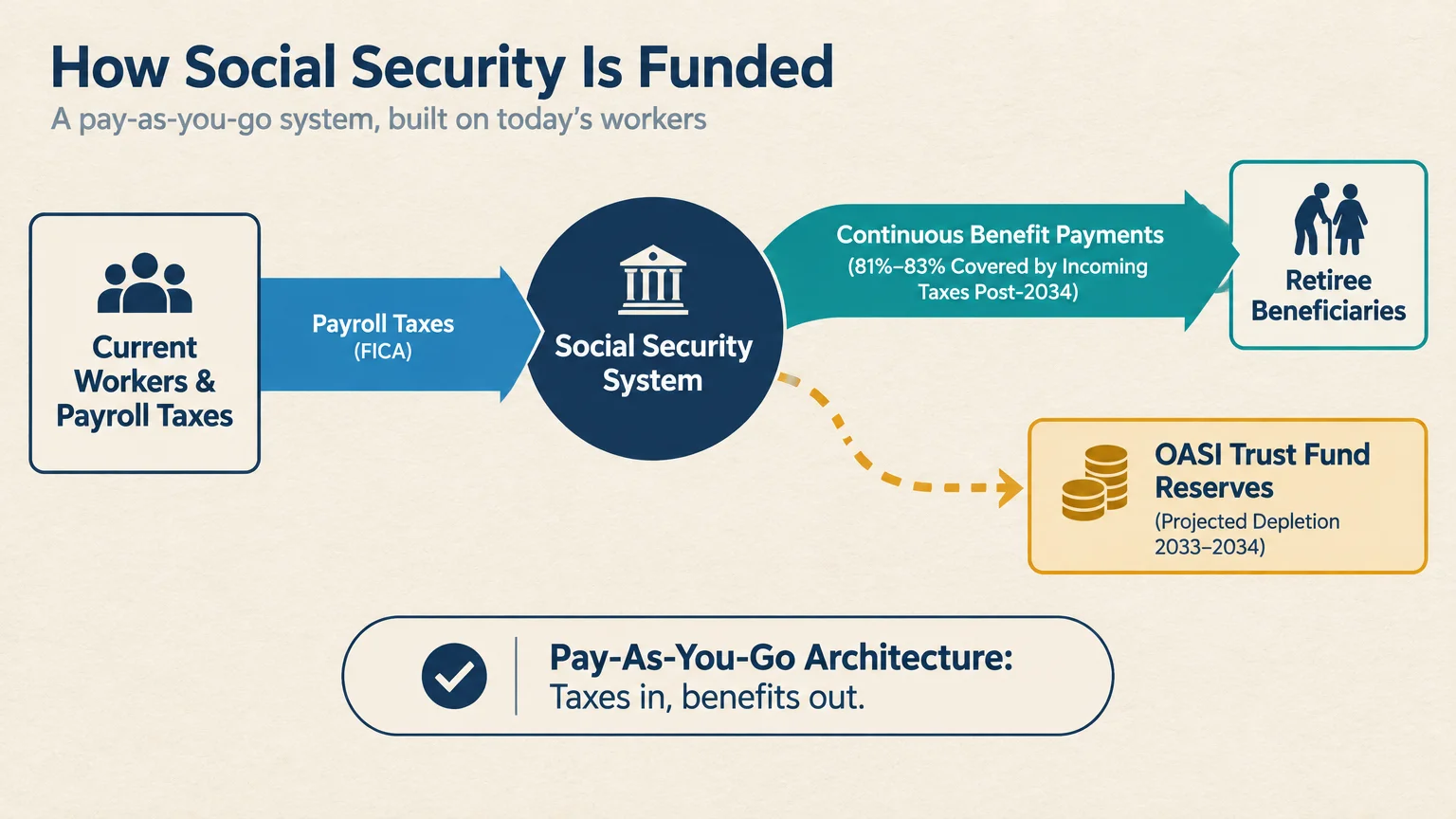
According to the Social Security Administration, the Old-Age and Survivors Insurance (OASI) Trust Fund reserves face depletion between 2032 and 2033. The combined trust funds project reserve depletion around 2034.
Reserve depletion does not mean the program goes bankrupt or shuts down. Social Security operates primarily on a pay-as-you-go model supported by working Americans.
Current payroll taxes flow directly into the program to pay present-day retirees. Even if Congress takes no action before the reserves deplete, tax revenues will still cover roughly 81% to 83% of scheduled benefits.
Congress has resolved similar funding shortfalls in past decades through bipartisan legislation. Benefits may face minor future adjustments, but payments will not suddenly drop to zero.
Myth 2: “Full Retirement Age Is Still 65”
Generations of workers grew up hearing that retirement begins at age 65. Many relatives still believe this age represents the standard threshold for collecting full checks.
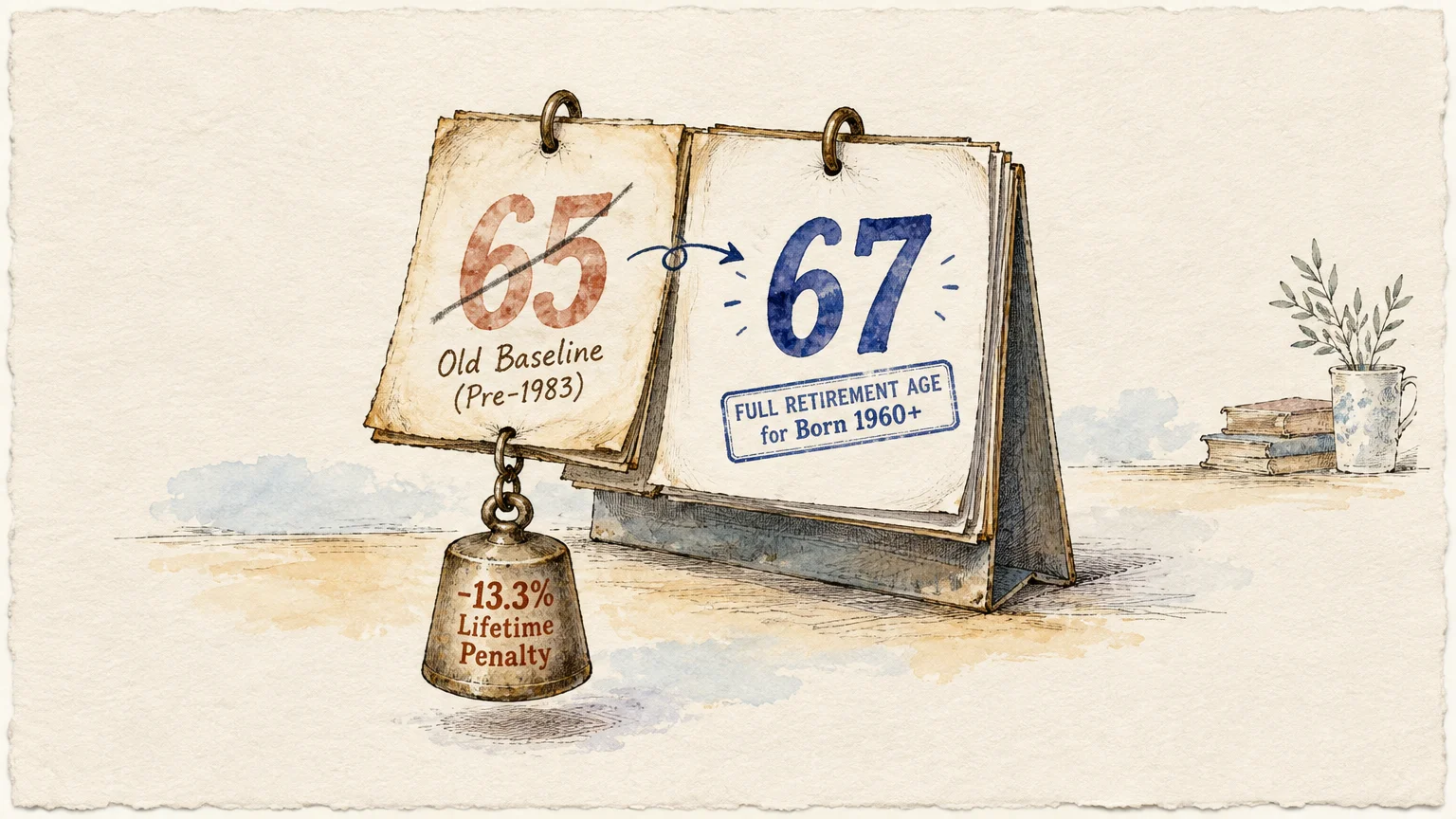
Congress changed the statutory retirement timeline more than forty years ago. The 1983 Social Security amendments created a gradual phase-in to reflect rising life expectancies.
For anyone born in 1960 or later, your Full Retirement Age (FRA) is officially 67. Claiming benefits at age 65 when your FRA is 67 triggers an early claiming penalty.
Filing at 65 permanently reduces your monthly payment by roughly 13.3%. That lifetime cut surprises many retirees who assume age 65 unlocks 100% of their earned benefits.
Myth 3: “You Should Always Claim at Age 62 Before Rules Change”
Family members often urge new retirees to grab their money as early as possible. This advice usually stems from fear rather than mathematical analysis.
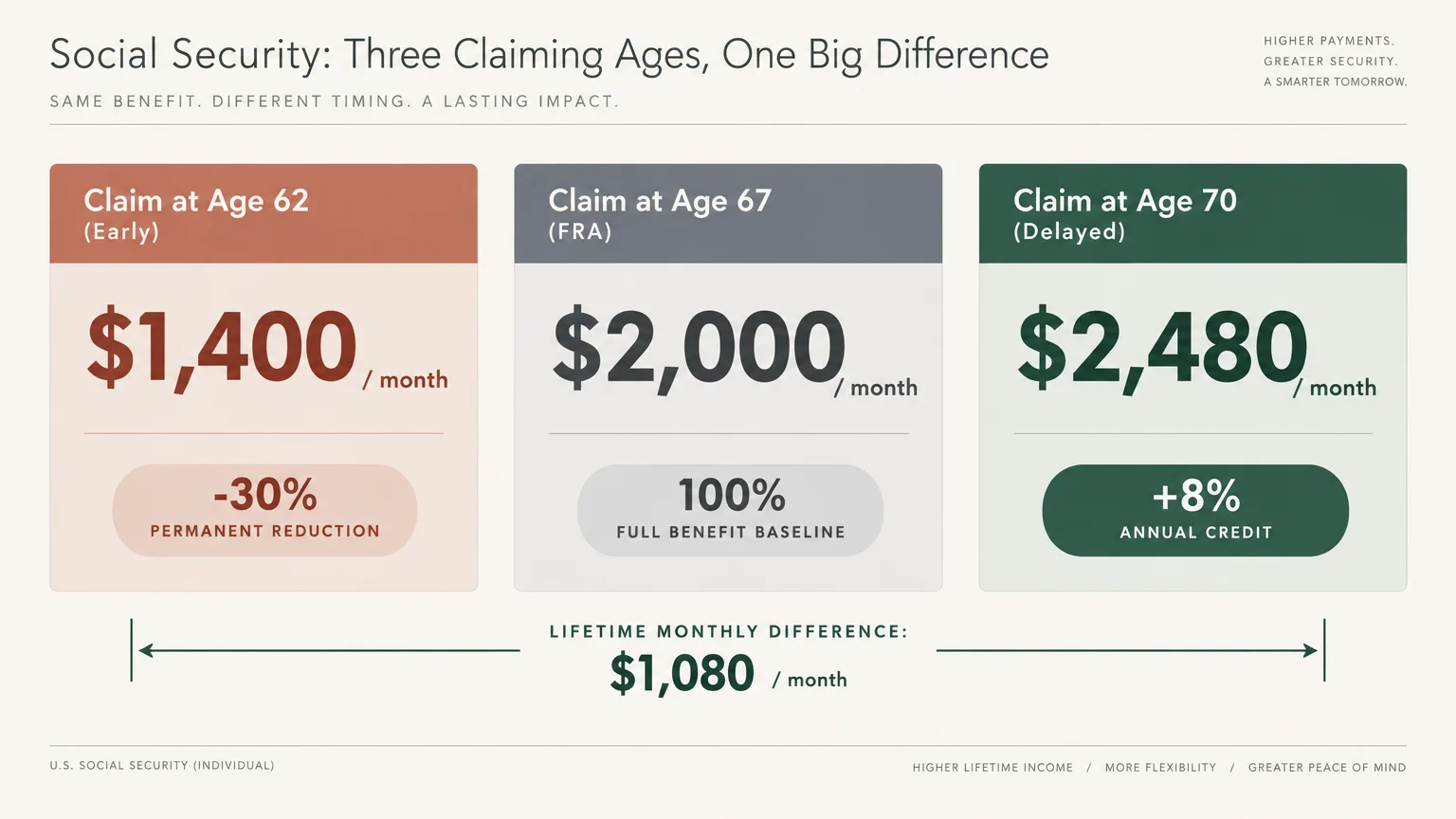
You can legally begin collecting retirement benefits at age 62. However, filing at 62 locks in a permanent monthly reduction of up to 30% compared to your FRA.
Delaying your claim past your Full Retirement Age produces delayed retirement credits. Your monthly benefit grows by approximately 8% for every year you wait up to age 70.
“A guaranteed 8% annual return does not exist in any other safe financial vehicle today.” — Jean Chatzky, Financial Journalist
If your monthly benefit at an FRA of 67 is $2,000, filing at age 62 reduces it to $1,400. Delaying until age 70 raises that exact same benefit to $2,480 each month.
That represents a $1,080 monthly difference that lasts for the rest of your life. While claiming early makes sense for those facing severe health challenges, rushing to claim out of panic often proves costly.

Myth 4: “Working While Receiving Benefits Forfeits Your Checks Forever”
Working retirees often hear that earning an income completely wipes out their Social Security benefits. This myth leads people to turn down enjoyable part-time work unnecessarily.
The Retirement Earnings Test applies only to beneficiaries who have not yet reached their Full Retirement Age. If you are under FRA all year, the SSA withholds $1 in benefits for every $2 earned above the annual exempt limit.
The annual earnings limit was $23,400 in 2025 and rises to $24,480 for 2026. In the calendar year you reach FRA, the SSA withholds $1 for every $3 earned above a higher threshold ($62,160 in 2025; $65,160 in 2026).
The government does not keep or forfeit withheld benefits. When you reach Full Retirement Age, the SSA automatically recalculates your monthly benefit upward to credit back the withheld amounts.
Once you reach your FRA month, the earnings test vanishes entirely. You can earn an unlimited income from wages or self-employment without losing a single dollar of benefits.
Myth 5: “Your Social Security Benefits Are Completely Free From Federal Taxes”
Older relatives who retired decades ago sometimes claim retirement benefits are never taxed. Unfortunately, modern tax rules frequently surprise seniors with unexpected tax bills.
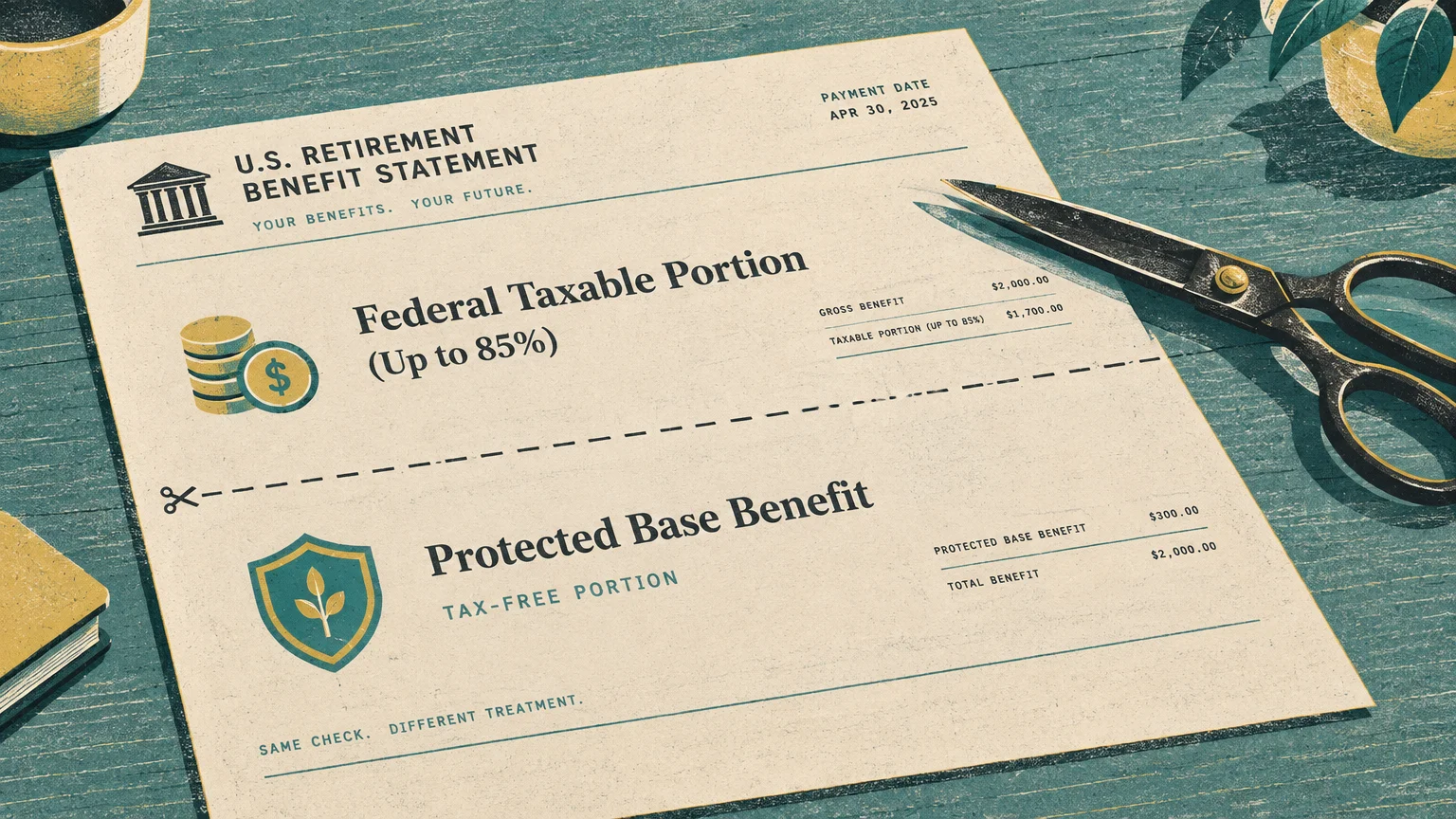
According to the Internal Revenue Service, up to 85% of your benefits can face federal income taxation depending on your “combined income.” Combined income equals your adjusted gross income, plus nontaxable interest, plus half of your annual Social Security benefits.
Single filers with combined income between $25,000 and $34,000 may pay income tax on up to 50% of their benefits. If your combined income exceeds $34,000, up to 85% becomes taxable.
For married couples filing jointly, combined income between $32,000 and $44,000 exposes up to 50% of benefits to tax. Joint income exceeding $44,000 subjects up to 85% of benefits to taxation.
“Tax planning for Social Security is not about what you make; it is about what you keep after Uncle Sam takes his cut.” — Ed Slott, CPA and Retirement Specialist
Congress enacted these dollar thresholds in 1983 and 1993 without indexing them for inflation. Because normal wage growth and cost-of-living adjustments raise incomes over time, more middle-income seniors face taxation each year.

Myth 6: “A Divorce Erases Any Claim to Your Ex-Spouse’s Earnings Record”
Many divorced seniors believe their separation permanently stripped them of spousal benefits. In reality, federal law protects long-term former partners.
You can collect divorced spousal benefits based on your former partner’s work record if your marriage lasted at least 10 consecutive years. You must also be at least 62 years old and currently unmarried.
An eligible divorced spouse can receive up to 50% of the former spouse’s Full Retirement Age benefit. Claiming this benefit does not reduce the payout received by your ex-spouse or your ex-spouse’s current family.
Your former partner does not even need to be notified when you apply. The Social Security Administration processes your claim confidentially using marriage certificates and divorce decrees.

Myth 7: “Politicians Raided the Trust Fund and Left Empty IOUs”
Conspiracy theories about politicians stealing the Social Security trust fund are dining room staples. This myth confuses government borrowing practices with theft.
By law, excess payroll tax revenues cannot sit in cash accounts or commercial banks. The Social Security Act requires the Treasury to invest all surplus revenues into special-issue U.S. government securities.
These securities are backed by the full faith and credit of the United States government. They earn regular interest just like standard Treasury bonds purchased by private investors worldwide.
When the program needs money to pay benefits, the Treasury redeems these bonds with interest. The trust fund holds legal government bonds rather than worthless paper slips.

Myth 8: “Cost-of-Living Adjustments Guarantee Your Healthcare Costs Are Covered”
Family members often view the annual Cost-of-Living Adjustment (COLA) as a generous raise meant to cover escalating medical expenses. In practice, the adjustment formula works quite differently.
The annual COLA is calculated mathematically using the Consumer Price Index for Urban Wage Earners and Clerical Workers (CPI-W). This index monitors spending patterns among working individuals rather than older retirees.
Because working households spend proportionally less on prescriptions and healthcare than seniors, the CPI-W frequently underestimates senior inflation. Annual adjustments totaled 2.5% for 2025 and 2.8% for 2026.
Rising healthcare expenses often consume a significant portion of this annual adjustment. Premiums for Medicare Part B are deducted directly from Social Security checks, muting the net gain for many households.
You can review current Medicare premium updates directly through Medicare.gov to see how premiums impact your net benefit.
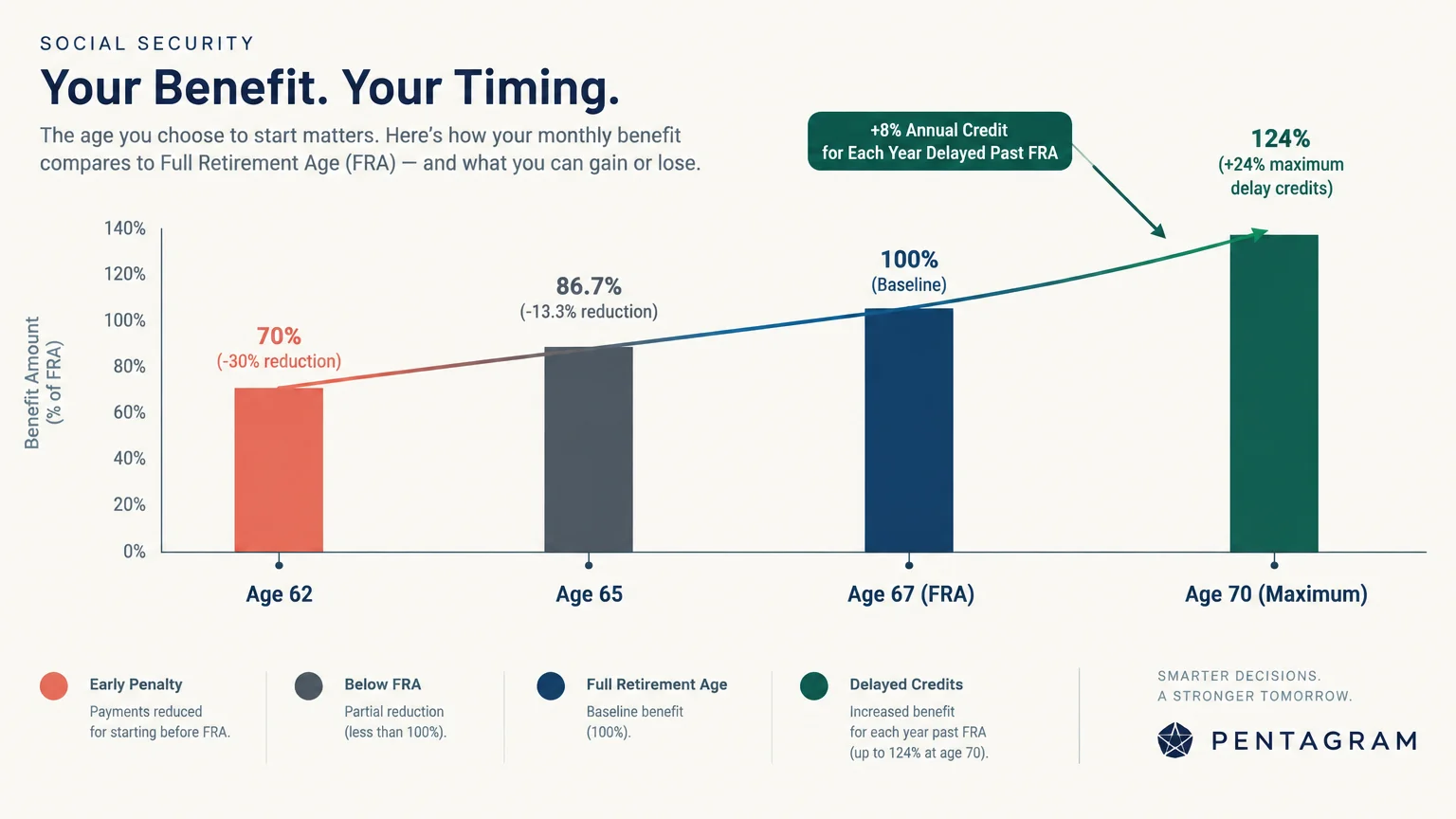
Claiming Age Comparison: Understanding the Financial Impact
Selecting your claiming age is one of the most critical decisions in your retirement journey. The table below illustrates the financial difference across claiming ages for someone with a $2,000 monthly benefit at FRA.
| Claiming Age | Benefit Level (% of FRA) | Estimated Monthly Check | Primary Advantage or Consideration |
|---|---|---|---|
| Age 62 | 70% | $1,400 | Provides early liquidity, but locks in a permanent 30% reduction. |
| Age 65 | 86.7% | $1,734 | Aligns with Medicare eligibility, but still incurs an early filing penalty. |
| Age 67 (FRA) | 100% | $2,000 | Unlocks full earned benefits without early retirement reductions. |
| Age 70 | 124% | $2,480 | Maximizes lifetime monthly check through delayed retirement credits. |
Monthly payouts stop accumulating delayed credits once you reach age 70. Waiting past your 70th birthday offers no financial advantage.

Common Mistakes to Avoid When Planning Your Benefits
Believing popular myths often leads directly into preventable financial missteps. Watch out for these common planning errors before filing your paperwork.
- Failing to Coordinate Spousal Benefits: Married couples often claim early without examining survivor protections. The higher-earning spouse provides a larger surviving benefit by delaying their claim as long as possible.
- Neglecting Annual Wage Records: The SSA calculates your benefits based on your highest 35 earning years. Failing to verify your earnings record on your online SSA account can leave clerical errors uncorrected.
- Overlooking State Income Taxes: While most states exempt Social Security benefits, several states continue to tax retirement income above specific income limits.
- Rushing to Claim Out of Political Anxiety: Claiming at 62 due to alarming headlines permanently depresses your guaranteed income stream. Base your timing on your health, career, and household wealth instead.

Finding the Right Financial Professional
Navigating benefit rules can feel overwhelming when juggling investments, pensions, and taxes. Consulting a qualified professional can clarify your options.
Consider consulting a fee-only fiduciary financial advisor if you face any of the following scenarios:
- You own traditional IRAs or 401(k) accounts that will trigger large Required Minimum Distributions alongside Social Security benefits.
- You have a complex household structure involving an ex-spouse, minor dependents, or a significant age gap between partners.
- You plan to continue consulting or working part-time between age 62 and your Full Retirement Age.
- You want to model tax-efficient withdrawal strategies that keep combined income below federal benefit taxation brackets.
You can find verified educational materials on managing retirement assets from the Consumer Financial Protection Bureau.
Frequently Asked Questions About Social Security
Can I change my mind after claiming Social Security early?
Yes, you can cancel your claim within 12 months of filing by submitting Form SSA-521. However, you must repay all benefits collected by you and your family.
Will my monthly benefit increase when my spouse passes away?
You will not receive both benefits combined. Instead, the SSA steps your benefit up to the higher of the two monthly amounts.
Does enrolling in Medicare at 65 require claiming Social Security?
No, Medicare enrollment and Social Security claiming are entirely separate decisions. You can sign up for Medicare at 65 while delaying Social Security checks until age 70.
How does part-time work recalculate my benefit?
If your part-time wages rank among your highest 35 lifetime earning years, the SSA automatically recalculates your benefit upward the following year.
Protecting Your Hard-Earned Retirement Income
Family dinners are wonderful for catching up, but dining table chatter should never replace verified retirement planning. Understanding the mechanics of Full Retirement Age, taxation, and spousal rights gives you lasting financial stability.
Take time to log into your official Social Security portal, inspect your lifetime earnings records, and run personalized claiming scenarios. Making informed choices today guarantees you enjoy the retirement security you worked so hard to build.
The information in this guide is meant for educational purposes. Your specific circumstances—including income, benefits, tax situation, and health needs—may require different approaches. When in doubt, consult a licensed financial advisor or tax professional.
Last updated: February 2026. Benefit amounts, tax rules, and program details change annually—verify current figures with official government sources.









Leave a Reply