

Waking up with stiff, aching joints can make even simple daily tasks feel like a heavy burden. If you dread rolling out of bed because your knees, back, or shoulders need an hour to “warm up,” you know exactly how frustrating morning stiffness can be. According to the Centers for Disease Control and Prevention (CDC), nearly 54 percent of adults aged 75 and older manage some form of arthritis. But managing joint pain is not just a matter of physical comfort; it has a profound, direct impact on your financial security in retirement.
When mobility declines, the risk of falls increases. The National Council on Aging (NCOA) reports that one in four Americans aged 65 and older falls each year, driving total non-fatal fall-related healthcare costs to a staggering $80 billion annually. Over 67 percent of those costs fall on Medicare, but the out-of-pocket expenses for deductibles, copays, and home modifications can quickly drain your personal savings.
The good news is that you have a powerful, completely free tool at your disposal to protect both your joints and your wallet: a daily stretching habit. By incorporating simple morning stretches for seniors into your routine, you can lubricate your joints, increase blood flow, and significantly reduce your risk of costly injuries.
How Daily Movement Protects Your Retirement Budget
It is easy to separate your physical health from your financial planning, but the two are deeply intertwined. A sudden fall or a sharp decline in mobility often leads to emergency room visits, specialist consultations, and months of physical therapy.
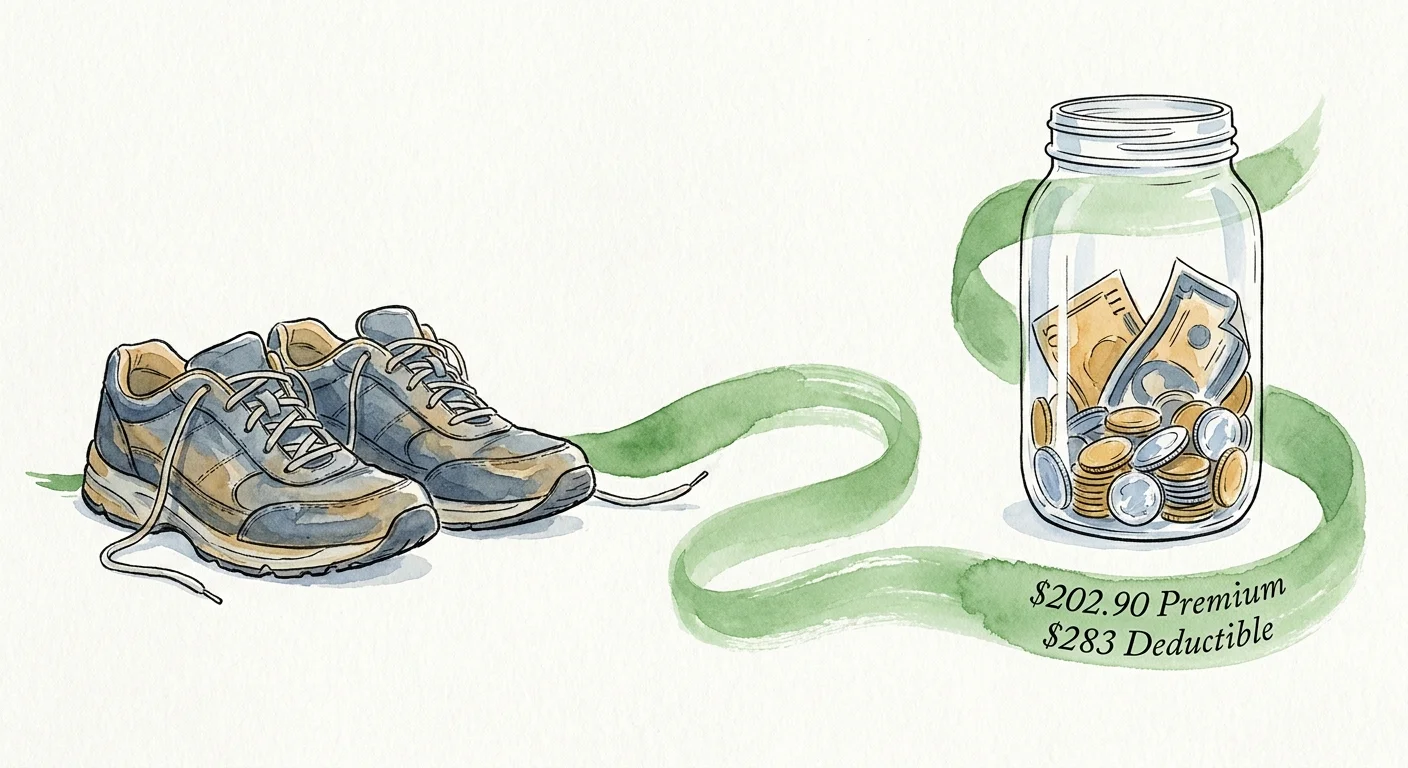
Consider the costs associated with Medicare Part B, which covers outpatient services like physical therapy. In 2026, the standard Medicare Part B monthly premium is $202.90, and the annual deductible is $283. Once you meet that deductible, you typically pay 20 percent of the Medicare-approved amount for physical therapy services. If you require months of rehabilitation to recover from a joint injury or a fall, that 20 percent coinsurance can easily add hundreds or thousands of dollars to your annual expenses.
If your monthly Social Security benefit is $1,900, an unexpected $500 medical bill from a minor fall can severely disrupt your monthly budget. Investing just ten minutes a day into a flexibility routine 60+ helps keep your muscles pliable, your joints healthy, and your balance steady—acting as a free insurance policy against unexpected medical bills.
“The better your physical condition today, the lower your expenses will likely be down the road. That’s not just about money—it’s about your quality of life.” — Suze Orman, Personal Finance Expert

8 Morning Stretches to Ease Joint Pain and Boost Energy
You do not need fancy equipment or a gym membership to benefit from stretching. These eight easy exercises aging adults can perform safely will help you find joint pain relief, improve your balance, and boost your morning energy. Perform these stretches slowly, breathing deeply through each movement. Never force a stretch to the point of sharp pain.
1. Neck Half-Circles
Sleeping in an awkward position can leave your neck incredibly stiff, leading to headaches and poor posture throughout the day. This gentle stretch restores mobility safely.
- Sit upright on the edge of your bed or in a sturdy chair with your feet flat on the floor.
- Relax your shoulders down and away from your ears.
- Slowly drop your chin toward your chest until you feel a gentle pull along the back of your neck.
- Gently roll your head so your right ear moves toward your right shoulder. Hold for a few seconds.
- Slowly roll your chin back down to your chest, then bring your left ear toward your left shoulder.
- Repeat this fluid half-circle motion 5 times in each direction.
2. Seated Shoulder Rolls
Tight shoulders can restrict your breathing and make lifting objects difficult. Shoulder rolls stimulate blood flow and relieve tension in your upper back.
- Sit up tall and let your arms hang loosely at your sides.
- Inhale deeply and shrug both shoulders up toward your ears.
- Exhale as you roll your shoulders backward and down, squeezing your shoulder blades together slightly.
- Complete 10 backward rolls, then reverse the direction and complete 10 forward rolls.
3. Seated Torso Twist
Your spine requires regular rotation to stay healthy. This stretch relieves lower back stiffness and engages your core muscles, which are vital for maintaining your balance.
- Sit sideways on a sturdy, armless chair with your feet firmly planted.
- Inhale and lengthen your spine, sitting as tall as possible.
- Exhale and gently twist your torso toward the back of the chair, using your hands on the backrest for light support.
- Hold the stretch for 15 to 20 seconds, taking deep breaths.
- Slowly release, turn around to sit on the other side of the chair, and repeat the twist in the opposite direction.
4. Knee-to-Chest Stretch
This is an excellent movement for loosening tight hips and easing tension in the lower back before you even stand up.
- Lie flat on your back in bed, or sit near the edge of a sturdy chair.
- Using both hands, gently pull your right knee toward your chest.
- Keep your left leg relaxed. If lying down, you can keep the left knee bent with your foot on the mattress.
- Hold the stretch for 20 to 30 seconds, feeling the release in your lower back and glutes.
- Slowly lower your right leg and repeat with your left leg. Do this 3 times per side.
5. Seated Hamstring Stretch
Tight hamstrings (the muscles on the back of your thighs) pull on your pelvis, which is a major cause of lower back pain. Stretching them improves your stride length and walking stability.
- Sit on the edge of a chair and extend your right leg straight out in front of you, resting your heel on the floor with your toes pointing up.
- Keep your left foot flat on the floor for stability.
- Place your hands on your left thigh for support. Keep your back straight and hinge forward gently at your hips.
- Stop leaning forward when you feel a comfortable stretch along the back of your right leg.
- Hold for 30 seconds, then switch legs.
6. Ankle Circles
Poor circulation in the lower legs can cause swelling and stiffness. Ankle mobility is crucial for stepping over obstacles and preventing trips.
- Sit comfortably and extend your right leg out slightly so your foot is off the floor.
- Slowly rotate your right foot in a large circle, as if you are drawing the letter “O” with your big toe.
- Complete 10 circles clockwise, then 10 circles counterclockwise.
- Switch to your left foot and repeat.
7. Overhead Reach and Side Bend
This movement expands your rib cage, allowing you to take deeper breaths. More oxygen in your blood provides a natural, caffeine-free energy boost.
- Stand up straight with your feet shoulder-width apart, or remain seated in an armless chair.
- Inhale deeply and slowly raise both arms overhead.
- Clasp your hands together if comfortable, and gently lean your torso to the right side, feeling a stretch along your left rib cage.
- Hold for 10 seconds, return to the center, and gently lean to the left.
- Repeat 3 times on each side.
8. Standing Calf Stretch
Your calves work hard to keep you upright. Keeping them flexible prevents Achilles tendon pain and improves your overall balance.
- Stand facing a wall or the back of a heavy, sturdy chair. Place your hands on the wall or chair for balance.
- Step your right foot back about two feet, keeping your right leg straight and your right heel firmly pressed into the floor.
- Bend your left knee slightly and lean your weight forward until you feel a stretch in your right calf.
- Hold for 30 seconds, making sure to breathe steadily.
- Switch legs and repeat 2 times per side.
Common Medicare Fitness Programs Compared
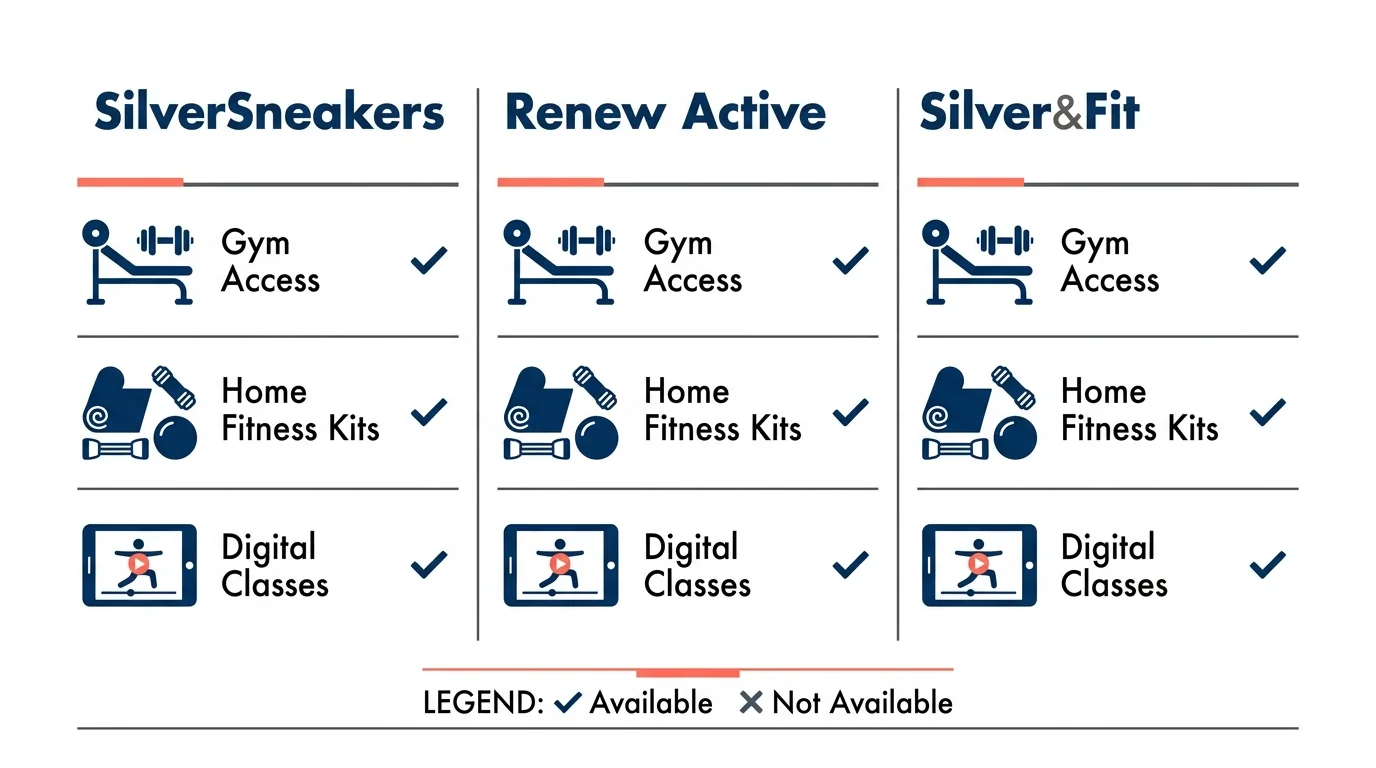
If you want to expand your mobility routine beyond morning stretches, you may have access to free fitness benefits. While Original Medicare (Parts A and B) does not cover gym memberships, many Medicare Advantage (Part C) plans and some Medicare Supplement (Medigap) plans offer robust fitness programs at no additional cost. Utilizing these benefits is an excellent way to gain access to guided classes, swimming pools, and professional instruction without draining your fixed income.
| Fitness Program | Medicare Plan Compatibility | Key Benefits for Seniors |
|---|---|---|
| SilverSneakers | Included in many Medicare Advantage and some Medigap plans. | Access to thousands of participating gyms nationwide, specialized classes for seniors, and a large library of online workout videos. |
| Renew Active | Exclusively available through eligible UnitedHealthcare Medicare plans. | Free standard gym memberships, personalized fitness plans, and access to the AARP Staying Sharp brain health program. |
| Silver&Fit | Offered by various Medicare Advantage and Medigap insurance carriers. | Choice of participating fitness centers, home fitness kits (including wearable trackers), and digital workout classes. |
To find out if you qualify for these programs, check the evidence of coverage document provided by your Medicare plan, or call the customer service number on the back of your insurance card. Taking advantage of these prepaid benefits helps you secure professional fitness guidance while keeping your monthly expenses predictable.
Common Mistakes to Avoid
When starting a new physical routine, enthusiasm can sometimes lead to avoidable injuries. To get the maximum benefit from your mobility tips without risking harm, avoid these common pitfalls:
- Stretching cold muscles intensely: Do not jump out of bed and immediately force a deep stretch. Walk to the kitchen, make your coffee, and let your blood circulate for a few minutes before starting your routine. Gentle movement acts as a warm-up.
- Bouncing during a stretch: Bouncing, also known as ballistic stretching, causes tiny tears in muscle fibers and triggers a reflex that makes muscles tighten up rather than relax. Always use smooth, controlled motions.
- Holding your breath: Many people unknowingly hold their breath when concentrating or feeling muscle tension. This spikes your blood pressure and deprives your muscles of oxygen. Practice breathing deeply into your belly during every stretch.
- Ignoring sharp pain: A stretch should feel like a mild, dull tension. If you experience sharp, shooting, or localized pain, stop immediately. Pushing through pain can cause joint damage that requires expensive medical intervention.

Finding the Right Physical Therapist or Fitness Professional
While home stretching is generally safe, your specific medical history might require customized guidance. If your joint pain limits your daily independence, seeking professional help is a wise investment in your long-term health. Consider consulting a professional in the following scenarios:
- You recently had joint replacement surgery: Hips and knees require highly specific rehabilitation protocols. Always follow the exact mobility guidelines provided by your orthopedic surgeon and physical therapist.
- You have a history of severe falls: If balance issues make you fearful of moving, a physical therapist can provide a secure environment to rebuild your confidence and strength.
- Your arthritis causes severe inflammation: If a joint is hot to the touch, visibly swollen, or exceptionally red, wait until the acute inflammation subsides and consult a physician before stretching the area.
Remember to utilize authoritative resources to find qualified help. You can verify licensed professionals through the MedlinePlus (NIH) directory or find community aging resources via the National Council on Aging (NCOA) and the Medicare.gov provider comparison tools.
Frequently Asked Questions
Does Medicare Part B cover physical therapy for joint pain?
Yes, Medicare Part B covers medically necessary outpatient physical therapy. In 2026, once you meet your $283 annual deductible, you generally pay 20 percent of the Medicare-approved amount for these services. Your doctor must certify that the therapy is medically necessary for your condition.
Are fitness programs like SilverSneakers covered by Original Medicare?
No. Original Medicare (Part A and Part B) does not cover standard gym memberships or fitness programs. However, if you are enrolled in a Medicare Advantage (Part C) plan, there is a strong chance that a program like SilverSneakers, Renew Active, or Silver&Fit is included at no extra premium cost.
How often should seniors do morning stretches for joint pain relief?
Consistency provides the greatest relief. A daily routine yields the best results for reducing stiffness. Dedicating just 5 to 10 minutes every morning to easy exercises aging bodies tolerate well can dramatically improve your overall mobility and energy levels.
Can simple stretches really prevent expensive medical bills?
Absolutely. The NCOA reports that falls cost Americans roughly $80 billion in healthcare expenses annually. Maintaining balance, joint health, and flexibility through daily stretching helps prevent the falls that lead to emergency room visits, hospitalizations, and costly home health care.
Taking ten minutes each morning to gently stretch your muscles is one of the smartest investments you can make in your retirement. It costs nothing, requires no special equipment, and provides immediate dividends in the form of reduced pain and higher energy. Start slowly with just a few of the stretches above, listen to your body, and enjoy the physical and financial peace of mind that comes with staying active.
The information in this guide is meant for educational purposes. Your specific circumstances—including income, benefits, tax situation, and health needs—may require different approaches. When in doubt, consult a licensed financial advisor, tax professional, or healthcare provider.
Last updated: April 2026. Benefit amounts, tax rules, and program details change annually—verify current figures with official government sources.








Leave a Reply