

Healthcare can quietly become your single largest expense in retirement, but you do not have to accept soaring medical bills. Strategic planning allows you to safeguard your hard-earned nest egg and reduce your out-of-pocket exposure significantly.
According to the 2026 Fidelity Retiree Health Care Cost Estimate, an average 65-year-old retiring in 2026 will spend $185,500 on healthcare throughout retirement. A married couple faces roughly $371,000 in medical obligations.
Taking proactive steps with your coverage, prescriptions, and tax planning helps you keep more money where it belongs. Here are five practical ways to lower your retirement medical expenses today.
Understanding Your True Retirement Healthcare Burden
Many retirees assume that Medicare pays for every medical necessity once they reach age 65. Unfortunately, standard Medicare contains distinct coverage gaps that leave you responsible for deductibles, coinsurance, and premiums.
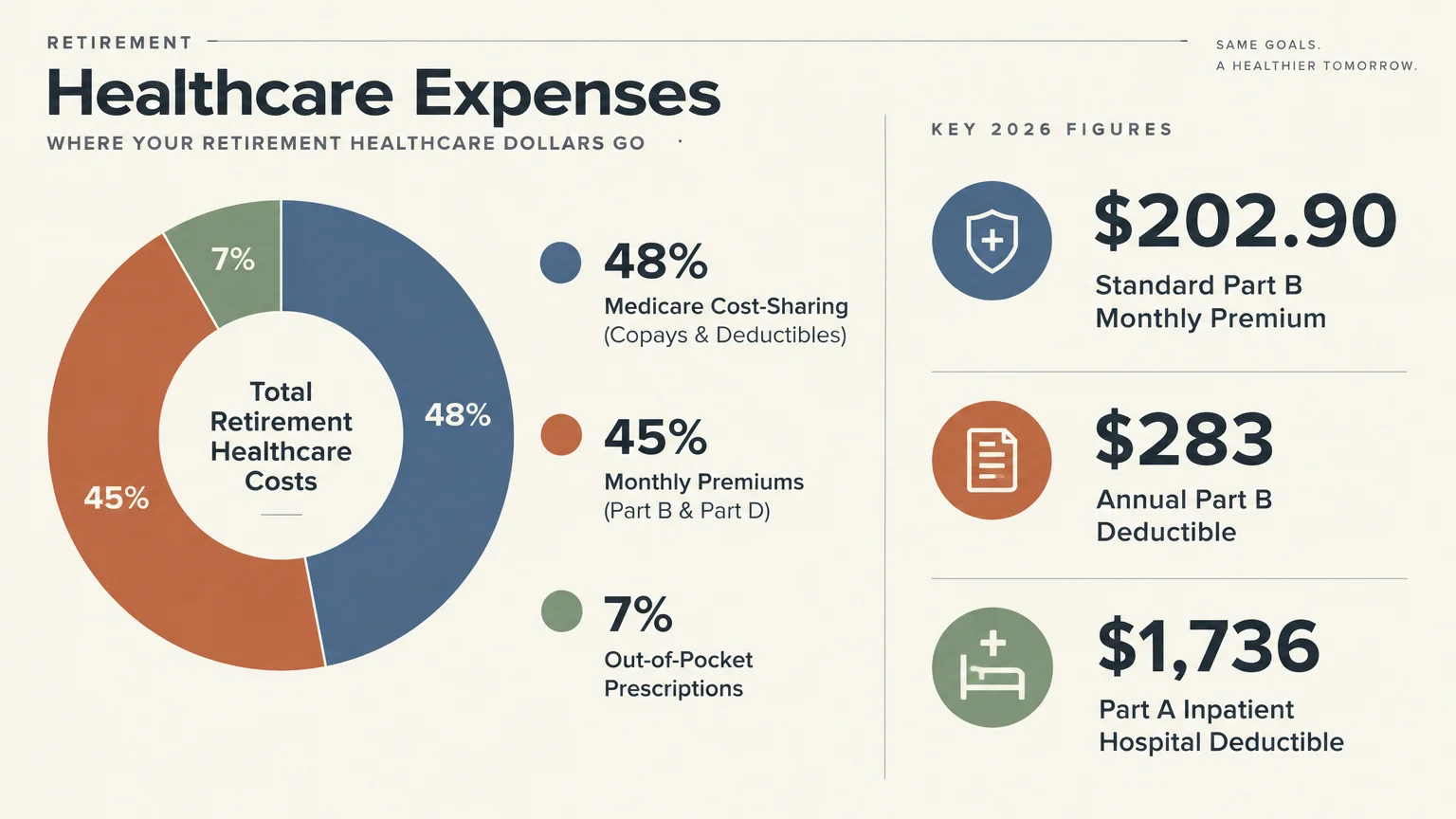
Fidelity reports that 48% of total retirement medical expenses stem from Medicare cost-sharing like copayments and deductibles. Another 45% pays for monthly Part B and Part D premiums; out-of-pocket prescription drugs consume the remaining 7%.
In 2026, the standard Medicare Part B monthly premium is $202.90, alongside an annual deductible of $283. Projections for 2027 suggest the monthly premium will reach approximately $209.50, with the deductible rising to $292.
Meanwhile, the 2026 Medicare Part A inpatient hospital deductible stands at $1,736 per benefit period. If hospital stays exceed 60 days, daily coinsurance fees of $434 quickly drain your cash reserves.
Skilled nursing facility stays require a daily copayment of $217 for days 21 through 100 in 2026. Without proactive planning, routine treatments and hospital visits can derail your long-term budget.
“You cannot afford to be passive about healthcare costs in retirement; every dollar you protect from medical bills remains invested for your future.” — Jean Chatzky, Financial Journalist and Author
1. Optimize Your Medicare Coverage Every Fall
The easiest way to overpay for healthcare is leaving your Medicare plan on autopilot year after year. Insurance carriers adjust their formularies, provider networks, copays, and premium tiers on an annual basis.
Medicare Annual Open Enrollment runs every fall from October 15 through December 7. Any plan switches or adjustments you make during this window take effect on January 1 of the following year.
Always review your Annual Notice of Change (ANOC) letter, which arrives in your mailbox each September. This document details upcoming price increases, dropped medications, and network provider changes for your existing plan.
Log onto Medicare.gov to input your current prescription medications and preferred local pharmacies. The plan comparison tool instantly ranks available Part D plans by total estimated out-of-pocket cost.
For 2026, the maximum allowable Part D deductible is $615; this ceiling increases to $700 in 2027. Comparing plans allows you to identify options with lower deductibles or zero copays on your regular maintenance medications.
Evaluating your coverage every autumn guarantees that your insurance adapts to your current health conditions and preserves your savings.

2. Maximize and Deploy Health Savings Accounts Before Medicare
If you are between ages 55 and 64 and still working, an eligible High-Deductible Health Plan (HDHP) allows you to fund a Health Savings Account (HSA). HSAs represent one of the most powerful tax shelters available to pre-retirees.
Contributions to an HSA go in tax-free, investments grow completely tax-sheltered, and withdrawals for qualified medical expenses remain 100% tax-free. No other retirement savings vehicle offers this rare triple-tax advantage.
According to the Internal Revenue Service (IRS), the 2026 HSA contribution limit is $4,400 for self-only coverage and $8,750 for family coverage. For 2027, limits rise to $4,500 for self-only and $9,000 for family plans.
Savers aged 55 and older can contribute an additional $1,000 catch-up contribution annually. You have until April 15, 2027, to complete your 2026 HSA contributions and reduce your adjusted gross income.
Once you enroll in Medicare at age 65, you can no longer contribute new funds to an HSA. However, you can tap accumulated HSA dollars tax-free to pay for Medicare Part B, Part D, and Medicare Advantage premiums.
You can also use HSA balances tax-free for dental work, hearing aids, prescription glasses, and qualified long-term care insurance premiums. This shields your general retirement accounts from unexpected medical bills.
3. Dodge the Costly IRMAA Surcharge Cliff
Retirees with higher annual incomes face substantial government surcharges on their healthcare coverage. This surcharge is known as the Income-Related Monthly Adjustment Amount, or IRMAA.
The federal government bases your 2026 IRMAA bracket on your Modified Adjusted Gross Income (MAGI) reported on your 2024 tax return. Exceeding income thresholds by a single dollar triggers mandatory premium increases on Part B and Part D.
In 2026, IRMAA surcharges apply if your MAGI exceeds $109,000 as a single filer or $218,000 as a married couple filing jointly. Crossing this threshold pushes your monthly Part B premium from $202.90 to at least $284.10.
Sudden income events often cause accidental IRMAA penalties. Common triggers include selling an appreciated home, taking large traditional IRA distributions, or executing poorly timed Roth conversions.
If your income dropped recently due to retirement or work reduction, you do not have to accept higher premiums. The Social Security Administration (SSA) allows you to appeal an IRMAA surcharge using Form SSA-44.
Qualifying life-changing events include marriage, divorce, spousal death, work stoppage, or the loss of income-producing property. Filing Form SSA-44 requests that Medicare recalculate your premiums using your current, lower income level.

4. Slash Prescription Drug Bills Using Built-In Safeguards
Prescription drugs represent an ongoing expense that can quickly spiral out of control. Fortunately, recent federal legislative reforms provide major cost protections for older adults.
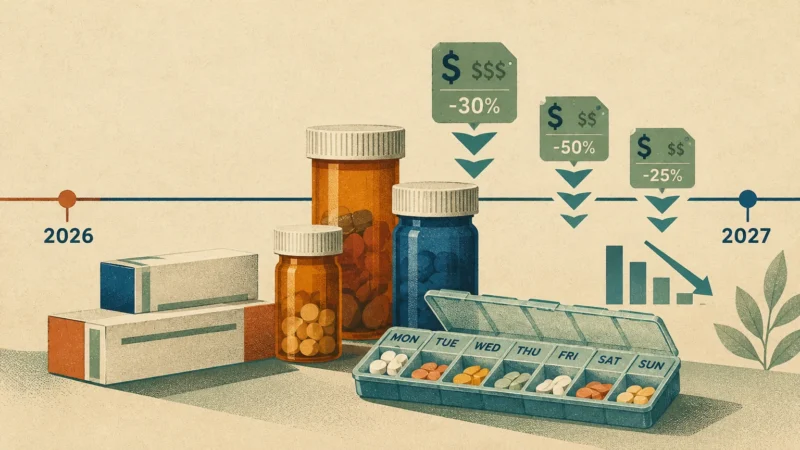
Under the Inflation Reduction Act, annual out-of-pocket spending on covered Part D prescriptions is capped at $2,100 in 2026. In the 2027 plan year, this legal spending ceiling shifts to $2,400.
Once your out-of-pocket payments reach this cap, your Part D plan covers 100% of your covered drug costs for the rest of the year. This reform eliminates the catastrophic coverage gaps that historically plagued retirees.
You can also opt into the Medicare Prescription Payment Plan. This voluntary program spreads your out-of-pocket prescription drug costs into manageable monthly installments throughout the calendar year instead of hitting you all at once.
Low-income seniors should explore the Part D Extra Help program. Individuals with limited resources and incomes up to 150% of the federal poverty level qualify for eliminated premiums, zero deductibles, and low drug copayments.
Always ask your physician whether generic or biosimilar medications are available for your treatments. Generic formulations contain identical active ingredients to brand-name counterparts but typically cost 80% to 85% less.
“A big part of financial freedom is having your heart and mind free from worry about what-ifs.” — Suze Orman, Personal Finance Author
5. Audit Every Medical Bill and Never Pay Retail Prices
Medical billing errors occur with surprising frequency across clinics, testing labs, and hospital networks. Paying a medical invoice immediately upon receipt often means paying for services you never actually received.
Whenever you receive a medical bill, request an itemized statement showing standard Current Procedural Terminology (CPT) codes. Compare every billed line item against the Explanation of Benefits (EOB) provided by Medicare or your private insurer.
Look specifically for duplicate charges, unrendered therapies, or billing errors that list outpatient services as inpatient stays. Contact the hospital billing department immediately to dispute any discrepancies you identify.
If you owe a legitimate balance after insurance processing, ask the provider for an upfront cash or prompt-pay discount. Many medical networks will reduce your remaining balance by 10% to 30% if you pay immediately via debit card.
Non-profit hospitals are legally mandated to maintain financial hardship and charity care programs. If your retirement income meets their criteria, hospitals must forgive a significant portion of your remaining medical debt.
Comparing Medicare Coverage Options
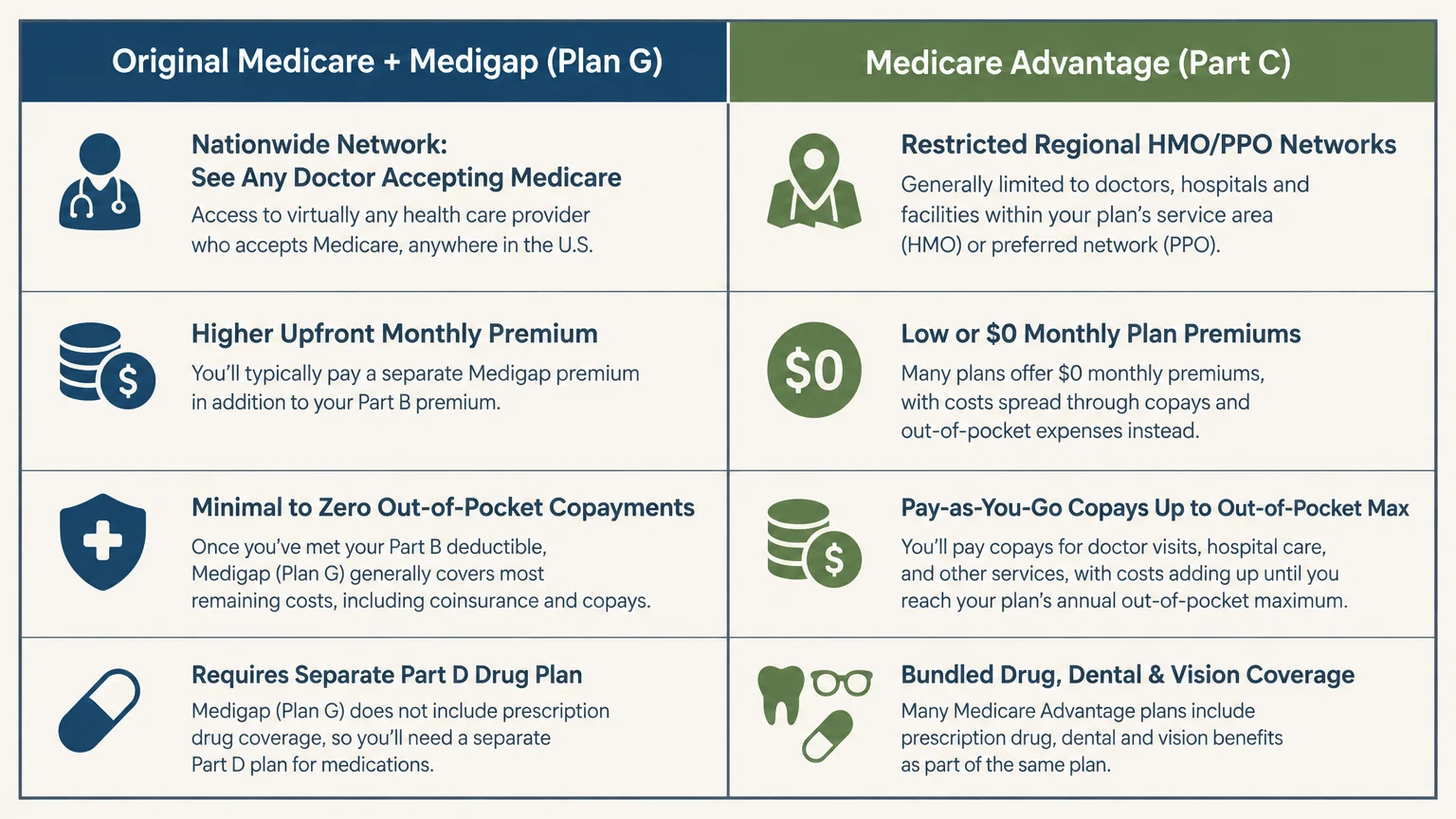
Choosing between Original Medicare paired with a Medigap policy and a private Medicare Advantage plan is a critical financial decision. Each path offers distinct pricing structures and out-of-pocket risk protections.
| Feature | Original Medicare + Medigap (Plan G) | Medicare Advantage (Part C) |
|---|---|---|
| Monthly Premiums | Higher monthly premiums (Part B + Medigap + Part D) | Low or $0 additional monthly plan premiums |
| Doctor Networks | Any provider nationwide that accepts Medicare | Restricted local HMO or PPO provider networks |
| Out-of-Pocket Cap | Near zero out-of-pocket after the $283 Part B deductible | High annual out-of-pocket maximums (up to $9,350 in-network) |
| Referrals & Approvals | No prior authorizations or specialist referrals required | Prior authorizations and referrals frequently required |
| Prescription Coverage | Requires a separate standalone Part D drug plan | Usually bundled directly inside the Advantage plan |
Medigap Plan G requires a predictable monthly premium but pays almost all approved medical expenses after you satisfy the annual Part B deductible. This structure shields you from catastrophic out-of-pocket hospital bills.
Medicare Advantage offers low entry premiums and bundled dental or vision extras. However, Advantage plans feature copayments for specialist visits and hospital stays that can accumulate quickly during a major illness.
Pitfalls to Watch For
Navigating healthcare rules in retirement requires careful timing and attention to detail. Making a single bureaucratic mistake can saddle you with permanent financial penalties.
- Medicare Late Enrollment Penalties: Missing your Initial Enrollment Period for Part B adds a permanent 10% surcharge to your premium for every 12-month period you were eligible but unenrolled. Missing Part D enrollment triggers a permanent 1% monthly penalty.
- HSA Contributions Past Age 65: If you claim Social Security benefits after age 65, Medicare Part A coverage is automatically backdated up to six months. Any HSA contributions made during that retroactive window incur severe IRS tax penalties.
- Ignoring Formulary Modifications: Part D plans frequently move medications into higher cost tiers or drop coverage entirely. Assuming your prescription coverage remains unchanged without checking your ANOC notice risks massive pharmacy bills in January.
- Overlooking the IRMAA Reconsideration Process: Many new retirees pay thousands in unwarranted IRMAA surcharges simply because they fail to notify the SSA about their recent drop in employment income.

Getting Expert Help
Navigating retirement healthcare alone can feel overwhelming, but you do not need to make complex coverage decisions in isolation. Trusted professionals and free advocacy organizations can guide your strategy.
State Health Insurance Assistance Programs (SHIP) offer free, one-on-one, unbiased Medicare counseling funded by the federal government. SHIP counselors do not sell insurance policies and provide objective guidance tailored to your health profile.
The National Council on Aging (NCOA) provides tools like BenefitsCheckUp to help you identify federal, state, and private assistance programs. These programs offset utility, food, and medical expenses for eligible seniors.
Consider consulting a fee-only Certified Financial Planner (CFP) to map out retirement account withdrawals and Roth conversions. A financial advisor ensures your income distributions remain below expensive IRMAA thresholds.
If you prefer private coverage, work with an independent, non-captive health insurance broker. Independent brokers represent dozens of carriers and help you find plans that cover your specific doctors and medications.
Frequently Asked Questions
Can I use my HSA to pay for Medicare supplement premiums?
No, IRS rules prohibit using HSA funds to pay premiums for Medigap supplemental policies. However, you can use HSA dollars tax-free to pay for Medicare Part B, Part D, and Medicare Advantage premiums.
How does the 2026 Medicare Part D cap protect my savings?
The Inflation Reduction Act established a strict $2,100 out-of-pocket cap on covered Part D medications for 2026. Once your personal spending reaches $2,100, your plan pays 100% of your covered drug costs for the rest of the year.
What should I do if my Medicare Advantage plan drops my doctor?
You can switch to another Medicare Advantage plan or return to Original Medicare during the Annual Open Enrollment window. You can also utilize the Medicare Advantage Open Enrollment Period, running from January 1 through March 31.
How do I prove a life-changing event to reduce my IRMAA surcharges?
Submit Form SSA-44 to your local Social Security office along with supporting documentation. Acceptable proof includes a letter from your former employer confirming your retirement date or a signed copy of your most recent tax return.
Practical Next Steps for Your Healthcare Budget
Taking control of your retirement healthcare expenses starts with small, deliberate actions. Mark October 15 on your calendar each year to evaluate your Medicare coverage and check for drug formulary changes.
Audit every medical bill you receive, verify your tax brackets to manage IRMAA risk, and leverage available HSA assets strategically. Proactive management preserves your wealth and ensures quality care throughout your retirement years.
This article provides general financial education and information only. Everyone’s financial situation is unique—what works for others may not work for you. For personalized advice tailored to your retirement needs, consider consulting a qualified financial professional such as a CFP or CPA.
Last updated: November 2026. Benefit amounts, tax rules, and program details change annually—verify current figures with official government sources.








Leave a Reply