

Finding the right skilled nursing facility protects your loved one’s health and your family’s financial security. Navigating thousands of options across the country requires clear data and trusted quality benchmarks.
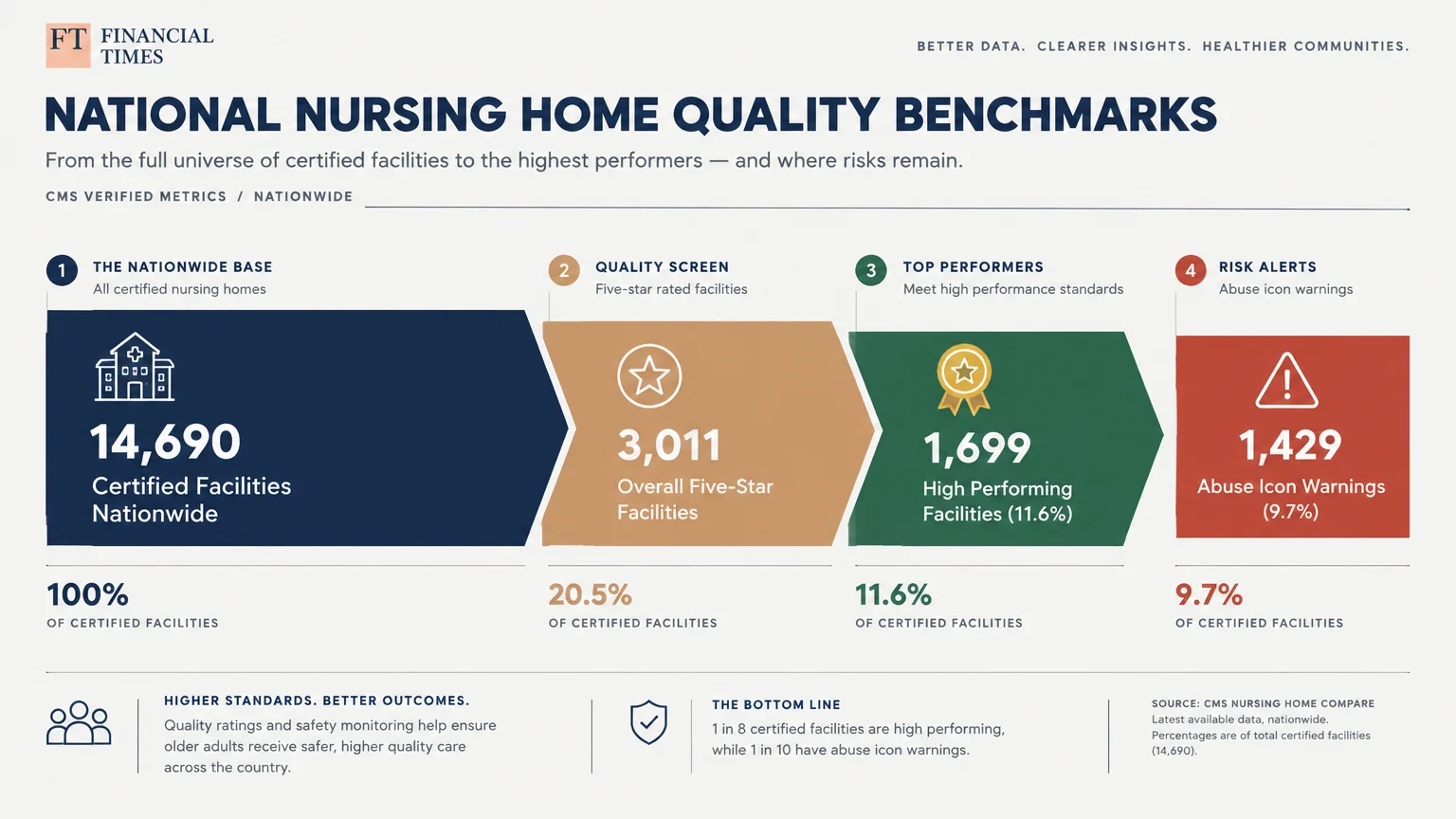
The Centers for Medicare and Medicaid Services monitors 14,690 certified nursing homes nationwide. Only an elite group of facilities meets top federal standards for staffing, clinical care, and patient safety.
This state-by-state guide reveals the top-ranked nursing homes across every region, verified 2026 cost figures, and vital inspection metrics. Use these actionable insights to make a confident, well-informed care decision.
Evaluating Nursing Home Ratings in 2026
Federal regulators evaluate skilled nursing facilities using strict clinical, operational, and safety standards. Understanding these scoring benchmarks helps you identify truly exceptional facilities while screening out troubled providers.
The Centers for Medicare and Medicaid Services (CMS) reports public quality measures on its Medicare Care Compare portal. While 3,011 nursing homes hold an overall five-star rating, CMS recently raised its performance criteria.
On October 8, 2026, CMS introduced a new High Performing icon on Care Compare. Only 1,699 facilities—representing just 11.6% of nursing homes nationwide—qualified for this elite distinction.
To secure this icon, a facility must hold an overall five-star rating and maintain at least three stars in nurse staffing. It must also show zero recent severe health citations and qualify for an abbreviated Risk-Based Survey.
You must also monitor consumer alert flags during your research. CMS currently displays a red abuse warning icon on the profiles of 1,429 nursing homes, representing 9.7% of all certified facilities.
Independent media rankings provide another valuable screening filter. In its 2026 ratings, U.S. News & World Report evaluated nearly 15,000 nursing homes across 19 distinct quality metrics.
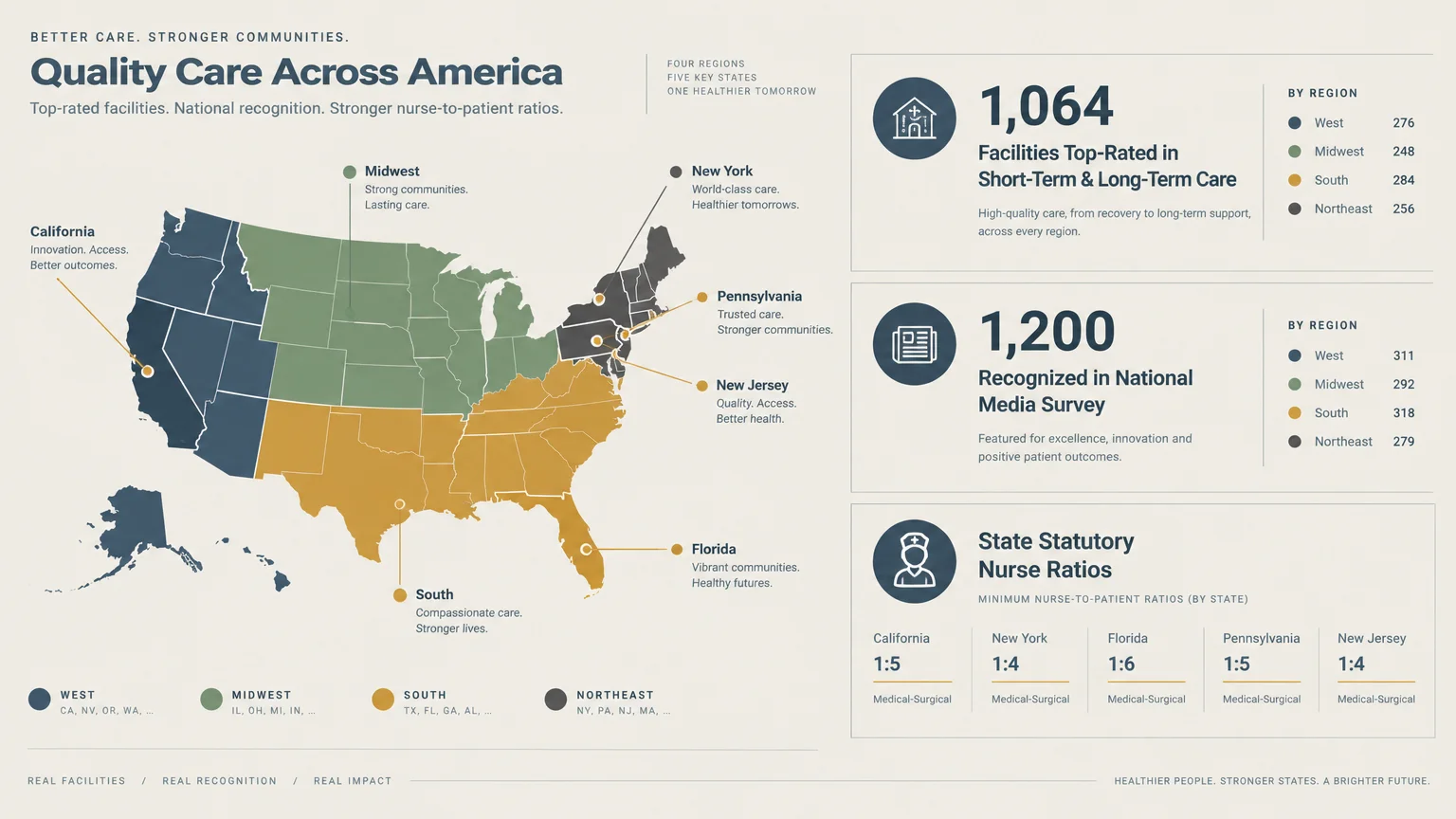
Fewer than 19% of facilities earned a Best Nursing Home designation in that analysis. Furthermore, only 1,064 facilities nationwide achieved top tier ratings in both short-term rehabilitation and long-term care.
Additionally, Newsweek recognized the country’s leading 1,200 facilities in its America’s Best Nursing Homes 2026 survey. Comparing federal survey data against independent media rankings provides the most accurate view of facility excellence.
Staffing Rules, Ratios, and Safety Standards
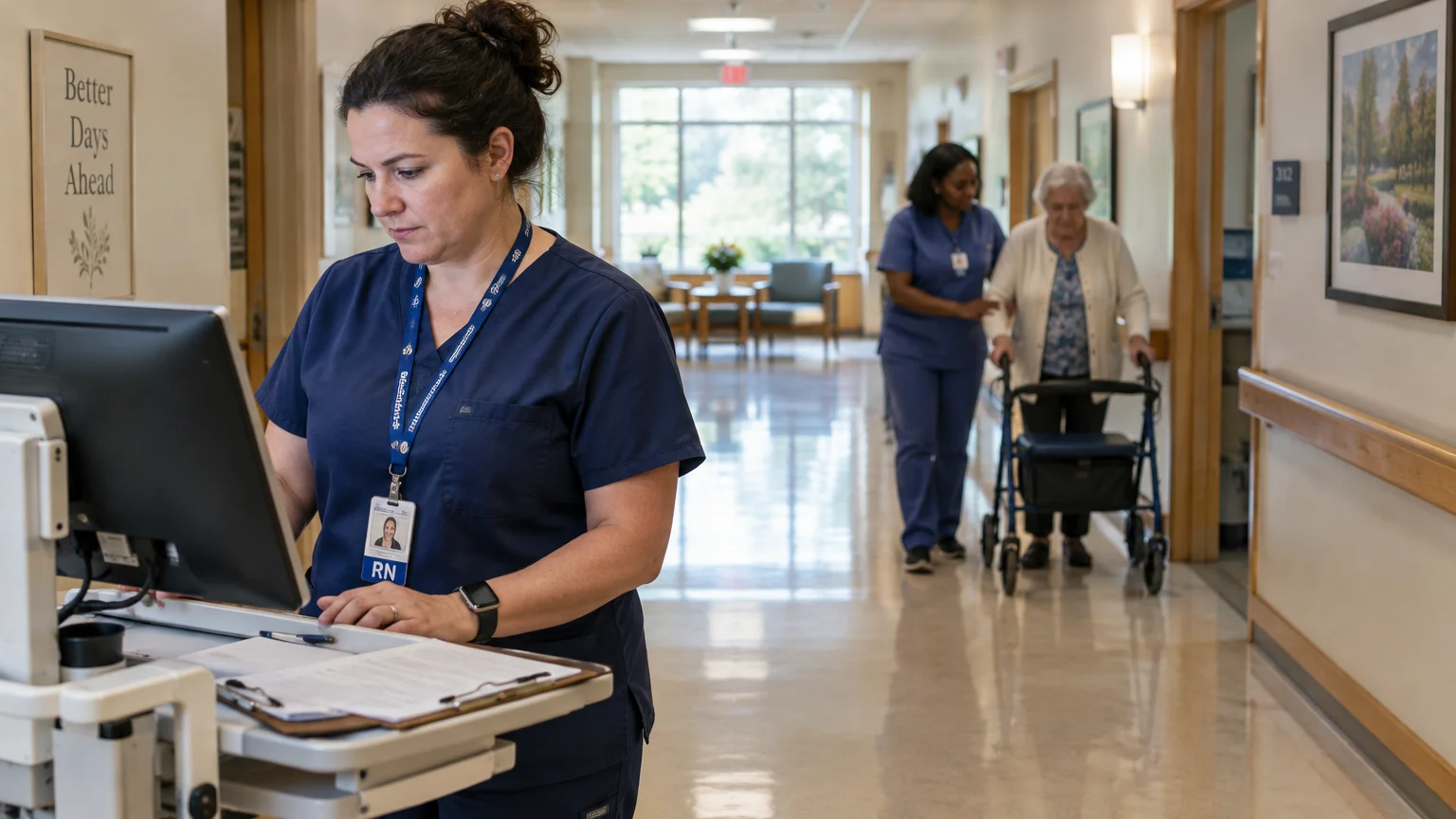
Staffing levels remain the single most reliable predictor of resident health and safety. Facilities with higher registered nurse presence report fewer hospital readmissions, lower infection rates, and fewer falls.
The regulatory framework governing nursing home staffing experienced major legal changes recently. On February 2, 2026, CMS officially repealed the 2024 federal Minimum Staffing Standards rule.
That repealed rule would have required 3.48 hours per resident day of direct nurse care and 24-hour on-site registered nurses. Federal courts struck down portions of the rule, and Congress prohibited its enforcement until 2034.
With that repeal finalized, federal requirements reverted to the baseline standard requiring an on-site registered nurse for eight consecutive hours daily. Facilities must also complete a data-driven annual staffing assessment.
Because the federal baseline is limited, individual states now govern mandatory nurse staffing ratios. States like California, New York, Florida, Pennsylvania, and New Jersey enforce mandatory daily staffing hours under state statutes.
Federal oversight continues through stricter financial reporting and compliance audits. Nursing homes must now disclose all contract labor hours and agency staffing costs on their Medicare cost reports.
CMS also conducts random audits across 1,500 facilities to verify reported clinical and quality data. These measures help regulators detect falsified payroll records and identify chronic facility turnover.
Top-Rated Nursing Homes by State and Region
High-quality nursing homes are not distributed evenly across the United States. Five states—California, Florida, Pennsylvania, New York, and Ohio—account for the largest concentration of top-ranked skilled nursing homes.
The following regional directory profiles high-performing facilities across all fifty states. Each selection holds top CMS inspection marks and superior quality ratings from independent industry evaluators.
Northeast Region
The Northeast features mature regulatory systems and strong state-level staffing requirements. Facilities in this region frequently lead the nation in clinical quality scores and specialized memory care programs.
- Connecticut: Duncaster in Bloomfield and McLean Health Center in Simsbury stand out for exceptional short-term rehabilitation and consistent five-star health inspections.
- Maine: Mount Saint Joseph Residence in Waterville and Piper Shores in Scarborough maintain stellar clinical safety and low nurse turnover.
- Massachusetts: Hebrew Rehabilitation Center in Boston and Bethany Health Care Center in Framingham earn top honors for advanced geriatric medicine and continuous registered nurse coverage.
- New Hampshire: RiverMead in Peterborough and Kendal at Hanover deliver superior long-term care and low resident rehospitalization rates.
- New Jersey: Christian Health Care Center in Wyckoff and Monroe Village in Monroe Township rank among the state’s elite care providers.
- New York: Home to 157 top-tier homes, led by the Hebrew Home at Riverdale in the Bronx and Parker Jewish Institute in New Hyde Park.
- Pennsylvania: Features 175 top-performing homes, including Dunwoody Home in Newtown Square, Cornwall Manor in Cornwall, and St. Anne’s Retirement Community in Columbia.
- Rhode Island: Saint Elizabeth Home in East Greenwich delivers high staff-to-resident ratios and five-star quality outcomes.
- Vermont: Wake Robin in Shelburne and The Pines at Rutland maintain industry-leading staffing consistency and clean health inspection records.
Southeast Region
The Southeast offers modern facilities and extensive retirement networks. Florida holds the second-highest concentration of premier nursing homes in the country, with 196 facilities earning top honors.
- Alabama: St. Martin’s in the Pines in Birmingham and Crowne Health Care of Montgomery deliver exemplary care.
- Arkansas: Circle of Life Hospice and Legacy Health in Bentonville rank among the state’s highest-rated recovery centers.
- Florida: Leading centers include Cypress Cove in Fort Myers, MorseLife Health System in West Palm Beach, and The Glenview at Pelican Bay in Naples.
- Georgia: Canterbury Court in Atlanta and Carlyle Place in Macon lead the state in staff retention and rehabilitation success.
- Kentucky: Episcopal Church Home in Louisville and Sayre Christian Village in Lexington consistently maintain five-star federal ratings.
- Louisiana: Poydras Home in New Orleans and St. Anthony’s Healthcare in Metairie deliver exceptional clinical oversight.
- Mississippi: St. Catherine’s Village in Madison and North Mississippi Medical Center in Tupelo earn top quality scores.
- North Carolina: Carol Woods in Chapel Hill and Arbor Acres in Winston-Salem lead the state with outstanding staff retention.
- South Carolina: Rolling Green Village in Greenville and Bishop Gadsden in Charleston set the regional benchmark for comprehensive senior care.
- Tennessee: Trevecca Center for Rehabilitation in Nashville and Park Manor earn top marks for post-surgical recovery.
- Virginia: Westminster-Canterbury in Richmond and Goodwin House in Alexandria provide gold-standard clinical services and low rehospitalization metrics.
- West Virginia: Stonerise Morgantown and Peterson Rehabilitation Hospital in Wheeling lead state rankings with excellent inspection histories.
Midwest Region
Midwestern facilities consistently record high community engagement and low staff turnover. Ohio anchors the region with 108 top-rated nursing homes, backed by strong non-profit senior living networks.
- Illinois: The Moorings of Arlington Heights and Westminster Place in Evanston provide exemplary skilled nursing and physical rehabilitation.
- Indiana: Carmel Health & Living Community and Marquette in Indianapolis lead the state in overall quality metrics.
- Iowa: Oaknoll Retirement Residence in Iowa City and Western Home Communities in Cedar Falls maintain pristine inspection reports.
- Kansas: Meadowlark Hills in Manhattan and Aberdeen Village in Olathe deliver high direct-care nurse hours per resident day.
- Michigan: Chelsea Retirement Community in Chelsea and Clark Retirement Community in Grand Rapids earn top clinical honors.
- Minnesota: Benedictine Health Center in Duluth and Jones-Harrison Residence in Minneapolis consistently outperform federal quality averages.
- Missouri: Bethesda Meadow in Ellisville and John Knox Village in Lee’s Summit rank among the state’s top long-term care homes.
- Nebraska: Madonna Rehabilitation Hospital in Lincoln and Immanuel Village in Omaha lead the state in patient recovery benchmarks.
- North Dakota: Eventide Fargo and Missouri Slope Lutheran Care Center in Bismarck achieve five-star overall federal ratings.
- Ohio: Standouts include Judson Park in Cleveland, Otterbein Cridersville, and Maple Knoll Village in Cincinnati.
- South Dakota: Dow Rummel Village in Sioux Falls and Bethany Home in Brandon maintain high staffing marks.
- Wisconsin: Clement Manor in Greenfield and Cedar Community in West Bend deliver exceptional memory and skilled nursing care.
Southwest Region
The Southwest has seen significant growth in modern, resort-style skilled nursing centers. Texas features 1,177 certified nursing facilities statewide, offering vast options across major metropolitan corridors.
- Arizona: Beatitudes Campus in Phoenix and Fellowship Square Historic Mesa maintain top ratings for long-term health and resident autonomy.
- New Mexico: La Vida Llena in Albuquerque and Woodmark at Uptown offer strong rehabilitation and clean survey histories.
- Oklahoma: Saint Simeon’s Episcopal Home in Tulsa and Epworth Villa in Oklahoma City rank among the highest-rated centers statewide.
- Texas: Standouts include Belmont Village West University in Houston, The Plaza at Edgemere in Dallas, and Army Residence Community in San Antonio.
West and Pacific Region
The Pacific region features rigorous state-level regulations and innovative care models. California leads the entire nation with 295 top-rated nursing homes out of its 1,165 certified care facilities.
- Alaska: Providence Extended Care in Anchorage and Maple Springs of Palmer earn strong inspection scores despite geographic logistics.
- California: Top facilities include the Jewish Home of San Francisco, Vi at Palo Alto, and Los Angeles Jewish Health in Reseda.
- Colorado: Clermont Park in Denver and Frasier Meadows in Boulder deliver industry-leading nursing ratios and therapy programs.
- Hawaii: Hale Makua Health Services in Kahului and Kahala Nui in Honolulu achieve top marks for compassionate, high-touch elder care.
- Idaho: Idaho State Veterans Home in Boise and Cascadia of Boise lead the state with five-star CMS inspection records.
- Montana: St. John’s United in Billings and Immanuel Living in Kalispell lead the state in staff retention and safety.
- Nevada: Carson Nursing and Rehabilitation Center in Carson City and Saint Joseph Transitional Rehabilitation in Las Vegas lead state quality charts.
- Oregon: Mary’s Woods in Lake Oswego and Mirabella in Portland earn consistent praise for advanced memory and skilled recovery care.
- Utah: St. Mark’s Millcreek in Salt Lake City and Canyonlands Healthcare in Moab provide exemplary post-acute care.
- Washington: Horizon House in Seattle and Judson Park in Des Moines lead the state in resident satisfaction and health survey metrics.
- Wyoming: Westward Heights Care Center in Lander and Sheridan County Fulmer Public Library Care Center maintain pristine safety records.
Nursing Home Care Costs and Financial Coverage
Skilled nursing care is one of the largest out-of-pocket expenses older adults and their families will ever encounter. Preparing for these expenses requires a clear understanding of market rates and federal insurance rules.
According to the latest CareScout Cost of Care Survey, the national median cost for a semi-private room is $315 per day. That daily expense totals $9,581 per month or $114,975 per year.
Private rooms carry a substantial price premium. A private room averages $355 per day, which amounts to $10,798 per month or $129,575 annually.
Many seniors mistakenly assume standard Medicare pays for ongoing, long-term nursing home residency. Medicare Part A never covers custodial care, which includes everyday assistance with bathing, dressing, eating, or taking medications.
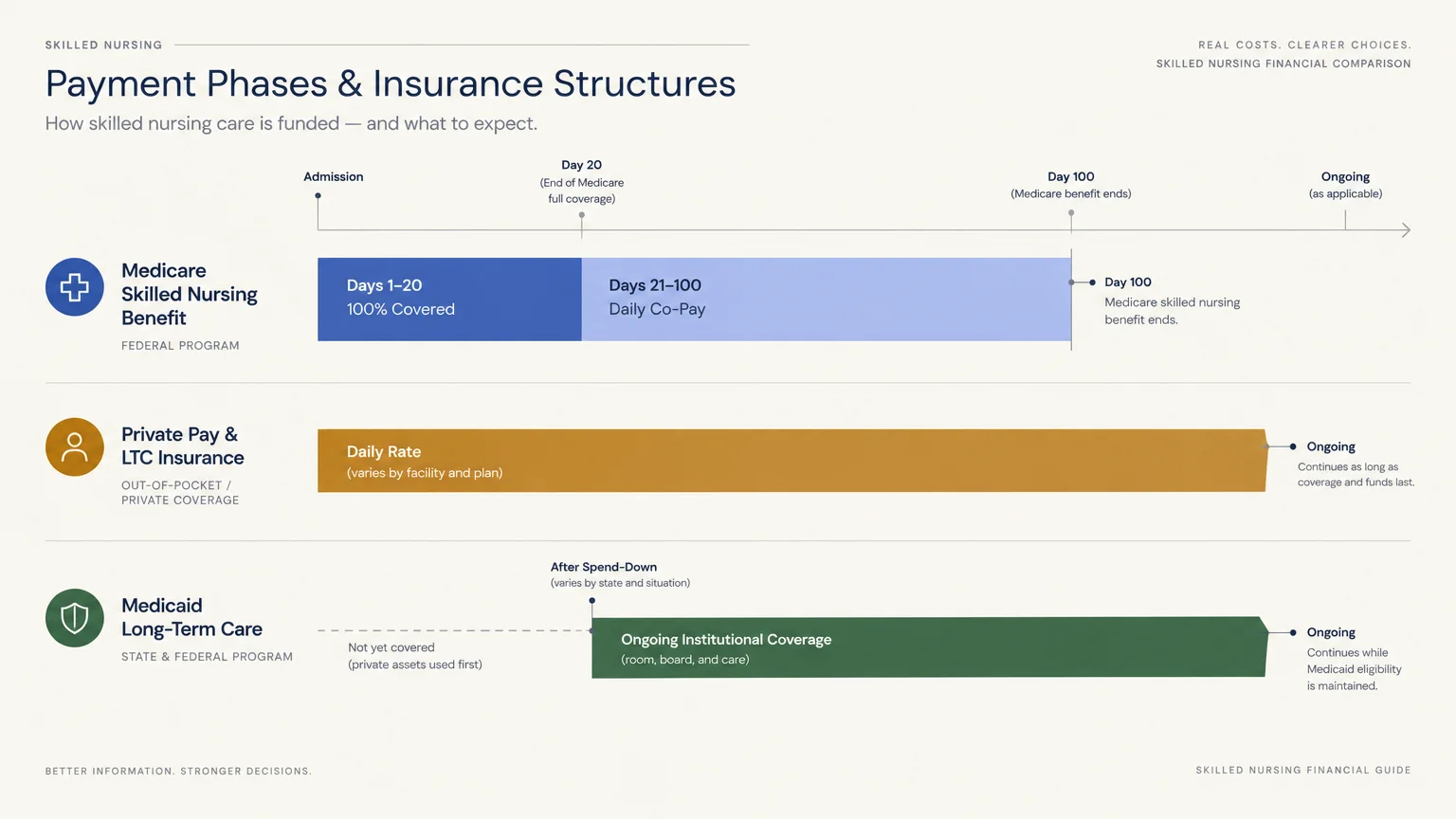
Medicare Part A only covers short-term skilled nursing facility stays following a qualifying three-day inpatient hospital admission. In 2026, after meeting the $1,736 hospital deductible, Medicare pays 100% of skilled nursing expenses for days 1 through 20.
For days 21 through 100, beneficiaries must pay a mandatory daily coinsurance of $217.00 per day. Once you cross day 100, Medicare coverage ends entirely, and the resident must pay 100% of all ongoing charges.
Medicaid covers long-term nursing home care for seniors who exhaust their personal resources. However, you must meet strict asset and monthly income limits established by your individual state to qualify.
| Payment Source | Coverage Duration | 2026 Out-of-Pocket Costs | Eligibility Requirements |
|---|---|---|---|
| Medicare Part A | Up to 100 days per benefit period | $0 for days 1–20; $217.00/day for days 21–100 | Requires 3-day prior inpatient hospital stay and daily skilled medical need |
| Private Pay (Self-Funded) | Unlimited while funds last | $9,581/month (semi-private) or $10,798/month (private) | Personal retirement assets, home equity, or private long-term care insurance |
| Medicaid | Ongoing long-term coverage | Most monthly income goes toward care; minor personal allowance retained | Strict state-specific financial asset limits and demonstrated medical necessity |
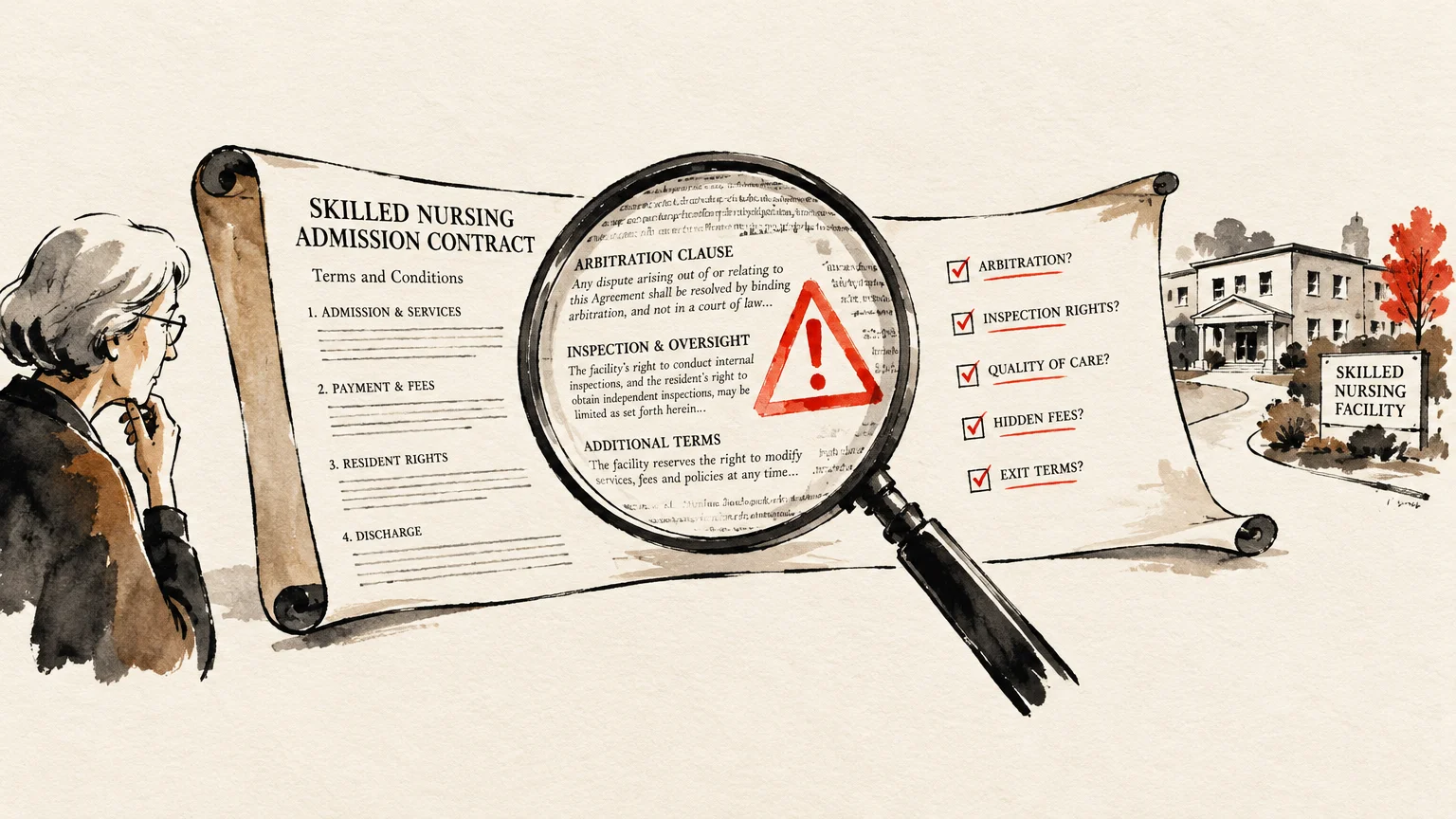
What Can Go Wrong: Critical Mistakes Families Make
Selecting a nursing home under urgent circumstances often leads to costly errors and emotional distress. Recognizing common selection mistakes protects your family from substandard care and financial surprises.
Relying exclusively on marketing tours is a frequent mistake. Beautiful lobbies, updated chandeliers, and gourmet dining rooms frequently conceal severe staff shortages and delayed response times in the resident wings.
Families also make the mistake of ignoring CMS consumer alerts. If a facility displays the red abuse warning icon on Care Compare, you should bypass that provider unless significant improvements are verified.
Another common mistake involves miscalculating Medicare coverage timelines. Families often assume Medicare will cover a full three-month stay without realizing the heavy $217 daily coinsurance starts on day 21.
Finally, families often fail to assess contract staff turnover rates. Facilities that rely heavily on temporary agency nurses frequently experience poor continuity of care and higher medication errors.

When to Consult a Professional
Navigating skilled elder care often requires professional intervention to avoid legal, financial, and clinical traps. Calling on specialized advisors can preserve your family’s life savings and safeguard resident rights.
Consult an elder law attorney when you need to structure assets for future Medicaid eligibility. A licensed attorney helps protect a healthy spouse’s residence and savings without triggering costly transfer penalties.
Hire an independent geriatric care manager if you live far from your aging family member. These licensed professionals conduct unannounced facility checks, evaluate nurse responsiveness, and coordinate complex medical appointments.
Contact your local Long-Term Care Ombudsman if you encounter unresolved facility grievances or notice sudden declines in care quality. You can locate your regional ombudsman through the federal Eldercare Locator supported by the Administration for Community Living.
Engage a fee-only financial planner when coordinating retirement withdrawals with long-term care insurance claims. Expert financial timing prevents unnecessary tax bracket spikes when liquidating investments for medical bills.
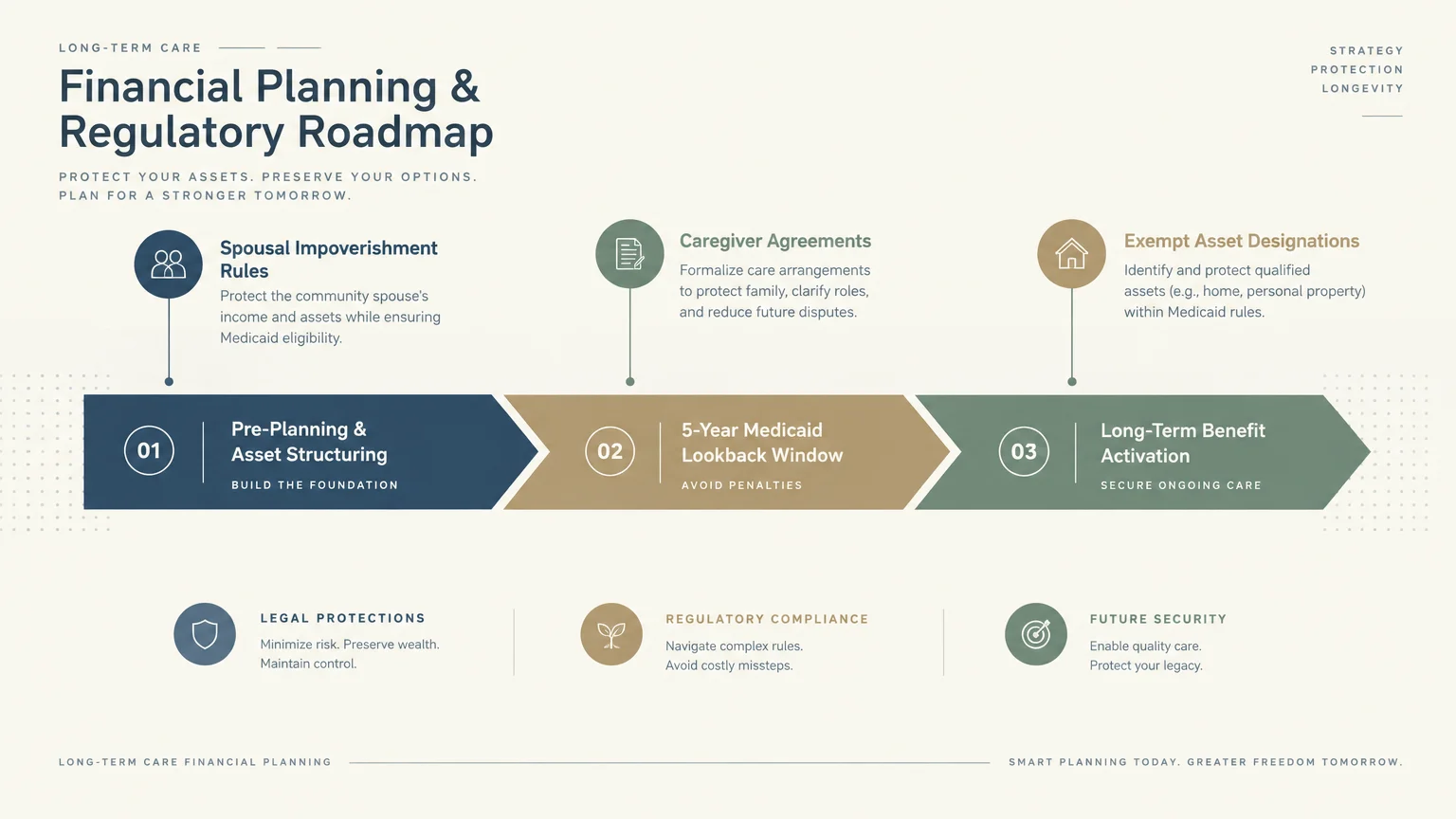
Expert Financial Insights on Long-Term Care
Personal finance specialists emphasize that planning ahead for skilled care prevents emotional and economic crises. Addressing long-term care early remains an essential pillar of retirement security.
“You cannot ignore long-term care planning; hope is not a financial plan when healthcare needs arise.” — Suze Orman, Personal Finance Author and Host
Sound financial preparation allows you to retain control over where and how you receive nursing care. Reviewing your local options before a medical emergency ensures you secure a bed in a top-rated facility.
Frequently Asked Questions About Choosing a Nursing Home
How does CMS award its new High Performing designation?
CMS grants this icon only to facilities with a five-star overall rating and at least three stars in staffing. Eligible homes must also have zero recent severe citations and qualify for an abbreviated Risk-Based Survey.
What out-of-pocket costs apply during a Medicare-covered nursing home stay?
In 2026, Medicare pays 100% of skilled nursing expenses for days 1 through 20. For days 21 through 100, the patient must pay a daily coinsurance of $217.00.
Why did the federal government repeal the minimum nurse staffing mandate in 2026?
CMS repealed the 2024 rule following federal court rulings that vacated key portions and congressional actions that barred funding enforcement. Nursing homes must now comply with state-level staffing ratios and the federal eight-hour registered nurse baseline.
Where can I review health inspection reports for a specific nursing home?
You can review full survey histories and violation reports on Medicare Care Compare. State health department licensing websites also maintain searchable databases of state-level complaint investigations.
Taking Action for Your Loved One
Selecting a nursing home requires proactive research, objective data evaluation, and steady financial planning. Start your evaluation by reviewing recent health inspection surveys and verifying current staffing stability on official federal portals.
Visit target facilities unannounced during evening hours and weekend meal shifts to observe actual staff responsiveness firsthand. Taking these deliberate steps ensures your loved one receives safe, compassionate, and dignified skilled care.
The information in this guide is meant for educational purposes. Your specific circumstances—including income, benefits, tax situation, and health needs—may require different approaches. When in doubt, consult a licensed financial advisor or tax professional.
Last updated: October 2026. Benefit amounts, tax rules, and program details change annually—verify current figures with official government sources.








Leave a Reply