

Your geographic location directly influences your medical safety and surgical survival odds. Choosing the right hospital protects both your physical well-being and your hard-earned retirement savings from catastrophic complications.
Medical treatments aim to heal, yet surgical errors and hospital-acquired infections remain severe risks for older adults. Recent federal records reveal that some states experience complication mortality rates more than double the national baseline.
Understanding these state-level safety rankings empowers you to evaluate regional facilities before scheduling any procedure. Smart preparation helps you demand better clinical standards and safeguard your long-term health.
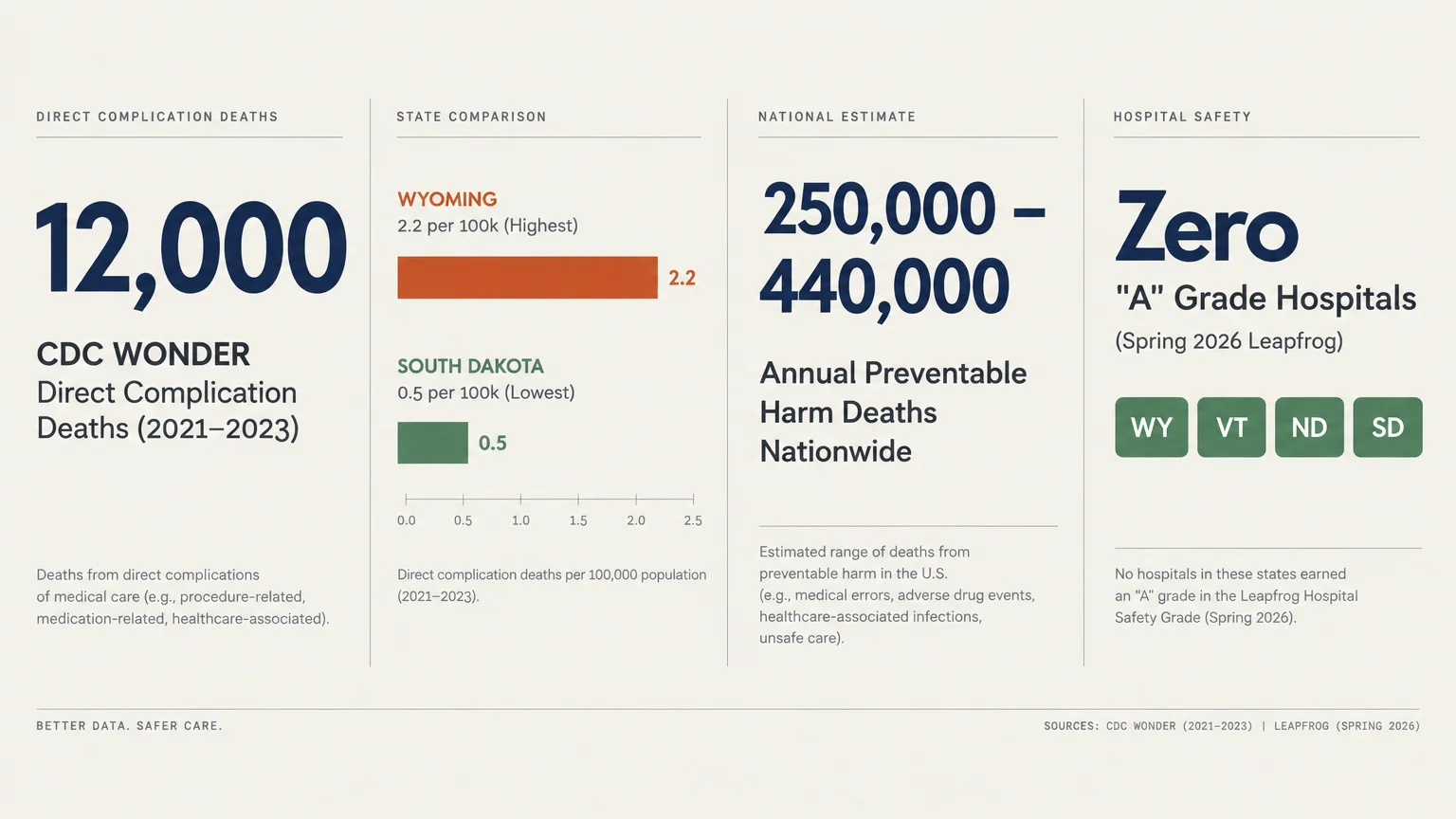
At a Glance: Key Findings on State Healthcare Safety
Patient safety varies significantly depending on where you receive inpatient care across the country.
Official records from the CDC WONDER database document approximately 12,000 deaths directly attributed to medical and surgical care complications between 2021 and 2023.
Independent safety researchers estimate that preventable harm contributes to between 250,000 and 440,000 deaths every year.
Wyoming holds the highest mortality rate from medical complications in the nation at 2.2 deaths per 100,000 residents.
South Dakota records the lowest complication mortality rate in the country at just 0.5 deaths per 100,000 people.
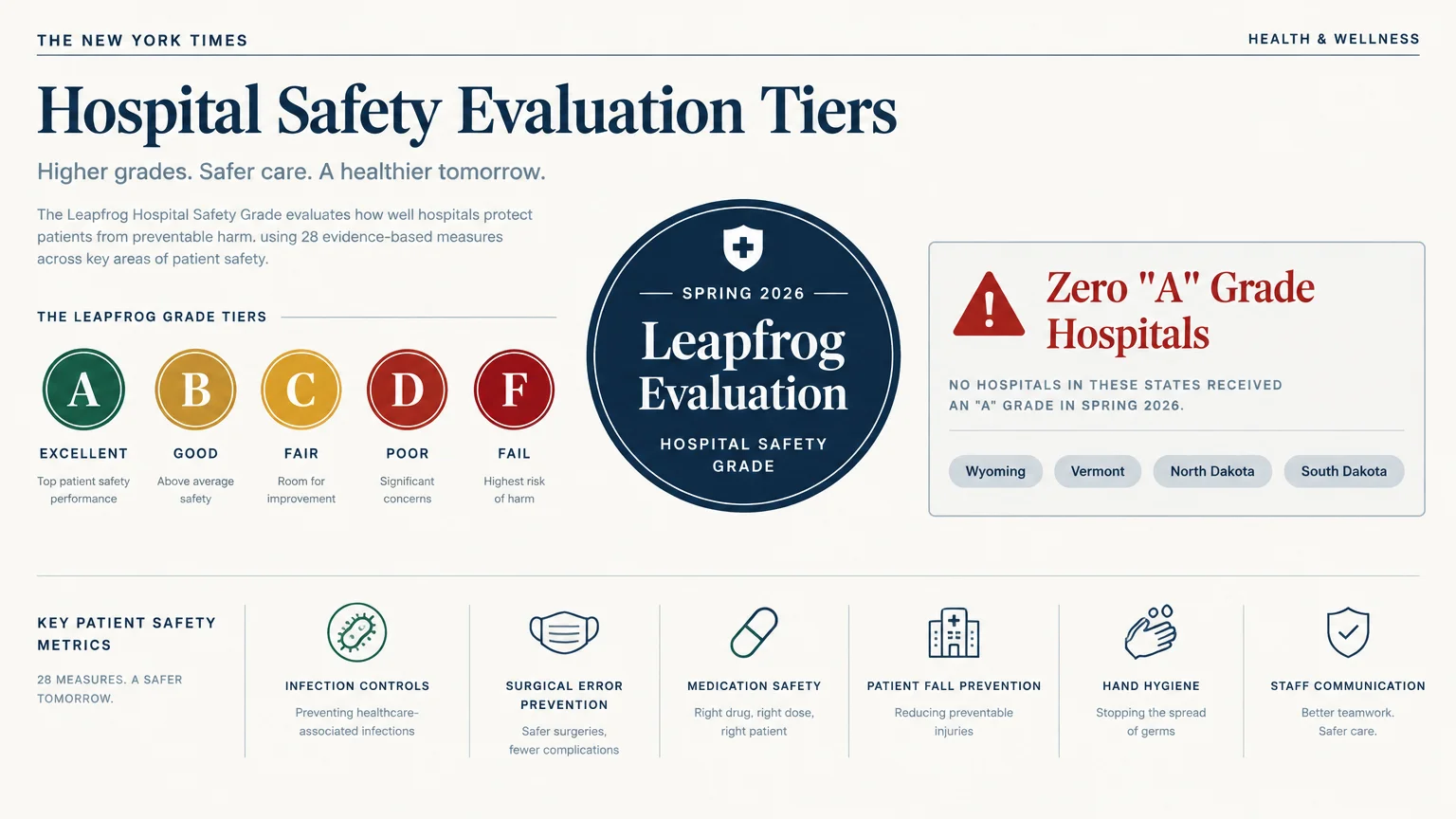
Four states—Wyoming, Vermont, North Dakota, and South Dakota—had zero hospitals earn an “A” safety grade in the Spring 2026 Leapfrog Group evaluation.
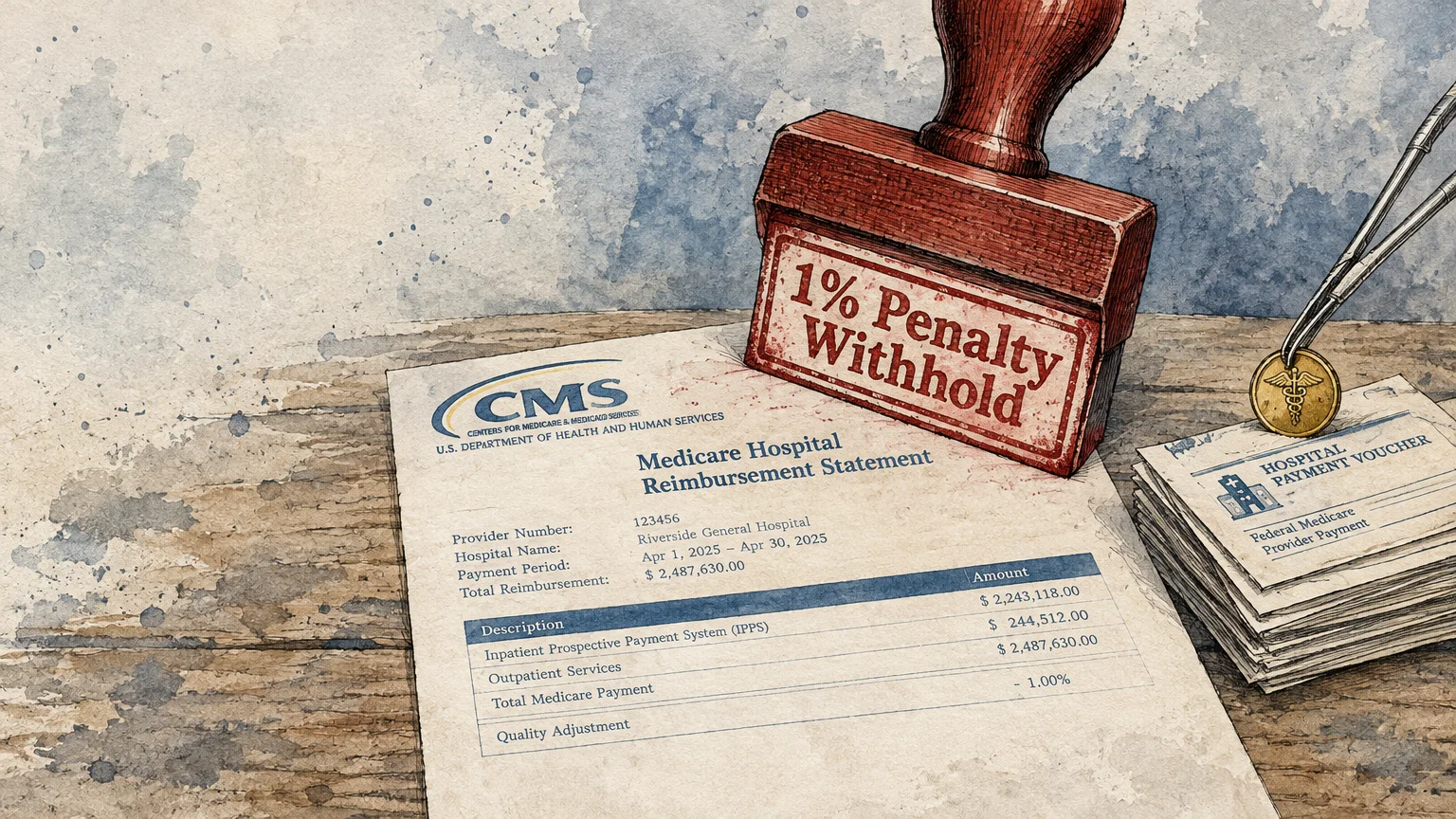
Federal Medicare penalties now withhold up to 1% of inpatient payments from hospitals ranking in the worst quartile for patient safety.
Understanding Medical Complication Deaths and Patient Safety
Medical complications include adverse events that occur during or after clinical treatment. These complications range from post-surgical sepsis and medication overdoses to accidental punctures and severe internal bleeding.
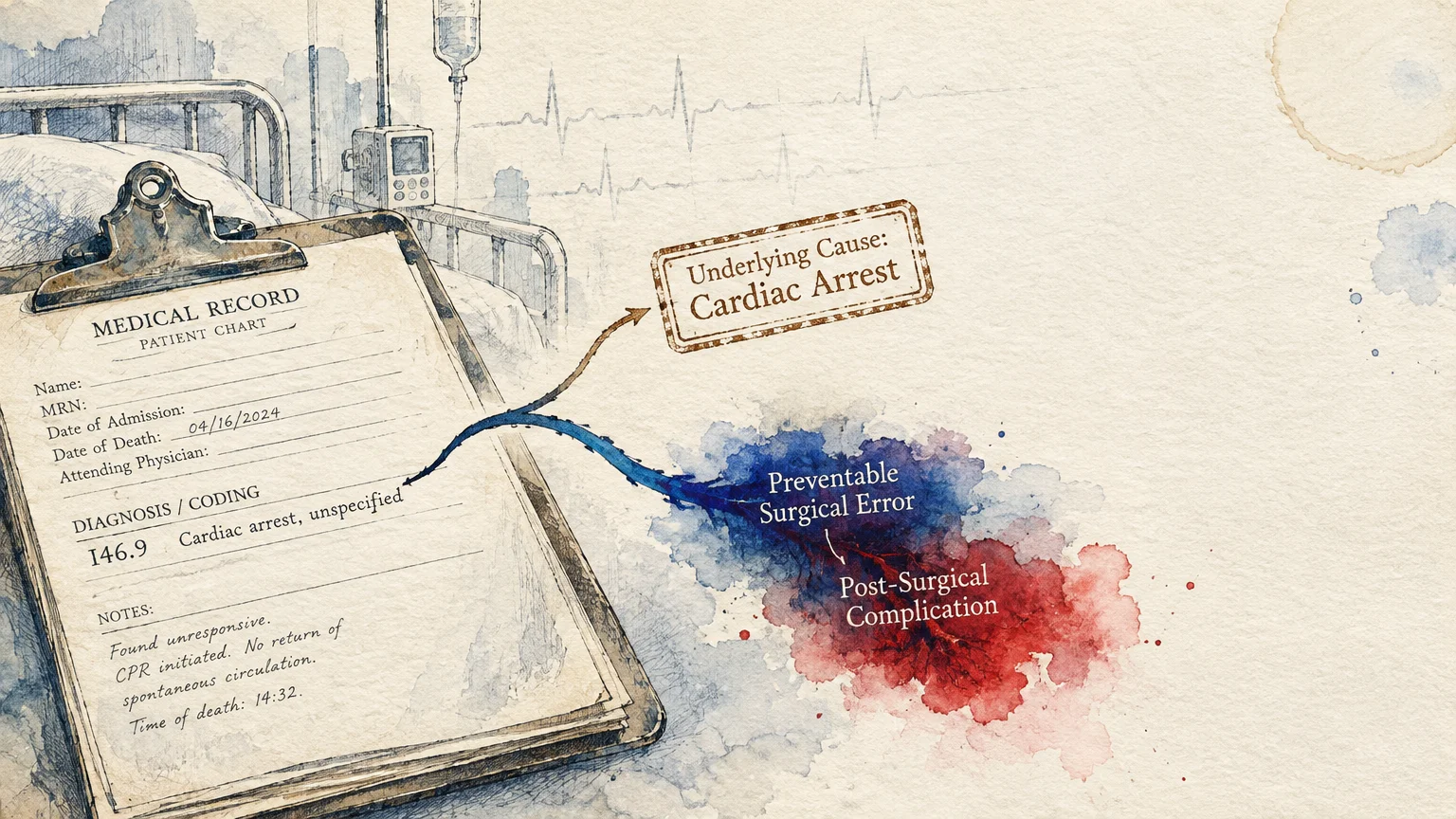
Federal reporting classifies these incidents under specific diagnostic codes for complications of medical and surgical care. However, official death certificates rarely capture the full scope of medical errors.
A physician often lists cardiac arrest or respiratory failure as the primary cause of death rather than the surgical error that triggered the collapse.
Because of this coding gap, official CDC records show around 12,000 direct complication deaths over a three-year span.
In contrast, comprehensive hospital research published by patient safety groups presents a far more alarming picture. Studies indicate that preventable harm affects roughly one in four hospitalized patients across the United States.
You can research specific conditions and diagnostic procedures through resources provided by MedlinePlus to understand standard clinical protocols.
Older adults face heightened vulnerability during inpatient stays. Age-related changes in drug metabolism and underlying chronic illnesses make recovery from hospital-acquired infections substantially more difficult.
When a routine surgery leads to an avoidable complication, extended intensive care stays can rapidly deplete retirement reserves through copayments and non-covered services.
“You cannot take your financial life seriously if you do not take your health care seriously.” — Suze Orman, Personal Finance Expert
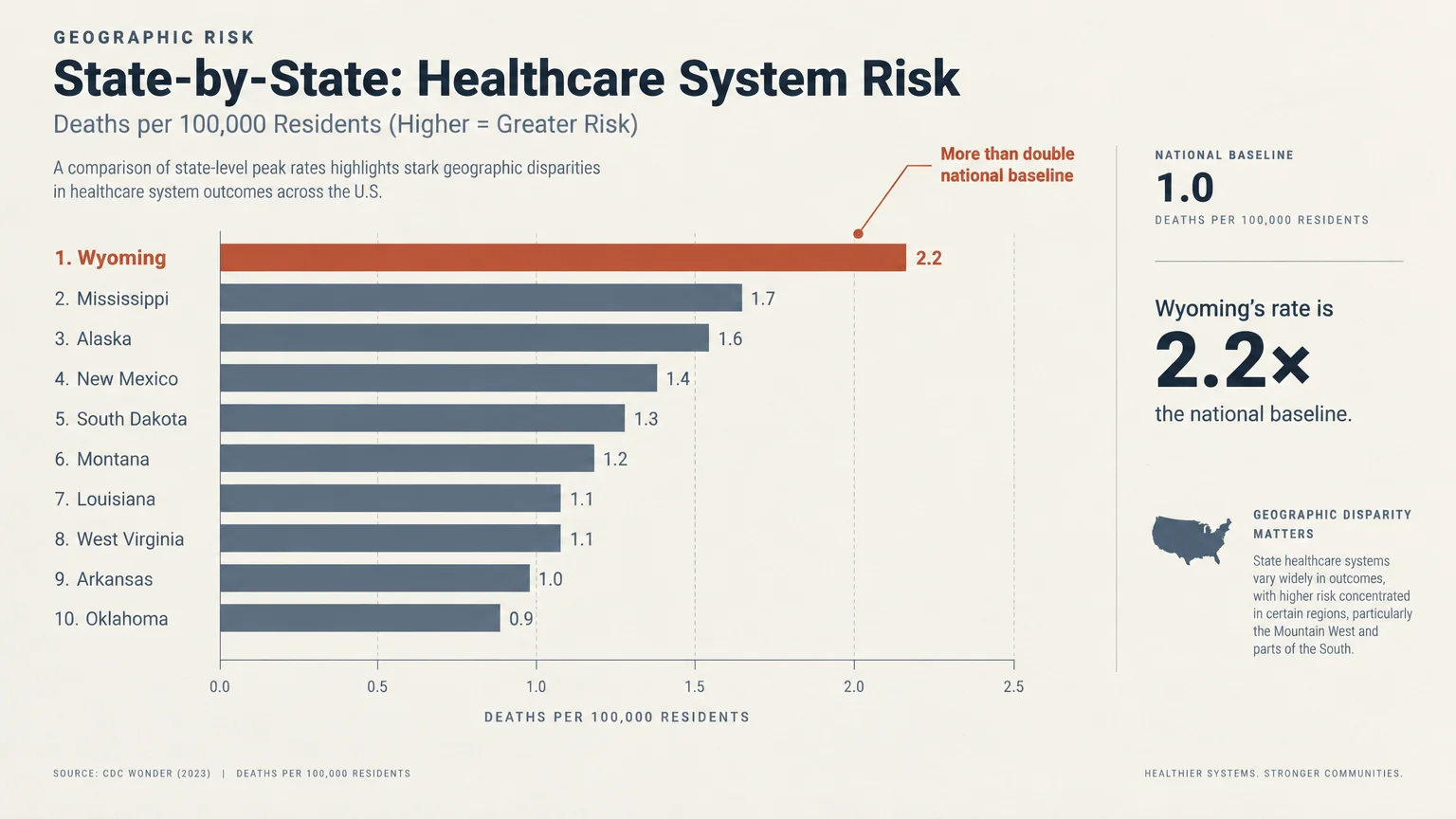
The 10 States With the Highest Rates of Fatal Medical Complications
Recent public health data illustrates dramatic regional disparities in fatal medical outcomes. Rural infrastructure, practitioner shortages, and healthcare funding directly influence these state-level outcomes.
1. Wyoming
Wyoming ranks worst in the nation with 2.2 complication deaths per 100,000 residents. This figure sits at more than double the national average.
The state maintains an average of 254.4 physicians per 100,000 residents. Median annual healthcare practitioner compensation stands at $81,210.
Over a recent ten-year tracking window, Wyoming recorded $49.4 million in malpractice payouts across 85 claims. That represents an average payout of $581,247 per case and $84.59 per capita.
Vast distances between specialized facilities frequently delay critical emergency interventions when routine surgical procedures suffer sudden complications.
2. Mississippi
Mississippi shares the second-highest mortality spot with 1.6 deaths per 100,000 residents from medical care complications.
The state has the lowest physician density among the top ten, with only 245.3 practicing doctors per 100,000 residents.
Healthcare practitioner wages in Mississippi reflect tight operational budgets, averaging a median of $64,960 annually.
Between 2015 and 2024, the state logged 480 malpractice payouts totaling $156.7 million. This equals $53.29 per capita and an average resolution of $326,381.
Persistent underfunding in rural facilities leaves hospital staff managing complex cases without sufficient clinical support or modern monitoring technology.
3. Arkansas
Arkansas matches Mississippi with a complication death rate of 1.6 per 100,000 residents.
Clinical staffing remains constrained across the state, which supports just 257.4 physicians per 100,000 individuals.
Median earnings for healthcare practitioners in Arkansas sit at $67,930 per year. Malpractice resolutions over a decade reached $182.7 million across 453 individual cases.
These malpractice payouts cost the state approximately $59.56 per capita, with an average settlement value of $403,338.
High rates of chronic cardiovascular disease complicate standard surgical procedures, driving elevated post-operative mortality across community hospitals.
4. Kansas
Kansas holds the fourth-highest rate, recording 1.5 complication deaths per 100,000 people.
The state benefits from a higher concentration of medical staff, providing 307.5 physicians per 100,000 residents.
Practitioner compensation averages a median of $75,120 per year. Kansas resolved 1,111 malpractice claims over ten years, totaling $243.8 million.
This translates to $82.90 per capita, with an average claim payment of $219,428.
Despite better physician availability, systemic coordination breakdowns between rural feeder clinics and urban medical centers contribute to post-surgical complications.
5. New Mexico
New Mexico also registers 1.5 medical complication deaths per 100,000 residents.
The state supports 322.0 physicians per 100,000 residents, with healthcare workers earning a median salary of $84,380.
New Mexico leads the nation in per-capita malpractice costs among high-mortality states, accumulating $344.3 million across 914 settled claims.
Residents shoulder an exceptional liability burden of $162.84 per capita, with the average malpractice payout reaching $376,700.
Severe nursing shortages across desert communities frequently undermine post-operative monitoring, allowing preventable complications to turn fatal.
6. West Virginia
West Virginia documents 1.3 deaths per 100,000 residents linked directly to medical care complications.
The state maintains 328.5 physicians per 100,000 residents, while practitioners earn a median annual wage of $69,340.
Malpractice settlements totaled $229.8 million across 663 legal actions over ten years. That represents $129.82 per capita and an average payment of $346,587.
West Virginia also struggles with hospital safety benchmarks, with fewer than one in ten facilities achieving top performance ratings.
An aging population with multi-system health conditions increases the clinical complexity of inpatient hospitalizations across Appalachian healthcare networks.
7. Tennessee
Tennessee records a complication mortality rate of 1.3 deaths per 100,000 residents.
The state features 297.6 practicing physicians per 100,000 residents, with median healthcare salaries standing at $75,830.
Malpractice payouts reached $295.5 million across 899 cases during the past decade. This equates to $41.47 per capita and an average settlement of $328,741.
High surgical volumes in major metropolitan centers contrast with struggling rural community hospitals, creating uneven safety environments across county lines.
8. Vermont
Vermont presents an unexpected profile, registering 1.3 complication deaths per 100,000 residents despite strong clinical resources.
The state maintains an impressive 417.3 physicians per 100,000 people, the highest doctor density among the top ten states.
Healthcare practitioners in Vermont earn a median salary of $84,660. Malpractice payouts over ten years remained modest at $40.9 million across 94 cases.
The per-capita malpractice expense is $63.22, with an average payout size of $435,447.
Despite heavy physician staffing, small community critical-access facilities face operational challenges managing rare, complex surgical emergencies.
9. Indiana
Indiana records 1.3 medical complication deaths per 100,000 residents.
Physician coverage sits at 269.9 doctors per 100,000 residents, and practitioners earn a median salary of $78,330.
Indiana processed an extraordinary volume of medical liability claims, paying out $515.5 million across 2,068 cases.
This payout total represents $75.13 per capita and an average compensation amount of $249,288.
Crowded urban trauma wards and regional hospital consolidation have strained nurse-to-patient staffing ratios in several major healthcare systems.
10. Ohio
Ohio completes the top ten list with 1.3 complication deaths per 100,000 residents.
The state houses a robust medical workforce, offering 380.6 physicians per 100,000 residents.
Healthcare practitioners earn a median annual income of $79,130. Ohio generated $686.8 million in malpractice payouts over the ten-year analysis window.
That liability volume equates to $58.27 per capita, with an average payout amount of $482,997.
Despite world-renowned specialized hospital systems, profound safety variations persist among regional community facilities serving suburban and rural populations.
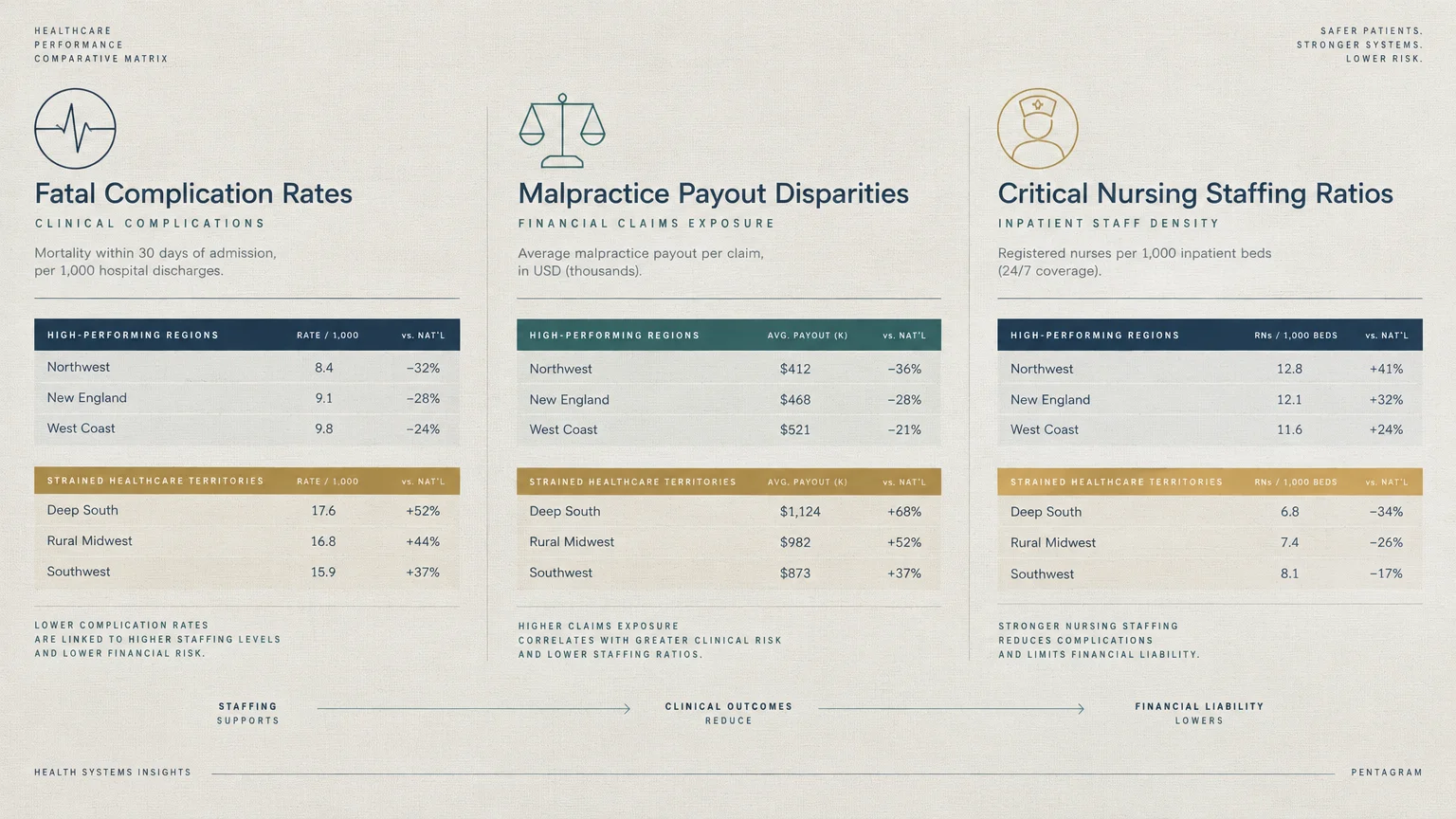
Comparing State Health Outcomes: Complications, Payouts, and Staffing
Reviewing clinical outcomes alongside financial liability data highlights how patient safety varies across state lines.
The following table details performance metrics across the ten highest-risk states, alongside low-risk benchmark states.
| State | Complication Deaths (per 100k) | Physicians (per 100k) | Malpractice Payout Total | Per Capita Payout | Median Practitioner Wage |
|---|---|---|---|---|---|
| Wyoming | 2.2 | 254.4 | $49.4M | $84.59 | $81,210 |
| Mississippi | 1.6 | 245.3 | $156.7M | $53.29 | $64,960 |
| Arkansas | 1.6 | 257.4 | $182.7M | $59.56 | $67,930 |
| Kansas | 1.5 | 307.5 | $243.8M | $82.90 | $75,120 |
| New Mexico | 1.5 | 322.0 | $344.3M | $162.84 | $84,380 |
| West Virginia | 1.3 | 328.5 | $229.8M | $129.82 | $69,340 |
| Tennessee | 1.3 | 297.6 | $295.5M | $41.47 | $75,830 |
| Vermont | 1.3 | 417.3 | $40.9M | $63.22 | $84,660 |
| Indiana | 1.3 | 269.9 | $515.5M | $75.13 | $78,330 |
| Ohio | 1.3 | 380.6 | $686.8M | $58.27 | $79,130 |
| California (Benchmark) | 0.6 | N/A | $2.2B | $56.44 | N/A |
| South Dakota (Benchmark) | 0.5 | N/A | $73.6M | $80.09 | N/A |
Malpractice figures reflect total payouts reported to the National Practitioner Data Bank between 2015 and 2024. Mortality figures reflect age-adjusted CDC records from 2021 through 2023.
Staffing ratios and wage figures stem from verified federal workforce surveys published through early 2025.
States Leading the Nation in Patient Safety
At the opposite end of the spectrum, several states maintain outstanding track records for preventing surgical and medical complications.
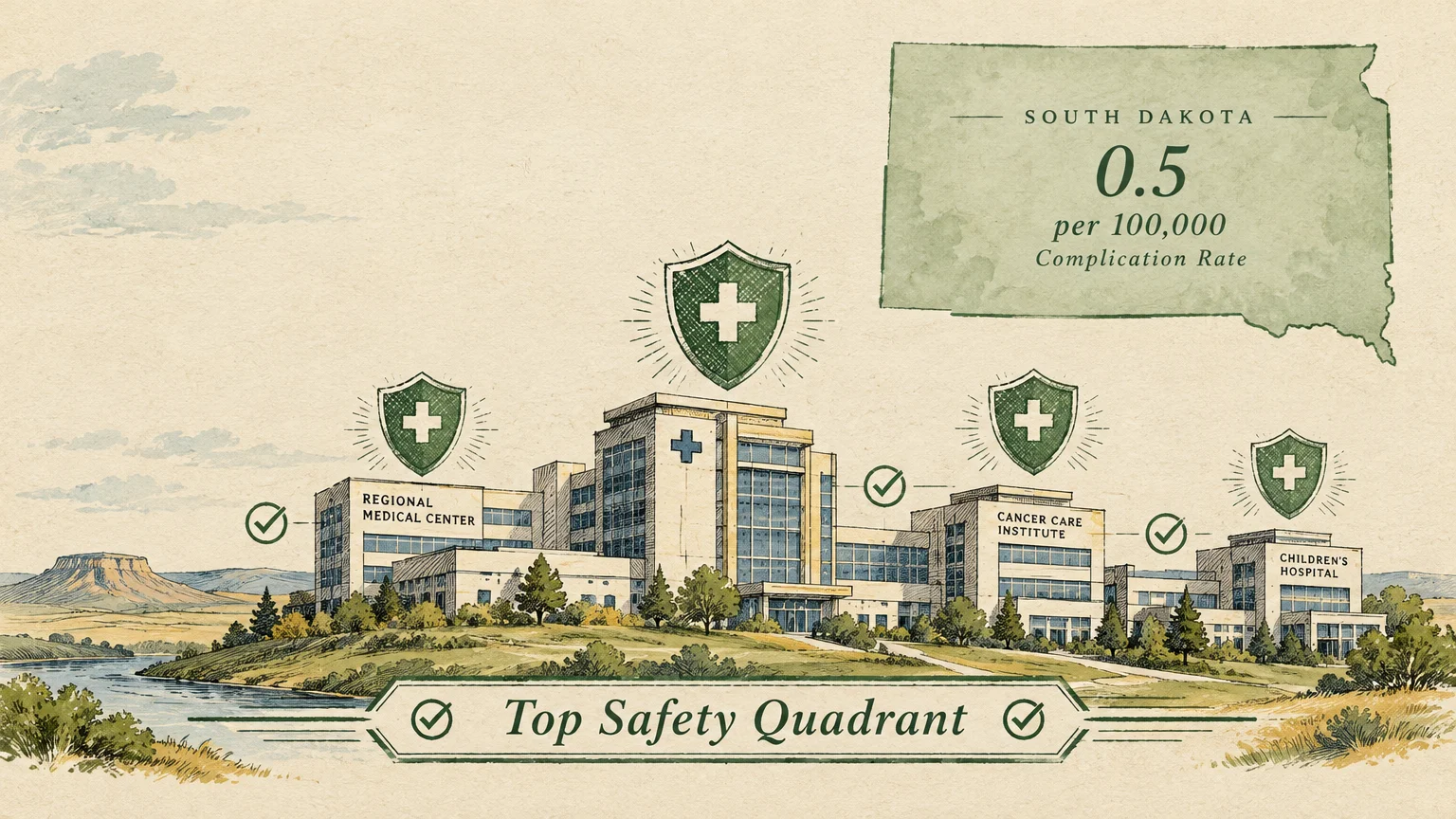
South Dakota records the absolute lowest complication death rate in the country at just 0.5 per 100,000 residents.
Between 2015 and 2024, South Dakota recorded 107 malpractice payouts totaling $73.6 million, averaging $688,143 per settlement.
California ranks second-lowest in fatal complications, posting a mortality rate of 0.6 deaths per 100,000 residents.
Because of its immense population, California generated $2.2 billion in malpractice payouts across 7,352 cases, which equates to an economical $56.44 per capita.
Densely populated states across the Northeast also demonstrate superior safety performance. Massachusetts, New York, Connecticut, and New Jersey all recorded low complication death rates of 0.8 per 100,000 residents.
These northeastern states maintain exceptionally high physician densities. Massachusetts supports 526.2 doctors per 100,000 people, New York supports 474.4, Connecticut provides 451.4, and New Jersey maintains 364.2.
Higher physician concentrations provide patients with rapid access to sub-specialists when early signs of surgical distress appear.
Hospital Safety Grades: What the Spring 2026 Leapfrog Data Reveals
Independent evaluation groups provide vital consumer insights into local hospital reliability. The Leapfrog Group evaluates thousands of general acute-care hospitals twice each year.
In the Spring 2026 Leapfrog Hospital Safety Grades, analysts examined 2,639 facilities nationwide.
The national distribution revealed notable variation in safety standards across facilities:
- 823 hospitals earned an “A” rating.
- 706 hospitals earned a “B” rating.
- 933 hospitals received a “C” rating.
- 167 hospitals fell to a “D” rating.
- 10 hospitals received an “F” rating.
State performance at the bottom of the Leapfrog rankings closely mirrors federal complication mortality patterns.
Four states tied for last place with 0.0% of their hospitals earning an “A” grade: Wyoming, Vermont, North Dakota, and South Dakota.
Iowa ranked near the bottom with only 3.3% of hospitals securing an “A,” while West Virginia achieved “A” marks at just 8.7% of its facilities.
Wyoming, Vermont, and West Virginia appear in both the top ten for fatal complications and the bottom tier for hospital safety grades.
Conversely, five states led the country with high proportions of top-performing facilities. Connecticut ranked first, with 64.3% of its evaluated hospitals receiving an “A.”
Virginia followed at 59.2%, South Carolina reached 51.0%, Utah achieved 50.0%, and Montana recorded 44.4% top-grade facilities.
Medicare Penalties and Federal Quality Oversight
Federal regulators penalize poor patient safety performance through direct Medicare payment reductions. These programs incentivize hospital administrators to eliminate avoidable clinical errors.
The Centers for Medicare & Medicaid Services enforces the Hospital-Acquired Condition Reduction Program under Section 1886(p) of the Social Security Act.
This program penalizes hospitals performing in the worst-performing quartile for patient safety. Facilities scoring above the 75th percentile lose 1% of all Medicare fee-for-service inpatient payments.
The program monitors the CMS Patient Safety and Adverse Events Composite, alongside five primary infection metrics:
- Central line-associated bloodstream infections (CLABSI).
- Catheter-associated urinary tract infections (CAUTI).
- Surgical site infections (SSI) following colon surgeries and abdominal hysterectomies.
- Methicillin-resistant Staphylococcus aureus (MRSA) bacteremia.
- Clostridioides difficile (C. diff) intestinal infections.
A second major initiative, the Hospital Value-Based Purchasing Program, withholds 2% of inpatient diagnosis-related group payments across more than 3,000 hospitals.
CMS redistributes these funds as performance bonuses to facilities demonstrating superior clinical outcomes, low mortality rates, and high patient satisfaction.
For fiscal year 2026, CMS removed previous pandemic-era exclusions, restoring full accountability across all standard safety metrics.
CMS also expanded its readmission reduction monitoring to track Medicare Advantage patients alongside traditional fee-for-service beneficiaries.
You can review quality and safety ratings for hospitals in your immediate zip code by visiting Medicare.gov before scheduling care.
What Can Go Wrong: Critical Mistakes Patients Make
Navigating the modern medical system requires active oversight. Avoiding common missteps significantly reduces your personal risk during an unexpected inpatient stay.
1. Assuming Every Accredited Hospital Is Equally Safe
Many seniors believe that all licensed medical centers deliver identical clinical standards. In reality, complication rates and infection controls vary wildly between facilities in the same county.
Failing to review hospital safety grades before elective surgery leaves your health outcomes entirely to chance.
2. Remaining Silent During Medication Handoffs
Medication mix-ups represent one of the most common hospital complications. Shift changes and fragmented electronic records increase the danger of receiving incorrect dosages.
Never swallow a pill or allow an intravenous injection without asking the nurse to confirm the drug name and intended purpose.
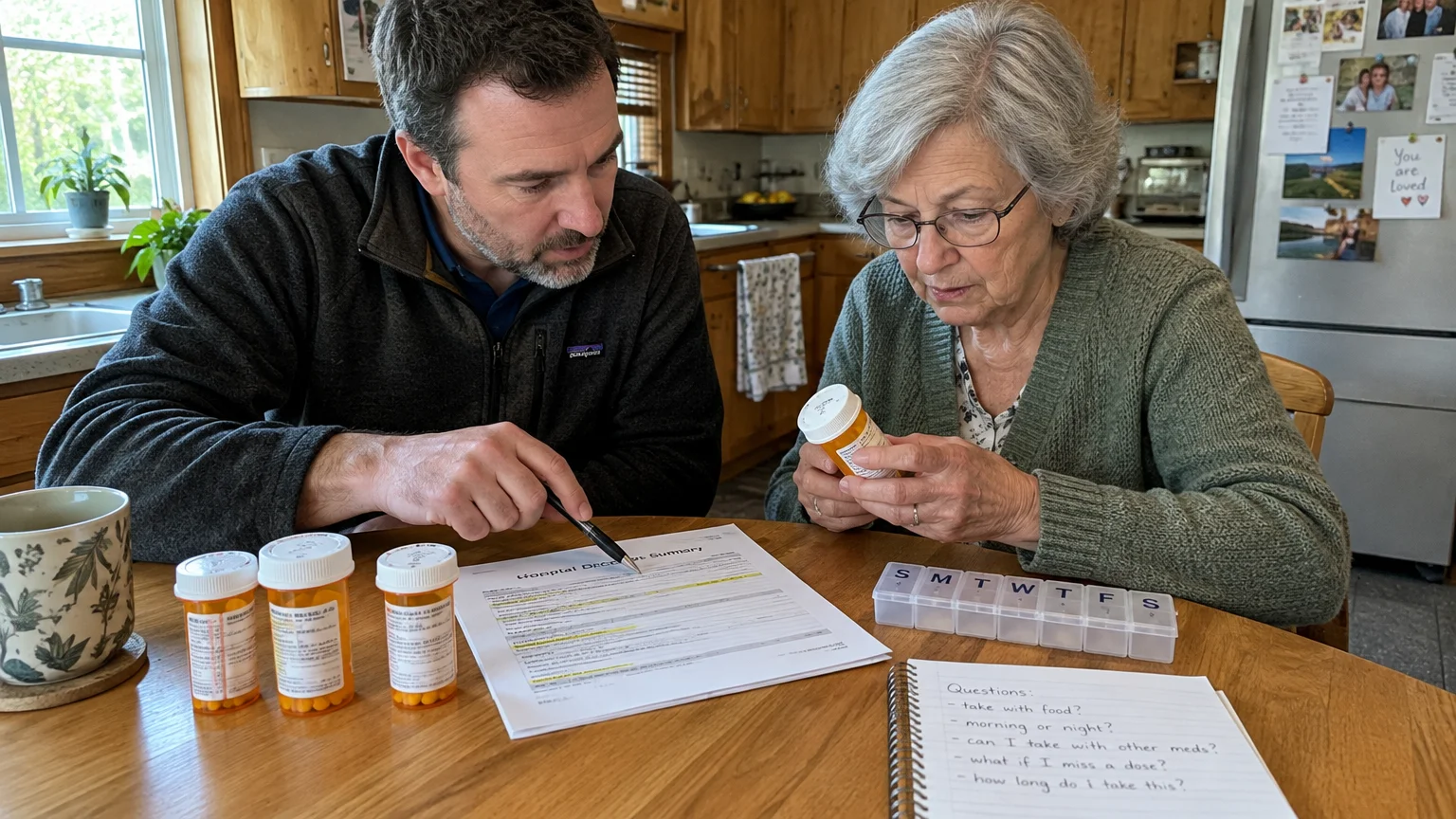
3. Overlooking Caregiver Coordination at Discharge
Complications frequently develop within forty-eight hours of returning home. Unclear instructions regarding wound management or blood thinners trigger rapid hospital readmissions.
Always review discharge orders with a family member present, confirming follow-up appointment dates and emergency contact numbers.
4. Assuming Medicare Covers Every Complication Expense
While Medicare Part A covers standard inpatient care, severe complications often require extended stays and specialized rehabilitation. These prolonged recoveries generate substantial out-of-pocket coinsurance costs.
You can explore consumer health resources through AARP to prepare your household for unplanned medical costs.
“Being prepared means asking the hard questions before a crisis hits, not after.” — Jean Chatzky, Financial Journalist
Actionable Steps to Protect Yourself During a Hospital Stay
You possess the right to demand high clinical standards whenever you enter a medical facility. Proactive measures minimize surgical risks and accelerate recovery.
Designate an assertive healthcare advocate before you check into a hospital. Having a trusted family member or friend stay in the room ensures staff adhere to strict care standards.
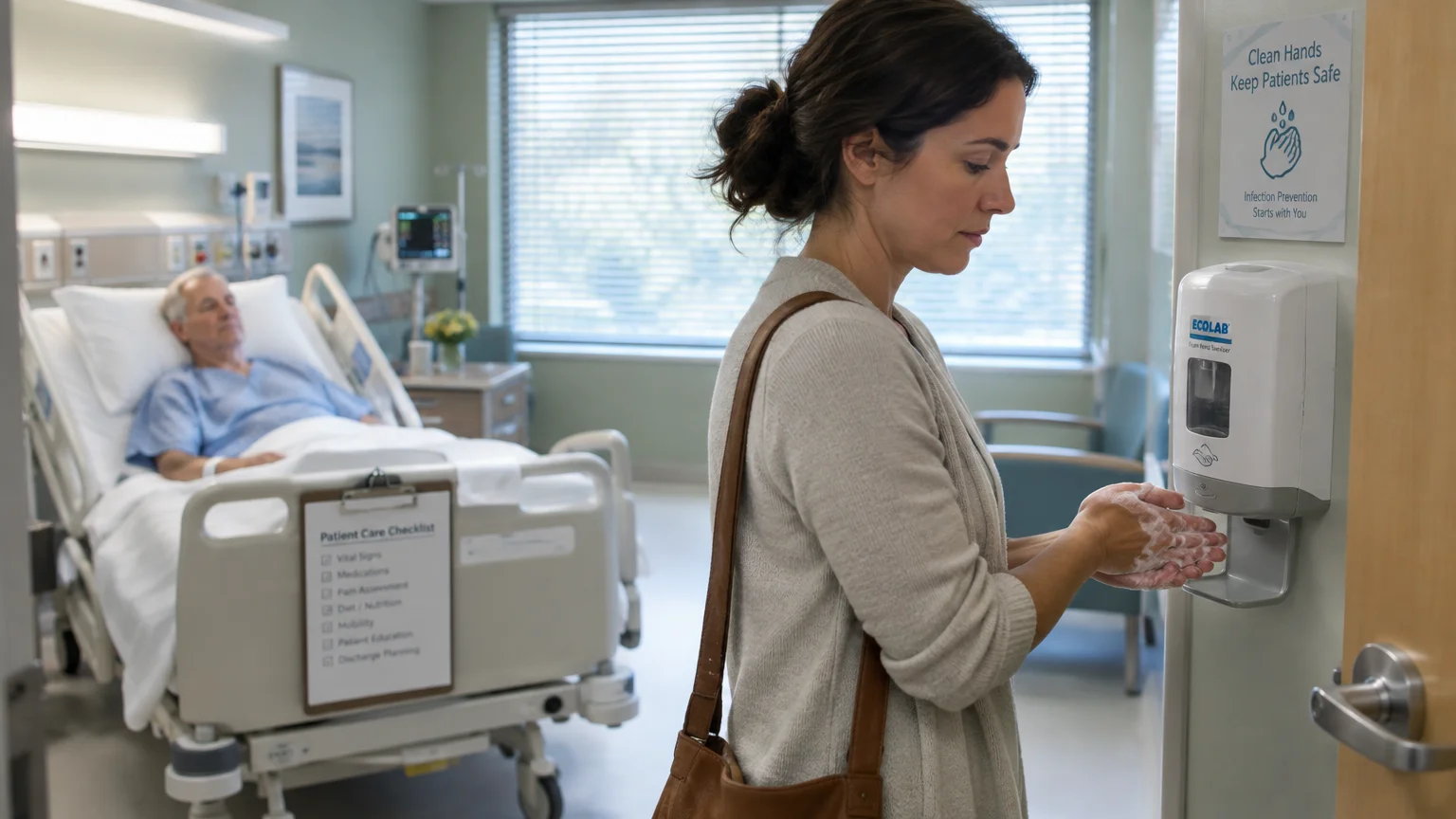
Require clinical staff to sanitize their hands in your presence. Unwashed hands and contaminated equipment remain primary drivers of hospital-acquired bacterial infections.
Request an updated medication reconciliation form every morning. Compare this list against the home prescriptions you take regularly to avoid dangerous drug interactions.
Obtain a second surgical opinion whenever an elective procedure carries significant complication risks. Independent specialists can often recommend less invasive alternative therapies.
Seek community support services and caregiver guidance through the Administration for Community Living if you need post-surgical assistance at home.

When to Consult a Professional
Certain healthcare challenges require outside professional expertise. Recognizing when to engage professional support safeguards your finances and legal rights.
Consider retaining an independent patient advocate if you or a spouse face a complex, multi-week hospitalization without local family support. Advocates navigate hospital protocols and enforce care standards.
Consult an elder law attorney if a severe medical error results in long-term disability or sudden cognitive decline. Attorneys establish vital guardianships and protect your assets from predatory collection practices.
Engage a medical billing specialist if a complicated inpatient stay produces confusing out-of-network claims or surprise bills. Specialists audit billing codes and successfully dispute erroneous hospital charges.
Hire a certified geriatric care manager when transitioning a recovering spouse from acute hospital care to an assisted living or skilled nursing facility.
Frequently Asked Questions About Medical Complication Deaths
What qualifies as a medical complication death?
A medical complication death occurs when a patient dies from adverse reactions, surgical trauma, post-operative infections, or medication errors directly resulting from treatment rather than the underlying disease.
Why do rural states like Wyoming and Mississippi have higher complication rates?
Rural states frequently face severe physician shortages, limited intensive care capacity, and longer transport times between regional clinics and specialized surgical centers.
Can I look up my surgeon’s complication history?
Individual surgeon data can be difficult to access publicly, but you can review hospital complication rates, infection scores, and patient safety ratings on Medicare.gov.
Does Medicare penalize hospitals that injure patients?
Yes. The Centers for Medicare & Medicaid Services cuts inpatient reimbursements by 1% for hospitals scoring in the worst quartile under the Hospital-Acquired Condition Reduction Program.
Next Steps for Securing Safe Care
Begin protecting your health today by researching the safety records of the hospitals in your community. Bookmark public quality databases and discuss hospital preferences with your primary care physician before medical emergencies occur.
Assemble an organized binder containing your complete medical history, advance directives, and current prescription list. Having these documents ready ensures medical teams make informed decisions during critical moments.
The information in this guide is meant for educational purposes. Your specific circumstances—including income, benefits, tax situation, and health needs—may require different approaches. When in doubt, consult a licensed financial advisor or tax professional.
Last updated: October 2026. Benefit amounts, tax rules, and program details change annually—verify current figures with official government sources.








Leave a Reply