

Deciding when to step away from work represents one of the most consequential financial decisions of your lifetime. Choosing between retiring at age 62 and waiting until your Full Retirement Age of 67 involves far more than picking a date on a calendar—it fundamentally alters your monthly income, tax obligations, and healthcare spending for decades. Claiming Social Security early reduces your monthly benefits by a permanent 30%, while stepping down before age 65 leaves a three-year health insurance gap until Medicare begins. Evaluating the exact numbers behind these choices ensures you protect your lifetime wealth, maintain comfortable cash flow, and build a resilient retirement strategy tailored to your personal health and financial goals.
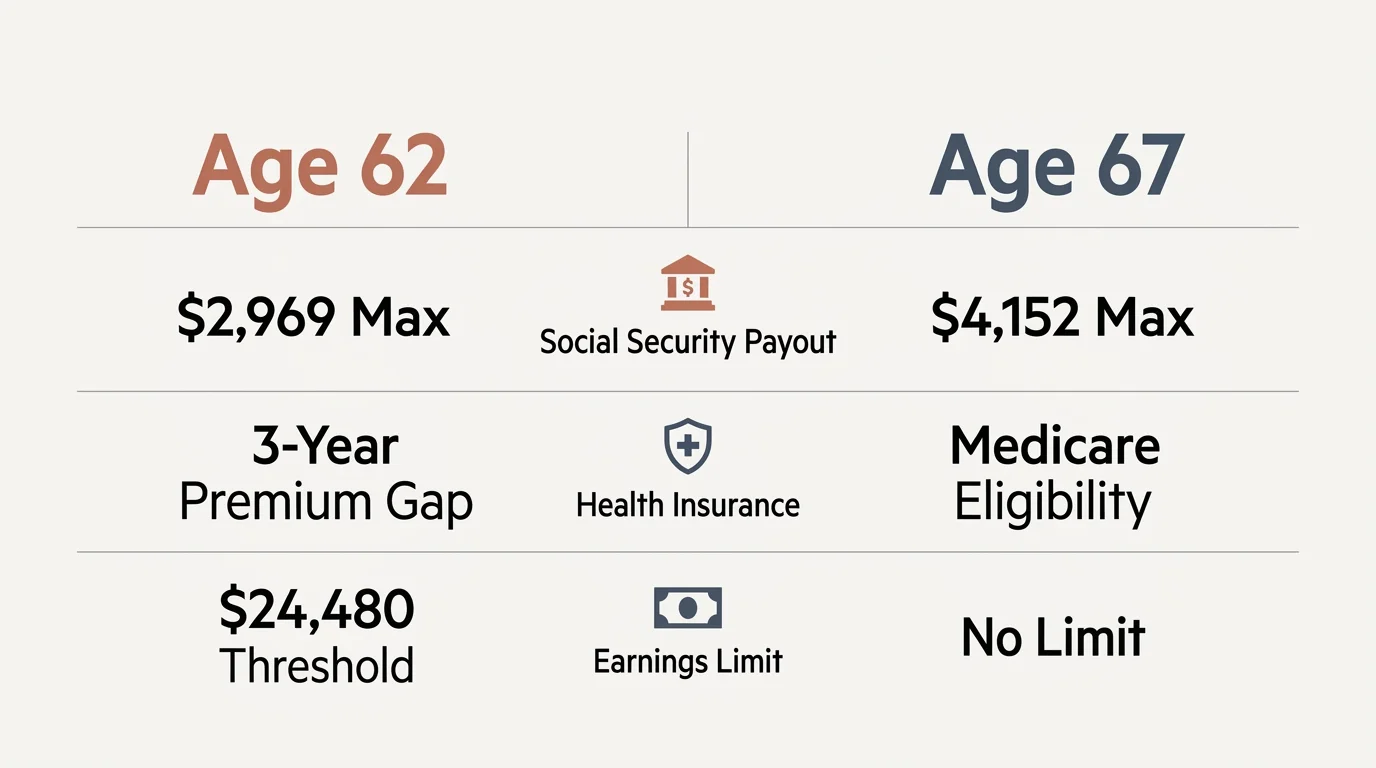
The Essentials: Key Differences at a Glance
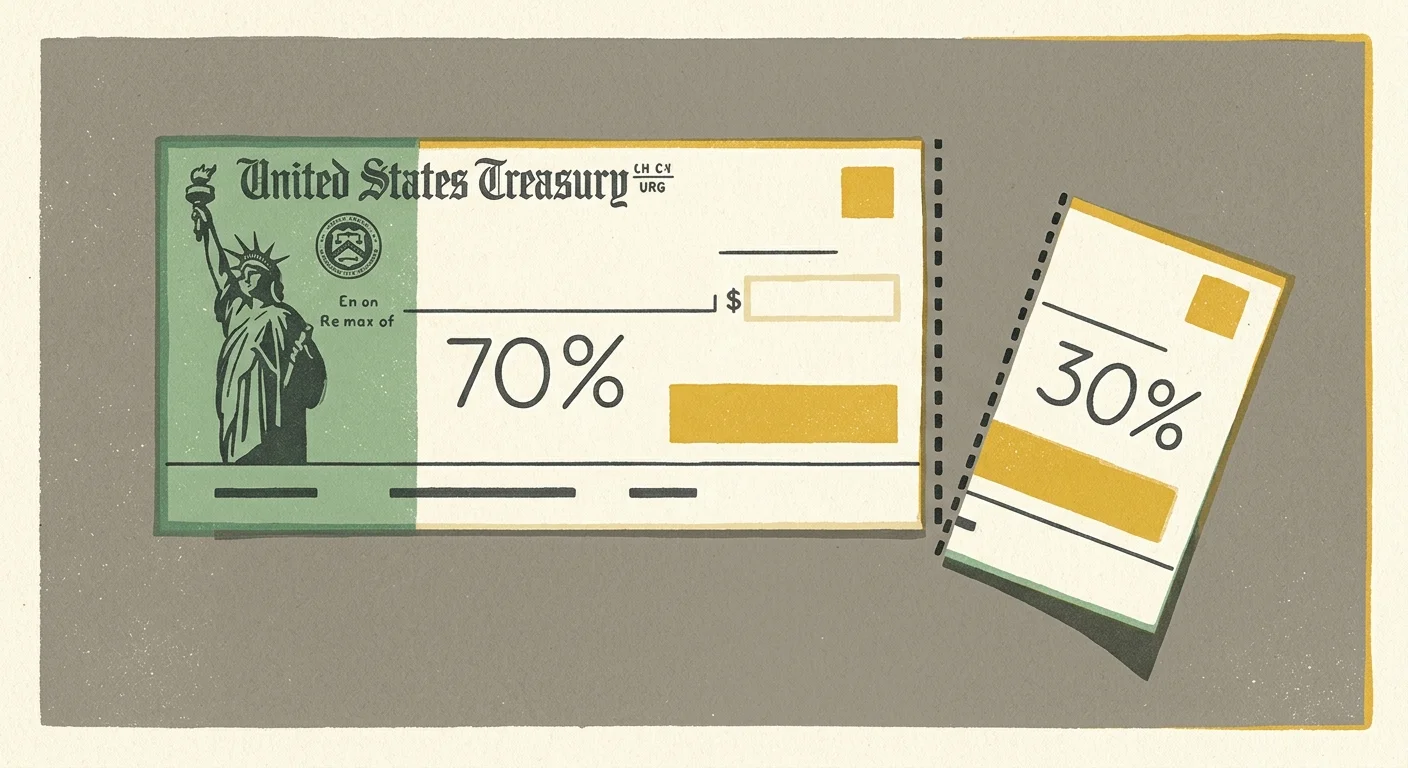
- Permanent Benefit Reduction: Claiming Social Security at age 62 permanently cuts your monthly payment by 30% compared to waiting until age 67.
- Maximum Benefit Differences: According to the Social Security Administration (2026), the maximum monthly payout is $2,969 at age 62, compared to $4,152 at age 67.
- The Healthcare Gap: Retiring at 62 requires you to fund three years of private health coverage out of pocket until Medicare begins at age 65.
- The Earnings Limit Penalty: Working while collecting early benefits in 2026 subjects your payments to a $24,480 earnings threshold, withholding $1 for every $2 earned above the limit.
- Compound Growth Loss: Retiring five years early means five fewer years of saving and five extra years of drawing down your private investment accounts.
12: cost
13: of
14: early
15: retirement.
Total: 15 words.
Perfect. Meets all criteria.A Treasury check split into 70% and 30% pieces illustrates the cost of early ret
Social Security Monthly Benefit Cut: The 30% Reality
For workers born in 1960 or later, federal law establishes Full Retirement Age (FRA) at exactly 67. If you decide to claim benefits the moment you turn 62, the Social Security Administration penalizes early filing by reducing your baseline payout by 30%. This is not a temporary reduction; it locks in a lower monthly income for the rest of your life.
To understand the monetary impact, consider a full monthly benefit entitlement—known as your Primary Insurance Amount—of $2,000 per month at age 67. If you file at age 62, your monthly check drops to $1,400. That $600 monthly difference equals an annual loss of $7,200 in guaranteed income. Over a 20-year period, filing early forfeits $144,000 in baseline payments before accounting for annual cost-of-living adjustments (COLA).
The gap widens further at maximum earning levels. In 2026, a top earner claiming at age 62 receives a maximum of $2,969 per month. Waiting until age 67 raises that maximum monthly payout to $4,152. Delaying until age 70 increases the maximum check to $5,181 per month due to delayed retirement credits. Performing a detailed retirement age benefits comparison reveals how much guaranteed cash you leave on the table by choosing early exit options.
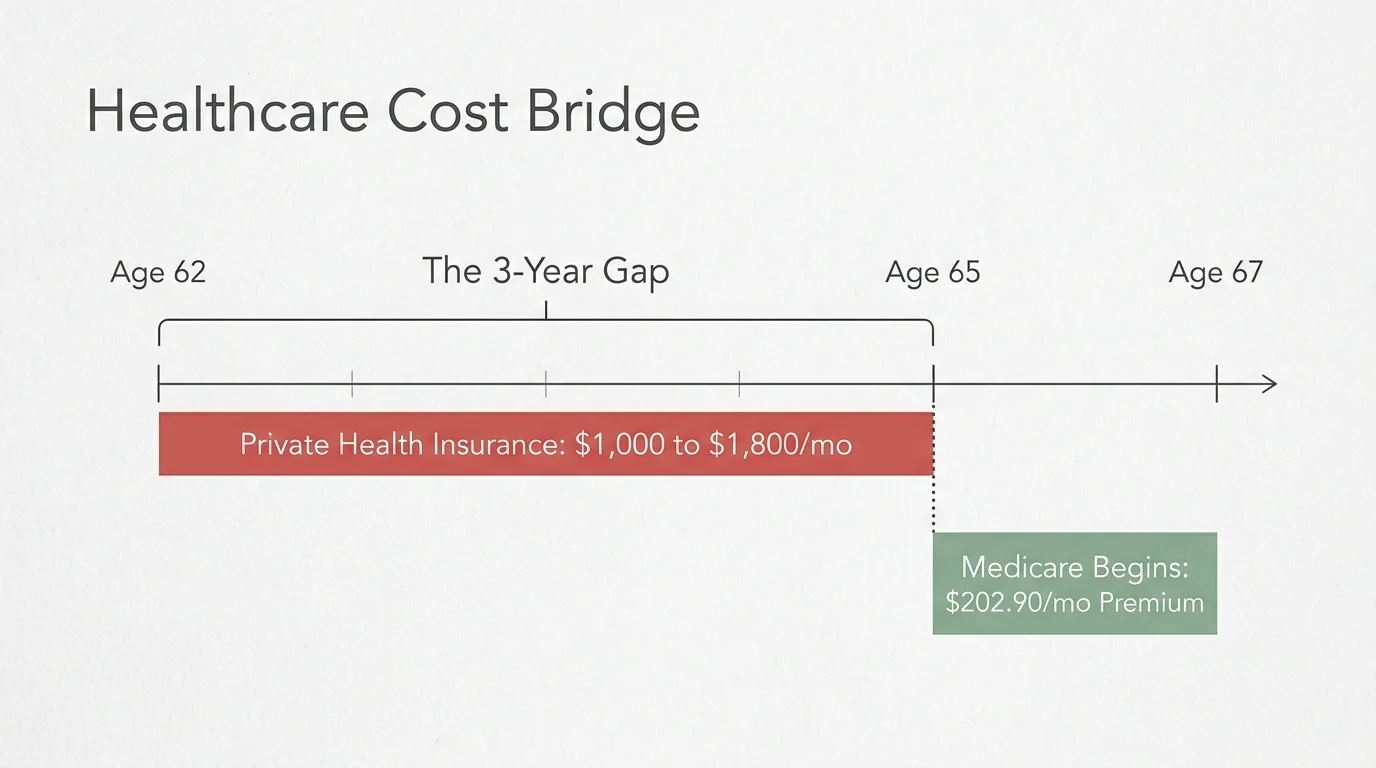
The Healthcare Cost Bridge: Ages 62 to 65
The financial impact of early retirement extends far beyond Social Security checks. Standard Medicare eligibility does not begin until you turn 65, creating a critical three-year health insurance coverage gap for anyone who retires at 62. Without employer-sponsored group health insurance, you must pay full retail rates for individual coverage.
Data from Medicare.gov confirms that baseline Medicare Part B premiums sit at $202.90 per month in 2026 once you hit age 65. However, between ages 62 and 65, your options carry significantly higher price tags:
- ACA Marketplace Plans: An individual aged 62 purchasing an ACA plan without income-based subsidies pays between $1,000 and $1,800 per month for middle-tier coverage. Over three years, premiums alone easily top $36,000 to $64,800 per person.
- COBRA Continuation Coverage: COBRA allows you to stay on your former employer’s policy for up to 18 months, but you pay 102% of the total premium cost. Average COBRA premiums range from $700 to $1,800 per month, leaving you to find independent coverage for the remaining 18 months before Medicare.
- Out-of-Pocket Maximums: In addition to monthly premiums, high deductibles and annual out-of-pocket maximums can add up to $9,000 per year in medical costs if an unexpected illness occurs.
This early retirement cost requires substantial cash reserves. A married couple retiring together at age 62 may spend over $100,000 on medical premiums and out-of-pocket care before their Medicare coverage kicks in at 65.

The Social Security Earnings Test Penalty
Many seniors plan to retire at 62 from their main career while working part-time to supplement their reduced Social Security check. However, the federal government limits how much you can earn without forfeiting part of your benefit.
The Social Security Administration applies an earnings test to anyone collecting benefits prior to their Full Retirement Age. For 2026, the annual earnings limit sits at $24,480. If your earnings exceed this threshold, the government withholds $1 in benefits for every $2 you earn over the limit.
For example, if you take early benefits at 62 and earn $34,480 from a part-time job, you stand $10,000 over the limit. Social Security will withhold $5,000 of your benefits for that year. During the calendar year you reach your Full Retirement Age of 67, the rule softens: the earnings limit jumps to $65,160, and the penalty drops to $1 withheld for every $3 earned above the limit. Once you reach full retirement age, the earnings limit disappears completely, allowing you to earn unlimited wages without benefit reductions.
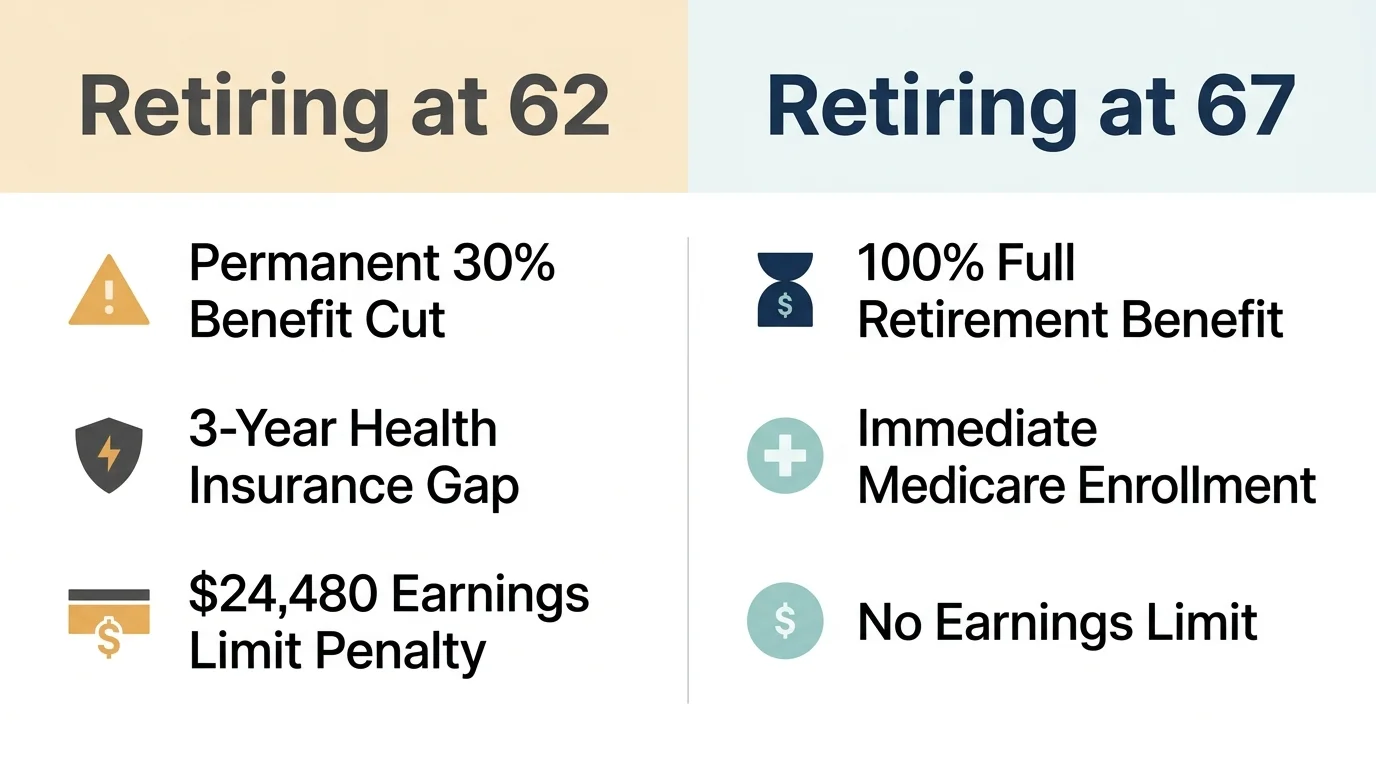
Side-by-Side Comparison: Retiring at 62 vs. 67
Evaluating a comprehensive social security age comparison allows you to see how income, health expenses, and long-term asset values shift depending on your choice.
| Financial Factor | Retiring at Age 62 | Retiring at Age 67 (FRA) |
|---|---|---|
| Baseline Monthly Benefit ($2,000 PIA Example) | $1,400 per month (30% permanent reduction) | $2,000 per month (100% full benefit) |
| 2026 Maximum Monthly Benefit | $2,969 per month | $4,152 per month |
| Health Insurance Status | Private ACA / COBRA (High cost out-of-pocket) | Full Medicare Eligibility (Part B standard: $202.90/mo) |
| 2026 Annual Earnings Test Limit | $24,480 limit ($1 withheld per $2 over) | No earnings limit; keep full benefit regardless of wages |
| Savings Portfolio Impact | 5 additional years of withdrawals; lost growth potential | 5 additional years of compounding savings and contributions |
| Spousal Survivor Benefit Base | Locks in lower lifetime payout for surviving spouse | Preserves 100% base payout for surviving spouse |

Capital Preservation and Portfolio Longevity
Retiring five years earlier shifts the burden of living expenses directly onto your investment portfolio. When you retire at 62 instead of 67, you stop contributing to tax-advantaged accounts like 401(k)s and IRAs, and you begin withdrawing money five years sooner.
Consider a senior with a $750,000 retirement portfolio. Retiring at 62 means this portfolio must support 30 to 35 years of living expenses rather than 25 to 30 years. Additionally, withdrawing funds during the early years exposes your money to sequence-of-returns risk. If the financial markets suffer a downturn right when you begin taking distributions at age 62, your portfolio loses value rapidly, making it difficult for your principal to recover later.
“Every year you wait to take Social Security is a guaranteed return you cannot find anywhere else in the market.”
— Suze Orman, Personal Finance Expert
Staying employed until age 67 allows your investment accounts to compound longer while benefiting from high contribution limits. In 2026, workers aged 50 and older can make catch-up contributions to their 401(k) plans up to an annual maximum verified by the Internal Revenue Service (IRS), strengthening your total nest egg before distributions start.
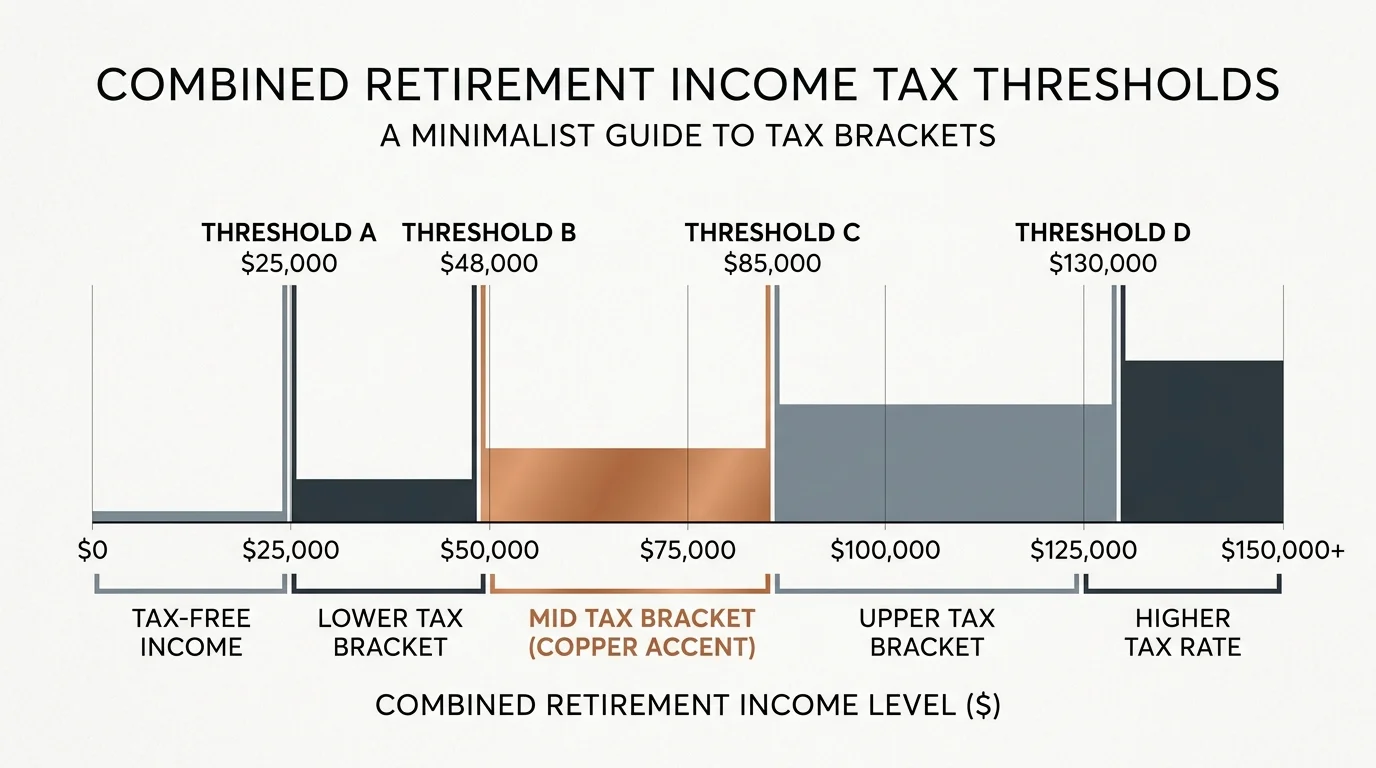
Tax Considerations and Combined Income Thresholds
Your retirement age directly influences how the IRS taxes your retirement income. Social Security benefits are not automatically tax-free. The IRS calculates your provisional income (adjusted gross income plus non-taxable interest plus 50% of your Social Security benefit) to determine taxability.
If your combined provisional income exceeds $25,000 for single filers or $32,000 for married couples filing jointly, up to 50% of your Social Security benefits become subject to federal income tax. If your income passes $34,000 for individuals or $44,000 for married couples, up to 85% of your benefits become taxable. Retiring early often forces seniors to draw larger taxable distributions from Traditional IRAs to make up for smaller Social Security checks, accidentally triggering higher tax brackets and Medicare premium surcharges.
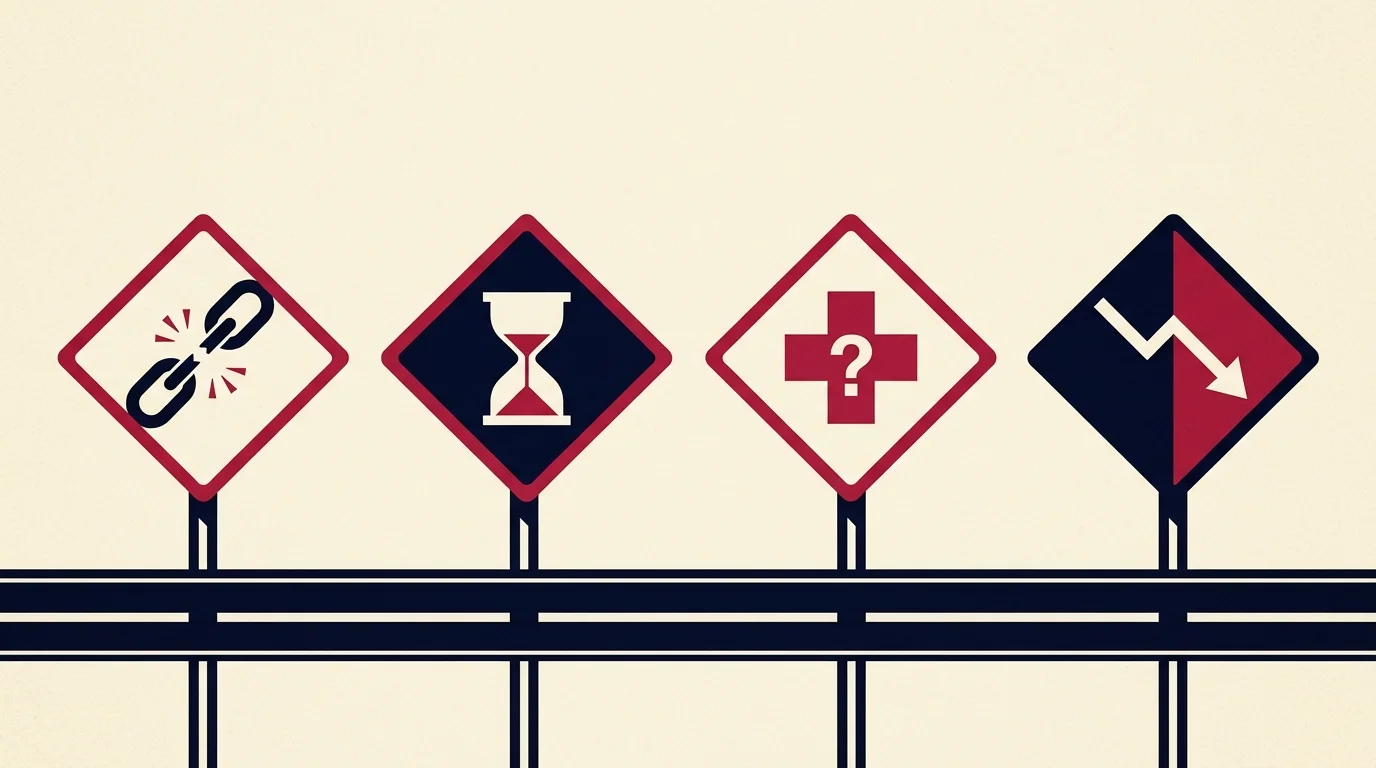
What Can Go Wrong: 4 Early Retirement Pitfalls
- Miscalculating Pre-Medicare Healthcare Costs: Assuming standard retirement savings will cover early medical insurance often leads to cash shortages before age 65.
- Overestimating Part-Time Income Potential: Failing to account for the Social Security earnings test limit ($24,480 in 2026) can cause unexpected benefit withholdings if you work past the threshold.
- Reducing Survivor Protection for Your Spouse: If you are the higher-earning spouse, claiming at 62 permanently caps the survivor benefit your spouse receives if you pass away first.
- Draining Capital in Bear Markets: Initiating portfolio withdrawals at age 62 during a stock market decline accelerates account depletion and increases overall failure risk.

When to Consult a Professional
Deciding when to transition out of the workforce involves complex financial modeling. You should consult a fee-only Certified Financial Planner (CFP) or tax advisor in these scenarios:
- Complex Asset Bundles: You hold a mix of traditional pensions, commercial real estate, taxable brokerage accounts, and tax-deferred IRAs requiring a coordinated draw-down schedule.
- Significant Spousal Wage Disparities: One spouse earns substantially more than the other, requiring precise filing timing to maximize combined lifetime income and survivor benefits.
- Pre-Existing Health Considerations: Poor health or family longevity history suggests a shortened lifespan where claiming at 62 offers a higher cumulative payout.
- Roth Conversion Strategies: You plan to execute tax-bracket management strategies between ages 62 and 67 prior to mandatory distributions.
Organizations like the National Council on Aging (NCOA) offer additional public resources and benefit access support to help seniors navigate early retirement decisions safely.
Frequently Asked Questions
What is the break-even age when comparing Social Security at 62 versus 67?
The mathematical break-even point typically occurs around age 77 to 78. If you live past age 78, the total cumulative dollars collected by waiting until age 67 surpass the total dollars collected by starting smaller payments at age 62.
Can I collect Social Security at 62 and still work full-time?
You can collect early benefits while working, but if your earnings exceed the 2026 limit of $24,480, Social Security will withhold $1 for every $2 earned over that mark. The SSA recalculates your monthly benefit higher once you reach age 67 to credit you for withheld funds.
Does retiring early at 62 impact my spouse’s benefits?
Yes. If you claim your own benefit early, spousal add-ons and potential survivor benefits are restricted based on your early filing age. A surviving spouse generally receives up to 100% of the benefit you were receiving at death, meaning early claims permanently lower their survivor protection.
How can I run exact projections for my personal benefit numbers?
You can log into your personal my Social Security account on the official SSA website to access their interactive social security benefit calculator. This tool uses your actual earnings history to project your exact benefit at ages 62, 67, and 70.
Taking Action on Your Retirement Timeline
Choosing between retiring at 62 and waiting until 67 requires balancing immediate lifestyle preferences against long-term financial security. While early retirement grants five extra years of freedom, it demands higher out-of-pocket health insurance spending, permanent cuts to monthly income, and elevated pressure on your personal savings. Take time to tally your exact monthly budget, review your current health insurance options, and test your savings against potential market downturns. Running accurate numbers today ensures that whenever you decide to step down, you do so with complete financial confidence.
This is educational content based on general financial principles for seniors. Individual results vary based on your situation. Always verify current benefit amounts, tax rules, and program eligibility with official government sources.
Last updated: February 2026. Benefit amounts, tax rules, and program details change annually—verify current figures with official government sources.









Leave a Reply