
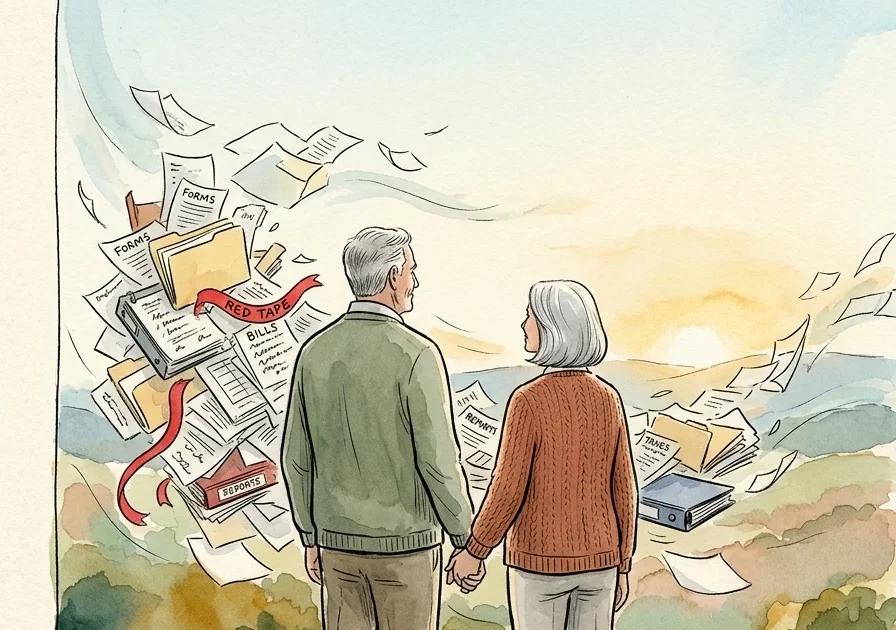
An overly complicated estate plan creates unnecessary administrative friction, steep legal fees, and emotional exhaustion for the loved ones you leave behind. Streamlining your financial footprint today ensures your hard-earned assets transfer smoothly without the delays of multi-state probate, tangled trusts, or misplaced accounts. Many Americans set up intricate trusts decades ago when tax laws differed dramatically, but modern rules make many of those multi-layered structures obsolete. By spotting the signs your estate needs simplifying, you can consolidate fragmented accounts, update outdated beneficiary designations, and build an accessible roadmap that gives you lasting peace of mind and preserves your family legacy.
1. You Have Fragmented Accounts Across Multiple Financial Institutions
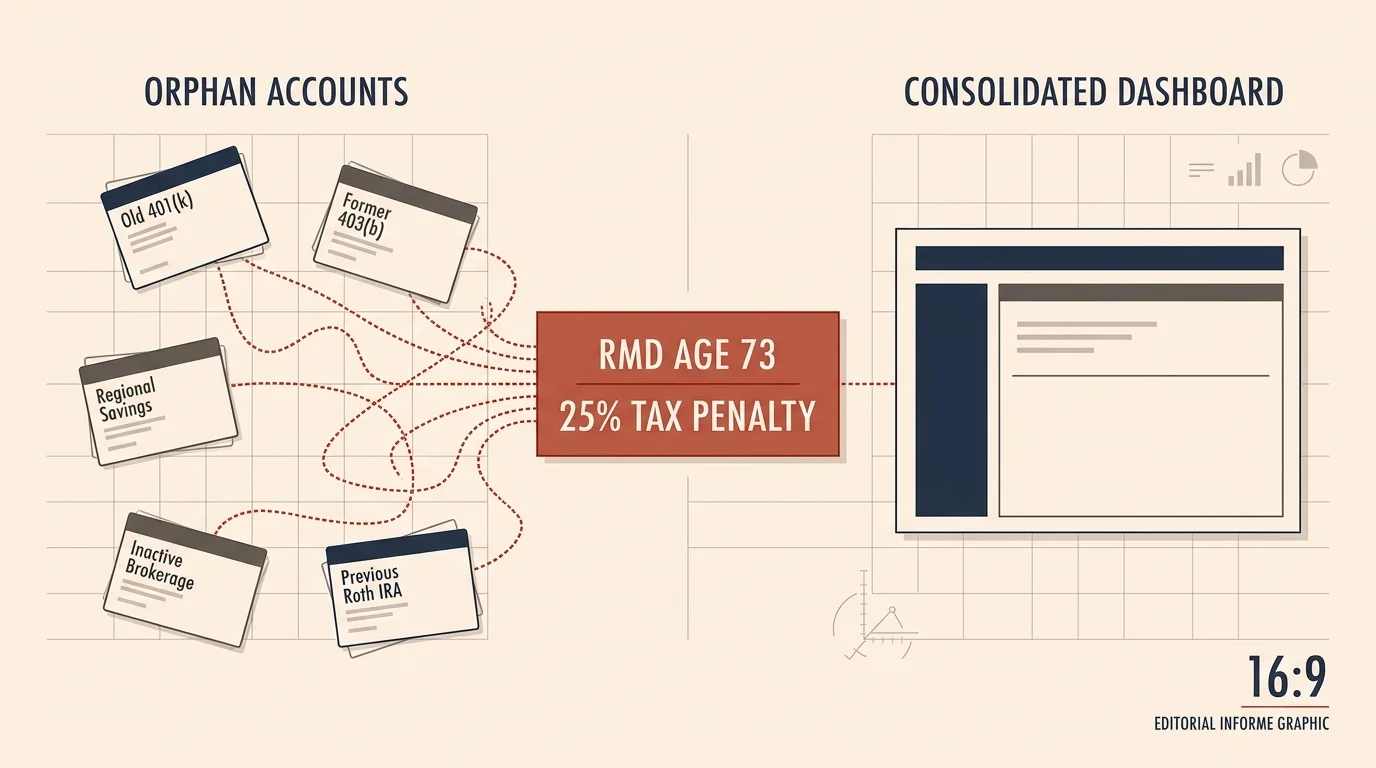
Over a lifetime of working and investing, accumulating financial accounts becomes second nature. You might have an old 401(k) from a previous employer, three different retail brokerage accounts, two certificates of deposit at separate regional banks, and several legacy savings vehicles. While this spreading of assets felt like healthy diversification during your accumulation years, it turns into an administrative nightmare during retirement and estate settlement.
Managing multiple institutions significantly increases the chance of logistical errors. Under current IRS regulations, Required Minimum Distributions (RMDs) from traditional retirement accounts begin at age 73 (increasing to age 75 in 2033 under the SECURE 2.0 Act). If you hold five distinct traditional IRAs across three brokerages, you must calculate and withdraw the exact aggregate RMD every year. If you miscalculate or forget a single orphan account, the Internal Revenue Service (IRS) imposes an excise tax penalty of up to 25% on the amount you failed to withdraw (which drops to 10% if corrected in a timely manner).
Consolidating your holdings into one or two primary custodians drastically reduces your paperwork; simplifies your tax reporting; and allows you to monitor your asset allocation with clear, single-dashboard visibility. It also spares your future executor from tracking down dozens of logins, statements, and abandoned accounts.
2. Your Estate Documents Haven’t Been Updated Since Major Tax Law Changes
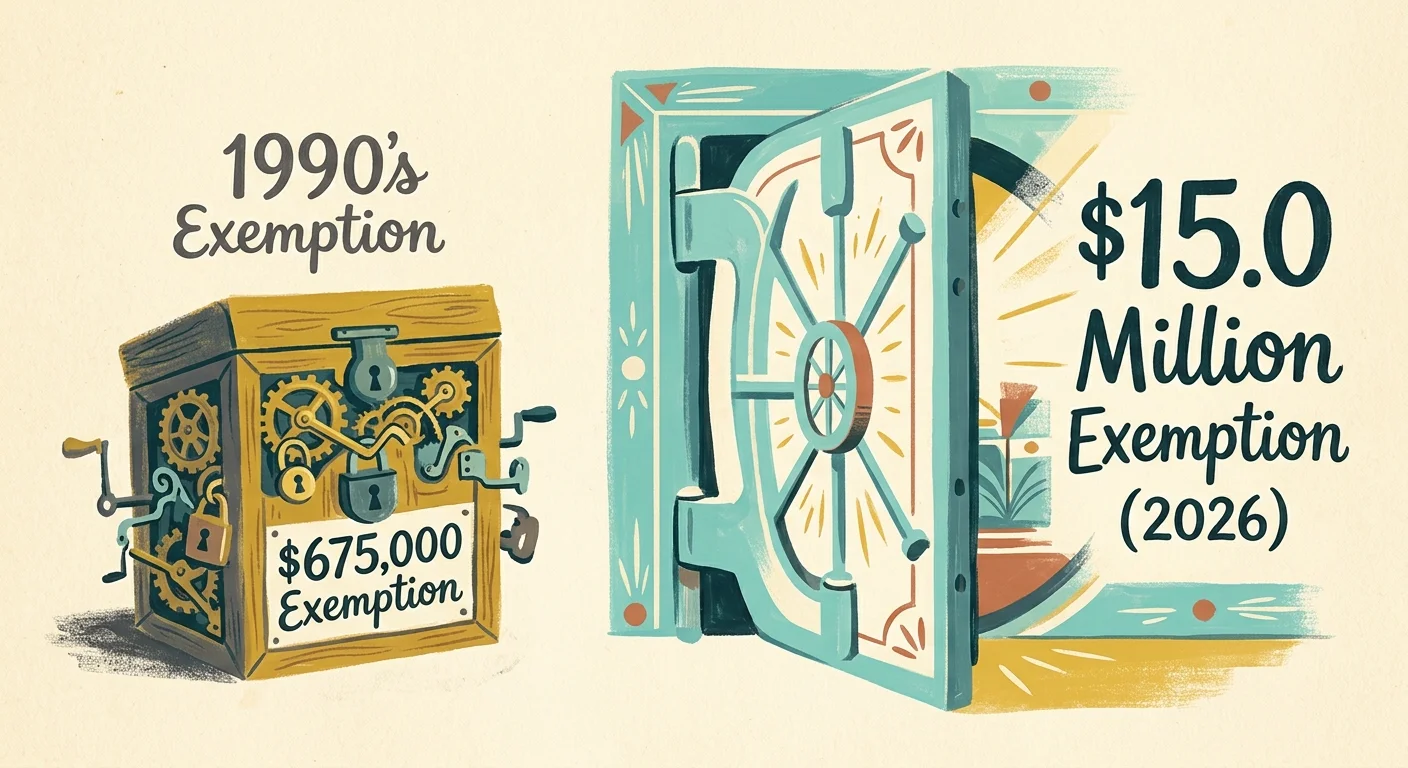
Tax laws evolve continually, and an estate plan drafted ten or twenty years ago may no longer serve your family well. In past decades, the federal estate tax exemption sat between $675,000 and $3.5 million, which led attorneys to routinely draft complex “A/B Credit Shelter Trusts” or bypass trusts for married couples. These structures required estates to divide into distinct irrevocable sub-trusts upon the death of the first spouse to shield wealth from federal taxes.
For 2026, the federal lifetime estate and gift tax exemption stands at $15.0 million per individual ($30.0 million for a married couple), up from $13.99 million in 2025. Because the vast majority of estates fall well below these thresholds, maintaining a restrictive bypass trust often creates pointless legal expenses, forces the surviving spouse to file separate fiduciary tax returns (Form 1041), and can forfeit a valuable second “step-up” in cost basis when the surviving spouse passes away.
“The most important thing to do if you find yourself in a hole is to stop digging. Keep your financial life as simple and transparent as possible for those you love.” — Warren Buffett, Chairman and CEO of Berkshire Hathaway
If your legal documents mandate complex trust splits that were designed to solve a 1990s tax problem, simplifying your estate plan to a basic revocable living trust or straightforward wills can save your heirs thousands of dollars in administrative costs and income taxes.
3. Your Beneficiary Designations and Will Tell Different Stories
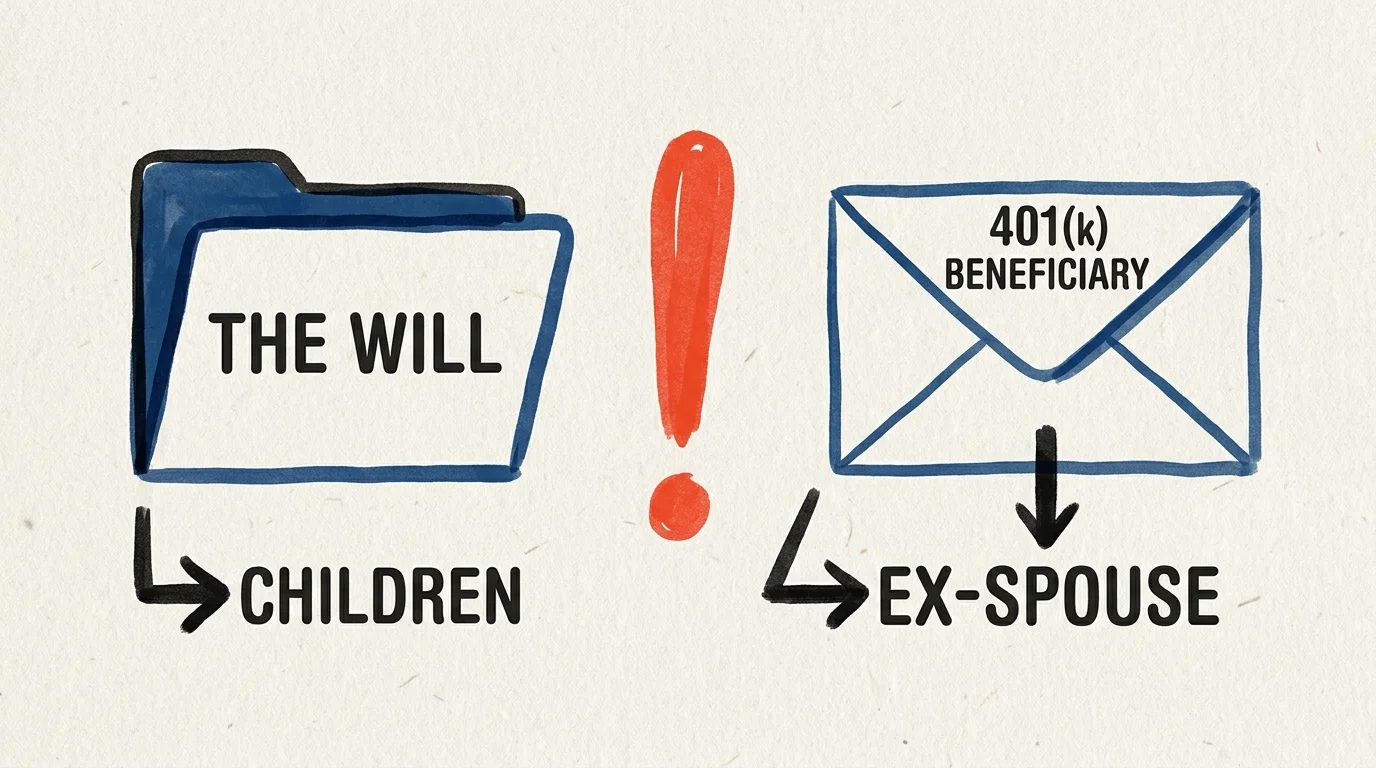
One of the most common points of estate conflict stems from a fundamental misunderstanding of how assets transfer at death. Direct beneficiary designations—such as Transfer-on-Death (TOD) registrations on brokerage accounts, Payable-on-Death (POD) designations on bank accounts, and named beneficiaries on life insurance or retirement accounts—supersede any instructions written in your Last Will and Testament.
If your will directs your estate to split equally among your three children, but your primary IRA still lists only your oldest child or names an ex-spouse from fifteen years ago, the financial institution must legally distribute those retirement funds according to the account contract. The probate court cannot override that beneficiary form to honor your will.
Taking time to audit your primary and contingent beneficiary designations across all accounts ensures that your legal documents and financial contracts work in total harmony rather than direct opposition.

4. You Own Real Estate in More Than One State
Holding deeded real property across state lines—such as a primary residence in Ohio, a vacation condo in Florida, and inherited family land in North Carolina—exposes your heirs to multiple probate proceedings, commonly known as ancillary probate.
Standard probate proceedings generally consume 3% to 8% (and sometimes up to 10%) of the gross estate in court fees, legal costs, and executor stipends, requiring anywhere from 9 to 24 months to fully resolve. When you own real estate in three separate states, your executor must hire local legal counsel and initiate three separate court cases to clear title on each piece of property.
You can streamline multi-state real estate by placing properties inside a single Revocable Living Trust or, where state law permits, recording Transfer-on-Death (TOD) or Lady Bird deeds. By doing so, the real estate transfers directly to your named beneficiaries outside the probate court system, cutting out thousands of dollars in multi-state legal fees.
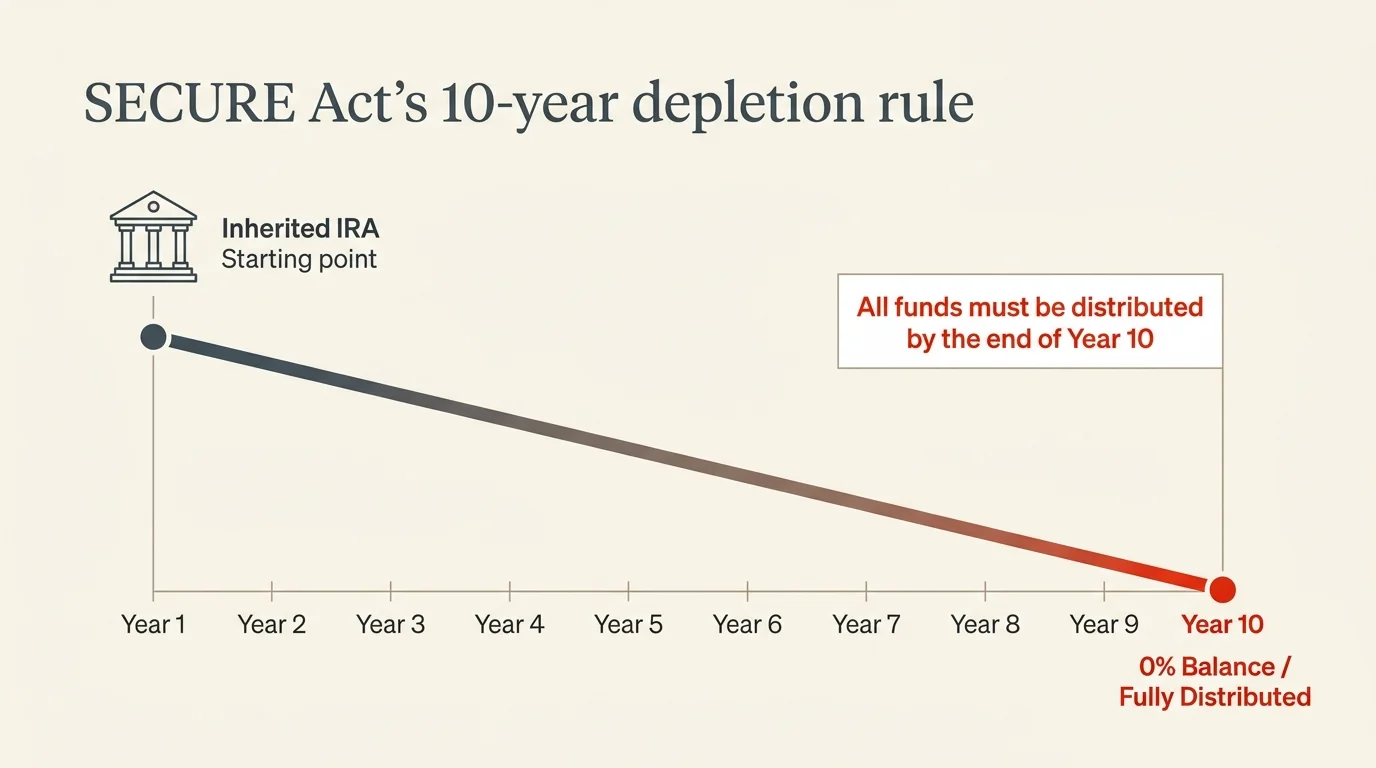
5. Your Trust Designations Collide with the SECURE Act’s 10-Year Rule
The passage of the SECURE Act and SECURE 2.0 fundamentally changed how non-spouse beneficiaries inherit traditional IRAs and 401(k) plans. Prior to 2020, non-spouse heirs could “stretch” taxable distributions over their entire statistical life expectancies, deferring taxes for decades. Under current rules, most non-eligible designated beneficiaries must fully distribute and pay taxes on inherited retirement accounts within 10 years of the account owner’s death.
This statutory change created a significant trap for older estate plans that named complex “conduit trusts” as the beneficiary of large retirement accounts. Under the old rules, conduit trusts passed the small annual stretch distributions directly to heirs. Under the 10-year rule, that same trust might force an enormous taxable distribution in year ten, or retain the income inside the trust where it gets taxed at aggressive, compressed trust tax rates.
“Naming a trust as your IRA beneficiary under the SECURE Act is often a tax disaster waiting to happen unless that trust has been specifically updated for the 10-year rule.” — Ed Slott, CPA and IRA Distribution Specialist
For trust and estate income, the top federal income tax bracket of 37% kicks in at just over $15,000 of retained income, whereas an individual taxpayer does not reach that bracket until their income surpasses several hundred thousand dollars. Reviewing your retirement beneficiary designations and removing unneeded trust layers protects your heirs from severe tax brackets.

6. Your Named Executor Doesn’t Know Where Your Key Documents Are
An estate plan is only as effective as its accessibility during a crisis. According to legacy planning research, only 18% of Americans age 55 and older have the complete foundational triad of estate planning documents: a will, a durable financial power of attorney, and a healthcare directive. Worse, among those who have completed these documents, studies show only 46% of named executors actually know where the original files and asset keys are located.
Signs of an overly complex or disorganized estate include:
- Important legal originals locked in a bank safe-deposit box that no one else has authorized legal access to open.
- Dozens of online accounts with paperless billing and no documented password repository or legacy contact assigned.
- Insurance policies, vehicle titles, and stock certificates scattered across multiple home filing cabinets, basements, or attics.
- No single consolidated master directory (asset roadmap) listing account numbers, professional advisor contacts, and regular recurring bills.
You can review educational resources from the Consumer Financial Protection Bureau (CFPB) to understand managing someone else’s money and setting up fiduciary access properly.

7. You Have Physical Assets and Heirlooms with No Clear Distribution Plan
Family disputes during estate administration rarely arise over index funds or bank accounts—those split cleanly down to the penny. The most bitter disputes frequently center on sentimental personal property: jewelry, family heirlooms, art collections, musical instruments, and antique furniture.
If you have accumulated decades of household items without specifying who receives what, your executor faces the thankless job of mediating emotional family negotiations. Simplifying this area involves two proactive steps:
- Downsizing and gifting during life: You can take advantage of the annual gift tax exclusion, which allows you to give up to $19,000 per year per recipient ($38,000 for married couples splitting gifts) without needing to file IRS Form 709 or tap your lifetime estate exemption. Gifting heirlooms now allows you to share the story behind the item and witness your family enjoying it.
- Drafting a Personal Property Memorandum: In many states, you can create an informal written list referenced in your will that spells out specific items and their intended recipients. You can update this document whenever you like without hiring a lawyer to rewrite your formal will.
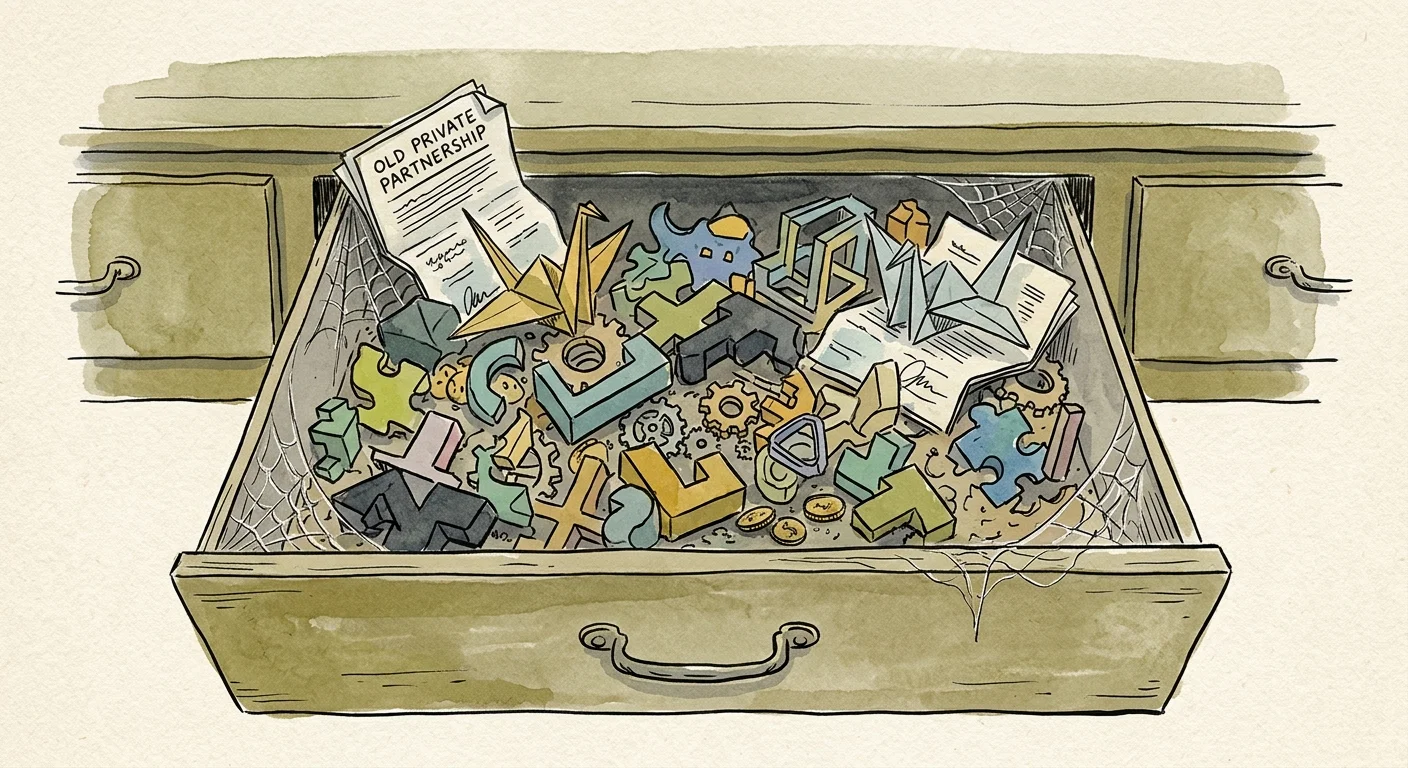
8. You Are Managing Niche or Illiquid Investments You No Longer Track
Over decades of investing, you may have acquired speculative or illiquid assets: fractional vacation timeshares, non-traded Real Estate Investment Trusts (REITs), minority stakes in private family partnerships, paper U.S. Savings Bonds tucked in drawers, or oil and mineral royalty deeds.
These niche holdings carry significant administrative baggage. Non-traded REITs and private partnerships often have strict transfer rules and limited redemption windows. Fractional timeshares can saddle your heirs with ongoing annual maintenance fees that they do not want. Clearing these assets off your balance sheet while you have the time and energy removes an immense investigative burden from your executor’s shoulders.
You can research the transfer and redemption rules of specialized securities by consulting the investor guides on Investor.gov (SEC) or working with a fee-only financial planner.

9. Your Incapacity Directives Are Outdated or Missing
Estate planning is not just about distributing wealth after you pass away; it also protects your personal autonomy and financial security while you are alive. If you become temporarily incapacitated due to an illness or accident, someone must have legal authority to pay your property taxes, manage your investments, and coordinate your healthcare decisions.
Many seniors executed a basic Power of Attorney (POA) twenty years ago and haven’t looked at it since. However, banks and brokerage firms frequently scrutinize or reject older powers of attorney if they lack specific digital asset authorizations, modern statutory language, or explicit gifting provisions. Ensuring you have updated, state-compliant medical directives and durable financial powers of attorney ensures that trusted individuals can step in without requiring an expensive, public court guardianship proceeding.

Comparing Estate Structures: Complex vs. Streamlined
The table below highlights how transitioning from an outdated, fragmented estate plan to a streamlined model reduces costs, eliminates delays, and protects your heirs.
| Planning Category | Outdated or Complex Estate | Streamlined Estate Plan |
|---|---|---|
| Account Distribution | 6–10 separate accounts across multiple banks and brokerages; higher risk of missing age 73 RMDs. | 1–2 primary custodians; consolidated reporting; automated annual RMD distribution calculations. |
| Multi-State Real Estate | Individual deeds in multiple states; requires multiple ancillary probate court cases. | Real estate held in a Revocable Living Trust or Transfer-on-Death deeds; zero probate needed. |
| Trust Architecture | Restrictive bypass or credit-shelter trusts created under obsolete lower exemption levels. | Simple revocable trust or direct transfer mechanisms; maximizes double step-up in cost basis. |
| Retirement Plan Beneficiaries | Outdated conduit trusts that collide with the SECURE Act’s 10-year rule; high trust tax rates. | Direct named individuals or modernized accumulation trusts designed for SECURE 2.0 rules. |
| Executor Access | Paperwork scattered in hidden boxes; unknown passwords; missing original will. | Organized master digital ledger; clear physical binder; designated legacy contacts on accounts. |

Common Mistakes to Avoid When Simplifying Your Estate
While decluttering your estate brings immense relief, taking shortcuts can introduce new legal and tax problems. Avoid these common pitfalls during the streamlining process:
- Adding an adult child directly to your real estate deed: Many seniors add a child to their home’s deed to avoid probate. However, this constitutes an immediate taxable gift of equity, exposes your home to your child’s potential creditors or divorce claims, and strips your child of a full step-up in tax basis upon your death—potentially exposing them to significant capital gains taxes when they sell the home. Using a revocable trust or transfer-on-death deed avoids probate without sacrificing tax benefits.
- Closing accounts before rerouting automated transactions: When consolidating bank accounts, verify that all direct deposits (such as monthly benefits from the Social Security Administration or pension plans) and automated utility drafts have successfully migrated to your primary account before shutting down the old account.
- Overlooking secondary and contingent beneficiaries: Naming a primary beneficiary without naming alternate contingent beneficiaries means that if your primary beneficiary predeceases you, the asset automatically defaults into your probate estate, defeating the purpose of your direct designation.
- Relying on informal verbal promises: Telling family members around the dinner table who gets certain bank accounts or heirlooms carries no legal weight. If it is not documented in writing via account registrations, a personal property memorandum, or your formal will, the court cannot enforce your wishes.

Finding the Right Advisor
Simplifying an estate requires a collaborative approach between legal and financial disciplines. Because individual state laws govern probate, trusts, and real estate, you should evaluate which professional is best suited for your specific situation:
- Hire an Estate Planning Attorney: If you own real estate in multiple states, have a blended family, care for a child with special needs, or need to amend an existing irrevocable trust structure, work with an attorney licensed in your state who specializes exclusively in wills, trusts, and elder law. Helpful consumer guidance on finding legal help is available through advocacy groups like AARP.
- Consult a Fee-Only Certified Financial Planner (CFP): If your main hurdle is investment clutter—such as multiple old 401(k)s, scattered brokerage accounts, and coordinating annual RMD requirements—a CFP can help you execute direct custodian-to-custodian transfers without triggering taxable events.
- Work with a Certified Public Accountant (CPA): If you hold significant unrealized capital gains in non-retirement accounts, own complex business partnerships, or have questions about lifetime gifting limits, a CPA will ensure your consolidation strategy does not generate unexpected state or federal income tax liabilities.
Frequently Asked Questions
How often should I review and simplify my estate plan?
You should conduct a brief review of your beneficiary designations and account balances annually. Perform a formal legal review with an estate attorney every three to five years, or immediately following major life events such as a marriage, divorce, birth of a grandchild, death of a named executor, or a significant change in federal tax legislation.
What is the easiest way to keep my bank accounts out of probate?
The simplest and most cost-effective method is adding a Payable-on-Death (POD) designation to your checking, savings, and certificate of deposit accounts. Setting up a POD designation is free, takes only a few minutes with your bank, allows you to retain 100% control of your funds during your lifetime, and automatically transfers remaining funds to your beneficiaries upon presentation of a death certificate.
Do I need a trust if my estate is well below the federal exemption?
Not necessarily. If your estate is under the federal estate tax threshold ($15.0 million per individual in 2026) and you do not own out-of-state real estate, have a blended family, or require strict control over how heirs spend money, you may be able to manage your estate entirely through a simple will combined with TOD/POD beneficiary designations on all accounts.
What is the difference between a durable financial power of attorney and an executor?
A durable financial power of attorney grants a trusted individual legal authority to manage your finances, pay bills, and make business decisions on your behalf while you are alive but incapacitated. The moment you pass away, that power of attorney instantly terminates, and your named executor takes legal charge of settling your estate according to your will.
Taking Action to Protect Your Legacy
Simplifying your estate is one of the most generous and practical gifts you can give to the people you love. By pruning duplicate accounts, modernizing outdated trust documents, and clearly communicating the location of your records, you convert what could be a confusing, multi-year administrative chore into a clean, stress-free transfer of wealth.
Begin by making a complete list of your existing financial accounts, verifying your primary and contingent beneficiaries, and assembling an accessible legacy binder for your loved ones. Taking these steady, structured steps today ensures that your wishes are executed smoothly and that your hard-earned assets directly enrich the next generation.
This article provides general financial education and information only. Everyone’s financial situation is unique—what works for others may not work for you. For personalized advice tailored to your retirement needs, consider consulting a qualified financial professional such as a CFP or CPA.
Last updated: February 2026. Benefit amounts, tax rules, and program details change annually—verify current figures with official government sources.









Leave a Reply