

Touring a retirement community should reveal more than fresh flowers and staged model apartments; it must safeguard your long-term health, dignity, and life savings. The national median cost of assisted living now ranges between $5,900 and $6,200 per month, making this move one of the most significant financial and lifestyle commitments you will ever make. Shiny brochures often mask chronic understaffing, aggressive care-level fees, and operational instability. Knowing how to look past cosmetic upgrades helps you identify hidden risks before signing a binding contract. By spotting the seven critical warning signs outlined below, you can protect your financial security and find a community that genuinely cares for your wellbeing.
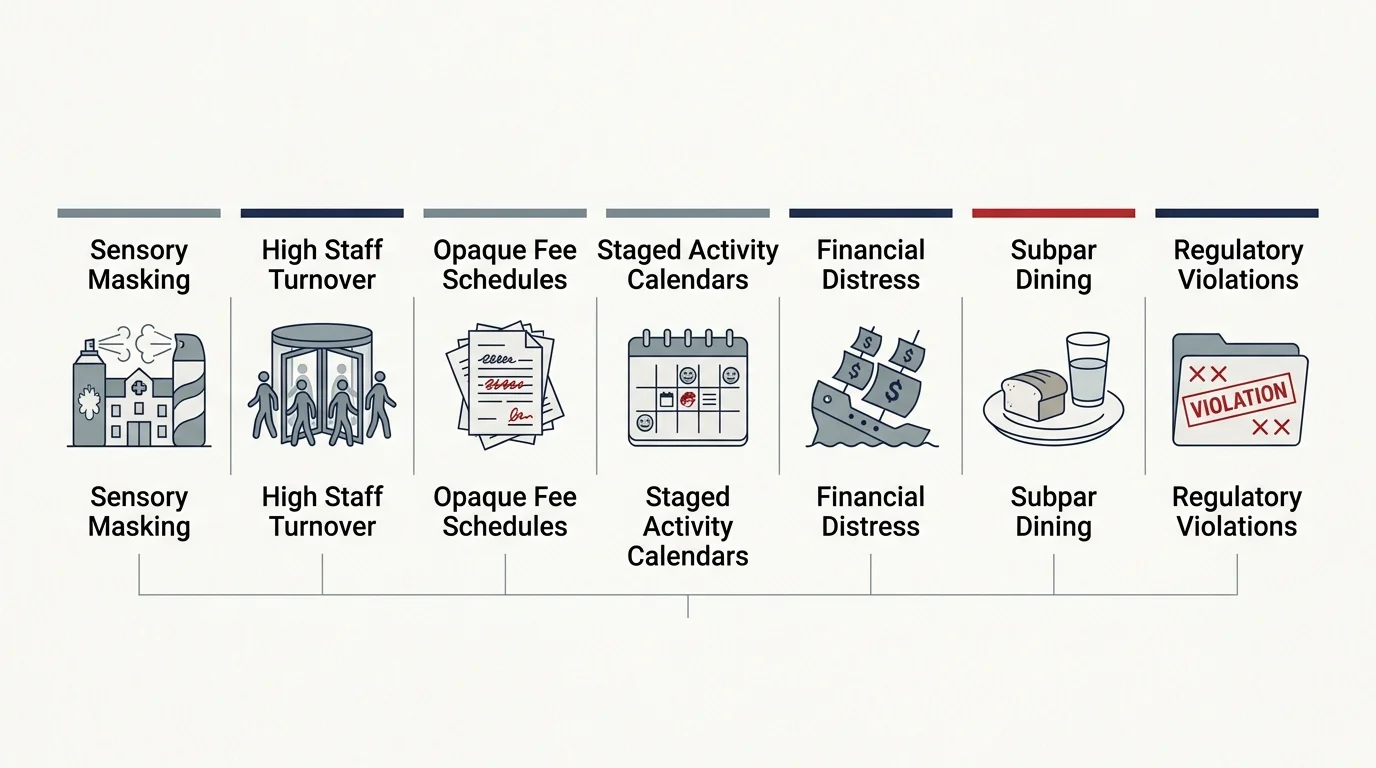
At a Glance: Critical Warning Signs to Watch For
- Sensory Masking: Heavy artificial fragrances or bleach smells used to cover up persistent maintenance or cleanliness failures.
- High Staff Turnover: Frequent reliance on temporary agency workers, unattended call lights, and certified nursing assistant (CNA) turnover exceeding 40%.
- Opaque Fee Schedules: Vague answers regarding à la carte pricing for Activities of Daily Living (ADLs) and missing caps on annual rate increases.
- Staged Activity Calendars: Empty communal rooms, unengaged residents, and scheduled events that exist only on paper.
- Financial Distress: Declining occupancy rates below 85%, delayed entrance-fee refunds, and refusal to share audited financial statements.
- Subpar Dining Operations: Inability to accommodate dietary restrictions, unappetizing meals, and rigid dining hall policies.
- Hidden Regulatory Violations: Missing state inspection reports, unresolved complaints with the Long-Term Care Ombudsman, or poor health inspection histories.
1. Heavy Air Fresheners and Superficial Maintenance
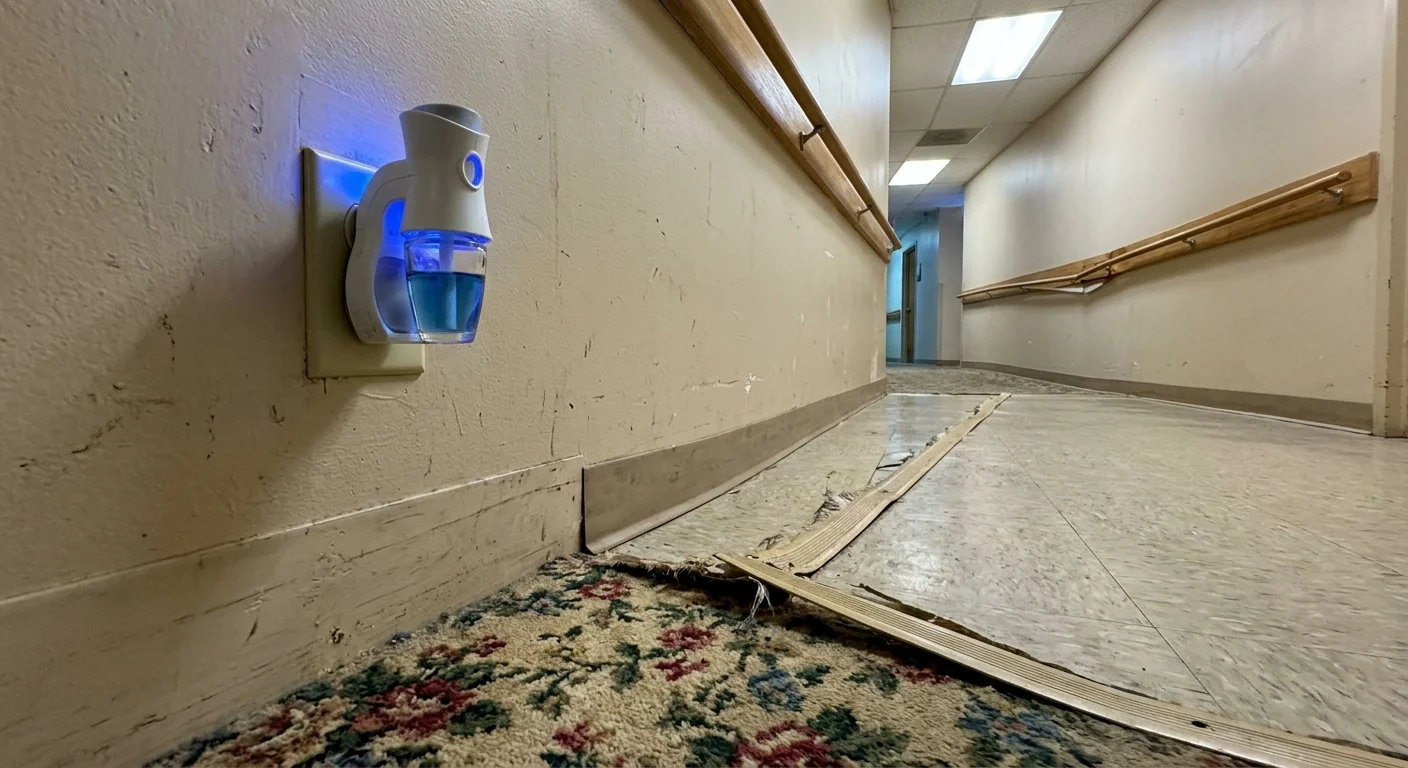
Your senses provide immediate insight into how well a community operates behind closed doors. When you walk through the front doors, pay attention to the ambient smell. A clean facility smells neutral—not like industrial pine cleaner, heavy floral sprays, or synthetic citrus plug-ins. Facilities that pump overwhelming artificial fragrances through their HVAC systems often attempt to mask underlying issues with urine, moisture, or poor waste management. If you detect distinct chemical cover-ups in hallways or residential corridors, take note.
Look past the polished marble in the central lobby and examine the secondary spaces where residents spend their daily lives. Check the condition of baseboards, elevator tracks, and communal stairwells. Are the walls scuffed, carpets stained, and handrails loose? These cosmetic flaws point to a deeper problem: deferred maintenance. A facility that cuts corners on physical repairs often cuts corners on resident care, housekeeping, and dietary support.
Inspect the common bathrooms and residential transition strips between carpet and linoleum. Uneven flooring transitions create dangerous tripping hazards for older adults who use walkers or canes. Ensure emergency pull cords in public restrooms hang within six inches of the floor so a fallen resident can reach them. If pull cords are tied up out of reach or call lights blink without an audible signal, the facility is failing basic safety standards.
2. Staff Disengagement, Agency Badges, and High Turnover
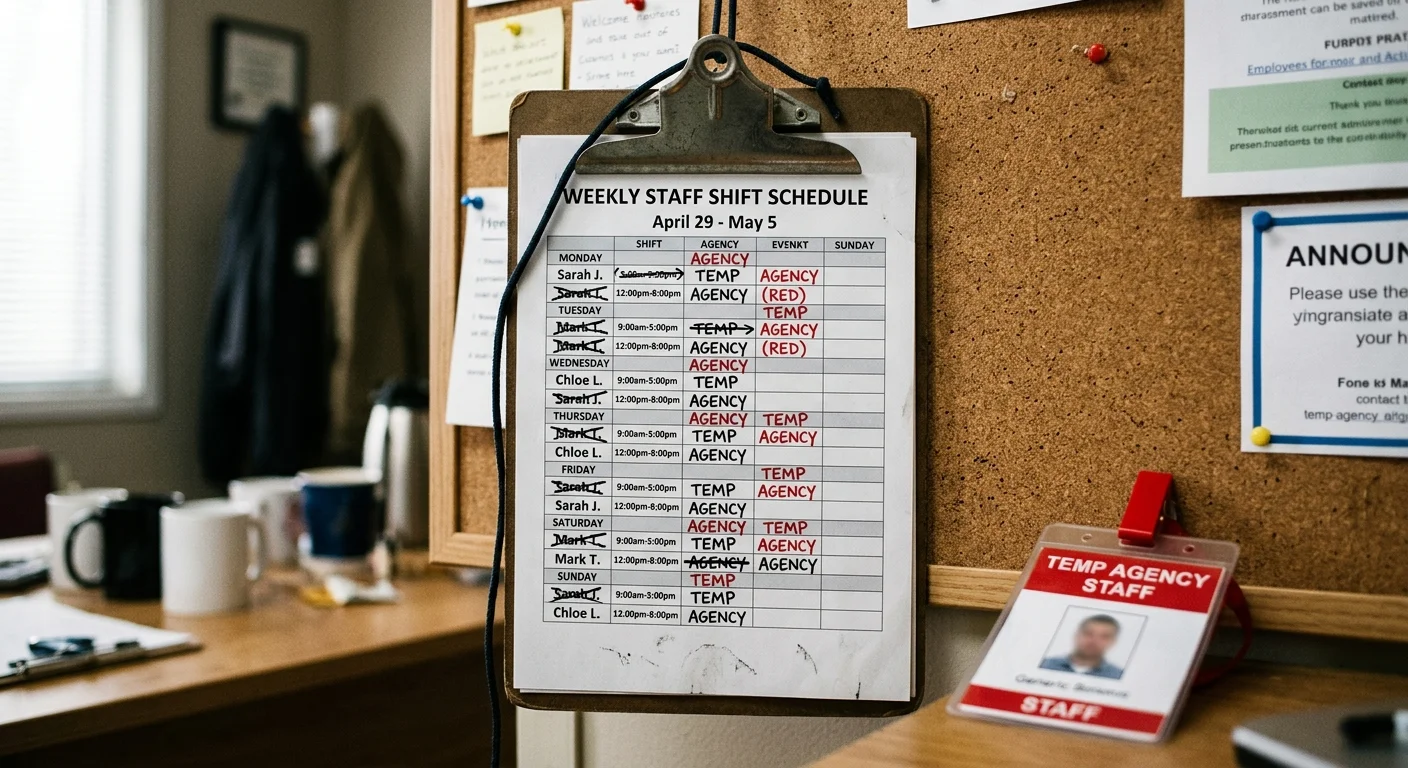
The quality of any retirement community depends entirely on the people providing daily care. According to workforce data from the American Health Care Association and National Center for Assisted Living (AHCA/NCAL), annual turnover for certified nursing assistants (CNAs) in senior care frequently exceeds 42% to 44%, while administrative turnover hovers around 22%. Chronic understaffing compromises safety, leads to missed medication doses, and causes caregiver burnout.
Observe the staff during your visit. Do caregivers make warm eye contact and address residents by name, or do they rush past with clipboard charts and avoid conversation? Look at the name tags worn by the nursing and caregiving staff. A high proportion of “temporary,” “agency,” or unlabeled badges indicates the community relies heavily on short-term staffing agencies to meet minimum ratios. Agency workers rarely know a resident’s unique baseline health, personal preferences, or subtle signs of cognitive decline.
Test the response times during your tour. As you walk down residential hallways, listen for call bells or room alarms. If alarms ring continuously for more than five minutes without a caregiver responding, ask your tour guide why. A prompt, coordinated care team responds to alerts quickly to prevent unassisted transfers that lead to serious falls.
“Never sign a senior housing contract until you understand every single fee that can be tacked on when your health changes. Surprises in long-term care pricing can wipe out a lifetime of savings.” — Suze Orman, Personal Finance Expert
3. Opaque Care-Level Assessments and Hidden Fee Schedules
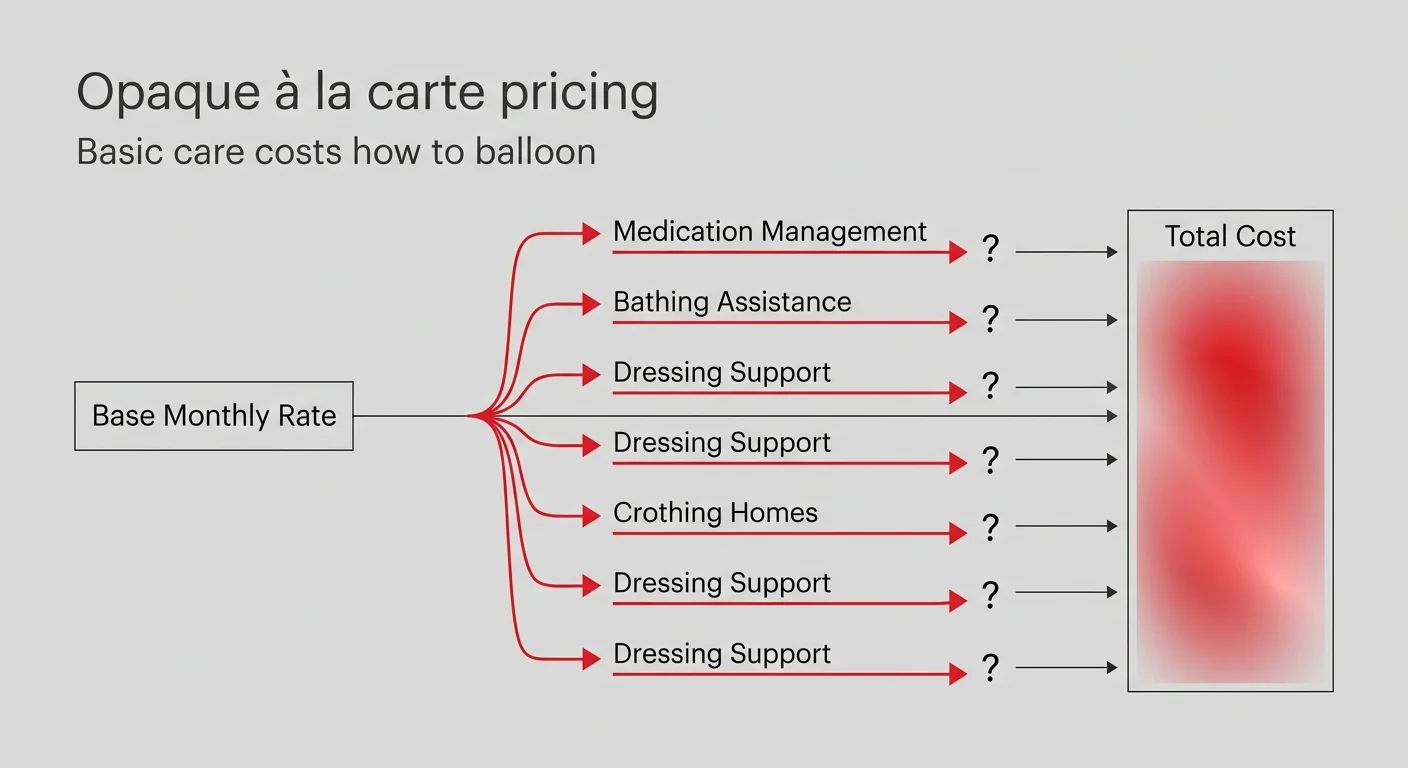
The financial structure of senior living can become a budget trap if you do not demand full transparency upfront. According to the Genworth and CareScout Cost of Care Survey, the national median cost for assisted living sits between $5,900 and $6,200 per month. However, that baseline figure rarely covers comprehensive care. Many facilities advertise an attractive base rate to get you through the door, only to impose substantial tiered charges once a resident moves in.
Most assisted living communities evaluate care using a point-based or tiered assessment system for Activities of Daily Living (ADLs). Basic tasks such as medication administration, shower assistance, incontinence management, and escorting you to the dining hall often trigger distinct surcharges. For instance, managing three daily medications might add $400 per month, while needing physical support during morning dressing might add an extra $800 per month. If a sales director claims that pricing is “all-inclusive” but refuses to provide a written fee schedule for higher care tiers, treat that evasion as a major financial red flag.
You must also examine the facility’s history of annual rate increases. While normal inflationary adjustments range from 3% to 6% annually, post-pandemic operational pressures have driven unexpected hikes of 8% to 10% in some corporate-owned facilities. Review the contract for language specifying how and when rates increase, how much advance notice the community must provide, and whether there are caps on annual rent adjustments.
4. “Ghost Town” Activity Rooms and Staged Event Calendars
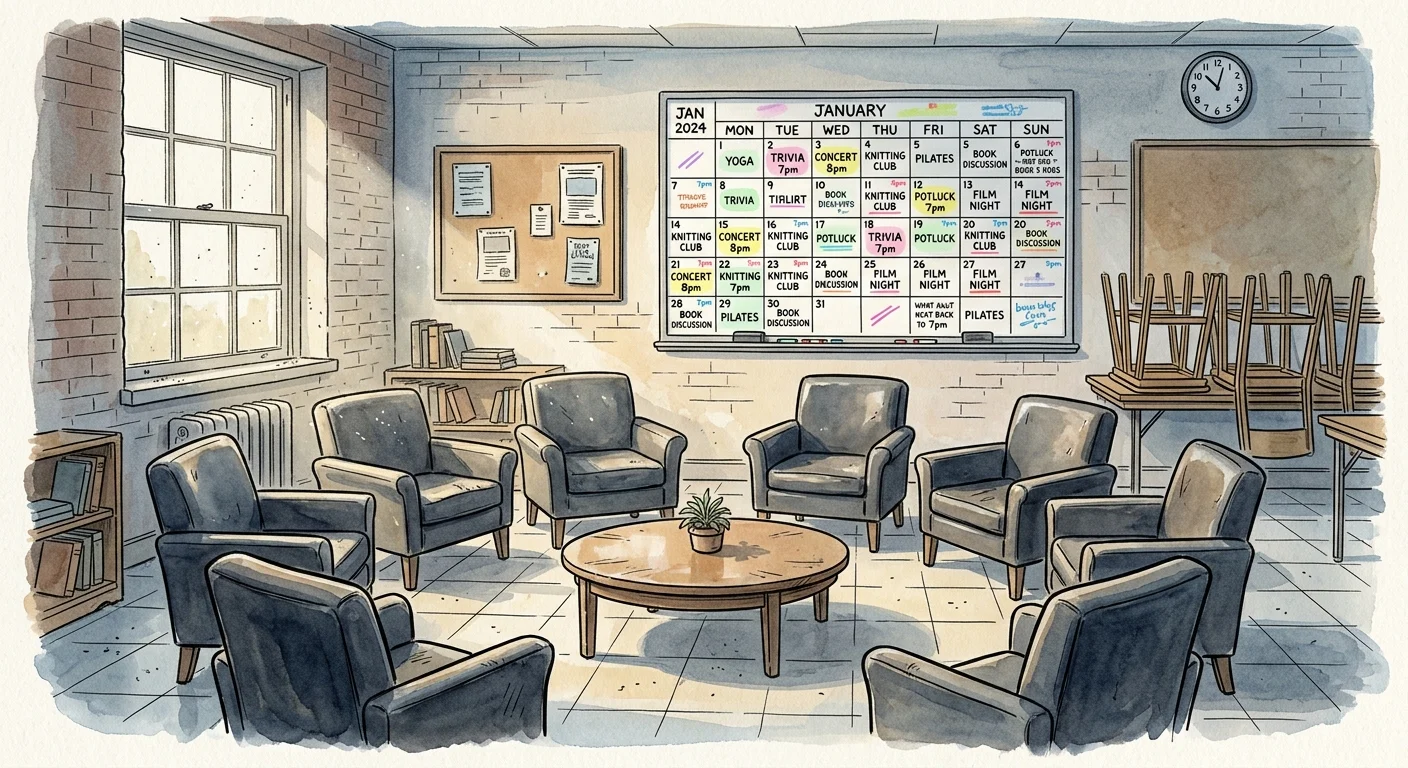
A thriving social environment supports cognitive vitality and emotional health. During your tour, the sales representative will likely hand you a colorful monthly calendar packed with book clubs, yoga sessions, guest lectures, and scenic van excursions. Do not judge a community’s lifestyle offerings by its printed calendar alone; verify that these programs actually take place.
Schedule your tour during a time when an activity is listed on the daily schedule, such as 10:30 AM or 2:30 PM. Walk directly to the designated activity room. Is an engaging group session underway with high resident participation, or is the room dark, locked, or empty? A common warning sign is finding residents clustered passively in a semi-circle around a muted television set in the lobby with no interaction or structured stimulation.
Ask to speak with the full-time Life Enrichment Director. Inquire about how activities are adapted for residents with physical limitations or early-stage memory changes. Ask about transportation reliability: How often does the community bus run for non-medical outings, such as grocery runs or cultural events? A vibrant facility invests real budget and dedicated personnel into daily engagement rather than using the activity calendar as a marketing prop.
5. Shaky Financial Health, Low Occupancy, and Predatory Refund Clauses
If you are exploring a Continuing Care Retirement Community (CCRC)—also known as a Life Plan Community—you may face substantial upfront entrance fees ranging from $100,000 to well over $1,000,000, depending on whether you choose a Type A (LifeCare), Type B (Modified), or Type C (Fee-for-Service) contract. Committing substantial capital to a community requires thorough due diligence on the operator’s financial stability.
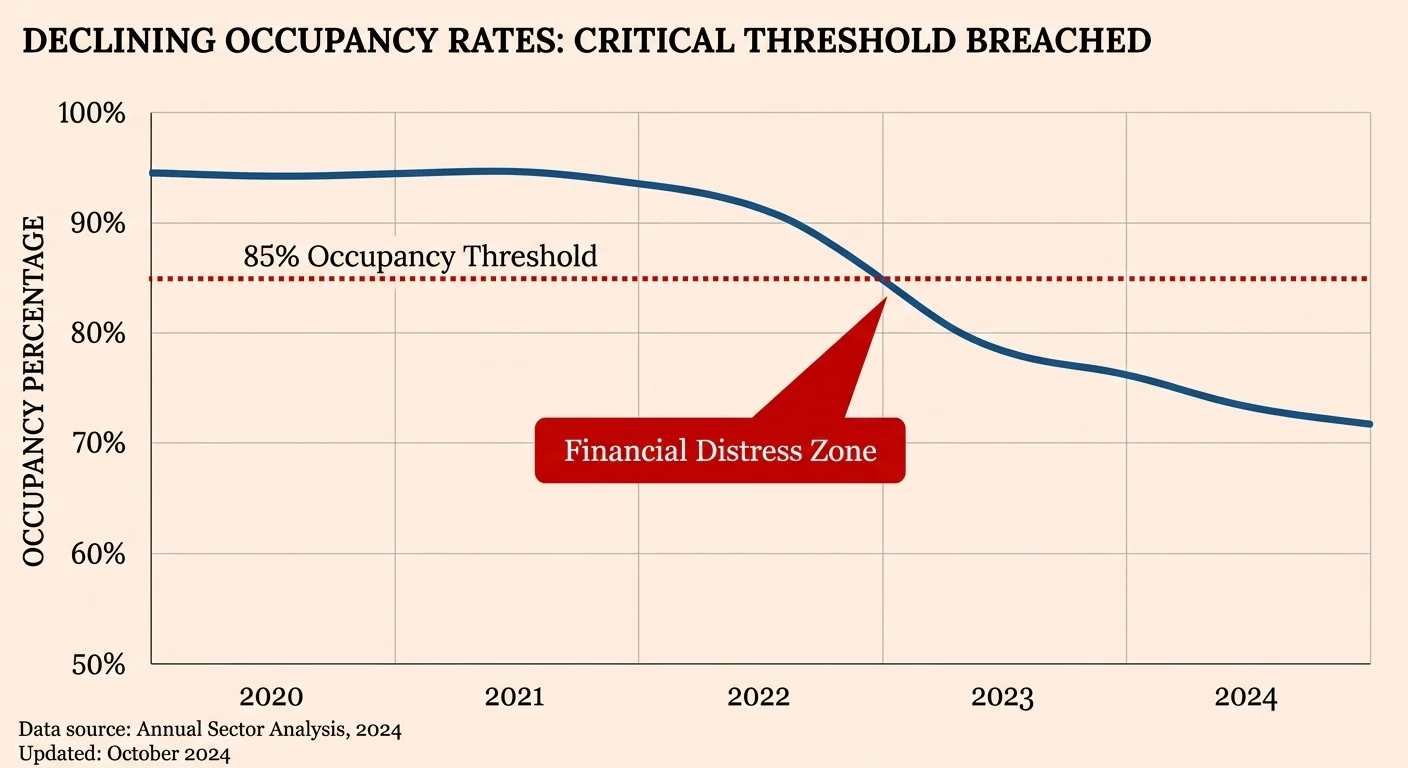
A healthy, stable retirement community maintains an average occupancy rate of 90% or higher. An occupancy rate hovering below 80% to 85% suggests resident dissatisfaction, operational troubles, or unaddressed regulatory issues. Low occupancy strains facility revenue, which inevitably triggers staffing cuts, delayed building maintenance, and degraded dining services.
Pay close attention to entrance fee refund structures. Some contracts promise an 80% to 90% refund of your initial entrance fee to your estate upon your passing or departure. However, predatory clauses may state that the refund will not be paid until your specific unit is re-occupied by another incoming resident who pays an equivalent entrance fee. In slow markets, families have waited years for substantial refunds. Always request the facility’s last three years of audited financial statements, debt-service coverage ratios, and actuarial reserve studies before transferring funds.

6. Poor Dining Realities Versus Polished Marketing Pitches
Nutritious, appetizing food is vital for maintaining physical health, muscle mass, and daily morale. Dining is also the primary social anchor in most senior living communities. When touring, insist on eating a full meal in the primary dining room rather than accepting a private lunch in an executive conference room or a curated snack tray.
Arrive during peak meal service to evaluate the dining experience in real time. Are meals served hot and presented with care, or do residents wait 45 minutes for lukewarm, pre-packaged food? Watch the dining staff: Do servers accommodate dietary needs cheerfully, or do they appear overwhelmed and impatient? Check whether the menu offers fresh produce, lean proteins, and diverse seasonal options, or relies heavily on high-sodium canned soups, frozen patties, and processed starches.
Inquire about dining flexibility. Can you eat at flexible times, or are you locked into rigid seating shifts? What happens if you feel unwell and need a meal delivered to your apartment—does the community charge an excessive room-service delivery fee? How does the kitchen accommodate specialized dietary needs, such as diabetic, cardiac low-sodium, gluten-free, or mechanical soft diets? A community that treats dining as an afterthought will quickly degrade your daily quality of life.
7. Hidden State Inspection Violations and Poor Ombudsman Records
While skilled nursing facilities face direct federal oversight, assisted living and independent living communities are licensed and regulated at the state level, typically through state Departments of Health or Social Services. This state-by-state patchwork means regulatory rigor varies, making independent verification essential.
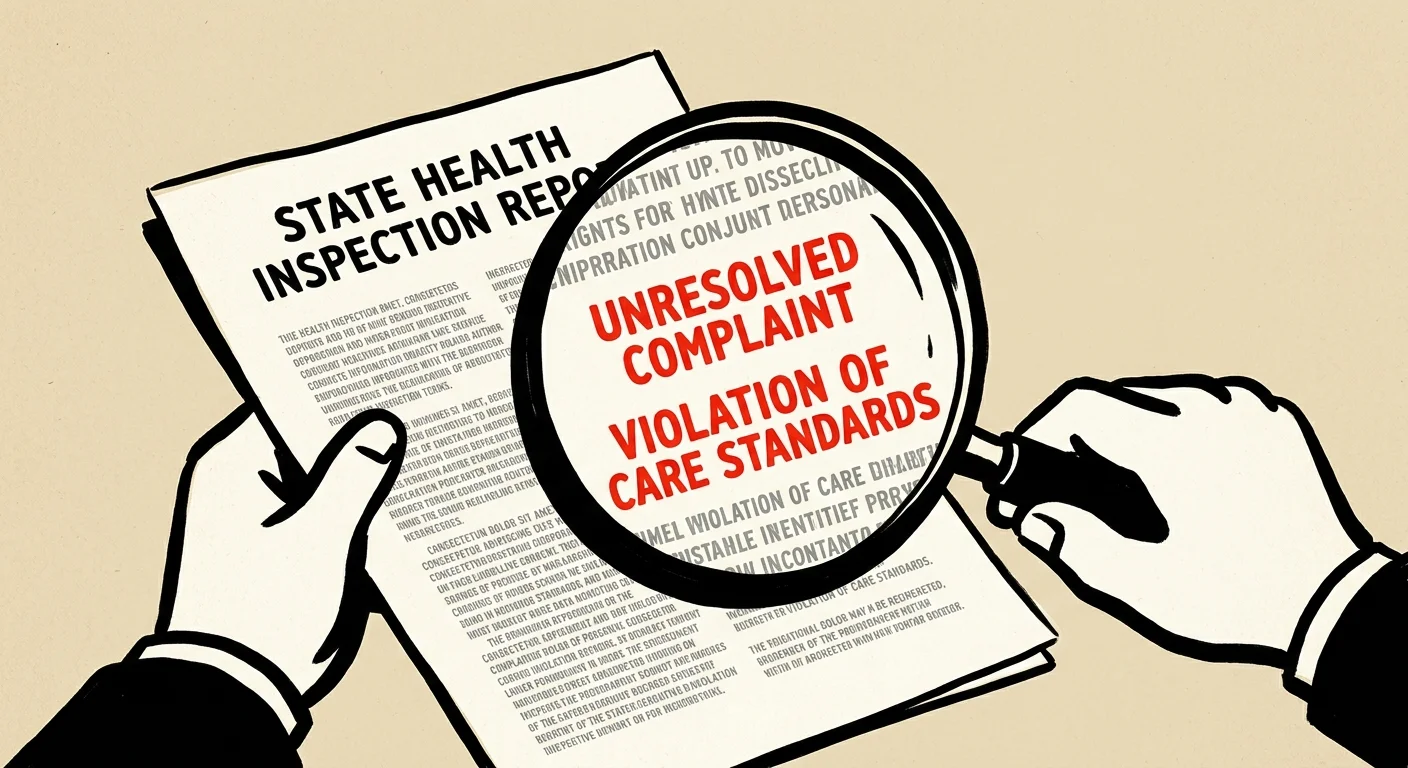
Every licensed assisted living community must maintain a public record of its state licensing surveys, complaint investigations, and citations. Ask the executive director to show you their state survey binder from the past 24 to 36 months. Reluctance to produce these public documents is an immediate red flag. Common citations include medication administration errors, failure to conduct required criminal background checks on staff, inadequate staffing ratios, and unaddressed building safety violations.
Cross-check the facility’s claims independently using government resources. Contact your local Long-Term Care Ombudsman via the Eldercare Locator supported by the Administration for Community Living (ACL). Ombudsmen serve as free, independent advocates for senior living residents and track validated complaints regarding care quality, resident rights violations, and involuntary discharges. If the community operates a certified skilled nursing wing, review their star ratings and health inspection records on Medicare.gov through the Care Compare portal.
Comparing Fair Senior Living Terms vs. Red Flag Contracts
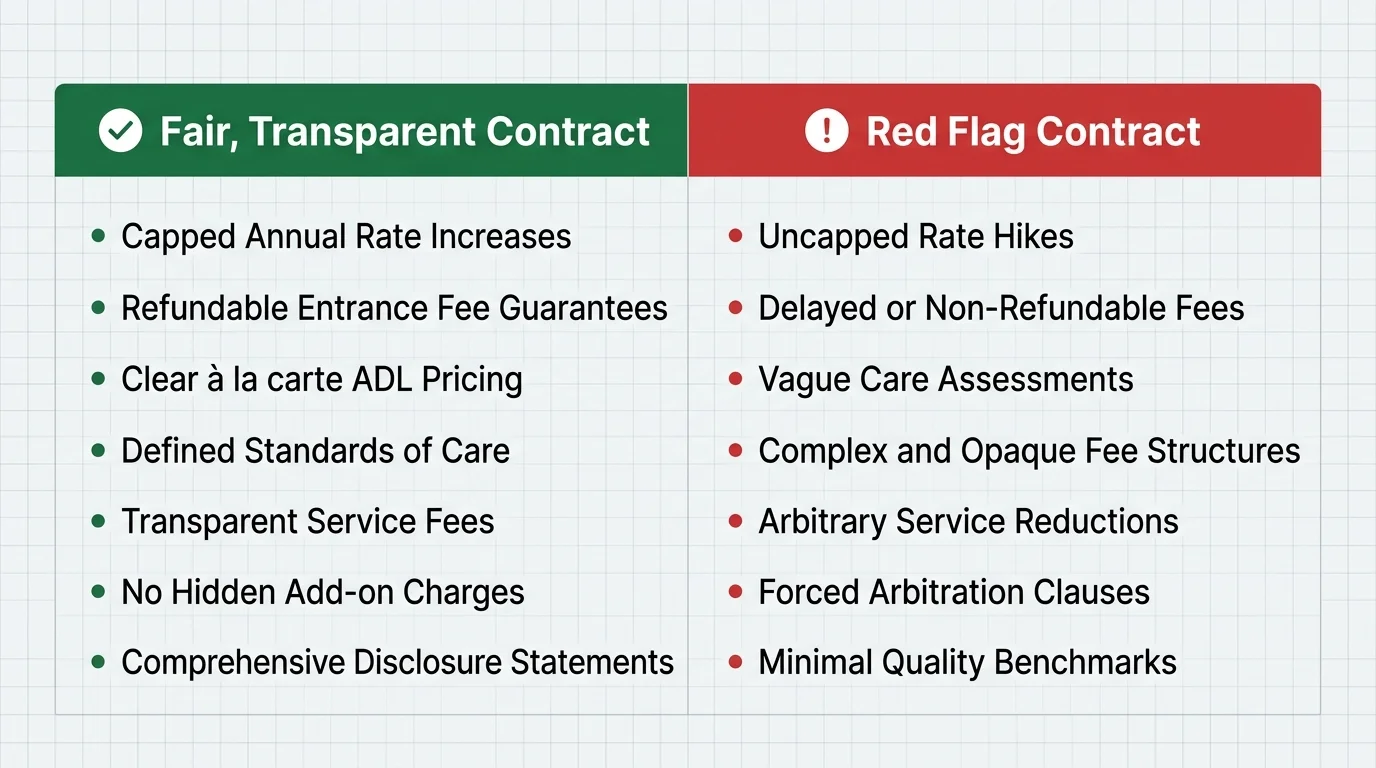
To help you evaluate contracts and operational standards during your search, use the comparison table below to identify whether a prospective community meets transparent standards or presents critical risks.
| Evaluation Category | Transparent, Healthy Standard | Red Flag / Warning Sign |
|---|---|---|
| Care-Level Pricing | Detailed, written point matrix for all ADL tiers; transparent fees for medication management and hygiene support. | Vague “all-inclusive” claims; hidden add-on fees that appear after move-in; no written ADL price breakdown. |
| Rate Adjustments | Historical annual rent increases capped between 3% and 6%; clear written policy requiring 60 days advance notice. | History of 8% to 10%+ rate hikes; contract permits mid-year operational fee increases with minimal notice. |
| Staffing Stability | Low CNA turnover; consistent permanent staff assigned to the same residents; clear caregiver-to-resident ratios. | Over 40% staff turnover; heavy reliance on temporary agency workers; unattended call lights in hallways. |
| CCRC Entrance Refunds | Refunds paid within a fixed timeframe (e.g., 90 to 180 days) or tied to overall community turnover. | Refund contingent solely upon re-leasing your specific unit; indefinite repayment delays; no reserve fund audit. |
| Regulatory Compliance | Clean state inspection surveys readily accessible on-site; zero substantiated abuse or neglect complaints. | Staff refuses to share state licensing reports; history of repeat medication violations or chronic understaffing. |

Costly Errors to Sidestep When Touring Senior Communities
Finding the right community requires sidestepping several common pitfalls that catch prospective residents and their families off guard.
- Touring Only During Curated Marketing Hours: Sales directors schedule tours during peak morning hours (typically 10:00 AM on weekdays) when administrative staff is fully present and common areas are freshly staged. Return unannounced for a second visit on a Saturday afternoon or during an evening dinner service. Weekend visits reveal true staffing ratios, real dining performance, and actual facility cleanliness when management is away.
- Falling for Model Unit Décor: Model apartments feature custom, scaled-down furniture, removed closet doors, and extra lighting to make small floor plans look expansive. Bring a tape measure to the tour. Measure actual wall dimensions, bathroom door widths for wheelchair clearance, and closet storage to ensure your real-world furniture and mobility equipment will fit comfortably.
- Neglecting 5-Year Financial Stress Testing: Many seniors budget based on their initial monthly base fee without modeling future health changes. If your baseline rent is $5,500 per month and you experience a 5% annual rate increase alongside $1,200 in monthly ADL care surcharges three years in, your monthly cost will exceed $7,500. Work with financial guidance from organizations like AARP and the Consumer Financial Protection Bureau (CFPB) to model escalating care scenarios against your retirement income.
- Failing to Speak Privately with Current Residents: The sales representative will guide your conversations toward hand-picked resident ambassadors. Take time to step away and speak independently with residents sitting in common areas, libraries, or garden courtyards. Ask them direct questions: “How quickly do staff answer your call light at night?” and “What is one thing you wish management would improve?”

When DIY Isn’t Enough: Professional Support for Your Search
Navigating senior housing contracts, care assessments, and asset protection can quickly become overwhelming. Enlisting specialized professionals protects your rights and prevents costly missteps in the following situations:
- Reviewing CCRC and LifeCare Contracts: Entrance fee agreements are complex legal documents involving significant assets. Hire an experienced elder law attorney to review the contract’s refund terms, insolvency protections, arbitration clauses, and transfer conditions before signing.
- Assessing Complex or Progressive Health Needs: If you or your spouse live with progressive neurological conditions, multiple chronic ailments, or early-stage dementia, hire an Aging Life Care Professional (also known as a Geriatric Care Manager). These licensed nurses or social workers conduct independent functional assessments to ensure a facility can genuinely support your care trajectory over time.
- Structuring Long-Term Care Funding and Medicaid Spend-Down: Transitioning between private pay, long-term care insurance benefits, and eventual Medicaid coverage requires strict adherence to state look-back rules. A fee-only financial planner or elder law specialist can structure your assets to prevent unintended disqualification from state assistance programs.
Frequently Asked Questions
What is the average monthly cost of an assisted living facility in the United States?
According to the Genworth/CareScout Cost of Care Survey, the national median cost of assisted living is approximately $5,900 to $6,200 per month ($70,800 to $74,400 per year). However, costs vary widely based on geographic location, apartment size, and the specific level of care or ADL assistance required.
How can I verify a retirement community’s inspection history and citations?
You can review public licensing records and health inspection reports through your state’s Department of Health or Department of Human Services licensing portal. Additionally, contact your local Long-Term Care Ombudsman through the Eldercare Locator (eldercare.acl.gov) to ask about recent complaints and regulatory actions.
Can an assisted living community raise my monthly rent unexpectedly?
Yes. Unless your contract explicitly caps annual adjustments, facilities can increase monthly base rent and care fees. Standard annual increases typically range from 3% to 6%, but inflation and labor costs have driven recent spikes of 8% to 10%. Most state regulations require facilities to provide a 30- to 60-day written notice before fee adjustments take effect.
What occupancy rate indicates a financially stable senior living community?
A healthy, stable senior living community or Continuing Care Retirement Community (CCRC) maintains an occupancy rate of 90% or higher. An occupancy rate below 85% may signal operational instability, declining resident satisfaction, or impending budget cutbacks to staffing and dining services.
Taking the time to evaluate retirement communities with a critical eye protects both your physical well-being and your hard-earned savings. Trust your instincts during every visit, verify all sales claims through independent public records, and insist on written transparency before signing any agreements. The information in this guide is meant for educational purposes. Your specific circumstances—including income, benefits, tax situation, and health needs—may require different approaches. When in doubt, consult a licensed financial advisor or tax professional.
Last updated: February 2026. Benefit amounts, tax rules, and program details change annually—verify current figures with official government sources.









Leave a Reply