

Many retirees assume inheritance taxes operate under uniform federal rules across the nation. In reality, the federal government levies no inheritance tax at all; the burden depends entirely on state borders.
If your heirs live across state lines or inherit out-of-state property, they could face tax rates reaching up to 16%. A few simple planning moves can shield your beneficiaries from sudden tax bills.
Discover how these state-specific taxes vary so you can safeguard your hard-earned assets and protect your family’s financial legacy.
1. The Payer Distinction: Inheritance Tax vs. Estate Tax
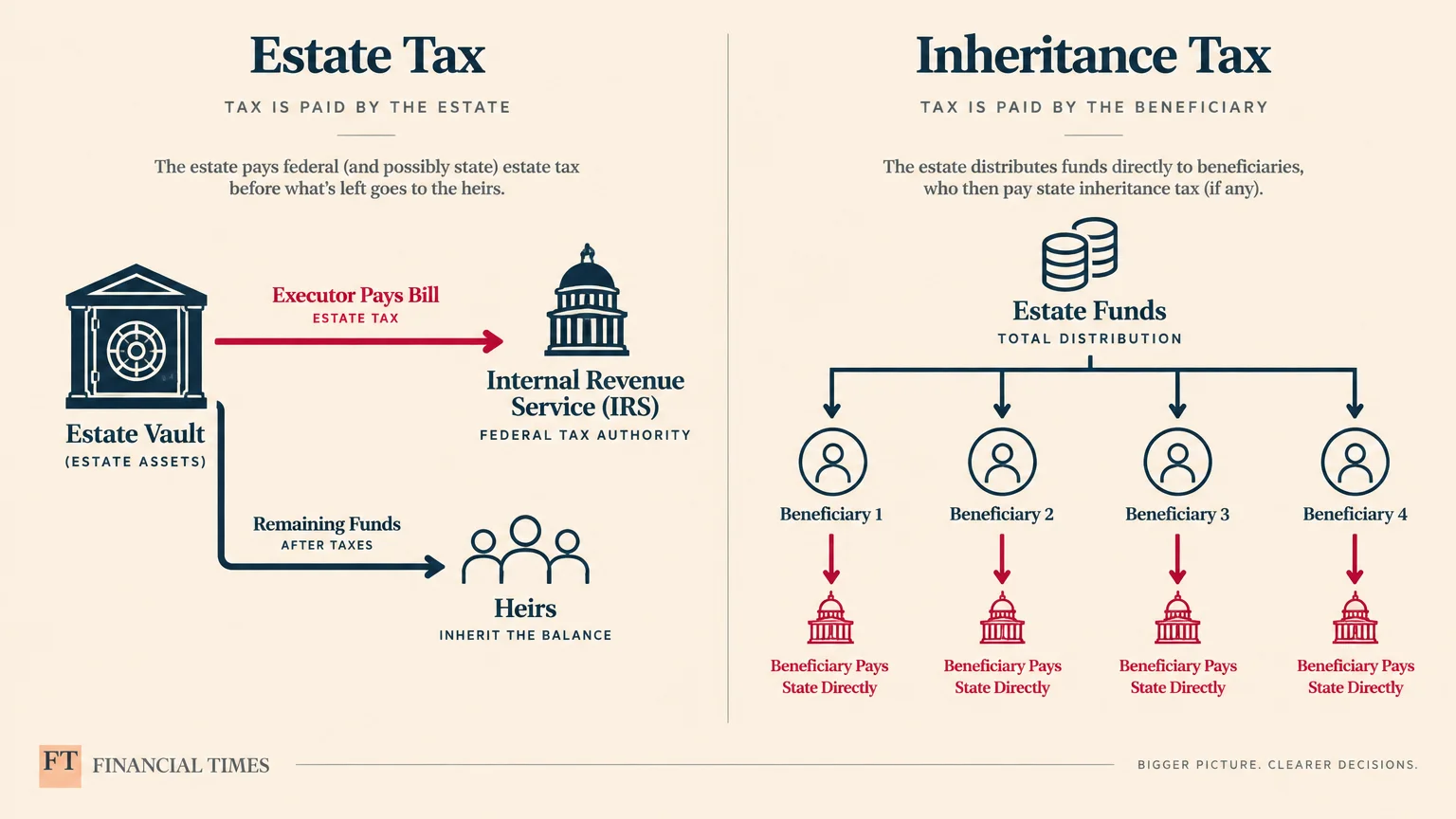
Most people confuse inheritance taxes with estate taxes, but the law treats them very differently. Understanding who writes the check helps you plan your distributions accurately.
An estate tax targets the deceased person’s estate before any assets reach the heirs. The executor pays this bill directly from the estate funds.
The Internal Revenue Service (IRS) enforces a federal estate tax on high-net-worth transfers, but it levies zero inheritance tax.
An inheritance tax, by contrast, is paid by the beneficiary who receives the wealth. The state calculates the tax rate based on each heir’s individual share.
If your estate owes an estate tax, your heirs receive their remaining portion afterward. When an inheritance tax applies, your heir pays the state directly from their windfall.
2. The Shrinking Map: Only Five States Still Tax Heirs
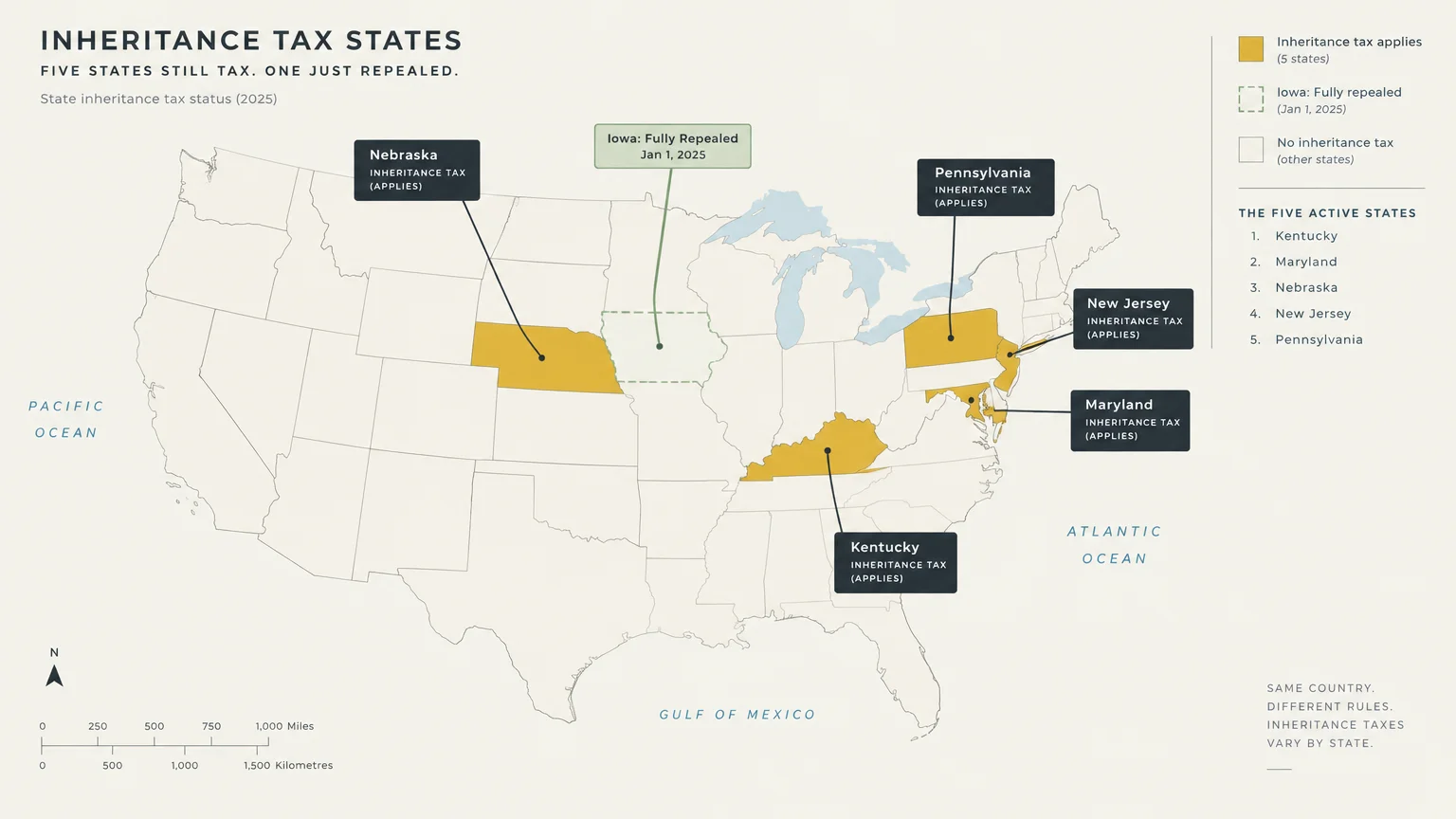
Decades ago, most states levied inheritance taxes to generate local revenue. Today, almost every state has repealed these statutes in favor of friendlier tax climates.
As of 2026, only five states continue to assess an inheritance tax. These states are Kentucky, Maryland, Nebraska, New Jersey, and Pennsylvania.
Iowa previously collected this tax, but lawmakers enacted a multi-year phaseout. Iowa fully repealed its inheritance tax for deaths occurring on or after January 1, 2025.
If you live outside these five states and leave your assets to local heirs, they will not pay state inheritance tax. However, out-of-state assets can still trigger surprise liabilities.
3. Family Ties Matter: How Kinship Sets the Tax Rate
States group beneficiaries into distinct classes based on their blood relation to you. Your relationship with the deceased determines whether you pay a heavy tax or nothing at all.
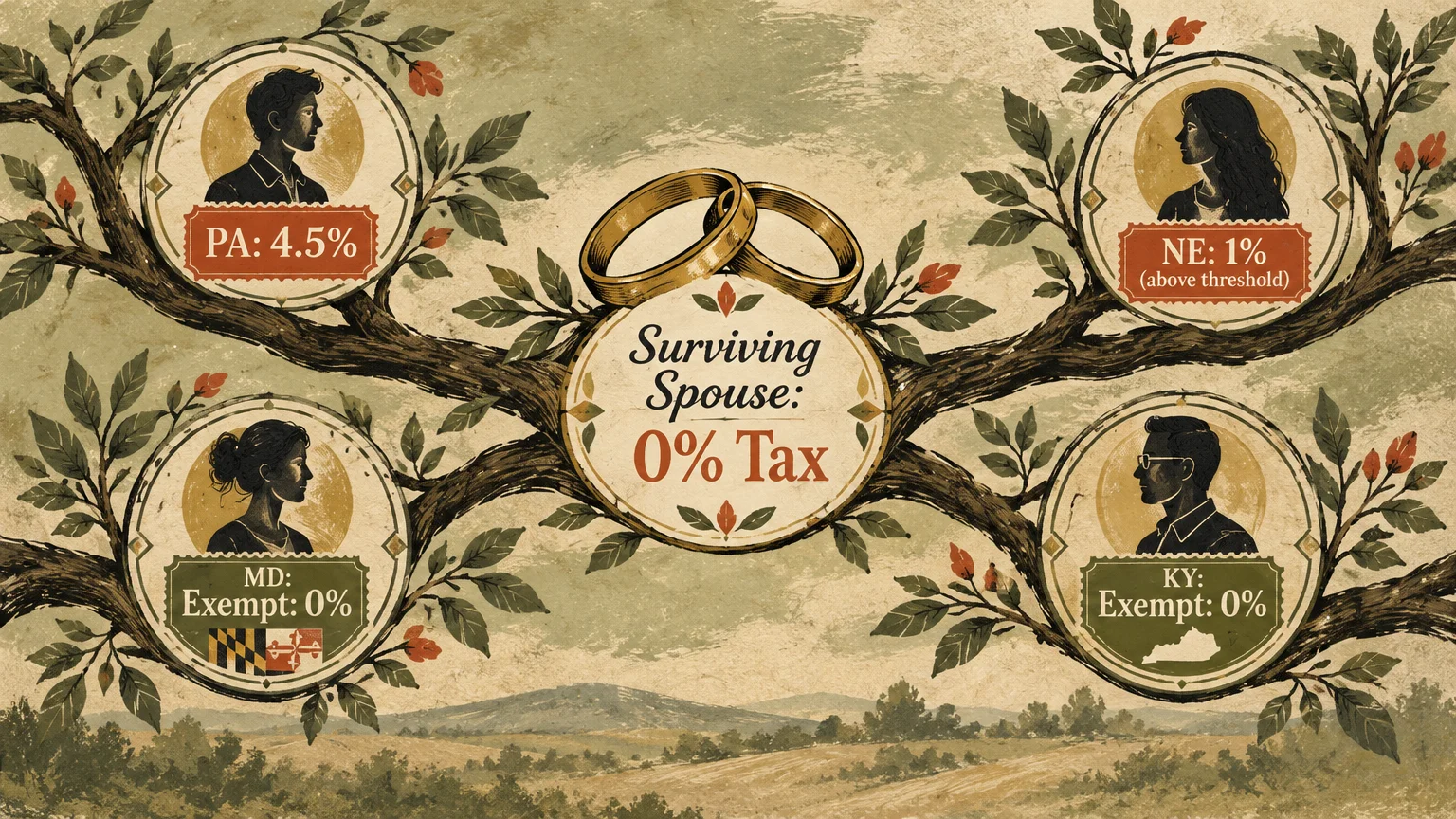
Surviving spouses enjoy complete protection across the board. In all five inheritance tax states, surviving husbands and wives pay a 0% tax rate on every dollar inherited.
Lineal descendants—such as biological children and grandchildren—face vastly different rules depending on the state. Maryland, New Jersey, and Kentucky place direct children into an exempt class with a 0% rate.
Pennsylvania, however, taxes transfers to adult children and grandchildren at a flat 4.5% rate. The state only waives this tax for surviving children aged 21 or younger.
Nebraska taxes children and parents at a 1% rate on amounts above their statutory exemption threshold. Heirs under age 22 remain exempt from Nebraska inheritance taxes.
4. The Sibling Surprise: Huge Rate Swings Between Borders
Leaving money to a brother or sister can trigger steep tax bills in certain jurisdictions. How inheritance tax works for siblings illustrates just how fragmented state laws have become.
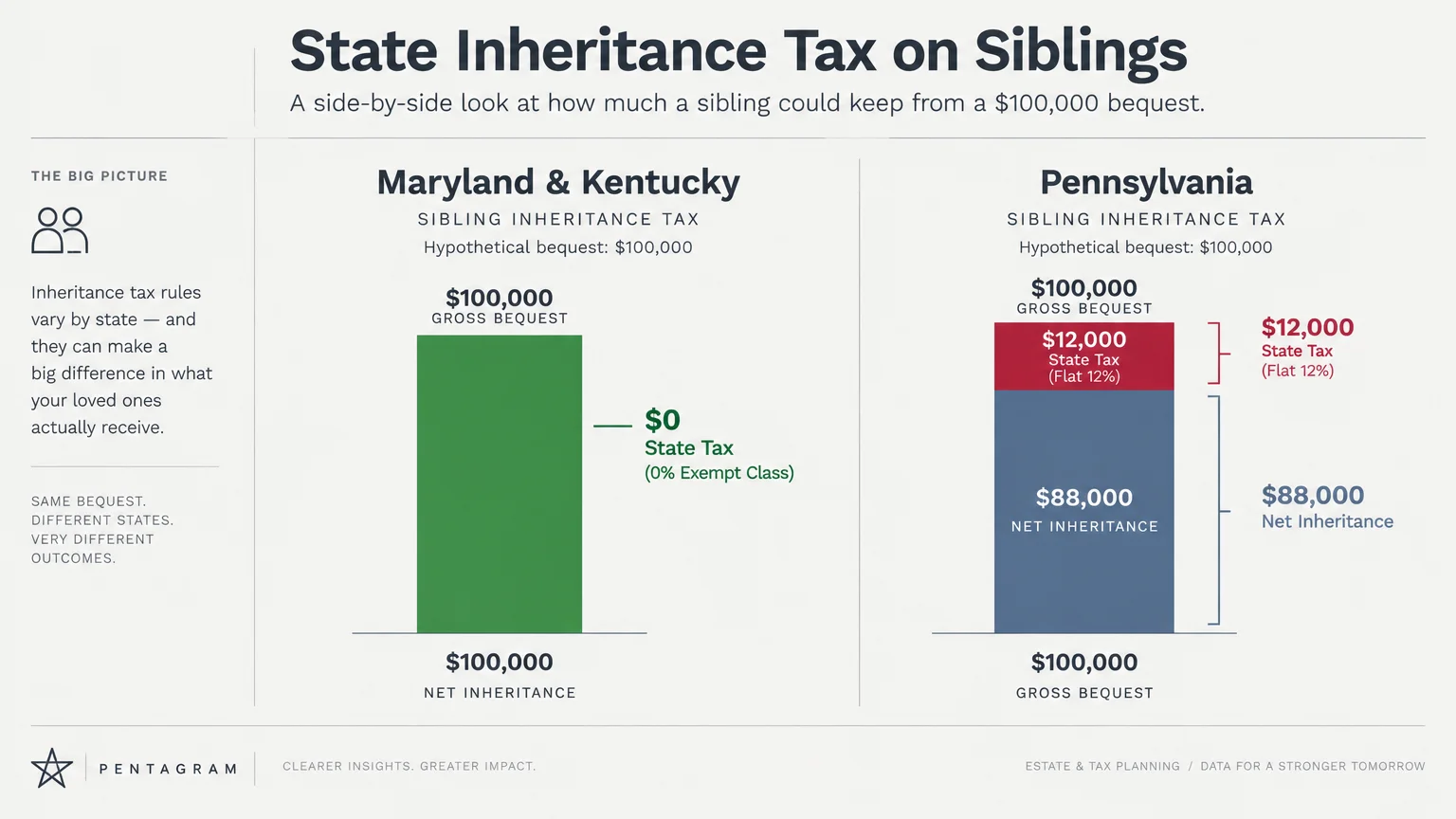
In Maryland and Kentucky, lawmakers treat siblings generously. Both states place brothers and sisters into exempt beneficiary classes, meaning they pay 0% in state inheritance tax.
Pennsylvania takes the opposite approach. The state taxes siblings at a flat 12% rate without granting any standard dollar deduction.
If you leave $100,000 to a sibling in Pennsylvania, they must send $12,000 directly to the state Department of Revenue. That same bequest incurs zero inheritance tax in Maryland or Kentucky.
New Jersey places siblings into Class C, applying progressive tax rates between 11% and 16%. Nebraska assesses a modest 1% rate on siblings after applying generous baseline exemptions.

5. Distant Relatives and Friends Face the Heaviest Toll
If you intend to leave assets to nieces, nephews, cousins, or lifelong friends, prepare for substantial tax bites. States impose their highest brackets on non-lineal beneficiaries.
Pennsylvania imposes a flat 15% rate on unrelated beneficiaries and distant relatives. That rate applies starting from the very first dollar received.
New Jersey and Kentucky push marginal tax rates for distant relatives and unrelated friends up to 16%. In Kentucky, non-relatives fall into Class C, where tax rates climb rapidly.
Maryland charges a flat 10% inheritance tax on all non-exempt collateral beneficiaries. Nebraska taxes non-related heirs at 15% on amounts exceeding baseline thresholds.
“Proper estate planning is not about how much money you leave behind; it is about how much of that money stays with the people you love.” — Ed Slott, CPA and IRA Distribution Expert
Without proper advance planning, non-relatives often forfeit up to one-sixth of their bequest to state revenue agencies.
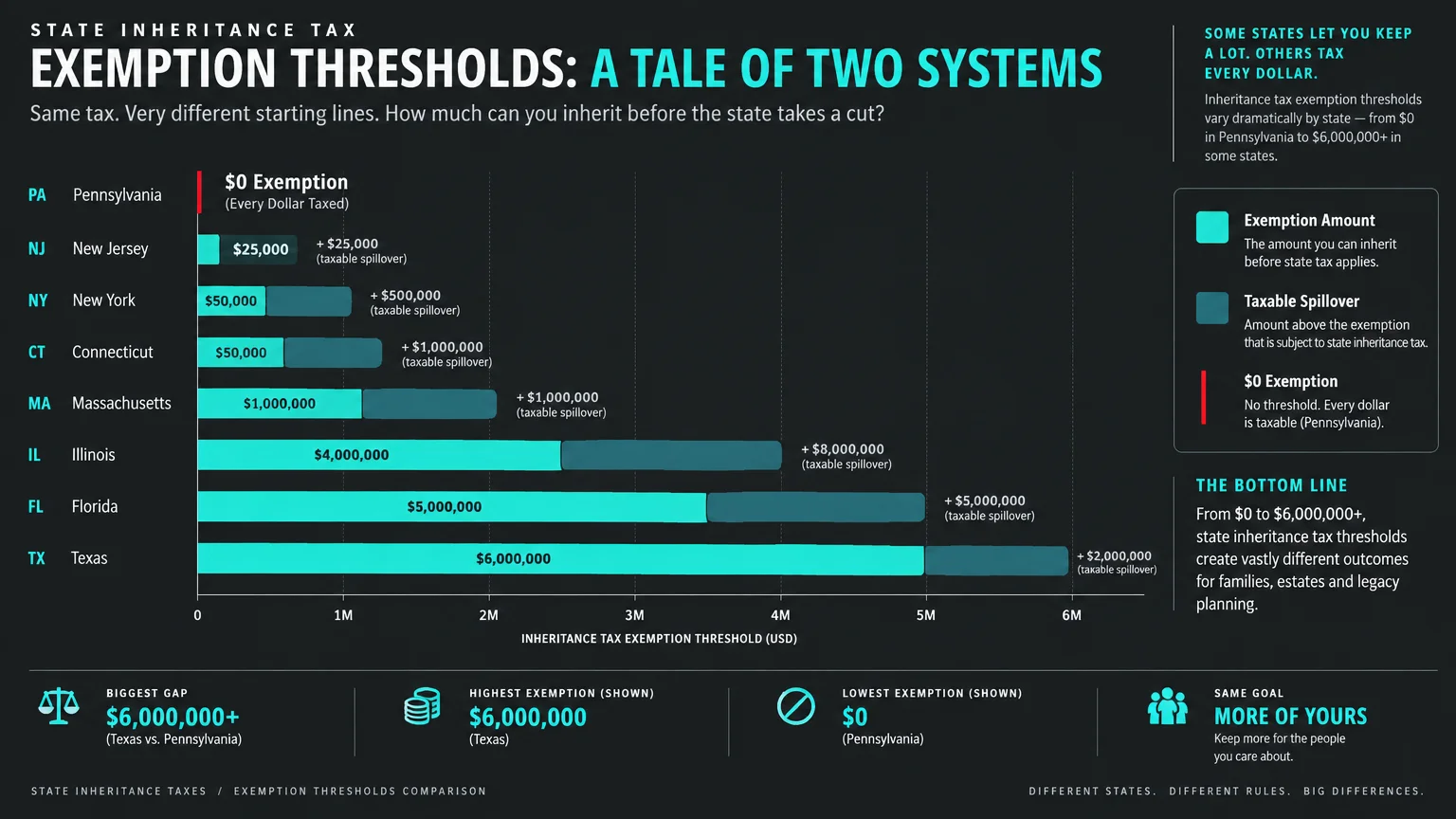
6. Exemption Cliffs: From Zero Dollars to Six Figures
State inheritance tax exemptions vary dramatically from one zip code to the next. Some states allow substantial tax-free transfers, while others offer no baseline buffer.
Nebraska provides some of the highest statutory exemptions in the country. Immediate relatives receive a $100,000 exemption, remote relatives receive $40,000, and non-relatives enjoy a $25,000 buffer.
New Jersey provides a $25,000 exemption for siblings before its graduated rates begin. However, distant relatives in New Jersey receive an exemption of just $500.
Kentucky offers a tiny $500 exemption for Class C beneficiaries. Once an inheritance crosses that nominal threshold, the state collects taxes starting at 6%.
Pennsylvania offers no baseline dollar exemption for individual heirs. Adult children and siblings must pay taxes on the entire inherited sum starting at dollar one.

7. The “Double-Tax” Outlier: Maryland’s Dual System
Most states choose between an estate tax, an inheritance tax, or neither. Maryland stands out as the only jurisdiction in the nation that enforces both systems simultaneously.
The state levies a graduated estate tax reaching up to 16% on estates exceeding $5 million. That tax is assessed directly against the decedent’s collective estate.
Maryland then imposes a separate 10% inheritance tax on distributions made to non-exempt heirs. This creates a rare dual tax scenario for large distributions passing to friends or remote relatives.
Fortunately, Maryland provides clear relief mechanisms. The state grants an estate tax credit for inheritance taxes actually paid, preventing double taxation on the exact same transferred dollars.
Even with credits, administering an estate in Maryland requires careful timing. Executors must navigate two distinct sets of state tax returns alongside standard federal filings.

8. The Cross-Border Real Estate Trap (The “Situs” Rule)
Many seniors retire to tax-friendly states like Florida, Texas, or Arizona to escape local taxes. However, moving your primary domicile does not eliminate your inheritance tax risk entirely.
Tax authorities apply the legal principle of “situs,” which gives states taxing power over real estate within their borders. Physical land remains tied to the state where it sits.
If you pass away as a Florida resident but own a vacation cottage in Pennsylvania, your heirs must file a Pennsylvania return. The state taxes the real property regardless of where you lived.
This rule also applies to tangible personal property kept inside an inheritance tax state. Bank accounts and stocks follow your domicile, but physical real estate never leaves its home jurisdiction.
To learn more about managing property across borders, review consumer resources from the Consumer Financial Protection Bureau (CFPB).

9. Asset Classes Are Treated Unequally (Life Insurance Perks)
States do not treat every type of inherited asset equally. Certain assets carry built-in statutory exemptions that bypass inheritance taxes entirely.
Life insurance proceeds represent one of the most advantageous estate planning vehicles available. In Pennsylvania, Kentucky, and New Jersey, life insurance death benefits paid to a designated beneficiary are 100% exempt.
If your policy pays directly to your adult child, Pennsylvania levies 0% inheritance tax. If you deposit those same cash funds into a standard savings account, they face the 4.5% rate.
Real estate, brokerage accounts, vehicles, and precious metals generally receive no special exemption. They are appraised at fair market value and taxed under standard kinship rates.
Retirement accounts such as traditional IRAs can trigger dual obligations. Heirs must pay state inheritance taxes on the balance, plus ordinary income tax when they withdraw the funds.

10. Administration Quirks: Early Discounts and County Filings
Procedural rules and deadlines create surprising variations in the final tax bills beneficiaries pay. A few states even reward families who pay their taxes ahead of schedule.
Pennsylvania offers a 5% prompt-payment discount on the total inheritance tax due. Beneficiaries must remit their estimated tax payment within three months of the decedent’s death to qualify.
Kentucky offers an identical 5% discount if the estate pays the tax within nine months of death. Kentucky gives families up to 18 months before declaring an unpaid inheritance tax delinquent.
Administration methods also differ sharply by region. In Pennsylvania, Maryland, New Jersey, and Kentucky, executors submit returns to state revenue departments or county probate courts acting for the state.
Nebraska handles the entire process at the local level. Each of Nebraska’s 93 individual counties assesses, audits, and collects the tax to support local county government budgets.
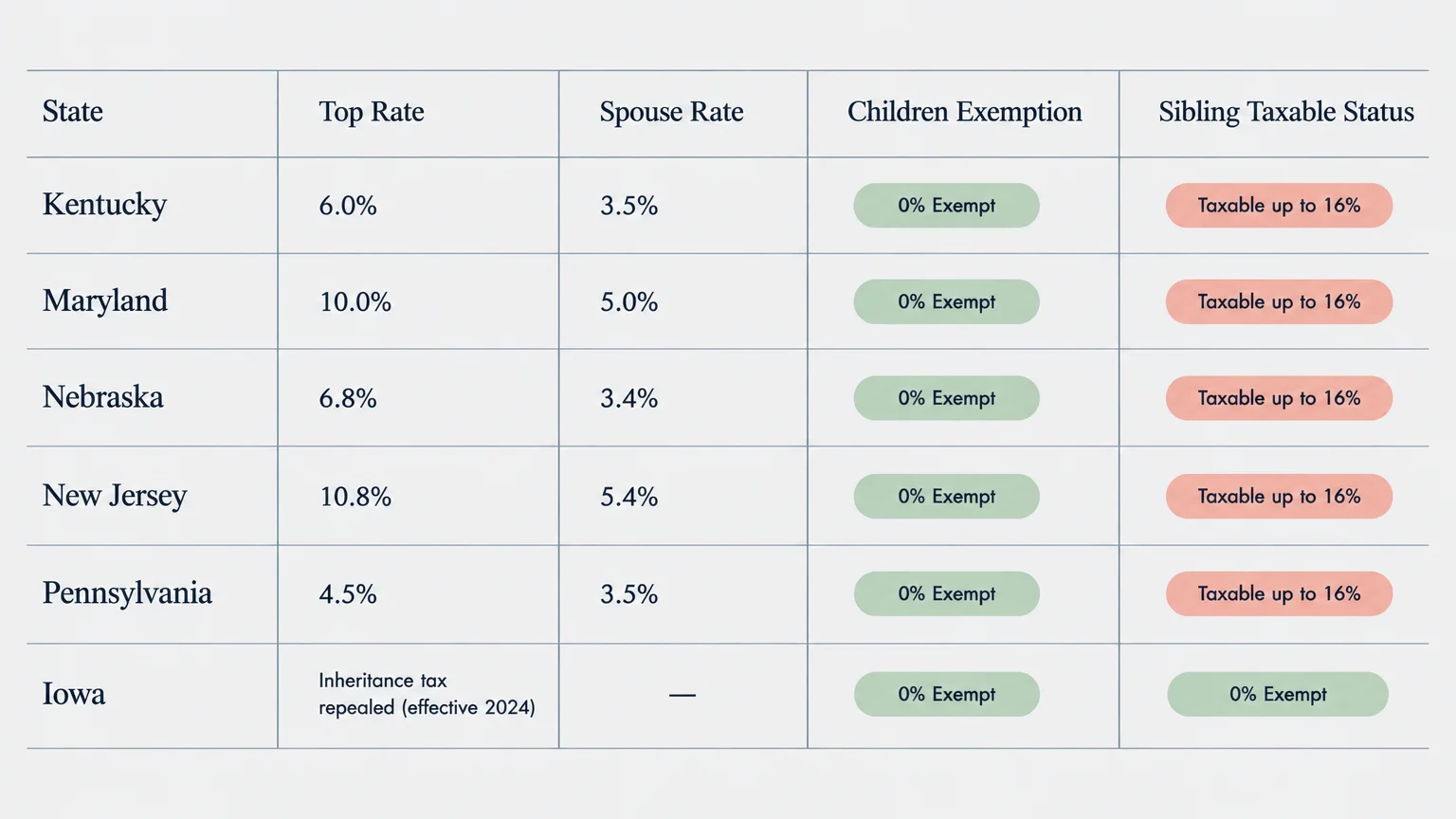
Inheritance Tax Rules by State: Quick Comparison
Navigating inheritance tax by state requires looking at rates, kinship categories, and baseline exemptions. The table below outlines how each state treats different family members.
| State | Spouse Rate | Children & Grandchildren | Sibling Rate | Non-Relatives | Key Exemptions |
|---|---|---|---|---|---|
| Kentucky | 0% | 0% (Class A) | 0% (Class A) | Up to 16% (Class C) | $500 exemption for Class C; 5% discount if paid within 9 months. |
| Maryland | 0% | 0% | 0% | Flat 10% | Estates under $50,000 exempt; levies separate state estate tax over $5M. |
| Nebraska | 0% | 1% (Age 22+); 0% (Under 22) | 1% | 15% | $100,000 for close family; $40,000 remote; $25,000 unrelated. Handled by 93 counties. |
| New Jersey | 0% | 0% (Class A) | 11% to 16% (Class C) | 15% to 16% (Class D) | $25,000 exemption for siblings; $500 exemption for Class D. |
| Pennsylvania | 0% | 4.5% (Age 22+); 0% (Age 21 and under) | Flat 12% | Flat 15% | No baseline heir exemption; 5% early discount if paid within 3 months. |

Pitfalls to Watch For
Navigating state inheritance rules requires vigilance. Many families run into expensive problems simply because they misunderstand how state statutes interact.
- Relying entirely on federal guidelines: Assuming you owe nothing because your estate falls below federal limits can leave heirs unprepared for state-level inheritance taxes.
- Overlooking out-of-state real estate: Owning real property in states like Pennsylvania or New Jersey triggers state inheritance tax filings, even if you reside in Florida.
- Naming the estate as life insurance beneficiary: Life insurance proceeds lose their tax-exempt status in states like Pennsylvania if paid to the general estate rather than a named person.
- Missing early payment discounts: Delaying payments causes families to forfeit prompt discounts, such as Pennsylvania’s 5% savings for paying within three months.
Educational organizations like AARP provide tools to help older adults review their estate plans and avoid these common traps.

Getting Expert Help
Because inheritance tax rules differ across state lines, generic advice rarely works. Certain complex scenarios demand guidance from an experienced estate planner or tax attorney.
Consider consulting a credentialed professional if you face any of the following situations:
- You own multi-state properties: Owning physical land across state borders requires customized trusts or business structures to minimize cross-border inheritance taxes.
- You plan to leave significant sums to non-relatives: Distant family members and close friends face rates up to 16%, requiring proactive gifting or insurance strategies.
- You live in Maryland: Co-navigating Maryland’s combined estate and inheritance tax demands coordinated filing to claim all allowable state credits.
- You hold large retirement accounts: Inherited traditional IRAs create both state inheritance tax liabilities and federal income taxes for beneficiaries under current distribution rules.
Before implementing changes, verify the credentials of your advisor through public databases like Investor.gov.
Frequently Asked Questions
Does the beneficiary or the estate pay the inheritance tax?
The beneficiary is legally responsible for paying the inheritance tax. However, wills often include provisions directing the executor to pay these taxes directly from the residuary estate.
Can moving to Florida protect my family from inheritance taxes?
Moving establishes a tax-friendly domicile for bank accounts, stocks, and bonds. However, any physical real estate you retain in an inheritance tax state remains subject to that state’s tax.
Are inherited retirement accounts subject to inheritance tax?
Yes, states that levy an inheritance tax treat retirement account balances as taxable transfers. In addition, the heir must pay federal income tax when withdrawing the funds.
Do grandchildren pay the same rate as children?
In most states, grandchildren share the same lineal classification as children. In Pennsylvania, for example, adult grandchildren pay the identical 4.5% rate assessed on adult children.
Taking time to understand state tax variations ensures your wealth reaches your heirs with minimal administrative friction. Review your beneficiary designations regularly to keep your estate plan current and effective.
The information in this guide is meant for educational purposes. Your specific circumstances—including income, benefits, tax situation, and health needs—may require different approaches. When in doubt, consult a licensed financial advisor or tax professional.
Last updated: February 2026. Benefit amounts, tax rules, and program details change annually—verify current figures with official government sources.









Leave a Reply