

Your parked vehicle can generate reliable cash to pad your retirement budget or offset rising grocery costs. Turning your everyday car into an income stream gives you complete control over your working hours.
Whether you want active driving gigs or passive vehicle sharing, flexible opportunities fit nearly any schedule. You can easily pocket an extra $300 to $1,500 every month without committing to rigid shifts.
Before you turn the key, you must understand key tax deductions, mileage rules, and auto insurance coverage. Let us explore ten practical ways to make money with your car while protecting your financial security.

Why Car-Based Gigs Appeal to Older Adults
Retirement often brings an unexpected challenge: plenty of free time alongside fixed monthly incomes. Car side hustles offer an ideal way to bridge that gap without taking on stressful corporate demands.
You choose your own hours, take days off whenever you want, and decide how far you travel. Driving also keeps you engaged with your local community, preventing the isolation many retirees face.
Additionally, modern mobile apps handle client scheduling, payment processing, and GPS routing. You simply need a reliable vehicle, a clean driving record, and a smartphone to get started.
“Creating extra cash flow in retirement gives you emotional breathing room, but protecting your capital and managing taxes must always come first.” — Suze Orman, Personal Finance Author

10 Practical Ways to Make Money with Your Car
1. Senior Companion and Medical Transport
Many older adults need assistance getting to routine medical appointments, pharmacy pickups, or community centers. Specialized platforms connect vetted drivers with seniors who prefer personalized, compassionate support over impersonal taxis.
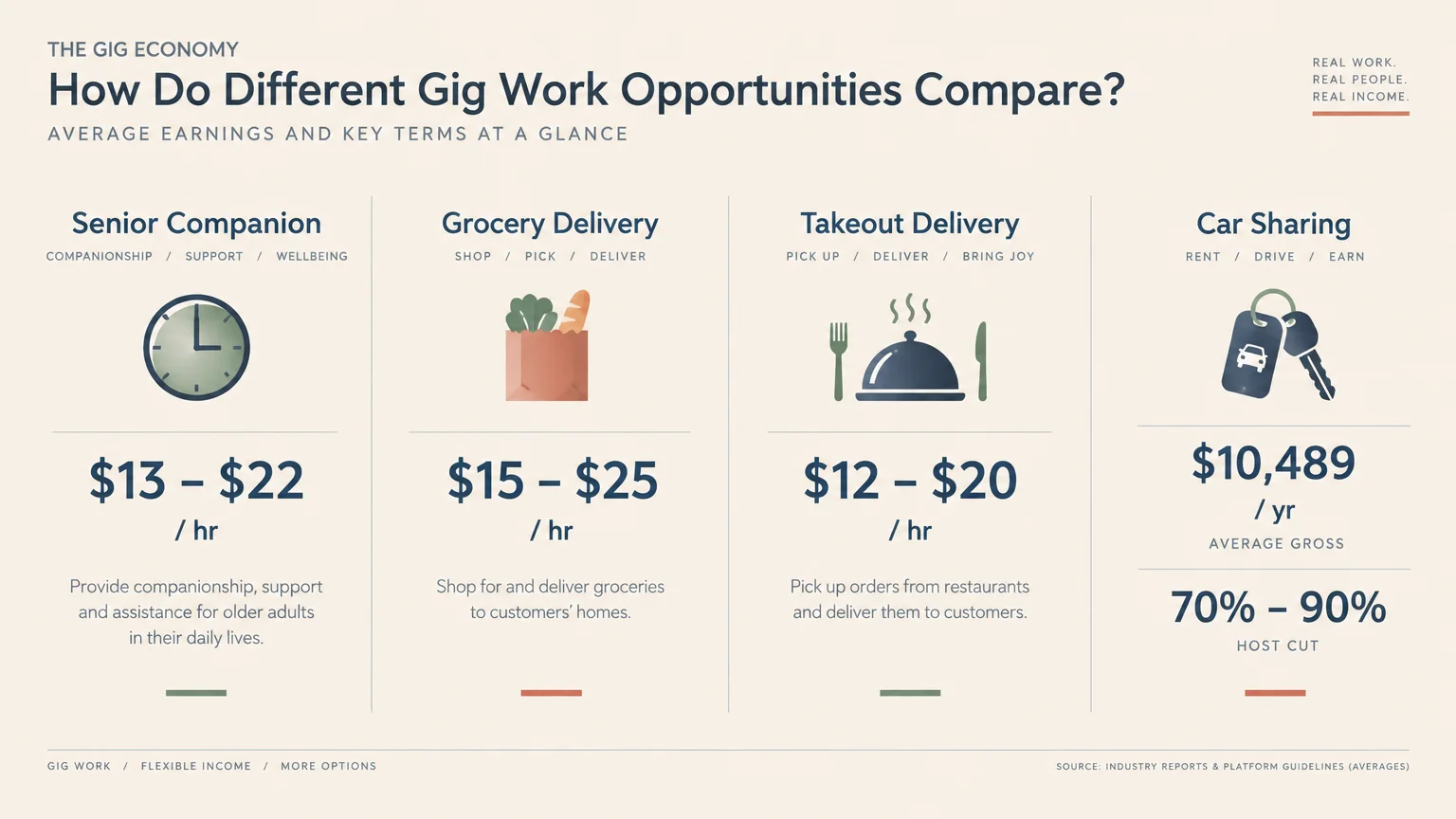
Services like Papa Pals pay a base wage of $13 to $18 per hour. With platform bonuses and mileage stipends, your earnings can easily reach $20 to $22 per hour.
Most programs require a clean background check and a dependable four-door vehicle from the 2008 model year or newer. This role combines meaningful social companionship with steady supplemental income.
2. Grocery Delivery Services
Grocery shopping apps let you earn money driving without carrying strangers in your back seat. Companies like Instacart and Shipt pay you to collect store items and deliver them to doorsteps.
You can see the order payout, store location, and estimated delivery distance before accepting any job. Drivers typically make between $15 and $25 per hour during peak morning and weekend hours.
This gig requires some physical stamina for lifting bags and climbing stairs. However, it gives you total control over when and where you shop.
3. Restaurant Food Delivery
Delivering takeout through platforms like DoorDash and Uber Eats represents one of the most accessible gig jobs with a car. You pick up prepared meals from local restaurants and bring them to hungry diners.
Earnings generally range from $12 to $20 per hour, supported by customer tips and promotional surge pay. You can focus exclusively on lunch or dinner rushes to maximize your earnings per mile.
Unlike passenger driving, you do not have to keep your vehicle spotless for riders. You can simply turn on the app whenever you feel like running a few quick deliveries.
4. Peer-to-Peer Vehicle Sharing
If you rarely drive your vehicle, peer-to-peer car sharing generates genuine passive income car opportunities. Platforms like Turo allow verified drivers to rent your automobile for vacations or business trips.
According to Turo company data, an active rental vehicle generates an average gross income of $10,489 per year. Hosts typically keep 70% to 90% of the trip fee, depending on their chosen protection tier.
You set daily mileage caps, designate pick-up rules, and block out days when you need the automobile yourself. This option works especially well if your household maintains an underused second vehicle.
5. Package Courier Routes
Package delivery programs allow you to transport parcels for major retailers during predictable shifts. Amazon Flex lets independent drivers reserve three- to five-hour blocks to drop off packages in designated neighborhoods.
Most Amazon Flex shifts pay between $18 and $25 per hour, with guaranteed minimum earnings for scheduled blocks. Another app, Roadie, pays drivers to haul retail goods or lost airport luggage along routes you already drive.
Because you know your schedule and route duration in advance, planning your week remains simple and predictable.
6. Traditional Rideshare Driving
Driving for Uber or Lyft remains a dependable way to earn money driving on short notice. When you log into the platform, nearby riders request trips, and the app calculates your payout automatically.
Full-time and part-time drivers average $15 to $25 per hour after factoring in tips and ride bonuses. You can accept rides only in safe, familiar neighborhoods or restrict driving strictly to daylight hours.
Keep in mind that rideshare companies enforce strict vehicle age restrictions, usually requiring models less than 10 to 15 years old. Your vehicle must also pass an annual mechanical safety inspection.
7. Mobile Notary and Document Delivery
If you prefer professional appointments over casual deliveries, consider becoming a mobile notary public. Title companies and legal offices pay certified notaries to travel to clients to witness mortgage and estate document signings.
Loan signing agents often earn between $75 and $200 per appointment, which usually takes under an hour. You must obtain state commission credentials, secure an errors and omissions insurance policy, and pass background screening.
This role offers high hourly returns and very light wear and tear on your vehicle compared to courier work.
8. Pet Taxi and Animal Transport
Pet owners frequently need assistance transporting dogs and cats to veterinarian appointments, groomers, or boarding kennels. Apps like Rover and CitizenShipper let you offer dedicated pet transportation services in your local area.
Drivers typically charge $20 to $40 per trip for local runs, or negotiated rates for long-distance transport. If you love animals, this gig provides enjoyable companionship without the pressure of strict commercial delivery clocks.
You should equip your vehicle with washable seat covers, pet safety harnesses, and travel crates to ensure safe journeys.
9. Legitimate Car Wrap Advertising
Legitimate advertising agencies pay drivers to place commercial vinyl decals on their daily commuter vehicles. Companies like Wrapify and Carvertise pay between $100 and $450 per month depending on how many miles you drive.
Advertisers favor drivers who regularly travel through high-traffic suburban corridors and major metropolitan areas. You simply go about your normal daily driving routines while a smartphone app tracks your qualifying campaign mileage.
Legitimate platforms never charge upfront onboarding fees or ask you to wire money to independent decal installers.
10. Local Business and Florist Delivery
Small neighborhood businesses often need independent drivers to deliver goods during peak holidays without maintaining full-time delivery staff. Local florists, print shops, and catering bakeries regularly hire contract couriers for morning runs.
Pay ranges from $15 to $25 per hour or a flat rate of $10 to $20 per delivered arrangement. Holiday seasons like Valentine’s Day and Mother’s Day offer intense earning potential for dependable drivers.
Reaching out directly to local business owners often leads to recurring weekly routes with consistent, predictable clients.
Comparing Your Car Earning Options
Choosing the right gig depends on your physical capabilities, schedule flexibility, and vehicle preferences. The table below compares the earnings potential and demands of these ten popular options.
| Earning Method | Typical Earnings | Physical Effort | Vehicle Wear |
|---|---|---|---|
| Senior Companion Driving | $15–$22 / hour | Low | Moderate |
| Grocery Delivery | $15–$25 / hour | Moderate to High | Moderate |
| Restaurant Food Delivery | $12–$20 / hour | Moderate | High |
| Peer-to-Peer Rental | $500–$1,000 / month | Very Low | High |
| Package Courier Routes | $18–$25 / hour | Moderate | Moderate |
| Traditional Rideshare | $15–$25 / hour | Low | High |
| Mobile Notary Signing | $75–$200 / appointment | Low | Low |
| Pet Taxi Services | $20–$40 / local trip | Moderate | Moderate |
| Car Wrap Advertising | $100–$450 / month | None | Low |
| Local Business Delivery | $15–$25 / hour | Moderate | Moderate |
Tax Rules and Social Security Limits You Must Know
Earning gig income changes your annual tax obligations because platforms classify you as an independent contractor. Companies report your earnings on Form 1099, meaning income tax and self-employment taxes are not automatically withheld.
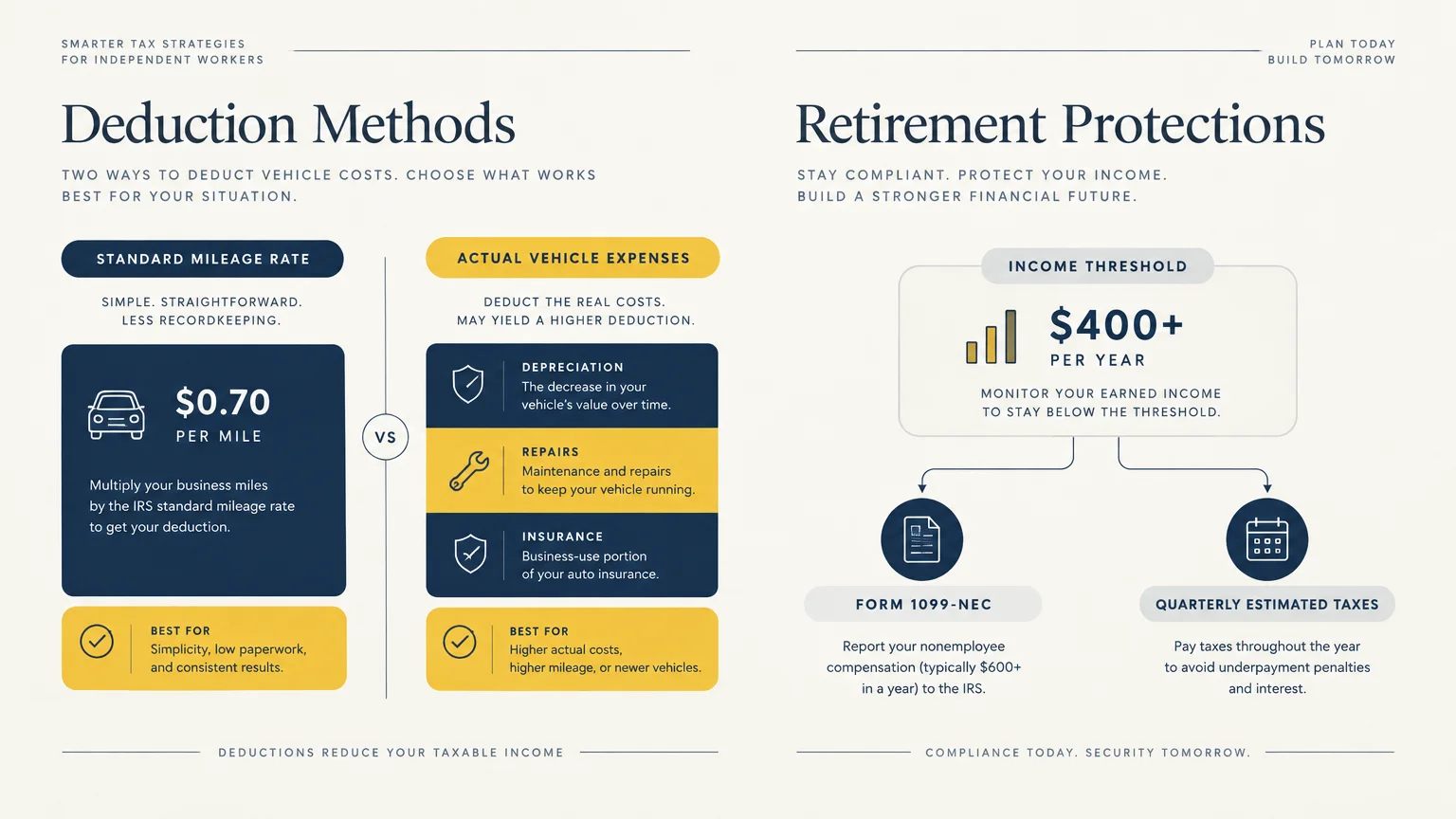
Fortunately, you can offset your gross business income by claiming substantial vehicle expense deductions. The Internal Revenue Service (IRS) allows self-employed individuals to claim standard mileage deductions.
According to the IRS, the standard business mileage rate was 67 cents per mile for 2024 and rose to 70 cents per mile for 2025. Tracking your business miles accurately can wipe out a major portion of your taxable driving income.
For example, driving 4,000 verified delivery miles in 2025 yields an immediate $2,800 tax deduction against your gross gig receipts.
If you collect retirement benefits before reaching Full Retirement Age (FRA), watch the Social Security Administration (SSA) earnings limits closely. Exceeding these statutory thresholds triggers temporary benefit withholding.
According to the Social Security Administration, the annual earnings limit was $22,320 ($1,860 per month) in 2024 and rose to $23,400 ($1,950 per month) for 2025. The SSA temporarily withholds $1 of benefits for every $2 earned above the limit.
In the specific calendar year you reach FRA, a higher limit applies ($59,520 in 2024; $62,160 in 2025) until your birthday month. Once you reach your Full Retirement Age, earnings restrictions disappear completely.
What Can Go Wrong: 4 Costly Mistakes to Avoid
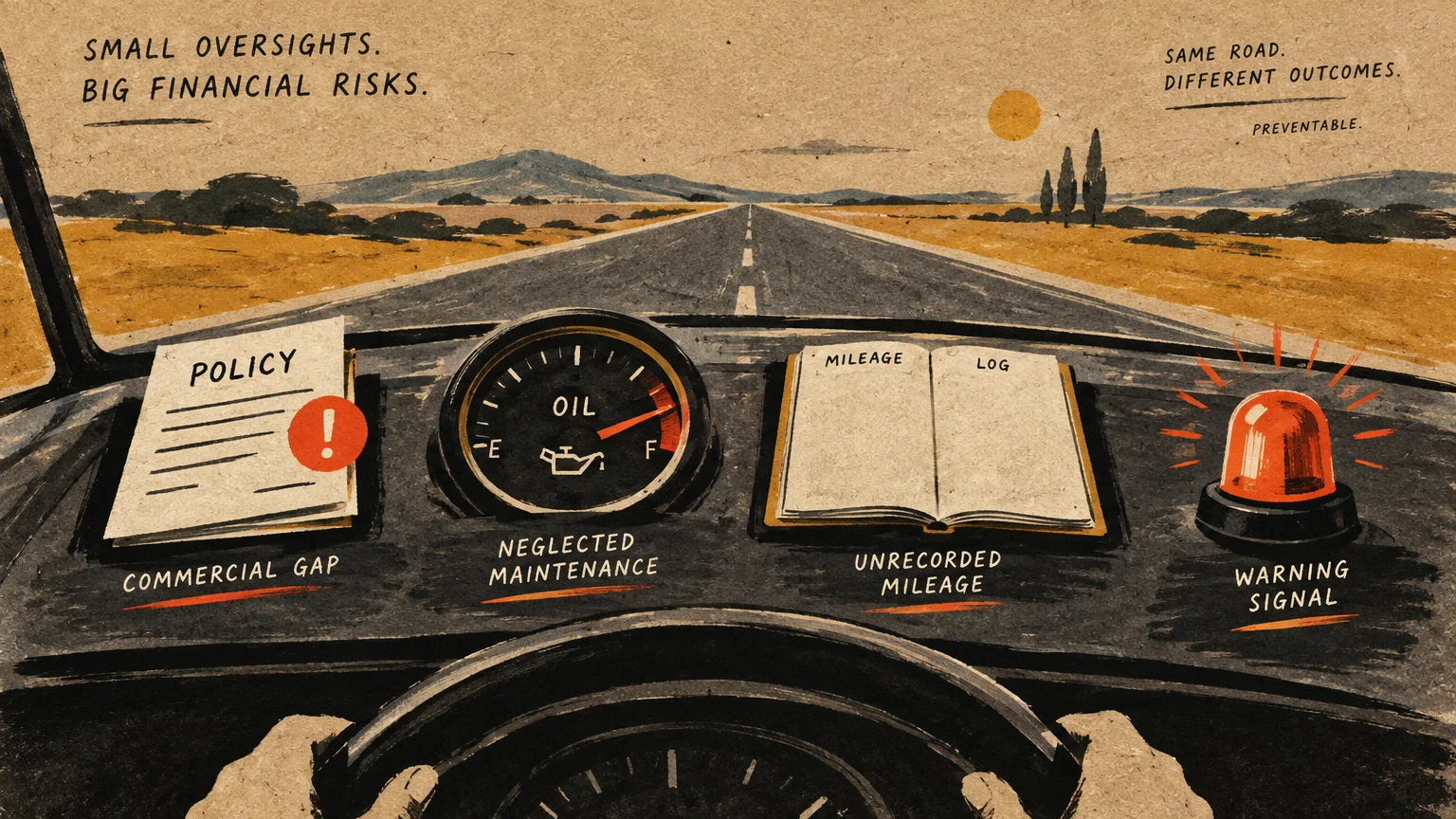
While driving side hustles provide helpful cash, unexpected operational errors can derail your financial plans. Protect your wallet by avoiding these four common pitfalls.
1. Relying on Standard Personal Auto Insurance
Standard personal auto policies contain strict business use and livery exclusions. If you cause an accident while delivering food or carrying passengers, your insurer can legally deny coverage entirely.
Contact your insurance agent before taking your first gig to add a dedicated rideshare or delivery endorsement. These affordable policy add-ons bridge the risky coverage gap between personal driving and commercial platform periods.
2. Falling for Fake Check Car Wrap Scams
Consumer regulators frequently alert older adults to fraudulent car wrap employment offers. According to the Consumer Financial Protection Bureau (CFPB), scammers actively exploit job seekers using fake checks.
In this scheme, criminals send a counterfeit check for several thousand dollars and tell you to wire funds to a fake decal installer. The fake check bounces days later, leaving you responsible to your bank for the lost money.
3. Ignoring Vehicle Depreciation and Maintenance
High gross payouts look appealing, but driving puts rapid wear and tear on your vehicle. Frequent stop-and-go driving accelerates tire wear, brake degradation, and fluid breakdown.
Set aside at least 15% to 20% of your gig earnings into a dedicated maintenance reserve account. This fund prevents routine oil changes or unexpected suspension repairs from wiping out your profits.
4. Accidentally Triggering Social Security Clawbacks
Taking on too many delivery blocks can push early Social Security recipients over annual statutory limits. A sudden $3,000 benefit reduction erases months of hard driving profits.
Keep a detailed monthly ledger of your net self-employment earnings to stay comfortably below the SSA thresholds. Review your financial numbers regularly alongside educational resources from AARP.

When to Consult a Professional
Managing independent contractor revenue involves rules that differ significantly from W-2 employment. Seek guidance from licensed professionals in the following situations:
- When you need an accountant to calculate quarterly estimated taxes and optimize mileage deductions.
- When you must adjust auto insurance coverage to ensure full liability protection during commercial trips.
- When your annual gig earnings approach the Social Security Retirement Earnings Test threshold before your Full Retirement Age.
- When you plan to form a formal business entity, such as an LLC, for notary or transport services.
Frequently Asked Questions
Do I need special commercial auto insurance to make money with my car?
Yes, standard personal auto insurance policies exclude commercial driving and delivery activities. You must contact your insurance provider to add a rideshare or delivery endorsement.
This add-on typically costs between $10 and $30 per month and ensures full coverage during active gig work.
Does gig driving income reduce my Social Security benefits?
Gig income only affects your benefits if you collect Social Security before reaching your Full Retirement Age. In 2025, you can earn up to $23,400 annually without penalty.
Once you reach Full Retirement Age, you can earn unlimited money without any reduction to your monthly payments.
How does the IRS mileage deduction work for car side hustles?
The IRS standard mileage deduction allows you to deduct 70 cents per business mile in 2025 from your gross earnings. This deduction substantially lowers your net taxable self-employment income.
You must maintain an accurate written or digital log recording your business trip dates, miles, and commercial purposes.
What are the best low-stress car gigs for seniors over 60?
Senior companion driving and scheduled parcel deliveries tend to offer the lowest stress levels. These gigs avoid crowded late-night entertainment districts and hectic fast-food restaurant rushes.
They also provide predictable daylight schedules and friendly, relaxed interactions with clients.
Getting Started with Your Car Side Hustle
Putting your automobile to work provides a flexible, enjoyable way to bolster your monthly retirement cash flow. Choose one gig that fits your comfort level, check your insurance coverage, and start with just a few hours each week.
The information in this guide is meant for educational purposes. Your specific circumstances—including income, benefits, tax situation, and health needs—may require different approaches.
When in doubt, consult a licensed financial advisor or tax professional.
Last updated: February 2026. Benefit amounts, tax rules, and program details change annually—verify current figures with official government sources.









Leave a Reply