

Longtime senior discounts are vanishing from store registers, airline booking portals, and utility bills across the country. Major corporations have rewritten their loyalty rules and moved savings behind complicated smartphone applications.
These changes mean reaching age 55 or 65 no longer guarantees an automatic discount at checkout. Over a single year, missing out on those markdowns can quietly siphon hundreds of dollars from your fixed retirement income.
Here is a breakdown of ten major senior perks that quietly disappeared—and the practical steps you can take today to replace them.
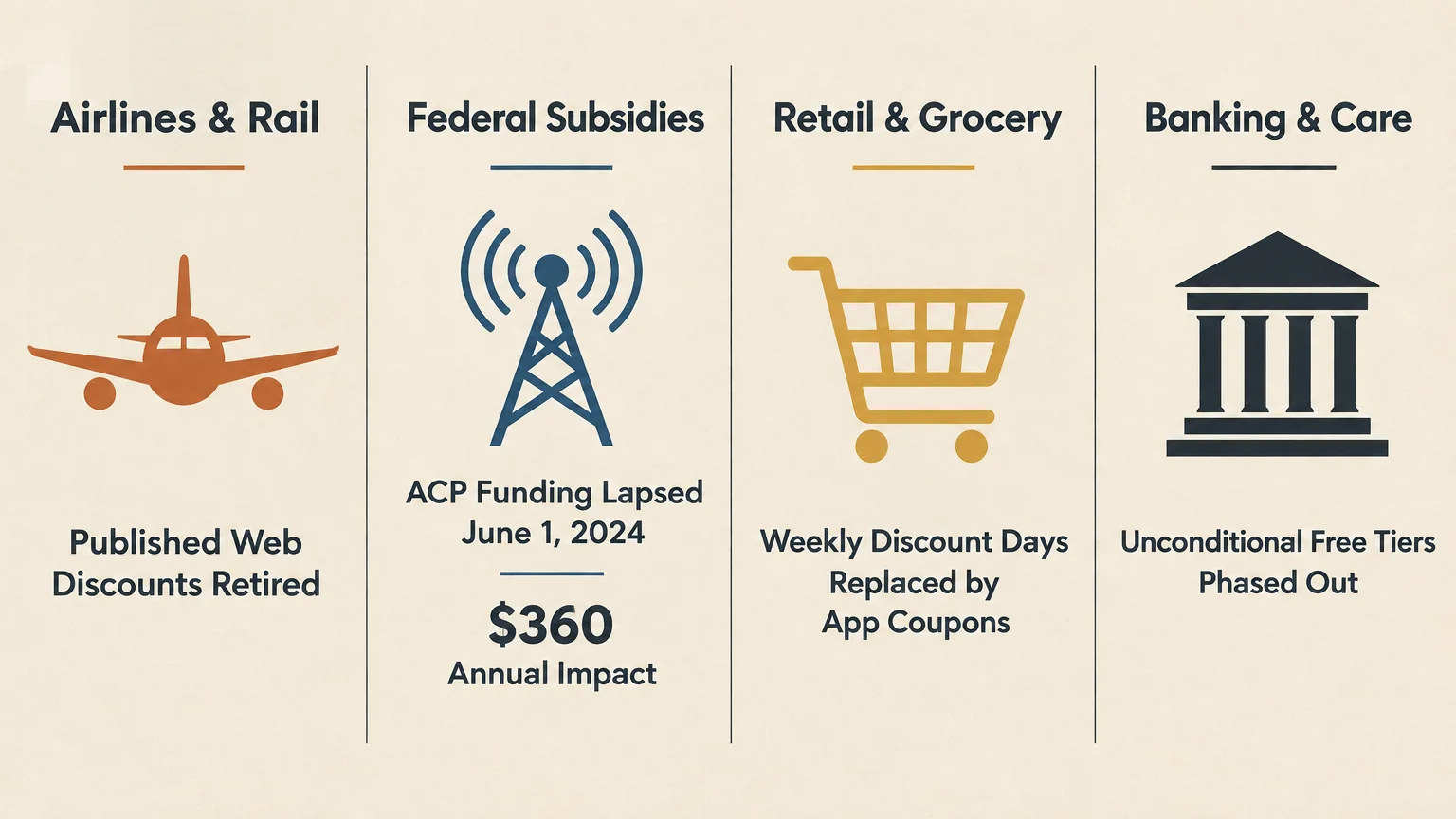
At a Glance: The Shifting Landscape of Senior Savings
Corporate cost-cutting and app-based loyalty models have reshaped how businesses reward older shoppers. Understanding these changes helps you protect your monthly cash flow.
- Airlines and rail: Published web discounts for seniors have largely ended or faced tighter age restrictions.
- Federal subsidies: Vital internet assistance programs have lapsed due to lack of congressional funding.
- Retail and grocery: Routine weekly discount days have been replaced by digital, app-exclusive coupons.
- Banking and healthcare: Free checking tiers and third-party gym networks now come with stricter strings attached.

1. Southwest Airlines and Legacy Carrier Senior Fares
For decades, travelers aged 65 and older enjoyed dedicated Senior Fares across major airlines. Southwest Airlines officially retired its long-running Senior Fares program, removing the category from its digital booking engine.
Legacy carriers like American, Delta, and United followed similar paths. While a few carriers technically keep senior fares on the books, you must call reservations directly to uncover them.
These phone-only tickets rarely beat standard non-refundable fares. Today, budget-conscious travelers find better savings by using fare comparison trackers or booking mid-week flights well in advance.
2. The Federal Affordable Connectivity Program (ACP)
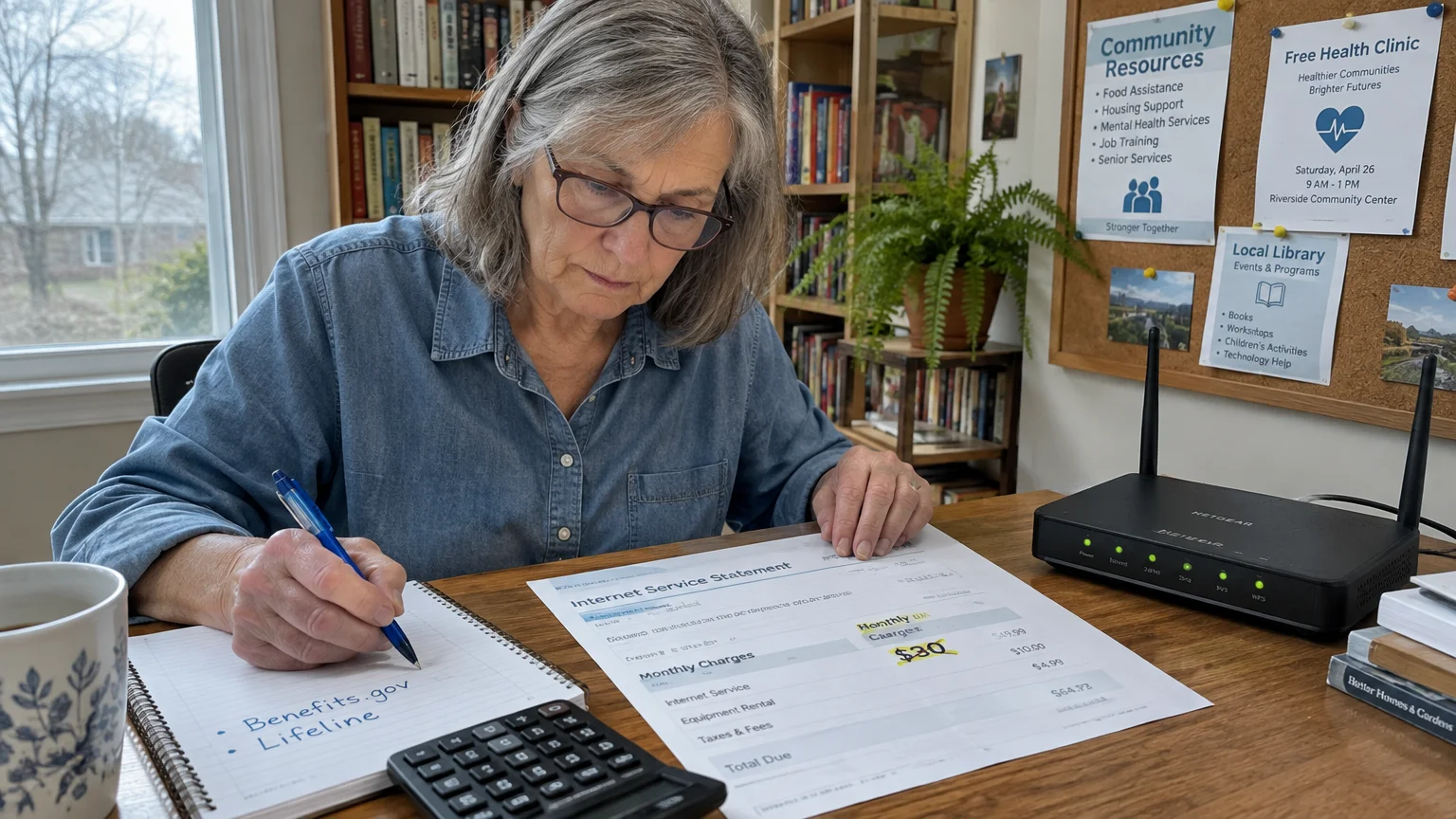
The Affordable Connectivity Program provided a crucial federal discount of up to $30 per month ($75 on qualifying Tribal lands) for high-speed home internet. More than 23 million American households relied on this benefit.
Congressional funding for the ACP expired on June 1, 2024, abruptly ending the subsidy. This left millions of older adults on fixed incomes facing sudden $360 annual price hikes.
If you lost ACP funding, explore alternative government utility assistance through Benefits.gov. You can also apply for the federal Lifeline program or ask your internet provider about low-cost basic tiers.
3. Weekly Supermarket Senior Discount Days
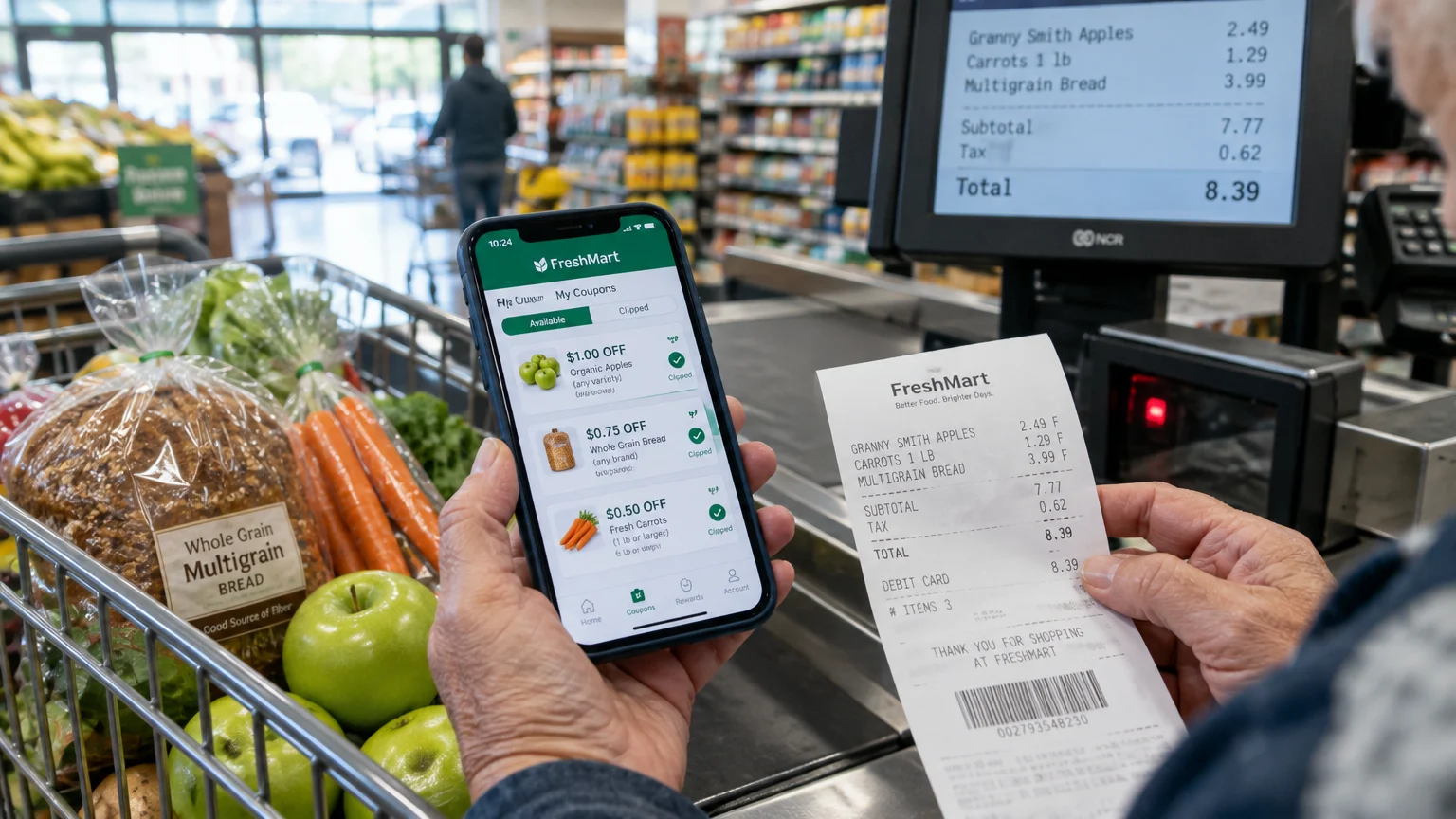
Many regional and national grocers once reserved a specific weekday—often Tuesday or Wednesday—to give older shoppers an automatic 5% to 10% off their entire cart. Retail giants like Publix and Kroger discontinued these chain-wide weekly programs.
A few regional chains, such as Fry’s and select Albertsons banners, scaled back their programs to a single day per month. In most stores, cashiers are no longer permitted to apply manual courtesy markdowns.
Supermarkets have largely shifted those promotional dollars into smartphone applications. To save on groceries now, you must clip digital store coupons or shop weekly loss-leader circulars.
4. Truly Unconditional Free Senior Checking Accounts
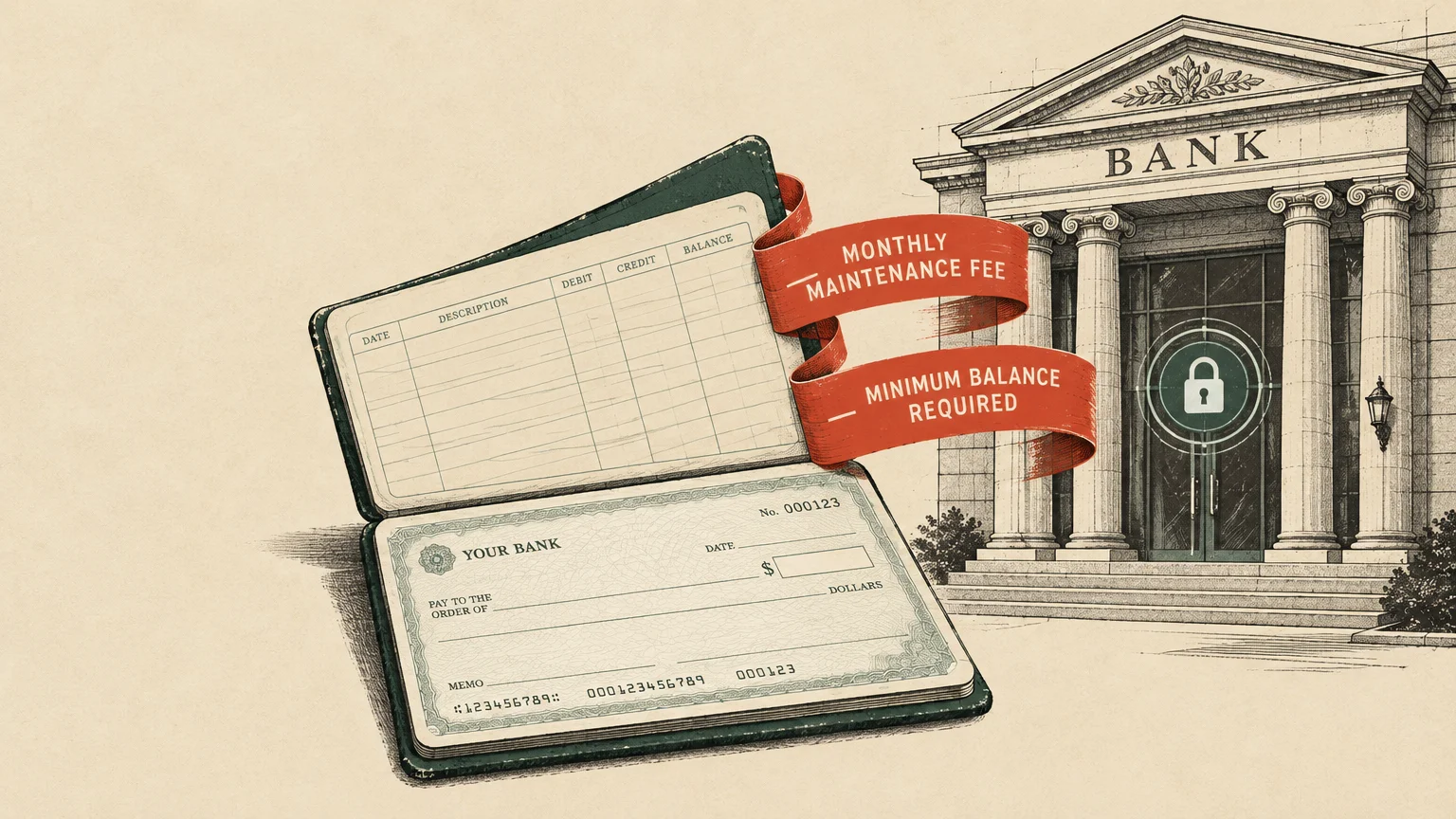
Free checking accounts tailored for older adults used to be a staple at neighborhood bank branches. These accounts offered zero monthly maintenance fees and free paper checks without requiring huge minimum deposits.
Major financial institutions have steadily phased out standalone senior tiers. In 2024, Citibank overhauled its retail structure with “Simplified Banking,” eliminating legacy tiers and requiring qualifying direct deposits or large balances to dodge fees.
The Consumer Financial Protection Bureau (CFPB) advises consumers to review monthly account statements closely. Consider moving your retirement funds to community banks or credit unions, which still frequently offer fee-free checking accounts.
“A habit of saving is a lifestyle choice. Never hesitate to ask for a better price, because nobody cares more about your money than you do.” — Suze Orman, Personal Finance Author
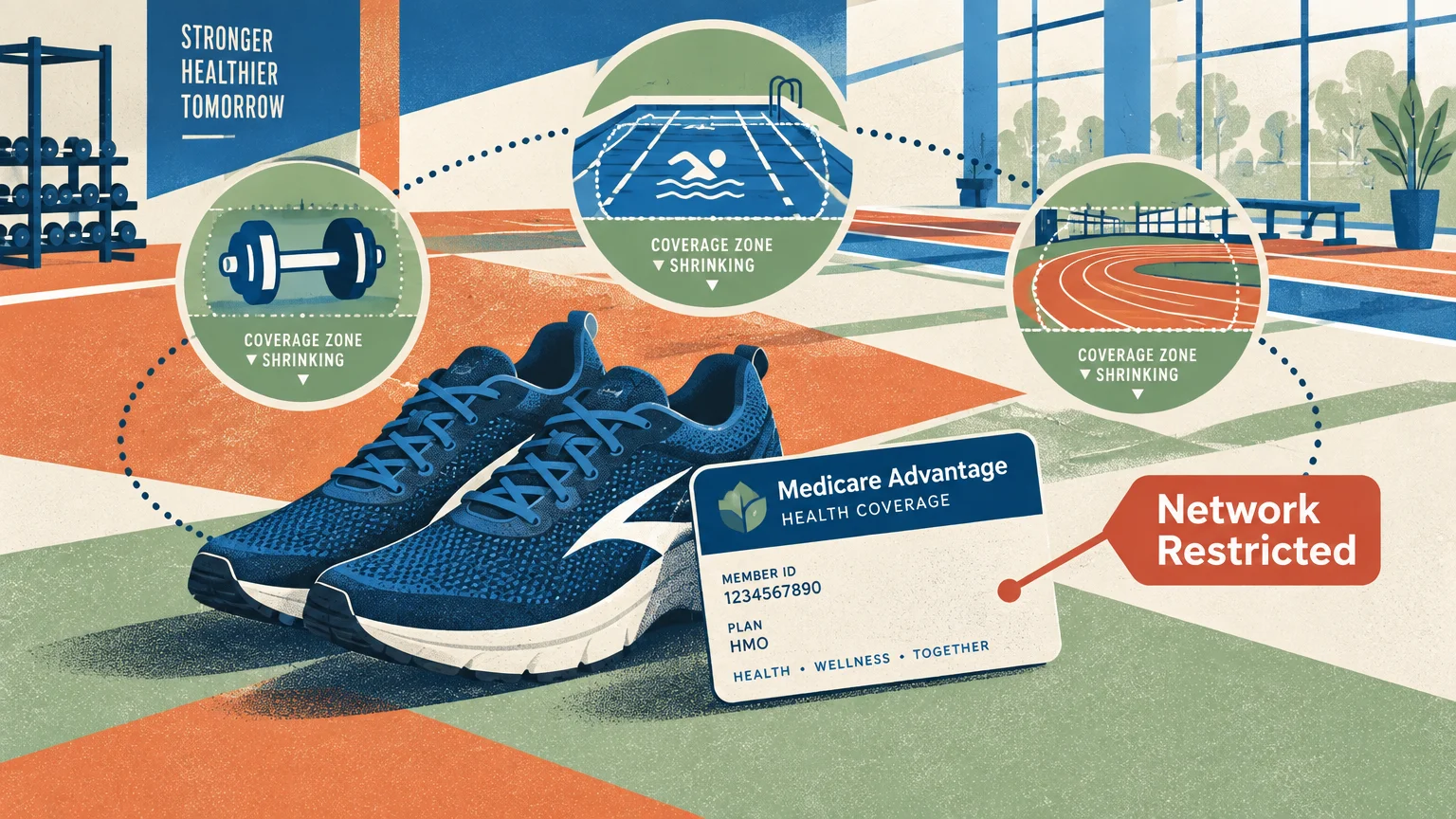
5. Nationwide SilverSneakers Coverage on Medicare Advantage
Free fitness center access has long been a top-selling perk for Medicare Advantage plans. For years, the SilverSneakers network served as the gold standard, offering access to thousands of commercial fitness centers.
In recent years, several large insurers dropped or trimmed third-party gym networks to curb overhead costs. UnitedHealthcare transitioned members away from SilverSneakers into its proprietary Renew Active network.
Other regional Blue Cross Blue Shield plans adjusted their coverage, dropping access to premium health clubs and select regional YMCAs. Review your annual Evidence of Coverage via Medicare.gov during open enrollment to confirm which local gyms remain in your network.

6. Dedicated Early-Morning Senior Shopping Hours
During 2020, major retailers nationwide rolled out dedicated morning shopping hours for high-risk customers and seniors. Chains like Walmart, Target, and Kroger opened their doors exclusively to older adults from 6:00 a.m. to 8:00 a.m.
These reserved windows allowed seniors to shop calmly without battling crowds or long checkout lines. As stores returned to normal schedules between 2021 and 2022, retailers quietly phased out the perk entirely.
If you prefer a quieter shopping environment, visit stores on Tuesday or Wednesday mornings around 9:00 a.m. Most retail foot traffic remains light during mid-morning hours on weekdays.

7. Fast-Food Counter Discounts and Automatic Freebies
Fast-food chains were once famous for informal senior discounts. Grabbing a 50-cent coffee or a 10% discount on lunch was as simple as mentioning your age at the register.
Corporate partnerships have pulled back as well. Dunkin’ officially retired its nationwide partnership with AARP, which previously gave members a free donut with the purchase of a large beverage.
Meanwhile, chains like McDonald’s leave senior beverage discounts entirely to individual franchise owners. Most quick-service chains now direct all discounts through their proprietary mobile apps, locking out counter-only requests.

8. Amtrak’s Generous 15% Travel Markdown
Train travel has historically provided a comfortable, scenic alternative to highway driving for retirees. For years, Amtrak awarded a 15% discount across most routes to passengers starting at age 62.
Amtrak reduced the discount to 10% and raised the qualification age to 65. The markdown also excludes weekday travel on premium Acela trains and non-coach sleeping accommodations.
You can offset this reduction by booking your train tickets well ahead of time. Amtrak releases Saver Fares for regular coach seats that often provide deeper discounts than the standard senior rate.

9. The $10 Lifetime National Park Senior Pass
One of the most beloved bargains in government history was the America the Beautiful Senior Pass. From 1994 until mid-2017, any U.S. citizen aged 62 or older could buy a lifetime pass for a one-time fee of $10.
Congress passed the National Park Service Centennial Act, which increased the lifetime pass price by 700% to $80. The change aimed to fund vital park maintenance and infrastructure projects across the country.
Even at $80, the lifetime pass pays for itself after visiting two or three premier national parks. If you travel less frequently, the National Park Service also offers an annual Senior Pass for $20.
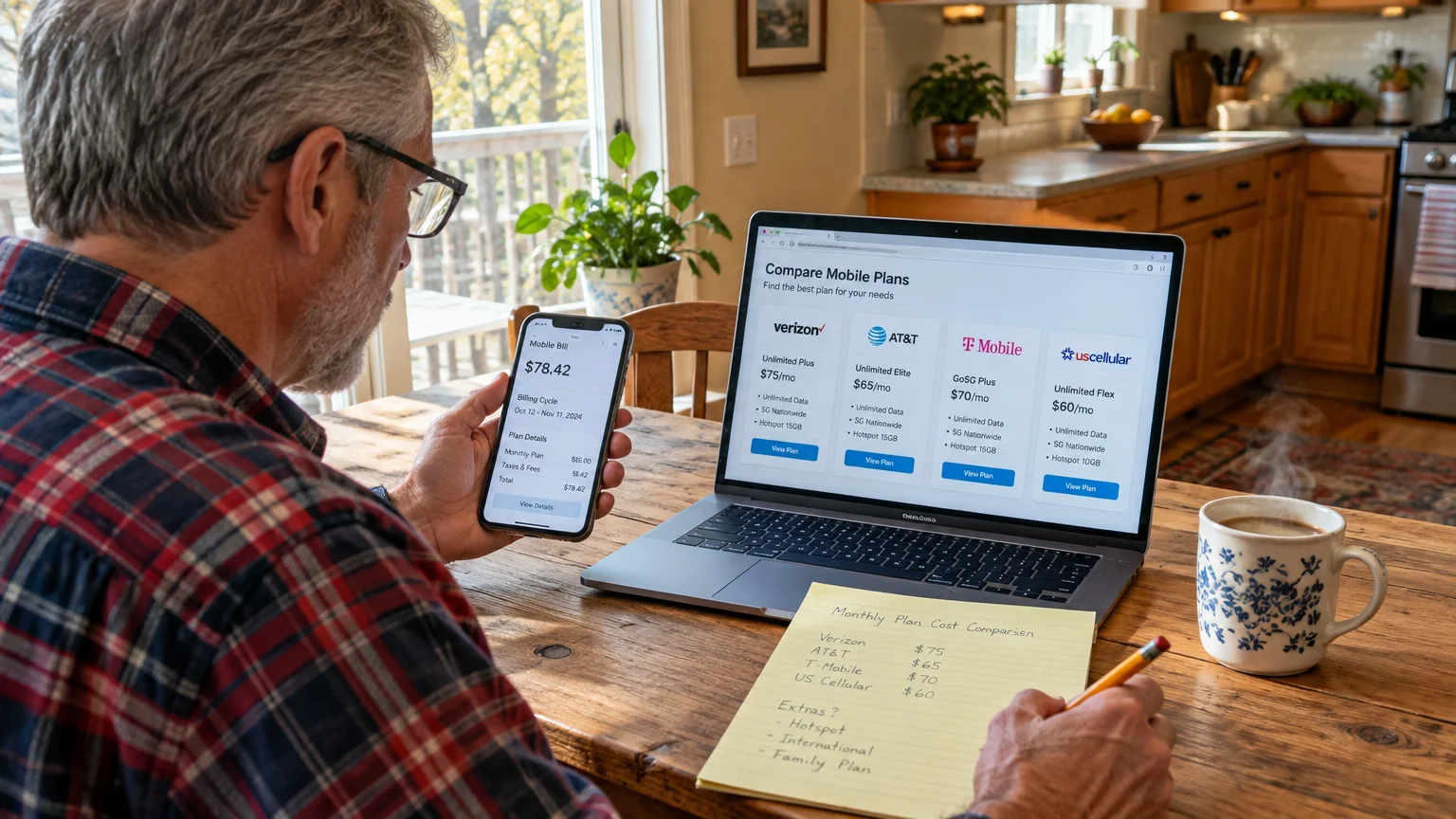
10. Wide-Open 55+ Wireless Phone Discounts
Wireless carriers frequently advertise discounted unlimited plans aimed directly at adults 55 and older. While those promotions sound appealing, carriers have placed significant geographic and pricing limitations on them.
AT&T introduced an Unlimited 55+ rate, but restricted the plan solely to customers with a Florida billing address. Meanwhile, T-Mobile rolled out rate increases on select legacy 55+ plans during 2024.
If major carrier senior plans let you down, consider mobile virtual network operators (MVNOs). Companies operating on major networks offer low-data plans starting at $15 to $20 per line each month.
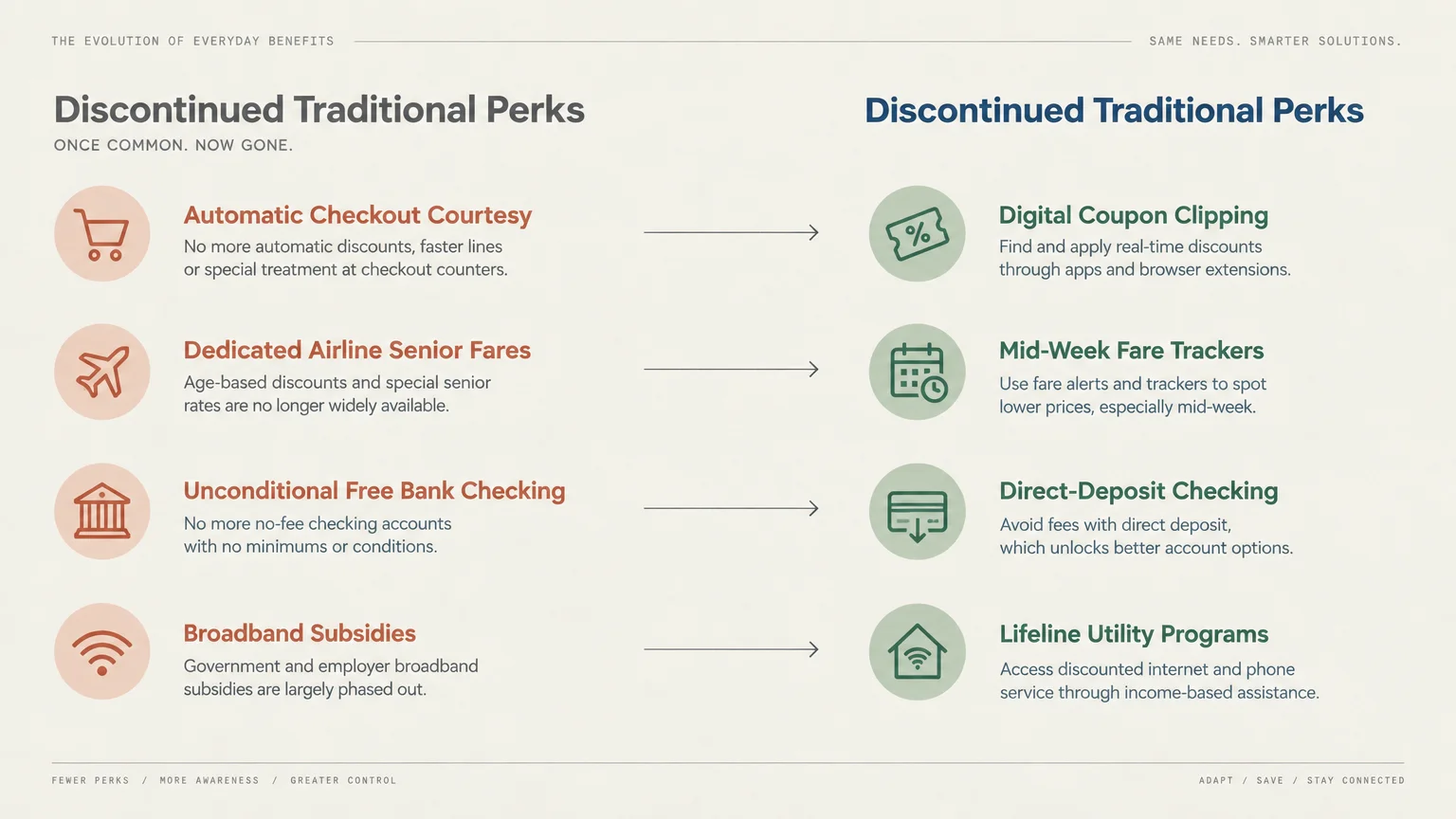
Comparing Lost Perks to Modern Alternatives
Understanding what replaced these discontinued benefits helps you avoid paying full retail price. Here is how former perks compare to the modern options available today.
| Discontinued Perk | Previous Benefit | Modern Alternative |
|---|---|---|
| Southwest Senior Fares | Published 10% discounts for 65+ | Mid-week bookings and price tracking tools |
| Federal ACP Benefit | $30 to $75/month internet subsidy | Lifeline program and carrier basic plans |
| Weekly Grocery Discount Days | Automatic 5%–10% off at register | Store digital coupons and weekly circulars |
| No-Fee Senior Checking | Zero balance rules and free checks | Credit unions and community bank accounts |
| SilverSneakers on All MA Plans | Universal access to gym chains | Renew Active or carrier fitness networks |
| National Park $10 Pass | $10 lifetime federal park entry | $20 annual senior pass or $80 lifetime pass |
| Amtrak 15% Fare Discount | 15% off at age 62 across routes | 10% off at age 65 or advance Saver Fares |
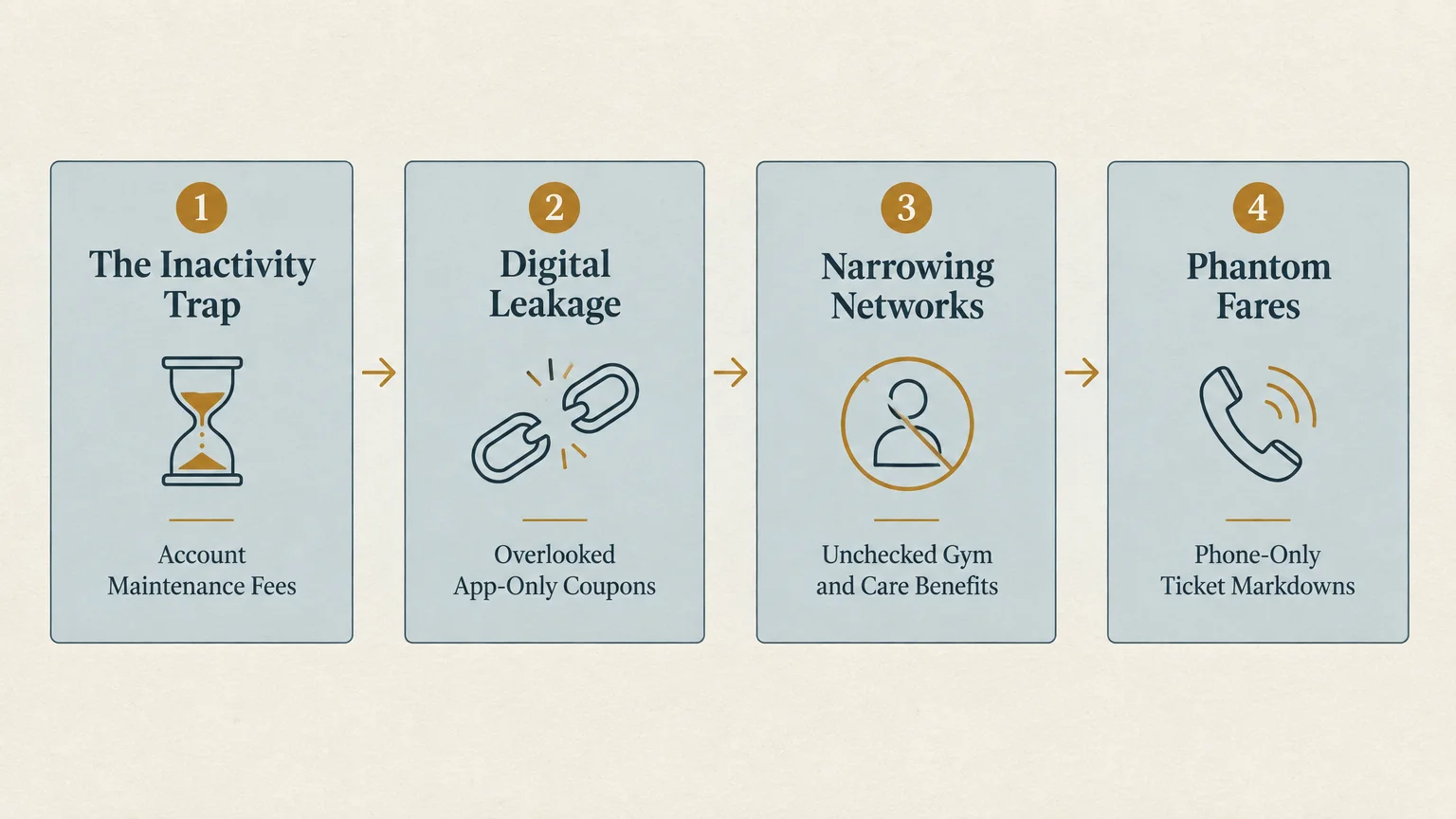
What Can Go Wrong: 4 Common Pitfalls
Navigating the changing world of senior discounts requires caution. Avoid these frequent missteps to keep your personal finances safe.
- Assuming discounts apply automatically: Always ask a manager about discounts before paying. Cashiers rarely offer unadvertised price cuts unless you explicitly request them.
- Falling for predatory utility scams: Scammers frequently target seniors using fake ACP replacement promises. Never share your Social Security number with unsolicited callers claiming to offer free government tablets or Wi-Fi.
- Ignoring hidden banking fees: Banks routinely update their account terms without fanfare. Monitor your statements monthly to catch recurring maintenance fees before they accumulate.
- Overpaying for carrier plans you do not need: Many 55+ mobile plans bundle unlimited data you might never use. Review your actual monthly data usage before signing an expensive contract.
Frequently Asked Questions
Why are businesses getting rid of traditional senior discounts?
Businesses are cutting overhead and steering shoppers into digital apps. Digital rewards programs allow retailers to track shopping behavior while lowering manual cashier discounts.
At what age do senior discounts usually begin now?
Discount thresholds vary widely across companies. Organizations like AARP begin benefits at age 50, while retail and travel perks typically require you to be 60, 62, or 65.
Can I still get unadvertised senior discounts by asking?
Yes, many locally owned diners, hardware stores, and independent shops still provide courtesy discounts. It never hurts to ask the cashier politely before your transaction is completed.
Protecting your retirement budget takes consistent effort as legacy perks quietly fade away. By replacing outdated discounts with digital coupons, credit union perks, and alternative assistance programs, you keep control over your household expenses.
This is educational content based on general financial principles for seniors. Individual results vary based on your situation. Always verify current benefit amounts, tax rules, and program eligibility with official government sources.
Last updated: February 2026. Benefit amounts, tax rules, and program details change annually—verify current figures with official government sources.







Leave a Reply