
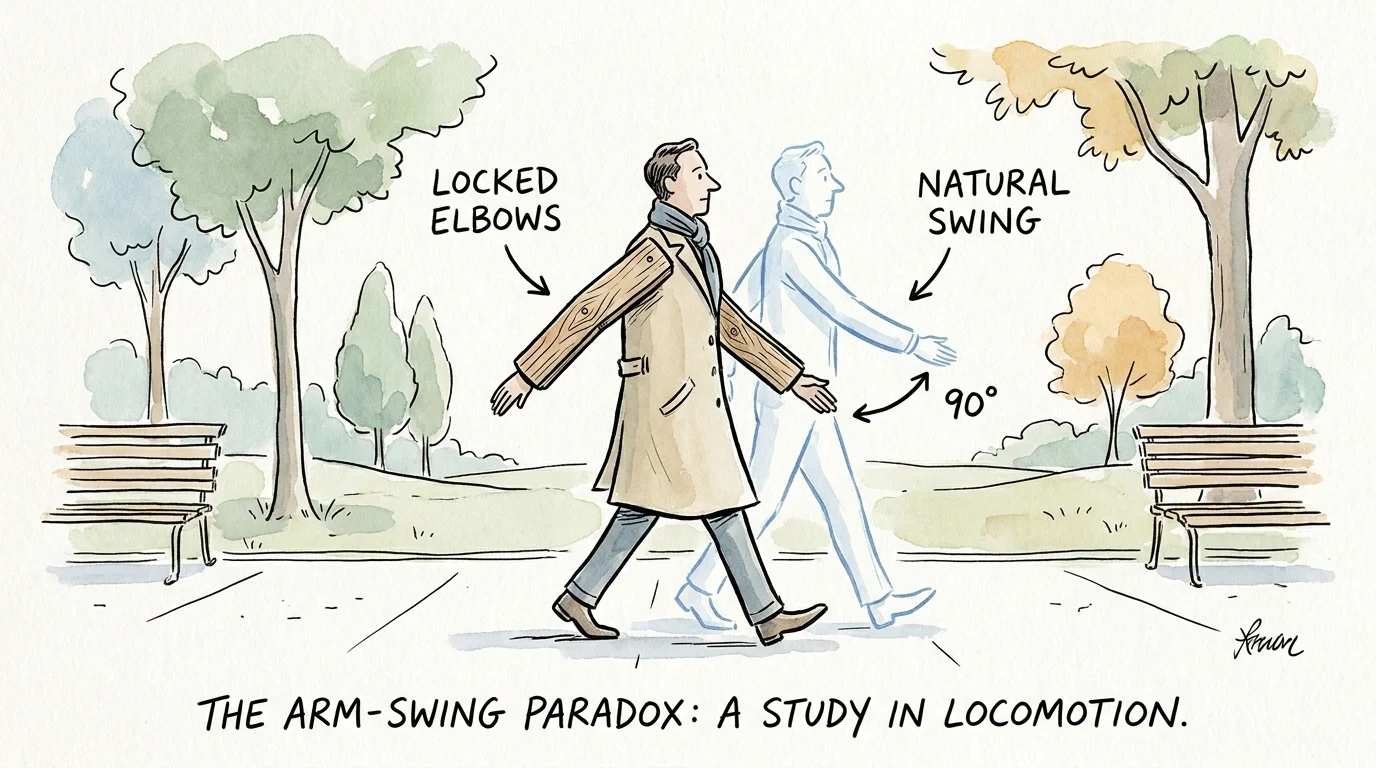
Mistake 5: Keeping Your Arms Stiff and Locked
Walking is not just a lower-body exercise; it requires fluid coordination across your entire body. Many walkers instinctively jam their hands into their pockets, cross their arms, or let them hang stiffly by their sides. Immobilizing your upper body in this way disrupts your natural biomechanics.
The human body moves efficiently through a contralateral pattern, meaning that as your left leg steps forward, your right arm should naturally swing forward to counterbalance it. This arm swing acts as a pendulum that drives the subtle, healthy rotation of your spine. When you lock your arms, you force your hips and lower back to work overtime to generate momentum and maintain stability.
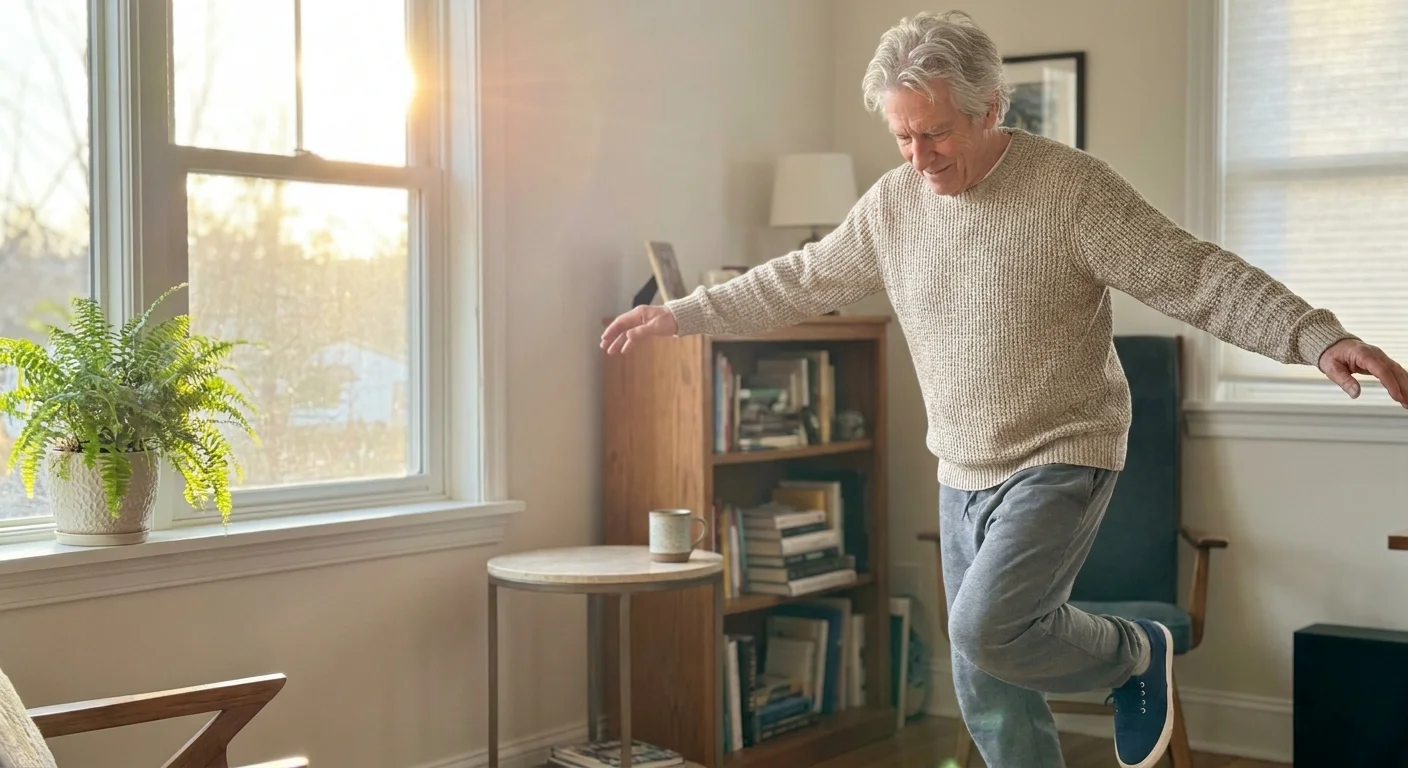
Take your hands out of your pockets, bend your elbows slightly, and allow your arms to swing naturally from your shoulders. You do not need to march rigidly; simply let your upper body move in a relaxed rhythm that matches your footsteps. This takes significant tension off your lower back and hip flexors.




This article about effective walking was the best I have ever read on the topic.
I walk 4 to 6 (15 minute walks) a day in all kinds of weather here in Ohio. I started doing this when I turned 60, I start my 83rd year this summer, never had any problems. Bad weather I walk at the mall. What should I prepare for at this age? Plus I take care of my wife 24/7, she’s unable to walk, fallen several times she’s a young 80, we’ve been married 60 years, she started falling 2 years ago and has never been able to walk since.
Neither of us use alcohol or tobacco and eat two meals each day coffee cake & cofee for bfast and a big lunch/dinner at 4:00 and maybe a desert at 7.
Should we add or subtract anything to keep us going into our 90’s.
This is wonderful that you have been consistently walking in short timeframes for many years. This is good in so many ways: moving body, increased heart rate several times a day, exposure to nature, social contacts with others, and change of scenery. Regarding your meals, several factors come into play: current heart health, current weight, bed time after last meal and snack and time of morning meal. Move your body after last meal or snack even in the house for blood sugar control. Can your wife do water exercises? Physical therapy at home to move legs and arms? Otherwise, why change if your current lifestyle is working for you. Seems like healthy choices. Stay social and keep moving your body.
walking is important, also do earthing which is go on the grass bare feet and lay on the grass and it helps your body get certain frequencies. also get a trampoline which helps your system. I also take a product called more mito which gives energy to your cells.
I am 94 years old, and love to share how important is to realize your body is like a car, give it the right fuel and environment it can regenerate every cell, organ, and tissue to be like a 40 year old. It also needs lots of love and be good to yourself every day and thank your body for all the hard work it does and listen to music like enjoy yourself by doris day its later than you think the years go by as quickly as a wink, enjoy yourself, its later than you think, you work and work and are on the go, you never take a minute since your so busy making dough, you say you take that ocean trip, you have the reservations, but you can’t get away, you’ll do it next time around, what good is it if you can’t travel and your in your rocking chair or 6 ft under ground, something like this, I just want everyone to enjoy every day, of every minute, and count your blessings for those that can see, walk, eat, sleep and love. Never give up no matter how old you are, God gave us a body, and the only reason we have problems is because we take it for granted, and everyone needs to be educated, not medicated, eat real food no preservatives, think your already healed rather than to pray for a healing, see yourself happy visualize and if you need any help call me i do not charge 814 769 3024 or 201 294 5136
I Like what you have to say. I AM 76 YEARS OLD WOMAN. My husband Passed away 5 years ago from Cancer. He was 72 years old. I used to be a Runner for many years, than I felt it was time to Just do walking and Weight-Training. When My husband Passed I stop doing alot. My STRESS was up and I was NOT the same. I need to start walking again I gave my Husband My word I feel I broke me promise. A lot been going on in my LIFE that prople was using me since my husband passed.
Joanne, find a good Church and get involved. Meet some people and study and fellowship, and worship. You will stop feeling like you broke your promise.
Amen!
Hi Jeanne,thank you so much for your info on walking.I will be in touch soon&again,thank you have a wonderful weekend
Looks interesting
That was very important information on walking. Thank you.
Great information, actually I planned to begin walking this week. I’m 63 years old, I have a total knee replacement on my left leg. I want to protect my right knee, I dont want to go to the process of another knee surgery. Thank you for all this information.
This is such great info. I’m 65 and now am walking 6 days a week for 45 min. Maybe I will break it up into 20/25 mins twice a day.
This is very good information on walking do’s and don’t’s. I have Parkinson’s and have to use a walker with wheels.
Any special walking suggestions for me?
As i turned 83 in August, I have always be physically active, although it was more Weight Training then walking. However my wife passed in April and I began to get more involved in our Church, one way to be a part of the security team and playing cards once a month. I also began to go to lunch at our Senior Center which has various active programs in our area. For example I do Tie Chi Wed and Fridays at the Center., they also offer chair exercises, a walking program and other activities for their Seniors Their lunches are well programed as to diet offering three choices from regular to meat free and are sponsored by donors. The lunch at the Center cost a $2 dollar donation and also offer daily home service at a $4 dollar donation. If the person cannot afford the Donation it is offered free. I have pushed this info to various Seniors and some have began to participate. I have found, the hardest part of getting older is continuing to be active, your body will respond but you have to have a regular routine for it to do so.