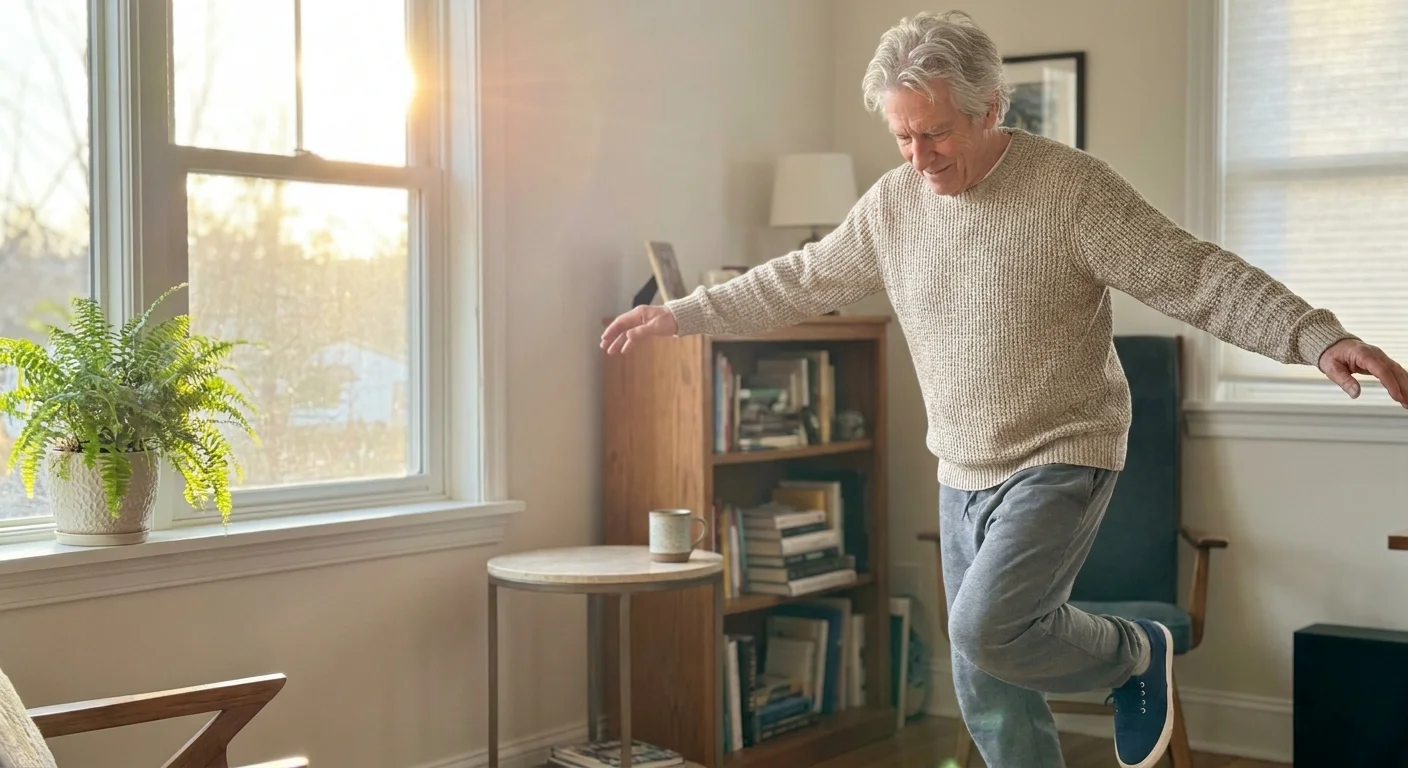
Protecting your mobility is the single best way to secure your retirement savings. While older adults spend hours obsessing over market fluctuations, many overlook the financial threat of physical decline. The CDC reports that nonfatal falls among seniors cost the U.S. healthcare system $80 billion annually, with Medicare covering the vast majority. You do not need an expensive gym membership to avoid becoming part of that statistic. Building a consistent, intentional walking routine preserves your joint health, improves your balance, and helps you remain fiercely independent. Adopting the right daily movement strategies lowers your medical expenses and actively enhances your quality of life. Here are seven practical walking habits designed to keep you moving comfortably for years to come.

The Hidden Financial Threat of Physical Decline
We rarely link our physical stamina to our financial security, but the two are permanently intertwined. As you age, your body requires regular maintenance to function efficiently—much like a vehicle or a home. When you neglect your mobility, the resulting decline triggers a cascade of out-of-pocket healthcare expenses. Joint deterioration leads to expensive surgeries; loss of balance results in traumatic falls; and generalized weakness often forces seniors into assisted living facilities long before they planned.
According to the Centers for Disease Control and Prevention (CDC) (2026), approximately one in four Americans aged 65 and older falls each year. These incidents are not just physically devastating; they drain retirement accounts. Copays, rehabilitation facility stays, and necessary home modifications—like installing ramps or stairlifts—can quickly dismantle decades of careful financial planning.
“You can have all the money in the world. You can be a multi-billionaire, but if you do not have your health it means nothing. Your health is the No. 1 important thing in your life.” — Suze Orman, Personal Finance Expert
Staying mobile is your first line of defense against these costs. The human body operates on a “use it or lose it” principle. By cultivating daily walking habits, you lubricate your joints, maintain your muscle mass, and protect your cardiovascular health. Walking requires no heavy equipment and carries a very low risk of injury, making it the perfect foundational exercise for healthy aging.
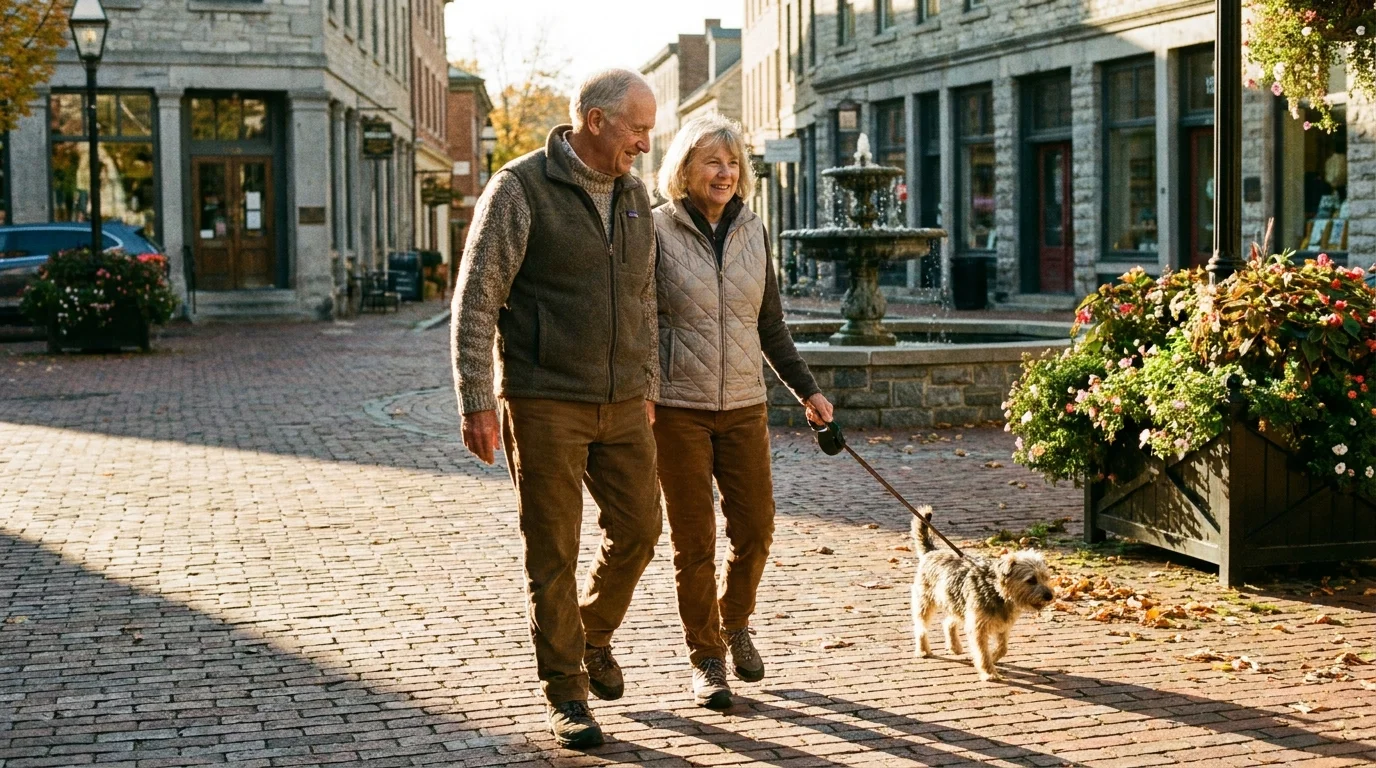
Habit 1: Anchor Your Walk to an Existing Daily Routine
Relying on motivation to start your daily walk is a recipe for failure. Motivation fluctuates based on your mood, the weather, and how well you slept the night before. Instead, tie your walking habit to an action you already perform every single day without fail. This psychological technique is known as “habit stacking.”
If you drink a cup of coffee every morning at 7:30 AM, make it a rule that you put your walking shoes on immediately after taking your last sip. If you check the mail at 2:00 PM, use that trip down the driveway as the starting point for a 15-minute stroll around the block. By anchoring the new behavior (walking) to an established routine (drinking coffee or getting the mail), you remove the burden of decision-making. Over time, your brain will automatically associate the trigger with the walk, turning exercise into an effortless daily reflex.

Habit 2: Prioritize “Posture Walking” Over Speed
Many seniors mistakenly believe that walking only “counts” as exercise if they are moving at a blistering pace. In reality, how you walk is far more important than how fast you walk. Poor posture places unnatural stress on your lower back, knees, and hips, which can cause painful inflammation and discourage you from walking altogether.
Make a conscious effort to practice “posture walking” every time you step out the door. Follow these biomechanical guidelines:
- Keep your gaze forward: Look 15 to 20 feet ahead of you rather than staring straight down at your toes. This naturally aligns your neck and spine.
- Hinge at the hips: Avoid slouching forward from your shoulders. If you need to lean into a hill, lean from your ankles and hips.
- Roll your feet: Strike the ground gently with your heel, roll through the arch, and push off cleanly with your toes. This absorbs the impact of the pavement.
- Swing your arms: Let your arms swing naturally from your shoulders, not your elbows. This counter-rotation helps propel you forward and maintains your balance.
By prioritizing your skeletal alignment, you distribute your body weight evenly across your joints, allowing you to walk longer distances without unnecessary pain.

Habit 3: Invest in High-Quality Footwear (and Replace It Often)
Walking in worn-out shoes is one of the fastest ways to develop plantar fasciitis, shin splints, and knee pain. The EVA foam used in the midsoles of most athletic shoes degrades over time, losing its shock-absorbing capabilities. Even if the outer rubber tread looks completely fine, the structural integrity of the shoe may be compromised.
As a general rule, replace your walking shoes every 300 to 500 miles. If you walk two miles a day, five days a week, you will need a new pair every six to eight months. To keep track, use a permanent marker to write the purchase date on the inside tongue of the shoe.
When shopping for walking footwear, visit a specialty running or walking store where a professional can analyze your gait. You may discover you overpronate (your feet roll inward) or supinate (your feet roll outward), requiring specific arch support. Because our feet naturally widen and flatten as we age, do not assume you wear the same size you wore a decade ago.

Habit 4: Incorporate Mild Interval Pacing
Once you establish a consistent walking routine, you can maximize your cardiovascular benefits by introducing mild interval pacing. Also known as “Fartlek” training (a Swedish term for speed play), this habit involves alternating between your normal walking pace and a slightly faster pace.
You do not need a stopwatch or a heart rate monitor to do this. Simply use environmental landmarks. Walk at your standard, comfortable pace for three blocks. When you reach the fourth block, walk briskly to the next intersection. Once you cross the street, return to your normal pace to recover. Repeat this cycle three or four times during your outing.
Interval pacing trains your heart to recover efficiently from sudden exertion. This cardiovascular flexibility is crucial for seniors; it ensures that your heart can handle unexpected physical demands, such as climbing a steep flight of stairs or hurrying to catch a bus, without dangerous spikes in blood pressure.

Habit 5: Walk on Varied Terrains to Build Balance
Paved sidewalks and indoor mall concourses provide a safe, flat surface for walking, but they do very little to challenge your balance. To stay mobile longer, your body needs to practice stabilizing itself on unpredictable surfaces.
Incorporate varied terrains into your weekly routine. Walk on packed dirt trails, manicured grass in a local park, or a sandy beach if you live near the coast. These softer, uneven surfaces force the micro-muscles in your feet, ankles, and calves to constantly fire and adjust to keep you upright. This neuromuscular training strengthens your lower-body stabilizers, dramatically reducing your risk of suffering a catastrophic fall in your home or yard.
Note: If you have a history of severe balance issues or vertigo, consult your doctor before transitioning to uneven terrains, and consider using walking poles for added stability.

Habit 6: Utilize the “Talk Test” to Gauge Exertion
Overexertion is a common mistake that leads to burnout and injury. You want to elevate your heart rate, but you do not want to push your body into an anaerobic state where you are gasping for air. The simplest way to monitor your intensity without expensive fitness trackers is the “Talk Test.”
While walking, you should be able to speak a full sentence aloud without needing to pause for a breath. If you are walking with a friend, you should be able to hold a comfortable conversation. If you can sing a song easily, you are likely walking too slowly and should pick up the pace. If you can only get out two or three words before gasping, you are pushing too hard and need to slow down immediately.
This simple metric ensures you remain in the aerobic exercise zone, which burns fat, improves lung capacity, and strengthens your heart without overtaxing your system.

Habit 7: Stretch Your Calves and Hip Flexors Post-Walk
Many seniors skip stretching because they find it tedious, but failing to stretch tight muscles accelerates mobility loss. When you walk, your muscles repeatedly contract. If you sit down in a recliner immediately after a walk, those muscles cool down in a shortened, contracted state. Over time, this leads to a shortened stride and a shuffling gait, which is a major precursor to falling.
Your muscles are warmest and most pliable right after your walk. Spend just three minutes stretching your two most vulnerable areas: your calves and your hip flexors.
- The Wall Calf Stretch: Stand facing a wall. Place your hands on the wall for support. Step one foot back, keeping the heel flat on the floor and the leg straight. Bend your front knee until you feel a gentle stretch in the back of your lower leg. Hold for 30 seconds per side.
- The Standing Hip Flexor Stretch: Hold onto a sturdy chair. Step one foot back slightly, tuck your pelvis under (as if pulling your tailbone toward the floor), and gently squeeze your glutes. You should feel a stretch in the front of your hip. Hold for 30 seconds per side.

Getting Expert Help: Maximizing Your Medicare Benefits
If you are experiencing pain that prevents you from walking, you should not try to self-diagnose. Lean on the healthcare benefits you have earned to get professional guidance.
For 2026, the standard Medicare Part B premium sits at $202.90 per month, according to the Centers for Medicare & Medicaid Services (CMS) (2026). If you are paying this premium, take full advantage of the services it provides to keep your body moving.
Medicare Part B covers a comprehensive Annual Wellness Visit at no out-of-pocket cost to you. This is the perfect time to ask your physician for a fall risk assessment and to discuss a personalized walking plan. If your doctor determines that you need physical therapy to address a gait issue or joint pain, Medicare Part B covers outpatient physical therapy. According to CMS (2026), the KX modifier threshold for physical and speech therapy combined is $2,480. This is not a hard cap; it simply means your provider must confirm the medical necessity of your care if your treatment costs exceed that amount.
| Mobility & Fitness Service | Medicare Part B (Original Medicare) Coverage | Medicare Advantage (Part C) Coverage |
|---|---|---|
| Outpatient Physical Therapy | Covered. You pay a 20% coinsurance after meeting your Part B deductible. | Covered. You typically pay a fixed copay per visit; check your specific plan summary. |
| Fitness Programs (e.g., SilverSneakers) | Not covered. You pay 100% out of pocket for gym memberships. | Frequently covered at no extra premium cost, offering access to walking tracks and pools. |
| Annual Wellness Visit | 100% covered once every 12 months. | 100% covered once every 12 months. |
| Orthopedic Walking Shoes | Covered only if you have severe diabetic foot disease. Not covered for general fitness. | Typically not covered, though some plans offer an over-the-counter (OTC) allowance for orthotic inserts. |

Pitfalls to Watch For
Even with the best intentions, certain walking mistakes can set your mobility back. Avoid these three common pitfalls to ensure your walking routine remains a healthy habit:
- Pushing Through Sharp Joint Pain: There is a distinct difference between muscle fatigue and joint damage. Muscle soreness usually presents as a dull, widespread ache that improves as you warm up. Sharp, localized pain in a knee, hip, or ankle is a warning sign. Never push through sharp pain; rest the joint and consult a physical therapist.
- Walking Without Hydration: As you age, your body’s natural thirst response diminishes, and the overall water content in your body decreases. You can easily become dehydrated during a 30-minute walk without ever feeling thirsty. Drink a glass of water before you head out, and carry a small bottle with you if you walk in warm weather.
- Relying Solely on Walking for Exercise: Walking is phenomenal for cardiovascular health and lower-body endurance, but it is not a complete fitness program. It does not build upper body strength or significantly challenge your core. To stay fully mobile, supplement your walking habit with two days of light resistance training or yoga each week.
Frequently Asked Questions
How many minutes a day should seniors walk?
The National Council on Aging (NCOA) and the CDC recommend that older adults aim for at least 150 minutes of moderate-intensity aerobic activity per week. This breaks down to about 30 minutes a day, five days a week. You can also break this into smaller chunks, such as two 15-minute walks per day.
Does Medicare pay for walking shoes?
Original Medicare (Part B) does not cover standard walking or running shoes for general fitness. Medicare only covers therapeutic shoes and inserts if you have diabetes and suffer from severe diabetic foot disease. You will need to budget for your own fitness footwear.
Can walking help reverse mobility loss?
Yes. According to MedlinePlus, physical activity like walking helps lubricate joints, strengthens the muscles supporting your skeleton, and improves balance. While it cannot cure structural joint damage, regular movement often prevents further decline and can significantly reduce stiffness associated with osteoarthritis.
Is it better to walk in the morning or evening?
The best time to walk is whenever you can do it consistently. However, walking in the morning exposes your eyes to natural sunlight early in the day, which helps regulate your circadian rhythm and can vastly improve your nighttime sleep quality.
Take the Next Step Today
You do not need to walk three miles tomorrow to start reaping the benefits of movement. Begin simply. Set your shoes by the door tonight, commit to a 10-minute stroll after breakfast, and focus on keeping your posture tall. By treating your daily walk as a non-negotiable appointment with your health, you actively defend your independence and protect the retirement savings you worked so hard to build.
This article provides general financial education and information only. Everyone’s financial situation is unique—what works for others may not work for you. For personalized advice tailored to your retirement needs, consider consulting a qualified financial professional such as a CFP or CPA.
Last updated: May 2026. Benefit amounts, tax rules, and program details change annually—verify current figures with official government sources.