
Finding the right work-from-home job can transform your retirement by adding reliable extra income without sacrificing your freedom. If you want to boost your savings, delay claiming Social Security, or simply stay mentally engaged, remote work offers incredible flexibility. You no longer need to commute or commit to rigid schedules. Instead, you can leverage a lifetime of professional experience from your living room, working only the hours you choose. Employers increasingly value the reliability and expertise that older adults naturally possess. Whether you need a few extra hundred dollars for travel or steady part-time income to cover rising costs, these nine opportunities provide the perfect balance of competitive pay and total convenience.
How Working Affects Your Social Security Benefits
Before jumping into a new remote job, you need to understand how earning an income impacts your Social Security benefits. A common misconception is that you cannot work while collecting Social Security. You absolutely can, but the rules depend heavily on your age.
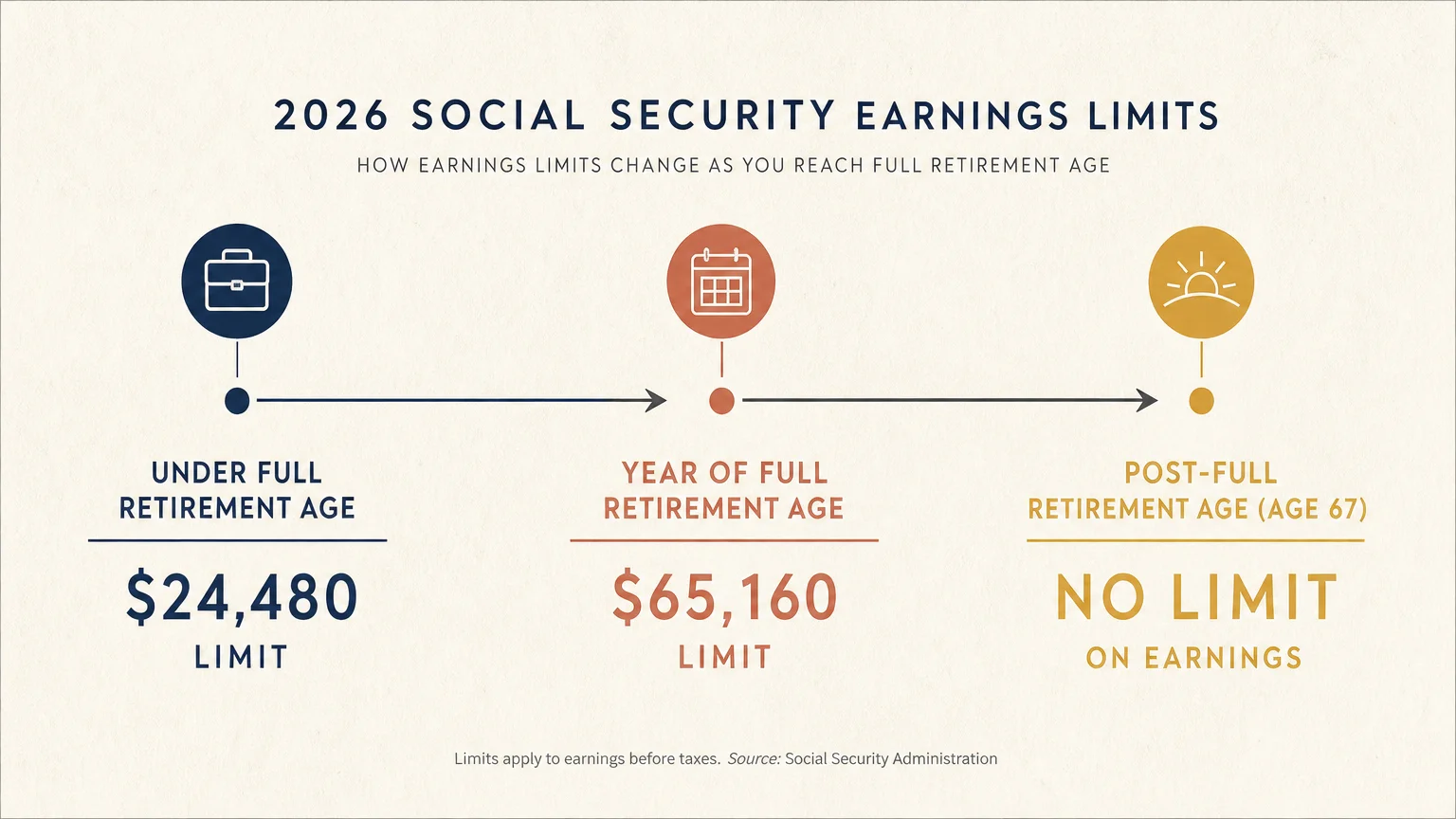
If you have already reached your Full Retirement Age (FRA)—which is 67 for anyone born in 1960 or later—you can earn as much money as you want without any reduction to your Social Security benefits.
However, if you claim Social Security early and decide to work, the Social Security Administration (SSA) applies an earnings limit. For the 2026 calendar year, the earnings limit is $24,480 if you remain under your Full Retirement Age for the entire year. If your income from working exceeds that limit, the SSA deducts $1 from your benefit payments for every $2 you earn above the threshold.
During the specific calendar year you reach your Full Retirement Age, the rules become much more lenient. The earnings limit jumps significantly to $65,160 for 2026. During the months leading up to your birthday, the SSA only deducts $1 for every $3 you earn above that higher limit. Once your birthday month arrives, the earnings test disappears completely.
Keep in mind that the money withheld by the SSA is not lost forever. Once you reach your Full Retirement Age, the SSA recalculates your benefit amount upward to account for the months they withheld payments, resulting in a permanently higher monthly check for the rest of your life. Before starting a new job, always review the current limits directly on the Social Security Administration website to make sure your financial plan is completely up to date.
Comparing the Best Remote Opportunities
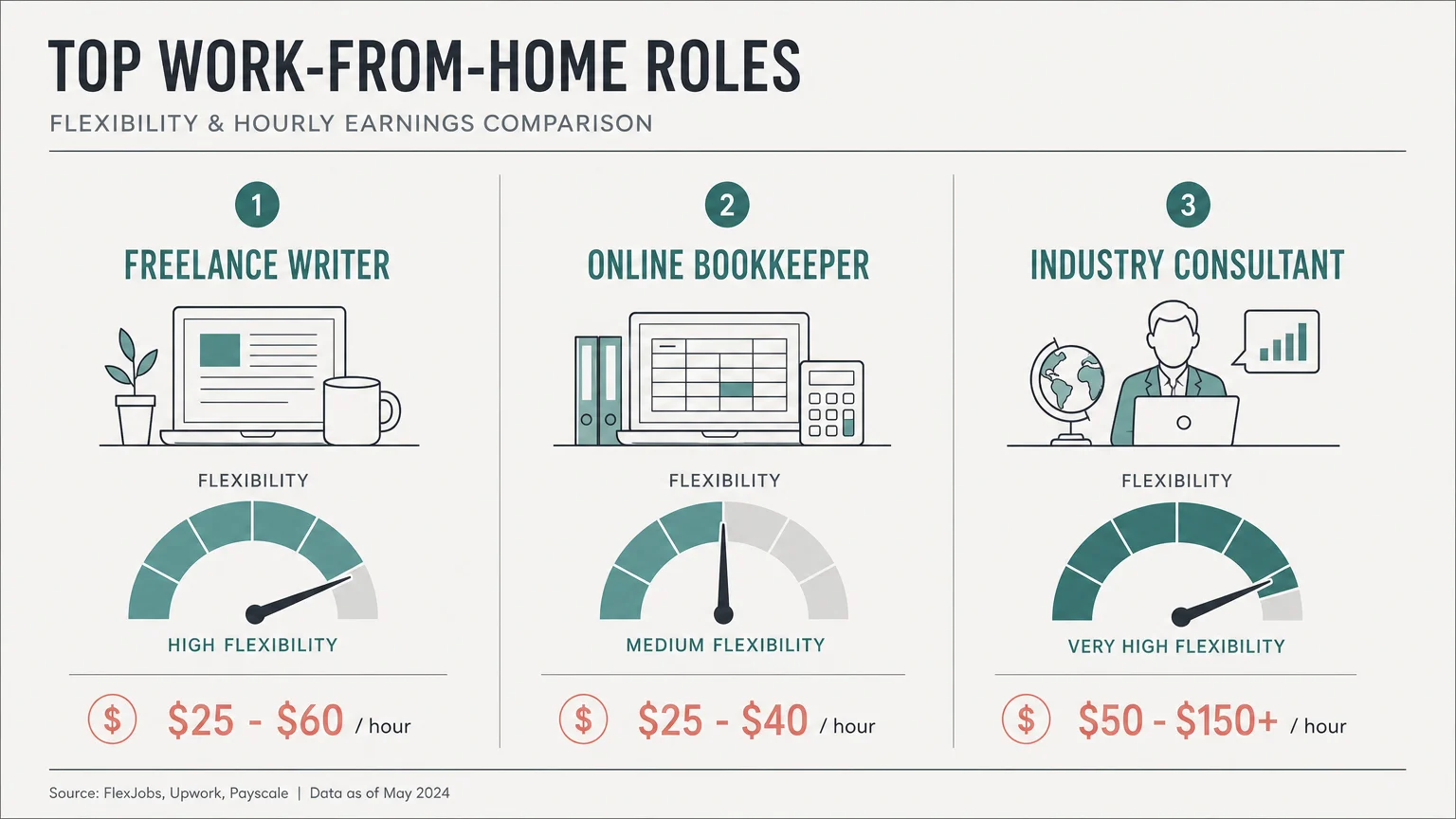
Different work-from-home jobs require different levels of commitment and specialized skills. To help you evaluate your options quickly, use the comparison table below to see how these nine flexible roles stack up regarding pay, required experience, and schedule flexibility.
| Opportunity | Average Pay Rate | Flexibility Level | Experience Needed |
|---|---|---|---|
| 1. Virtual Assistant | $20 – $55 / hour | High | General admin skills |
| 2. Online Bookkeeper | $25 – $40 / hour | Medium | Accounting knowledge |
| 3. Freelance Writer/Editor | $25 – $60 / hour | Very High | Strong writing skills |
| 4. Online Tutor | $15 – $30 / hour | Medium | Subject expertise |
| 5. Industry Consultant | $50 – $150+ / hour | Very High | Deep career expertise |
| 6. Customer Service Rep | $15 – $22 / hour | Low (Set shifts) | Patience, clear voice |
| 7. Transcriptionist | $15 – $25 / hour | Very High | Fast, accurate typing |
| 8. Focus Group Participant | $50 – $150 / session | High (Gig-based) | None |
| 9. Travel Planner | Commission-based | High | Organization, research |

9 Flexible Work-From-Home Jobs for Seniors
1. Virtual Assistant (VA)
If you spent your career managing schedules, organizing files, or responding to emails, becoming a virtual assistant is a natural transition. Small business owners and busy executives constantly seek reliable professionals to handle their day-to-day administrative tasks. Because business owners want trustworthy partners, older adults with decades of real-world office experience are highly desirable candidates.
As a VA, you might manage a client’s email inbox, schedule travel arrangements, process basic data entry, or return phone calls. Recent market data shows that U.S.-based virtual assistants typically charge between $20 and $55 per hour, depending on the complexity of the tasks and their level of expertise. You can find clients through platforms like FlexJobs, Upwork, or specialized VA agencies.
2. Online Bookkeeper
For detail-oriented individuals who enjoy numbers, bookkeeping offers a stable and lucrative remote career. You do not need to be a Certified Public Accountant (CPA) to work as a bookkeeper. Your primary responsibilities will involve categorizing expenses, reconciling bank statements, and preparing basic financial reports for small businesses.
Many bookkeepers operate as independent contractors, allowing them to choose how many clients they take on. Learning a modern software platform like QuickBooks Online or Xero is essential. In fact, you can take free training through QuickBooks to become a certified ProAdvisor, which immediately boosts your credibility and allows you to charge premium rates.
3. Freelance Writer or Editor
Content is the engine that drives the internet, and businesses constantly need capable writers to craft blog posts, newsletters, website copy, and training manuals. If you possess strong grammar skills and a knack for storytelling, freelance writing offers unmatched flexibility. You take on assignments with specific deadlines, but you can complete the actual writing whenever you want—whether that is at 6:00 AM with your morning coffee or late at night.
If writing from scratch feels daunting, consider proofreading or editing. Many companies hire remote editors to polish articles, correct grammatical errors, and ensure their corporate messaging sounds professional. Websites like MediaBistro and ProBlogger feature robust job boards for freelance writers and editors.
4. Online Tutor
Retirees with backgrounds in education, mathematics, science, or languages make excellent online tutors. Even if you were never a formal teacher, a deep understanding of a specific subject can qualify you to help students. Online tutoring connects you with students ranging from elementary age through college via video chat.
You can also teach English as a Second Language (ESL) to students overseas. Several established platforms handle the lesson plans, scheduling, and payment processing, so you only need to show up and teach. Keep in mind that international tutoring may require you to work early mornings or late evenings to accommodate different time zones.
5. Industry Consultant
Do not let the specialized knowledge you accumulated over a 30- or 40-year career go to waste. Many companies cannot afford to hire full-time senior executives, but they eagerly pay for short-term consulting on specific projects. Whether your background is in human resources, engineering, logistics, marketing, or healthcare administration, you can package your expertise into a consulting service.
Consulting offers some of the highest hourly rates among remote jobs. Because you are the expert, you hold the power to dictate your hours, limit your client roster, and set your fees. Leverage your existing LinkedIn network to announce your availability for part-time project work and advisory roles.
6. Customer Service Representative
If you enjoy talking to people and solving problems, virtual customer service is a massive industry. Major retailers, healthcare providers, and insurance companies outsource their customer support to remote workers. Your job will involve answering inbound calls, processing returns, and helping customers navigate their accounts.
Unlike the other jobs on this list, customer service roles often require you to work set shifts rather than choosing your own hours. However, many companies offer part-time shifts (e.g., 15 to 20 hours a week), making it easy to build around your retirement lifestyle. You will need a quiet room, a reliable internet connection, and often a dedicated USB headset.
7. Transcriptionist
Transcription involves listening to audio or video recordings and typing out exactly what is said. This role requires fast and highly accurate typing skills, as well as a sharp ear for detail. Medical and legal transcription require specialized knowledge and pay higher rates, but general transcription (typing up podcasts, interviews, or focus group sessions) is accessible to anyone.
Transcription is highly flexible. Companies like Rev or TranscribeMe allow you to log into their portal, claim an audio file, and transcribe it on your own schedule. You are paid per audio minute, meaning the faster and more accurately you type, the higher your effective hourly wage becomes.
8. Mock Juror or Focus Group Participant
While not a traditional job, participating in focus groups and mock trials provides an entertaining way to earn supplemental income. Market research companies pay everyday consumers to test new websites, review products, or share their opinions on advertising campaigns. Similarly, lawyers frequently use remote “mock juries” to test their arguments before taking a case to an actual trial.
These opportunities are purely gig-based. You might make $100 for a one-hour video interview about your grocery shopping habits, or $150 for reviewing legal case summaries. Platforms like Respondent.io and UserTesting are great places to register and start qualifying for these remote panels.
9. Travel Planner
If you spent your life organizing flawless family vacations and finding the best flight deals, you can turn that passion into a remote career. Modern travel agents operate almost entirely online. They specialize in booking complex itineraries, organizing multi-generational family cruises, or planning specialized European tours.
You can work as an independent contractor under a “host agency,” which provides you with the booking software and industry credentials. You earn a commission from the hotels, cruise lines, and tour operators whenever your clients travel. The hours are entirely up to you, and the job often comes with the added perk of discounted travel rates for yourself.
“The best investment you can make is an investment in yourself. The more you learn, the more you’ll earn.” — Warren Buffett
Important Tax Rules for Independent Contractors
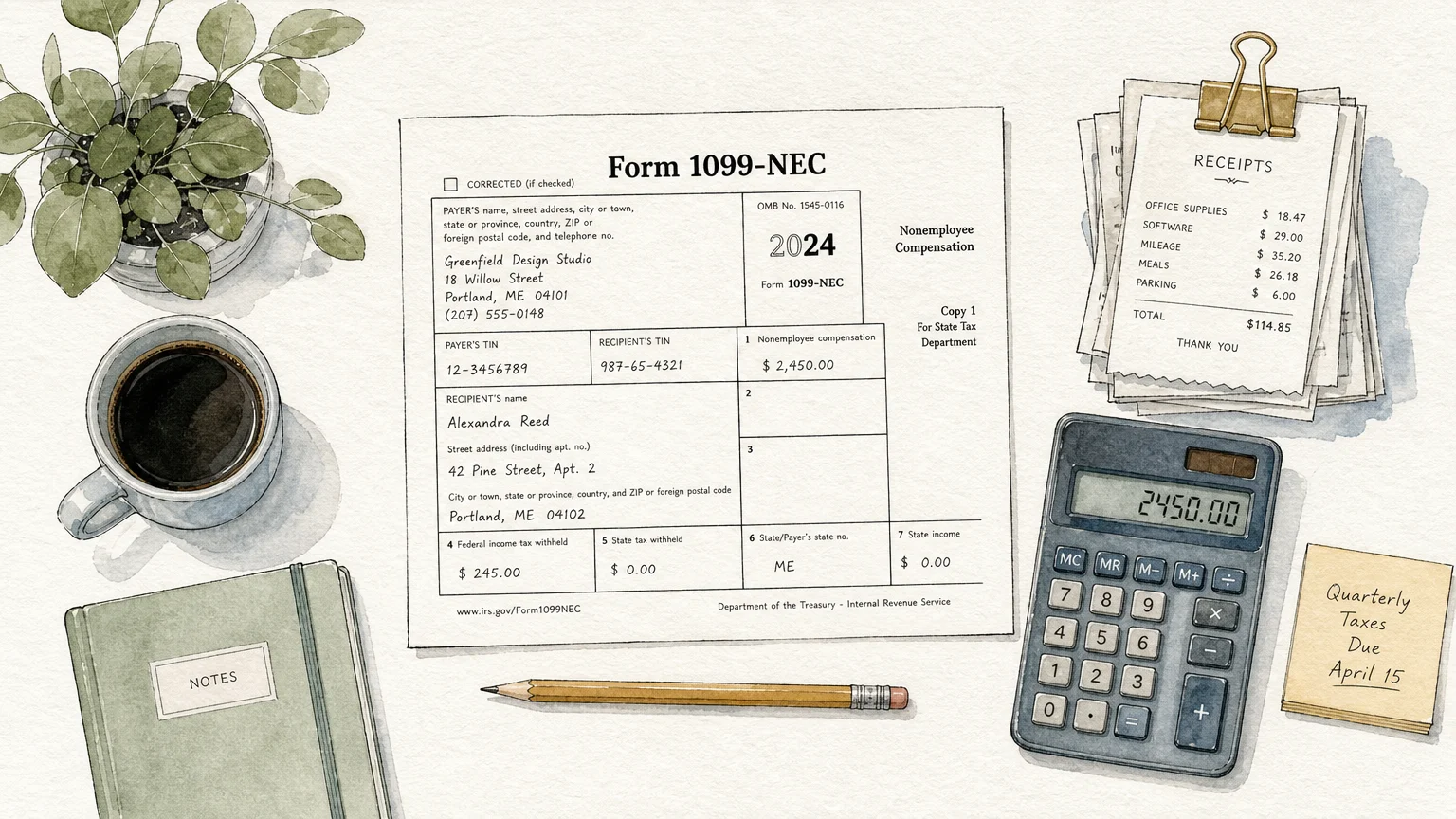
When you work a traditional job, your employer automatically deducts taxes from your paycheck. When you work from home as a freelancer, consultant, or gig worker, you are usually classified as an independent contractor (receiving a 1099 form instead of a W-2). This shift introduces new tax responsibilities.
First, you must pay the self-employment tax. This is a 15.3% tax that covers your Medicare and Social Security contributions. Normally, an employer pays half of this, but as an independent contractor, you are responsible for the entire amount. You must set this money aside from every payment you receive.
Second, you need to understand your deductions. You can deduct legitimate business expenses—like internet service, a new laptop, or a dedicated home office space—from your gross income, lowering your overall tax burden. Make sure you keep meticulous receipts and track your business expenses separately from your personal spending.
Finally, consider how the standard deduction impacts your overall tax picture. For the 2026 tax year, the IRS standard deduction for a single filer is $16,100. However, if you are 65 or older, you receive an additional standard deduction of $2,050, bringing your baseline deduction to $18,150. Married couples filing jointly where both spouses are 65 or older receive a massive total standard deduction of $35,500. Furthermore, temporary tax provisions active from 2025 through 2028 offer an additional enhanced deduction of up to $6,000 for qualifying seniors, depending on your income. Always review the IRS website or speak with a tax professional to ensure you claim every deduction you deserve.

Common Mistakes to Avoid
The work-from-home landscape is filled with incredible opportunities, but it also contains pitfalls. Avoid these common traps when launching your remote career:
- Paying Upfront for a Job: Legitimate employers pay you for your work; you should never pay them. If a company asks you to purchase a “starter kit,” pay for background checks, or buy training materials out of pocket before you begin, it is almost certainly a scam.
- Neglecting Quarterly Estimated Taxes: Because independent contractors do not have taxes withheld automatically, the IRS expects you to make estimated tax payments four times a year. Waiting until April to pay your entire tax bill can result in painful underpayment penalties.
- Failing to Set Boundaries: Working from home blurs the line between your personal life and your career. Without a physical commute to separate your day, it is easy to answer emails at 9:00 PM or work through the weekend. Set clear working hours and stick to them to protect your retirement lifestyle.
- Ignoring Ergonomics: Sitting at a dining room table hunched over a laptop will quickly lead to back pain and physical strain. Invest in a supportive desk chair, raise your monitor to eye level, and ensure your workspace is physically comfortable.
Frequently Asked Questions
Will working from home affect my Medicare premiums?
It might, depending on how much you earn. Medicare Part B and Part D premiums are based on your Modified Adjusted Gross Income (MAGI) from two years prior. If your new work-from-home income pushes your MAGI above the government’s set thresholds, you will be subject to the Income-Related Monthly Adjustment Amount (IRMAA), meaning you will pay higher monthly premiums. You can find current IRMAA brackets on Medicare.gov.
Do I need a landline phone for customer service jobs?
In most cases, no. While some legacy companies still require a dedicated landline, the vast majority of remote customer service roles now use Voice over Internet Protocol (VoIP) software. This means the calls route directly through your internet connection into your computer. You will simply need a fast, hardwired internet connection and a high-quality USB headset.
What is the best way to avoid work-from-home scams?
Always research the company thoroughly before providing any personal information. Check their rating with the Better Business Bureau and search for reviews from other remote workers. Never provide your Social Security number or banking details until you have verified the company’s legitimacy, signed a formal contract, and completed the standard onboarding process. Use trusted platforms like the National Council on Aging (NCOA) resources to find vetted senior employment programs.
Finding Your Next Step
Stepping into the remote work world is a fantastic way to protect your financial security while keeping your mind sharp and engaged. Take stock of the skills you already possess, update your resume, and start exploring platforms that connect seasoned professionals with flexible opportunities. You have total control over how much you work—so take your time, find a role that sounds genuinely enjoyable, and embrace the freedom of earning from home.
The information in this guide is meant for educational purposes. Your specific circumstances—including income, benefits, tax situation, and health needs—may require different approaches. When in doubt, consult a licensed financial advisor or tax professional.
Last updated: June 2026. Benefit amounts, tax rules, and program details change annually—verify current figures with official government sources.