

A tiny fee buried in your retirement statements can quietly siphon hundreds of thousands of dollars from your nest egg. Even a seemingly innocent one percent annual charge wipes out nearly thirty percent of your wealth over time.
Most retirees believe their accounts operate for free or carry negligible administrative expenses. In reality, complex fund layers and custodial markups constantly erode your hard-earned savings behind the scenes.
Spotting these stealth deductions gives you immediate control over your financial future. Here is how you can identify the thirteen biggest hidden fees and stop the leak today.
The True Impact of Hidden Retirement Fees
Financial fees work like reverse compound interest. Instead of compounding growth to expand your wealth, they compound losses by pulling money out before it can grow.
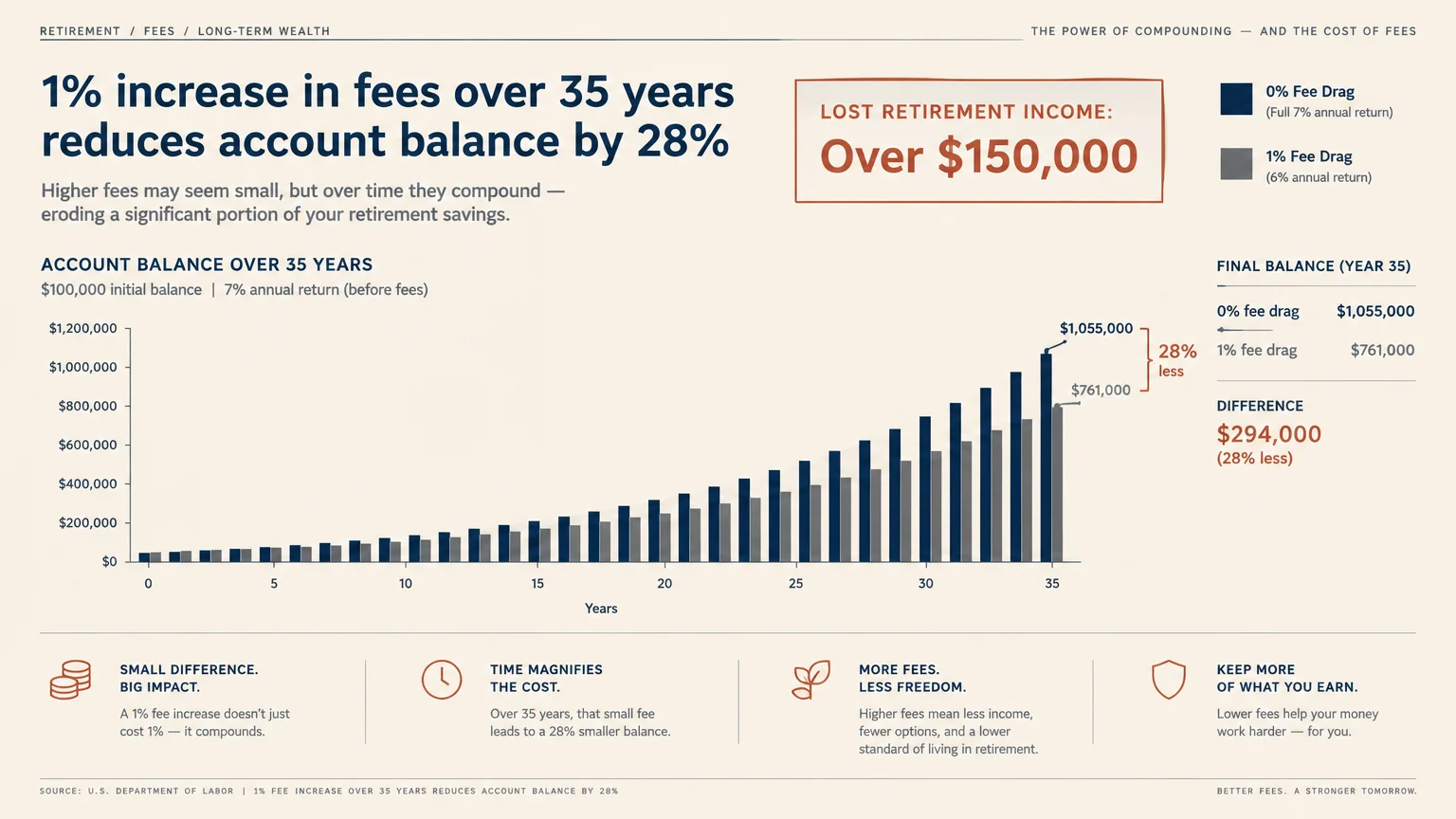
According to the U.S. Department of Labor (DOL), a 1% increase in fees over 35 years reduces an account balance by 28%. That single percentage point can easily cost a diligent saver over $150,000 in lost retirement income.
Most fee deductions never trigger a bill in your mailbox. Instead, fund managers and account custodians withdraw them directly from your investment returns.
“Performance comes and goes, but fees never falter.” — Warren Buffett, Chairman and CEO of Berkshire Hathaway
1. Actively Managed Fund Expense Ratios
An expense ratio represents the percentage of your assets deducted annually to pay fund management and operating overhead. Even if your fund loses value during a market downturn, the fund manager still takes this cut.
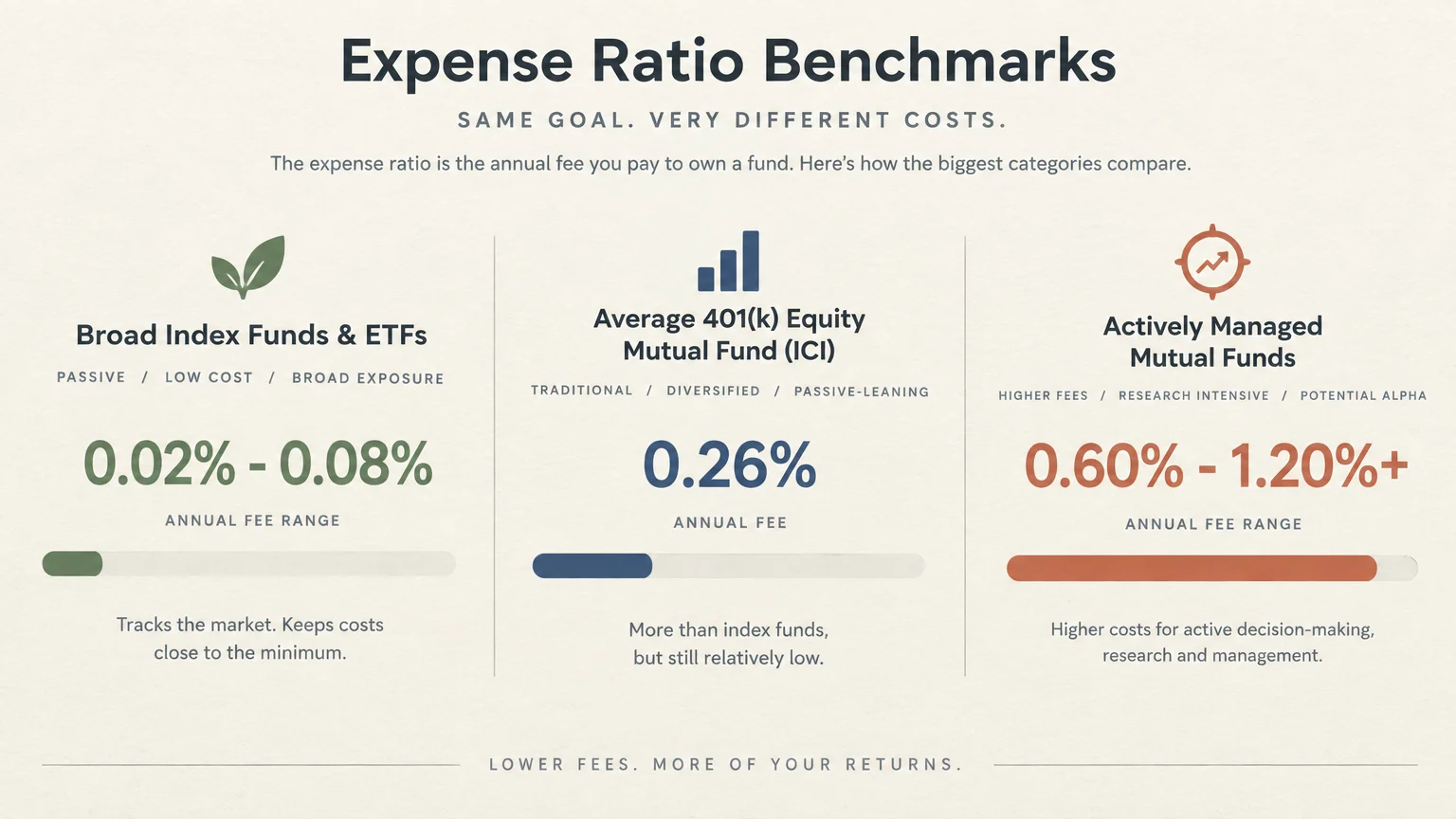
According to research from the Investment Company Institute (ICI), 401(k) participants paid an asset-weighted average of 0.26% for equity mutual funds. Yet many actively managed equity mutual funds charge between 0.60% and 1.20% or more each year.
By contrast, broad index funds and exchange-traded funds (ETFs) frequently charge between 0.02% and 0.08%. Shifting your core holdings to low-cost index funds can immediately preserve thousands of dollars annually.

2. 12b-1 Distribution and Marketing Fees
Named after an SEC rule, 12b-1 fees compensate brokers and intermediaries for selling and marketing mutual funds to the public. You pay these fees out of your investment capital so the fund can advertise to other prospective investors.
Under rules enforced by FINRA Investor Education, annual 12b-1 charges are capped at 1.00% of fund assets. This total includes up to 0.75% for distribution and advertising alongside a 0.25% shareholder service charge.
Mutual funds cannot legally market themselves as “no-load” funds if their 12b-1 fee exceeds 0.25%. You can avoid this drag by verifying your fund holdings use clean share classes without 12b-1 charges.
3. Front-End and Deferred Sales Loads
Sales loads are commissions paid directly to the broker who sold you a specific mutual fund share class. These charges do not go toward managing your investment; they simply reward the salesperson.
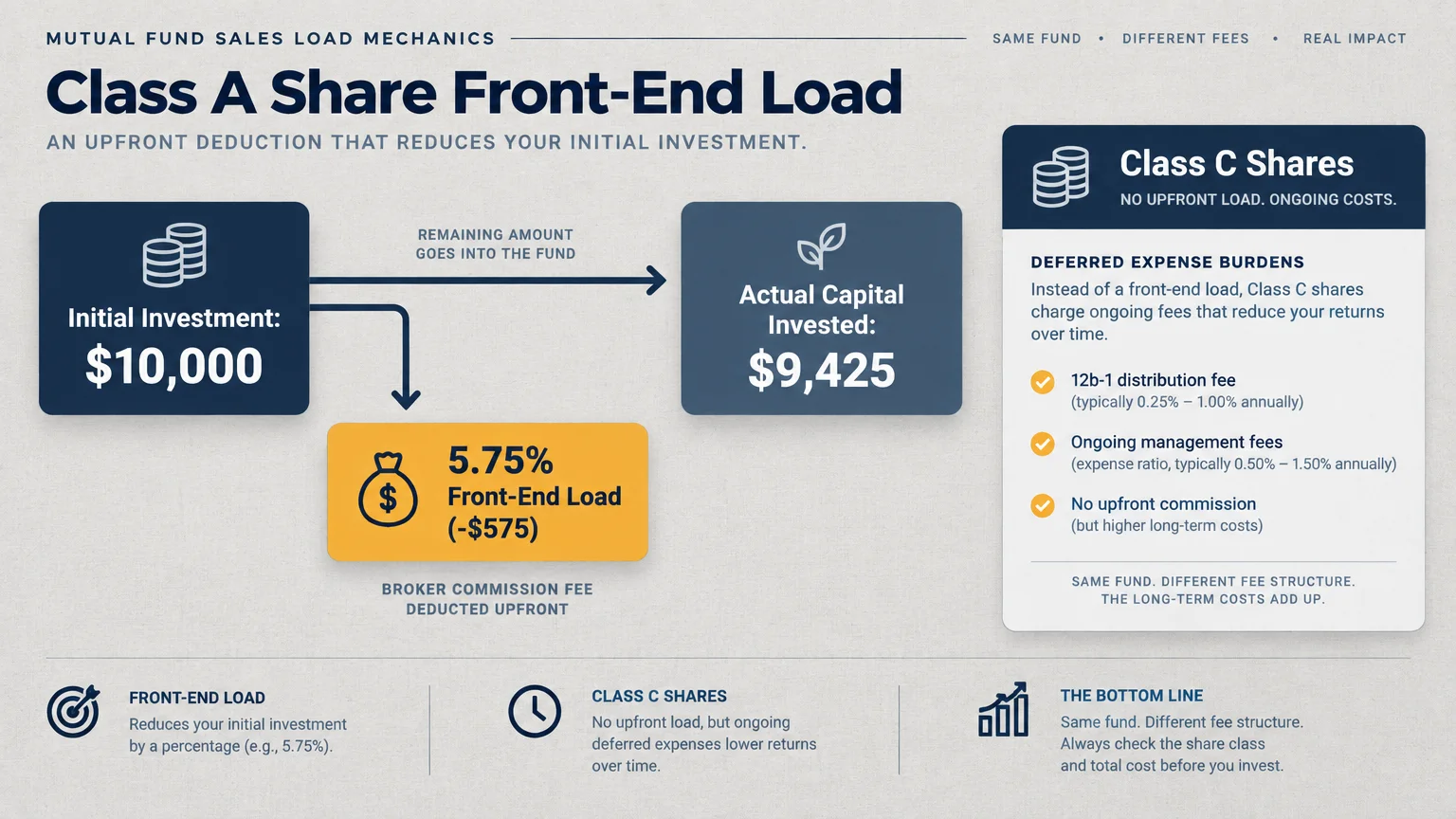
Class A shares typically hit you with a front-end load as high as 5.75%. If you invest $10,000 into a fund with a 5.75% front-end load, only $9,425 actually enters the market.
Class C shares may waive the front-end charge, but they charge higher ongoing annual expense ratios. To safeguard your nest egg, refuse loaded share classes entirely and demand pure no-load investment alternatives.
4. 401(k) Administrative and Recordkeeping Fees
Your employer-sponsored 401(k) plan incurs ongoing operational expenses for daily accounting, compliance testing, legal services, and website maintenance. Many plan sponsors shift these administrative bills directly onto participating employees.
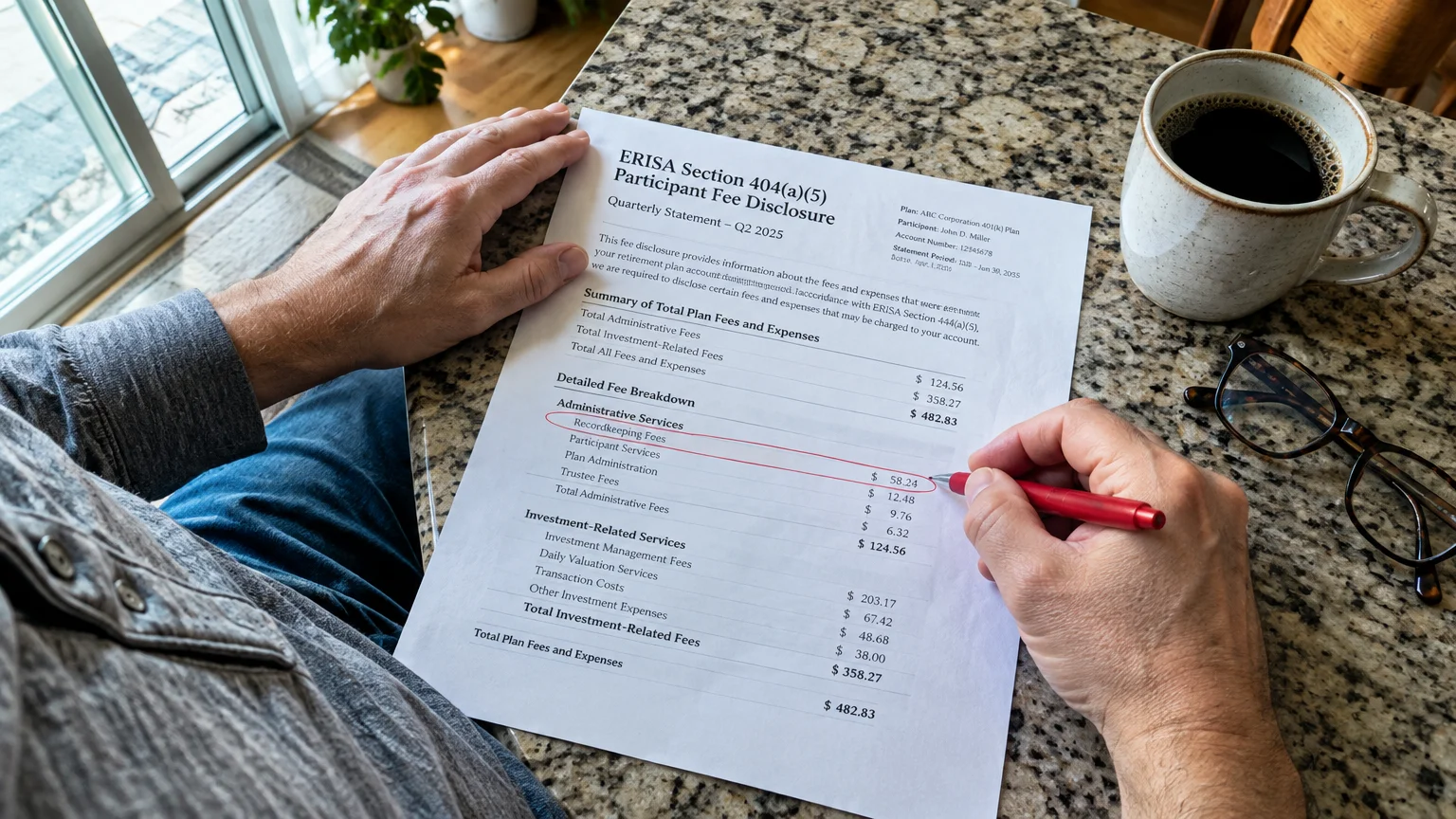
Federal regulations under ERISA Section 404(a)(5) require plan administrators to disclose these operational charges explicitly. You can find them listed on your quarterly statement as flat dollar deductions or asset-based percentages.
These fees commonly range from $30 to over $150 per year per participant. If you have left an employer, rolling that older 401(k) into an IRA can eliminate unnecessary plan-level administrative charges.
5. Sub-Transfer Agency (Sub-TA) Revenue Sharing
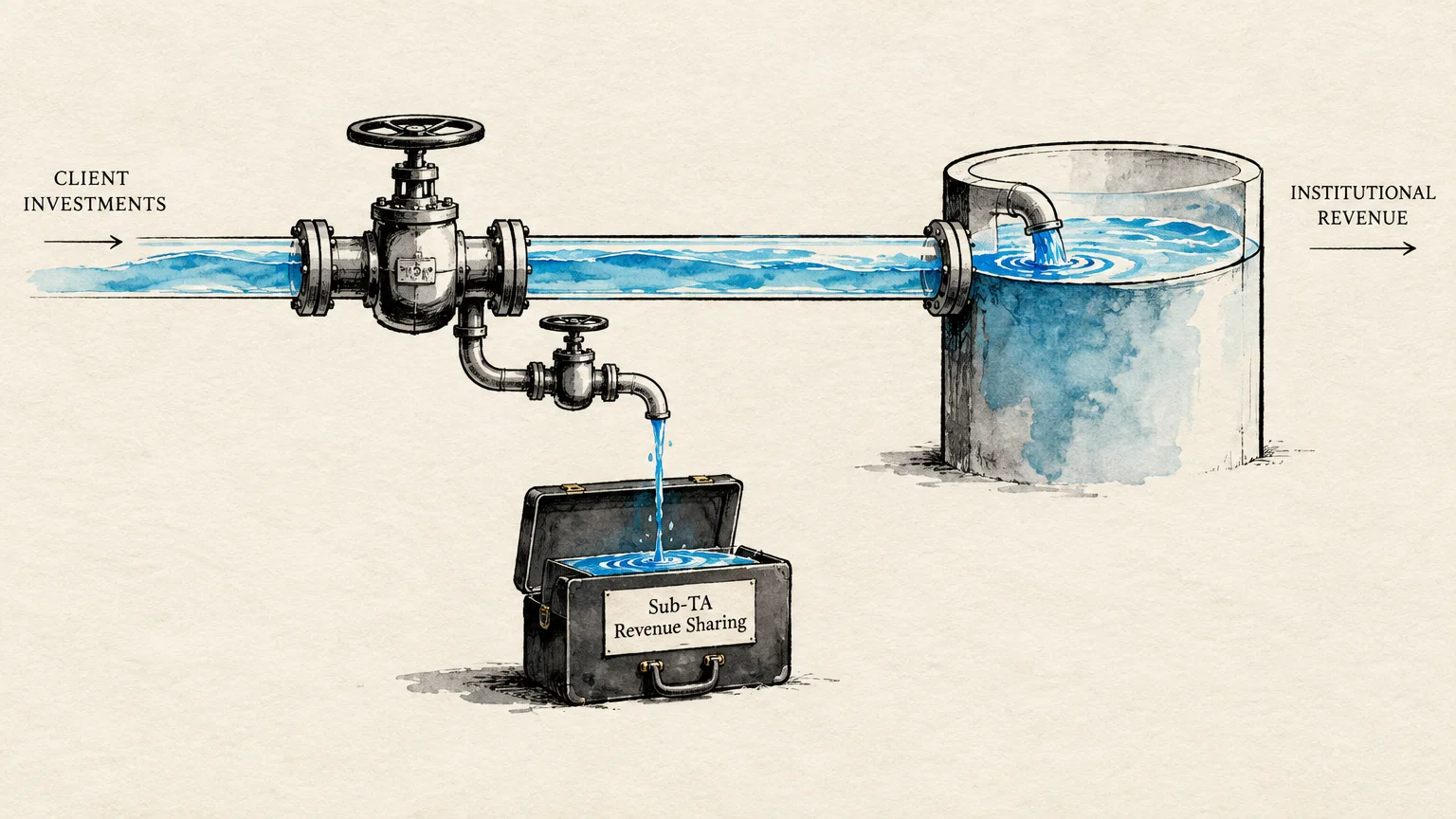
Sub-transfer agency fees represent behind-the-scenes payments made by mutual fund companies directly to 401(k) recordkeepers. The fund company pays the recordkeeper to handle participant accounting and communication.
These revenue-sharing arrangements allow fund companies to buy their way onto your company retirement plan menu. Because they are baked directly into the fund expense ratio, participants rarely see them as a separate item.
Examine your plan comparative fee disclosure document to spot revenue-sharing tiers. Choose institutional share classes whenever possible, as they exclude these hidden servicing surcharges.
6. Cash Sweep Yield Drag
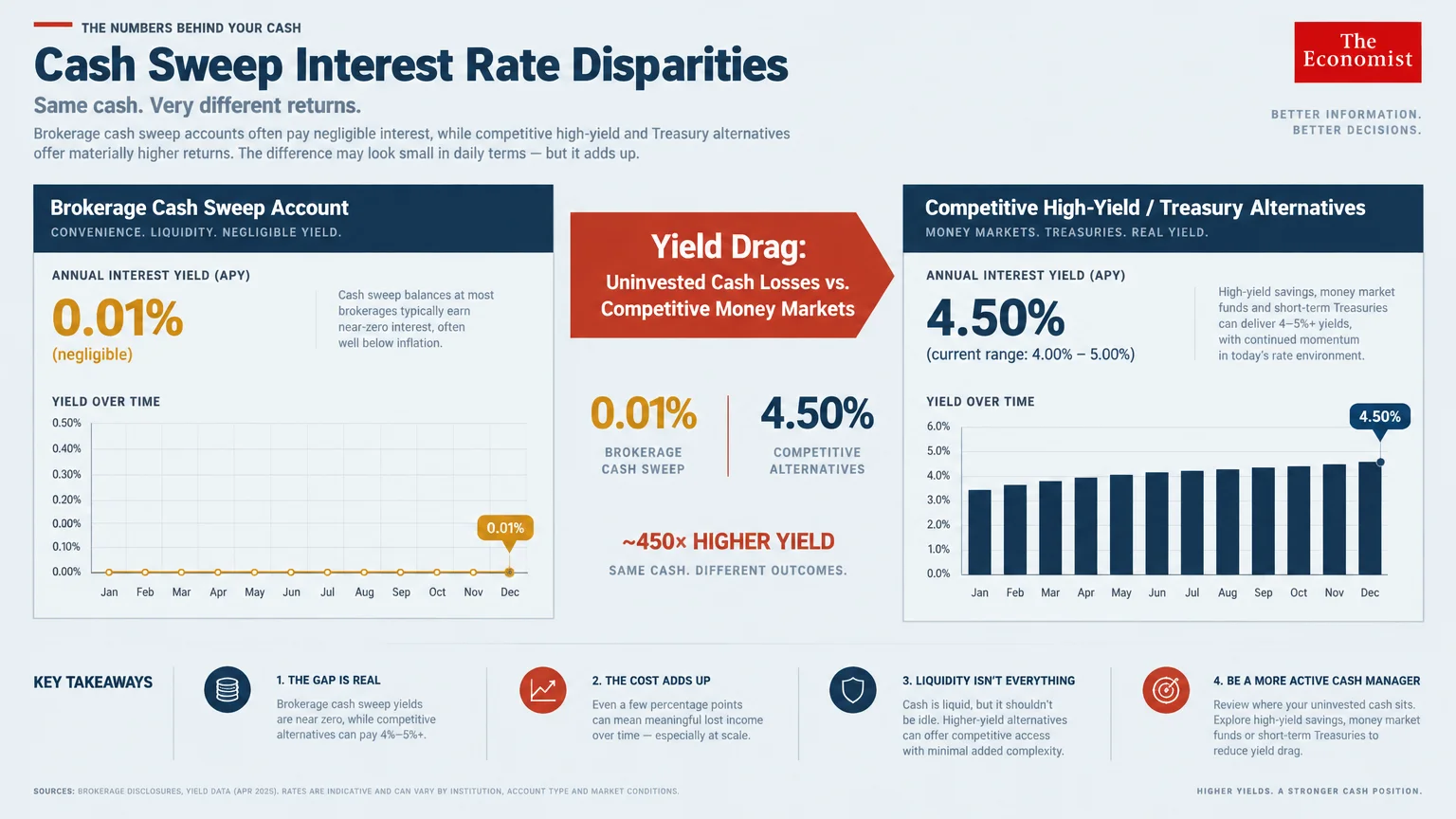
When you hold uninvested cash in a brokerage or retirement account, the custodian automatically deposits it into a sweep program. Major brokerages frequently sweep this cash into affiliate banks paying nominal yields as low as 0.01% to 0.45%.
While cash sits earning fractions of a percent, short-term Treasuries and money market funds often yield significantly more. This yield spread represents substantial profit for the brokerage at your direct expense.
Regulators have taken decisive action against these hidden yield traps. On January 17, 2025, the SEC announced a $60 million combined settlement with Wells Fargo Advisors and Merrill Lynch over cash sweep compliance failures.
Review your cash holdings today through tools on Investor.gov. Manually transfer uninvested retirement cash into dedicated government money market funds to maximize your income yield.
7. Variable Annuity Mortality, Expense, and Rider Charges
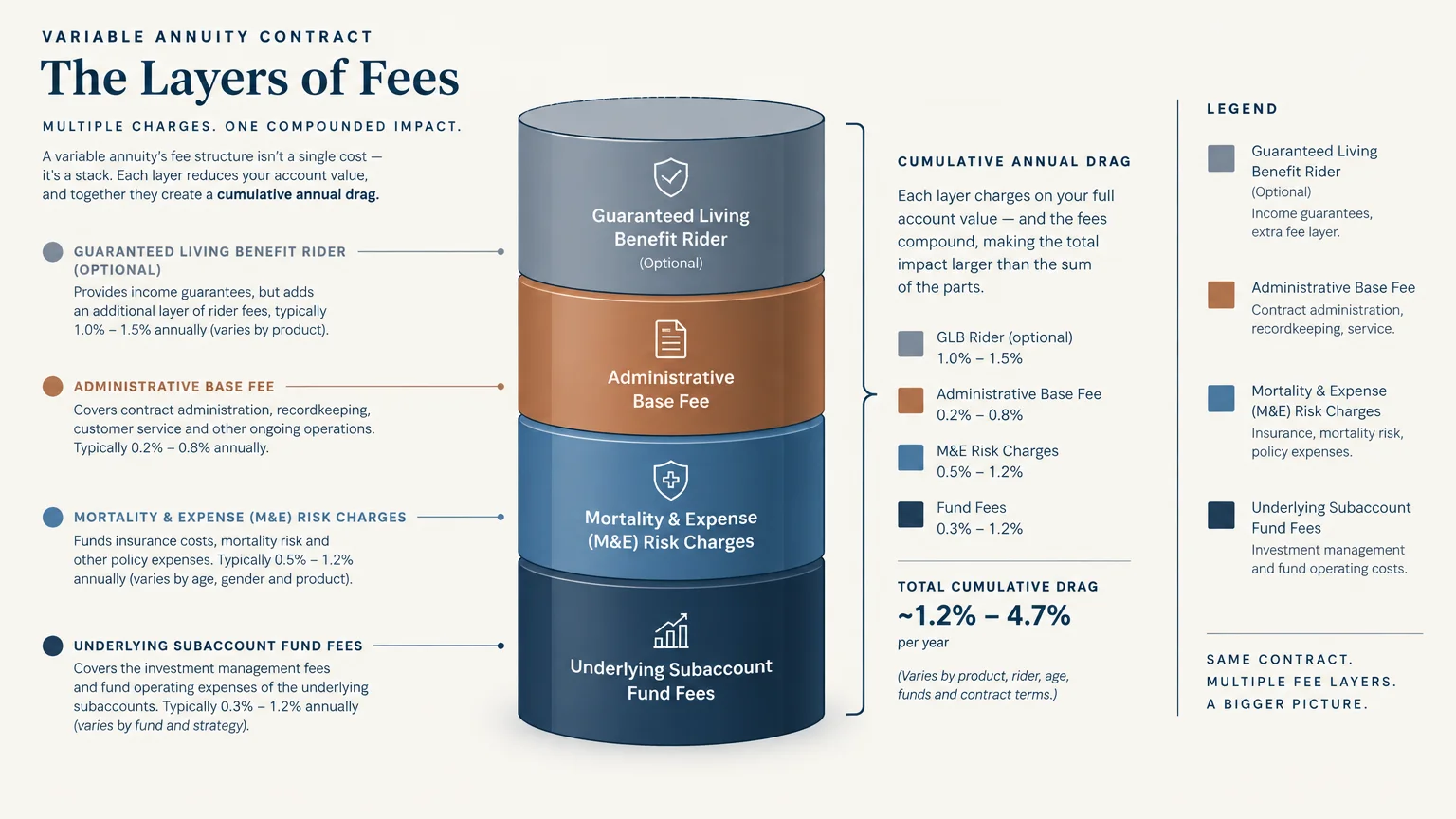
Variable annuities wrap mutual fund-like subaccounts inside an insurance contract, creating multiple overlapping layers of annual fees. These layered deductions can rapidly drain your capital without delivering proportionate value.
The insurance company charges a Mortality and Expense (M&E) risk fee that typically ranges between 1.10% and 1.40% annually. Contract administrative fees add another 0.15% to 0.30% each year.
Underlying investment subaccounts charge management fees averaging 0.60% to 1.50%, while optional living benefit riders add another 0.75% to 1.50%. In total, you may face ongoing annual expenses between 2.50% and 3.50% or higher.
“The biggest threat to your retirement isn’t the market; it’s the fees and taxes quietly eroding your balance.” — Ed Slott, CPA and Retirement Specialist

8. Early Surrender Charges on Annuities
Surrender charges trap your savings inside annuity products by penalizing early withdrawals or contract terminations. Insurance carriers impose these penalties to recoup upfront sales commissions paid to the agent who sold the contract.
Surrender schedules commonly begin at 6% to 8% in the contract’s first year and gradually step down over six to ten years. Liquidating an annuity early can sacrifice thousands of dollars in immediate penalties.
Before buying any insurance product, check the surrender schedule carefully. If you already own an annuity, wait until the surrender period expires before executing a tax-free transfer into a low-cost alternative.
9. Dual-Layer Wealth Management Wrap Fees
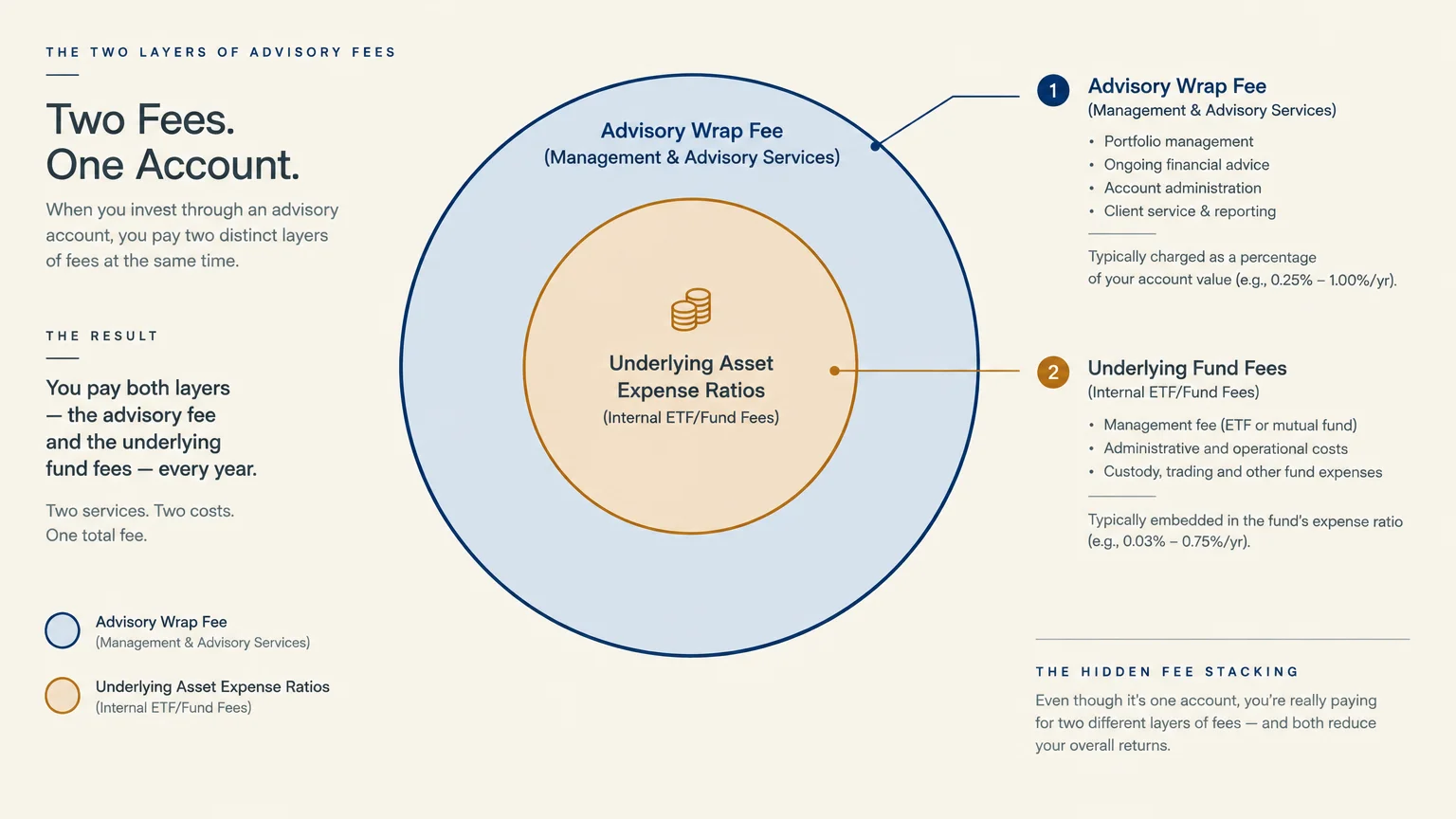
Many retirees hire a financial advisor who charges an Assets Under Management (AUM) advisory fee, often averaging around 1.00% annually. While professional guidance is valuable, this advisory charge rarely represents your only investment expense.
The advisor often places your funds into third-party mutual funds, ETFs, or separately managed accounts that charge their own internal fees. You end up paying the advisor’s 1.00% wrap fee on top of the underlying fund expense ratios.
Review your annual advisory agreement and demand a total cost of ownership breakdown. Ensure your advisor builds your portfolio with ultra-low-cost index funds to keep aggregate fees manageable.
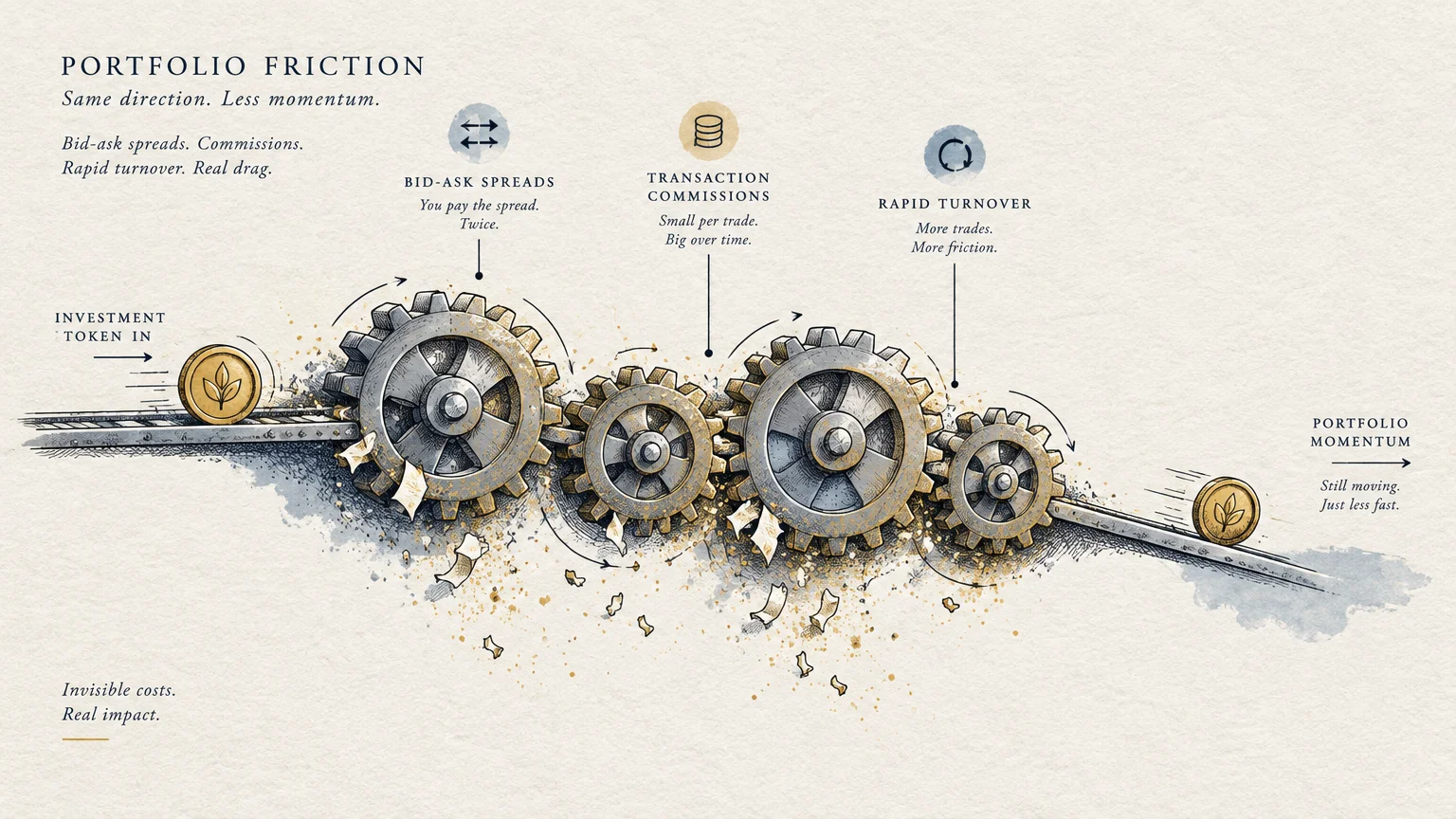
10. Portfolio Turnover and Trading Friction
Mutual fund managers generate trading friction every time they buy or sell securities inside the fund. These transaction costs include brokerage commissions, bid-ask spreads, and market impact costs.
These trading costs are never included in the fund’s published expense ratio. Instead, the manager absorbs them directly out of the fund’s net asset value before reporting performance.
A mutual fund with a 100% turnover rate replaces its entire portfolio over a single year. You can minimize these invisible friction losses by selecting index funds with turnover rates under 10%.

11. 401(k) Loan Origination and Maintenance Fees
Borrowing money from your workplace 401(k) might seem harmless because you pay the interest back to your own account. However, plan recordkeepers charge explicit processing fees to manage these transactions.
Most plans charge a one-time loan origination or setup fee ranging between $50 and $100. Many also assess an ongoing loan maintenance fee of $25 to $50 deducted annually from your remaining balance.
Furthermore, borrowed funds sit outside the financial markets, missing out on potential market growth. Treat your retirement plan as a dedicated nest egg and avoid using it as a personal loan provider.
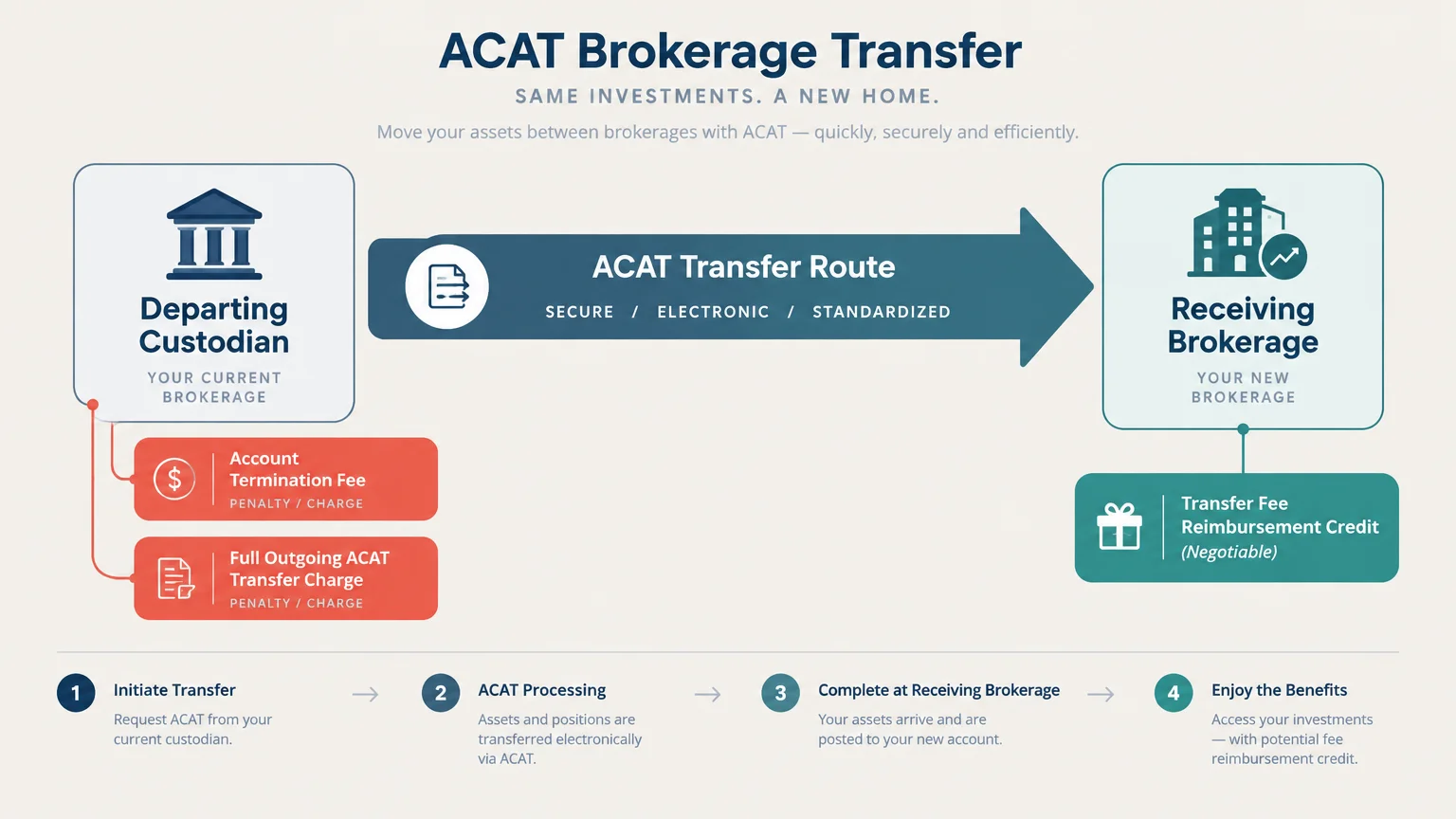
12. Custodial Account Termination and ACAT Transfer Fees
When you decide to move your IRA or taxable account to a lower-cost brokerage, your existing custodian may charge you on the way out. These charges are called outgoing transfer or account closure fees.
Executing an Automated Customer Account Transfer (ACAT) often costs between $50 and $150 per account. If you hold multiple IRAs across different institutions, these exit penalties add up quickly.
Fortunately, many competitive discount brokerages offer ACAT fee reimbursement promotions for new account transfers. Always ask your incoming broker to cover these outgoing charges before finalizing your account transfer.

13. Qualified Domestic Relations Order (QDRO) Review Fees
Dividing a workplace 401(k) or pension during a divorce requires a specialized legal court order known as a QDRO. Before dividing the account, the plan’s third-party administrator must review and approve the document for legal compliance.
Plan administrators routinely charge an administrative review fee ranging between $300 and $1,200 to process the order. They typically deduct this charge directly from the retirement balances of the divorcing parties.
You can manage this cost by requesting the plan administrator’s pre-approved model QDRO template in advance. Submitting a compliant template minimizes administrator review time and prevents repeated submission penalties.
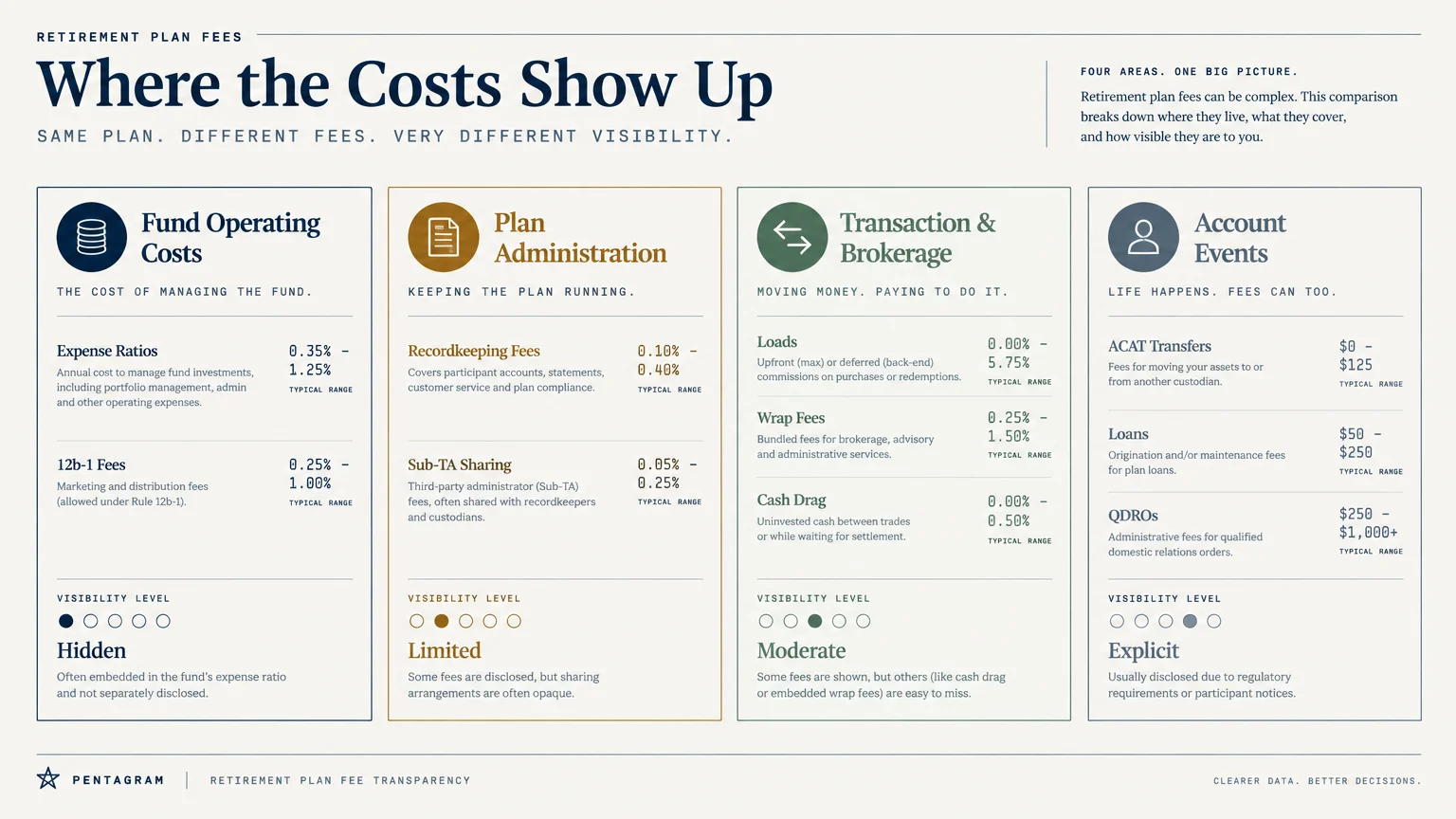
Retirement Account Hidden Fees Comparison
Understanding where fees hide helps you eliminate unnecessary drains on your wealth. The table below summarizes these thirteen common fees, typical price ranges, and direct steps to resolve them.
| Fee Type | Typical Annual Cost | Where It Hides | How to Eliminate or Reduce |
|---|---|---|---|
| Active Fund Expense Ratio | 0.60% to 1.20%+ | Deducted from fund NAV | Switch to broad-market index funds |
| 12b-1 Marketing Fee | 0.25% to 1.00% | Inside fund expense ratio | Select institutional or no-load shares |
| Front-End Sales Load | 3.00% to 5.75% upfront | Subtracted from initial deposit | Never purchase Class A shares |
| Plan Administration Fee | $30 to $150+ annually | Quarterly 401(k) statements | Roll old 401(k) accounts into an IRA |
| Sub-TA Revenue Sharing | 0.05% to 0.25% | Fund management agreement | Demand transparent share classes |
| Cash Sweep Yield Drag | 2.00% to 4.00%+ lost yield | Default sweep bank account | Manually transfer cash to money market funds |
| Annuity M&E and Riders | 2.50% to 3.50%+ total | Deducted from annuity value | Avoid high-cost contracts; 1035 exchange |
| Annuity Surrender Charge | 6.00% to 8.00% declining | Deducted upon contract exit | Wait out surrender window before moving funds |
| Dual-Layer Wrap Fee | 1.00% advisory + fund fees | Quarterly fee deduction | Negotiate AUM fee; verify underlying funds |
| Trading Friction / Turnover | 0.20% to 0.80% implied | Fund net performance drag | Select low-turnover index ETFs |
| 401(k) Loan Fees | $50–$100 setup; $25–$50/yr | Account transaction ledger | Avoid borrowing against your retirement plan |
| ACAT Outgoing Transfer Fee | $50 to $150 per account | Final account statement | Request fee reimbursement from new broker |
| QDRO Administrator Fee | $300 to $1,200 one-time | Deducted during legal split | Use employer pre-approved QDRO templates |

How to Conduct a Retirement Account Fee Audit
Auditing your accounts once every twelve months guarantees your investment dollars work for you rather than financial intermediaries. A simple three-step audit process keeps your costs transparent and predictable.
First, gather your latest quarterly account statements alongside your 401(k) plan’s annual ERISA 404(a)(5) disclosure. Review the individual transactions ledger for explicit line-item deductions, recordkeeping debits, or advisory fees.
Second, look up the ticker symbol for every mutual fund and ETF you own using online financial screening tools. Note each fund’s expense ratio and 12b-1 charge, flagging any equity holding that charges more than 0.20%.
Third, review the uninvested cash in each account to verify your current interest yield. If your cash earns negligible interest, contact your brokerage or move those funds into an institutional money market option immediately.
For consumer protection resources and guides on auditing financial paperwork, consult the Consumer Financial Protection Bureau (CFPB).

Finding the Right Advisor
Financial guidance can prove invaluable when planning retirement distributions, managing Required Minimum Distributions (RMDs), or handling estate transitions. However, you must ensure your advisor’s fee structure aligns with your personal interests.
Consider these common scenarios when selecting professional guidance for your retirement accounts:
- You Have a Simple Portfolio: If you hold low-cost index funds and require basic portfolio rebalancing, choose a fee-only, hourly financial planner rather than giving up 1% of your assets each year.
- You Want Full-Service Management: If you prefer ongoing wealth management, insist on a fiduciary advisor who commits in writing to avoid commissionable products, sales loads, or proprietary funds.
- You Need a One-Time Retirement Checkup: Hire a Certified Financial Planner (CFP) for a flat-fee comprehensive plan to stress-test your withdrawal rate without ongoing custodial fee obligations.
- You Are Considering an Annuity: Never work with an agent who sells products exclusively from one insurer; seek independent advice to assess whether lower-cost fixed options meet your needs without complex rider fees.

Common Mistakes to Avoid
Retirees often fall into common traps that magnify hidden fees. Steering clear of these missteps will protect your retirement balance from unnecessary erosion.
- Assuming 401(k) Plans Are Free: Never assume your company plan incurs zero cost simply because you do not receive a paper bill. Check your plan comparative chart to uncover administrative deductions.
- Chasing Past Performance in Active Funds: Buying high-fee active funds based on last year’s top performance usually backfires. High expense ratios consistently drag performance down over multi-year periods.
- Ignoring Sweep Account Cash: Leaving substantial emergency reserves in standard brokerage sweep accounts sacrifices hundreds of dollars in risk-free yield. Actively manage your uninvested cash balances.
- Abandoning Orphaned 401(k) Plans: Leaving accounts with former employers exposes your money to lingering administrative fees and limited fund options. Consolidating older plans into an IRA simplifies oversight and lowers expenses.
When rolling over accounts, always execute direct trustee-to-trustee transfers to avoid unexpected tax penalties enforced by the IRS.
Frequently Asked Questions
Where can I find the hidden fees in my 401(k) plan?
Request the annual ERISA Section 404(a)(5) fee disclosure document from your plan administrator or human resources department. This document contains a comparative chart outlining every investment option’s expense ratio and all plan-level administrative deductions.
What is considered a reasonable expense ratio for retirement funds?
For broad index funds covering U.S. large-cap equities, total expense ratios should generally remain below 0.10%. Actively managed funds charging over 0.50% to 1.00% should be evaluated critically, as high expenses routinely undermine net portfolio returns.
Are advisory fees deductible on my annual tax return?
Under current federal tax law, individual miscellaneous deductions—including investment management and financial advisory fees—are not deductible on federal income tax returns. Paying advisory fees directly from retirement accounts avoids taxable events but still reduces your invested balance.
Can I negotiate fees with my financial advisor or broker?
Yes, many advisory fees are negotiable, especially if your household assets exceed $500,000. Ask your advisor for a tiered fee schedule or request fee breaks based on your total family account relationships.
Take Control of Your Nest Egg
Hidden retirement fees do not have to erode the savings you spent decades accumulating. By reviewing your fund expense ratios, auditing plan disclosures, and optimizing cash yields, you can preserve your retirement wealth.
Dedicate one afternoon this week to reviewing your investment statements. Eliminating unnecessary layers of costs puts those dollars back where they belong—supporting your retirement lifestyle.
This is educational content based on general financial principles for seniors. Individual results vary based on your situation. Always verify current benefit amounts, tax rules, and program eligibility with official government sources.
Last updated: February 2026. Benefit amounts, tax rules, and program details change annually—verify current figures with official government sources.









Leave a Reply