
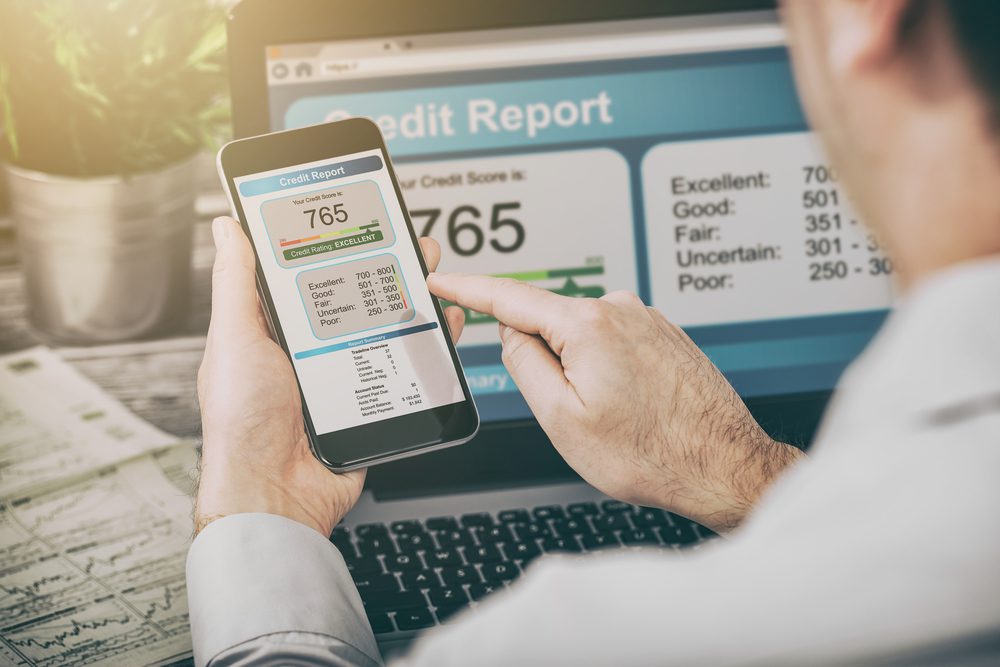
How does YOUR credit score look?
When our financial stability hangs in the balance, it’s no wonder we turn to the magical, three-digit number. The higher the credit score, the better. With it, we’re expected to easily navigate financial decisions and with debts and loans being a bigger and bigger part of our everyday lives, it’s no wonder it’s often at the forefront of our decision-making process.
But before we get into the nitty-gritty, first we have to discuss how your credit score is calculated. Without knowing this, it’ll be hard to understand why certain steps in the process are necessary in order to improve it.
For a full review, check our article on how your credit score is calculated. But what you should know for now is that it’s all based on mathematical algorithms. Because lenders compute credit scores differently, you may end up with more than one, but the basics are all the same.
For example, one financial company might consider more of your payment history than others. So, in that sense, degrees may vary, but the overall quality of your credit score stays the same. What these lenders will typically look at is your credit you use regularly, how long you’ve had your accounts open and what type of accounts they are, your payment history and how often you apply for new credit.
With all that being said, let’s look at what you can do to improve your credit score.
1. Check Your Score Frequently
Checking your credit score online as often as you can will help you stay on track of your process. If you’re worried about what it’s gonna look like, ignoring it won’t make the problem go away. Online tools will show you which factors need improvement so you’ll be able to focus on those areas instead of wasting time doing things you shouldn’t worry about in the first place.
Because of the aforementioned degree, you’ll also see which factors count more than others. Again, this should help you get a better idea of how much effort you should put in any one thing going forward. Of course, you should try to boost everything, but if your situation is rather dire, overexerting yourself all at once could lead to more problems down the line.
Keep in mind that more recent information will be at the forefront of the scoring system so don’t get stuck in the past.
…Don’t have a laptop to check your score? Amazon has got some great options!
2. Dispute Inaccuracies
TransUnion, Experian, and Equifax are three credit reporting bureaus you should always check out. You should also look at inaccuracies that could make your credit score plummet. Anything out of place? Immediately dispute the information and look for ways to correct it. You don’t want any human errors muddying up the waters. That’s also another reason you have to check your credit score as often as possible. The sooner you spot false information, the better.
3. Pay Bills on Time
Not paying your bills on time will reflect very badly on your credit score. If lenders see you as untrustworthy, chances are you’ve got a lot to lose. It could even cause a refusal to open a new credit line, even if you really need it to stay afloat.
What better way to improve your reliability than to make sure you’re focused on your bills and the money you owe? This goes for any loans you may have, of course, but financial companies also check utilities, phone bills, rent payments and so forth. So staying on top of your auto loans or student loans isn’t enough.
Missing or late payments will appear on your credit score for seven years, so tackling them as early as possible and then staying on track is very important. That being said, newer missed bills will have a bigger effect than older ones, so their influence on your credit score will lessen over time. Use that knowledge to figure out a game plan. We highly suggest opting for automatic payments and marking due dates on your calendar.

4. Paying Debt and Keeping a Low Balance on Your Credit Card
You’ve probably heard of credit utilization ratio and if you’re still confused about what it represents, read on. A lot of Americans think that taking full advantage of their loans is a good way to prove that they’re mindful of their money but in reality, lenders like to see ratios under 30%. The lower this percentage, the better your credit score. That’s because it’ll prove to them that you haven’t maxed out your credit cards and that you can be trusted. Winning them over with good credit card management skills will take you far.
This is how you can find out what your utilization ratio is. First, you have to add all your credit card balances- let’s say you come up with $2,000 at any given time. Then you must divide this number by your total credit limit. Say yours is $10,000 across all cards. Lastly, to view it as a percentage, multiply your result by 100.
2,000 ÷ 10,000 = 0,2
0,2 × 100 = 20%
Not bad, right?
There are two ways you can positively influence your ratio. A more obvious way is to pay off your debt while keeping your credit card balance low. It’ll probably require a lot of budgeting and planning on your end, but since the ratio counts quite a lot towards your credit score, it’s well worth the effort.
A riskier move is to become an authorized user on another person’s account. You should only do this if the other person knows how to use credit responsibly otherwise this method might backfire!
5. Take Advantage of Experian Boost
This free, opt-in product will allow Experian to connect to your bank. After looking at your utility and telecom payments, you’ll be asked to verify the data. Consumers have to confirm that they want the information added to their Experian credit file in order to receive an updated FICO® Credit Score.
So, if you’ve been on time with cell phone and utility payments, your credit score will improve just by using Experian Boost. If you’re okay with allowing the product to look at your data, we think you should take advantage of any help you can get.
6. Only Open New Credit Accounts When You Need Them
Opening accounts you don’t need will not work in your favor and it definitely won’t improve your credit score. Some people claim that it’s better to have a credit mix, but you’re setting yourself up for more troubles than necessary.
For example, you’ll be creating too many hard inquiries on your credit report. Another way this could negatively accent you is by luring you into overspending. Since the money is ‘there’ you might be tempted to use it as often and as much as possible. Being honest about your spending habits, especially if you’re looking to improve your credit score, will hopefully help you from making any more potentially harmful decisions.
7. Avoid Too Many Inquiries
Applying for credit creates a hard inquiry on your credit report and too many of these will not have a good impact on your credit score. So, opening a new credit should be avoided. If you’re struggling financially, try to figure out how you can stretch your dollars instead. Working overtime, part-time or freelancing are good ways to do so, as is budgeting and setting financial goals.
That being said, you should know that while hard inquiries aren’t good, their effect will lessen over time. They only stay on your credit report for two years.

8. Don’t Close Unused Credit Cards
The opposite side of the coin has to do with credit cards you no longer use. You might think that closing them will clear up some of the clutter in your credit score, but in reality, you’ll just be adding to your credit utilization ratio.
Of course, if annual fees are too much to handle, we think it’s better to close the accounts. If your aim is to improve your credit score and you’re in a bad financial place, that money is better off used in making payments on time.
So, ultimately, it’s your choice. But you should know that not closing them is a strategy many Americans employ since your credit score will go down if you own the same amount but have fewer open accounts.
So, these are our tips on how to improve your credit score. Basically, staying vigilant should help boost it. In some cases, actions or inactions are just as helpful. For a better understanding of why and how this all works together, check out our article on how credit scores work.
What’s the hardest thing you’ve had to do in order to improve your credit score? Comment down below and see if you can find more helpful tips from the community.
Looking for some more helpful advice on finance? Check THIS out!









Leave a Reply