

Leaving your retirement cash in an outdated brick-and-mortar account often earns you less than 0.50% APY. Moving those funds into high-performing accounts today can boost your annual yield eightfold without risking principal.
With the Federal Reserve benchmark rate sitting at 3.50% to 3.75%, competitive deposit yields remain historically strong in 2026. You can easily optimize your liquid cash for dependable retirement income.
This guide highlights the best bank accounts this year to help you eliminate unnecessary fees and maximize returns. Strategic banking choices will keep your hard-earned nest egg safe, accessible, and productive.
The 2026 Cash Landscape: Why Account Selection Matters
Interest rate decisions by the Federal Reserve continue to benefit cash savers in 2026. Because the federal funds rate hovers between 3.50% to 3.75%, banks must compete aggressively for your deposits.
Yet traditional banks still pay an average savings rate under 0.50% APY. Keeping your money in those low-yield institutions quietly erodes your purchasing power over time.
By contrast, the highest yield savings accounts deliver yields of 3.75% to 4.10% APY. That wide gap translates into substantial annual income on your cash reserves.
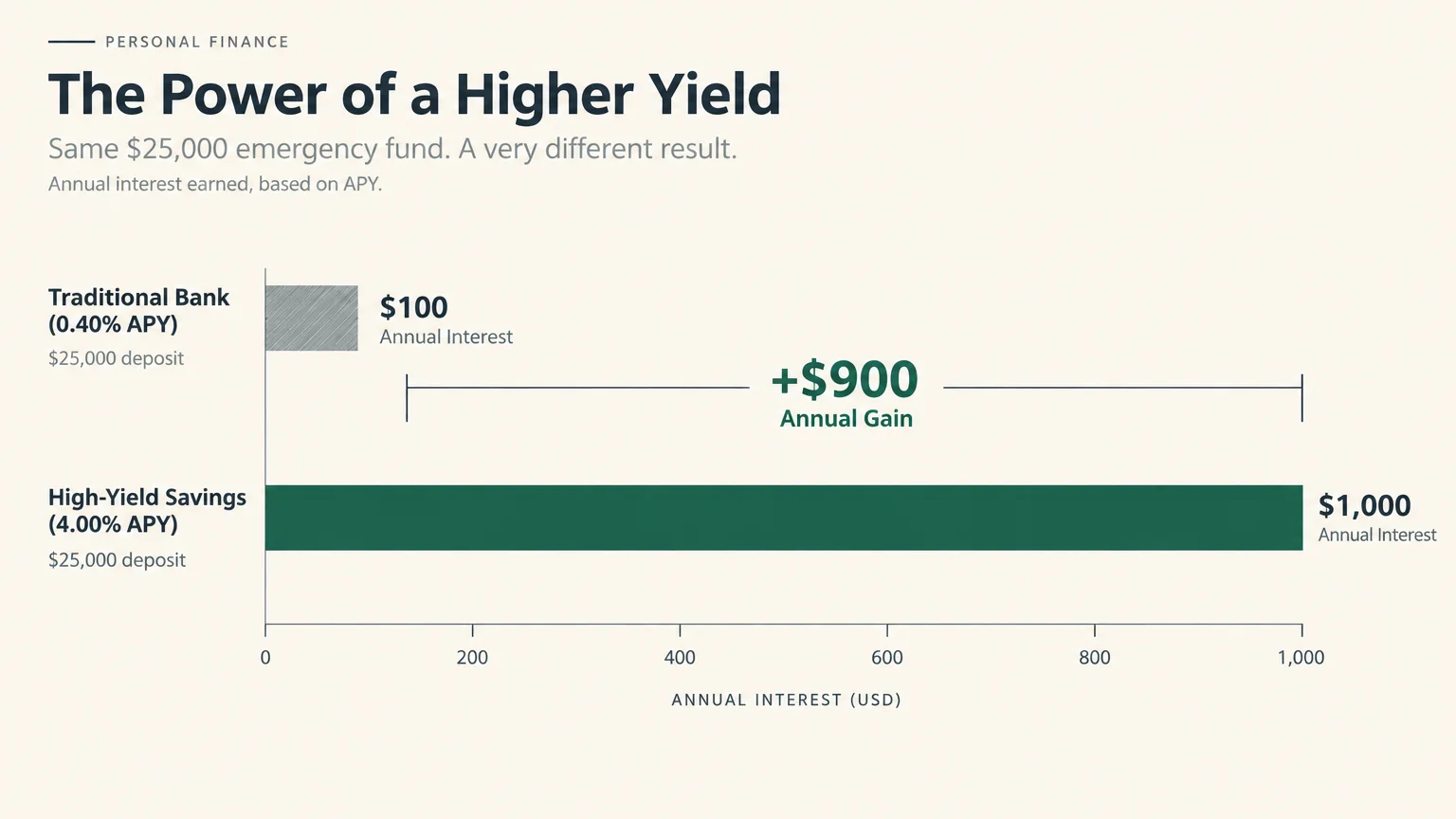
Consider a retired couple holding $25,000 in an everyday emergency fund. At a standard 0.40% rate, that balance earns only $100 after twelve months.
Placing that same $25,000 into a 4.00% APY account generates $1,000 in annual interest. That is an extra $900 in dependable cash with zero market risk.
Understanding where to position your money lets you fund living expenses while preserving capital. You worked hard for your savings; your cash should work equally hard for you.
Highest Yield Savings Accounts for Reliable Liquidity
A high-yield savings account provides the ultimate balance of growth and accessibility. You earn top-tier returns while keeping money available for home repairs or medical emergencies.
Online banks pass their lower overhead costs directly to you through superior rates. According to guidance from the Consumer Financial Protection Bureau (CFPB), choosing accounts with low fees preserves compound growth.
Here are the premier high-yield savings options delivering the best savings accounts 2026 performance:
- CIT Bank (Platinum Savings): Delivers up to 4.10% APY on balances of $5,000 or greater, requiring an initial deposit of $100.
- Live Oak Bank: Offers a competitive 4.00% APY with no minimum balance requirements or recurring maintenance charges.
- Capital One 360 Performance Savings: Yields 3.75% APY with no minimum balance hurdles, paired with access to physical cafe branches.
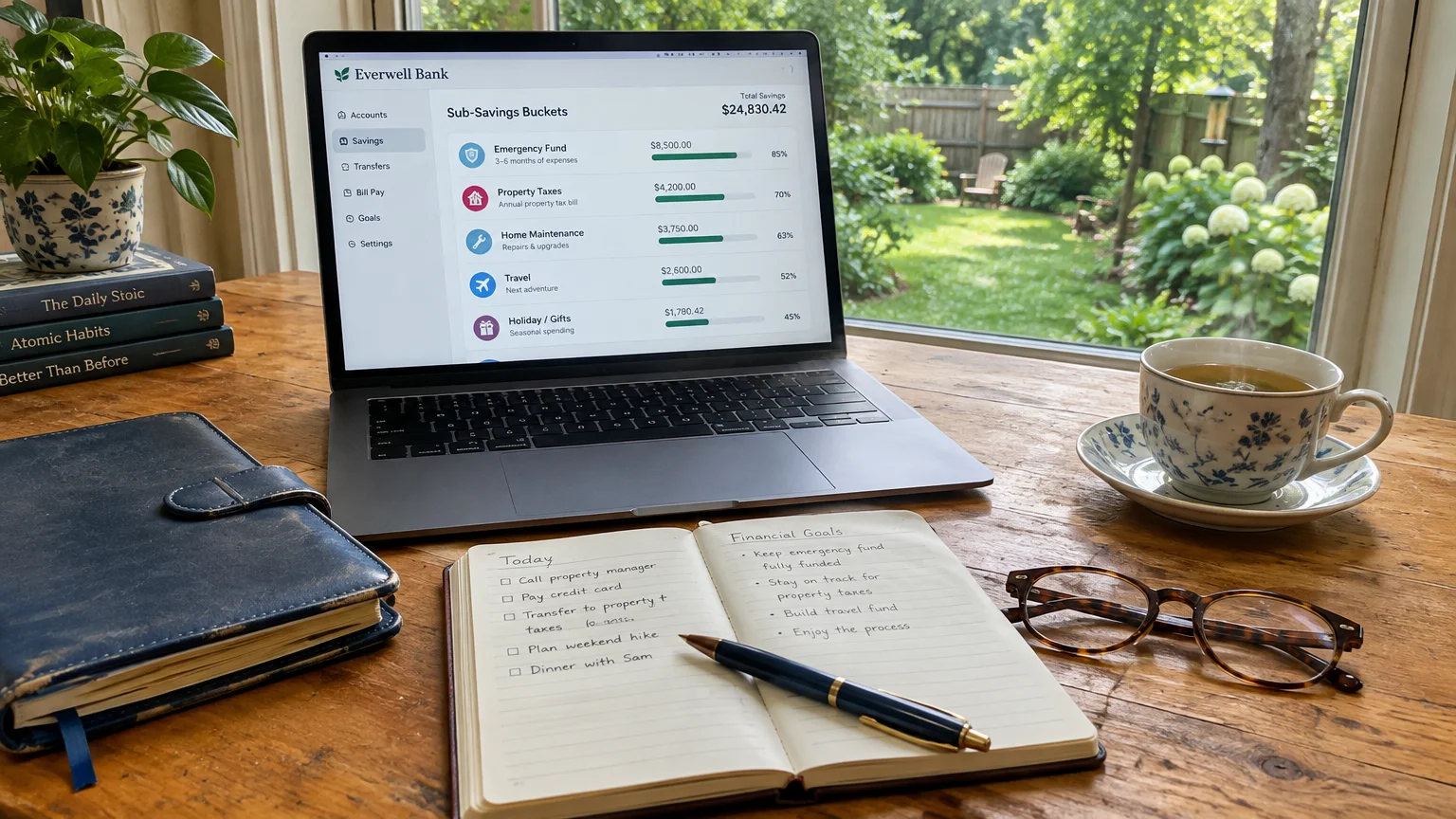
- Ally Bank: Yields 3.65% APY alongside automatic savings buckets to help organize seasonal property taxes and travel funds.
Each of these digital banks connects seamlessly to your primary checking account. Electronic transfers typically clear within one to two business days, preserving ready liquidity.
Retirees should keep three to six months of living expenses in these liquid accounts. This cash buffer prevents you from selling portfolio equities during temporary stock market declines.
Top CD Rates of 2026: Securing Guaranteed Returns
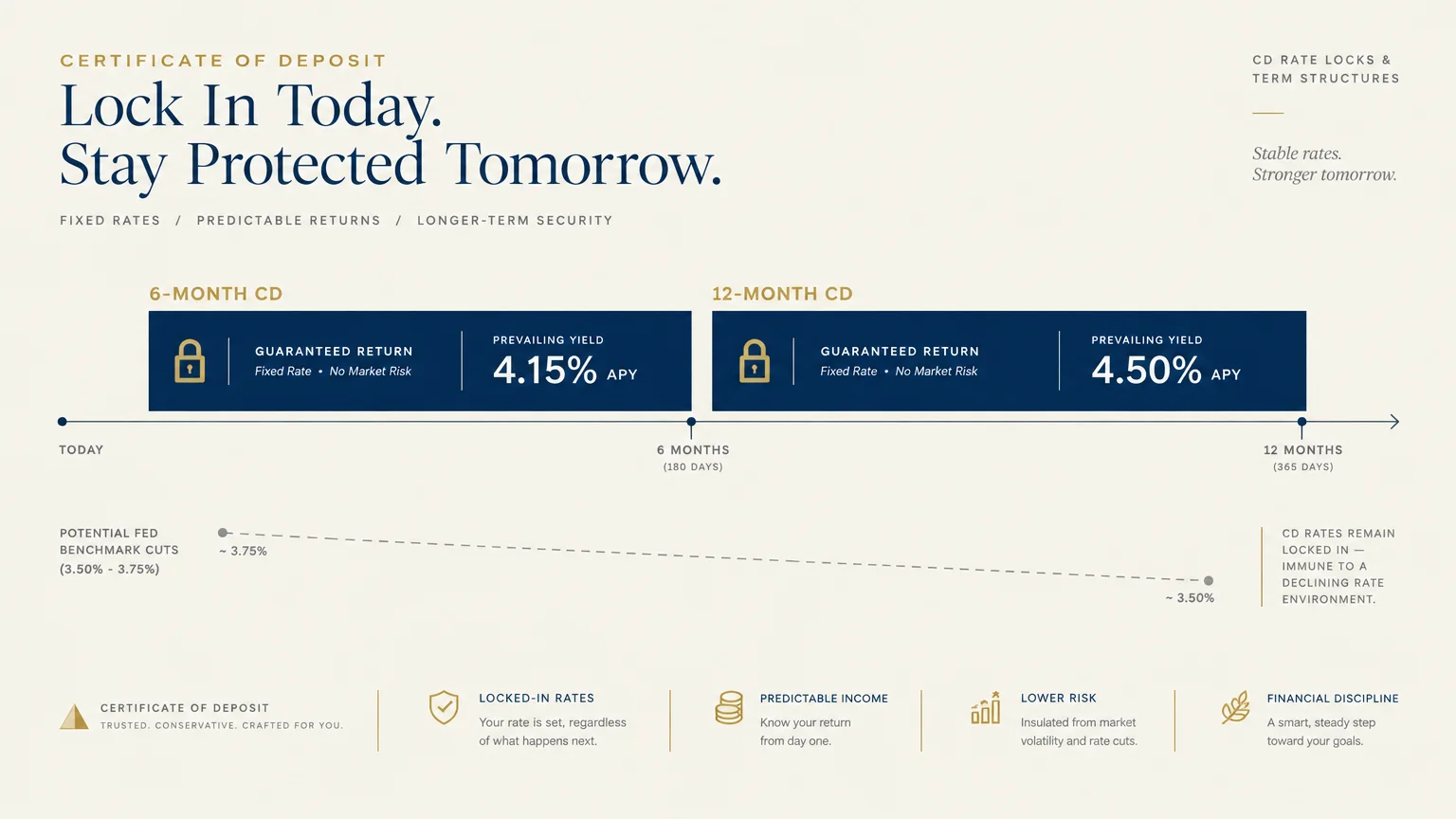
Certificates of Deposit (CDs) allow you to lock in fixed rates regardless of future central bank rate cuts. They provide peace of mind for money you do not need immediately.
In 2026, short- and intermediate-term CDs continue to outpace savings yields. Top CD rates 2026 range from 4.15% to 4.50% APY on terms between six and twelve months.
Review these leading CD providers when constructing your cash reserves:
- Popular Direct: Delivers up to 4.50% APY on select short-term CDs with a $10,000 minimum deposit requirement.
- Marcus by Goldman Sachs: Features a 4.30% APY on its 9-month term with an accessible $500 opening minimum.
- E*TRADE (Morgan Stanley Private Bank): Yields fixed returns from 4.15% on 12-month terms to 4.35% on multi-year terms.
While CD rates are tempting, beware of early withdrawal penalties. Cashing out a one-year CD prematurely usually costs you 90 to 180 days of simple interest.
You can sidestep these penalties by implementing a structured CD ladder. A ladder splits your cash across staggered maturities, such as three, six, nine, and twelve months.
As each certificate matures, you either spend the principal or roll it over into a fresh term. This strategy guarantees predictable cash flow throughout retirement.
“A big part of financial freedom is having your money where it is safe, accessible, and working for you every single day.” — Suze Orman, Personal Finance Author

Best Checking Accounts for Seniors: Fee Waivers and Perks
Your checking account serves as command central for your monthly budget. The best checking accounts 2026 eliminate administrative fees while offering practical perks for retirees.
Several institutions waive maintenance fees purely based on your age. For example, U.S. Bank automatically waives monthly maintenance charges on its Bank Smartly account for primary holders aged 65 and older.
TD Bank features the TD 60 Plus Checking account for adults aged 60 and older. It waives service charges with a modest $250 balance and supplies free standard paper checks.
Travelers should consider the Charles Schwab Bank High Yield Investor Checking account. Schwab offers unlimited worldwide ATM fee rebates and charges zero foreign transaction fees.
Many modern checking accounts also expedite federal benefit deposits. Under current processing rules from the Social Security Administration, direct deposit programs can make funds accessible up to two days early.
Look for accounts with intuitive mobile check deposit tools. Depositing checks from home spares you unnecessary trips to a bank branch in bad weather.
Account Comparison: Key Banking Options at a Glance
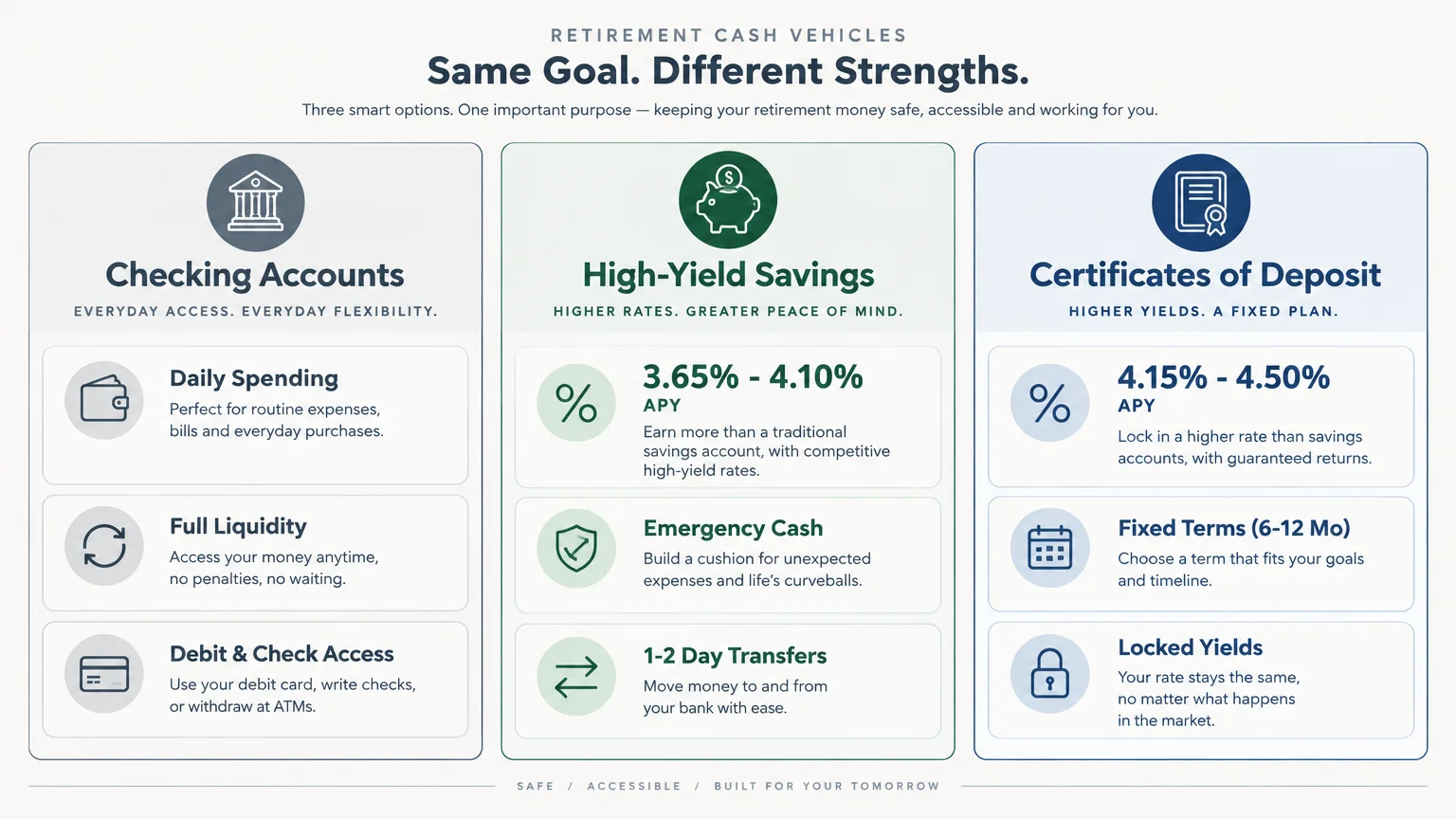
Review this comparison to align account features with your personal financial priorities for 2026.
| Institution | Account Type | Annual Yield / Key Perk | Minimum Balance | Best Suited For |
|---|---|---|---|---|
| CIT Bank | Platinum Savings | 4.10% APY | $5,000 for top tier | Maximized liquid yield |
| Live Oak Bank | High Yield Savings | 4.00% APY | $0 | No-fee flexible cash |
| Marcus by Goldman Sachs | 9-Month CD | 4.30% APY | $500 | Guaranteed short-term return |
| Popular Direct | 12-Month CD | 4.50% APY | $10,000 | Lump-sum cash reserves |
| U.S. Bank | Bank Smartly Checking | Fee waived at 65+ | $0 for seniors | Traditional branch access |
| Charles Schwab | Investor Checking | Unlimited ATM rebates | $0 | Retirees who travel |

Safety First: Maximizing FDIC and NCUA Protections
Preserving your money matters just as much as earning interest. Federal insurance represents your strongest defense against institutional insolvency.
The Federal Deposit Insurance Corporation (FDIC) and National Credit Union Administration (NCUA) insure deposits up to $250,000. This protection applies per depositor, per institution, for each ownership category.
According to investor guidelines from Investor.gov, understanding ownership categories allows you to safeguard balances well over the standard cap.
For instance, a couple with a joint account receives $500,000 in total insurance at one bank. Combining individual accounts with joint accounts doubles that protection to $1,000,000.
If you downsize a home, your liquid proceeds might exceed these standard thresholds. In that situation, consider using an IntraFi cash sweep program.
These networks disperse your deposits across dozens of vetted banks through a single dashboard. You gain multi-million-dollar FDIC coverage without manually opening numerous accounts.
Costly Errors to Sidestep
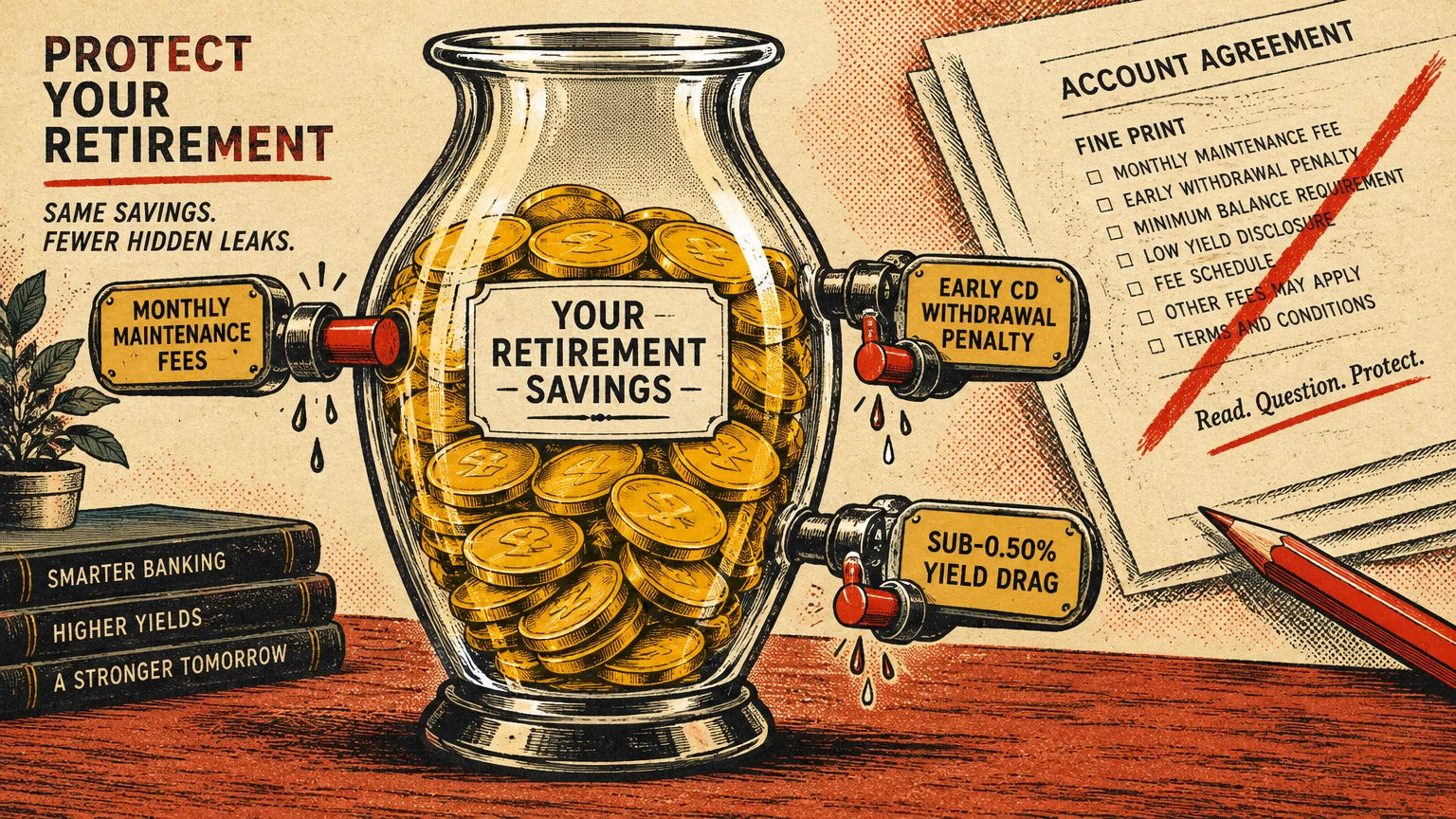
Small banking missteps can gradually reduce your retirement nest egg. Staying alert protects your cash from unnecessary erosion.
- Hoarding excess checking cash: Holding large balances in zero-interest accounts deprives you of hundreds of dollars in risk-free yield.
- Overlooking paper statement fees: Many institutions now bill $3 to $5 monthly for paper statements unless you specifically enroll in fee-free senior accounts.
- Breaking CDs impulsively: Redeeming long-term certificates for short-term needs forfeits accrued interest; build a ladder instead.
- Ignoring beneficiaries: Failing to designate Payable on Death (POD) recipients forces liquid bank balances through lengthy probate proceedings.
Setting up proper beneficiary forms takes minutes and ensures seamless asset transfer. Review your account designations annually to reflect your current family wishes.

When DIY Isn’t Enough
Managing basic checking and savings balances is straightforward for most households. However, certain complex retirement events call for specialized advice.
Consult a qualified financial professional if you manage deposits inside an irrevocable living trust. State trust laws dictate specific fiduciary rules regarding insured cash repositories.
Professional input is also valuable when balancing cash yields against tax liabilities. Remember that bank interest gets taxed as ordinary income on your federal tax return.
A Certified Financial Planner (CFP) can structure withdrawals to protect you from crossing higher tax brackets. They help align your cash yields with your comprehensive retirement blueprint.
Frequently Asked Questions
Are online banks safe for retirees unfamiliar with digital banking?
Yes, chartered online banks feature identical FDIC insurance protections as physical neighborhood branches. They employ modern encryption protocols and automated fraud alerts to protect your money.
How does the Federal Reserve rate affect my deposit returns?
When the Federal Reserve adjusts its benchmark rate, banks typically alter high-yield savings APYs within weeks. CD rates lock in your return for the entire duration of your term.
Can I open a high-yield account if I prefer paper checks?
Most high-yield savings accounts operate entirely electronically and do not offer checkbooks. Pair your online savings account with a fee-free senior checking account for everyday check-writing.
Will moving money between banks trigger taxes?
No, transferring your own cash between institutions is not a taxable transaction. Only the interest you earn throughout the calendar year counts as taxable income.
Next Steps for Your Cash Strategy
Take an inventory of where your cash sits today and calculate your current earnings. If your bank pays less than 3.50% APY, consider moving unallocated cash into higher-yielding vehicles.
Start by opening a competitive savings account or setting up a structured CD ladder. Reallocating your funds today ensures your money continues to protect your retirement independence.
This article provides general financial education and information only. Everyone’s financial situation is unique—what works for others may not work for you. For personalized advice tailored to your retirement needs, consider consulting a qualified financial professional such as a CFP or CPA.
Last updated: February 2026. Benefit amounts, tax rules, and program details change annually—verify current figures with official government sources.








Leave a Reply