

Millions of retirees are stepping back into the workplace to collect extra income and stay energized. This quiet surge in senior employment offers you unprecedented flexibility to earn on your terms.
Nearly 19% of Americans aged 65 and older now participate in the labor force, according to the Bureau of Labor Statistics. That number continues to grow as the “Peak 65” generation reimagines traditional retirement.
Whether you want extra cash for travel or need to offset persistent inflation, returning to work can significantly strengthen your financial foundation.
The Changing Face of Retirement: What the Data Shows
The traditional retirement model—exiting the workforce completely at age 65—is fading rapidly.
Today, older workers represent one of the fastest-growing segments of the American labor pool.
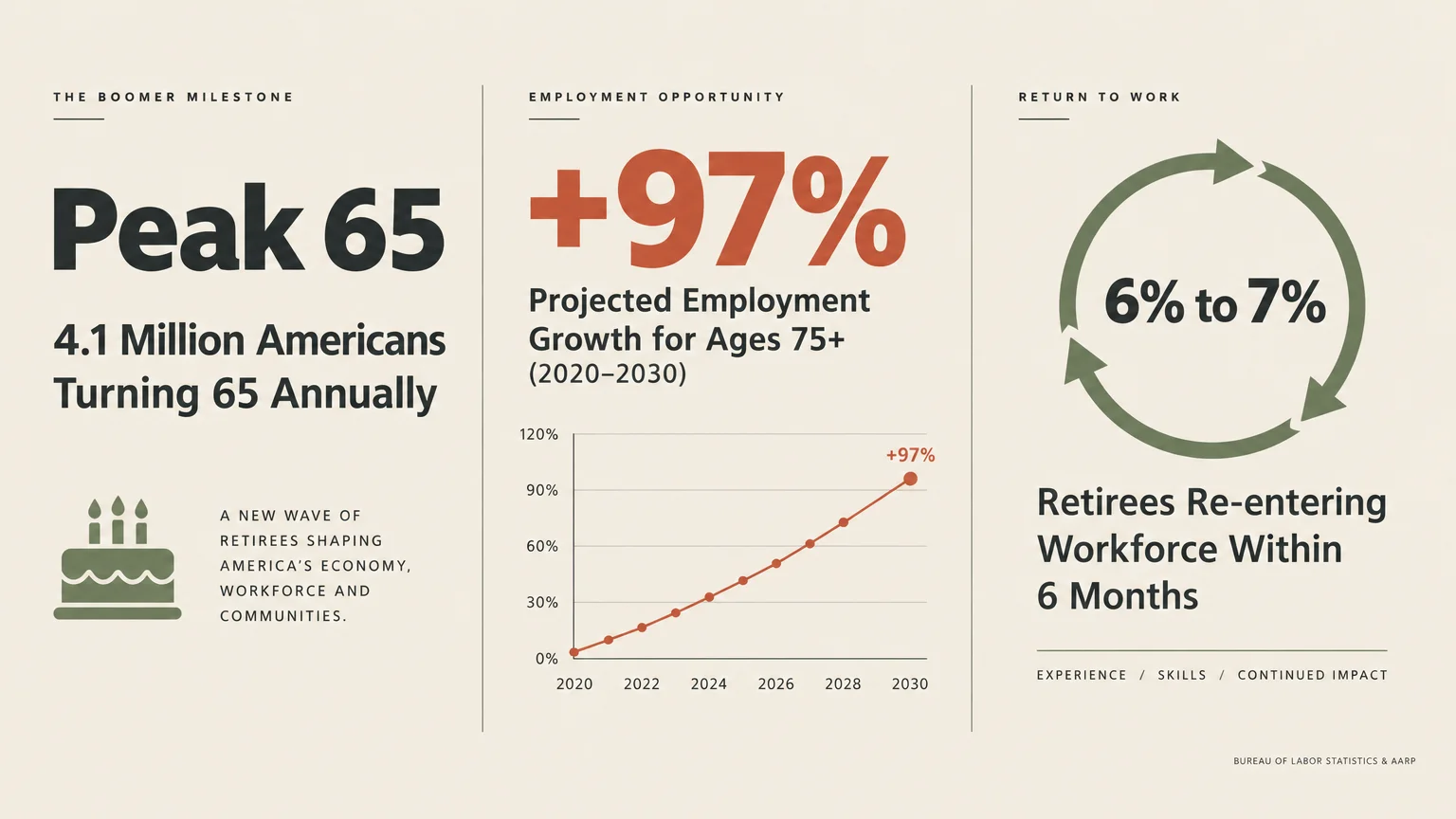
The Bureau of Labor Statistics projects that employment for Americans aged 75 and older will surge by roughly 97% between 2020 and 2030.
At the same time, the nation is navigating the “Peak 65” milestone, where over 4.1 million Americans reach age 65 each year.
Data from AARP reveals that roughly 6% to 7% of retirees re-enter the workforce within any given six-month window.
Rather than sitting on the sidelines, retirees are creating flexible second acts that fit their lifestyles.

Why Retirees Are Punching the Clock Again
Seniors are returning to work for a blend of economic security and personal fulfillment.
According to AARP research, 48% of workers aged 50 and older rejoin the workforce primarily for financial reasons.
Living costs continue to strain fixed budgets; around 20% of adults over 50 report having zero retirement savings.
Beyond finances, nearly 18% of returning workers cite boredom, social connection, and daily structure as their primary motivators.
Staying engaged through a job sharpens your cognitive health while keeping you connected to your local community.
“Work gives you a routine, intellectual stimulation, and social interaction—things that often disappear when you retire.” — Jean Chatzky, Financial Journalist and Author
A retirement job can provide purpose and camaraderie, especially when you control your weekly schedule.
Social Security and the Earnings Test: How Much Can You Make?
You can collect Social Security while working, but timing matters if you have not reached Full Retirement Age (FRA).
For anyone born in 1960 or later, your Full Retirement Age is 67.
If you claim benefits before FRA, the Social Security Administration (SSA) applies an annual Retirement Earnings Test.
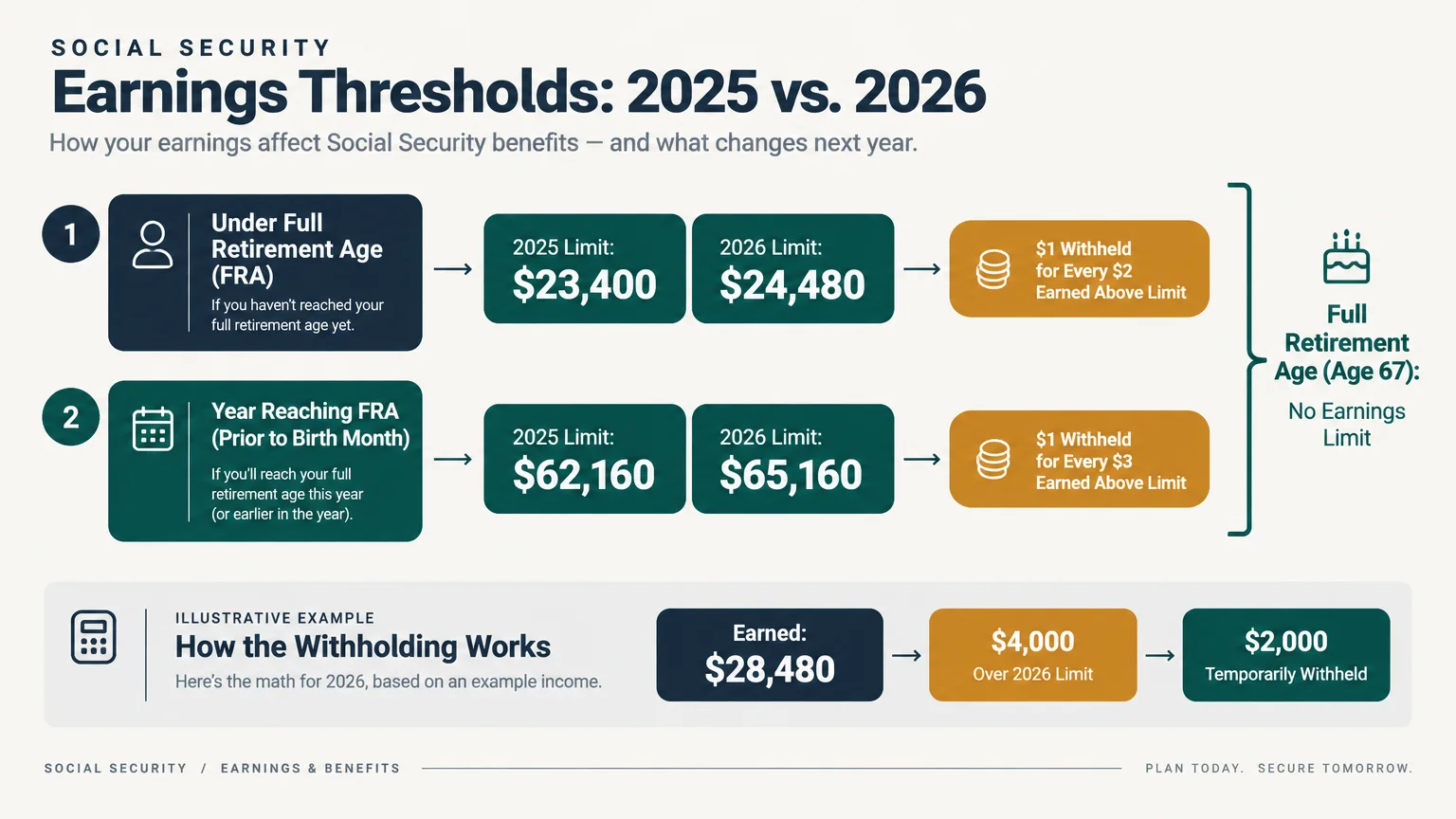
In 2025, you can earn up to $23,400 without penalty; the SSA withholds $1 of benefits for every $2 earned above that limit.
In 2026, according to the Social Security Administration, the earnings threshold rises to $24,480.
During the calendar year you reach FRA, the earnings limit increases significantly to $62,160 in 2025 and $65,160 in 2026.
In that specific year, the agency withholds only $1 for every $3 earned above the limit until your birth month.
Once you reach your Full Retirement Age, the earnings limit disappears completely.
Withheld benefits are not lost forever.
When you hit your FRA, the SSA recalculates your monthly benefit upward to credit back every withheld dollar over time.
For example, if you are 63 and earn $28,480 in 2026, you exceed the limit by $4,000. Social Security temporarily withholds $2,000 from your checks.
| Retirement Age Status | 2025 Annual Limit | 2026 Annual Limit | Withholding Rate |
|---|---|---|---|
| Under Full Retirement Age (Entire Year) | $23,400 | $24,480 | $1 for every $2 earned above limit |
| Year You Reach Full Retirement Age (Months Prior) | $62,160 | $65,160 | $1 for every $3 earned above limit |
| Month You Reach FRA and Beyond | No Limit | No Limit | No withholding; full benefits paid |
Taxes on Retirement Earnings: Watch Your Combined Income
Earning a paycheck while collecting retirement benefits can alter your federal tax bill.
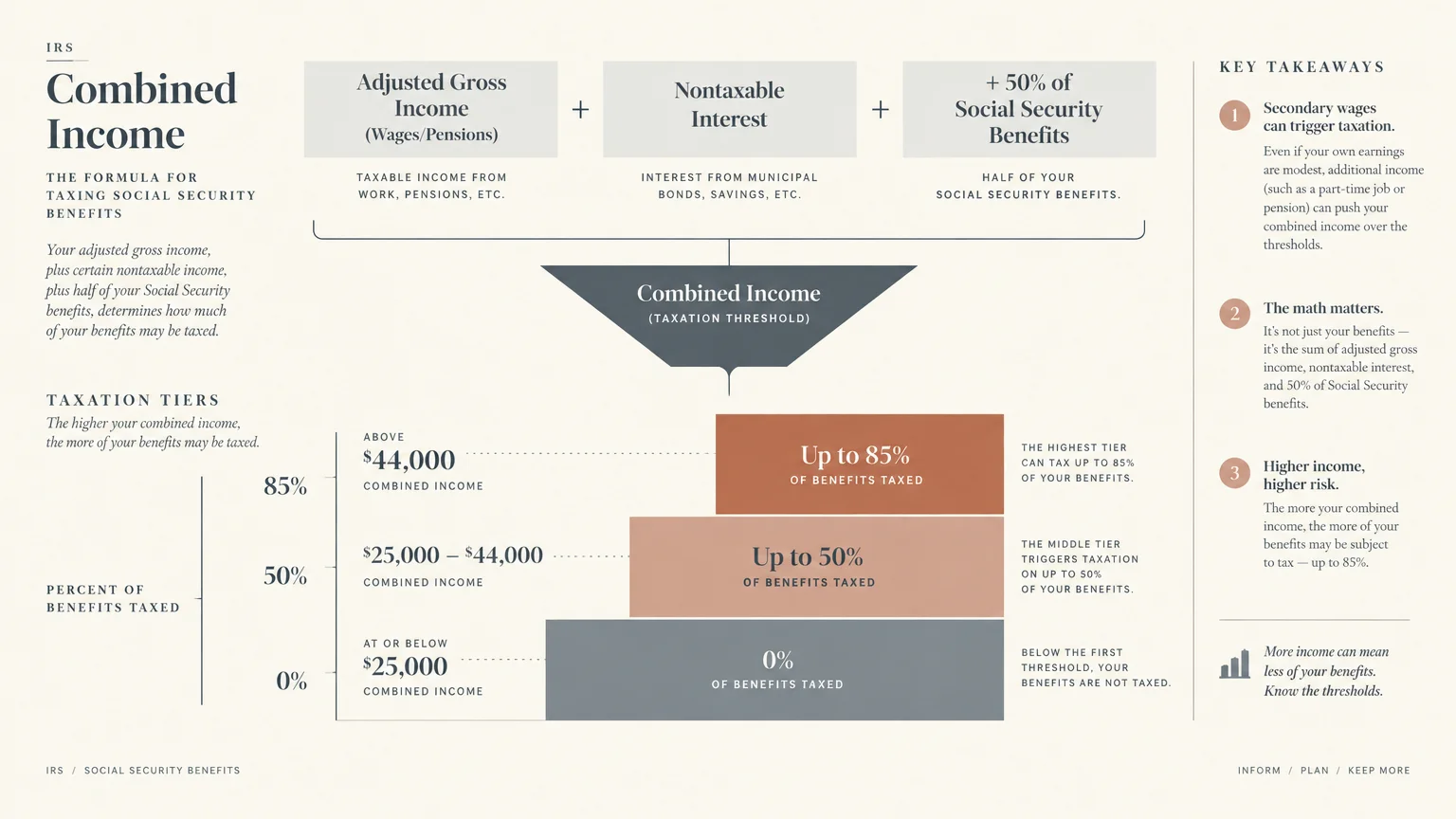
The Internal Revenue Service (IRS) uses a metric called “combined income” to determine whether your benefits face taxation.
Combined income equals your Adjusted Gross Income (AGI), plus non-taxable municipal interest, plus half of your annual Social Security benefits.
If you file as an individual, combined income between $25,000 and $34,000 makes up to 50% of your benefits taxable.
Exceeding $34,000 makes up to 85% of your benefits subject to regular income tax rates.
For married couples filing jointly, those thresholds sit at $32,000 and $44,000, respectively.
Because Congress never indexed these thresholds for inflation, a modest part-time paycheck can easily trigger taxation on your monthly checks.
Additionally, your employer must still withhold standard FICA payroll taxes—6.2% for Social Security and 1.45% for Medicare—from your wages.
Healthcare Coordination: Medicare vs. Employer Insurance
If your retirement job provides health insurance, coordinate your coverage carefully with Medicare.
The critical factor is the size of your employer.
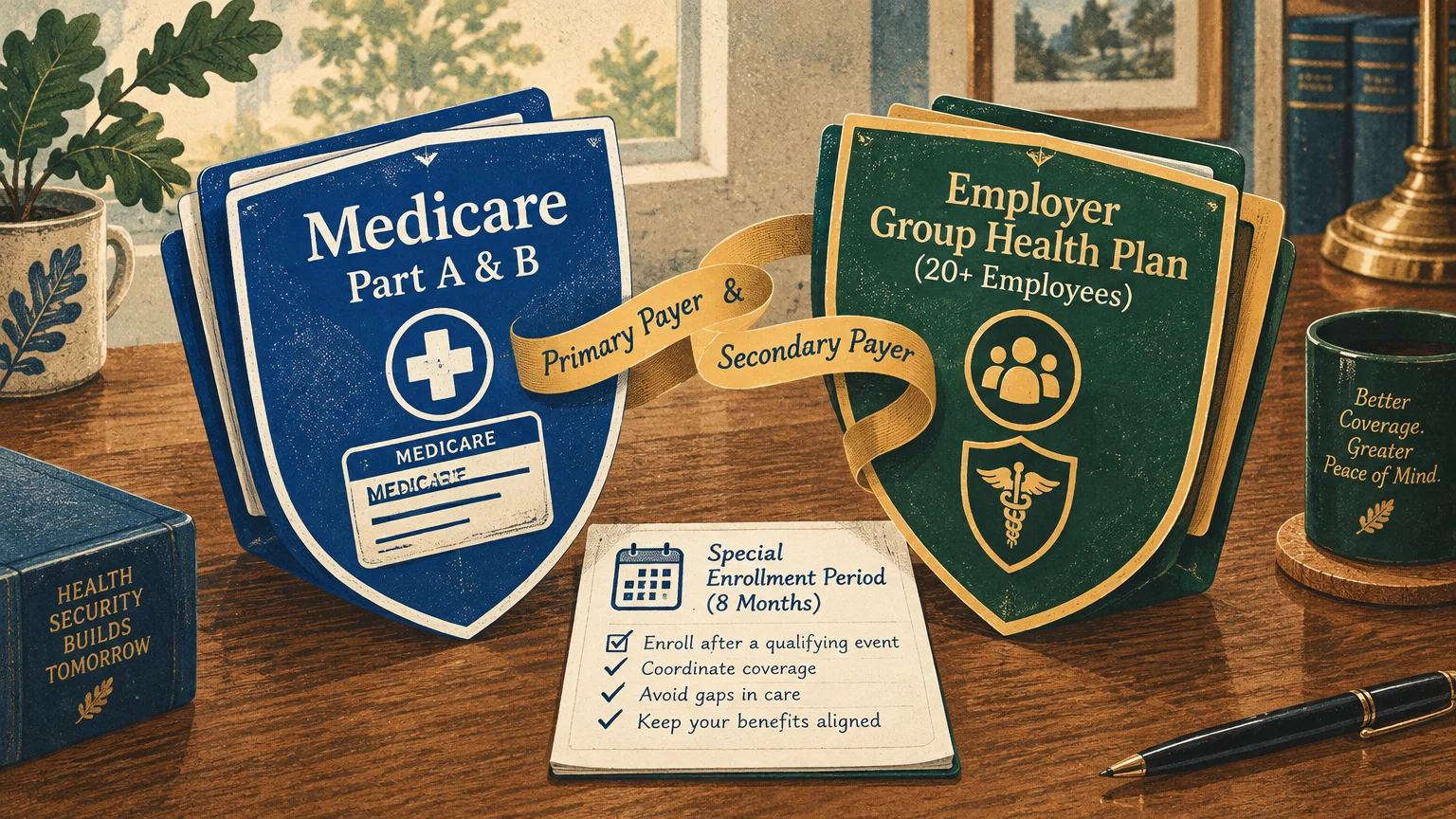
If the company employs 20 or more people, their group health plan acts as primary insurance, allowing you to delay Medicare Part B safely.
If the business employs fewer than 20 workers, Medicare remains primary.
In smaller companies, failing to enroll in Part B on time triggers lifelong late-enrollment penalties and leaves substantial coverage gaps.
Also, you cannot contribute to a Health Savings Account (HSA) once you enroll in any part of Medicare.

Top Retirement Jobs and Flexible Roles
Most older adults prefer flexibility over high-stress demands.
Survey data reveals that 79% of seniors returning to work choose part-time schedules, while only 13% seek full-time roles.
Consider these popular and practical options for retirees:
- Consulting or Freelance Work: Leverage your career expertise to advise former employers or small businesses on project-based contracts.
- School District Positions: Work as a substitute teacher, aide, or bus driver with predictable daytime hours and seasonal breaks.
- Retail and Garden Centers: Share your personal hobbies—like home improvement or gardening—while enjoying staff discounts.
- Remote Customer Care: Provide phone, chat, or administrative support from the comfort of your home office.
- Nonprofit and Community Roles: Coordinate volunteers, lead museum tours, or support local community initiatives.
These roles let you capitalize on decades of real-world experience while safeguarding your personal freedom.
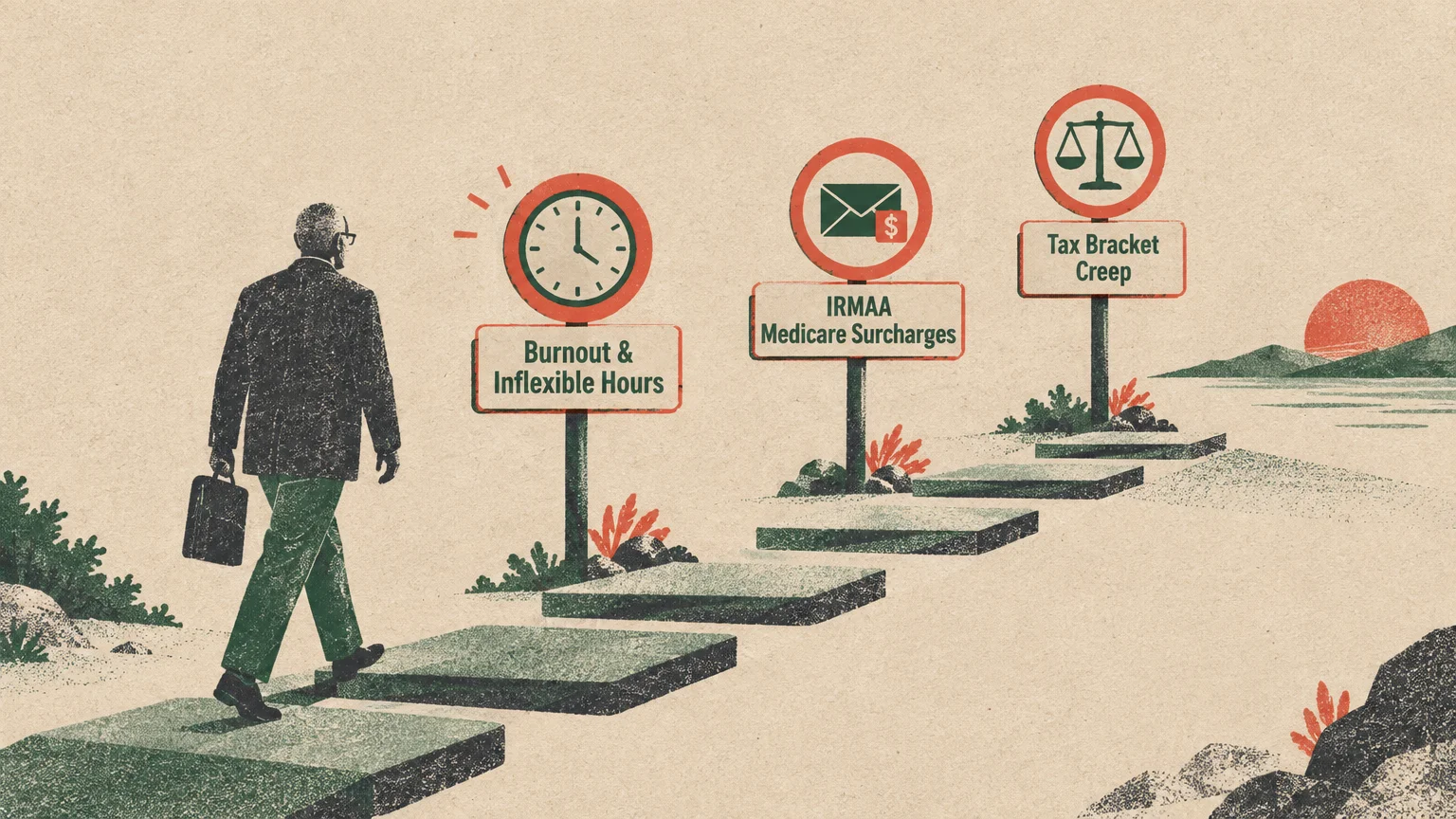
Pitfalls to Watch For
Returning to work brings notable financial advantages, but you must avoid several costly traps.
- Triggering the Earnings Test Early: Earning too much before reaching Full Retirement Age temporarily reduces your monthly Social Security benefit.
- Dropping Medicare Part B Incorrectly: Dropping Part B while working for a small employer (fewer than 20 staff) causes coverage denials and late penalties.
- Underestimating the Tax Bracket Jump: Pushing your combined income past federal thresholds exposes up to 85% of your Social Security to taxation.
- Neglecting Physical Well-Being: Choosing roles with excessive physical strain can jeopardize your health and independence.

Getting Expert Help
Navigating wages, taxes, and government benefits can feel complex.
Consult a qualified tax advisor or fee-only financial planner in these situations:
- Evaluating a Job Offer: A professional can calculate your true net income after factoring in taxes and benefit withholding.
- Navigating Medicare Transitions: A specialist ensures you transition between Medicare Part B and employer group coverage without incurring penalties.
- Suspending Social Security Benefits: If you reach FRA and wish to build delayed retirement credits up to age 70, a planner can map your strategy.
Frequently Asked Questions
Does returning to work permanently reduce my Social Security benefit?
No. If the SSA withholds benefits under the earnings test, it recalculates your check at Full Retirement Age to repay the difference over time.
Can I contribute to an IRA if I work after retirement?
Yes. As long as you have earned wage income, you can contribute to a traditional or Roth IRA regardless of your age.
Do I still pay Medicare and Social Security taxes on my wages?
Yes. Employers must deduct standard FICA taxes from your paycheck, even if you already receive Social Security and Medicare benefits.
Will working after retirement increase my future Social Security checks?
It can. If your current earnings rank among your highest 35 years of wage history, the SSA automatically recalculates your monthly benefit upward.
Next Steps for Your Second Act
Unretiring offers a proven way to enhance financial security, maintain mental sharpness, and build new social routines on your terms.
Before accepting an offer, run the numbers to ensure your earnings align with your Social Security, tax, and healthcare priorities.
The information in this guide is meant for educational purposes. Your specific circumstances—including income, benefits, tax situation, and health needs—may require different approaches. When in doubt, consult a licensed financial advisor or tax professional.
Last updated: February 2026. Benefit amounts, tax rules, and program details change annually—verify current figures with official government sources.









Leave a Reply