
Moving to a new home or changing your legal name can quickly disrupt your monthly retirement payments if federal records fall behind. Updating your details with the Social Security Administration ensures your benefits arrive without interruption.
A simple clerical misstep can delay critical Medicare notices, trigger tax discrepancies, or halt monthly distributions entirely. Fortunately, completing an SSA address update or legal name change requires only a few clear, structured steps.
Following the correct administrative sequence protects your retirement income and shields you from unnecessary bureaucratic headaches. Here is how you can update your Social Security record quickly and accurately.
Step 1: Determine Your Reporting Requirements and Deadlines
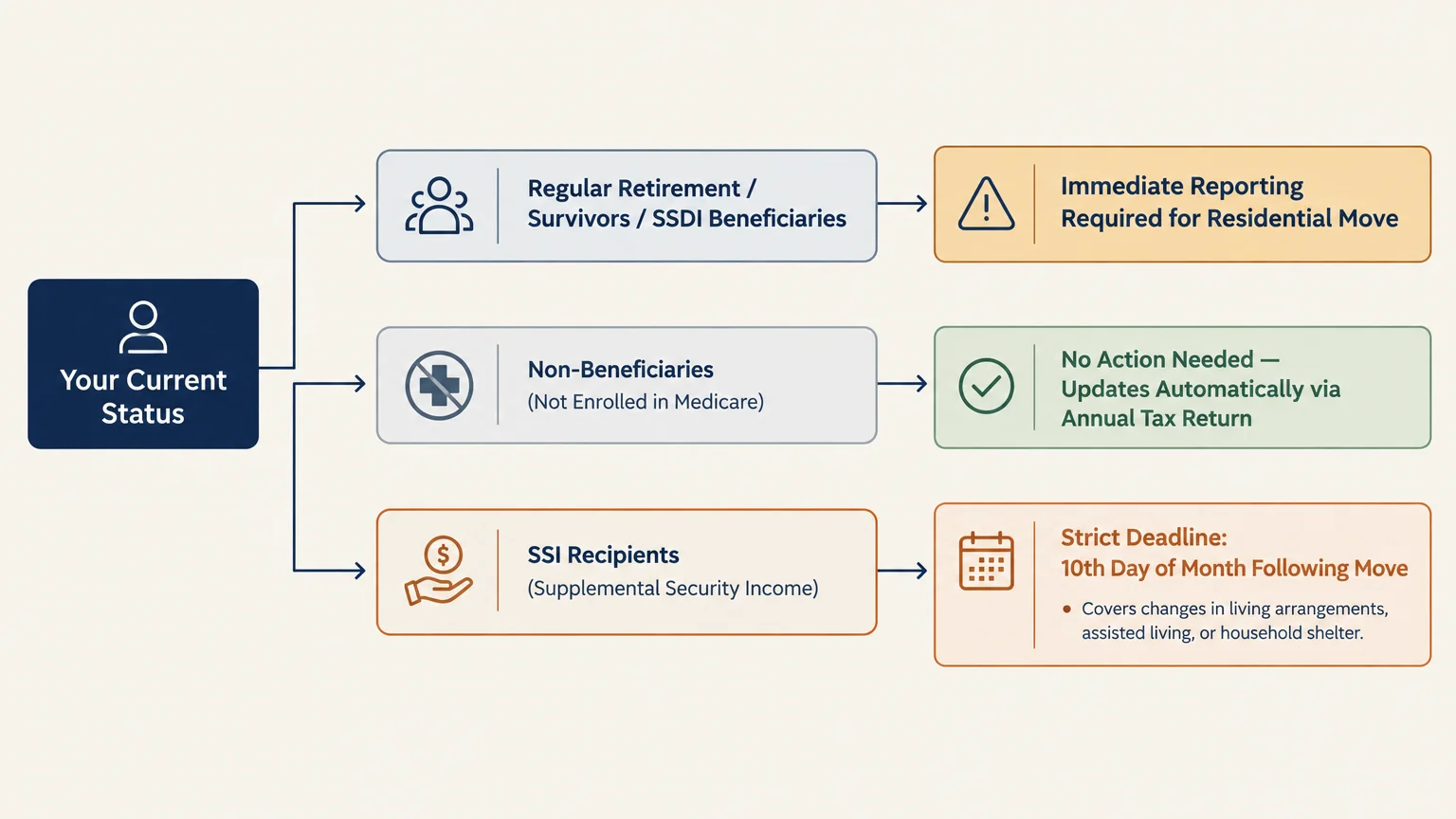
Before submitting any forms, you must clarify whether your recent life change legally requires an immediate notification. Beneficiaries receiving monthly retirement, survivors, or disability insurance must keep their living address current at all times.
If you do not currently collect monthly benefits and have not enrolled in Medicare, you do not need to report a residential move. In that situation, your address simply updates when you file your annual federal tax return.
A legal name change requires prompt reporting regardless of your age or benefit status. Your legal name must match across all federal agencies to safeguard future benefit calculations and prevent identity authentication errors.
Supplemental Security Income recipients face far stricter reporting standards than traditional Social Security retirement beneficiaries. Federal law demands that SSI recipients report any change in residence or household composition without delay.
Specifically, you must report an address or living arrangement change no later than the 10th day of the month following your move. Missing this firm deadline can trigger automatic benefit suspensions or costly overpayment recoupment actions.
Living arrangement changes include moving to an assisted living facility, changing roommates, or receiving free shelter from family members. Any of these transitions can alter your SSI monthly entitlement calculation.
“A big part of financial security is simply keeping your official records pristine and up to date.” — Suze Orman, Personal Finance Author
Take the time to evaluate your specific benefit programs before taking action. Knowing your exact reporting category saves administrative time and keeps your payments flowing smoothly.
Step 2: Check If You Qualify for the Online Name Change Portal
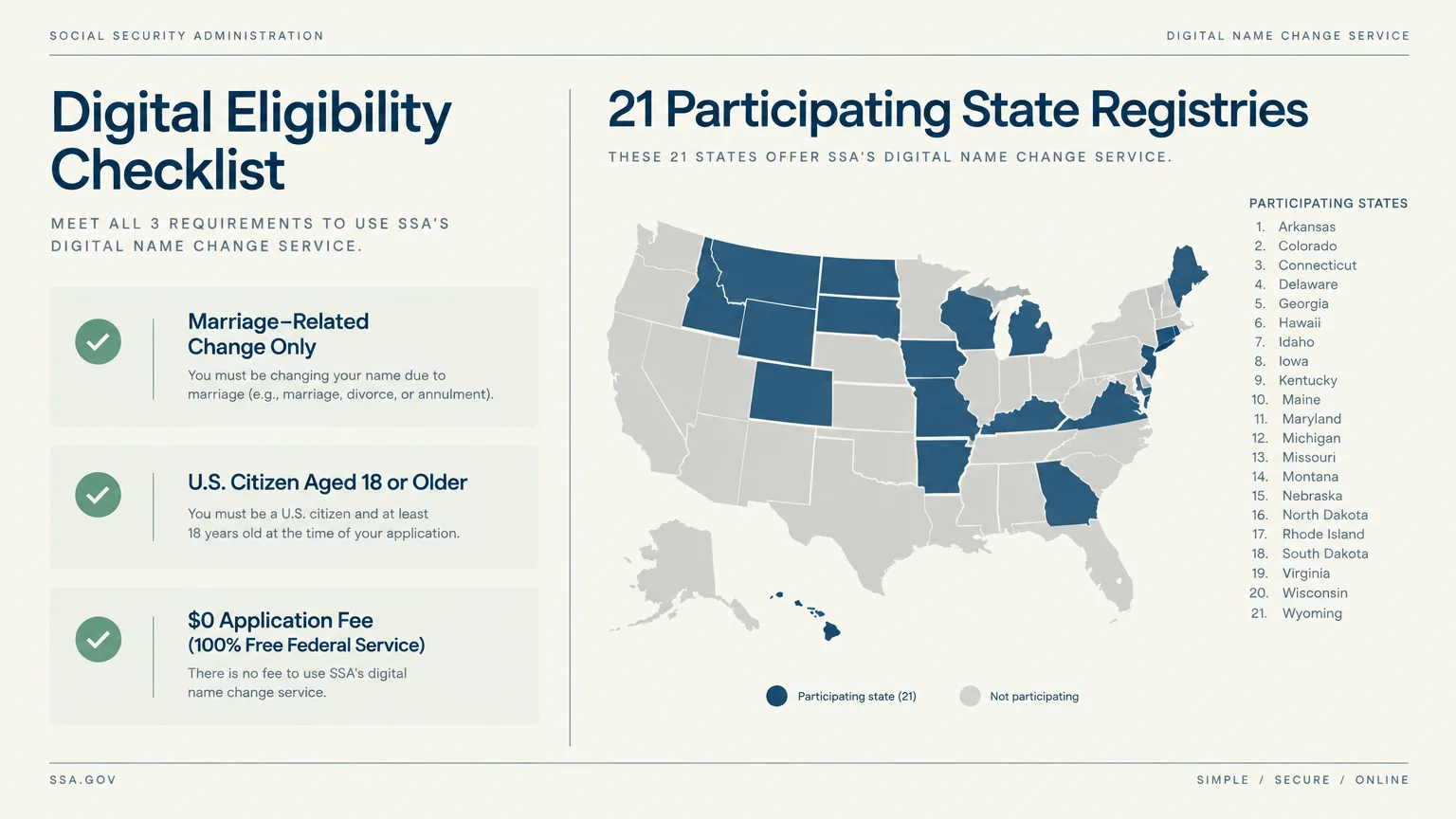
Submitting an application for an SSA name change is entirely free. The federal government never charges an application fee to correct your name or issue a replacement Social Security card.
A fully digital name change process exists, but strict eligibility criteria govern who can use it. You can complete the process online only if you changed your name due to a recent marriage.
Additionally, you must be a U.S. citizen aged 18 or older with an active, verified Social Security Administration online account. Your marriage certificate must also originate from a participating state.
The agency currently interfaces with electronic vital statistics registries across 21 participating states. If your marriage occurred outside these jurisdictions, you cannot complete your name change entirely online.
- Arkansas
- Colorado
- Connecticut
- Delaware
- Georgia
- Hawaii
- Idaho
- Iowa
- Kentucky
- Maine
- Maryland
- Michigan
- Missouri
- Montana
- Nebraska
- North Dakota
- Rhode Island
- South Dakota
- Virginia
- Wisconsin
- Wyoming
Couples must also observe a mandatory administrative waiting period before initiating an online request. The agency advises waiting at least 30 days after your wedding ceremony before submitting your application online.
This 30-day window gives county clerks and state vital statistics departments adequate time to register and transmit your marriage data. Applying prematurely causes electronic verification mismatches that force an in-person office visit anyway.
If you changed your legal name due to divorce or a court decree, you cannot complete the entire process digitally. You will need to prepare physical documents for an in-person or mail-in review.

Step 3: Gather Accepted Legal Identification and Documentation
Federal regulations enforce stringent evidentiary standards when you request an official name modification. The agency accepts only original documents or certified copies issued by the custodial government agency.
Uncertified photocopies and notarized copies are strictly rejected. Submitting unauthorized document reproductions will delay your paperwork and require an additional submission.
To establish your legal name change, you must provide an official document establishing the qualifying life event. Acceptable records include a certified marriage certificate, an official divorce decree, or a court order approving a legal name petition.
Your qualifying legal document must clearly link your prior name to your requested new name. If your divorce decree does not authorize you to resume your prior name, additional documentation is required.
You must also prove your identity using an unexpired government photo identification document. An unexpired U.S. passport, state driver’s license, or state-issued identification card fulfills this primary requirement.
Pay close attention if your legal name change occurred more than two years ago. The agency enforces a special documentation rule for older legal name transitions.
If your legal event occurred over two years ago, you must provide secondary identity documentation displaying your prior legal name. You must submit this historical evidence alongside your new identification card and legal change document.
All applicants filing by paper must also complete Form SS-5, the official Application for a Social Security Card. Ensure every response matches your accompanying identification documents exactly.
Step 4: Schedule an In-Person Field Office Appointment If Necessary
Most field offices across the country manage visitor traffic by appointment rather than walk-in service. Scheduling your appointment in advance eliminates lengthy lobby waits and guarantees agent availability.
If you initiate your application online but cannot complete it digitally, a strict timeline begins. You must present your original evidentiary documents at a field office within 45 calendar days.
Failing to visit the local office within that 45-day window cancels your electronic application entirely. If that occurs, you must restart the entire filing process from the beginning.
To schedule your visit, call the national customer assistance line directly at 1-800-772-1213. Representatives assist callers Monday through Friday between 8 a.m. and 7 p.m. local time.
Deaf or hard-of-hearing beneficiaries can access telephone customer support through the dedicated TTY service at 1-800-325-0778. Early morning and late afternoon calling times often feature shorter telephone hold durations.
When you arrive for your scheduled appointment, bring your completed Form SS-5 and all required original documents. The field office representative inspects your paperwork, verifies security features, and hands your original records back immediately.
Once the agent processes your application, your new card prints at a secure central printing facility. Your replacement card arrives in your physical mailbox within 10 to 14 business days.
Your Social Security number remains identical throughout your life; only the printed name updates on your physical card. Never carry your new card in your wallet once it arrives safely at home.
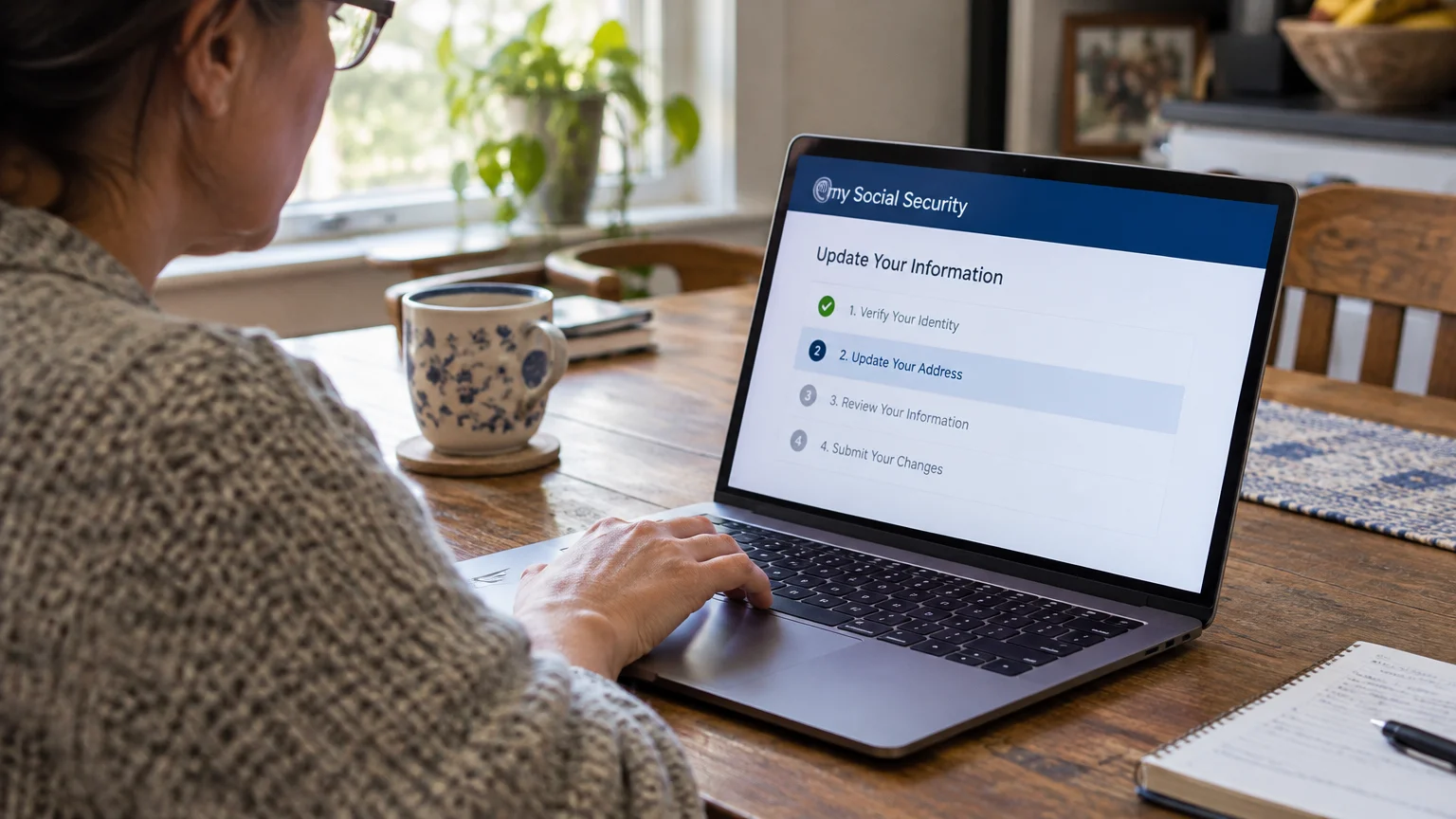
Step 5: Process Your Address Update in Your my Social Security Account
While updating a name requires extensive legal proof, an SSA address update is straightforward. Beneficiaries receiving retirement, survivors, or disability insurance can change their residential record in minutes online.
Begin by accessing your personal dashboard on the official government portal. If you haven’t yet registered your secure profile, create one using Login.gov or ID.me credentials.
Once logged in, navigate to your profile dashboard and locate the primary contact details section. Select the option to update your residential address and your preferred mailing address.
The system allows you to select an immediate implementation date or schedule a future transition date. Scheduling your address change ahead of time ensures seamless delivery when transitioning between seasonal residences.
Review your direct deposit banking information carefully while updating your physical address. If your move involves closing an old bank account, update your checking account numbers simultaneously to prevent payment disruption.
Always print or download the digital confirmation page generated at the conclusion of your transaction. This confirmation record serves as proof of timely reporting should postal delivery disputes arise later.
If you prefer updating your address over the phone, contact the agency at 1-800-772-1213. A phone agent can update your contact profile once you pass standard identity verification questions.
Recipients of SSI who cannot complete address updates online must call or visit their local field office directly. Reporting accurate living costs ensures your monthly SSI supplement remains legally compliant.

Step 6: Coordinate Medicare Advantage and Prescription Drug Plans
When you update your residential address with the agency, your Original Medicare records update automatically. The agency immediately shares your updated address with the Centers for Medicare & Medicaid Services.
However, this federal data exchange does not automatically update private insurance policies. Beneficiaries enrolled in Medicare Advantage (Part C) or standalone Part D prescription plans must notify their insurers directly.
Private health and drug plans maintain contracted medical networks tied to specific county and regional service areas. Moving beyond your existing plan’s designated service territory alters your covered benefit structure.
Relocating outside your plan’s operational boundaries triggers a Special Enrollment Period (SEP). This special window allows you to switch coverage without incurring late enrollment penalties.
Your Special Enrollment Period begins one full month before your scheduled moving date. It remains open for two full months following the month you establish your new residence.
If you fail to select a new regional policy before the enrollment window closes, your coverage lapses. You could face steep out-of-network medical expenses and lifelong Part D late enrollment surcharges.
Visit Medicare.gov during your enrollment window to compare available regional policies. Confirm that your local primary care physicians and essential prescription drugs remain covered under your prospective plan.
Notify your supplemental Medigap insurer of your move as well. While Medigap plans travel nationwide, regional premium rates vary significantly depending on your new ZIP code.
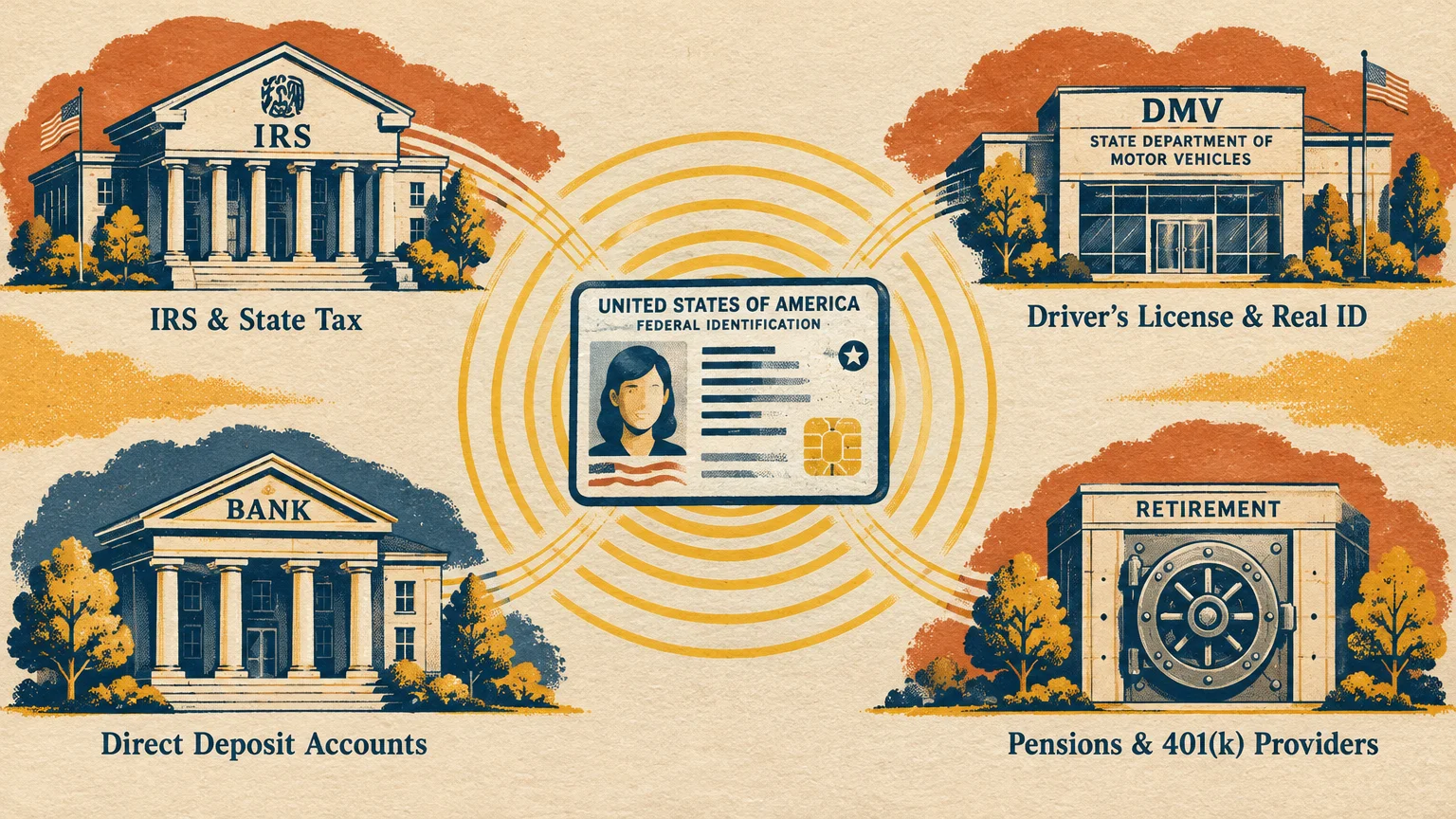
Step 7: Notify Secondary Agencies, Tax Authorities, and Financial Institutions
Updating your federal retirement records is a major milestone, but secondary agencies require attention too. Synchronizing all administrative records prevents identity flags, delayed tax refunds, and missed benefit correspondence.
Submit an official change of address with the Internal Revenue Service by filing Form 8822. Keeping IRS records current guarantees timely receipt of your annual SSA-1099 benefit statements.
If your legal name changed, verify that the agency processes your update before filing your annual tax return. Filing a tax return under a new name before the federal database updates triggers automatic electronic rejections.
Next, visit your state department of motor vehicles to update your driver’s license or state ID card. Federal REAL ID compliance regulations require your state identity card to match your federal database record exactly.
Notify private pension administrators, annuity providers, and former employer benefit coordinators. Discrepancies between your bank account title and incoming pension checks can result in returned or frozen distributions.
Contact your private financial institutions, including retail banks, brokerage houses, and credit card issuers. Financial institutions periodically run automated checks against federal records to comply with mandatory anti-money laundering statutes.
Consult Benefits.gov to determine whether your new home address impacts state-level benefit programs. Income-based assistance such as Medicaid or the Supplemental Nutrition Assistance Program must be transferred between state administrative offices.
Completing these secondary administrative updates establishes consistent identity verification across all platforms. A unified paper trail minimizes security holds and preserves uninterrupted access to your funds.
“Small administrative oversights can create major financial disruptions during retirement if you delay necessary filings.” — Jean Chatzky, Financial Journalist
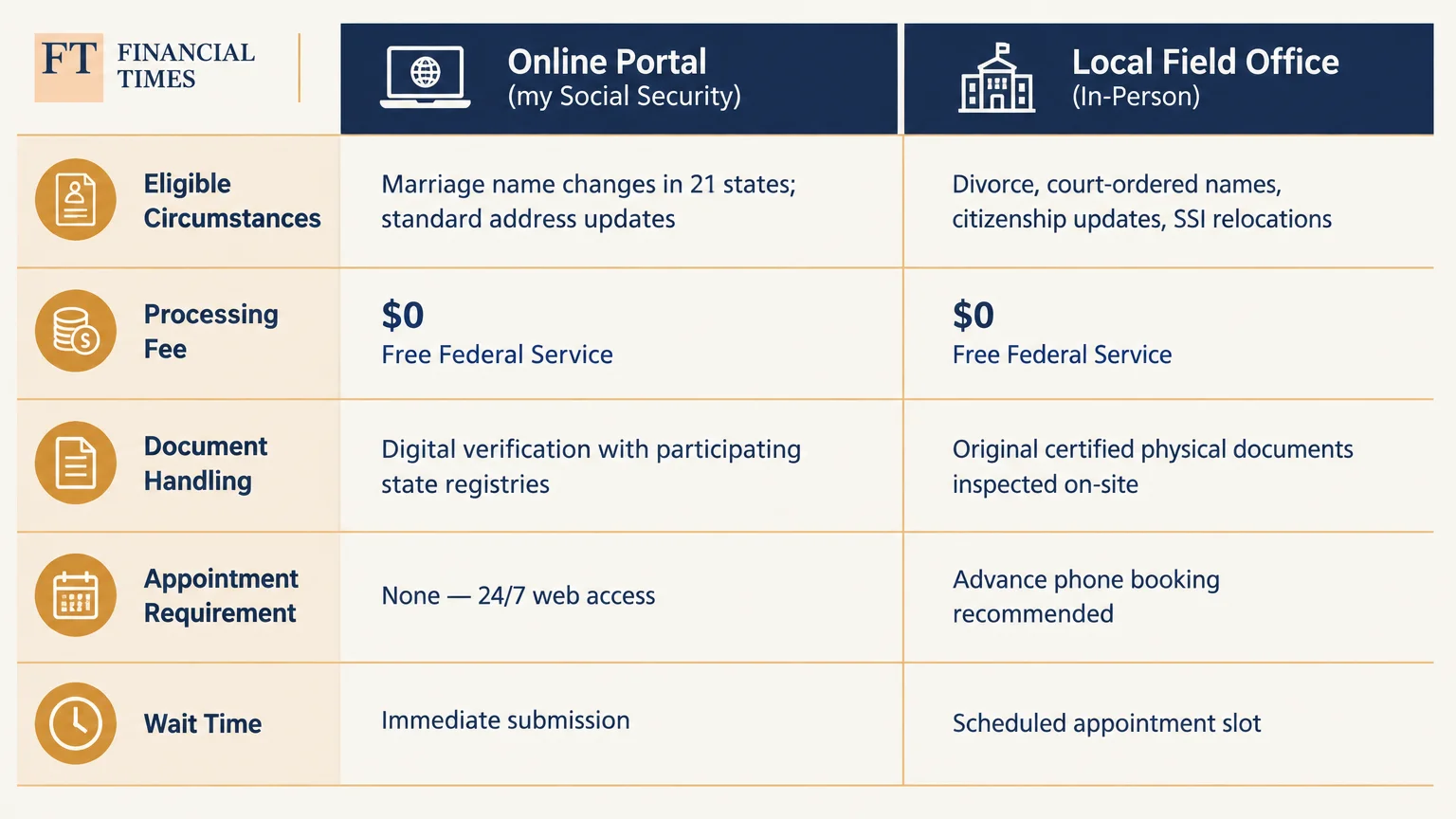
Online vs. In-Person Filing: Comparing Your Social Security Options
Choosing between online self-service and an in-person field office visit depends on your circumstances. Understanding which channel fits your administrative needs saves unnecessary trips and avoids processing delays.
Use the following comparison table to identify the correct administrative pathway for your situation.
| Administrative Action | Available Methods | Required Documentation | Processing Cost | Standard Completion Time |
|---|---|---|---|---|
| SSA Address Update (Retirement / SSDI) | Online portal, telephone, or local office | None; identity verification questions only | $0 (Free) | Immediate online; 1 business day by phone |
| SSA Address Update (SSI Recipients) | Telephone or field office visit | Lease agreement, utility bills, household expense details | $0 (Free) | Processed during appointment; monthly recalculation applies |
| Legal Name Change (Marriage in 21 States) | Online application portal | Marriage certificate verified digitally through state registry | $0 (Free) | Replacement card arrives in 10 to 14 business days |
| Legal Name Change (Divorce, Court Order, or Other States) | In-person field office visit or certified mail | Form SS-5, certified legal decree, and original unexpired photo ID | $0 (Free) | Card arrives 10 to 14 business days after document review |
Reviewing these distinctions helps you assemble appropriate paperwork before contacting customer support. Proper preparation turns an intimidating federal filing into a simple, routine errand.
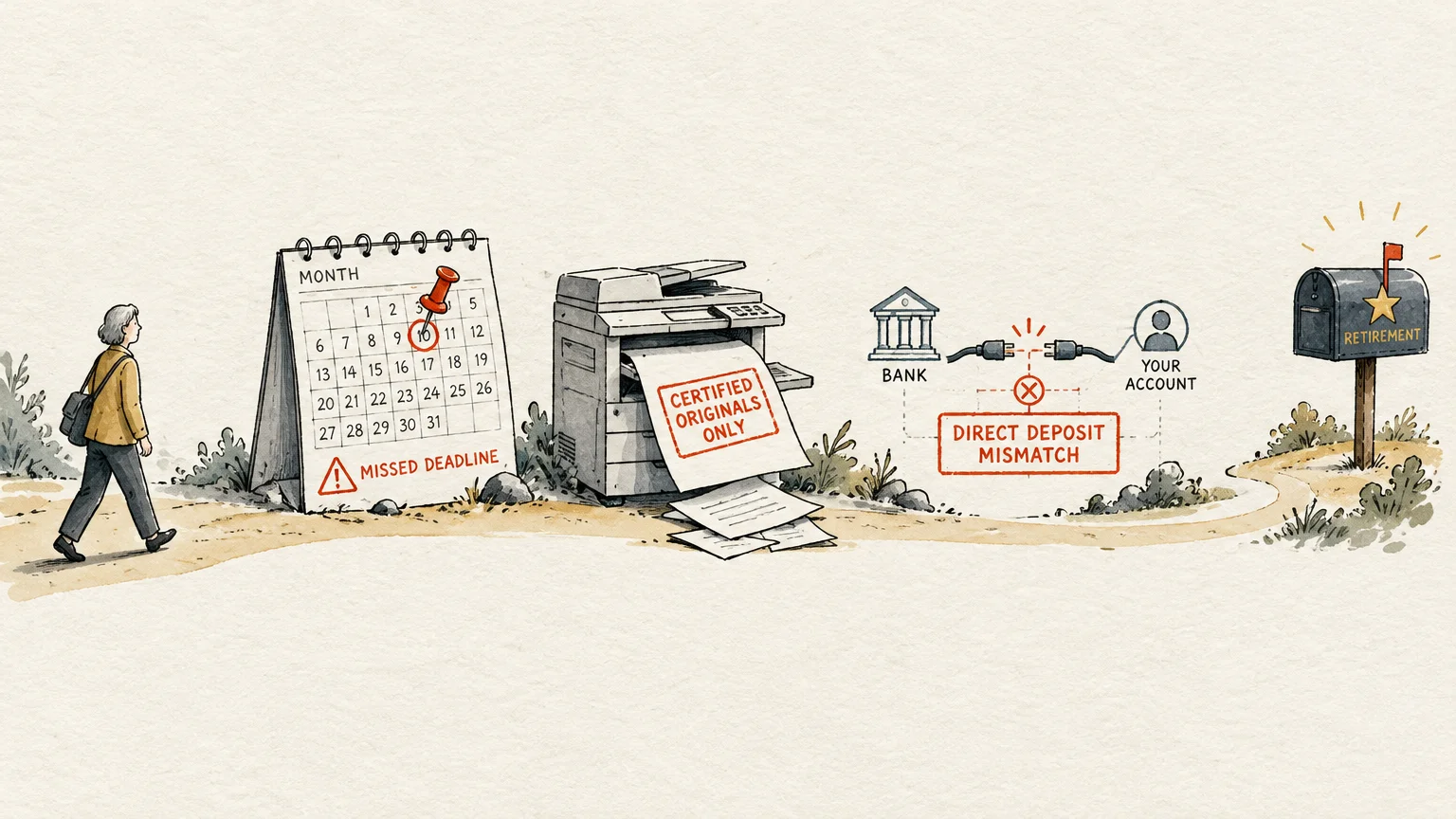
Costly Errors to Sidestep
Many seniors run into administrative delays simply because they misunderstand agency guidelines. Sidestepping these four common missteps protects your time and keeps your monthly retirement payments secure.
Submitting Photocopies Instead of Certified Originals: The agency automatically rejects standard photocopies, notarized copies, and laminated identification cards. You must present the certified original document bearing the issuing agency’s official raised seal or ink stamp.
Missing the SSI Reporting Cutoff: Supplemental Security Income recipients must report address changes by the 10th of the following month. Overlooking this strict reporting window triggers automatic payment withholding and creates painful overpayment liabilities.
Assuming Medicare Advantage Plans Update Automatically: Updating your details with the federal government only updates Original Medicare Parts A and B. Failing to contact your private Part C or Part D insurer directly can leave you without valid local medical or drug coverage.
Paying Third-Party Companies for Free Forms: Predatory websites frequently charge seniors fees ranging from $30 to $100 to file address updates or replacement cards. The Social Security Administration provides all card replacements, name changes, and address modifications completely free of charge.
When DIY Isn’t Enough
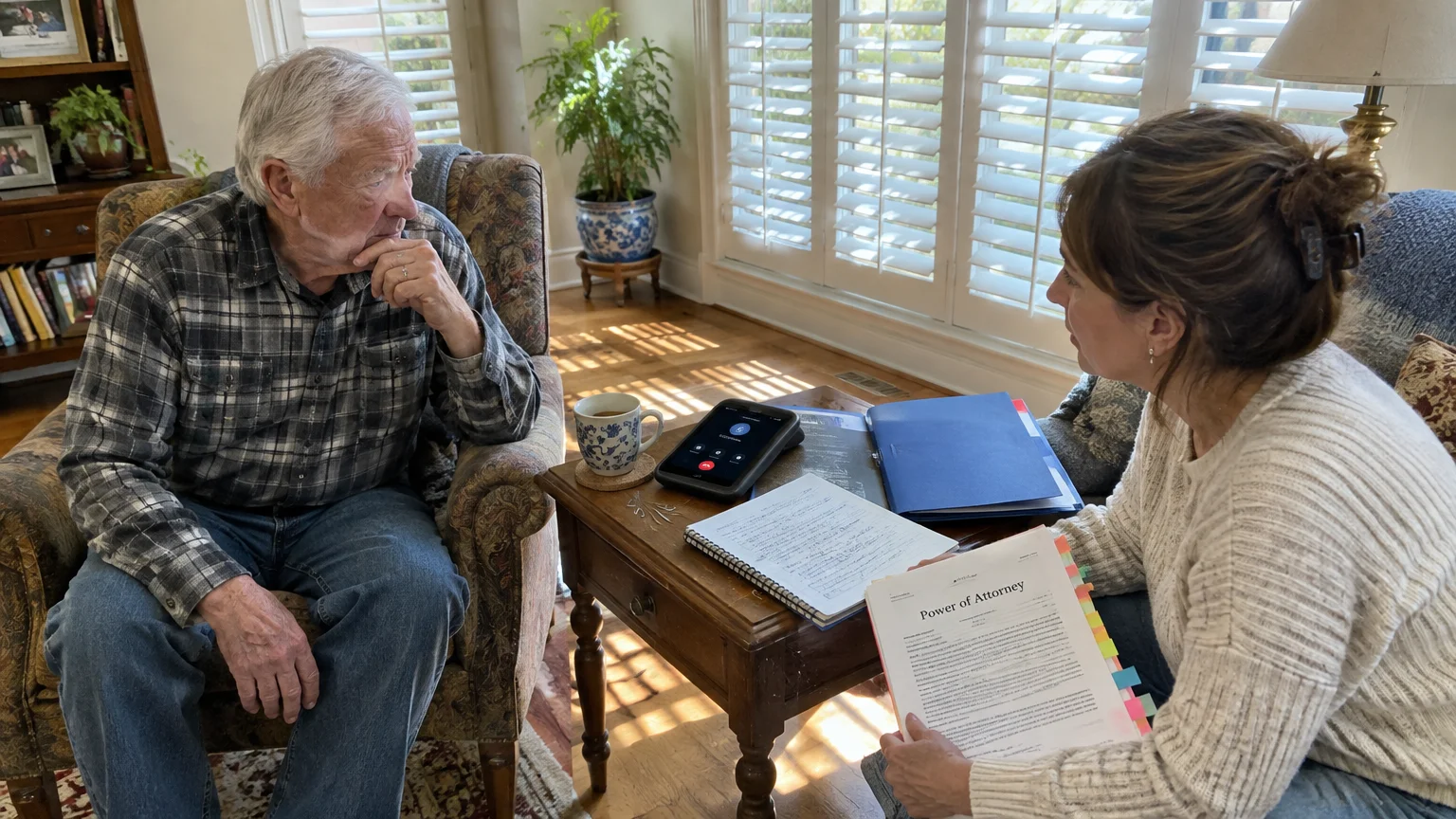
Most retirees handle an SSA address update or card replacement without specialized assistance. However, certain complex legal and financial circumstances warrant direct professional or administrative intervention.
Representative Payee Management: If a court or the agency designates a family member as a representative payee, the beneficiary cannot update contact records independently. The appointed representative payee must present legal credentials directly to the local field office to modify administrative files.
Historic Name Discrepancies: If past marriage licenses, naturalization papers, or divorce records span several decades with spelling variations, self-service tools will fail. You should schedule an in-person interview with a senior claims specialist to reconcile historical records manually.
Foreign Marriage or Divorce Decrees: Documents issued by foreign governments must adhere to strict consular authentication guidelines. You may require certified English translations and apostilles before a federal representative can approve your record modification.
Suspected Fraud or Compromised Identity: If you suspect someone altered your address to divert direct deposit distributions, bypass standard online channels immediately. Visit a local office in person with comprehensive identity documentation to place an immediate protective security block on your record.
Frequently Asked Questions
How much does it cost to update my Social Security card?
Updating your name or address with the federal government costs zero dollars. The agency never charges application fees for issuing updated or replacement Social Security cards.
Can I change my name on my card if my divorce occurred years ago?
Yes, but you cannot use the online portal. Because the divorce occurred over two years ago, you must provide your certified divorce decree, current photo ID, and secondary identification displaying your prior name.
How long does it take for a replacement card to arrive?
Once an agent approves your documentation, your new card arrives by mail within 10 to 14 business days. The agency delivers cards via standard first-class mail through the postal service.
Do I need to report a residential move if I do not receive benefits yet?
No, non-beneficiaries do not need to report residential changes to the agency. Your address updates automatically when you file your annual tax returns with the IRS.
Will an address change affect my monthly benefit payment amount?
Traditional Social Security retirement and disability benefits do not change based on residential address. However, Supplemental Security Income (SSI) payments may adjust if your shelter expenses or living arrangements change.
Taking Action on Your Retirement Records
Keeping your government profile accurate ensures that your monthly retirement checks, medical notices, and tax forms arrive without disruption. Taking prompt action prevents bureaucratic errors from complicating your retirement finances.
Begin by assessing your documentation needs, gathering required certified records, and utilizing online tools whenever eligible. Establishing clean, synchronized records across all institutions provides peace of mind throughout your retirement years.
This is educational content based on general financial principles for seniors. Individual results vary based on your situation. Always verify current benefit amounts, tax rules, and program eligibility with official government sources.
Last updated: October 2026. Benefit amounts, tax rules, and program details change annually—verify current figures with official government sources.









Leave a Reply