

Stepping into retirement brings newfound freedom, but hindsight often reveals financial blind spots that could have saved tens of thousands of dollars and immense stress. Recent studies show that over 70% of current retirees wish they had structured their nest eggs and lifestyle plans differently before leaving the workforce. By looking at the most common financial, healthcare, and timing regrets of those who have already made the transition, you can take concrete steps today to protect your income, limit tax burdens, and secure your future. Whether you are a few years away from calling it quits or adjusting to life in retirement, avoiding these seven critical oversights will keep your financial independence intact.
1. Claiming Social Security Benefits Too Early
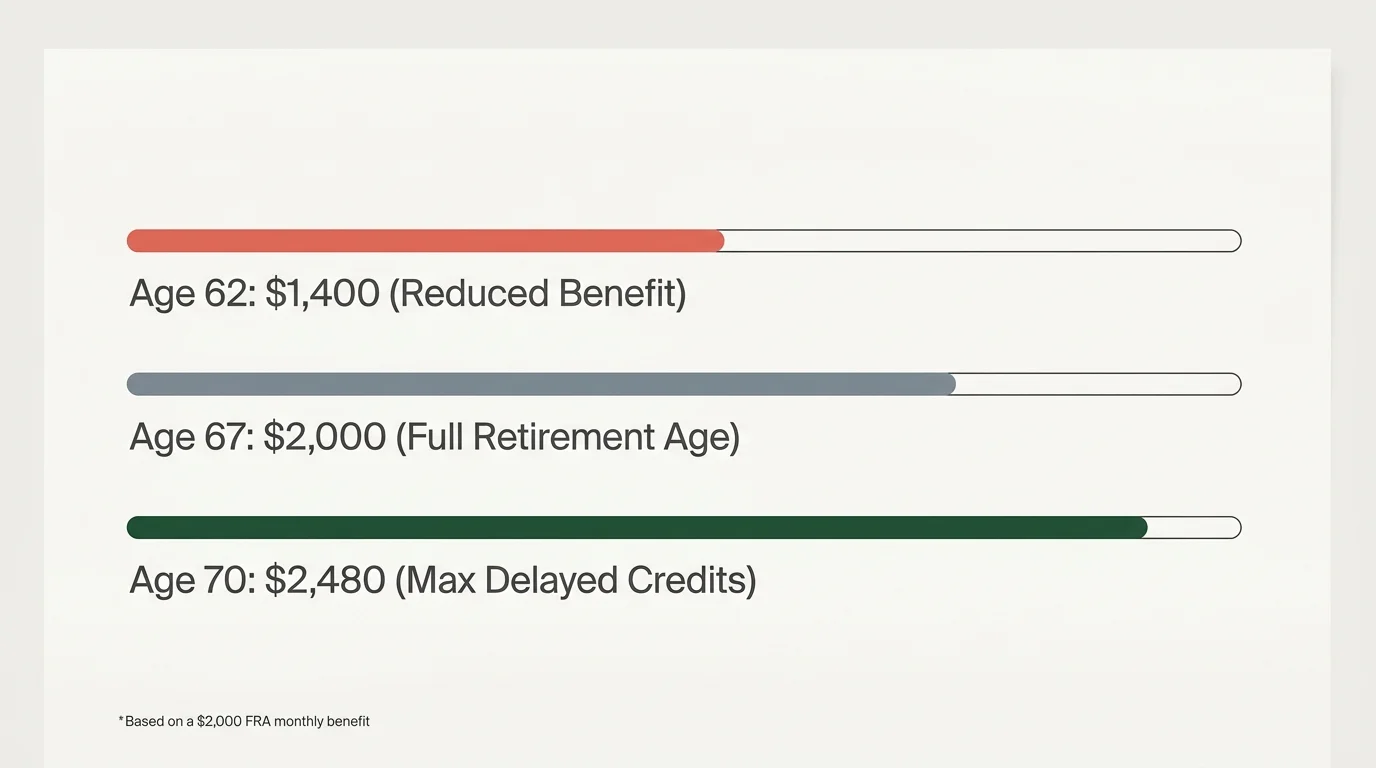
One of the most persistent choices retirees wish they could undo is filing for Social Security as soon as they become eligible at age 62. While taking benefits early offers immediate cash flow, it locks in a permanent reduction of up to 30% compared to your Full Retirement Age (FRA). Furthermore, delaying your claim past your FRA earns you delayed retirement credits, increasing your monthly payout by 8% simple interest for every year you wait up to age 70.
Consider a simple numeric comparison: If your earned FRA monthly benefit is $2,000 at age 67, claiming at age 62 reduces your check to roughly $1,400 per month. On the flip side, waiting until age 70 raises that monthly income to $2,480. Over a 20-year retirement, that decision accounts for well over $200,000 in lost lifetime income. Before locking in a claim, run official estimates on the Social Security Administration website to map out your breakeven age and evaluate how your decision impacts surviving spouse benefits.

2. Underestimating Out-of-Pocket Healthcare and Long-Term Care Costs
A surprising number of pre-retirees assume Medicare covers all medical expenses once they turn 65. In reality, original Medicare leaves significant gaps, including deductibles, coinsurance, prescription drugs, dental, vision, and long-term custodial care. According to Fidelity’s 25th Annual Retiree Health Care Cost Estimate (July 2026), a 65-year-old retiring in 2026 will need an average of $185,500 (or $371,000 for a married couple) in after-tax savings simply to cover healthcare costs throughout retirement—representing a 7.5% increase from 2025.
To prevent medical bills from consuming your nest egg, build a dedicated strategy for out-of-pocket health expenses:
- Maximize Health Savings Accounts (HSAs): If you hold a high-deductible health plan while working, fund your HSA to the maximum limit. These dollars grow tax-free and come out tax-free for qualified medical expenses.
- Shop Medicare Plans Annually: Compare Medicare Supplement (Medigap) and Medicare Advantage policies during open enrollment on Medicare.gov to ensure your coverage fits your medical needs and budget.
- Plan for Long-Term Care: Neither original Medicare nor Medigap covers extended nursing home or home health aide care. Evaluate long-term care insurance or hybrid life policies early while you remain in good health.

3. Retiring Without a Tax-Efficient Withdrawal Strategy
Accumulating a $1 million balance in a Traditional 401(k) or IRA sounds like a solid retirement cushion. However, every dollar withdrawn from pre-tax accounts gets taxed as ordinary income. Retirees frequently express regret over pulling money haphazardly, which inadvertently pushes them into higher federal tax brackets and triggers income-related surcharges on Medicare premiums.
“Tax planning doesn’t end when you retire—it actually becomes far more critical because you control when and where you pull your income.” — Ed Slott, CPA and IRA Expert
You can significantly lower your long-term tax bill by strategically balancing withdrawals across three separate tax buckets: pre-tax accounts (Traditional IRAs), tax-free accounts (Roth IRAs), and taxable brokerage accounts. Executing partial Roth conversions during lower-income years between retirement and the start of Required Minimum Distributions (RMDs) can shield future growth from income taxes. Always check current tax brackets directly with the Internal Revenue Service before executing major portfolio moves.

4. Leaving the Workforce Without Accounting for Early Exit Risks
Many financial calculators assume you will choose your exact retirement date down to the month. Unfortunately, life frequently alters those plans. The Allianz Life 2026 Annual Retirement Study revealed that 42% of retirees left the workforce earlier than planned. Unexpected health challenges prevented 30% of those individuals from continuing work, while sudden job eliminations or corporate restructurings forced 21% out early.
If health issues or layoffs force an early exit before age 65, you face an immediate gap in health insurance prior to Medicare eligibility. You can insulate your household against forced early retirement by building a conservative “cash bridge.” Maintain 12 to 24 months of living expenses in liquid high-yield savings or short-term Treasuries so you never have to liquidate stocks during a market downturn or pay early withdrawal penalties.

5. Carrying High-Interest Debt and Mortgages into Retirement
Entering retirement with fixed income streams and variable debt obligations creates friction in your monthly budget. Data from the 2026 EBRI/Greenwald Retirement Confidence Survey indicates that 29% of retirees report that carrying debt directly impairs their ability to live comfortably. Similarly, Bankrate’s Financial Regrets Survey highlights that failing to save early and carrying heavy debt loads rank as the absolute top financial regrets among older Americans.
Eliminating high-interest credit card debt, personal loans, and auto financing prior to your final working day gives you immediate flexibility. While carrying a low, fixed-rate mortgage into retirement is manageable for some, paying off your primary residence lowers your required monthly income overhead, allowing your investment accounts to last significantly longer. You can explore free debt counseling and consumer guidance through the Consumer Financial Protection Bureau.
6. Overlooking Inflation and Investment Growth Needs
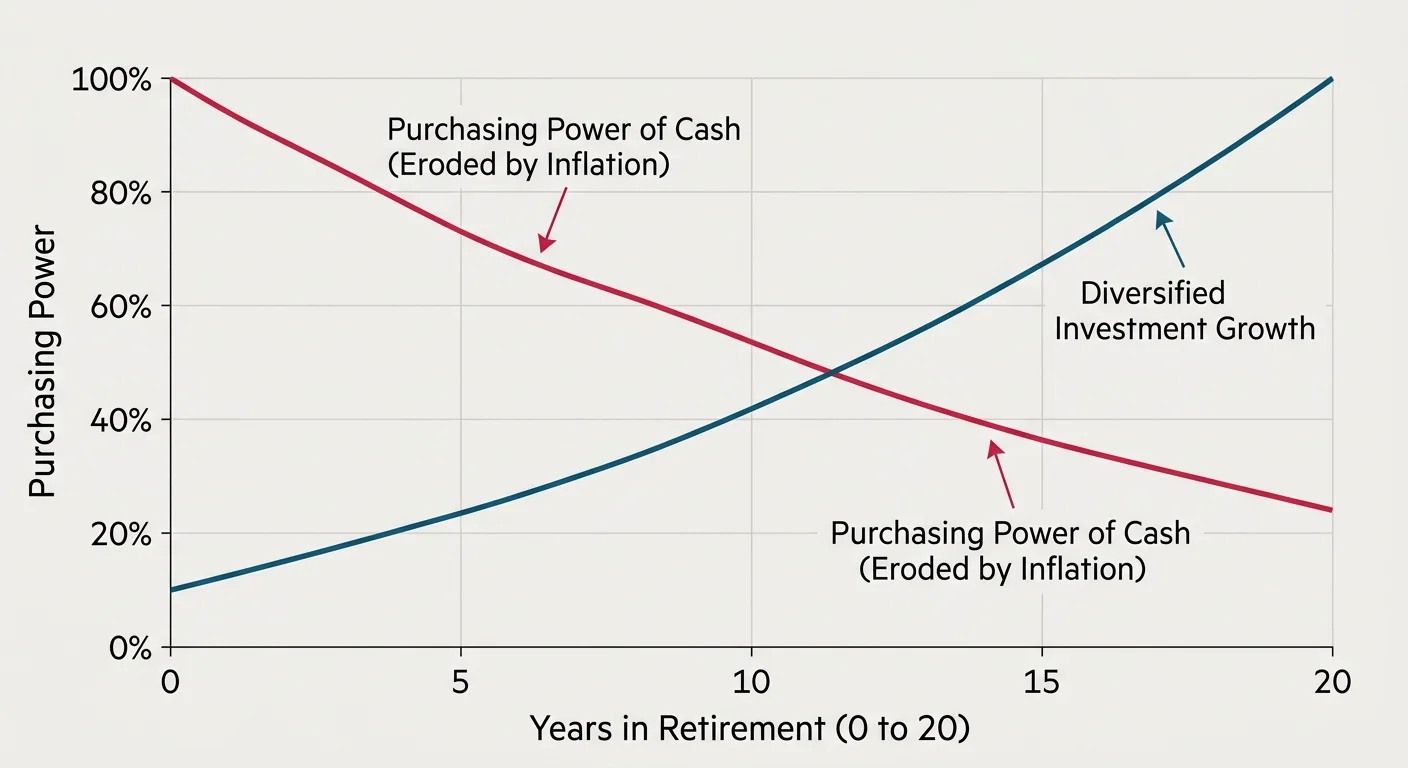
When retirees stop working, anxiety often drives them to move their entire savings portfolio into ultra-safe assets like cash, CDs, or money market funds. While this protects principal in the short term, it leaves your buying power completely vulnerable to inflation over a retirement that could easily last 25 to 30 years.
“Today, equities are downside protection against the loss of purchasing power over time.” — Suze Orman, Personal Finance Expert
Even moderate 2.5% annual inflation erodes nearly half of your purchasing power over 30 years. To ensure your money lasts as long as you do, maintain a diversified portfolio that retains a growth component. A mix of quality dividend-paying equities, inflation-indexed bonds (such as TIPS), and broad market index funds provides essential growth to keep pace with rising consumer prices.

7. Failing to Plan for the Emotional and Lifestyle Transition
A major survey from the Transamerica Center for Retirement Studies revealed that 68% of retirees wish they had a deeper understanding of personal finance and lifestyle planning during their careers. Many retirees focus so intently on financial metrics that they overlook the psychological transition of leaving a long-term career. Without a daily structure, professional identity, or social network, early retirement can lead to social isolation and boredom.
Before handing in your final notice, draft a realistic lifestyle schedule. Identify hobbies, travel goals, part-time consulting interests, or volunteer opportunities. Resources provided by community hubs and the National Council on Aging can help you connect with local programs, fitness opportunities, and volunteer networks to ensure a purposeful, fulfilling retirement.
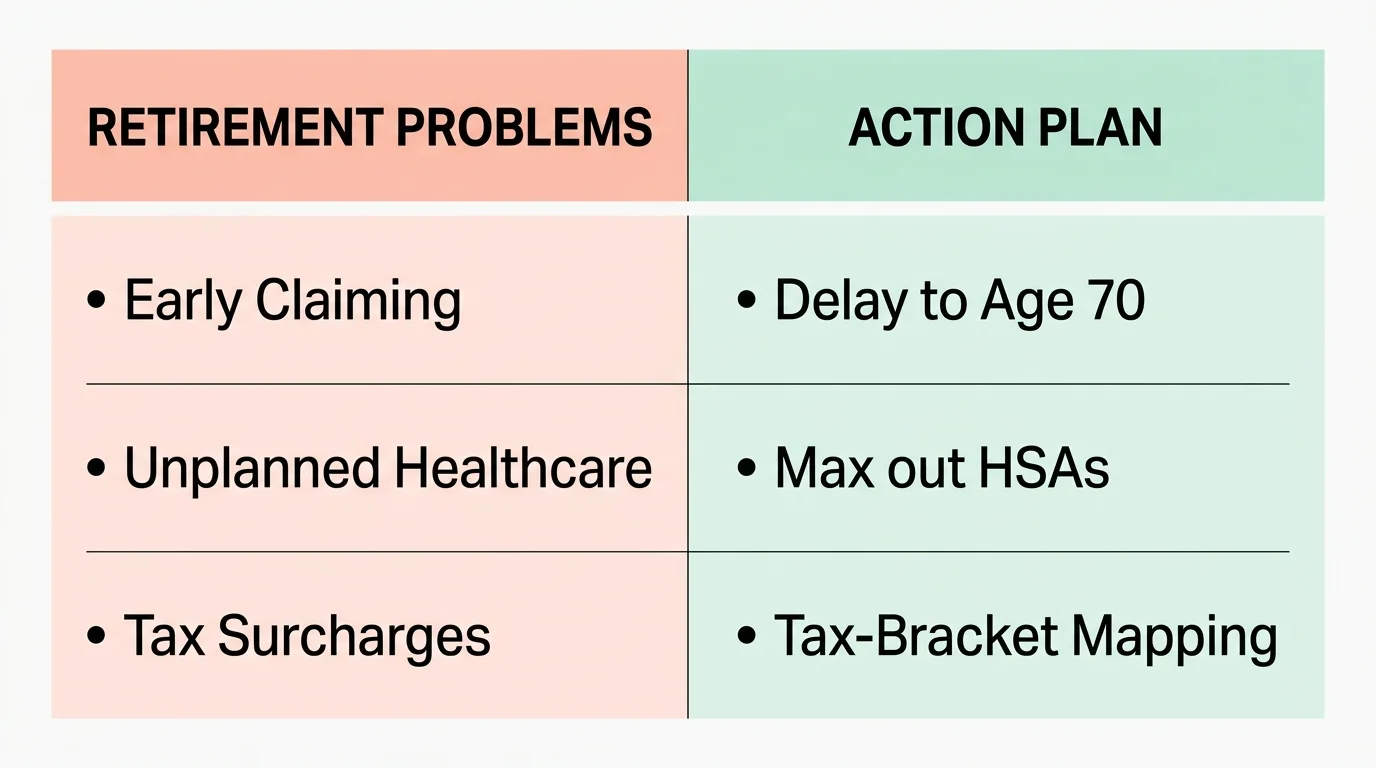
Retirement Regrets Breakdown: Problem vs. Action Plan
| Retirement Regret | Data / Real Impact | Immediate Action Plan |
|---|---|---|
| Early Social Security Claim | Permanent reduction up to 30% in monthly benefits. | Delay claiming toward age 70 to maximize monthly credits and survivor benefits. |
| Healthcare Cost Shock | Average couple needs $371,000 for out-of-pocket care (Fidelity 2026). | Max out HSAs pre-retirement; evaluate Medigap and Medicare Advantage options. |
| Unplanned Tax Liability | Ordinary income tax rates applied to 100% of pre-tax IRA withdrawals. | Execute systematic Roth conversions during low-income retirement bridge years. |
| Forced Early Retirement | 42% leave work earlier than expected due to health or job loss (Allianz 2026). | Establish a 12 to 24-month liquid cash cushion before full retirement. |
| Carrying Debt Load | 29% say debt damages retirement quality of life (EBRI 2026). | Aggressively eliminate high-interest loans and credit cards prior to filing. |
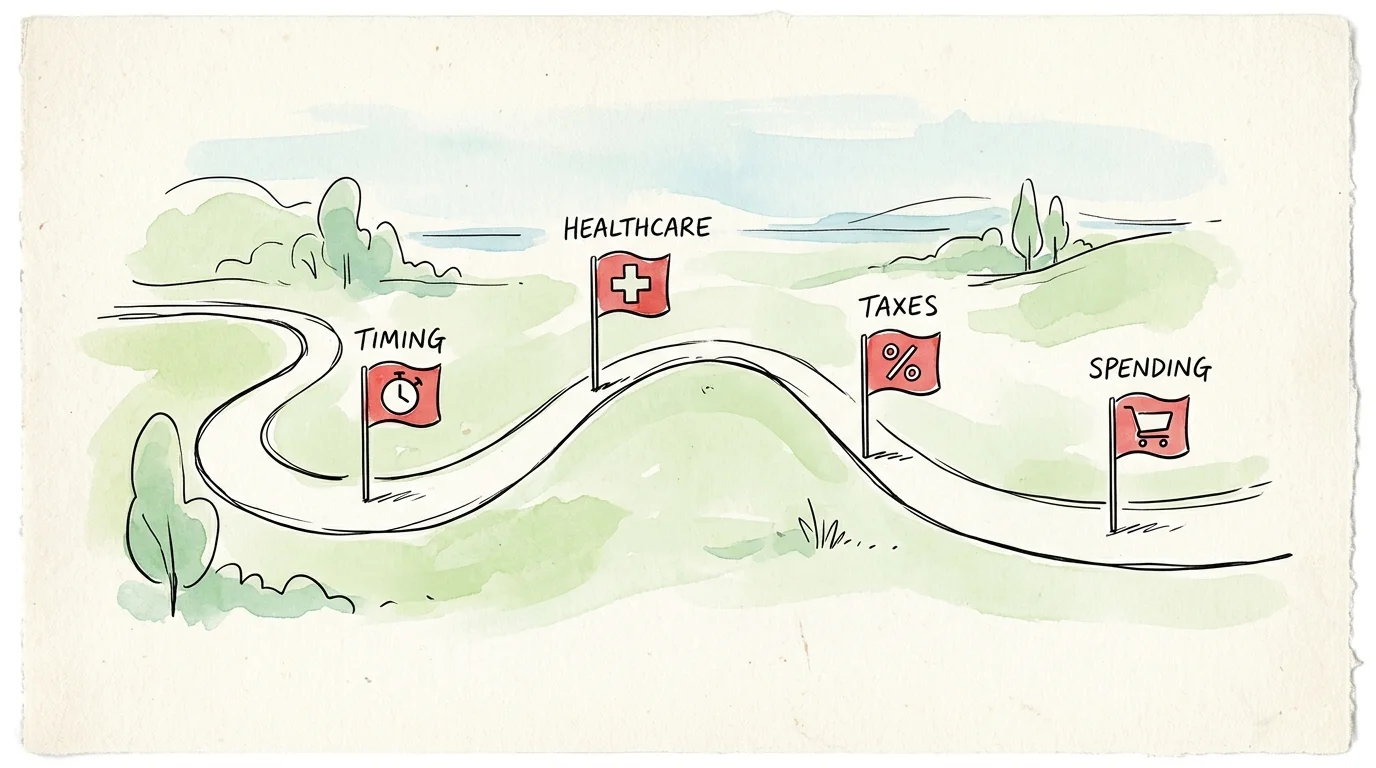
What Can Go Wrong: 4 Common Tactical Mistakes Seniors Make
Even with careful planning, tactical errors can derail your long-term security. Pay close attention to these four common pitfalls:
- Triggering Medicare IRMAA Surcharges: Liquidating a large lump sum from a pre-tax IRA to purchase an RV or pay off a mortgage can spike your modified adjusted gross income, triggering costly Income-Related Monthly Adjustment Amount (IRMAA) surcharges on your Medicare Part B and Part D premiums two years later.
- Ignoring State Tax Rules on Retirement Income: Relocating to a new state without analyzing local tax rules can create unforeseen expenses. Some states tax pensions, Social Security, and IRA withdrawals heavily, while others do not.
- Mismanaging Spousal Benefit Sequencing: If the higher-earning spouse claims Social Security early, they permanently reduce the survivor benefit available to the remaining spouse later in life.
- Over-Gifting to Adult Family Members: Providing excessive financial support to adult children can deplete your liquid savings, leaving you vulnerable to your own long-term care needs down the road.

When to Consult a Professional
While self-directed research provides a solid foundation, specific financial situations require professional intervention. Consider partnering with a fee-only Certified Financial Planner (CFP) or tax professional in these scenarios:
- Managing Complex Pre-Tax Assets: You hold over $500,000 distributed across taxable accounts, Traditional IRAs, and Roth IRAs and need a tax-efficient withdrawal schedule to prevent high RMD taxation.
- Evaluating Pension Payout Options: You must decide between taking a single lump-sum payout or a lifetime joint-and-survivor monthly annuity from an employer pension.
- Navigating an Unplanned Career Exit: You face an unexpected health diagnosis or job loss prior to age 65 and need to structure health insurance coverage and liquid reserves immediately.
- Structuring Estate and Long-Term Care Plans: You want to protect family assets from potential long-term care nursing expenses without exhausting your total net worth.
Frequently Asked Questions About Retirement Regrets
What is the single biggest financial regret retirees report?
According to major consumer research from Bankrate and the TIAA Institute, the most common financial regret among retirees is not starting to save early enough in life. Over 70% of current retirees report wishing they had accumulated a larger total nest egg during their working years.
How can I protect my retirement savings from healthcare costs?
You can protect your savings by maximizing tax-advantaged Health Savings Accounts (HSAs) prior to retirement, enrolling in comprehensive Medigap or Medicare Advantage policies, and evaluating long-term care insurance options well before health complications arise.
Is delaying Social Security until age 70 always the best choice?
Delaying until age 70 provides the highest monthly income, but it may not be ideal for everyone. If you have significant health issues that limit your life expectancy, or if you lack other liquid income sources to cover basic living expenses, filing earlier may be financially necessary.
How much cash reserve should I keep once I retire?
Most financial advisers recommend holding 12 to 24 months of total baseline living expenses in high-yield savings accounts or short-term cash equivalents. This liquidity prevents you from selling stocks during market downturns to cover basic expenses.
Taking control of your retirement trajectory starts with addressing these potential blind spots early. Evaluate your current savings, optimize your Social Security timeline, and create a tax-smart withdrawal plan today so you can enjoy your retirement years with complete confidence. This is educational content based on general financial principles for seniors. Individual results vary based on your situation. Always verify current benefit amounts, tax rules, and program eligibility with official government sources.
Last updated: February 2026. Benefit amounts, tax rules, and program details change annually—verify current figures with official government sources.









Leave a Reply