

Living on your own in retirement gives you independence, yet building regular social connection protects both your health and your retirement budget. Purposeful companionship lowers stress while keeping daily life engaging and active.
Data from the U.S. Census Bureau shows that nearly 28% of community-dwelling Americans aged 65 and older live alone. For women aged 75 and older, that figure reaches approximately 43%.
Discover twelve proven, cost-effective companionship ideas that bring genuine fulfillment to your daily routine without straining your savings.

The True Health and Financial Costs of Loneliness
Chronic loneliness threatens your physical vitality as well as your emotional peace of mind.
The U.S. Surgeon General warns that severe social isolation carries health risks comparable to smoking 15 cigarettes a day.
Isolated seniors experience a 29% higher risk of heart disease and a 32% increased risk of stroke.
Furthermore, prolonged isolation increases your risk of developing dementia by up to 50%.
Hiring commercial companion agencies to fill this void can rapidly drain your retirement nest egg.
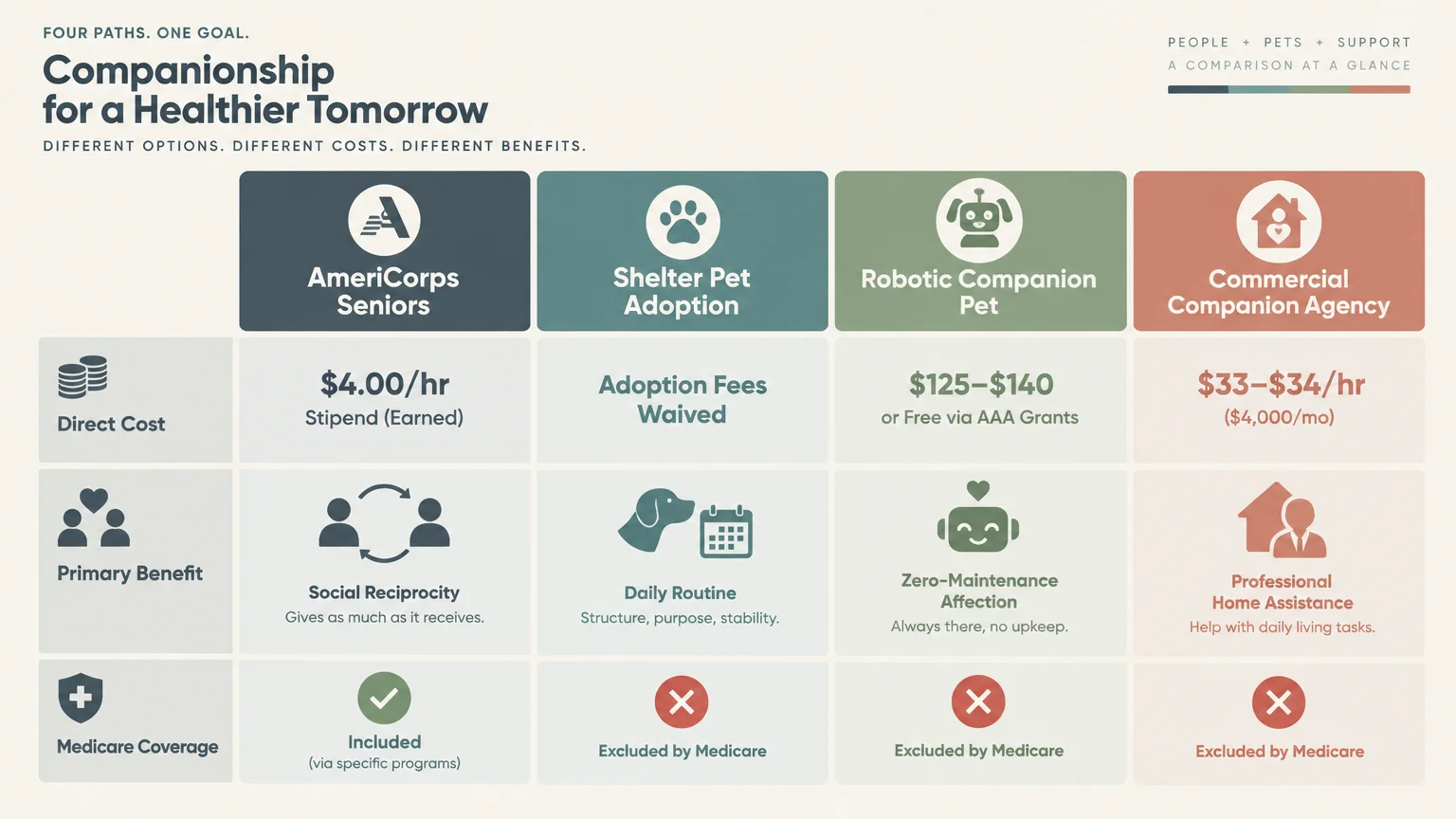
According to the Genworth Cost of Care Survey, non-medical homemaker and companion care averages $33 to $34 per hour nationwide.
Hiring an agency companion for just four hours a day can quickly cost over $4,000 each month.
Many retirees mistakenly assume Medicare will pay for private companion visits.
As detailed on Medicare.gov, Original Medicare excludes non-medical companionship, meal preparation, and custodial homemaker care.
Fortunately, exploring community-focused alternatives protects your savings while expanding your social circle.

12 Rewarding Companionship Ideas for Independent Retirees
1. Serve with AmeriCorps Seniors
Serving with AmeriCorps Seniors allows you to assist peers while earning modest financial compensation.
Programs like the Senior Companion Program match volunteers aged 55 and older with homebound older adults who need friendship.
Income-eligible volunteers receive a tax-free stipend of approximately $4.00 per hour along with travel reimbursements.
Federal guidelines ensure this modest payment does not count against your Social Security, SNAP, or Supplemental Security Income benefits.
2. Adopt a Shelter Pet Through Subsidized Programs
Pets deliver continuous loyalty, emotional comfort, and a predictable daily routine.
Walking a dog outdoors also creates natural conversation starters with neighbors and fellow pet owners.
Programs like Pets for the Elderly partner with animal shelters across the United States.
These initiatives cover adoption costs and initial veterinary exams for adults aged 60 and older.
3. Request an Interactive Robotic Companion Pet
Robotic companion animals provide calming interaction without veterinary bills, feeding schedules, or physical demands.
Interactive robotic cats and dogs feature built-in sensors that respond to touch, vocal tones, and movement.
Popular units like Joy for All retail between $125 and $140.
However, numerous Area Agencies on Aging distribute these interactive pets free of charge through loneliness-reduction grants.
4. Attend Lifelong Learning Institutes
Enrolling in continuing education classes keeps your mind sharp while connecting you with fellow retirees.
The Osher Lifelong Learning Institute (OLLI) operates at over 120 college campuses nationwide.
Members take stimulating non-credit courses in history, literature, and art alongside other curious adults.
In addition, most public community colleges allow senior citizens to audit undergraduate courses for free or at reduced rates.
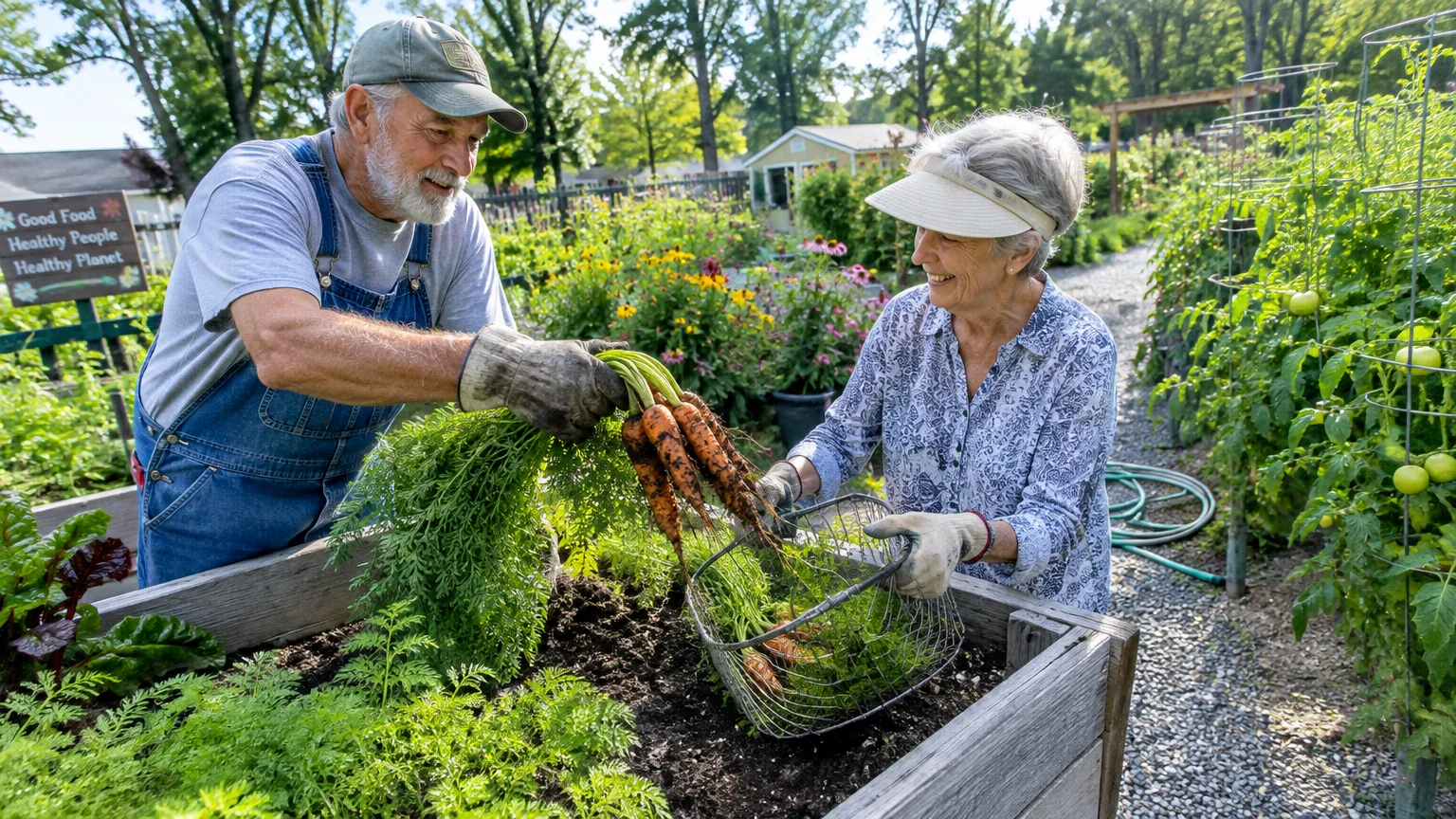
5. Volunteer at Local Food Banks or Community Gardens
Volunteering unites you with passionate neighbors who share your core community values.
Local food banks, community gardens, and historical societies rely heavily on dependable volunteer assistance.
Working together on tangible projects builds deep social ties far faster than formal social mixers.
Dedicating three to four hours a week gives your calendar structured social momentum.
6. Explore Intergenerational Home-Sharing
Home-sharing pairs older homeowners with compatible renters seeking affordable living spaces.
In exchange for reduced rent, younger housemates often help with grocery shopping, light chores, and evening companionship.
Services like Silvernest provide background screenings, compatibility matching tools, and standard lease agreements.
This living arrangement provides reliable peace of mind while bringing vibrant energy into your home.
7. Participate in Local TimeBanks
TimeBanks create local networks where neighbors trade personal skills and services without using currency.
For every hour you spend teaching a craft or gardening for a neighbor, you earn one time credit.
You can spend that credit on home repairs, transportation assistance, or a friendly social home visit.
This reciprocal exchange builds mutual respect and reminds you that your talents remain deeply valuable.
8. Visit Senior Centers for Low-Cost Luncheons and Activities
Modern senior centers serve as lively community hubs offering social, recreational, and wellness programming.
Most centers provide low-cost congregate meals where you can share hot lunches with fellow residents.
Daily activities range from duplicate bridge and book discussions to watercolor painting and line dancing.
Locate your closest public senior center using the federal Eldercare Locator.
9. Join Free Senior Fitness and Walking Groups
Exercising in a group keeps your body resilient while introducing you to health-conscious friends.
Many Medicare Advantage and Medicare Supplement policies include free memberships through programs like SilverSneakers or Renew Active.
Participating gyms offer senior-focused classes, heated pool sessions, and organized walking clubs.
Regular morning walks create a healthy social routine that you can look forward to every week.
10. Engage in Faith-Based and Non-Denominational Fellowship
Churches, synagogues, mosques, and secular humanist societies host warm weekly fellowship gatherings.
These communities provide book discussions, choir practices, committee projects, and social breakfasts.
Many groups maintain organized care networks to visit homebound members and offer assistance during illness.
Attending these weekly functions grounds your routine within a caring, supportive network.
11. Host a Rotating Neighborhood Gathering
Starting an informal neighborhood circle allows you to cultivate friendships right on your street.
Consider hosting a monthly book swap, board game afternoon, or front-porch coffee gathering.
Rotating the meeting house among participants keeps costs low and spreads out hosting duties.
Small, recurring gatherings provide low-pressure social interaction without high expectations.
12. Tap into Interactive Virtual Senior Communities
Virtual platforms offer rich interactive experiences when limited mobility or bad weather keeps you home.
Organizations like Senior Planet, powered by AARP, host live interactive online classes daily.
You can participate in live video workshops covering creative writing, fitness, digital literacy, and personal finance.
Interactive group discussions help you meet friendly peers across the country without leaving your living room.
Comparing Senior Companionship Options
Evaluating each activity by cost, time commitment, and setting helps you choose the best match for your lifestyle.
| Companionship Option | Average Cost | Time Commitment | Social Setting | Primary Benefit |
|---|---|---|---|---|
| AmeriCorps Seniors | Free ($4/hr stipend earned) | 5–20 hours/week | One-on-one or small group | Purpose and modest income support |
| Senior Center Programs | Free to nominal ($0–$5) | Flexible / Drop-in | Group setting | Daily hot meals and varied recreation |
| Subsidized Pet Adoption | $0–$100 upfront fee | Daily commitment | In-home and outdoors | Unconditional love and daily routine |
| Lifelong Learning (OLLI) | $50–$250 per term | 2–6 hours/week | Classroom or virtual | Cognitive stimulation and peer debate |
| Virtual Senior Networks | Free | Flexible hours | Online live video | Accessible anywhere with home internet |
| Private Companion Agencies | $33–$34 per hour | Scheduled shifts | One-on-one at home | Dedicated personal assistance |
Expert Insights on Staying Connected
“Retirement is not just about having enough money in the bank; it is about building a social network that gives your days purpose and connection.” — Jean Chatzky, Financial Journalist and Author
Social wellness directly reinforces your long-term financial security.
Retirees with active social networks stay sharper, spot fraudulent schemes faster, and avoid costly emotional isolation.

Pitfalls to Watch For
1. Over-Relying on Commercial Home Care for Socialization
Hiring non-medical agencies solely for companionship can rapidly deplete your retirement capital.
At median rates of $33 to $34 per hour, regular visits create an unsustainable long-term financial burden.
Reserve paid agency care for essential personal care, and utilize community programs for routine companionship.
2. Falling for Companionship and Romance Scams
Financial predators routinely target older adults seeking connection on social media and dating platforms.
The Consumer Financial Protection Bureau (CFPB) warns against sending money to online acquaintances who report sudden financial emergencies.
Never share financial details, wire funds, or purchase gift cards for individuals you have only met through the internet.
3. Misunderstanding Medicare Benefit Boundaries
Many retirees delay joining community groups because they expect Medicare will eventually send companion caregivers.
Medicare covers medical therapy and skilled nursing interventions rather than social companions.
Review your Medicare Advantage supplemental benefits, but depend primarily on local community resources for social connection.
4. Overcommitting to High-Stress Activities
Joining too many volunteer committees or intensive organizations can trigger unwanted stress.
Begin with one low-pressure activity so you can gauge how it fits your physical energy levels.
True companionship should refresh your spirit rather than feel like a stressful professional obligation.

Getting Expert Help
When Limited Mobility Restricts Your Travel
If driving challenges prevent you from leaving home, contact your local Area Agency on Aging.
Staff members can connect you to subsidized senior transit, volunteer drivers, or telephone reassurance services.
When Tight Budgets Restrict Activity Fees
If living costs leave you with minimal discretionary spending, consult the National Council on Aging (NCOA).
Their free BenefitsCheckUp tool matches you with programs that help cover utility costs, food, and recreation.
When Navigating Prolonged Grief
Lingering sadness after losing a spouse requires professional support rather than casual group activities.
Consult your primary physician to access Medicare-covered mental health evaluations and specialized bereavement groups.
Frequently Asked Questions
Does Original Medicare pay for non-medical companion visits?
No, Original Medicare (Parts A and B) does not cover non-medical companion care or homemaker services.
Some Medicare Advantage plans offer modest supplemental benefits, but coverage varies by region and provider.
How can I find free companion programs in my neighborhood?
Call the federal Eldercare Locator at 1-800-677-1116 to connect directly with your regional Area Agency on Aging.
Agency specialists can refer you to subsidized senior centers, volunteer visitors, and free meal clubs.
Will an AmeriCorps Seniors volunteer stipend reduce my Social Security?
No, federal law explicitly exempts the AmeriCorps Seniors hourly stipend from income calculations.
Receiving this stipend will not reduce your Social Security benefits, Supplemental Security Income, or SNAP assistance.
What if I cannot physically care for a live pet?
Interactive robotic pets provide responsive purring and barking without the work of walking or feeding.
Check with your local aging agency to see if they distribute free robotic pets funded through community wellness grants.
Moving Forward with Confidence
Cultivating a rich social circle takes small, consistent steps over time.
Select one idea that excites you this week, reach out to the coordinator, and start expanding your community.
The information in this guide is meant for educational purposes. Your specific circumstances—including income, benefits, tax situation, and health needs—may require different approaches. When in doubt, consult a licensed financial advisor or tax professional.
Last updated: February 2026. Benefit amounts, tax rules, and program details change annually—verify current figures with official government sources.









Leave a Reply