

Planning for long-term care before age 60 protects your hard-earned retirement portfolio and preserves your financial independence. Addressing this milestone in your fifties locks in lower insurance rates and prevents catastrophic medical expenses later.
Nearly 70 percent of Americans turning 65 will eventually need assistance with daily living activities. Unfortunately, waiting until your late sixties limits your choices and leaves you vulnerable to sudden medical disqualification.
Proactive long-term care planning gives you total control over where and how you receive treatment. Here is what you must understand before reaching your sixtieth birthday.
1. Nearly 70 Percent of Older Adults Will Require Care
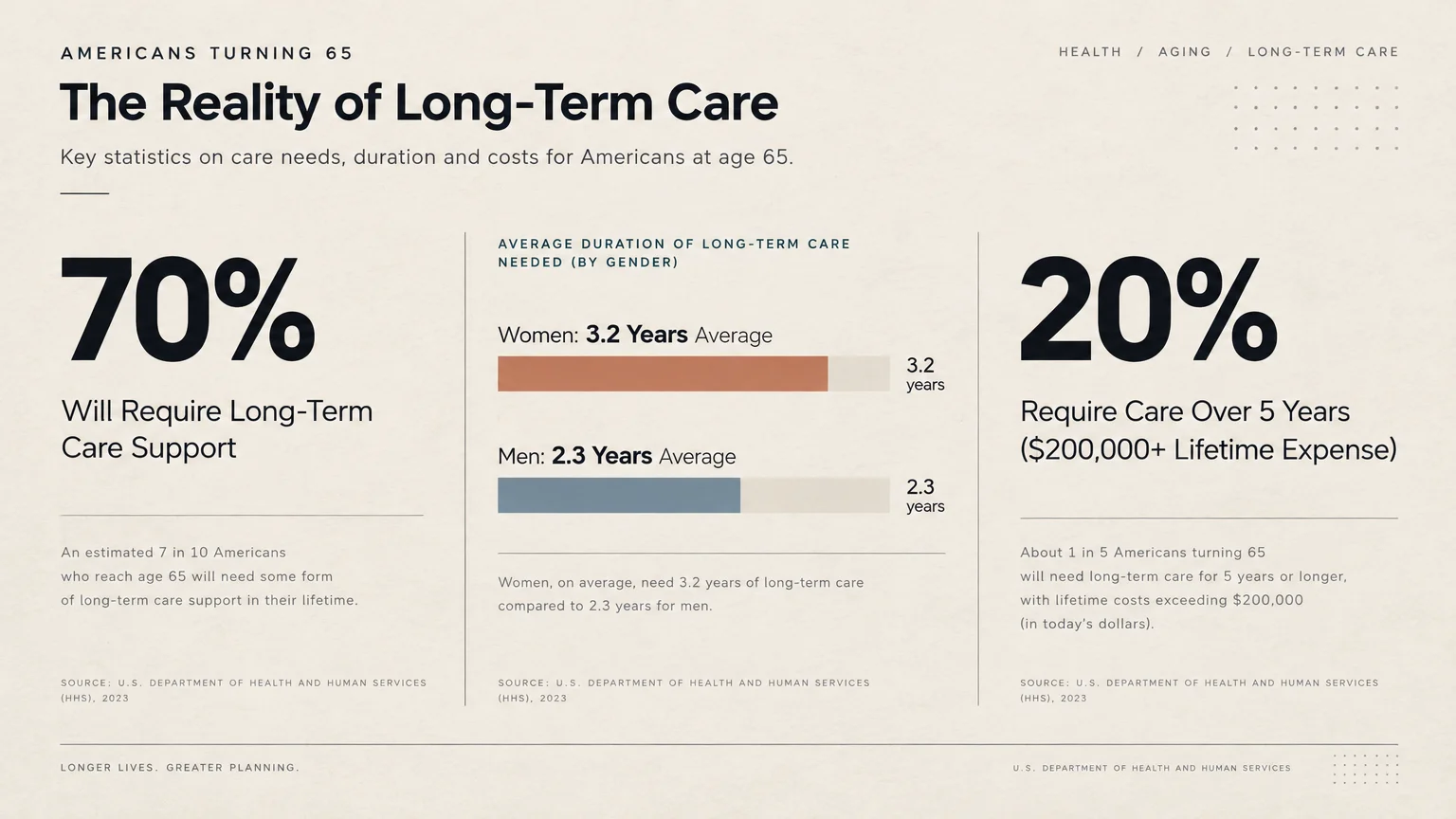
Long-term care is not an unlikely scenario; it is a statistical probability. The U.S. Department of Health and Human Services reports that roughly 70 percent of adults turning 65 will require long-term services and supports.
Many individuals underestimate how long these supportive services last. Roughly 20 percent of seniors will require daily assistance for more than five years, often incurring catastrophic expenses topping $200,000.
Gender also plays a major role in your overall risk profile. Women need care for an average of 3.2 years, whereas men require assistance for approximately 2.3 years.
Because women live longer on average, insurers often charge single female applicants higher policy premiums. Addressing this reality before age 60 allows you to incorporate realistic care timelines into your retirement strategy.
2. Medicare Does Not Cover Long-Term Custodial Care
The most dangerous misconception in retirement planning is assuming Medicare will cover your ongoing personal care needs. It will not.
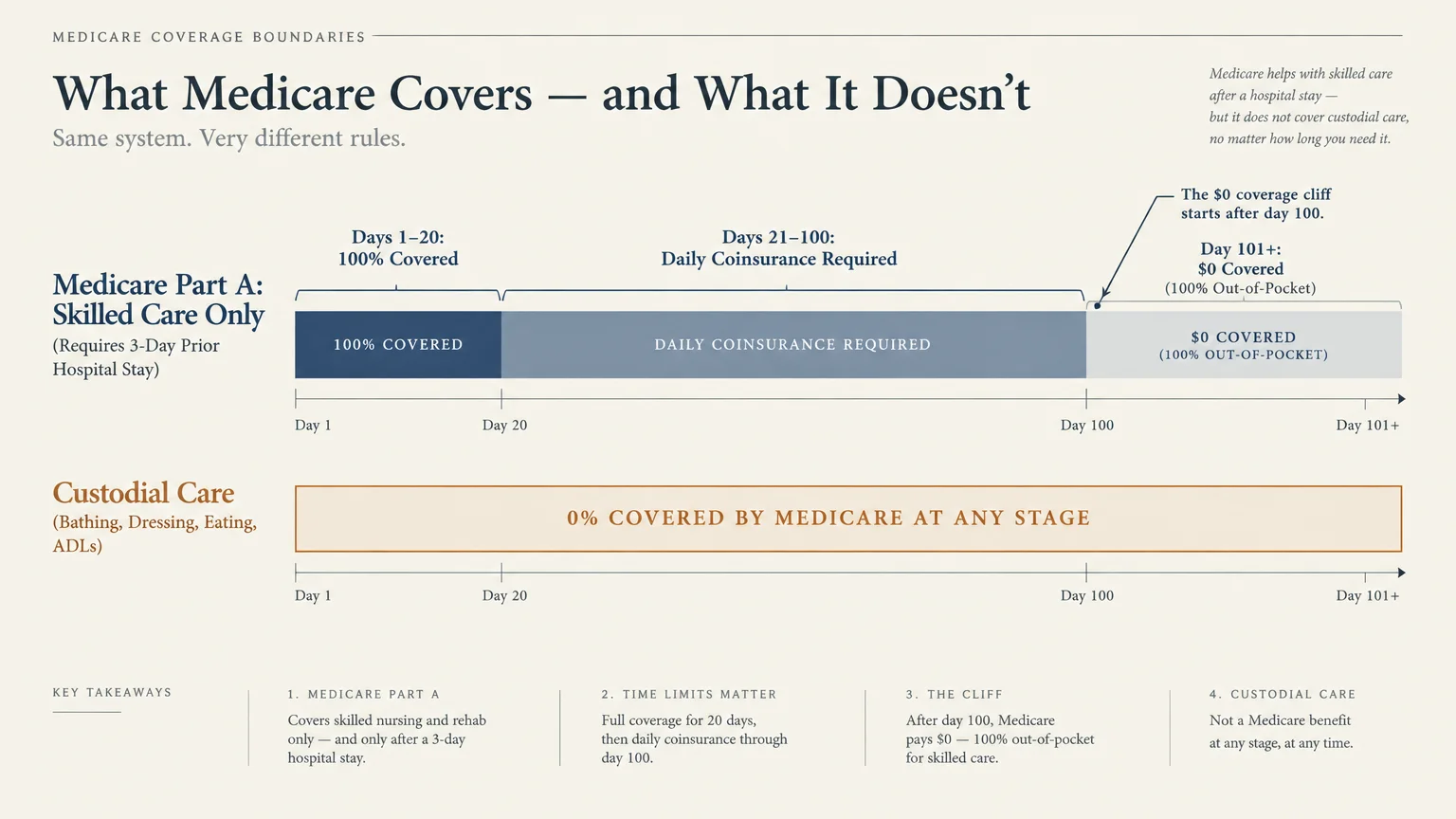
According to Medicare.gov, federal health insurance covers acute medical treatments, doctor visits, hospitalizations, and short-term rehabilitative therapies. It strictly excludes ongoing custodial care.
Custodial care involves non-medical help with Activities of Daily Living (ADLs), such as dressing, bathing, eating, and using the bathroom. If you develop chronic frailty or cognitive impairment, Medicare pays nothing for routine assisted living or home aides.
Medicare Part A covers up to 100 days in a skilled nursing facility per benefit period, but only after a qualifying three-day inpatient hospital stay. Days 1 through 20 are covered fully, while days 21 through 100 require significant coinsurance.
Once you reach day 101, you must pay all nursing facility costs out of your own pocket. Relying on Medicare as your primary long-term care plan leaves your life savings completely exposed.
3. The True Cost of Care Can Drain Retirement Savings Fast
Paying for private healthcare support without dedicated insurance or earmarked reserves can quickly unravel decades of diligent investing. The national median cost of long-term care continues to rise faster than general inflation.
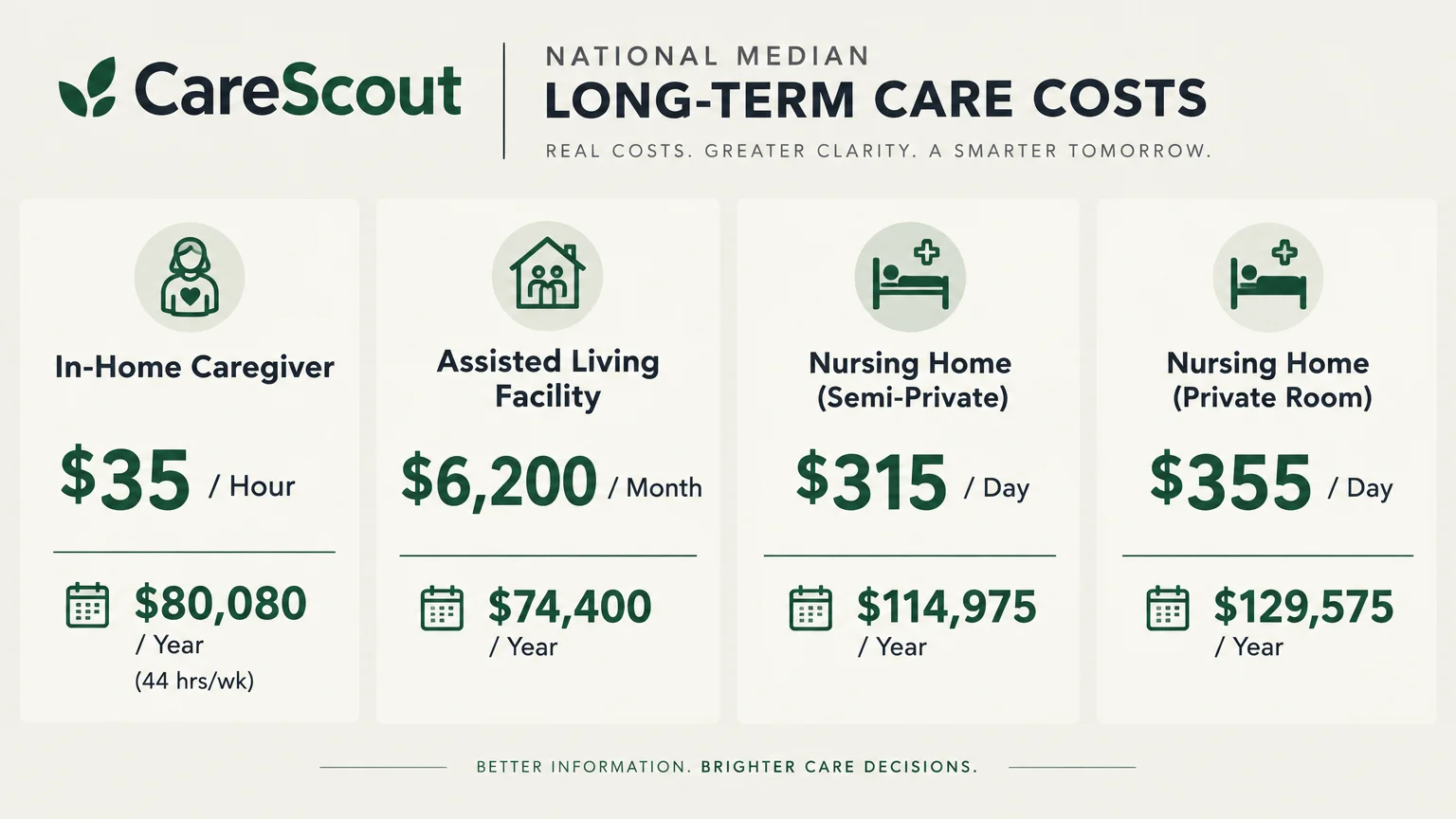
Data from the CareScout Cost of Care Survey reveals substantial annual expenses across common long term care options.
- In-Home Non-Medical Caregiver: $35 per hour, totaling roughly $80,080 per year for 44 hours of weekly care.
- Assisted Living Facility: $6,200 per month, totaling $74,400 annually for a private residential unit.
- Nursing Home (Semi-Private Room): $315 per day, which equates to $114,975 per year.
- Nursing Home (Private Room): $355 per day, generating an annual out-of-pocket expense of $129,575.
A married couple facing two or three years of memory care can easily spend over $300,000 out of pocket. Liquidating taxable brokerage accounts or traditional retirement accounts to meet these bills can also push you into higher tax brackets.
“Long-term care insurance is the single best way to protect your retirement savings from catastrophic healthcare expenses.” — Suze Orman, Personal Finance Author & Host

4. Your Fifties Are the Golden Underwriting “Sweet Spot”
Timing your policy purchase makes an enormous difference in both your approval odds and lifetime costs. The American Association for Long-Term Care Insurance designates ages 55 to 60 as the ideal window to apply.
Delaying your application exposes you to stricter medical underwriting. Insurer rejection rates climb from 14 to 20 percent in your fifties up to 30 to 38 percent during your late sixties.
After age 70, insurer denial rates surpass 47 percent. Even minor conditions like elevated blood pressure, arthritis, or fluctuating blood sugar can complicate your eligibility as you get older.
Securing long-term care insurance before 60 locks in lower rates while your medical history is clean. More than half of all traditional and hybrid policyholders purchase their coverage between ages 55 and 65.
5. Modern Hybrid Policies Eliminate the “Use-It-or-Lose-It” Trap
Standalone policies historically frustrated consumers because premiums could rise unexpectedly, and you received nothing back if you never required care. Today, modern hybrid policies dominate the marketplace.
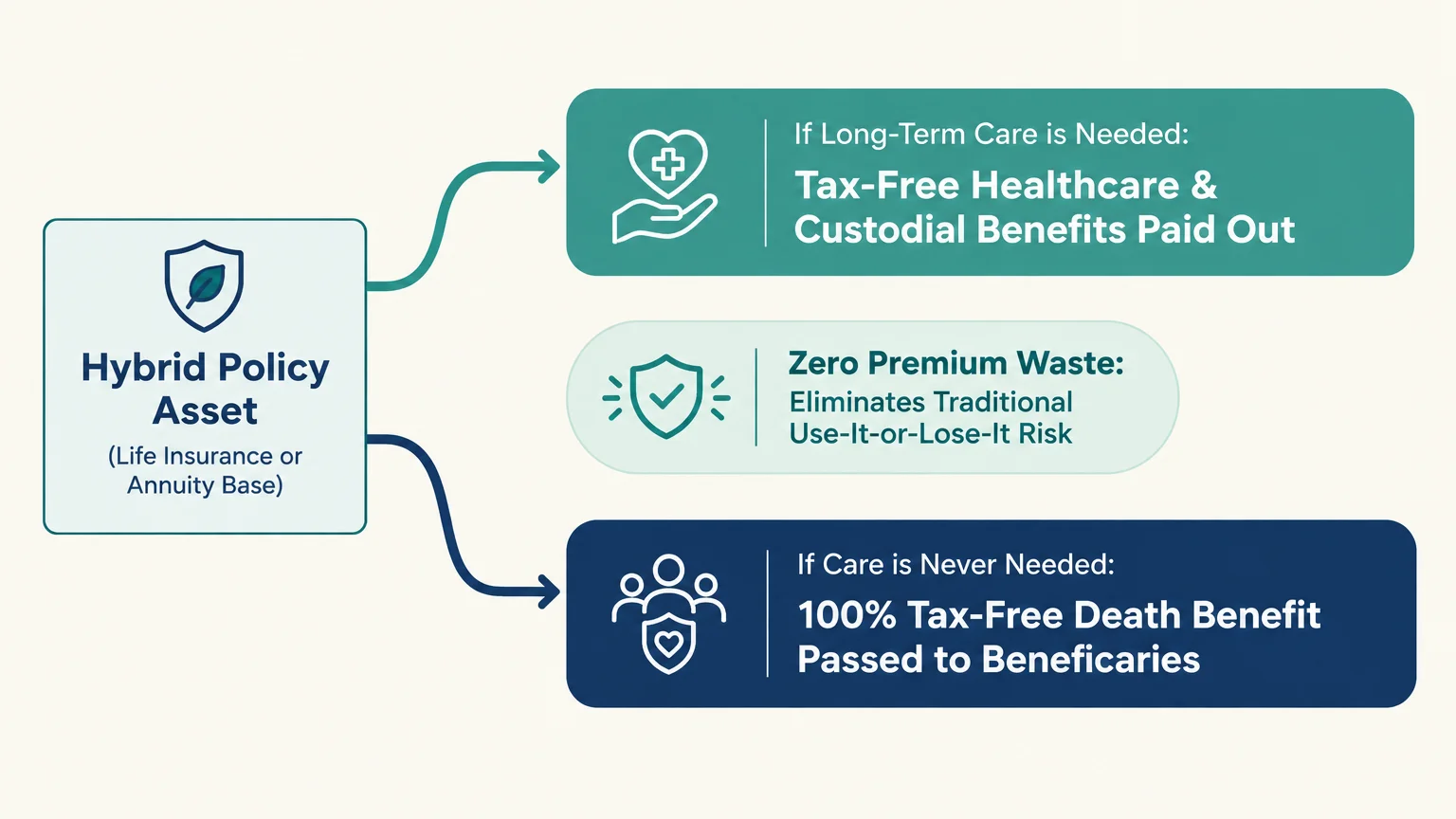
An asset-based hybrid policy pairs permanent life insurance or an annuity with an accelerated long-term care benefit rider. These contracts lock in level premiums that cannot increase down the road.
If you need care, the policy distributes tax-free monthly benefits to pay for qualified home aides or facility care. If you stay healthy and never need assistance, the policy pays a tax-free death benefit to your heirs.
This dual-purpose design protects your retirement nest egg without sacrificing capital. You preserve family wealth while eliminating the fear of wasting money on unused insurance.

6. The Tax Code Offers Substantial Incentives and HSA Perks
The federal government provides distinct tax incentives to encourage private planning for long-term care. Qualified policies allow you to treat eligible premiums as deductible medical expenses under guidelines from the IRS.
For individuals aged 51 through 60, the IRS allows you to include up to $1,860 per person in qualified premiums toward medical expense deductions. That limit jumps to $4,960 once you turn 61.
If you itemize deductions on Schedule A, qualified premiums count toward medical expenses exceeding 7.5 percent of your Adjusted Gross Income (AGI). Self-employed individuals can deduct eligible premiums directly above the line without itemizing.
You can also withdraw money tax-free from a Health Savings Account (HSA) to pay qualified premiums up to annual IRS limits. Furthermore, per diem insurance payouts remain exempt from federal income taxes up to $430 per day.
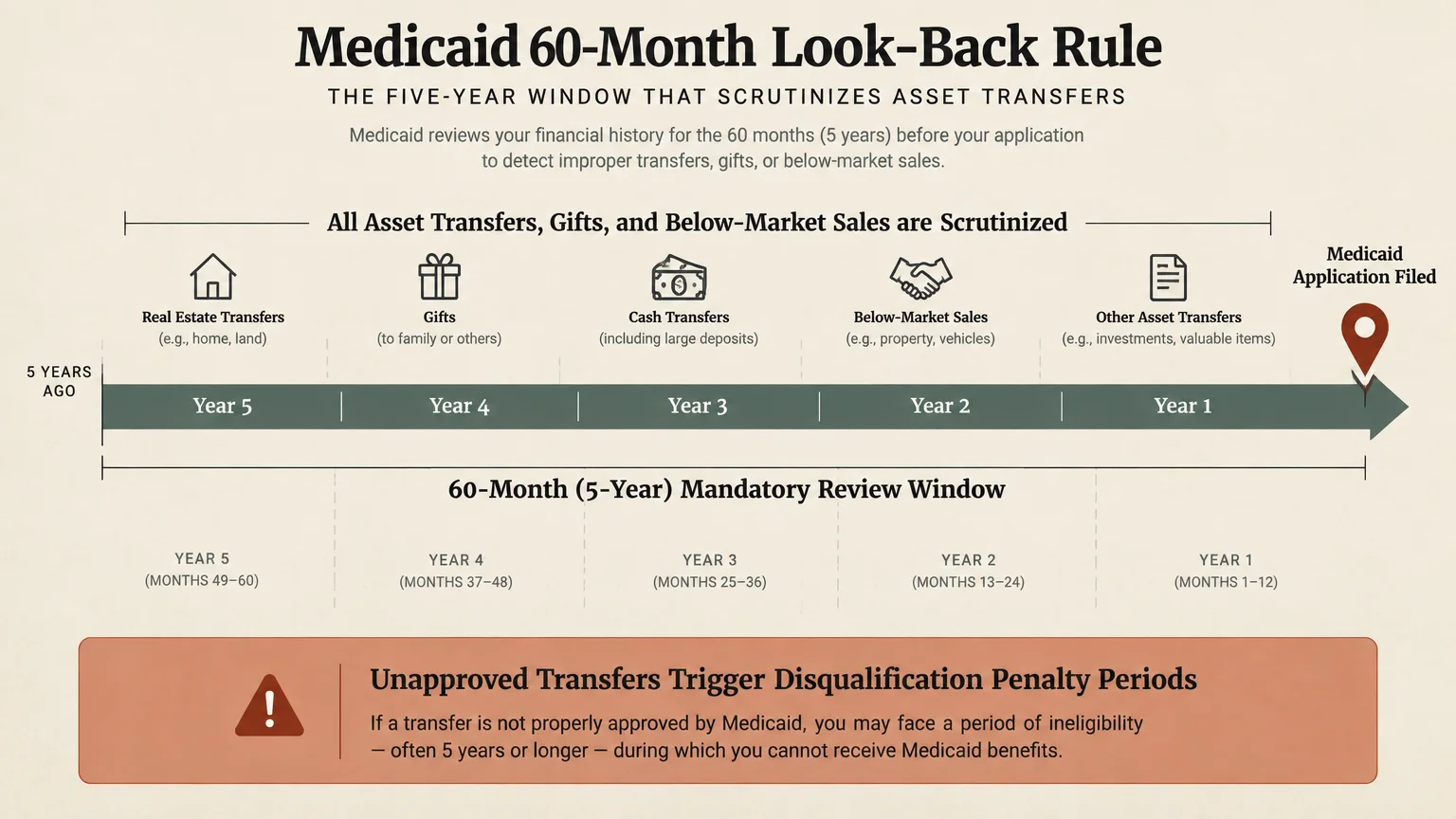
7. Medicaid Enforces a Strict 60-Month Look-Back Period
Medicaid pays for a substantial portion of long-term nursing home care in the United States, but it serves strictly as a safety net. In most states, an individual cannot own more than $2,000 in countable liquid assets to qualify.
To stop applicants from giving away money to meet asset thresholds, Medicaid enforces a mandatory 60-month look-back rule across 49 states. California enforces a modified 30-month look-back period.
State caseworkers examine every financial transfer, bank statement, and gift made within the five years prior to your application. Any uncompensated transfers trigger a penalty period during which Medicaid refuses to cover your care.
The Administration for Community Living highlights the importance of protecting a healthy spouse from impoverishment. If you intend to utilize legal trusts or asset-protection strategies, you must establish them years before care becomes necessary.

8. Informal Family Caregiving Imposes Severe Hidden Costs
Many people assume their spouse or adult children will step in to provide routine care. However, relying entirely on loved ones introduces heavy emotional, physical, and financial burdens.
Research published by AARP indicates that family caregivers spend thousands of dollars of their own money annually on uncompensated caregiving costs. These out-of-pocket expenses eat into their own savings.
Family caregivers frequently scale back work hours, pass up career promotions, or leave the workforce prematurely. These career interruptions permanently depress their lifetime earnings and future Social Security retirement benefits.
Planning for long-term care preserves family dynamics and protects your children from physical burnout. Professional coverage ensures your loved ones act as supportive family members rather than stressed, unpaid healthcare workers.

9. A Sudden Health Change Can Instantly Close Your Options
Underwriting guidelines for long-term care coverage are far more stringent than standard healthcare underwriting. Once a doctor diagnoses a chronic medical issue, private insurance options disappear almost instantly.
Conditions such as cognitive impairment, Parkinson’s disease, advanced diabetes, or multiple sclerosis result in immediate application rejections. Even planned joint replacements or pending medical tests cause insurers to postpone your application indefinitely.
Insurers review your prescription drug records, physician notes, and functional physical mobility before offering coverage. Waiting until you feel older or notice health declines practically guarantees an underwriting denial.
“The biggest risk to a retirement portfolio isn’t a stock market crash; it is the uninsured cost of long-term care.” — Ed Slott, CPA & Retirement Expert
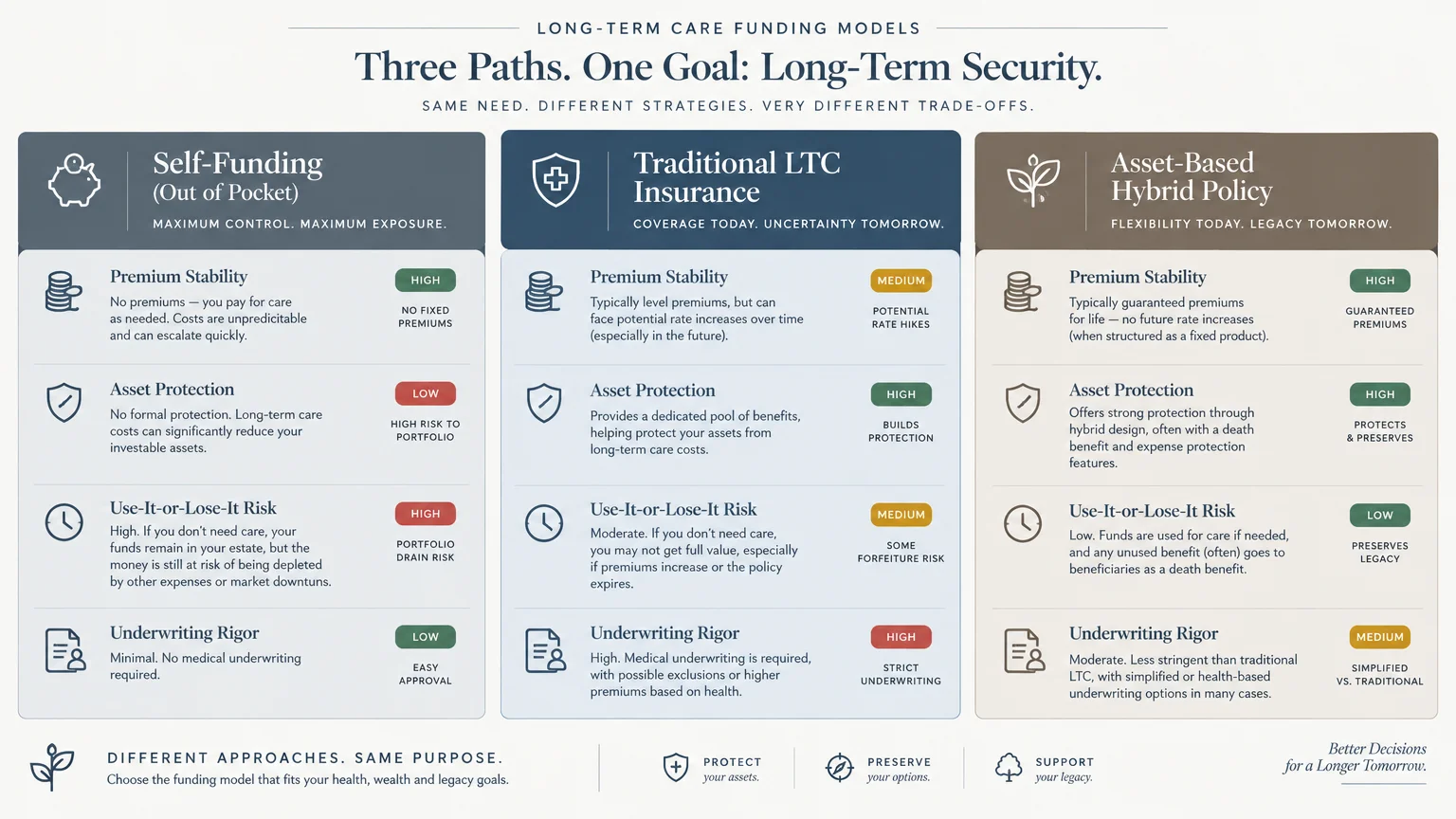
Comparing Long-Term Care Funding Strategies
Choosing the right way to fund future care depends on your current assets, health status, and estate planning goals. Here is how the three primary strategies compare.
| Funding Strategy | Premium Stability | Benefit if Care Is Unused | Medical Underwriting | Primary Tax Advantage |
|---|---|---|---|---|
| Traditional LTCI | Rates can rise over time | None (use-it-or-lose-it) | Moderate to strict | Deductible medical expense |
| Hybrid Life / LTC | Guaranteed level premiums | Tax-free death benefit to heirs | Moderate underwriting | Tax-free LTC payouts and death benefit |
| Pure Self-Funding | No premiums required | Remaining assets stay in your estate | None | No specific LTC tax breaks |
Evaluating these options in your fifties allows you to customize policy riders to your family history. You can balance inflation protection with premium affordability before rates climb higher.
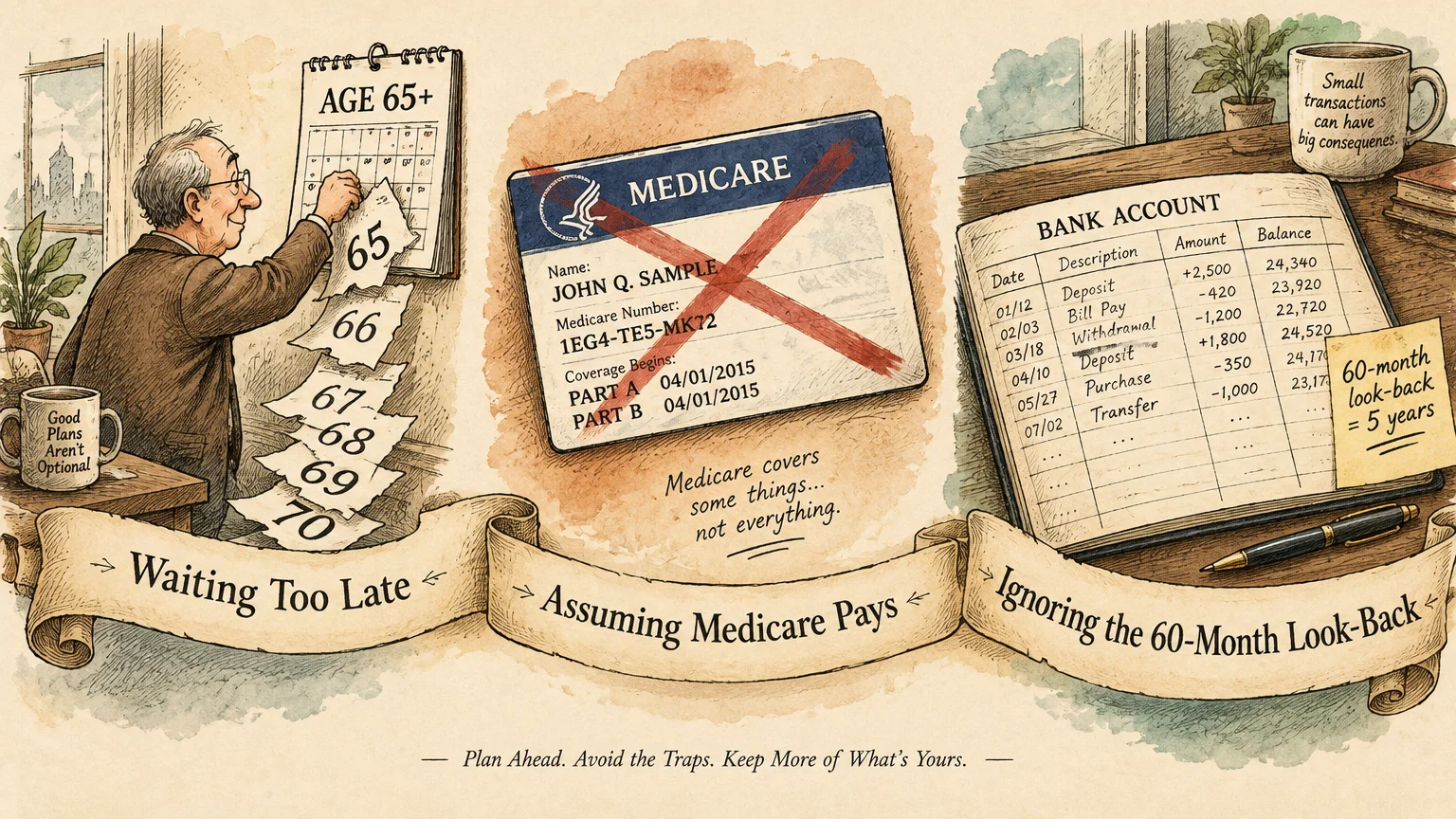
Common Mistakes to Avoid
Navigating long-term care decisions involves complex rules, but sidestepping standard errors keeps your retirement on track. Be sure to avoid these four frequent mistakes.
Assuming Medicare will step in: Do not rely on federal health coverage for personal home aides or assisted living. Medicare strictly limits nursing home stays to short-term rehabilitation.
Waiting until your sixties to shop: Postponing your search past age 60 increases your premiums and raises your rejection risk. Secure coverage while your medical history is clean.
Overlooking Health Savings Accounts: Forgetting to use your HSA to pay policy premiums wastes an exceptional tax advantage. Tap pre-tax HSA dollars to cover qualified premiums up to annual IRS limits.
Gifting assets without legal guidance: Handing money to children within five years of applying for Medicaid triggers harsh penalty periods. Work with an elder law attorney before moving any assets.

Finding the Right Advisor
Because long-term care planning intersects with investments, taxes, and healthcare law, partnering with the right professional is essential. Match your specific circumstances to the appropriate specialist.
If you want asset-based hybrid protection: Work with an independent, fee-based Certified Financial Planner (CFP). An independent planner can compare hybrid life policies across multiple carriers without sales quotas.
If you need Medicaid asset preservation: Consult a dedicated elder law attorney. An attorney helps you structure legal trusts and protect family assets while complying with state look-back laws.
If you want to maximize premium deductions: Speak with a Certified Public Accountant (CPA). A tax professional ensures you properly deduct premiums as medical expenses or utilize HSA funds correctly.
If you have pre-existing medical conditions: Seek an independent long-term care insurance broker. An experienced broker knows which carriers use more lenient underwriting guidelines for your health history.
Frequently Asked Questions
What is the best age to buy long-term care insurance?
The sweet spot for buying coverage is between ages 55 and 60. Applying during this window balances low premium costs with low medical underwriting rejection rates.
Does Medicare pay for assisted living or memory care?
No, Medicare does not cover assisted living or long-term memory care. Medicare only covers skilled medical care and short-term rehabilitative services following a hospital stay.
Can I pay long-term care insurance premiums using an HSA?
Yes, you can withdraw money tax-free from your HSA to pay qualified premiums up to IRS limits. For individuals aged 51 through 60, the annual deduction limit is $1,860.
What happens to a hybrid policy if I never need long-term care?
If you pass away without needing long-term care, your hybrid policy pays a tax-free death benefit to your beneficiaries. Your invested capital remains protected for your estate.
Taking Action Before Age 60
Preparing for future care needs is one of the most generous gifts you can give your family. Start evaluating your health history, retirement resources, and potential funding options today.
The information in this guide is meant for educational purposes. Your specific circumstances—including income, benefits, tax situation, and health needs—may require different approaches. When in doubt, consult a licensed financial advisor or tax professional.
Last updated: February 2026. Benefit amounts, tax rules, and program details change annually—verify current figures with official government sources.









Leave a Reply