

Moving to the wrong retirement town can quietly double your auto insurance bill, draining hundreds of dollars from your fixed income every year. Choosing a community with low claim rates and sensible state regulations cuts that expense in half immediately.
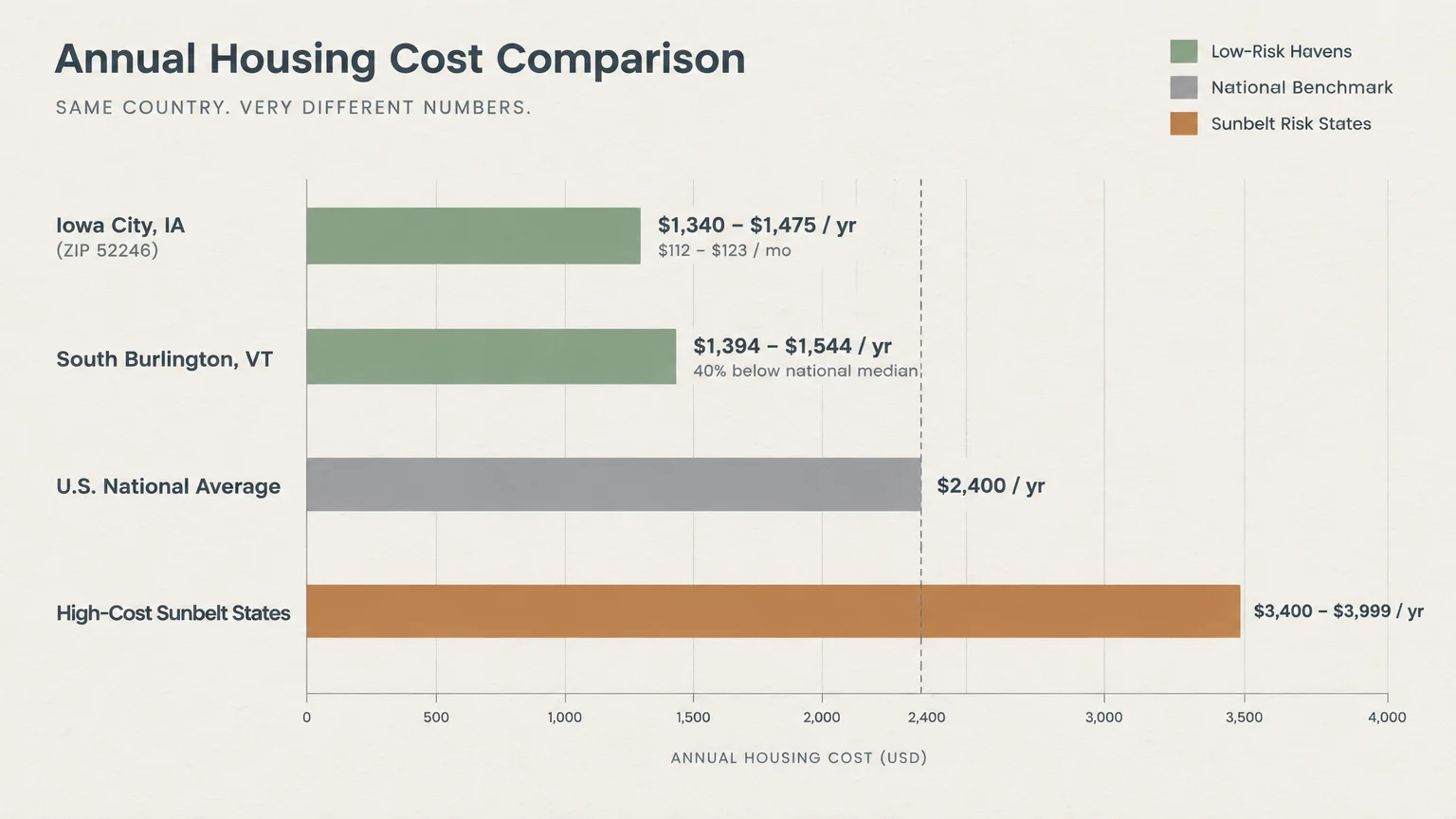
While the national average for full-coverage car insurance hovers around $2,400 annually, several picturesque retirement destinations offer rates below $1,400. You can protect your nest egg by looking beyond sunny tax shelters to places where driving costs remain remarkably modest.
Why Your Retirement Zip Code Dictates Car Insurance Costs
Where you park your car at night often impacts your premium more than your driving record. Insurance carriers calculate premiums based on geographic risk pools, accident statistics, and local litigation trends.
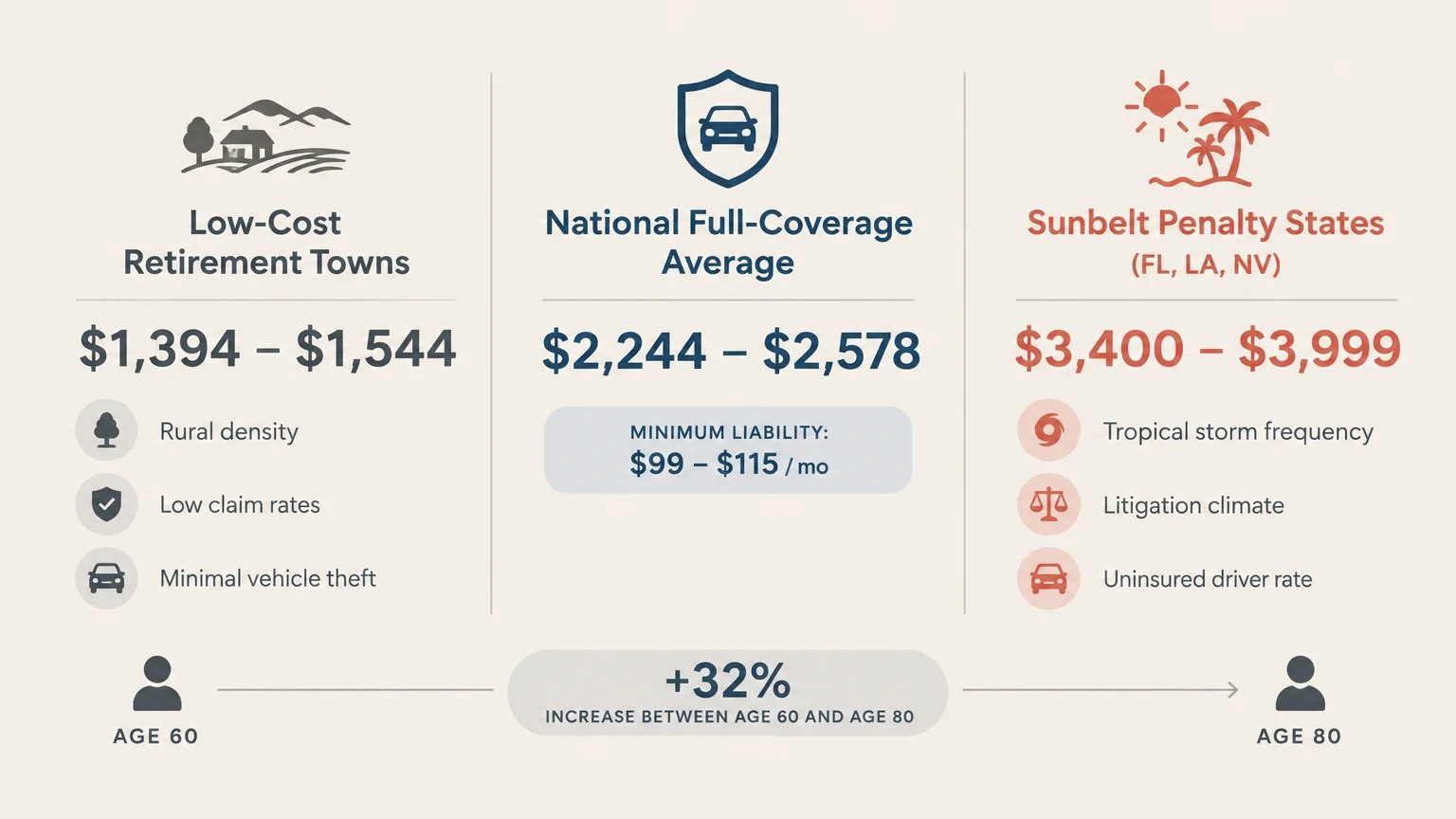
Nationwide, the average annual cost for full-coverage auto insurance ranges between $2,244 and $2,578. Minimum liability coverage averages roughly $99 to $115 per month.
Many retirees move toward popular Sunbelt destinations without realizing the hidden transportation penalties. States like Florida, Louisiana, and Nevada feature annual premiums averaging between $3,400 and $3,999.
Severe tropical weather, rampant insurance litigation, and higher rates of uninsured drivers cause these sharp increases. A move to the wrong state can wipe out your income tax savings.
Driver age also interacts directly with location. Motorists between ages 60 and 69 enjoy a pricing sweet spot, paying the lowest baseline premiums across the nation.
Premiums begin rising around age 70 as insurers account for slower reaction times. Industry actuarial figures show that rates increase roughly 32% between age 60 and age 80.
Settling in retirement towns with low insurance rates helps offset these age-related increases over time. You keep more money in your monthly budget for recreation and healthcare.
9 Affordable Retirement Towns for Auto Insurance
The following nine communities combine high retirement appeal with some of the lowest auto insurance rates in the United States. Each town delivers distinct lifestyle benefits alongside significant transportation savings.
1. South Burlington, Vermont
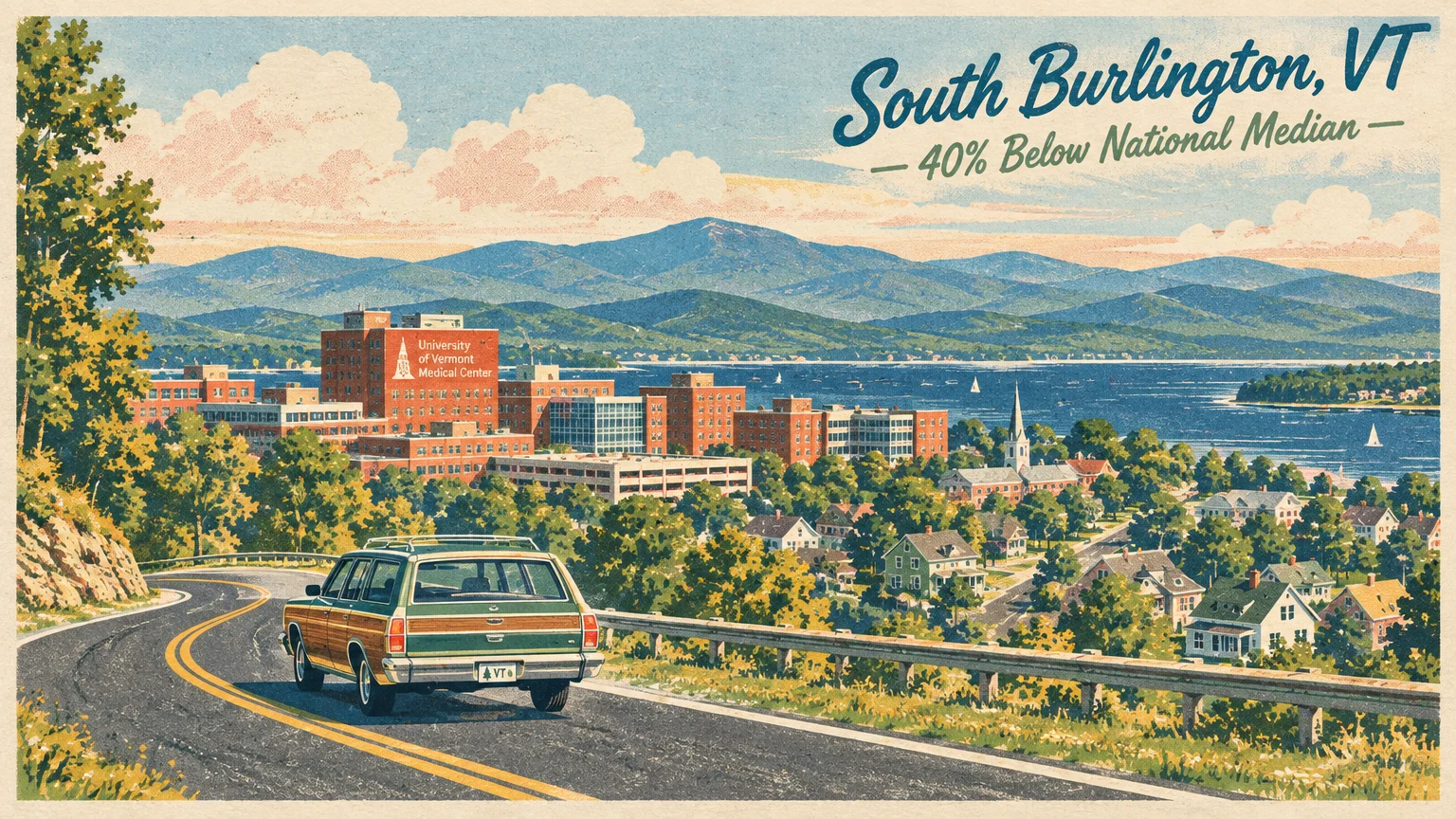
Vermont consistently ranks as the most affordable state in the country for personal auto insurance. Full-coverage policies in South Burlington average between $1,394 and $1,544 per year.
That figure sits roughly 40% below the national median. You benefit directly from Vermont’s sparse rural density and low accident frequency.
Vehicle theft rates throughout the Champlain Valley remain remarkably minimal. Fewer claim filings allow regional carriers to maintain exceptionally cheap car insurance for seniors.
Beyond vehicle savings, South Burlington offers top-tier medical facilities at the University of Vermont Medical Center. You enjoy scenic lakefront living alongside dependable public infrastructure.
2. Iowa City, Iowa
Iowa City combines Big Ten cultural energy with remarkably affordable vehicle ownership. Premium analyses frequently identify the 52246 ZIP code among the lowest-cost metro areas nationwide.
Full-coverage insurance in Iowa City averages between $112 and $123 per month. That equals an annual total of roughly $1,340 to $1,475.
Iowa benefits from a high proportion of insured motorists and moderate traffic volume. Court dockets also experience far less aggressive auto litigation than southern coastal states.
Retirees in Iowa City have access to the world-renowned University of Iowa Hospitals and Clinics. You can maintain reliable transit without straining your fixed retirement resources.
3. Asheville, North Carolina
Nestled in the Blue Ridge Mountains, Asheville is renowned for pleasant mountain air and thriving arts. It also stands out as one of the best places to retire cheap insurance seekers can find.
Full-coverage premiums in Asheville typically range from $59 to $113 per month. You can secure comprehensive protection for less than half the national average.
North Carolina keeps costs low through its unique regulatory mechanism known as the North Carolina Rate Bureau (NCRB). Established in 1977, the bureau coordinates rate filings directly with the state insurance commissioner.
This statutory oversight prevents carriers from implementing erratic price hikes. The system produces stable, predictable senior car insurance pricing year after year.
4. Coeur d’Alene, Idaho
Idaho regularly ranks among the five least expensive states for personal auto insurance. Retirees settling near the clear waters of Coeur d’Alene pay between $1,300 and $1,550 annually for full coverage.
The region’s uncrowded highway corridors minimize collision rates throughout Kootenai County. Less daily vehicle congestion translates into fewer expensive multi-car claims.
Idaho also experiences fewer severe storm-related vehicle catastrophes than Great Plains or coastal regions. Insurers pass those lower underwriting expenses directly to policyholders.
Outdoor enthusiasts will appreciate the easy access to lake trails, national forests, and golf courses. Your vehicle remains an affordable tool for adventure rather than a monthly financial burden.
5. Bangor, Maine
Maine is another perennial front-runner for budget-friendly auto coverage. Drivers in Bangor pay between $1,100 and $1,808 annually for full-coverage protection.
Maine features one of the lowest uninsured motorist rates in the entire country. When nearly everyone carries coverage, insurance companies spread risk efficiently without inflating baseline prices.
Bangor offers a relaxed pace of life with strong regional hospital networks. Low local traffic counts and rare vehicle thefts keep claim numbers remarkably depressed.
If you enjoy quiet coastal excursions and quiet northern towns, Bangor provides an attractive financial foundation. You keep transportation costs predictable throughout your post-career years.
6. Vermilion and Findlay, Ohio
Northern and western Ohio feature some of the lowest auto insurance rates by city anywhere in the Midwest. Communities like Findlay and lakeside Vermilion average approximately $1,449 to $1,780 annually for full coverage.
Ohio functions as a traditional at-fault state with strong tort reforms that discourage frivolous injury lawsuits. A healthy, competitive marketplace of regional insurers forces companies to keep rates aggressive.
Both communities offer peaceful neighborhoods, accessible cost-of-living standards, and simple lake access. You will avoid the punishing urban surcharges typical of larger metropolitan areas like Cleveland or Columbus.
The steady, reliable Midwestern pricing helps retirees build durable long-term spending plans. Modest transportation overhead leaves more room for travel and hobbies.
7. Keene, New Hampshire
Keene combines New England charm with an exceptionally distinct insurance environment. Drivers in Keene pay an average of $1,689 per year for full coverage.
New Hampshire is the only state that does not mandate auto insurance by statute, allowing residents to demonstrate financial responsibility instead. This unique model forces private carriers to compete vigorously on price and service.
Despite the lack of a mandate, most Granite State drivers voluntarily carry coverage. Low property crime rates and disciplined local traffic keep comprehensive and collision claims well below national figures.
The absence of state sales and personal income taxes creates added financial relief. Keene provides a balanced environment for older Americans seeking disciplined living costs.
8. Roanoke, Virginia
Nestled in the Blue Ridge foothills, Roanoke offers majestic mountain scenery and gentle four-season weather. Virginia auto premiums run 15% to 20% below the national median.
Full-coverage policies in Roanoke average between $1,500 and $1,750 per year. You bypass the heavy traffic gridlock and elevated collision frequency seen in Northern Virginia.
Virginia also provides favorable tax subtractions on retirement income for qualifying seniors. Low vehicle operating costs complement the Commonwealth’s overall retiree-friendly posture.
Roanoke’s regional medical centers and vibrant downtown make it an accessible base for active retirees. You can navigate the area easily without paying exorbitant transportation taxes or fees.
9. Bedford, Indiana
Bedford sits in the rolling limestone hills of southern Indiana, just south of Bloomington. Indiana ranks comfortably among the ten cheapest states for personal auto insurance.
Annual full-coverage premiums in Bedford average between $1,400 and $1,700. Minimal traffic congestion and low auto repair labor costs keep property damage payouts low.
Retirees here enjoy quiet rural tranquility paired with easy access to major university medical systems nearby. The modest insurance costs ensure your car remains an affordable necessity.
Southern Indiana offers exceptionally low housing costs to accompany its cheap vehicle rates. Bedford presents an appealing choice for stretching your retirement portfolio.
Comparing Annual Premiums Across Top Retirement Towns
Evaluating auto insurance costs alongside regional perks helps you choose the perfect retirement landing spot. The following comparison highlights full-coverage cost estimates across these nine locations.
| Retirement Town | State | Est. Annual Full Coverage | Primary Rate Advantage |
|---|---|---|---|
| South Burlington | Vermont | $1,394 – $1,544 | Lowest nationwide claim frequency and minimal theft |
| Iowa City (52246) | Iowa | $1,340 – $1,475 | Low legal litigation rates and high insured driver rates |
| Asheville | North Carolina | $708 – $1,356 | Strict state regulation through the NC Rate Bureau |
| Coeur d’Alene | Idaho | $1,300 – $1,550 | Low rural congestion and fewer severe weather events |
| Bangor | Maine | $1,100 – $1,808 | High insured population and competitive local carriers |
| Vermilion / Findlay | Ohio | $1,449 – $1,780 | At-fault legal framework and robust carrier competition |
| Keene | New Hampshire | $1,689 | Aggressive open-market pricing and low loss history |
| Roanoke | Virginia | $1,500 – $1,750 | Stable claim trends outside major DC beltway corridors |
| Bedford | Indiana | $1,400 – $1,700 | Low traffic density and modest repair labor costs |

Key Regulations and Discounts That Lower Senior Car Insurance
Moving to one of these low-cost towns gives you a significant starting advantage. However, you can lower your premiums even further by leveraging specific statutory rules and policy adjustments.
Mandated Defensive Driving Discounts
More than 30 states and Washington, D.C., enforce laws requiring auto insurance carriers to provide discounts to older drivers. You qualify by finishing an approved mature driver improvement course.
Organizations like AARP offer convenient classroom and online defensive driving classes. Completing the curriculum generally secures a 5% to 15% discount for three consecutive years.
Be sure to verify whether your state mandates this pricing reduction by law. If it does, your insurance provider must apply the savings once you submit your certificate.
The Pleasure Use Reclassification
When you transition from daily employment into retirement, your driving routine shifts dramatically. You no longer commute through peak-hour rush traffic five days a week.
Contact your carrier to update your vehicle status from “commute” to “pleasure use.” That simple change alone often trims 10% to 20% off your annual premium.
You can explore usage-based telematics or pay-per-mile insurance programs if you drive under 7,500 miles annually. Tracking devices or mobile apps verify your low mileage and reduce rates accordingly.
The North Carolina Rate Bureau Advantage
Understanding how states regulate insurers helps you make smarter relocation decisions. The North Carolina Rate Bureau system offers an instructive example of consumer protection.
Instead of each company filing sudden double-digit price increases individually, the bureau negotiates collective base rates with state authorities. This legal framework keeps annual price fluctuations remarkably narrow.

Expert Perspective on Fixed-Income Budgeting
“Every dollar you save on fixed overhead expenses is a dollar you can redirect toward enjoying your retirement years.” — Jean Chatzky, Financial Journalist and Author
Controlling fixed overhead expenses forms the cornerstone of a stress-free retirement. While investment yields fluctuate with market cycles, cutting monthly insurance bills guarantees permanent savings.
Reducing transportation expenses by $1,000 every year preserves your portfolio principal. That extra cash cushion protects you against unexpected cost-of-living jumps in other areas.

Common Mistakes to Avoid When Relocating in Retirement
Relocating during retirement involves numerous moving parts, and small oversights can produce unexpected expenses. Watch out for these four common errors when planning your move.
1. Chasing Income Tax Breaks While Ignoring Auto Rates
Many retirees move to zero-income-tax states like Florida or Nevada without examining other local costs. The money saved on state taxes often evaporates through sky-high auto and property insurance premiums.
Evaluate your complete living expenses before signing a lease or closing on real estate. The total cost of living provides a far more accurate financial picture.
2. Overlooking Available Community Assistance Programs
Many older adults neglect regional financial resources when establishing their residency. Resources listed through the National Council on Aging can help identify valuable benefits.
Local agencies affiliated with the Administration for Community Living also offer transportation assistance and supportive community services. These programs reduce driving requirements and fuel costs.
3. Dropping Essential Coverage Too Soon
Retirees often attempt to lower bills by dropping collision or comprehensive protection on older vehicles. While that strategy makes sense for low-value cars, replacement costs have surged in recent years.
Resources from the Consumer Financial Protection Bureau emphasize keeping adequate liability cushions to protect savings. An underinsured crash can jeopardize the assets you spent decades building.
4. Neglecting Annual Rate Comparisons
Auto insurance companies frequently increase rates quietly on loyal customers over time. Failing to shop your policy every twelve months can cost you hundreds of unnecessary dollars.
Compare quotes from at least three different insurers each renewal cycle. Insurers frequently adjust underwriting models, meaning a competing carrier might offer a much lower rate.
Frequently Asked Questions About Senior Car Insurance
Does car insurance always go up after age 70?
Premiums generally rise around age 70 due to actuarial crash statistics. However, completing driver courses and relocating to low-risk towns can easily offset these age-related increases.
How much can I save by updating my commute status?
Reclassifying your vehicle from commute to pleasure status typically saves between 10% and 20%. Insurers charge lower premiums because you drive during safer off-peak hours.
Why is auto insurance so expensive in popular retirement states?
States like Florida and Louisiana experience severe hurricane risks, crowded highways, and frequent insurance litigation. High rates of uninsured motorists also push baseline premiums upward for everyone.
What is the easiest way to earn an immediate auto discount?
Completing an approved mature driver safety course provides an immediate 5% to 15% discount in over 30 states. These state-mandated savings remain active on your policy for three full years.
Smart Next Steps for Your Retirement Move
Lowering your transportation expenses is one of the quickest ways to secure your retirement budget. Choosing one of these affordable retirement towns gives you an immediate head start.
Before packing your boxes, request auto insurance quotes using specific ZIP codes in your target cities. That simple step prevents unwelcome financial surprises after your relocation.
This is educational content based on general financial principles for seniors. Individual results vary based on your situation.
Always verify current benefit amounts, tax rules, and program eligibility with official government sources.
Last updated: February 2026. Benefit amounts, tax rules, and program details change annually—verify current figures with official government sources.









Leave a Reply