
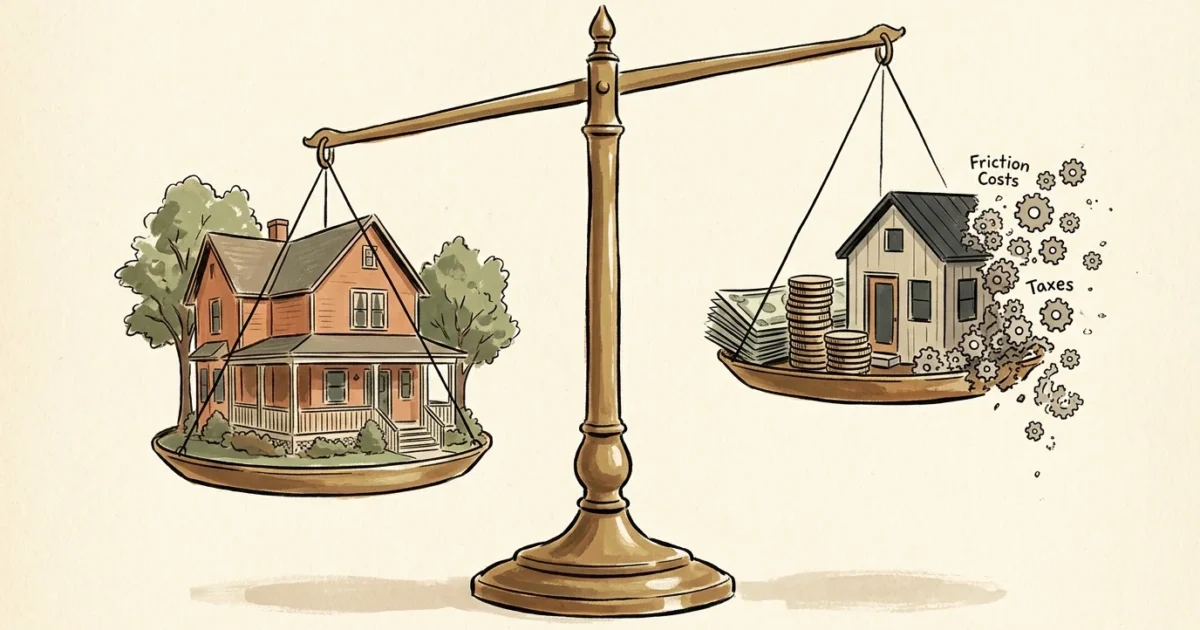
Selling your family home to unlock cash for retirement sounds like a guaranteed financial win; however, hidden costs, market realities, and tax obligations often shrink those anticipated savings. Between real estate transaction fees, moving expenses, higher prices per square foot for smaller homes, and ongoing homeowners association fees, many seniors find their monthly expenses barely budge after a move. Before putting a “For Sale” sign in your front yard, you need a clear breakdown of the financial friction points that turn downsizing into a break-even event. Understanding these hidden hurdles empowers you to make realistic housing decisions that protect your nest egg without delivering unpleasant financial surprises.

The Real Estate Friction Costs of Selling and Buying
Selling a long-held family home and buying a smaller replacement generates substantial transaction costs, frequently referred to as real estate “friction.” Combined friction costs—including agent compensation, legal fees, title insurance, home preparations, transfer taxes, and buyer closing costs—typically consume 6% to 10% of your home’s gross sale price before you spend a single dollar on a new property.
Following landmark legal settlements involving the National Association of Realtors (NAR) that took effect in August 2024, the rules around real estate agent compensation changed nationwide. Offers of buyer-agent compensation were removed from Multiple Listing Services (MLS), and buyers must now sign written agreements with their agents before touring homes. While sellers can still negotiate commission rates directly with their listing agents, these structural changes mean you must pay strict attention to fee negotiations when selling your home and purchasing a replacement property.
In addition to transaction fees, selling an older residence usually requires pre-listing repairs, staging, and cosmetic updates to command top market value. Spending $10,000 to $20,000 on fresh paint, floor refinishing, and roof repairs reduces your net equity before you even reach the closing table.
Capital Gains Taxes Can Take a Significant Bite
If you have lived in your home for decades, substantial home price appreciation could trigger unexpected federal capital gains taxes. Under IRS Section 121 rules, single filers can exclude up to $250,000 of capital gains on the sale of a primary residence, while married couples filing jointly can exclude up to $500,000. To qualify, you must have owned and occupied the property as your principal home for at least two of the five years preceding the sale.
However, long-time homeowners in high-appreciation markets frequently exceed these tax-free thresholds. Any profit above the exclusion limit faces federal long-term capital gains tax rates of 15% or 20%, depending on your income level. High earners may also owe the 3.8% Net Investment Income Tax (NIIT) on the excess profit, alongside applicable state capital gains taxes. You can review current primary residence tax rules directly on the Internal Revenue Service (IRS) website.
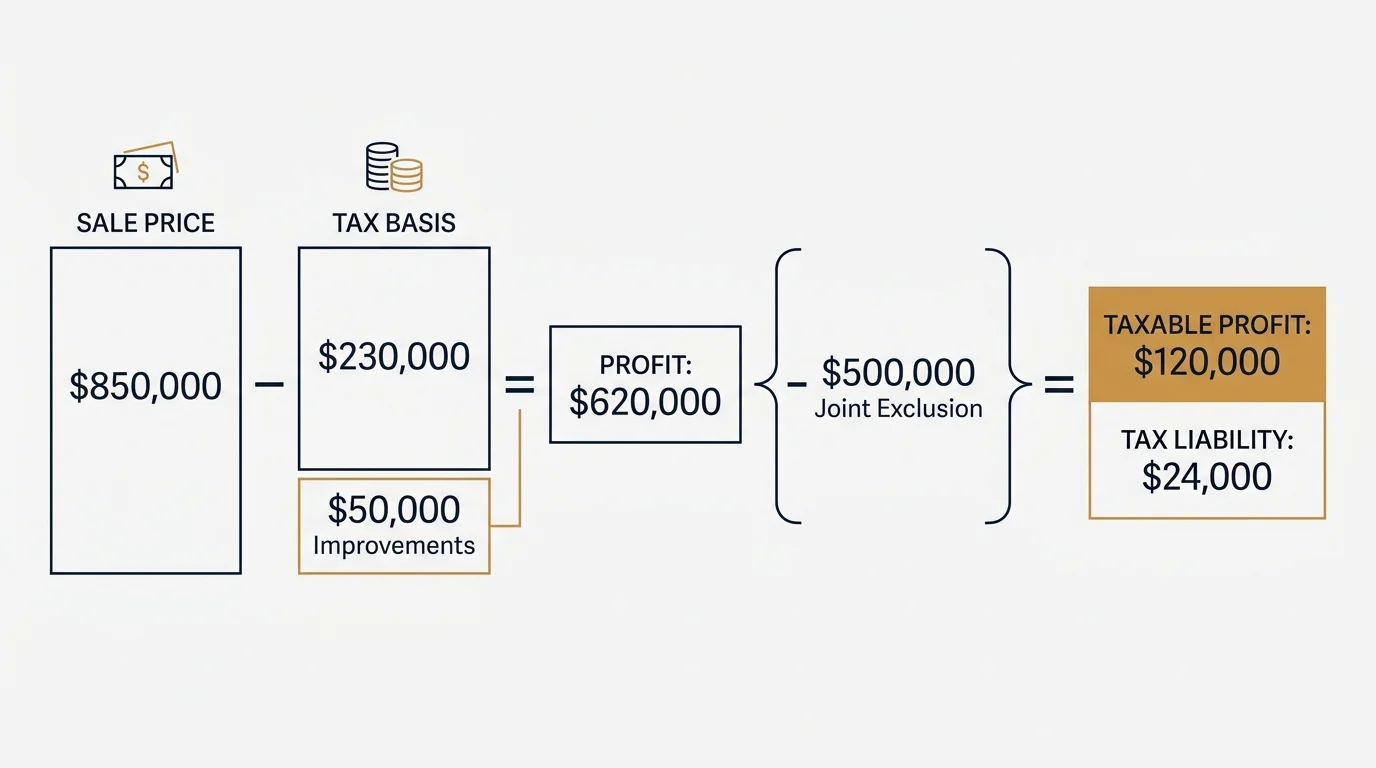
Consider a married couple who purchased their home in 1992 for $180,000 and sell it in 2026 for $850,000. After accounting for $50,000 in qualifying home improvements that raise their tax basis to $230,000, their profit equals $620,000. Subtracting the $500,000 joint capital gains exclusion leaves $120,000 in taxable profit. At a combined federal and state tax rate of 20%, that creates a $24,000 tax liability, shrinking the liquid capital available for their next home.
The Price-Per-Square-Foot Premium on Smaller Homes
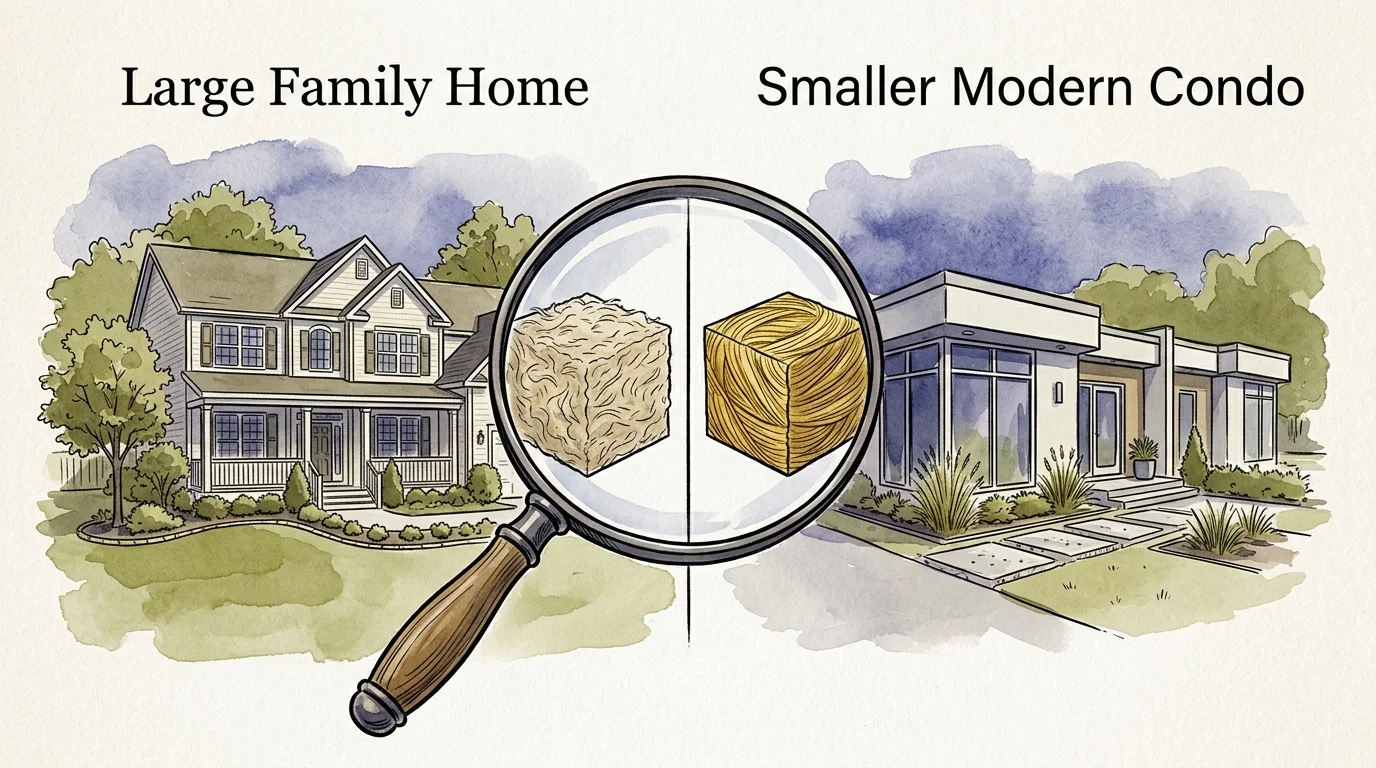
Retirees often assume that cutting their housing square footage in half will automatically cut their housing purchase price in half. Market dynamics, however, rarely work in a linear fashion. Smaller residences—such as single-story single-family homes, townhomes, and modern condominiums—frequently command a higher price per square foot than larger multi-story suburban houses.
This pricing disparity stems from fierce competition. Downsizing retirees compete for single-level, low-maintenance properties against first-time homebuyers, single professionals, and institutional real estate investors. Demand pushes smaller home prices higher on a per-square-foot basis.
To see how this math plays out in practice, review this typical market scenario:
- Your Current Home: 3,200 square feet valued at $640,000 ($200 per square foot).
- Your Replacement Condo: 1,600 square feet valued at $416,000 ($260 per square foot).
- Gross Price Difference: $224,000.
- Selling Friction Costs (7%): -$44,800.
- Purchasing Closing Costs (2%): -$8,320.
- Net Unlocked Capital: $170,880.
While unlocking roughly $170,000 in liquid capital helps your retirement reserves, investing that amount conservatively at a standard 4% annual withdrawal rate yields about $6,835 per year—or roughly $570 per month. As you will see next, recurring monthly costs in a smaller property can quickly absorb that entire income stream.

Recurring Dues and Property Tax Reassessments
Moving into a condo or active adult community introduces new recurring monthly expenses that offset potential energy and maintenance savings. Homeowners Association (HOA) and condominium maintenance fees routinely range between $200 and $700+ per month ($0.30 to $0.85+ per square foot). While these fees cover exterior maintenance, landscaping, building insurance, and amenities, they represent a permanent fixed cost that increases over time with inflation.
HOA communities also carry the risk of special assessments. If a condominium board fails to maintain adequate financial reserves and the community requires a new roof, elevator overhaul, or structural repair, unit owners receive a lump-sum assessment bill that can range from $5,000 to over $30,000 per unit.
Property taxes represent another surprise. Long-time homeowners frequently benefit from state property tax caps, senior homestead exemptions, or historical tax freezes that keep property taxes artificially low on an existing home. When you purchase a replacement property, local tax authorities reassess the new home at current market value. As a result, you might pay higher annual property taxes on a new $400,000 condominium than you paid on your old $600,000 family home.

The Hidden Out-of-Pocket Costs of Moving and Setup
Physical relocation generates immediate, non-negotiable out-of-pocket expenses. Professional moving companies charge between $1,500 and $5,000+ for local or regional moves, while long-distance relocations regularly exceed $7,000.
Many seniors turn to Senior Move Management services to handle decluttering, estate distribution, packing, and settling into a smaller floor plan. Specialty move managers provide invaluable physical and emotional support, but their services typically cost between $2,000 and $6,000 depending on the scope of work. You can explore aging-in-place resources and transition support through the National Council on Aging (NCOA).
Finally, your old furniture rarely fits into a smaller property. Oversized dining room sets, large sectional sofas, and king-sized bedroom suits must be replaced with compact, scale-appropriate furniture. Purchasing new furnishings, custom window treatments, and storage organization systems easily adds another $5,000 to $15,000 to your moving costs. If your new home requires age-in-place retrofits—such as grab bars, zero-threshold shower conversions, or improved lighting—you will face additional setup costs immediately after closing.
Comparing Housing Costs: Expectation vs. Reality
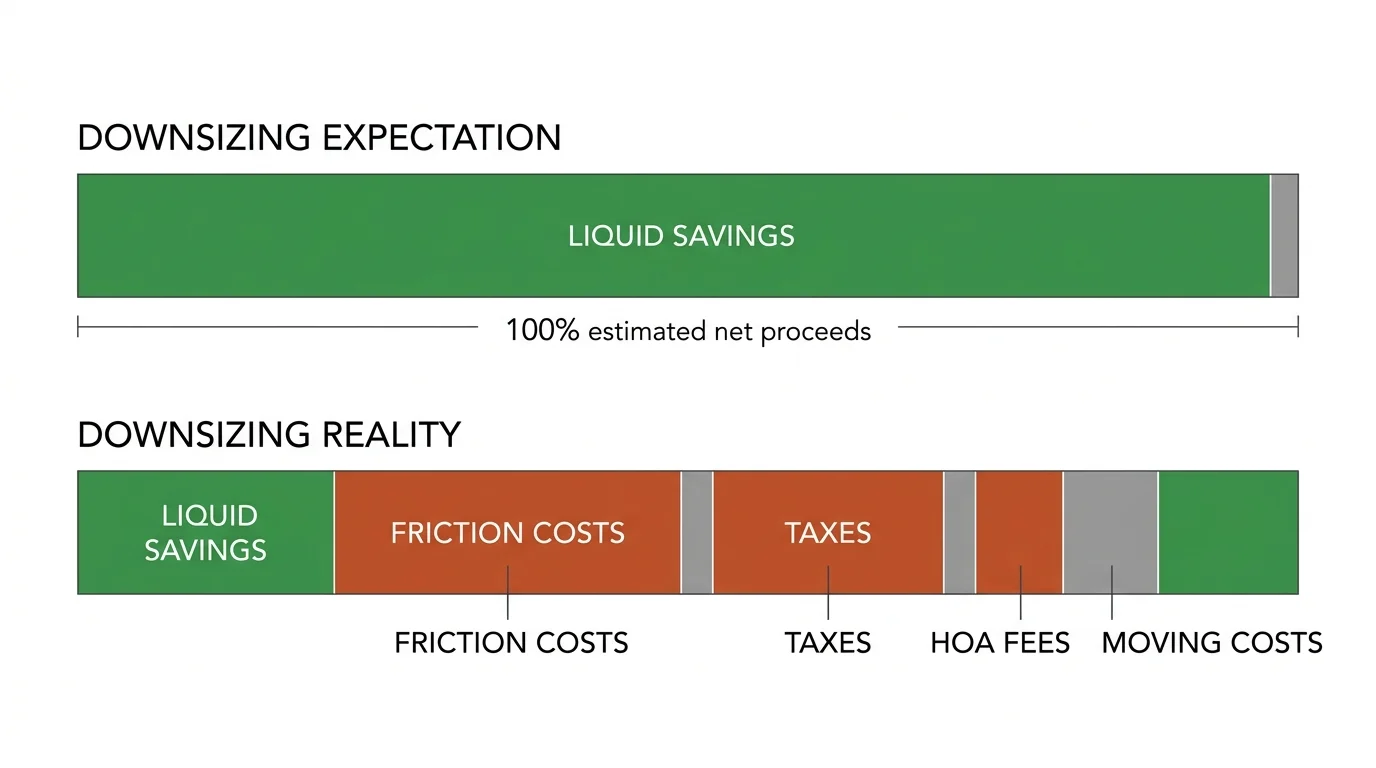
Evaluating a potential downsize requires analyzing both upfront costs and ongoing operational expenses. The comparison table below highlights common budget categories where retiree expectations diverge from actual costs.
| Expense Category | Retiree Expectation | Financial Reality | Typical Budget Impact |
|---|---|---|---|
| Equity Realization | Unlock 100% of the price difference between homes. | Transaction fees, repairs, and closing costs consume 6%–10% of gross equity. | -$35,000 to -$60,000 off net proceeds |
| Capital Gains Taxes | Keep all home sale profit completely tax-free. | Appreciation over $250k (single) or $500k (joint) triggers 15%–20% taxes plus NIIT. | $0 to $40,000+ in federal/state tax liability |
| Monthly Dues | Eliminate home maintenance costs entirely. | HOA and condo fees replace repair budgets with mandatory monthly payments. | +$200 to +$700+ per month |
| Property Taxes | Cut property taxes in half due to smaller square footage. | New property reassessments at market value can offset size reductions. | Neutral to +$1,500 per year |
| Moving & Outfitting | Move affordably using existing furniture and belongings. | Relocation services, senior move managers, and new scaled furniture require capital. | $8,000 to $25,000 upfront cash outlay |
Common Mistakes to Avoid
Seniors making retirement housing decisions can protect their finances by avoiding four primary pitfalls:
- Failing to Audit HOA Reserve Studies: Never buy into a condo or planned community without reviewing its latest financial reserve study. If reserve funds fall below 60% to 70% of recommended levels, unit owners face high risks of future special assessments.
- Overestimating Net Proceeds: Calculating cash flow based on gross listing prices leads to flawed retirement income projections. Always calculate net proceeds after deducting agent fees, closing costs, seller concessions, and capital gains taxes.
- Ignoring Property Tax Reassessment Rules: Contact local tax assessors before putting down earnest money to calculate your actual tax bill under current assessment rules, rather than relying on the seller’s historical tax payments.
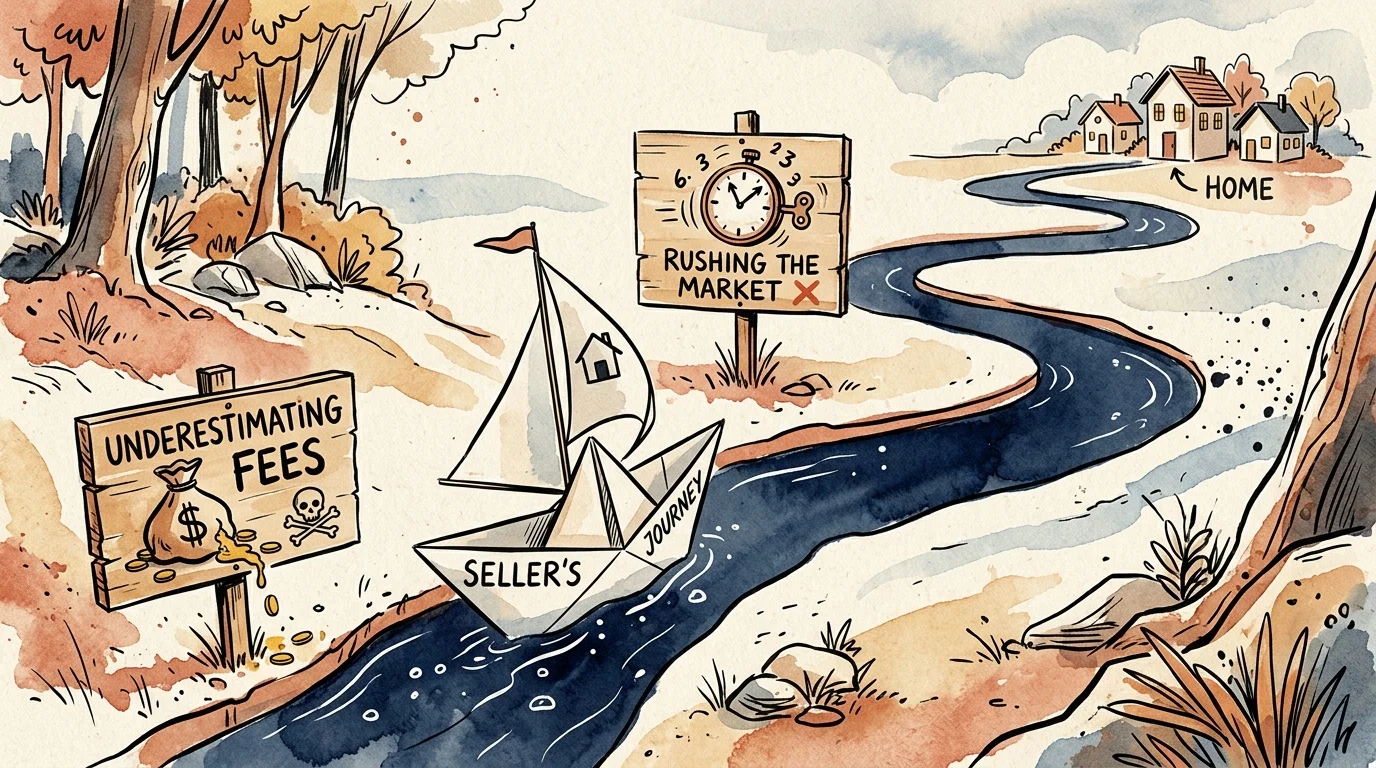
- Rushing the Decluttering Process: Waiting until weeks before a move forces you to make rushed decisions, often paying emergency storage fees or giving away valuable items that could have been sold to offset moving expenses.

Finding the Right Advisor
Because real estate decisions intersect with tax law, investment strategy, and physical health needs, consulting qualified professionals helps ensure your move succeeds financially.
You should consider seeking expert guidance in these specific scenarios:
- Significant Taxable Capital Gains: If your estimated home profit exceeds $250,000 (single) or $500,000 (joint), consult a Certified Public Accountant (CPA) or tax advisor before listing your home to explore tax mitigation strategies.
- Evaluating Retirement Income Cash Flow: Work with a Fee-Only Certified Financial Planner (CFP) to model how net home proceeds affect your safe withdrawal rate, Social Security timing, and long-term investment longevity.
- Navigating Specialized Housing Decisions: Partner with a Senior Real Estate Specialist (SRES) or a certified member of the National Association of Senior & Specialty Move Managers (NASMM) when coordinating complex downsizes. You can learn more about consumer protections and housing financial decisions from the Consumer Financial Protection Bureau (CFPB).
- Assessing Accessible Housing Needs: If health or mobility challenges prompt your move, consult housing resources from the U.S. Department of Housing and Urban Development (HUD) to identify communities meeting federal accessibility standards.
How to Downsize Successfully: A Step-by-Step Strategy
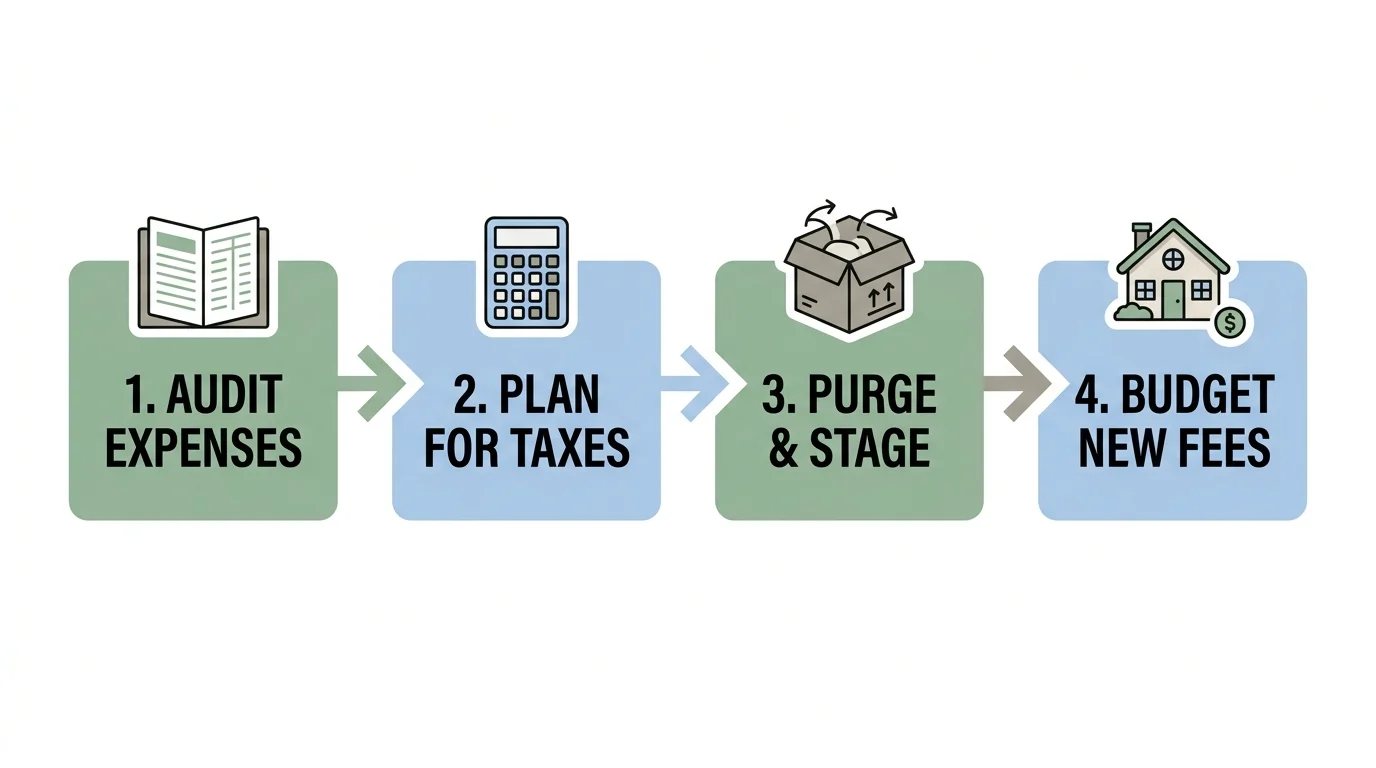
Downsizing can still yield valuable lifestyle benefits—such as freedom from yard maintenance, single-level living, and improved social connectivity—when executed with realistic expectations. Follow this clear action plan to make sure your transition protects your financial security.
First, create a comprehensive side-by-side operating budget comparing your current home against potential replacement options. Include real property taxes, insurance premiums, HOA dues, utility estimates, and routine maintenance reserves. If the net monthly savings fall below $300 after accounting for HOA dues, a move should be motivated by physical comfort or lifestyle preferences rather than financial gain.
Second, calculate your true net liquid proceeds using a conservative home sale price and deducting 8% to 10% for total friction costs, plus any estimated capital gains taxes. Divide that net sum by 25 to establish a conservative 4% annual retirement income distribution figure.
“Downsizing works best when it is driven by lifestyle preferences, location choices, and long-term physical comfort rather than purely mathematical expectations of instant financial wealth.” — Jean Chatzky, Financial Journalist & Author
Finally, consider test-driving your target lifestyle before selling your home. Renting a home or condo in your desired neighborhood for a few months—or leasing out your existing home short-term—allows you to evaluate floor plans, HOA management, and community amenities without taking an irreversible financial step.
Frequently Asked Questions
How much does it typically cost to sell and downsize a home?
Total real estate friction costs—including real estate agent fees, seller closing costs, title insurance, home staging, and minor repairs—typically range from 6% to 10% of your home’s sale price. When adding professional moving services ($1,500–$5,000) and replacement furniture suited for smaller spaces ($5,000–$15,000), total upfront transition costs frequently equal 10% to 15% of your home equity.
Can I avoid paying capital gains tax when downsizing my home?
Under IRS Section 121, you can exclude up to $250,000 in capital gains as a single filer or $500,000 as a married couple filing jointly, provided you owned and lived in the residence for at least two of the five years prior to the sale. Gains exceeding those thresholds are subject to federal long-term capital gains tax rates (15%–20%), the 3.8% Net Investment Income Tax, and state taxes. Consult a CPA to verify qualifying tax basis adjustments that can lower your gain.
Are HOA fees tax-deductible on a primary residence?
No, homeowners association (HOA) and condominium dues are personal living expenses and are not tax-deductible on your primary residence. However, if you rent out a portion of the property or run a qualified home office, a proportional deduction may apply under specific IRS rules.
Is renting a better option than buying when downsizing in retirement?
Renting a smaller property allows you to invest 100% of your net home equity proceeds into a diversified portfolio while completely eliminating property tax uncertainty, home maintenance bills, and HOA special assessment risks. However, rental rates increase over time with inflation, whereas a fixed-rate mortgage or fully paid-off home provides predictable housing payments. Comparing rental costs to total ownership costs helps determine the right path for your situation.
Before making any major real estate move in retirement, calculate your numbers carefully and consult with trusted financial and tax professionals. Downsizing should enhance your freedom, safety, and comfort—without putting an undue strain on your retirement budget.
This is educational content based on general financial principles for seniors. Individual results vary based on your situation. Always verify current benefit amounts, tax rules, and program eligibility with official government sources.
Last updated: February 2026. Benefit amounts, tax rules, and program details change annually—verify current figures with official government sources.









Leave a Reply