

Finding an affordable apartment on a fixed retirement income can transform your post-career life. Your monthly budget stretches significantly further when you target cities where living costs remain low.
A standard Social Security check easily covers pleasant rentals across select Midwestern and Southern regions. However, popular coastal hubs will quickly consume your entire monthly deposit just for basic shelter.
This guide reveals where retirees can comfortably afford rent today and identifies the pricey metro areas you should steer clear of. Discover actionable solutions to safeguard your retirement cash flow.
The 30 Percent Rule: Measuring Rent Affordability on Retirement Income
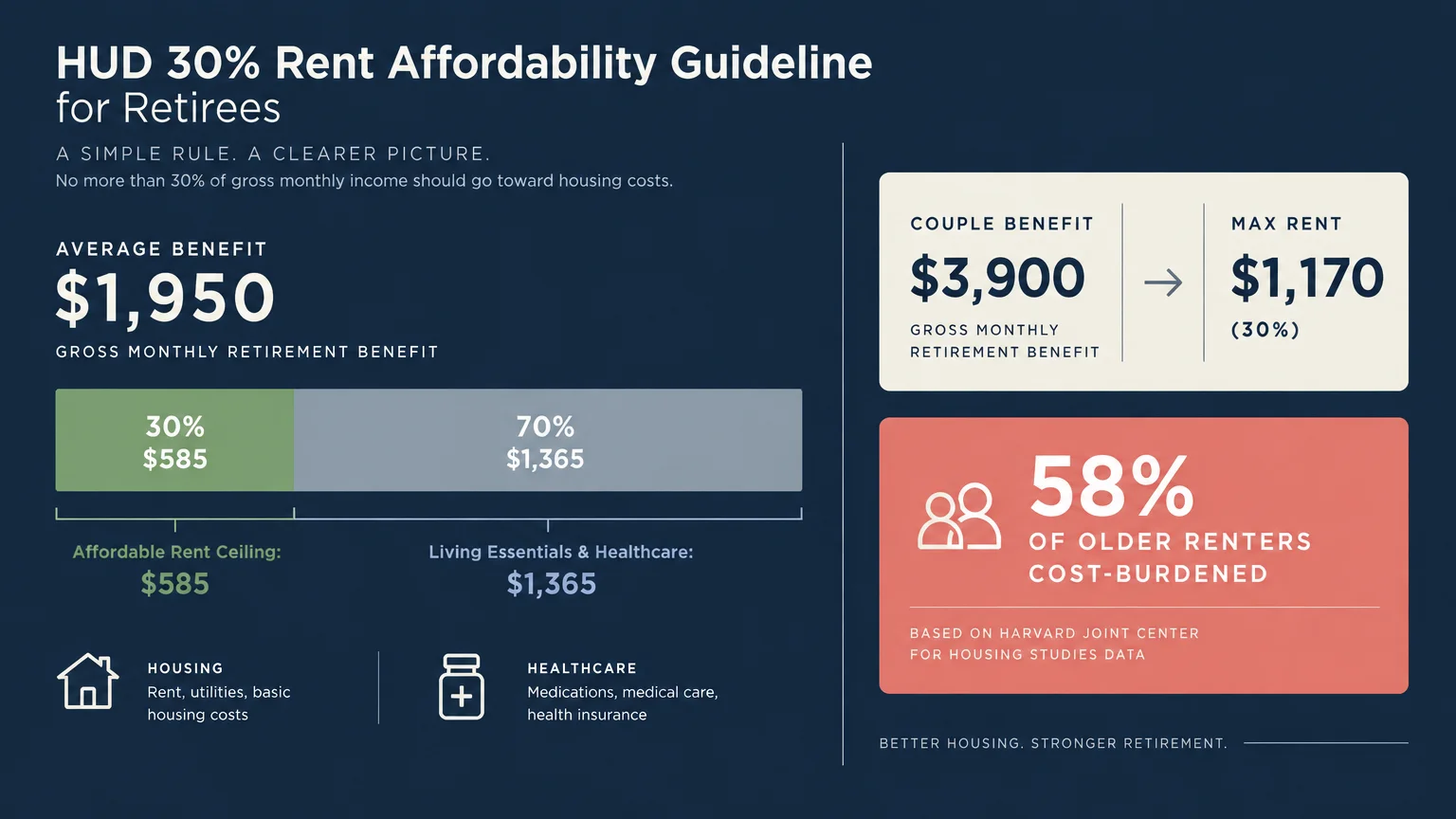
Housing analysts rely on a simple standard established by the U.S. Department of Housing and Urban Development (HUD). Under this guideline, your rent and utility costs should never exceed 30% of your gross monthly income.
Spending beyond 30% puts you in the cost-burdened category; spending over 50% makes you severely cost-burdened. When shelter eats up that much revenue, covering food, prescriptions, and emergencies becomes an uphill battle.
According to the Social Security Administration, the average monthly retirement benefit hovers between $1,900 and $2,000. That benchmark creates strict limits on what a solo retiree can spend safely.
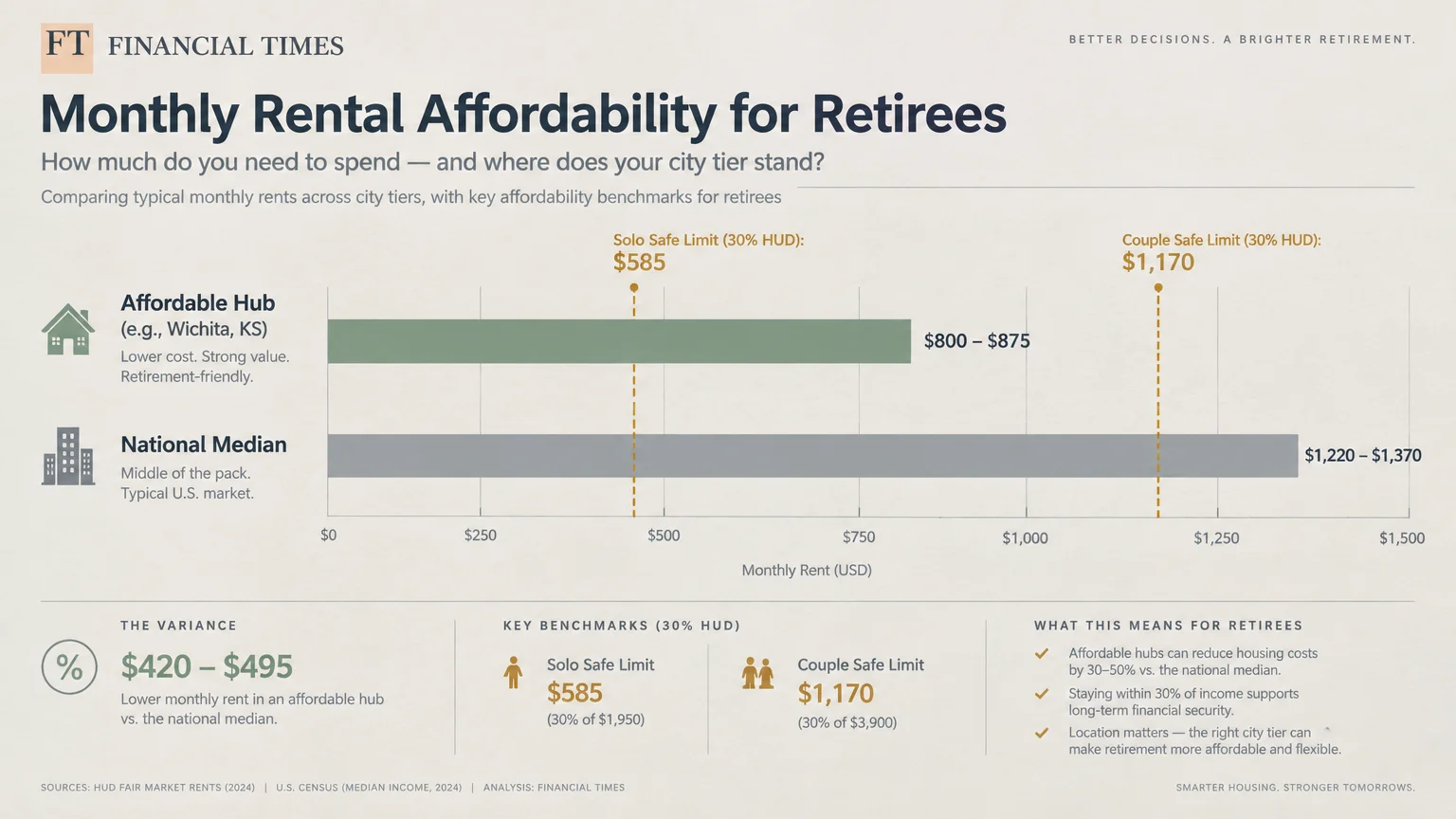
If you rely solely on an average Social Security check of $1,950, your monthly rental ceiling sits at roughly $585. Any apartment costing more than that pushes your budget into dangerous territory.
Retired couples receiving two average benefit checks enjoy considerably more breathing room. Together, they bring in roughly $3,900 each month, creating an affordable rental target of $1,170.
Unfortunately, reality catches millions of seniors off guard. A study by the Harvard Joint Center for Housing Studies found that 58% of older renter households are officially housing cost-burdened.
“A comfortable retirement begins with an affordable roof over your head. If your rent drains your check, your peace of mind disappears.” — Suze Orman, Personal Finance Expert
The National Rental Picture: Why Most Metros Squeeze Fixed Incomes
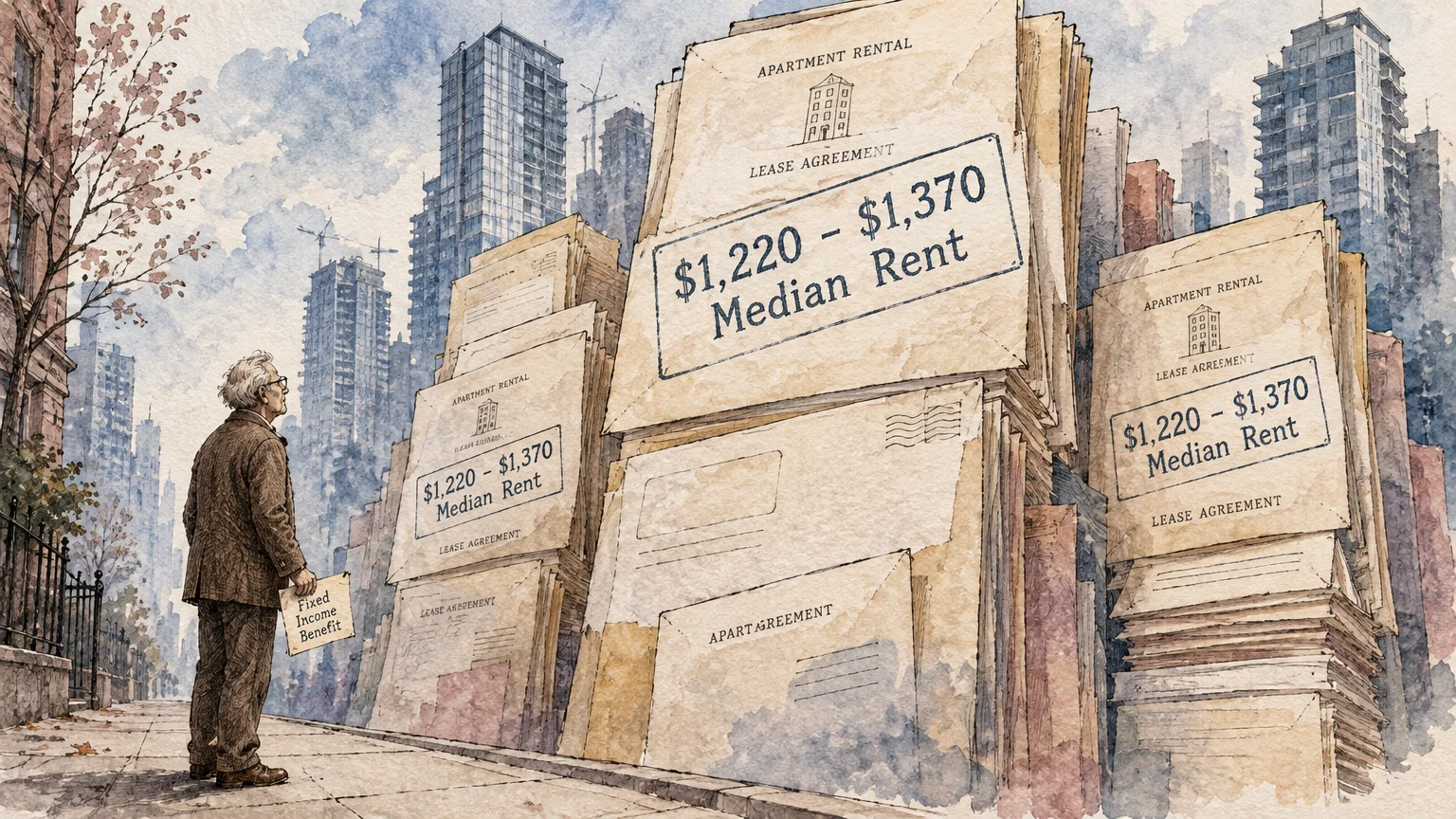
National rental trackers show the median rate for a one-bedroom apartment in the United States ranges from $1,220 to $1,370 per month. That baseline stands far above what a solo retiree can handle on benefits alone.
Even moderate rental price hikes can quickly erode your financial security over time. Unlike wages, which sometimes increase through job changes, fixed incomes only adjust via annual cost-of-living adjustments.
When rent climbs faster than annual benefit adjustments, seniors must cut back on other essentials. That dynamic forces many older Americans to look beyond high-cost regions toward affordable rental cities for retirees.

Cheapest Cities to Rent on a Fixed Income
Several metropolitan areas offer safe neighborhoods, reliable medical facilities, and rent prices that align with retirement benefits. Here are five standout markets where your retirement dollars provide authentic peace of mind.
1. Wichita, Kansas
Wichita consistently ranks among the most budget-friendly cities in America. The median price for a one-bedroom apartment here ranges between $800 and $875 per month.
More than half of all rental units in the metro area lease for under $1,000 monthly. Retired couples can easily stay under their 30% affordability limit without sacrificing comfort.
The city also provides exceptional healthcare networks through Ascension Via Christi and Wesley Medical Center. You also get easy access to cultural attractions like the Wichita Art Museum without metropolitan congestion.
2. McAllen, Texas
Located in the Rio Grande Valley, McAllen offers warm winters alongside some of the country’s lowest housing costs. Median one-bedroom apartments rent for roughly $820 to $900 per month.
Texas does not tax personal income, which helps stretch pension checks and retirement account withdrawals. In addition, routine expenses like groceries and utilities stay well below national averages.
Many seniors appreciate the city’s relaxed pace and strong sense of community. Affordable private rental complexes frequently cater directly to older adults seeking low-maintenance living.
3. Toledo, Ohio
Toledo stands out as an affordable Great Lakes haven for fixed-income households. A typical one-bedroom unit leases for approximately $825 to $920 per month.
You can locate comfortable garden apartments and suburban duplexes throughout Lucas County at reasonable rates. Coupled with an extensive metropark system, outdoor recreation costs next to nothing.
Healthcare access remains strong thanks to ProMedica Toledo Hospital and the University of Toledo Medical Center. Seniors enjoy big-city amenities while paying a fraction of coastal housing rates.
4. Little Rock, Arkansas
Little Rock pairs rich cultural institutions with an exceptionally low cost of living. Median rents for one-bedroom apartments generally range between $890 and $960 each month.
Couples sharing costs can easily maintain rent payments well below the recommended 30% ceiling. Solo renters with small pensions or modest savings also find ample choices here.
The University of Arkansas for Medical Sciences delivers top-tier geriatric healthcare services. Meanwhile, mild shoulder seasons make outdoor walks and community events pleasant throughout the year.
5. Fort Wayne and Evansville, Indiana
Indiana hosts several secondary cities that excel in senior living value. Both Fort Wayne and Evansville offer median one-bedroom rentals averaging $810 to $880 monthly.
These communities provide well-maintained housing stocks alongside quiet, walkable neighborhoods. Local transit authorities offer discounted fares and door-to-door rides for qualifying senior citizens.
Both cities maintain robust community center programs offering low-cost fitness classes and arts workshops. Living here allows your monthly check to cover housing while leaving cash for leisure.
Where Retirees Can’t Afford to Rent: The Priciest Markets
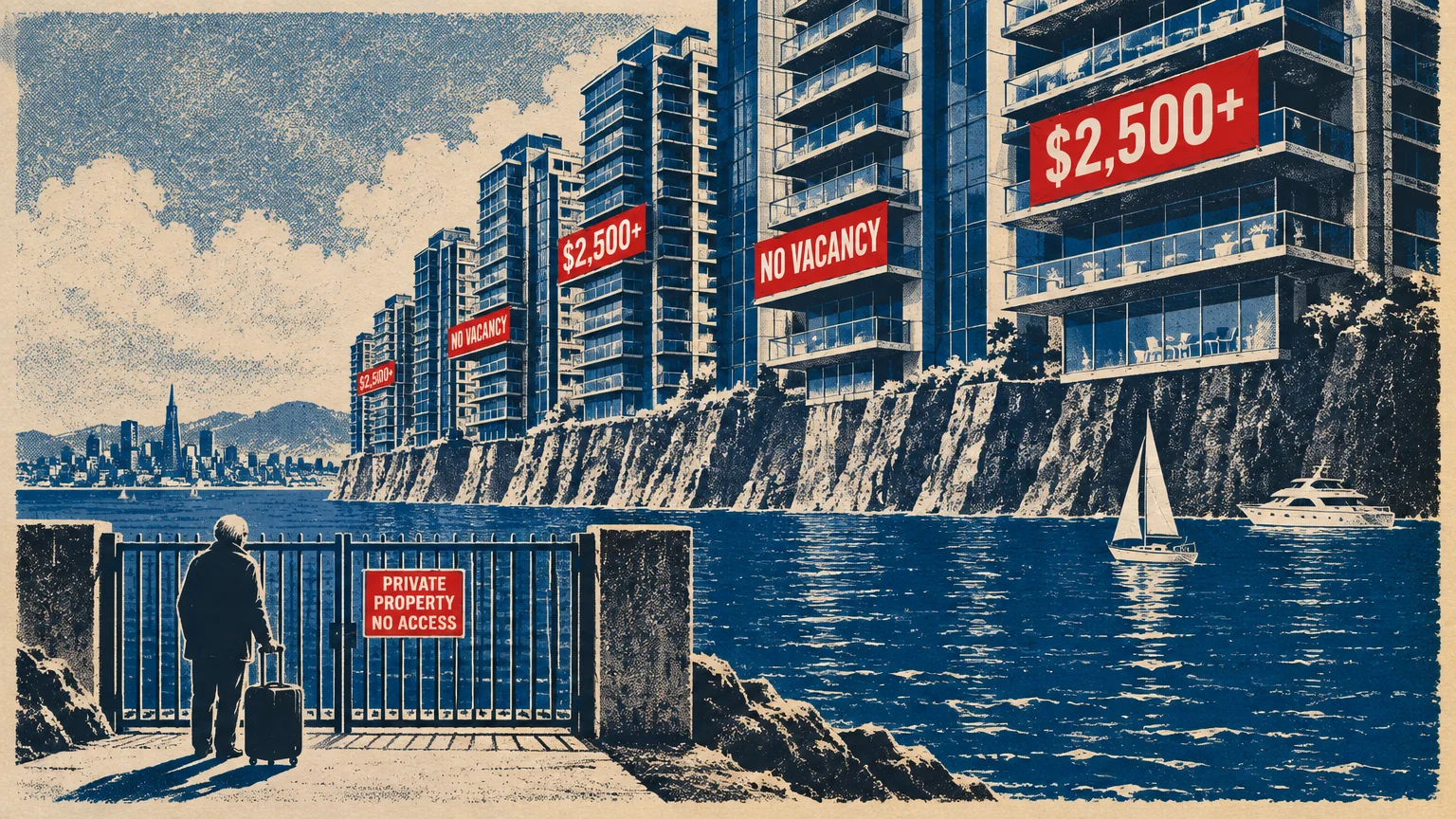
Certain metropolitan areas pose severe financial risks for anyone relying primarily on retirement checks. In these markets, typical one-bedroom rents dwarf an entire monthly Social Security benefit.
San Francisco and San Jose, California
The San Francisco Bay Area remains the most expensive rental market in the United States. Median one-bedroom apartments routinely run between $2,700 and $3,200 each month.
Renting here requires an annual income topping $110,000 just to satisfy the basic 30% affordability benchmark. A solo retiree living on standard benefits would spend more than 140% of their income on rent alone.
New York City, New York
In New York City, median one-bedroom rents frequently reach between $3,200 and $3,800 monthly across the boroughs. Even outer-borough neighborhoods command prices far outside a modest budget.
Without rent-stabilized leases or deep housing vouchers, retirees face swift financial exhaustion here. High local sales taxes and costly groceries compound the pressure on your wallet.
Boston, Massachusetts
Boston offers world-class medical facilities, but its rental costs are exceptionally punishing. One-bedroom apartments command median monthly rents of $2,600 to $3,100.
Seniors who sell longtime family homes in New England often struggle to transition into local rental apartments. The math simply does not work on baseline retirement checks.
Miami, Florida
While Florida remains a traditional retirement destination, South Florida rental prices have climbed dramatically. Median one-bedroom rentals in the Miami metro area now average $2,100 to $2,500 monthly.
Intense demand and increased insurance costs have driven landlord rates into the stratosphere. Retiring here on fixed income requires substantial independent savings to bridge the gap.
Comparing Rental Markets for Retirees
Reviewing numbers side by side helps you evaluate retirement income and rent affordability across regions. The table below illustrates what you must earn to lease comfortably in each metro.
| Metro Area | Median 1-Bed Rent | Monthly Income Needed (30% Rule) | Solo Retiree Affordability | Couple Affordability |
|---|---|---|---|---|
| Wichita, KS | $840 | $2,800 | Moderate Gap | Fully Affordable |
| McAllen, TX | $860 | $2,867 | Moderate Gap | Fully Affordable |
| Toledo, OH | $870 | $2,900 | Moderate Gap | Fully Affordable |
| Fort Wayne, IN | $850 | $2,833 | Moderate Gap | Fully Affordable |
| Little Rock, AR | $925 | $3,083 | Moderate Gap | Fully Affordable |
| Miami, FL | $2,300 | $7,667 | Severely Unaffordable | Severely Unaffordable |
| Boston, MA | $2,850 | $9,500 | Severely Unaffordable | Severely Unaffordable |
| San Francisco, CA | $2,950 | $9,833 | Severely Unaffordable | Severely Unaffordable |
| New York, NY | $3,500 | $11,667 | Severely Unaffordable | Severely Unaffordable |
Programs and Strategies That Lower Rental Costs
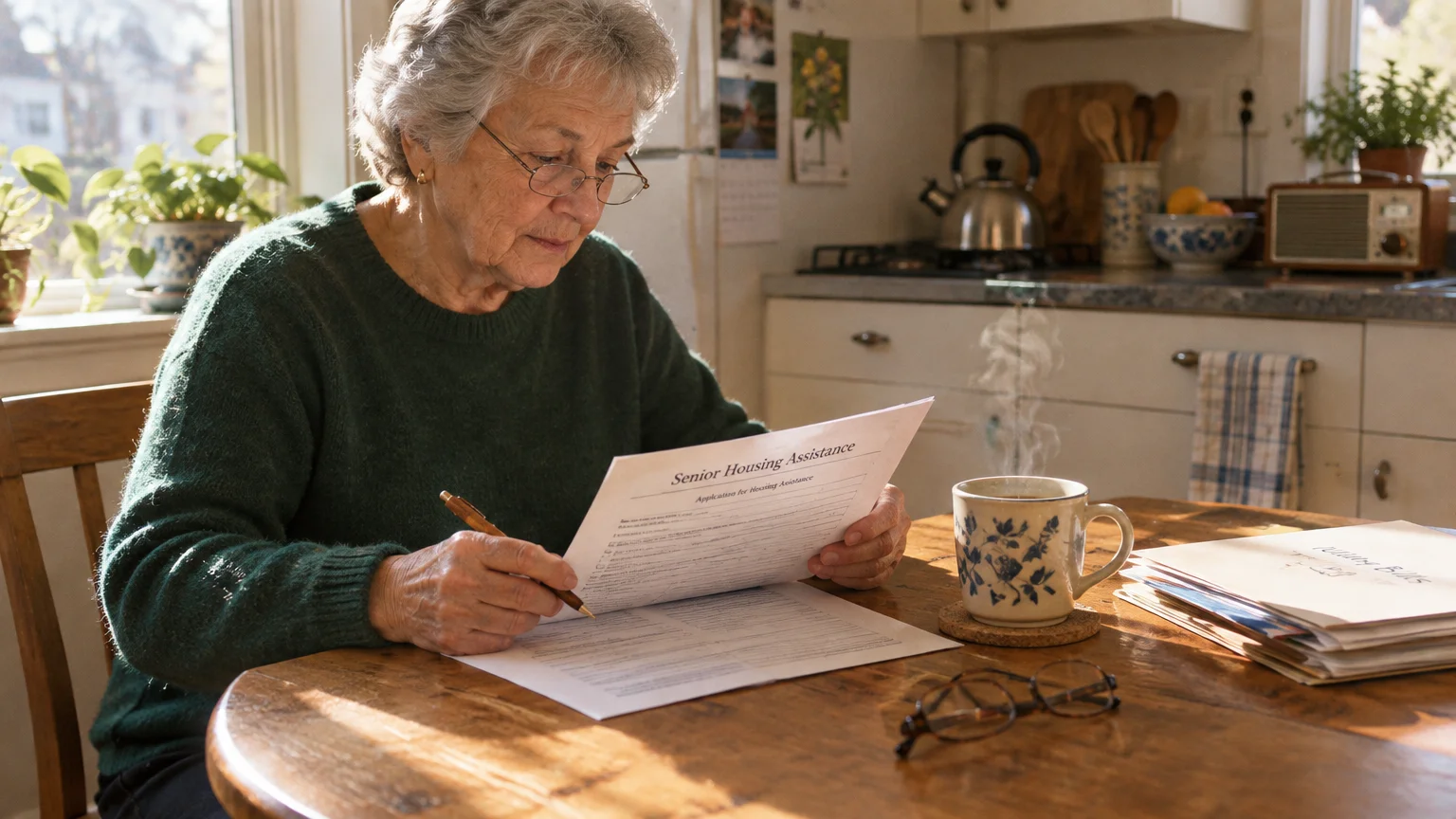
If your budget falls short of median prices, specialized programs can lower your housing expenses. Government initiatives and creative tenancy structures help preserve your hard-earned dollars.
The HUD Section 202 program provides supportive housing specifically designed for seniors aged 62 and older. Rent in these communities is capped at exactly 30% of your adjusted monthly income.
You can search for regional properties and state programs through Benefits.gov. Many communities offer waiting lists, so applying as early as possible is essential.
The Housing Choice Voucher program, commonly called Section 8, pays a subsidy directly to participating private landlords. You pay the difference between the subsidy and the actual rent charge.
Properties financed by the Low-Income Housing Tax Credit offer below-market rents to tenants meeting income caps. These communities look identical to conventional market-rate apartments but cap rents based on local median wages.
Home-sharing programs represent another expanding solution for older adults across the country. Services matched through organizations like AARP pair older homeowners with renters seeking affordable private rooms.
Costly Errors to Sidestep When Renting in Retirement
Avoiding common mistakes will protect your monthly nest egg from unexpected drains. Watch out for these four frequent pitfalls before signing any rental agreement.
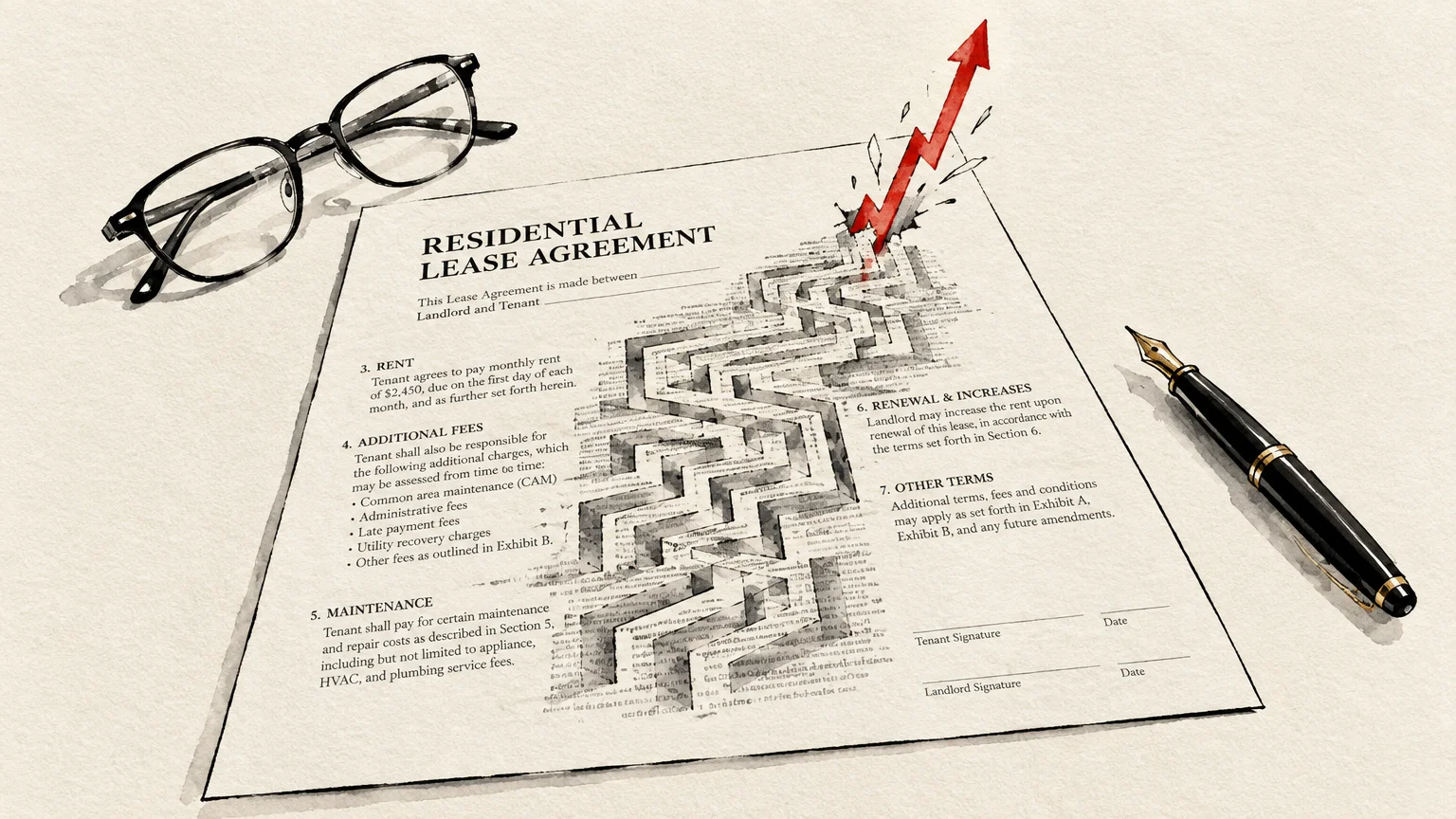
First, never assume your rent will stay flat after your first annual lease term ends. Private landlords frequently raise rates by 3% to 8% each year, which outpaces standard benefit increases.
Second, remember to account for separate utility charges, trash collection fees, and parking costs. An apartment that appears affordable on paper can quickly bust your budget once add-on fees arrive.
Third, do not sacrifice access to quality medical centers and transportation networks just for cheaper rent. Isolation and long drives to doctors will generate steep transportation and healthcare bills later.
Fourth, avoid delaying your applications for subsidized senior communities until an emergency strikes. Waiting lists for affordable senior apartments often run from six months to two full years.

When DIY Isn’t Enough
Managing housing transitions on a fixed income can occasionally overwhelm your personal planning. In several specific situations, consulting professional advocates protects your housing rights and money.
If your landlord issues an unexpected eviction notice or dramatic mid-lease rent hike, contact legal aid. Tenant advocacy groups specialize in enforcing local rent stabilization rules and elder protection statutes.
When you cannot locate subsidized properties on your own, reach out to local aging specialists. The Eldercare Locator connects you with your local Area Agency on Aging for free housing guidance.
If you plan to use investment withdrawals to pay rent, consult a certified financial planner. A qualified advisor helps you structure distributions to avoid sudden tax spikes or benefit reductions.
Frequently Asked Questions
Can a senior live solely on Social Security while renting?
Yes, but doing so independently requires finding apartments priced under $600 or relying on housing assistance. Solo renters generally need Section 202 housing, vouchers, or shared living arrangements to remain financially stable.
Which states offer the best rent affordability for retirees?
States throughout the Midwest and parts of the South offer the most favorable rental affordability. Kansas, Ohio, Indiana, Oklahoma, and Arkansas maintain numerous communities with median rents below $900.
Do senior apartment communities offer rent discounts?
Conventional age-restricted 55+ communities charge standard market rates and rarely offer direct discounts. True discounts come through income-restricted properties such as Section 202 housing or tax-credit developments.
How do waiting lists for senior apartments work?
Subsidized housing managers place applicants on waiting rosters based on application dates and statutory priority guidelines. You must submit income verification documents and maintain updated contact information while waiting.
Take Charge of Your Retirement Housing
Securing an affordable rental home gives you the freedom to enjoy retirement without lingering money worries. Focus your search on markets where typical rents align realistically with your monthly income.
Research municipal programs, tour potential neighborhoods, and review all prospective lease agreements with care. Taking measured steps today ensures your housing stays comfortable, sustainable, and entirely within your means.
This article provides general financial education and information only. Everyone’s financial situation is unique—what works for others may not work for you. For personalized advice tailored to your retirement needs, consider consulting a qualified financial professional such as a CFP or CPA.
Last updated: February 2026. Benefit amounts, tax rules, and program details change annually—verify current figures with official government sources.






Leave a Reply