

Simplifying your living situation unlocks immediate financial flexibility and eliminates the daily physical burden of managing a sprawling home. While your current house holds decades of cherished memories, rising property taxes, unexpected maintenance bills, and unused rooms can quietly drain your retirement nest egg. Recognizing when your home transitions from an asset into an anchor allows you to make proactive housing choices on your own terms. Whether you want to cut living expenses, free up trapped home equity, or eliminate demanding yard work, identifying the signs that you are ready for a simpler lifestyle empowers you to design a safer, more rewarding retirement.
The Hidden Costs and Burdens of Aging in Place
Most older adults prefer to remain in familiar surroundings. According to research from AARP, approximately 75% of adults aged 50 and older want to stay in their current residences as long as possible. However, the same research reveals that 44% expect they will eventually need to relocate; 60% of those movers cite lower maintenance and overall housing costs as their primary motivation, while 55% point to rising property taxes.
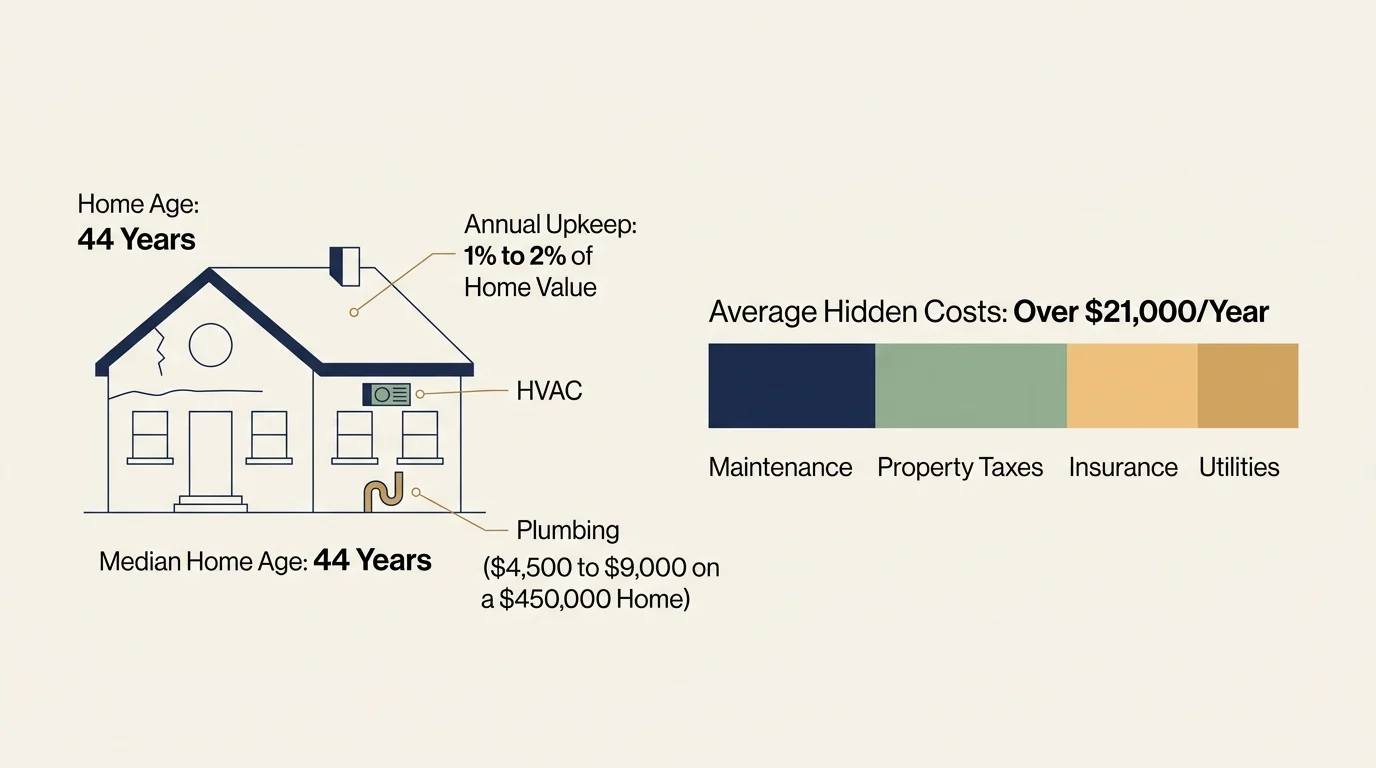
Data from the Harvard Joint Center for Housing Studies (JCHS) indicates that the median age of owner-occupied homes in the United States has reached 44 years. As structures age, their major mechanical systems—including HVAC units, plumbing networks, and roofs—require frequent, costly capital replacements. Financial guidelines suggest budgeting 1% to 2% of your home’s total market value each year for routine upkeep. On a $450,000 home, that amounts to $4,500 to $9,000 annually.
A recent Bankrate analysis found that total hidden ownership costs—combining maintenance, property taxes, homeowners insurance, and utilities—now average over $21,000 per year for a single-family home. When housing upkeep consumes a disproportionate share of your fixed retirement income, simplifying your living arrangement becomes a strategic financial upgrade rather than a sacrifice.
“Downsizing is not about giving up your lifestyle; it is about freeing up your money and your time so you can actually enjoy the years you worked so hard to achieve.” — Suze Orman, Personal Finance Author and Educator

8 Signs It Is Time to Simplify Your Home and Lifestyle
Recognizing the right time to transition requires honest self-assessment. Review these eight key indicators to determine if your current home still aligns with your physical needs and long-term financial goals.
1. Routine Home Maintenance and Yard Work Feel Exhausting
Tasks that once felt routine—cleaning gutters, mowing large lawns, shoveling snow, and climbing ladders to change high lightbulbs—can quickly become exhausting chores. If you spend your weekends managing deferred maintenance or feeling anxious about the next major repair bill, your property is dictating your schedule. Transitioning to a low-maintenance single-level house, townhome, or condominium transfers exterior upkeep and landscaping responsibilities to an association or dedicated property management team.
2. You Live in Only a Fraction of Your Total Square Footage
Walk through your house and evaluate how many rooms you actually use every week. If guest bedrooms, formal dining rooms, basements, and second living rooms sit empty for months at a time, you are paying to heat, cool, insure, and clean “ghost space.” Decluttering your lifestyle in retirement allows you to eliminate square footage you no longer need, focusing your resources exclusively on spaces that enhance your daily living.
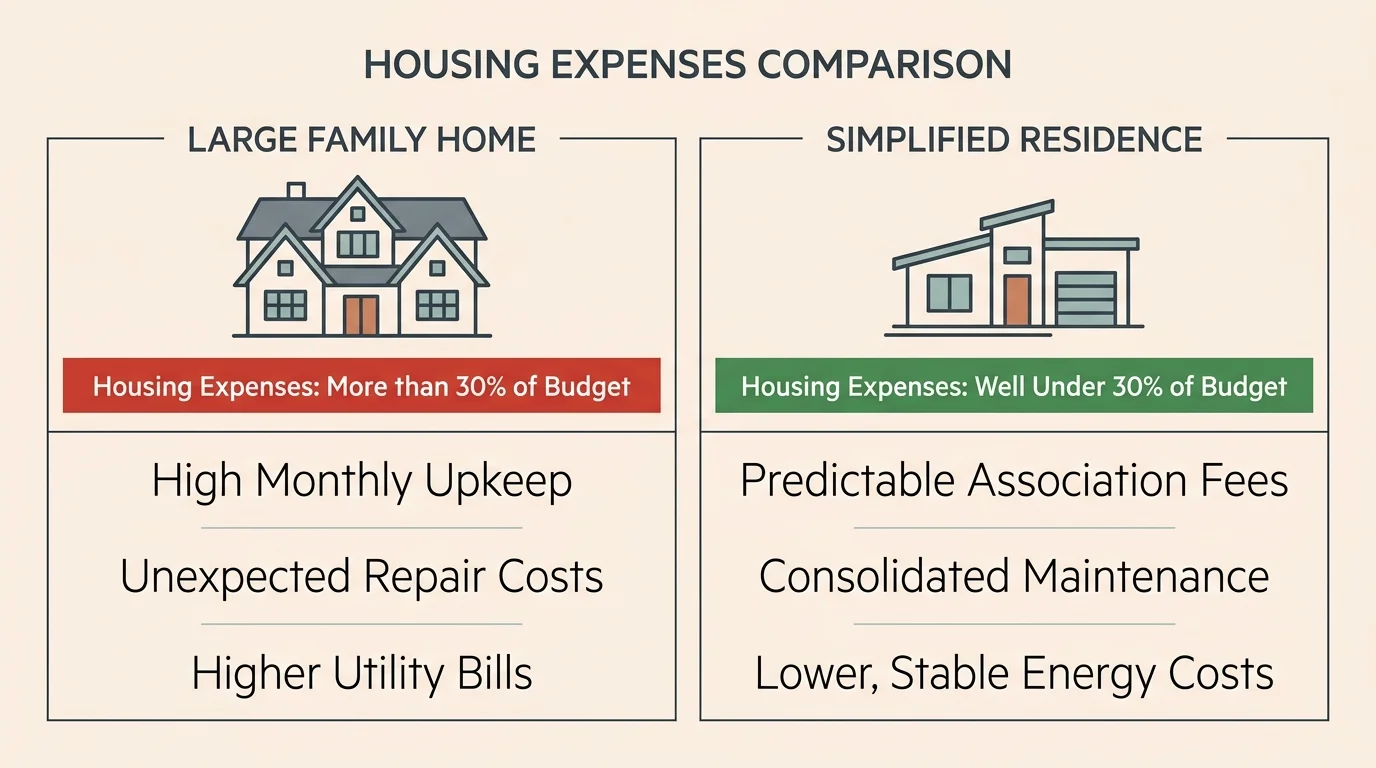
3. Housing Expenses Consume More Than 30% of Your Budget
The U.S. Department of Housing and Urban Development (HUD) classifies households spending more than 30% of their gross income on housing costs as “cost-burdened.” For retirees living on fixed sources of revenue—such as Social Security benefits, pensions, and retirement account withdrawals—unpredictable property tax reassessments and rising homeowners insurance premiums can crowd out healthcare, travel, and emergency savings. If monthly housing overhead forces you to pinch pennies elsewhere, moving to a more economical living situation restores cash-flow stability.
4. Physical Layout and Stairs Present Daily Obstacles
Multilevel living can quickly compromise personal safety. Research from Harvard JCHS reveals that less than 10% of existing U.S. homes offer the basic accessibility features needed to age safely in place, such as zero-step entrances, wide hallways, lever-style door handles, and first-floor full bathrooms. If navigating stairs to reach your bedroom, carrying laundry baskets between floors, or stepping over high bathtub walls causes discomfort or safety concerns, simplifying into a single-story layout prevents catastrophic falls.
5. You Are “House-Rich and Cash-Poor”
Decades of steady mortgage payments and market appreciation may have built significant home equity, but home equity cannot pay for medical co-pays, dental procedures, or daily living expenses. Selling a valuable primary residence allows you to unlock that trapped capital and reinvest it into liquid, income-generating assets.
Under Section 121 rules from the Internal Revenue Service (IRS), qualifying homeowners can exclude up to $250,000 in capital gains (for single filers) or up to $500,000 (for married couples filing jointly) from federal income taxes when selling a primary residence, provided you owned and lived in the property for at least two of the five years preceding the sale. This tax provision gives you an efficient vehicle to convert home equity into secure retirement capital.
6. Belongings and Clutter Create Emotional Stress
Holding onto boxes of old financial records, unused furniture, obsolete appliances, and inherited items stored in attics or garages creates cognitive overload. Cluttered environments increase anxiety and make daily cleaning more difficult. Downsizing forces a structured, intentional review of your personal items, allowing you to pass meaningful family heirlooms to children or grandchildren while donating or discarding the rest.
7. You Dread Leaving Home Due to Property Upkeep
Retirement should provide the freedom to travel, visit family, or spend winter months in a warmer climate. However, owning a large single-family home often creates travel hesitation. Concerns over burst pipes, roof leaks, overgrown lawns, or break-ins while you are away can keep you tied to your zip code. A simplified “lock-and-leave” residence—such as a secure condominium or a gated community with active groundskeeping—lets you travel without worrying about property maintenance.
8. Your Neighborhood No Longer Meets Your Daily Needs
Neighborhood demographics and municipal infrastructure evolve over time. Longtime friends and neighbors may have relocated, leaving you feeling isolated. Furthermore, if you must drive long distances on congested highways for groceries, pharmacy visits, specialized medical appointments, and social activities, your location may undermine your independence. Moving closer to healthcare corridors, walkable town centers, or family networks significantly improves quality of life as driving habits change.
Financial Comparison: Large Family Home vs. Simplified Residence
To understand the monetary impact of downsizing, compare the recurring annual carrying costs of maintaining a traditional 2,600-square-foot single-family home against a modern 1,200-square-foot single-level condominium or patio home. The following estimates reflect national median averages for common ownership expenses.
| Expense Category | Traditional Home (2,600 sq. ft.) | Simplified Home / Condo (1,200 sq. ft.) | Estimated Annual Savings |
|---|---|---|---|
| Annual Maintenance & Repairs (1%–2% rule / actual upkeep) | $6,500 – $9,000 | $1,500 – $2,500 (interior only) | $5,000 – $6,500 |
| Property Taxes (Based on assessed value) | $5,800 | $3,200 | $2,600 |
| Homeowners / Hazard Insurance | $2,400 | $900 (HO-6 condo policy) | $1,500 |
| Heating, Cooling, and Utilities | $3,800 | $1,900 | $1,900 |
| Landscaping, Lawn Care & Snow Removal | $2,200 | $0 (Included in HOA fee) | $2,200 |
| HOA / Community Assessment Fees | $0 | $4,200 ($350/month) | -$4,200 (added cost) |
| Total Estimated Annual Carrying Costs | $20,700 – $23,200 | $11,700 – $12,700 | $9,000 – $10,500 / year |
As the comparison demonstrates, simplifying your living arrangement can easily save $9,000 to $10,500 annually in carrying costs alone. Over a 15-year retirement timeline, those savings represent more than $140,000 in preserved capital—excluding the investment returns generated by redeploying your home equity.
Costly Errors to Sidestep When Downsizing
Transitioning to a simpler living space delivers major lifestyle and financial rewards, but navigating the process requires careful planning. Avoid these four common pitfalls:
- Waiting for a Health Event to Force Your Hand: Moving during a medical crisis removes your autonomy. You may face rushed decisions, limited housing options, and stress on family members. Planning your move while your health is strong gives you full control over where and how you live.
- Underestimating Transactional and Relocation Costs: Selling and moving involve clear expenses. Real estate agent commissions, title fees, local transfer taxes, professional moving crews, and minor cosmetic preparations can absorb 7% to 10% of your home’s sale price. Calculate these expenses upfront so your net proceeds match your expectations.
- Overlooking Homeowners Association (HOA) Health: When purchasing a condominium or townhome, review the community’s reserve study, balance sheet, and HOA meeting minutes. An underfunded reserve fund often leads to sudden “special assessments” costing thousands of dollars to fix roofs, elevators, or parking structures.
- Rushing to Buy Before Testing a New Area: Relocating to a new city or retirement community is a major transition. Consider renting for 6 to 12 months in your target neighborhood before purchasing. Renting gives you time to evaluate the local climate, traffic patterns, healthcare access, and social culture without locking yourself into a long-term mortgage or real estate asset.

When DIY Isn’t Enough: Professional Support Options
Managing the logistical and emotional challenges of simplifying a home of 30 or 40 years can feel overwhelming. Fortunately, professional networks specialize in helping seniors navigate this exact milestone:
- Senior Move Managers: Members of the National Association of Senior & Specialty Move Managers (NASMM) organize, downsize, pack, move, and unpack your belongings. They help you decide what fits into your new floor plan and manage estate sales or donations for leftover items.
- Seniors Real Estate Specialists (SRES): Real estate agents with the SRES designation receive specialized training in senior housing transitions, local tax exemptions, capital gains rules, and accessible home features.
- Fee-Only Financial Advisors: A fiduciary financial planner can run cash-flow projections to show how reallocating home equity affects your tax bracket, Medicare Part B premiums (IRMAA surcharges), and long-term portfolio longevity.
- Local Area Agencies on Aging: You can connect with regional eldercare resources, subsidized home repair grants, and community housing guides through the federal Eldercare Locator or the National Council on Aging (NCOA).
Frequently Asked Questions About Simplifying Your Living Situation
What is the ideal age to downsize and simplify your home?
There is no single “correct” age, but financial advisors and geriatric specialists typically recommend simplifying between ages 60 and 72. Moving during this window allows you to tackle the physical aspects of decluttering and adjusting to a new space while your energy, cognitive health, and mobility remain high.
Should I rent or buy when downsizing in retirement?
Renting eliminates home maintenance responsibilities, real estate taxes, and insurance volatility entirely, offering total budget predictability. Buying preserves your equity and protects you from unpredictable annual rent increases. If you plan to stay in your new home for more than five to seven years, buying often makes financial sense; for shorter horizons or when relocating to an unfamiliar city, renting offers flexibility.
How do I begin decluttering decades of personal possessions?
Begin early and work in small increments. Tackle one room or closet at a time rather than attempting to sort your entire house in a weekend. Categorize items into four distinct groups: Keep, Gift to Family, Donate/Sell, and Discard. Focus first on high-volume, low-sentimentality areas like basements, utility rooms, and attics before sorting through sentimental items like photo albums and family keepsakes.
Taking Your Next Steps
Simplifying your living situation is not an admission of aging; it is an active decision to align your environment with your current priorities. By cutting redundant housing expenses, removing maintenance hassles, and securing a single-level or accessible living space, you protect your physical safety and strengthen your financial foundation for the decades ahead.
Start your transition today by performing a simple room-by-room inventory of your home. Consult a fee-only financial planner to review your home equity options, and reach out to local real estate professionals to assess the current market value of your property. Making these decisions intentionally puts you firmly in charge of your retirement lifestyle.
The information in this guide is meant for educational purposes. Your specific circumstances—including income, benefits, tax situation, and health needs—may require different approaches. When in doubt, consult a licensed financial advisor or tax professional.
Last updated: February 2026. Benefit amounts, tax rules, and program details change annually—verify current figures with official government sources.









Leave a Reply