

Finding an affordable town that provides a vibrant quality of life can stretch your fixed income and double your retirement enjoyment. Moving to a community with low housing costs, manageable taxes, and top-tier healthcare lets you keep more money in your bank account while accessing excellent amenities. National data from the National Association of Realtors shows the U.S. median home price hovers around $415,000, making towns with median prices under $250,000 incredible bargains. In this guide, you will discover ten outstanding U.S. towns offering exceptional affordability, rich social communities, and high living standards without forcing you to compromise on comfort, safety, or fun.

At a Glance: Key Findings for Retirees
If you want cheap places to live with good amenities, focusing solely on housing prices will not give you the full picture. You must evaluate state taxes, healthcare availability, park systems, and local culture to find true value. Here is a quick preview of what makes these communities excel:
- Unbeatable Real Estate Value: Seven out of the ten towns featured offer median home prices between $188,000 and $265,000—saving you over $150,000 compared to national housing averages.
- Targeted Tax Savings: Several top-ranked communities reside in states like Pennsylvania and Wyoming, which completely exempt pensions, Social Security distributions, or all personal income from state taxes.
- World-Class Healthcare Networks: Mid-sized markets like Pittsburgh, Pennsylvania and Green Bay, Wisconsin host nationally recognized healthcare systems right in your backyard.
- Vibrant Community Life: These towns provide active senior centers, extensive trail networks, university lecture series, and booming downtown riverfronts.
How We Evaluate the Best Value Towns in America
Finding the best value towns in America requires looking beyond catchy promotional headlines. To assemble this list, we combined fresh real estate figures, cost-of-living indices, state tax regulations, and community livability scores published by organization metrics, including broad evaluation frameworks from AARP and major livability rankings.
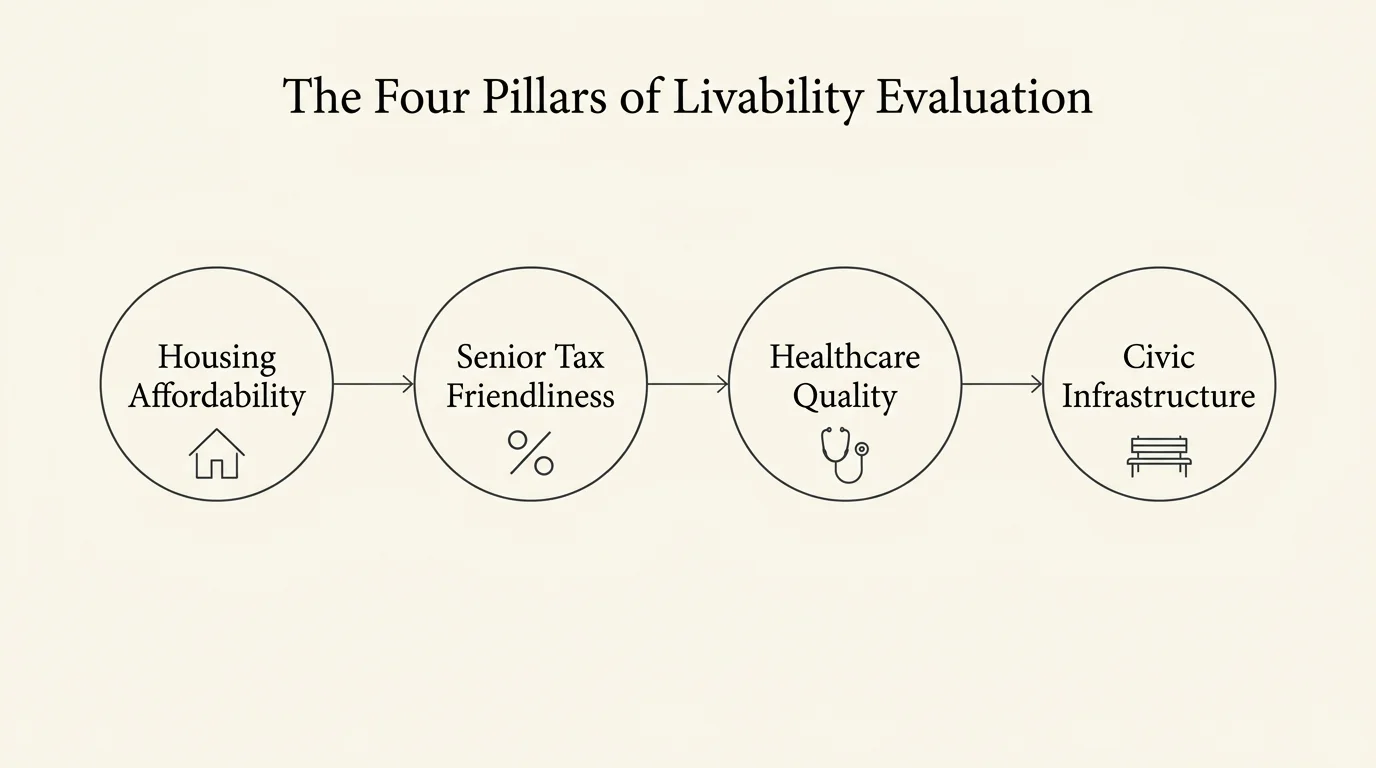
We weighted four core pillars to determine which communities give you the highest return on your lifestyle investment:
- Housing Affordability: We prioritized towns with median single-family home prices well below national benchmarks, allowing you to unlock home equity when downsizing.
- Senior Tax Friendliness: We evaluated state income taxes, local property tax rates, and specific exemptions for Social Security payouts, IRAs, and pension withdrawals.
- Healthcare Quality and Proximity: High quality of life demands accessible medical care. We selected towns served by comprehensive hospital networks and high ratios of primary care physicians.
- Civic Infrastructure and Recreation: Low costs mean little if you feel bored or isolated. We looked for walkable downtowns, rich park networks, lifelong learning programs, and low crime rates.
10 US Towns With the Best Combination of Low Cost and High Quality of Life
1. Fort Wayne, Indiana
Fort Wayne consistently ranks near the top of low cost high quality towns USA list due to its impressive balance of low living costs and big-city amenities. Housing costs sit roughly 20% to 30% below national averages, with median home prices floating between $188,000 and $247,000. Overall cost of living in Fort Wayne runs 6.5% to 9% below national benchmarks.
The city offers more than 90 miles of interconnected park trails, making daily physical activity safe and enjoyable. Downtown Fort Wayne has undergone a massive revitalization, featuring the Promenade Park riverfront development, regional theater venues, and bustling farmers markets. Healthcare services remain robust through Parkview Health and Lutheran Health Network, providing comprehensive medical care tailored to older adults.
2. Green Bay, Wisconsin
Green Bay earned the top spot in national livability studies due to its outstanding quality-of-life score relative to its budget-friendly price tag. The median home price in Green Bay sits around $245,000, while the total cost of living stays roughly 8% to 10% below national averages. Resident property taxes remain manageable, and everyday consumer goods cost substantially less than in major Midwestern metros.
In addition to legendary professional sports culture, Green Bay delivers serene nature trails along the Fox River and Green Bay shoreline. Bellin Health and Prevea Health deliver top-ranked medical services, giving you fast access to specialists. The community operates vibrant senior activity hubs that offer fitness classes, art workshops, and group excursions.
3. Pittsburgh, Pennsylvania
If you prefer a full-scale metropolitan area without big-city price tags, Pittsburgh stands out as one of the best US towns for low cost and high quality of life. The median home price hovers around $250,000—a full $165,000 below national housing medians. You can purchase historic brick homes, low-maintenance condos, or suburban single-family properties for modest monthly payments.
Pennsylvania offers an extraordinary tax perk for retirees: the state completely exempts Social Security benefits, public pensions, and private pensions from state income tax. Furthermore, Pittsburgh hosts two premier health networks—UPMC and Allegheny Health Network—delivering world-renowned specialized care. The city boasts dozens of distinct neighborhoods, vibrant cultural districts, and free public transit options for seniors through state programs.
4. Des Moines, Iowa
Des Moines combines Midwest hospitality with a thriving economy and exceptionally affordable real estate. The cost of living in Des Moines sits approximately 10% to 12% below the national average, with median home prices ranging between $230,000 and $250,000. Housing expenses run nearly 45% lower than national medians, allowing retirees to purchase high-quality modern housing for a fraction of coast-side prices.
Des Moines provides incredible civic amenities, including the world-class Des Moines Art Center, miles of paved biking and walking paths, and one of the largest downtown outdoor farmers markets in the nation. Iowa has steadily phased out state taxes on retirement income, enhancing your overall financial freedom. Medical coverage shines here through UnityPoint Health and MercyOne facilities.
5. Huntsville, Alabama
Huntsville offers mild winter weather, a dynamic technology-driven economy, and remarkable affordability. The overall cost of living runs 6% to 10% below national averages, and median home prices hover near $290,000. Property taxes in Alabama rank among the lowest in the entire United States, keeping your ongoing homeownership expenses extremely light.
Huntsville provides rich cultural experiences through the U.S. Space & Rocket Center, Huntsville Botanical Garden, and the vibrant Lowe Mill ARTS & Entertainment complex. Outdoor enthusiasts appreciate close proximity to Monte Sano State Park, which features scenic mountain trails and bluff overlook points. Medical infrastructure stays strong thanks to the Huntsville Hospital System, the region’s top medical network.
6. Tucson, Arizona
For retirees seeking warm weather and dry desert air without Southern California price tags, Tucson presents an exceptional option. While home prices have grown across the Sun Belt, Tucson’s median home price around $325,000 remains far more accessible than Phoenix or West Coast markets. Total living costs hover 2% below national averages, making it an affordable haven for outdoor recreation.
AARP featured Tucson on its list of high-value communities for older adults, praising its accessible public transportation, cultural diversity, and senior services. Tucson hosts the Banner – University Medical Center, a top-ranked academic medical facility. You can spend your days exploring Sabino Canyon, taking lifelong learning classes at the University of Arizona, or enjoying authentic Southwestern cuisine.
7. Easton, Pennsylvania
Nestled along the confluence of the Lehigh and Delaware rivers, Easton provides rich historic charm, walkable streets, and affordable housing. Median home prices average around $265,000, keeping home ownership comfortable for buyers selling real estate in high-cost neighboring states like New York or New Jersey. Overall living costs sit roughly 3% below national averages.
Easton benefits directly from Pennsylvania’s senior-friendly tax code, which leaves pension distributions and Social Security income un-taxed at the state level. Walkable downtown streets showcase historic architecture, local farm-to-table eateries, and the famous Easton Farmers’ Market—operating since 1752. Excellent medical coverage resides nearby through the St. Luke’s University Health Network and Lehigh Valley Health Network.
8. Sheridan, Wyoming
If you dream of mountain landscapes, low density, and high fiscal freedom, Sheridan offers a rare mix of rustic charm and financial perks. While median home prices sit higher around $380,000, Wyoming’s tax climate offsets real estate costs. Wyoming levies zero state income tax on retirement withdrawals, pensions, or Social Security, and features exceptionally low property tax rates.
Sheridan sits at the base of the Bighorn Mountains, providing direct access to fishing, hiking, and wildlife viewing. The town preserves a historic downtown district filled with local shops, western heritage sites, and community centers. Sheridan Memorial Hospital delivers quality medical care, while low crime rates foster peace of mind.
9. Savannah, Georgia
Savannah delivers coastal beauty, historic architecture, and Southern warmth at prices well under typical resort-town rates. The cost of living in Savannah sits roughly 6% below national averages, with median single-family home prices around $285,000. Georgia provides attractive retirement income exclusions, allowing individuals aged 65 and older to exclude up to $65,000 of passive retirement income from state taxation.
You can stroll under oak trees draped in Spanish moss, explore historic squares, and drive to nearby Tybee Island beaches in under thirty minutes. Memorial Health University Medical Center and St. Joseph’s/Candler health network offer comprehensive medical systems across the region. Local senior centers coordinate regular outings, art classes, and fitness programs.
10. Bloomington-Normal, Illinois
The twin cities of Bloomington-Normal offer university-town benefits, rich cultural programming, and cost-effective living. Median home prices sit around $225,000, and overall living expenses run 8% below national benchmarks. Housing availability remains strong, with low-maintenance ranch-style homes and active retirement communities available at competitive prices.
Host to Illinois State University and Illinois Wesleyan University, the town offers lifelong learning courses, collegiate sporting events, and musical performances. Illinois does not tax qualified retirement distributions, pensions, or Social Security benefits. Carle BroMenn Medical Center and OSF St. Joseph Medical Center handle local healthcare needs efficiently.

Comparison Table: Best US Towns for Low Cost and High Quality of Life
Comparing key figures helps you decide which community aligns with your personal retirement budget and lifestyle choices. The table below outlines real estate indicators, cost-of-living figures, and primary advantages for each featured location:
| Town & State | Est. Median Home Price | Cost of Living vs. US Avg | Primary Senior Advantage |
|---|---|---|---|
| Fort Wayne, IN | $215,000 | 8% Below | 90+ miles of park trails & low property taxes |
| Green Bay, WI | $245,000 | 9% Below | Top-ranked national livability score & Bellin Health care |
| Pittsburgh, PA | $250,000 | 7% Below | Zero state tax on pensions/SS & UPMC health network |
| Des Moines, IA | $240,000 | 11% Below | Housing costs 45% below national median |
| Huntsville, AL | $290,000 | 7% Below | Exceptionally low property taxes & mild winters |
| Tucson, AZ | $325,000 | 2% Below | Sun Belt climate, dry air & University health care |
| Easton, PA | $265,000 | 3% Below | Historic walkability & zero PA retirement income tax |
| Sheridan, WY | $380,000 | On Par | No state income tax & mountain outdoor recreation |
| Savannah, GA | $285,000 | 6% Below | Coastal access, rich history & $65k state tax exclusion |
| Bloomington-Normal, IL | $225,000 | 8% Below | University amenities, lifelong learning & no state retirement tax |

State Tax Strategies: Stretch Your Fixed Income
Finding affordable towns with great quality of life involves more than evaluating listing prices on real estate websites. State income taxes, sales taxes, and local property assessments heavily determine how far your monthly check stretches. Nine states tax no traditional income: Alaska, Florida, Nevada, New Hampshire, South Dakota, Tennessee, Texas, Washington, and Wyoming. Relocating to a state like Wyoming eliminates tax deductions from your 401(k) or traditional IRA distributions.
Furthermore, over 40 states do not tax Social Security benefits at all. States like Pennsylvania and Illinois go a step further by excluding private pensions, public pensions, and qualified retirement withdrawals from state income taxation. You can check your federal tax obligations using resources from the Internal Revenue Service (IRS) and review benefit estimation tables provided by the Social Security Administration (SSA) before choosing your destination.
“You work hard for your money, and in retirement, your money needs to work hard for you. Choosing a location that respects your budget protects your financial independence for life.” — Suze Orman, Personal Finance Expert

Costly Errors to Sidestep When Relocating
Relocating during your retirement years offers fresh opportunities, but skipping critical checks can strain your nest egg. Watch out for these four common mistakes:
- Focusing Exclusively on Sticker Price: Buying a $180,000 home in an area with high property tax rates or soaring homeowners insurance costs can erode your monthly budget quickly. Always calculate total monthly housing overhead, including utilities and insurance.
- Ignoring Healthcare Network Boundaries: Moving across state lines often requires changing Medicare Advantage plans or finding new primary care providers who accept your coverage. Verify physician networks using tools on Medicare.gov before closing on a home.
- Failing to Test-Drive the Community: A town that looks perfect during a summer visit may feel isolated during winter months. Rent a small apartment or long-term vacation home for three to four weeks during different seasons before committing long term.
- Disregarding Local Senior Infrastructure: Check whether your prospective town provides senior transportation programs, active adult centers, or home care support options. You can research local assistance programs through the federal government’s Eldercare Locator network.

When DIY Isn’t Enough: Professional Financial Guidance
Relocating across county or state lines triggers complex financial, tax, and legal questions. Handling every transaction on your own works well for simple moves, but specialized professional advice becomes invaluable under specific conditions:
- Selling High-Value Real Estate: If selling your primary residence generates capital gains above $250,000 (single) or $500,000 (married filing jointly), consult a Certified Public Accountant (CPA) to minimize federal capital gains tax liability.
- Managing Multi-State Tax Rules: Establishing residency in a new tax-friendly state requires clear documentation, such as updating driver’s licenses, voter registration, and physical presence records to satisfy tax auditors.
- Updating Estate Documents: Wills, power-of-attorney forms, and medical directives created in one state may require updates to comply with probate laws in your new home state.
- Managing Withdrawal Sequencing: A certified financial planner can help you time draws from taxable brokerage accounts, traditional IRAs, and Roth accounts to avoid pushing you into higher tax brackets or triggering Medicare IRMAA surcharges. You can research consumer rights and guidance through the Consumer Financial Protection Bureau (CFPB).
Frequently Asked Questions
Which US state offers the most favorable tax rules for retirees?
States like Wyoming, Florida, and Tennessee levy zero personal income tax, making them highly attractive for retirement withdrawals. Additionally, states like Pennsylvania exemptions all Social Security benefits and retirement pension income from state taxation, providing exceptional relief for fixed-income households.
How do low-cost towns maintain high quality medical care?
Many top value towns host regional university medical centers or anchor regional hospital systems. Cities like Pittsburgh (UPMC) and Green Bay (Bellin Health) act as regional healthcare hubs, giving local residents immediate access to specialists, specialized surgery, and advanced diagnostics.
Is it better to rent or buy when moving to a new value town?
Renting for six to twelve months provides flexibility to test different neighborhoods, understand traffic patterns, and check local healthcare access without committing capital. Once you feel confident about the town’s culture and climate, you can purchase real estate with peace of mind.
How can I locate local senior community programs before moving?
You can search municipal websites, contact county Area Agencies on Aging, or use the Eldercare Locator portal maintained by the U.S. Administration for Community Living. These tools reveal available meal delivery services, local transit options, and active adult recreation schedules.
Final Steps for Your Next Chapter
Finding a town with the ideal balance of low costs and high living standards creates real financial freedom. By reducing housing overhead and living in a senior-friendly tax climate, you stretch your retirement funds while enjoying rich amenities, quality healthcare, and vibrant community activities. Take time to list your personal priorities—such as warm weather, proximity to family, or walkable arts districts—and plan short visits to two or three top contenders.
The information in this guide is meant for educational purposes. Your specific circumstances—including income, benefits, tax situation, and health needs—may require different approaches. When in doubt, consult a licensed financial advisor or tax professional.
Last updated: February 2026. Benefit amounts, tax rules, and program details change annually—verify current figures with official government sources.









Leave a Reply