

You can trade freezing driveways and crippling heating bills for mild sunshine without draining your nest egg. With the national median home price hovering above $410,000, finding a budget-friendly winter haven requires looking beyond high-priced resort hubs.
Strategic relocation allows you to stretch your fixed income further while protecting your health from harsh winter conditions. Moving to a community with low property costs directly slashes your largest recurring monthly expense.
Below, discover eleven affordable towns offering January highs above 50 degrees and home prices well below the national baseline. Each destination combines pleasant winters, lower living expenses, and favorable state tax policies for retirees.
Why Mild Climates and Affordable Housing Matter in Retirement
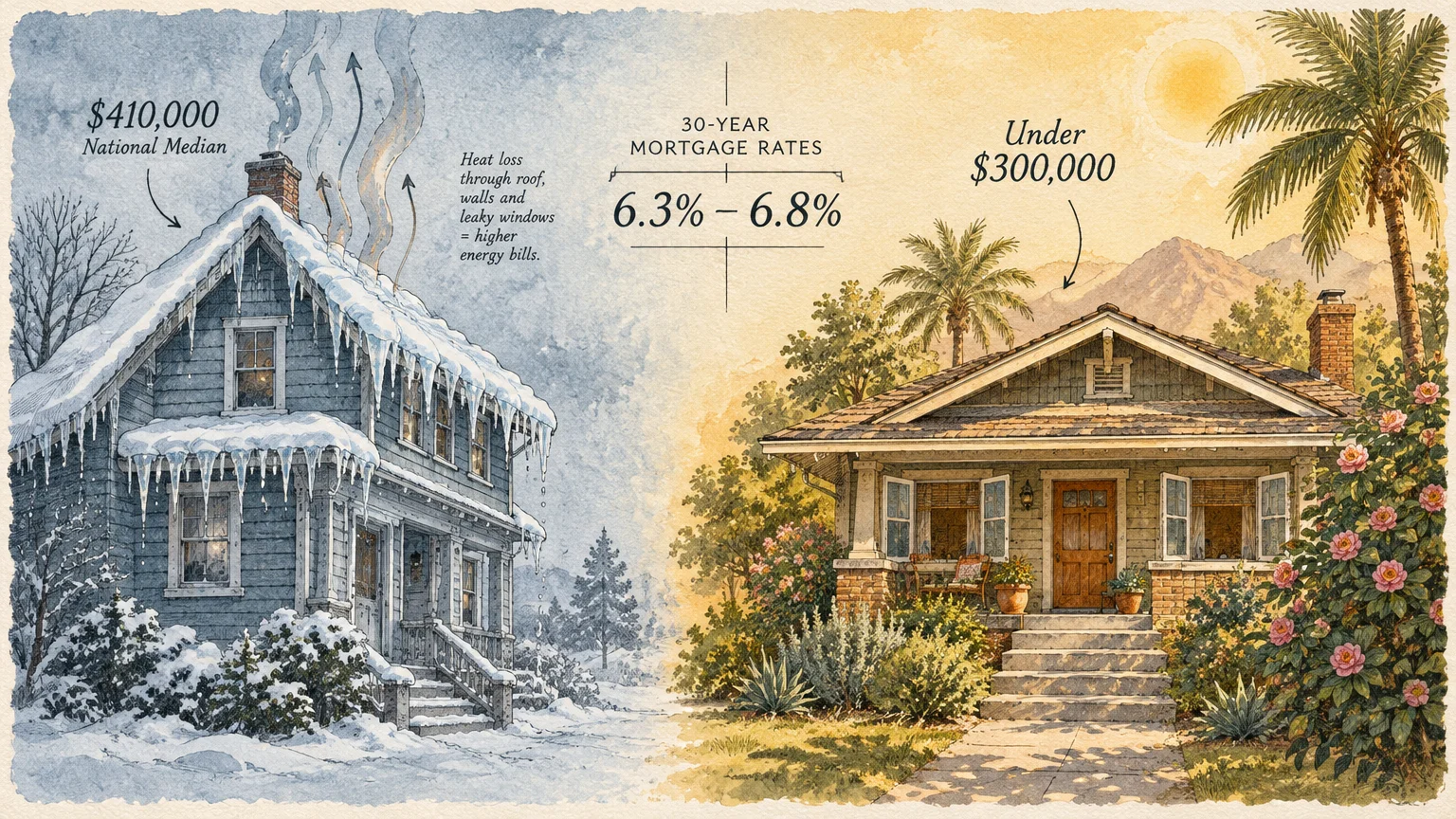
Surviving sub-zero temperatures drains more than your physical energy; it drains your bank account. Cold climates bring spiked heating bills, roof maintenance from ice dams, and higher medical risks from dangerous falls.
According to the National Association of Realtors, the national median home sale price sits between $408,000 and $428,000. Purchasing a home below $300,000 instantly frees up substantial capital for daily living.
Current 30-year mortgage rates hover between 6.3% and 6.8%, according to Freddie Mac data. A lower purchase price dramatically reduces both your monthly mortgage payments and your upfront cash requirements.
Lower home values also translate into reduced property tax assessments and cheaper insurance premiums. These combined savings preserve your liquid savings for long-term healthcare needs and leisure.
Comparison: 11 Warm Retirement Towns with Low Home Prices
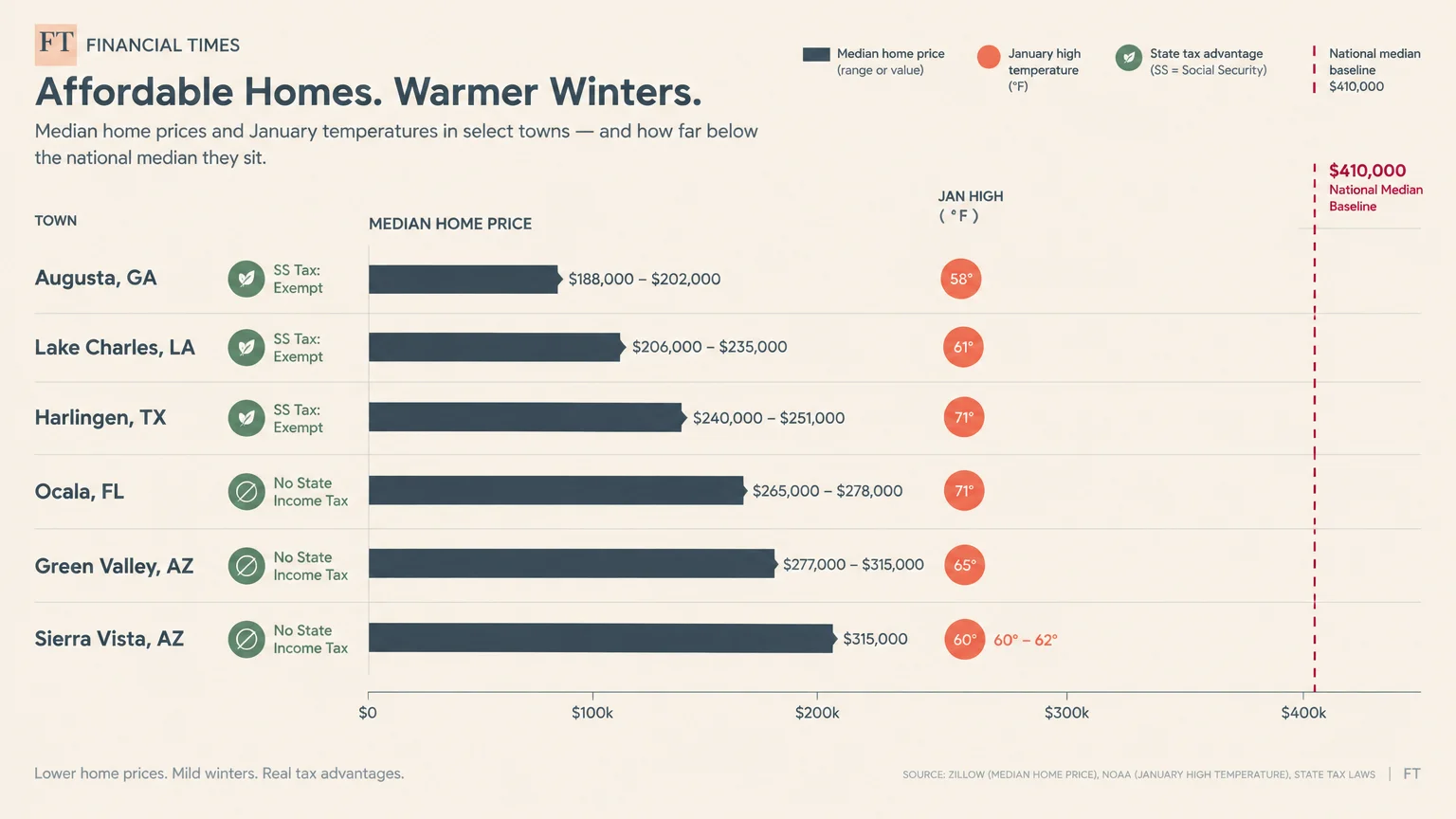
Comparing housing costs and winter temperatures side by side helps you narrow down potential relocation spots. Every town listed below features mild winters and average home values well beneath national figures.
| Town & State | Median Home Price | Average January High | Annual Snowfall | State Tax on Social Security |
|---|---|---|---|---|
| Augusta, GA | $188,000 – $202,000 | 58°F | Under 0.5 in | Exempt |
| Lake Charles, LA | $206,000 – $235,000 | 61°F | 0 in | Exempt |
| Gulfport / Biloxi, MS | $211,000 – $238,000 | 60°F – 62°F | 0 in | Exempt |
| Harlingen, TX | $240,000 – $251,000 | 71°F | 0 in | No State Income Tax |
| Winston-Salem, NC | $263,000 – $289,500 | 51°F – 53°F | 4 – 5 in | Exempt |
| Ocala, FL | $265,000 – $278,000 | 71°F | 0 in | No State Income Tax |
| Green Valley, AZ | $277,000 – $315,000 | 65°F | 0 in | Exempt |
| Aiken, SC | $281,000 – $292,500 | 57°F – 59°F | Under 1 in | Exempt |
| Las Cruces, NM | $290,000 – $305,000 | 58°F – 60°F | Trace | Exempt (under income limits) |
| Sierra Vista, AZ | $315,000 | 60°F – 62°F | Trace | Exempt |
| Pensacola, FL | $265,000 – $325,000 | 62°F | 0 in | No State Income Tax |
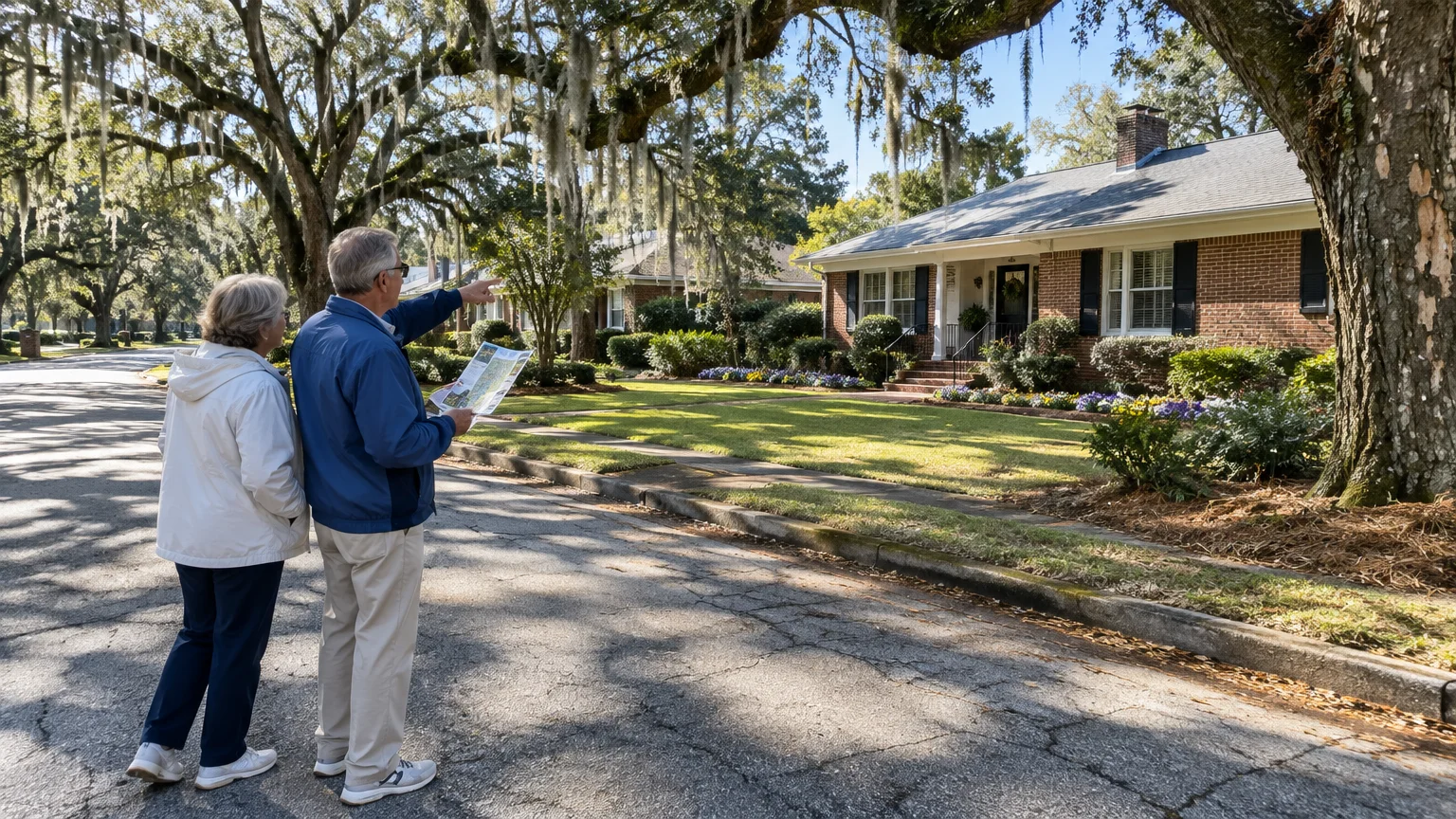
Exploring these regions in person during January gives you firsthand experience with local winter weather. It also allows you to tour neighborhoods and check local medical facilities.
11 Retirement Towns With Gentle Winters and Cheap Homes
1. Augusta, Georgia
Augusta combines southern charm with exceptional real estate bargains. The median home price ranges from $188,000 to $202,000, sitting roughly 50% below the national median.
Winters remain mild, with average January highs reaching 58°F and snowfall rarely exceeding half an inch. The city’s thriving Medical District provides outstanding healthcare options for retirees.
Georgia exempts all Social Security benefits from state income tax. Furthermore, residents age 65 and older can exclude up to $65,000 per person in retirement income.
2. Lake Charles, Louisiana
Located along the Gulf Coast plain, Lake Charles delivers rich Cajun culture and water recreation. Local median home prices range between $206,000 and $235,000.
January daytime temperatures average a comfortable 61°F, and measurable snowfall is practically nonexistent. Retirees enjoy access to casino resorts, fresh seafood, and scenic boardwalks along the lake.
Louisiana offers a homestead exemption that shields the first $75,000 of home value from parish property taxes. Social Security income and military pensions are also exempt from state taxation.
3. Gulfport and Biloxi, Mississippi
The Mississippi Gulf Coast presents white-sand beaches alongside remarkably cheap housing. Median home prices range from $211,000 in Gulfport to $238,000 in neighboring Biloxi.
Average January highs reach 60°F to 62°F with zero annual snowfall. Coastal breezes keep winters crisp without bringing bone-chilling freezes.
Mississippi is among the friendliest tax environments in the nation for retirees. The state exempts all qualified retirement income, pensions, and Social Security distributions from personal income taxes.
4. Harlingen, Texas
Situated in the subtropical Rio Grande Valley, Harlingen provides true warmth year-round. Median home prices range between $240,000 and $251,000, which is roughly 35% below the national baseline.
January brings average daily highs of 71°F, completely eliminating the need for heavy winter coats. The town has long welcomed retirees with active community programs and low living costs.
Texas levies zero state individual income tax, leaving your pensions and investment withdrawals untouched. Seniors age 65 and older can also freeze school district property taxes.
5. Winston-Salem, North Carolina
If you desire distinct seasons without severe cold, Winston-Salem hits the sweet spot. Median home prices average between $263,000 and $289,500 across its historic neighborhoods.
January daytime highs hover around 51°F to 53°F, with annual snowfall averaging just four to five inches. Winter cold snaps pass quickly, yielding sunny afternoons for walking and golf.
North Carolina does not tax Social Security retirement benefits. The city also features premier healthcare through Atrium Health Wake Forest Baptist medical center.
6. Ocala, Florida
Known as the Horse Capital of the World, inland Ocala offers tranquil living away from crowded coasts. Median sale prices sit between $265,000 and $278,000.
January daytime highs average 71°F with zero snowfall, providing outdoor comfort throughout the year. The inland location also offers lower insurance premiums than coastal Florida communities.
Florida imposes zero personal income tax, protecting every dollar of your Social Security and retirement distributions. The state’s homestead exemption further minimizes local real estate tax burdens.
7. Green Valley, Arizona
Located just south of Tucson, Green Valley is a master-planned active adult community. Median home values range from $277,000 to $315,000 across quiet desert neighborhoods.
The Sonoran Desert climate delivers January highs averaging 65°F and virtually zero humidity. Dozens of recreation centers offer swimming, pickleball, and social clubs specifically for seniors.
Arizona does not tax Social Security retirement income. The dry desert air also provides natural comfort for individuals managing joint pain or respiratory conditions.
8. Aiken, South Carolina
Aiken combines thoroughbred equestrian traditions with stately live oaks and historic charm. Median home prices range between $281,000 and $292,500.
Winter days are sunny and crisp, with average January highs between 57°F and 59°F. Snowfall remains rare, averaging less than one inch per year.
South Carolina fully exempts Social Security benefits and offers substantial retirement income exclusions for seniors. The state’s homestead exemption also lowers property taxes for homeowners aged 65 and older.
9. Las Cruces, New Mexico
Framed by the Organ Mountains, Las Cruces enjoys more than 340 days of sunshine annually. Median home sale prices sit between $290,000 and $305,000.
January daily highs reach 58°F to 60°F, paired with dry desert air and virtually no snow. The presence of New Mexico State University brings cultural events and lifelong learning programs.
Under state law, New Mexico exempts Social Security benefits for single filers earning under $100,000 and couples earning under $150,000. Property tax rates in the region also rank among the lowest in the West.
10. Sierra Vista, Arizona
Sitting at an elevation of 4,600 feet, Sierra Vista delivers temperate weather throughout the calendar year. Median home prices average around $315,000.
January daytime highs average 60°F to 62°F with clear, crisp skies and minimal precipitation. The surrounding Huachuca Mountains provide dramatic views and cool breezes that temper summer heat.
Arizona exempts all Social Security income and up to $2,500 in government pension benefits. Retirees appreciate the presence of modern medical centers and low overall living expenses.
11. Pensacola, Florida
Pensacola offers emerald Gulf waters, naval heritage, and an active historic downtown. Median home sale prices range from $265,000 to $325,000 across pleasant residential neighborhoods.
Winter highs average 62°F in January, allowing you to stroll coastal state parks year-round without snow shovels. The city offers two major hospital systems and convenient regional transit.
Like all Florida cities, Pensacola carries zero state income tax on Social Security, pensions, or withdrawals. Veterans also find extensive community resources near Naval Air Station Pensacola.
Tax Strategies That Maximize Your Relocation Savings
“Living within your means is not about deprivation; it’s about making choices that align your spending with your core priorities.” — Jean Chatzky, Financial Journalist and Author
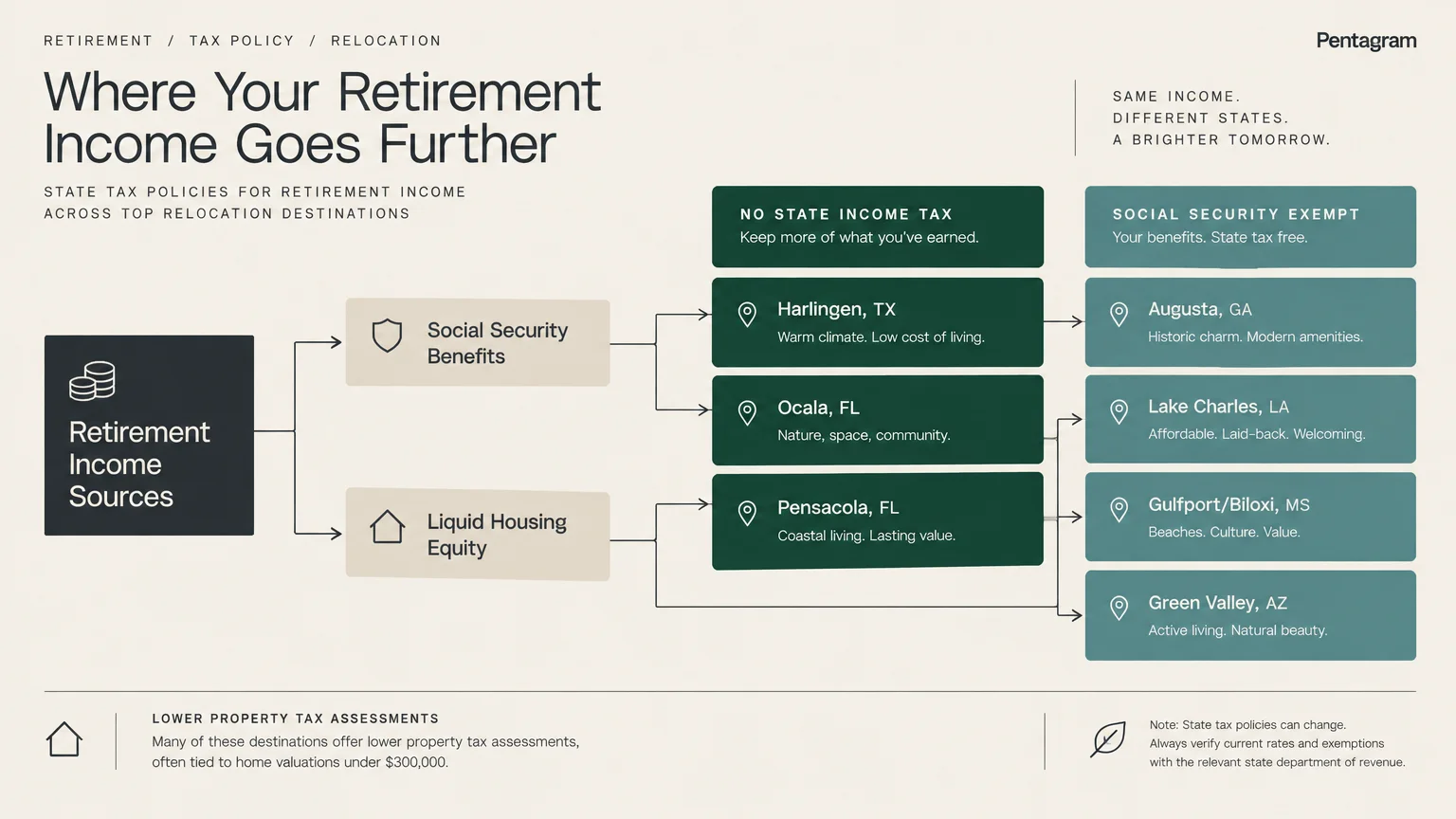
Lower purchase prices represent only one part of the retirement financial puzzle. The state tax landscape can either protect your distributions or eat away at your monthly budget.
States such as Florida and Texas levy zero personal income taxes. This policy lets you keep 100% of your 401(k) withdrawals, pensions, and Social Security benefits.
Other states like Georgia and Mississippi provide generous exemptions tailored directly to older adults. Mississippi waives taxes on all qualified retirement accounts, while Georgia shields up to $65,000 per person over 65.
According to the Internal Revenue Service (IRS), seniors age 65 and older also receive an extra federal standard deduction. Coupling federal tax perks with tax-friendly state rules optimizes your net income.
Costly Errors to Sidestep When Buying a Sunbelt Home
Relocating across state lines requires careful financial diligence. Sidestep these frequent miscalculations before signing a real estate purchase contract.
1. Ignoring Property Insurance Escalations
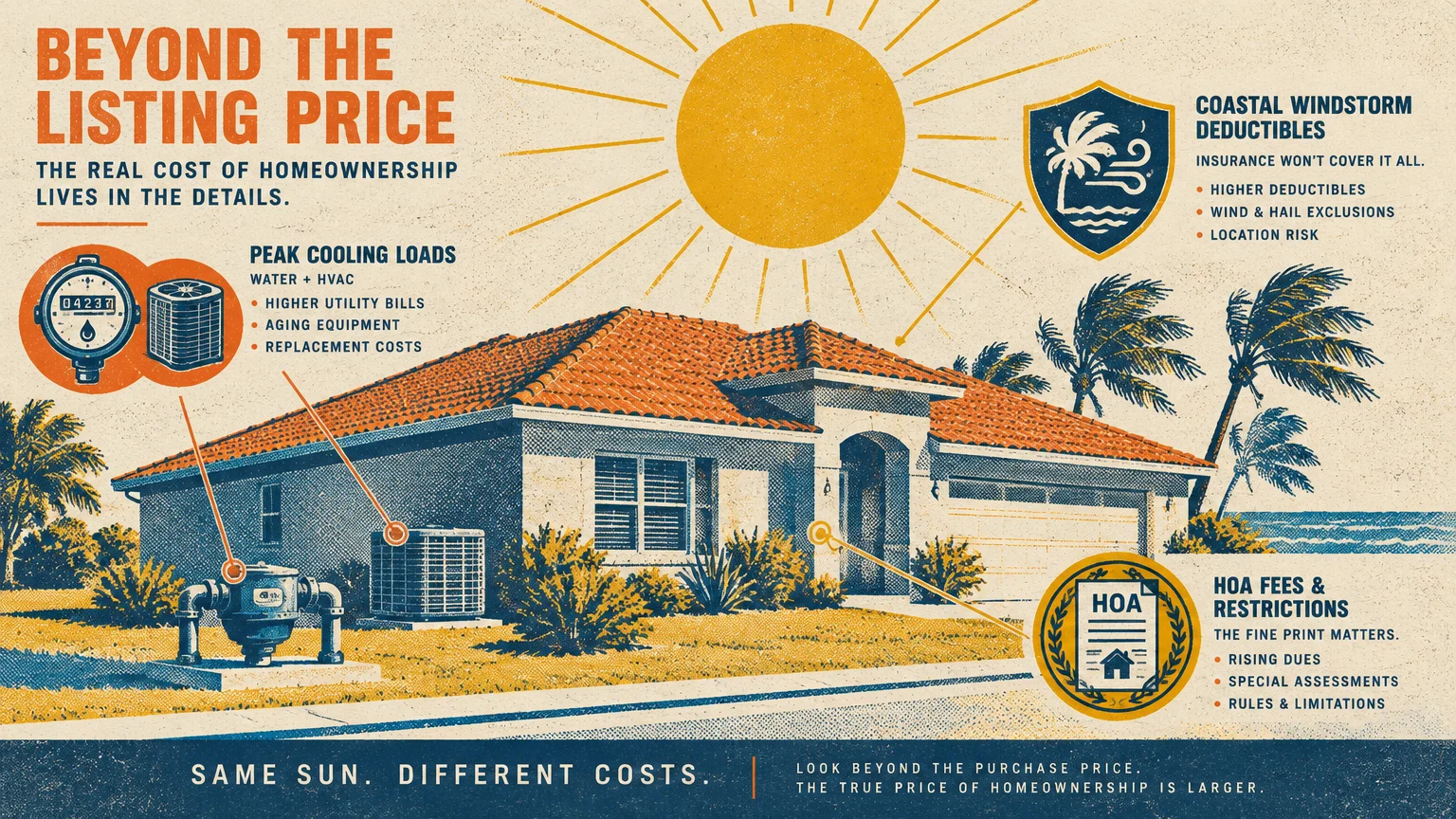
Sunbelt properties can carry substantial insurance premiums due to windstorms, hurricanes, or wildfire threats. Always request exact hazard and flood insurance quotes before making an offer on a home.
2. Overlooking Escalating HOA and Special Assessments
Many active-adult communities charge substantial monthly homeowners association (HOA) fees. These fees can escalate rapidly, eroding the savings you achieved on your purchase price.
3. Underestimating Summer Utility Bills
Gentle winters often translate into scorching summer afternoons. Verify that energy-efficient cooling systems are installed, or your summer electric bills might offset your winter heating savings.
4. Neglecting Proximity to Specialized Medical Care
Charming rural communities may lack comprehensive medical facilities or specialized geriatric care. Ensure your chosen town sits within a 30-minute drive of a major hospital and primary care network.

When DIY Isn’t Enough: Navigating the Relocation Decision
“A big part of financial freedom is having your heart and mind free from worry about the ‘what-ifs’ of life.” — Suze Orman, Personal Finance Expert
Relocating involves complex financial and legal transitions that go beyond simple house hunting. Certain situations require professional guidance before making a final commitment.
- Selling Highly Appreciated Real Estate: Consult a CPA to calculate capital gains exclusions and prevent unexpected federal tax liabilities.
- Coordinating Estate Plans Across State Borders: State probate codes differ significantly; hire an estate attorney to update your wills and medical directives.
- Balancing Medicare Networks: Work with a licensed broker to verify Medicare Advantage network coverage in your new county.
According to the Consumer Financial Protection Bureau (CFPB), understanding all closing costs and mortgage terms protects older borrowers from costly surprises. Review every disclosure document carefully before settlement.
The U.S. Department of Housing and Urban Development (HUD) provides approved housing counselors who can guide your relocation decisions. Check their resources to review regional housing grants and assistance.
Organizations like the National Council on Aging (NCOA) help seniors assess budget readiness and connect with local community support services. Leveraging these resources ensures a smooth transition to your new home.
You can also verify monthly retirement benefits directly through the Social Security Administration (SSA) before finalizing your new budget. Accurately tracking your income prevents unexpected cash flow shortfalls.
Frequently Asked Questions
Which state has the most affordable warm retirement towns?
States like Georgia, Mississippi, and Louisiana offer the lowest median home prices combined with mild winters. Cities such as Augusta and Lake Charles frequently feature homes under $210,000.
Does moving to a warm state lower my Medicare costs?
Original Medicare Part A and Part B costs remain uniform across the nation. However, Medicare Advantage and Part D prescription plans change premiums and provider networks based on your specific county.
How do property taxes compare between low-cost Sunbelt states?
States without income tax, such as Texas, frequently offset revenue needs with higher effective property tax rates. Conversely, states like Louisiana and South Carolina maintain much lower property tax rates for seniors.
Can I buy a home in a 55+ active-adult community with a standard mortgage?
Yes, conventional, FHA, and VA loans apply to age-restricted 55+ communities just as they do to standard homes. Ensure the community association meets standard lending guidelines before applying.
Next Steps for Your Warm-Weather Retirement
Take time to visit your top candidate towns during the midwinter months to experience daily life firsthand. Renting for a season allows you to test neighborhoods before committing your savings.
This article provides general financial education and information only. Everyone’s financial situation is unique—what works for others may not work for you.
For personalized advice tailored to your retirement needs, consider consulting a qualified financial professional such as a CFP or CPA.
Last updated: February 2026. Benefit amounts, tax rules, and program details change annually—verify current figures with official government sources.








Leave a Reply