

You can cut your prescription drug costs by hundreds of dollars each year simply by picking the right plan structure. Recent federal reforms have reshaped Medicare Part D, creating fresh opportunities to slash your monthly expenses.
Whether you face rising standalone monthly premiums or sudden income adjustments, practical strategies exist to protect your retirement budget. Discover seven clear methods to lock in a cheaper drug plan today.
Taking control of your drug expenses starts with understanding your rights and using updated policy rules to lower Medicare Part D premium charges.
1. Re-evaluate Your Plan During Medicare Open Enrollment
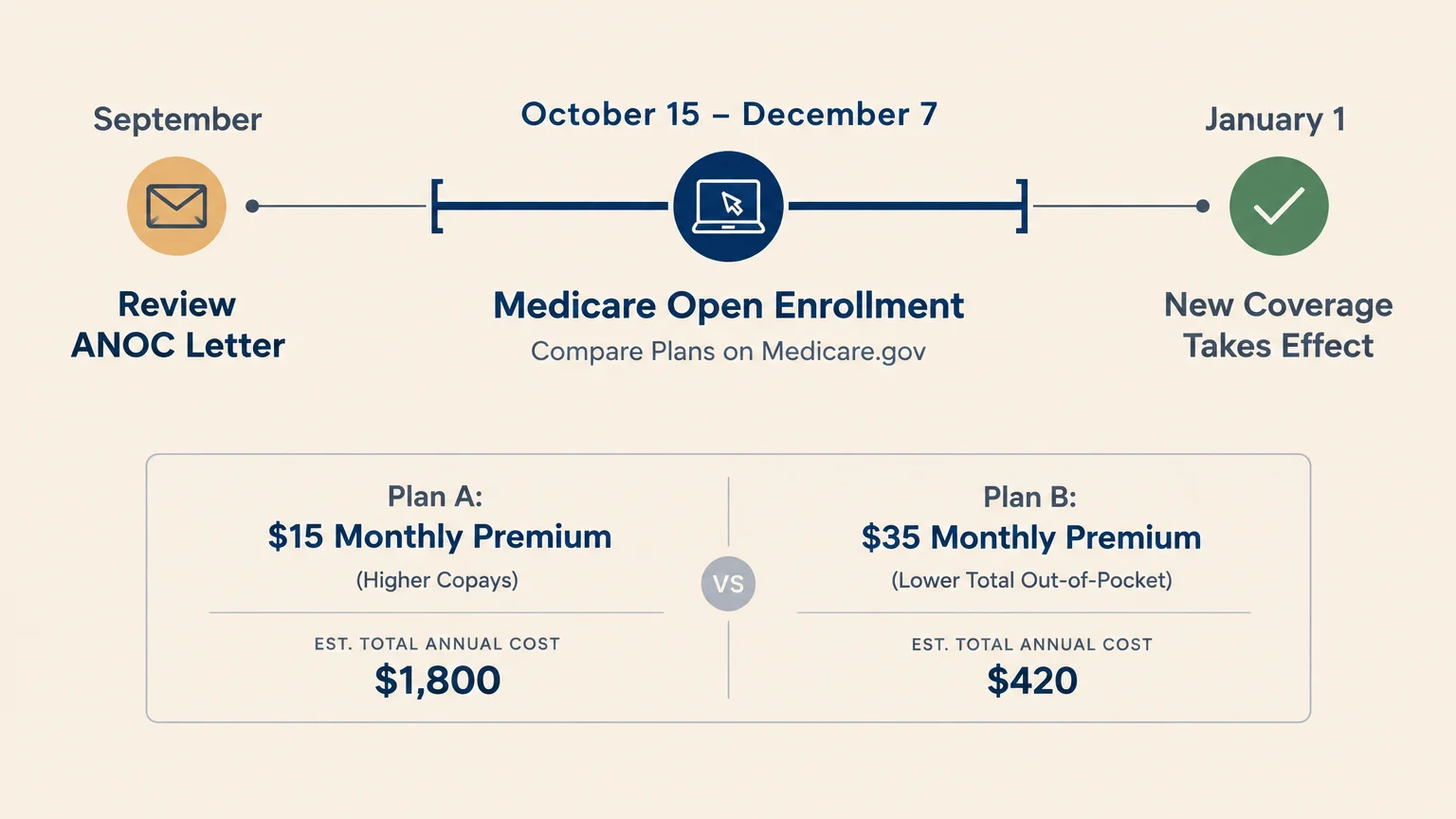
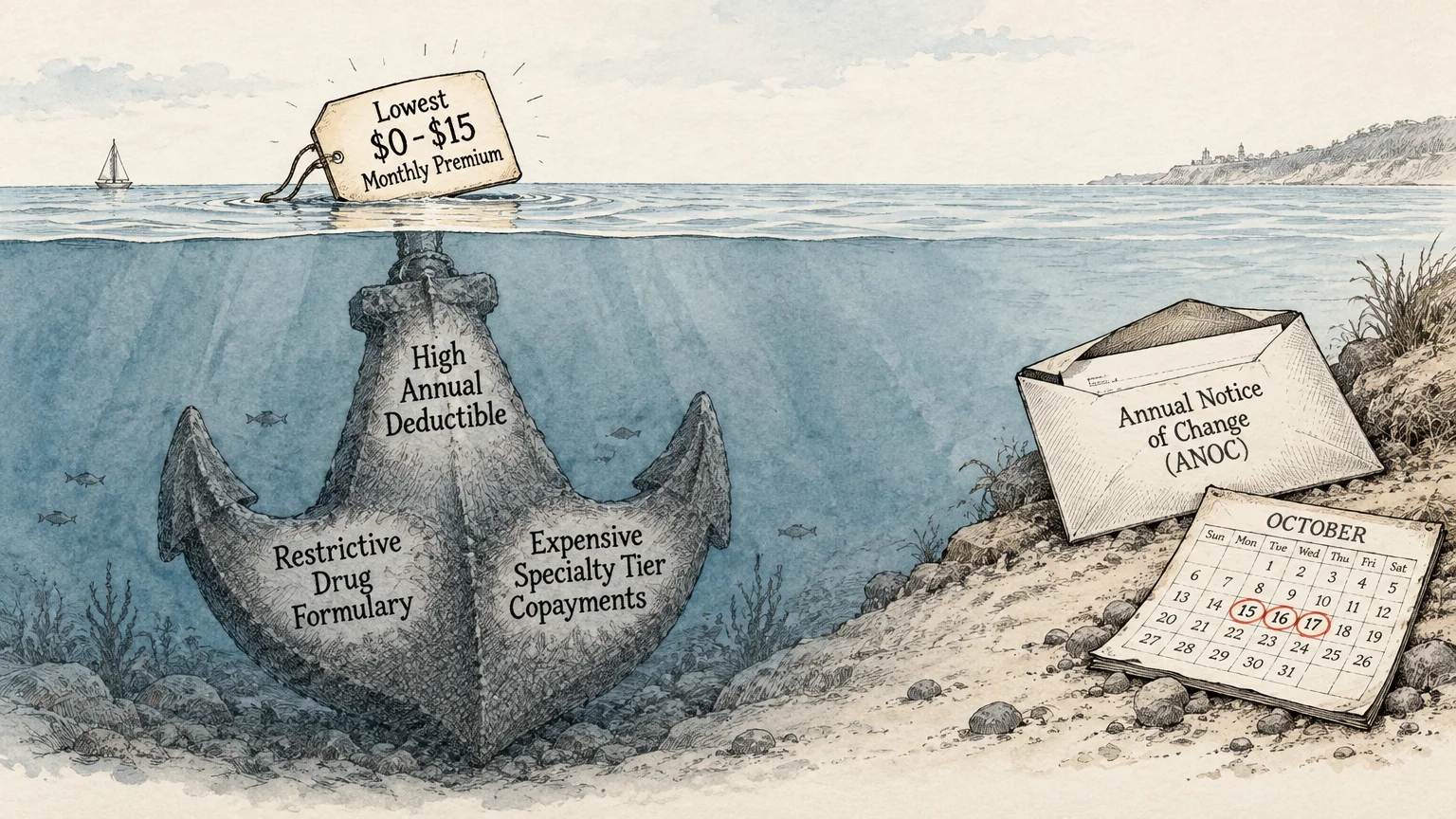
Medicare Open Enrollment runs each year from October 15 through December 7. Any changes you make during this period take effect on January 1.
Insurers change their premiums, deductibles, and drug formularies every single calendar year. A plan that offered the cheapest rates last year may carry a substantially higher premium next year.
You should review your Annual Notice of Change (ANOC) letter every September. This document outlines premium increases and alterations to your medication coverage tiers.
Use the official Medicare Plan Finder tool on Medicare.gov to compare every policy available in your ZIP code. Entering your exact dosages and medication names gives you an accurate forecast of your total annual costs.
Look beyond the monthly premium alone. A plan with a $15 monthly premium might charge higher copayments than a plan with a $35 monthly premium, making total out-of-pocket costs higher.

2. Apply for the Expanded Extra Help Program
The federal Low-Income Subsidy program—commonly known as Extra Help—provides dramatic Medicare drug plan savings. Recent legislative expansions under the Inflation Reduction Act broadened access to full benefits for more seniors than ever before.
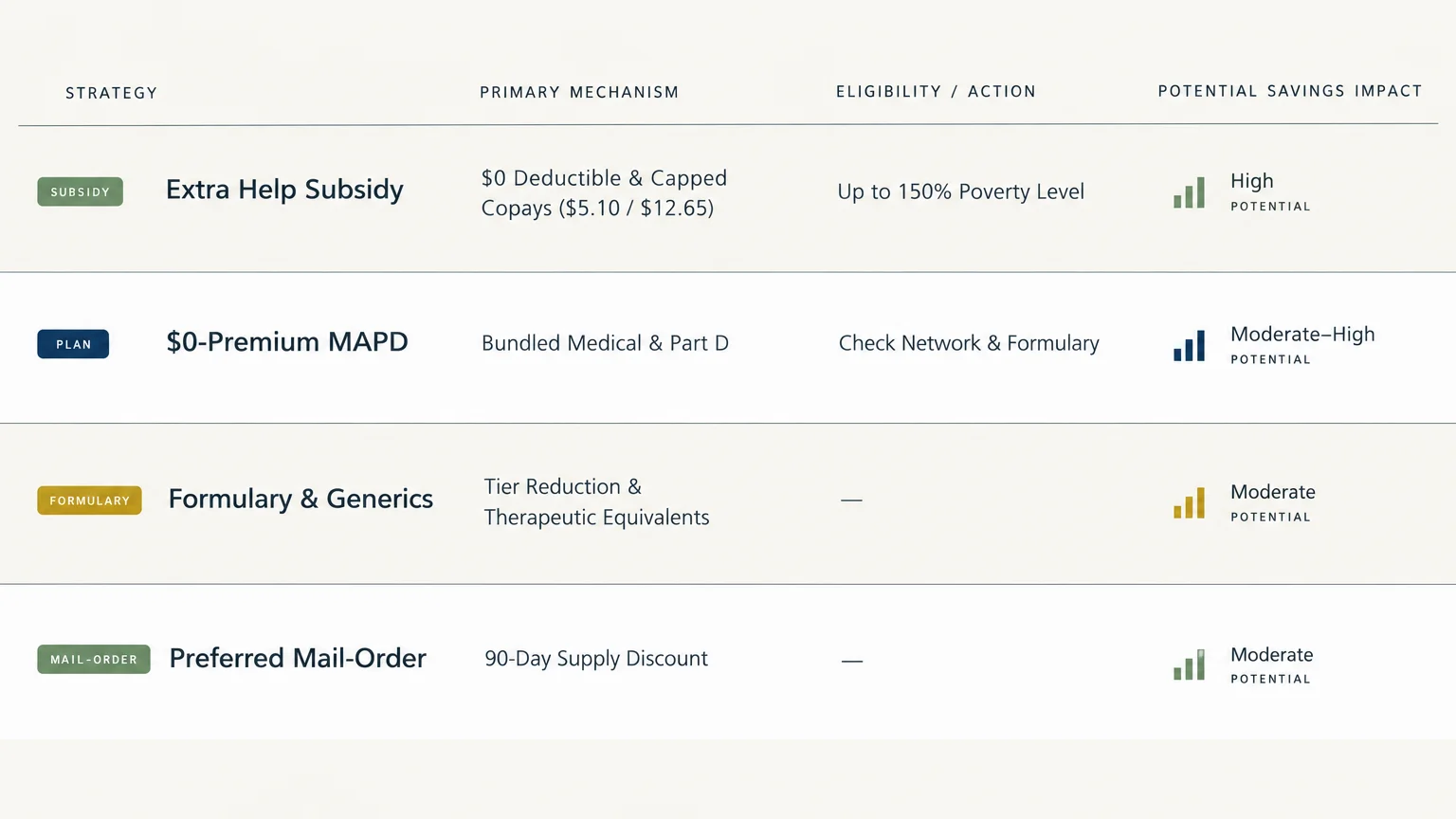
Under current rules, individuals with incomes up to 150% of the federal poverty level qualify for full Extra Help. This benefit completely eliminates your Part D premium up to your state benchmark amount.
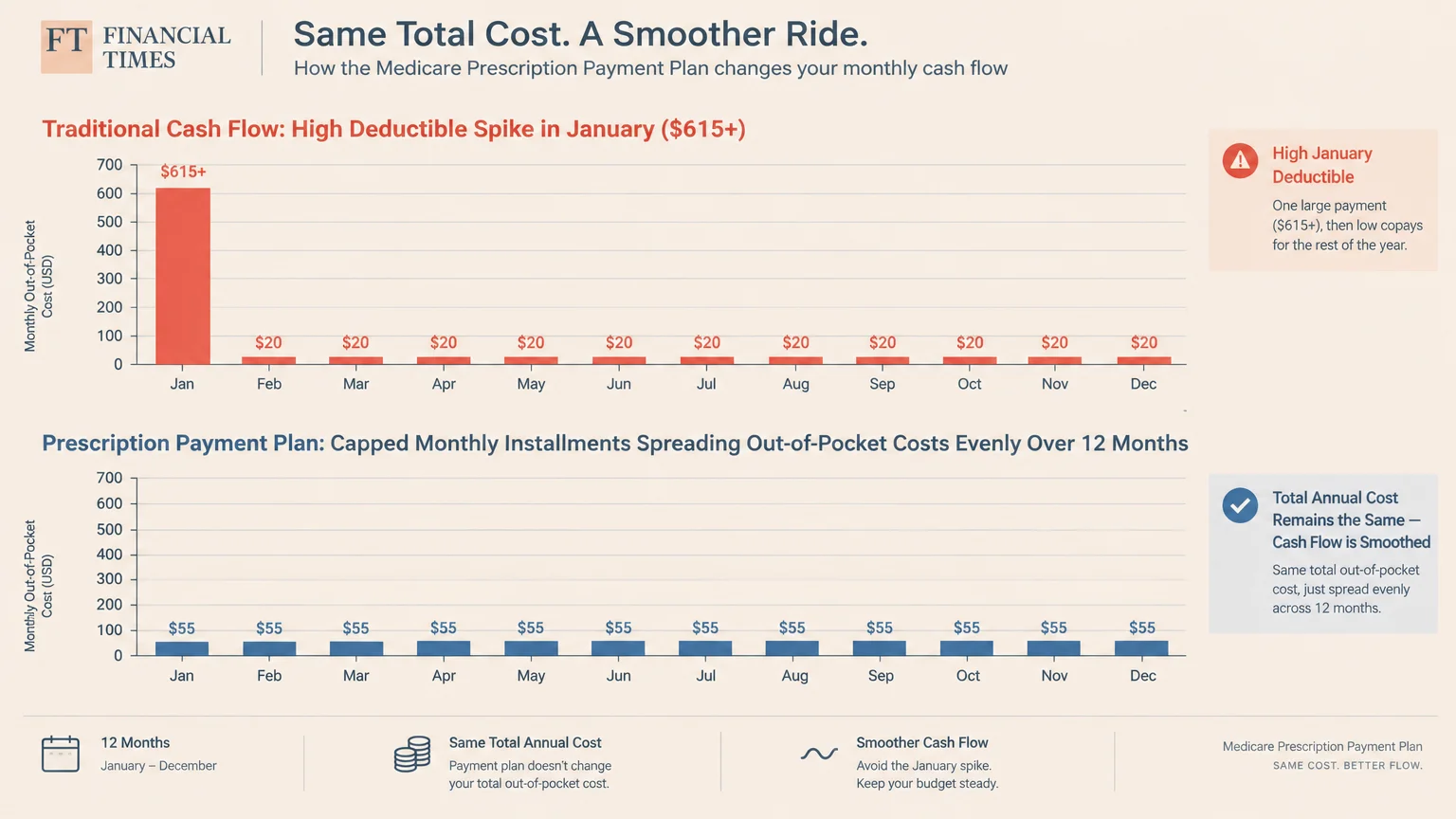
The program also eliminates the standard annual deductible. In 2026, the statutory standard deductible is $615, but Extra Help enrollees pay $0 before coverage begins.
In addition, covered prescription copayments drop significantly. In 2026, qualifying enrollees pay no more than $5.10 for generic medications and $12.65 for covered brand-name drugs.
To qualify in 2026, your countable resources must fall below $18,090 for an individual or $36,100 for a married couple. Your primary home, personal vehicle, and household goods do not count toward these asset thresholds.
You can check your eligibility and submit an application directly through the Social Security Administration or your state Medicaid office.
3. Explore a $0-Premium Medicare Advantage Plan (MAPD)
Standalone Prescription Drug Plans (PDPs) have faced premium adjustments following major Medicare payment redesigns. Many seniors bypass standalone premium increases entirely by switching to a Medicare Advantage Prescription Drug (MAPD) plan.
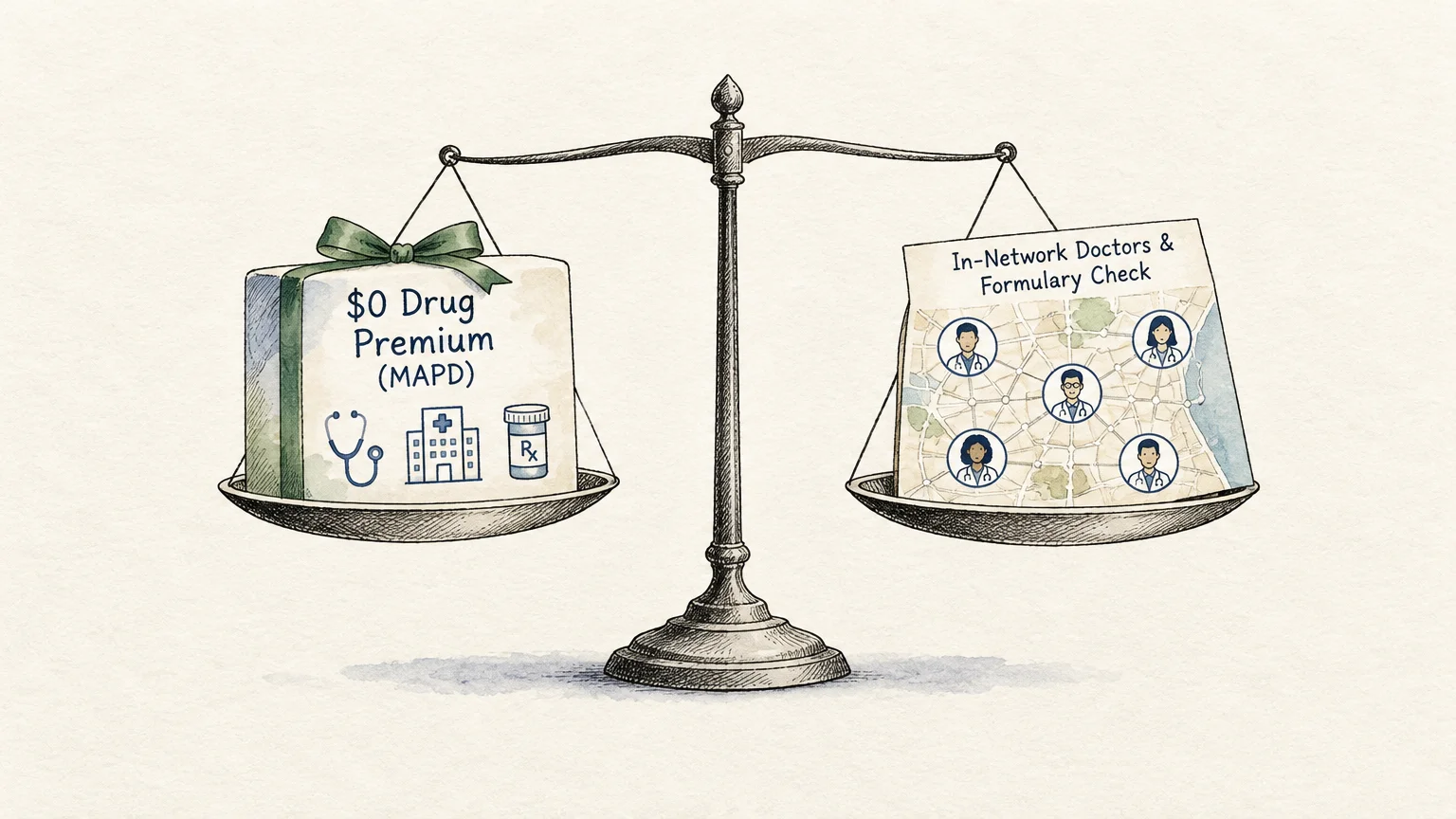
Private insurers frequently offer MAPD plans with a $0 monthly drug plan premium. These plans combine hospital care, doctor visits, and prescription coverage into one unified package.
Federal stabilization policies cushioned standalone PDP premium spikes in 2025 and 2026. However, regulatory shifts leading into Part D costs 2027 projections mean standalone premiums could face continued pressure.
If you choose an MAPD plan, you must use the plan’s network of doctors and hospitals. Verify that your primary physicians and medical specialists participate in the network before enrolling.
Confirm that the plan includes your regular prescriptions on its formulary. A $0 monthly premium provides real savings only if your preferred doctors and essential medications remain covered at affordable rates.
4. Appeal High-Income IRMAA Surcharges with Form SSA-44
If your income exceeds certain statutory limits, Medicare charges an Income-Related Monthly Adjustment Amount (IRMAA). This surcharge is paid directly to Medicare on top of your standard drug plan premium.
In 2026, IRMAA surcharges apply to individuals with a modified adjusted gross income above $109,000, or $218,000 for married couples filing jointly. Monthly Part D surcharges range from $14.50 to $91.00 per person.
Medicare calculates these surcharges using tax returns from two years prior. A surcharge assessed in 2026 reflects your earnings reported on your 2024 federal tax return.
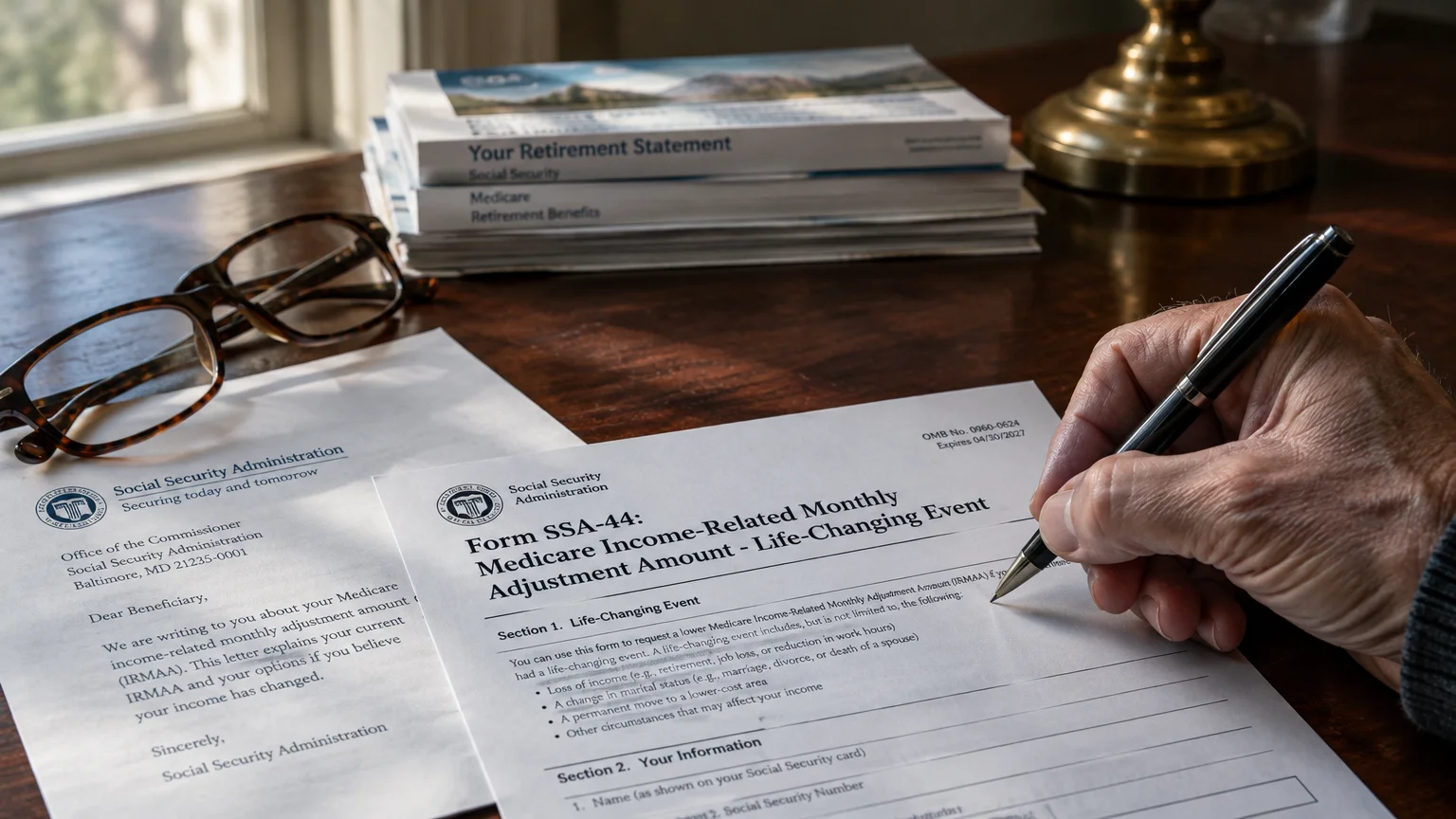
If your income dropped significantly due to a qualifying life-changing event, you do not have to pay the higher rate. Qualifying events include retirement, reduced work hours, loss of income-producing property, or the death of a spouse.
You can appeal the surcharge by submitting Form SSA-44 to the Social Security Administration. Include supporting financial documents, such as a retirement letter or a recent tax return showing reduced income.
A successful appeal immediately eliminates the monthly surcharge, effectively reducing your Part D costs back to standard plan rates.

5. Use Preferred Pharmacy Networks and Mail-Order Services
Where you fill your prescription plays a critical role in your overall out-of-pocket spending. Most Medicare Part D plans divide their pharmacy networks into standard and preferred categories.
Preferred pharmacies maintain contractual agreements with your insurer to dispense medications at discounted rates. Filling your prescriptions at a preferred retail store often cuts generic copayments significantly.
Standard pharmacies remain in-network, but they charge higher out-of-pocket copayments or coinsurance. Visiting a standard retail store when a preferred store sits nearby unnecessarily drains your retirement funds.
Many plans also offer home delivery through preferred mail-order pharmacies. These programs routinely provide a ninety-day supply of Tier 1 or Tier 2 generic maintenance drugs for a $0 copayment.
Check your plan’s online pharmacy directory or call customer service to verify your local pharmacy status. Moving your routine prescriptions to a preferred partner takes only minutes and delivers immediate savings.
6. Request Formulary Exceptions and Switch to Generic Equivalents
Medicare drug plans organize medications into pricing tiers numbered from one through five. Lower tiers feature low, fixed copayments, while higher tiers require steep coinsurance payments.
Tier 1 and Tier 2 consist primarily of preferred generic medications with low copayments. Tier 3 includes preferred brand drugs, while Tier 4 and Tier 5 contain non-preferred and specialty medications that demand higher cost sharing.
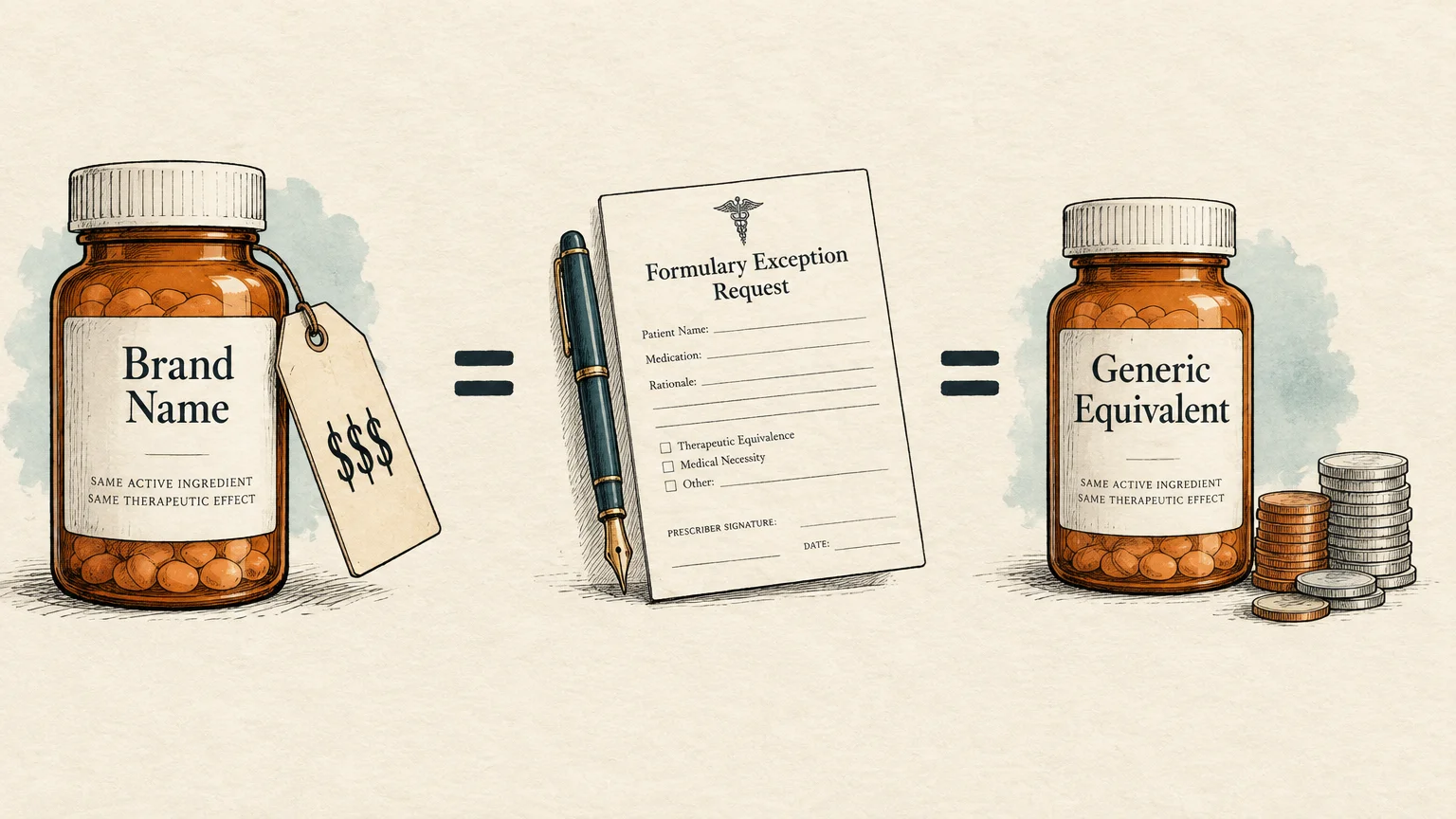
Ask your doctor if an equivalent generic medication can treat your condition safely. Switching from a Tier 3 brand drug to a Tier 1 generic often drops your monthly cost from $45 down to under $5.
If no therapeutic generic alternative exists, you can ask your doctor to file a formal tiering exception request. Your physician must certify that lower-tier medications would be ineffective or harmful to your health.
If your insurer approves the exception, they reclassify your medication to a lower tier. This approval lowers your monthly copayment without forcing you to switch your prescription.
“A budget is not about deprivation; it is about making conscious choices with your money so you can afford what truly matters.” — Suze Orman, Personal Finance Author
7. Protect Yourself from the Lifetime Late Enrollment Penalty
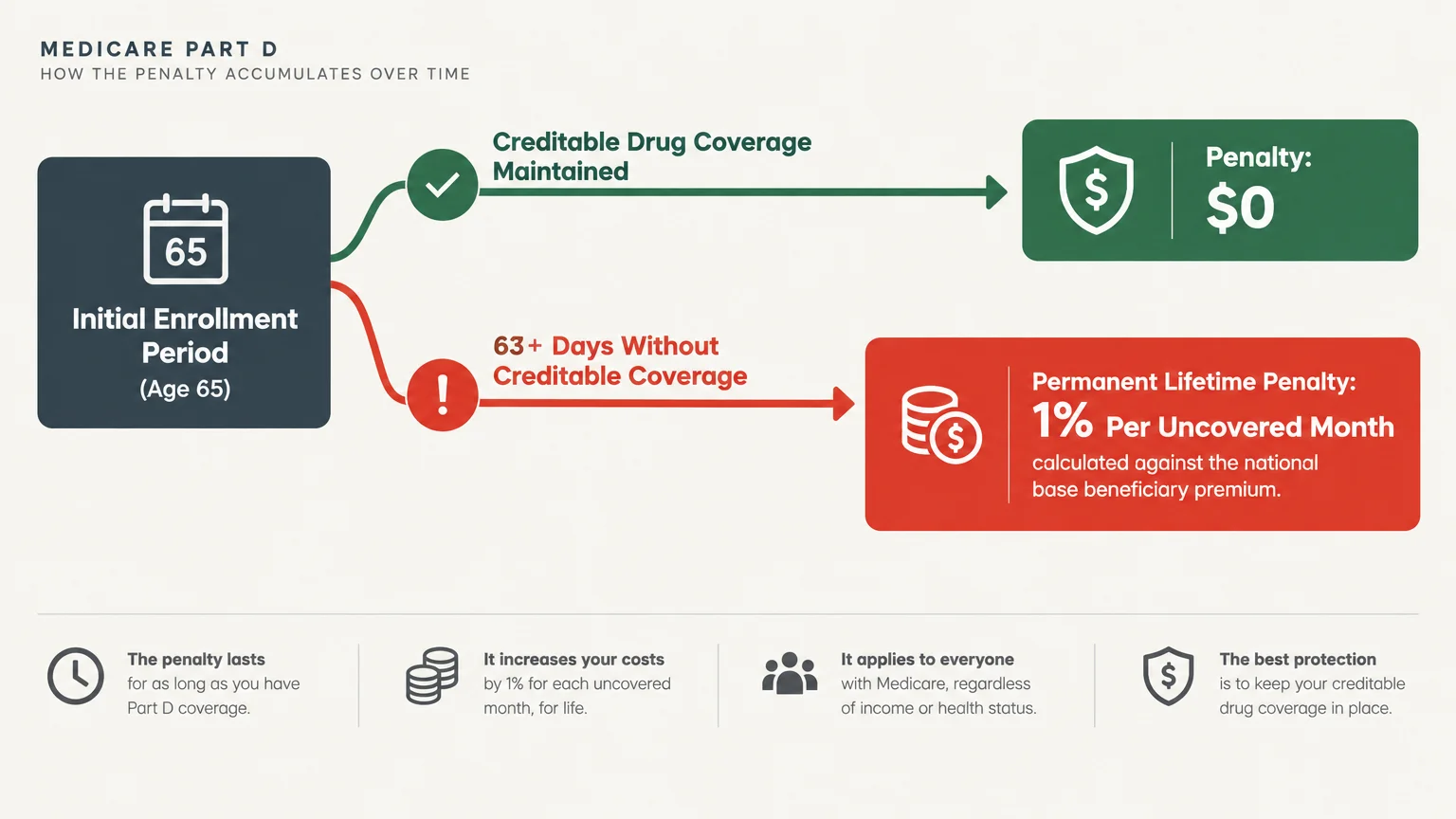
Avoiding administrative penalties is essential for keeping your long-term Medicare premiums low. The Part D Late Enrollment Penalty (LEP) acts as a permanent surcharge added directly to your monthly premium.
Medicare levies this penalty if you go 63 or more consecutive days without creditable prescription drug coverage after your Initial Enrollment Period ends. Creditable coverage means coverage expected to pay, on average, at least as much as standard Medicare prescription coverage.
Medicare calculates the fee by multiplying 1% of the national base beneficiary premium by the total number of full uncovered months. That calculated dollar amount is rounded to the nearest ten cents and added to your monthly bill forever.
For example, if you delayed enrollment for 24 months without creditable coverage, you pay an extra 24% penalty every month for life. As the national base premium shifts upward over time, your penalty amount increases as well.
Even if you take zero prescription medications today, enroll in a low-cost standalone drug plan when you turn 65. Maintaining coverage protects your future budget against permanent lifetime surcharges.
Managing Cash Flow with the Medicare Prescription Payment Plan
The Inflation Reduction Act introduced the Medicare Prescription Payment Plan to help seniors handle pharmacy bills. This voluntary option lets you spread out-of-pocket costs into capped monthly payments throughout the calendar year.
This program does not lower your monthly insurance premium, but it protects your bank account from unexpected pharmacy shocks. You will not face massive single-visit bills at the pharmacy counter during the deductible phase.
Federal law sets a strict annual cap on out-of-pocket spending for covered Part D medications. The cap sits at $2,100 in 2026 and adjusts to $2,400 in 2027.
Combining the annual out-of-pocket cap with monthly payment smoothing creates financial stability for anyone managing expensive specialty therapies. You can contact your plan sponsor at any time to opt into this payment arrangement.
Comparing Your Drug Plan Savings Strategies
Choosing the best strategy depends on your current financial situation, medications, and health network preferences. Review the comparison below to evaluate your options.
| Savings Strategy | Expected Monthly Impact | Best Suited For |
|---|---|---|
| Plan Comparison via Open Enrollment | Saves $15 to $60+ per month | Anyone with changing prescriptions or rising annual premiums |
| Extra Help (Low-Income Subsidy) | Reduces premium to $0 (up to benchmark) | Beneficiaries earning up to 150% of the federal poverty level |
| $0-Premium Medicare Advantage Plan | Eliminates standalone premium entirely | Seniors comfortable utilizing HMO or PPO healthcare networks |
| IRMAA Appeal (Form SSA-44) | Saves $14.50 to $91.00 monthly | Recent retirees whose income dropped following life changes |
| Preferred Network & Mail Order | Cuts copayments down to $0 on select generics | Seniors taking stable maintenance medications every day |
| Formulary Tiering Exception | Reclassifies drugs to lower copayment tiers | Patients requiring expensive brand drugs without generic equivalents |
Reviewing these strategies each autumn ensures you never overpay for necessary medical coverage.
Common Mistakes to Avoid
Many seniors surrender hundreds of dollars each year due to simple administrative oversights. Avoiding these frequent missteps protects your hard-earned retirement savings.
- Letting Your Policy Auto-Renew Without Review: Insurers adjust drug tiers and prices every year. Staying in the same plan automatically can expose you to unexpected premium hikes and higher copayments.
- Ignoring Pharmacy Network Designations: Filling prescriptions at an out-of-network or standard pharmacy costs significantly more. Always confirm that your local pharmacy holds preferred status with your plan.
- Failing to Appeal an IRMAA Surcharge: Many seniors accept high-income surcharges after retiring. If your earnings dropped due to retirement, submit Form SSA-44 immediately to stop unwarranted fees.
- Skipping Coverage While Healthy: Going without creditable coverage triggers permanent financial penalties. Enrolling in an affordable plan prevents lifetime surcharges if you develop health conditions later.
You can verify additional assistance programs in your community by visiting the National Council on Aging or browsing resources on Benefits.gov.
Frequently Asked Questions
Can I change my Medicare drug plan outside of Open Enrollment?
You can change plans mid-year only if you qualify for a Special Enrollment Period (SEP). Qualifying events include moving to a new service area, losing creditable coverage, or qualifying for Extra Help.
What happens to standalone drug plan premiums in 2027?
Federal stabilization programs phased down after helping stabilize standalone premiums in 2025 and 2026. Beneficiaries evaluating Part D costs 2027 should compare plans carefully, as standalone PDP premiums may see continued adjustment.
Does Medicare Extra Help eliminate my late enrollment penalty?
Yes. If you qualify for the full Extra Help program, Medicare waives any accrued Part D late enrollment penalty. Your premium recalculates without the added surcharge as long as you maintain subsidy eligibility.
How do I confirm if my employer health plan is creditable?
Your employer or union must send you a Notice of Creditable Coverage every September. Keep this written notice in your financial records to prove you maintained qualifying coverage if you enroll in Part D later.
Taking Action to Lower Your Expenses
Managing healthcare costs in retirement requires active oversight rather than passive acceptance. Comparing plans during Open Enrollment and confirming preferred pharmacy status can save you thousands of dollars over time.
Take time this week to review your current drug plan formulary and total monthly expenses. Applying for assistance programs and appealing outdated surcharges provides immediate relief to your monthly household budget.
The information in this guide is meant for educational purposes. Your specific circumstances—including income, benefits, tax situation, and health needs—may require different approaches. When in doubt, consult a licensed financial advisor or tax professional.
Last updated: February 2026. Benefit amounts, tax rules, and program details change annually—verify current figures with official government sources.









Leave a Reply