

Ignoring your fall mail can cost you thousands of dollars in unexpected medical bills and lost coverage. Key federal changes taking effect in 2027 alter prescription drug caps, premiums, and network access across the country.
Insurance carriers and federal agencies send vital disclosures every autumn that explain your exact costs for the coming year. Tossing these envelopes aside leaves your healthcare budget entirely up to chance.
Reviewing these seven essential notices before 2027 protects your retirement savings and guarantees uninterrupted access to your doctors.
Why Your Mailbox Holds Costly Surprises for 2027
Medicare never stays completely static from one year to the next. The transition into 2027 brings significant structural updates to prescription drug limits and plan availability.
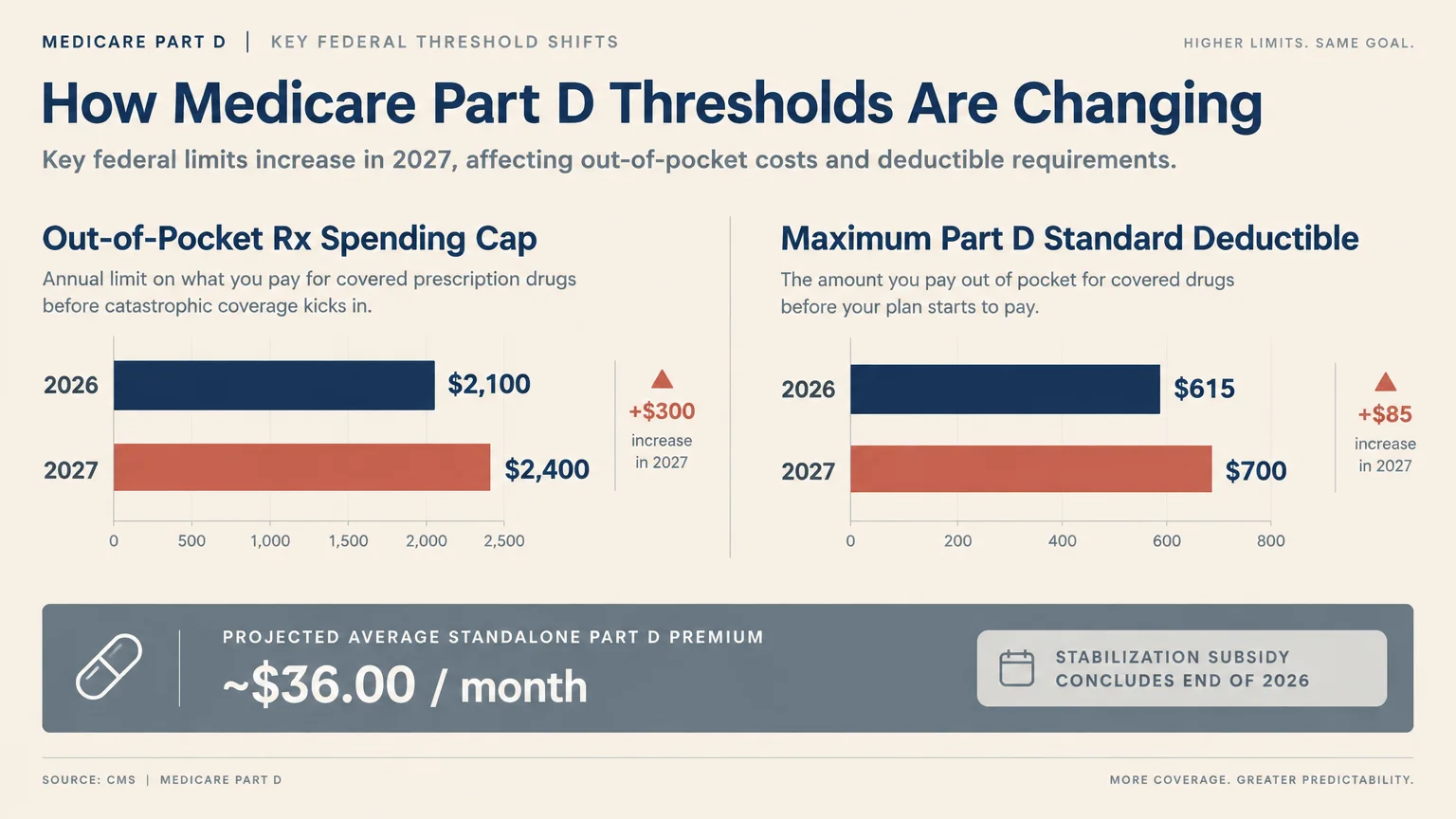
Federal rules cap out-of-pocket prescription drug spending at $2,400 in 2027. This represents an increase from the $2,100 cap established in 2026.
The maximum standard deductible for Part D prescription drug plans also jumps to $700 in 2027. That is up from $615 in 2026.
Carriers adjust their networks, drug formularies, and copays every year to offset these new national cost structures. If you overlook your notices, you might discover your favorite doctor left your plan only after you receive a denied claim.
Furthermore, the federal Part D premium stabilization subsidy program concludes at the end of 2026. This expiration means private drug plans may adjust their standalone premiums more aggressively than in recent years.
CMS projections released in late September 2026 show average standalone Part D premiums hovering around $36.00 per month. However, individual plan pricing can fluctuate widely by state and region.
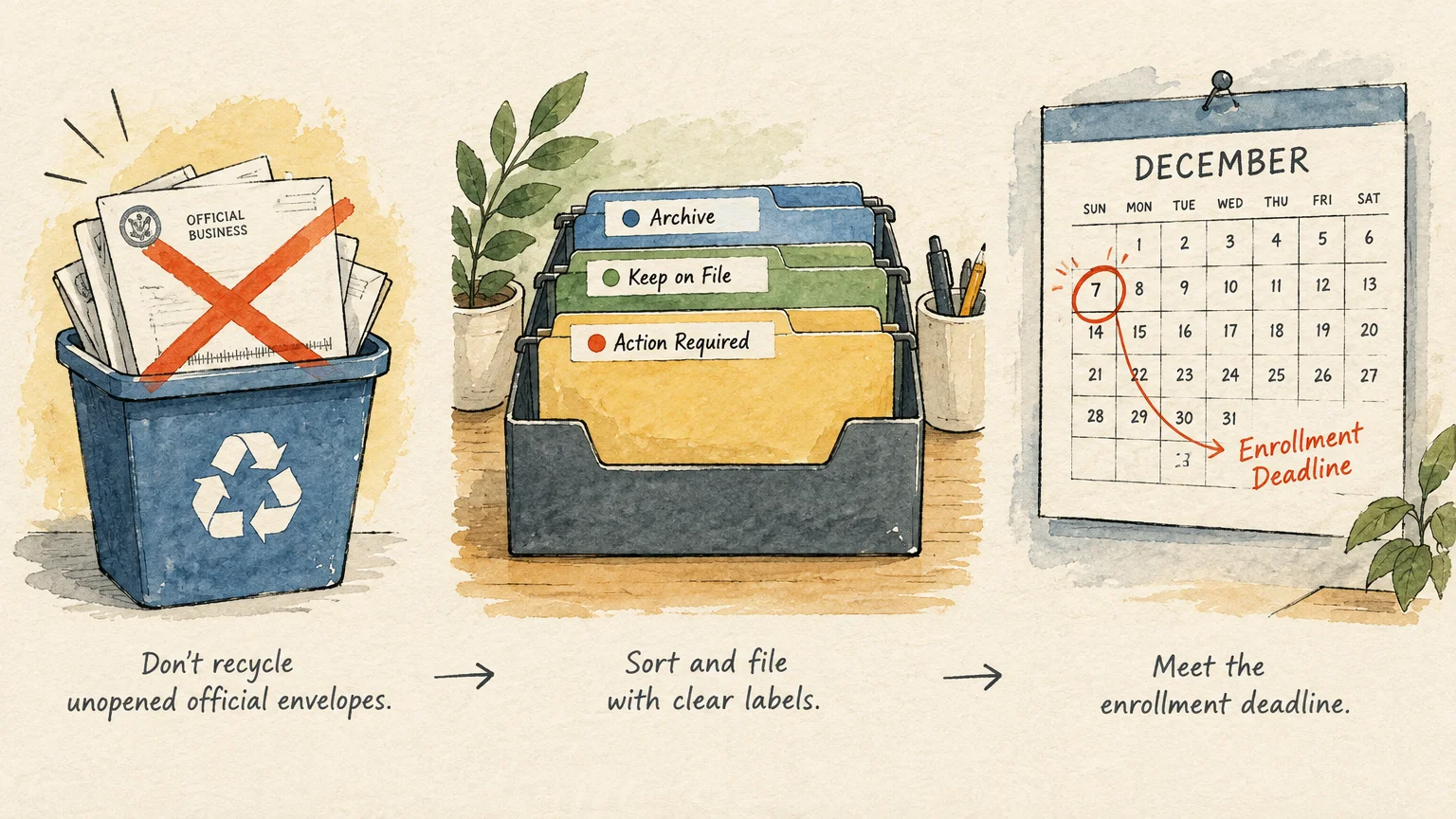
Staying informed requires sorting through your incoming correspondence rather than throwing mail into the recycling bin. Each letter you receive serves a distinct administrative and financial purpose.
“A great retirement plan is not just about growing your money; it is about protecting what you already have from unnecessary costs.” — Suze Orman, Personal Finance Author

1. The Annual Notice of Change (ANOC)
The Annual Notice of Change is arguably the single most critical document you receive each autumn. Private insurers must deliver this packet to you by September 30, 2026.
Federal law mandates this delivery if you belong to a Medicare Advantage plan or a standalone Part D prescription drug plan. It details every operational change scheduled for January 1, 2027.
Carriers use the ANOC to outline adjustments to monthly premiums, copayments, coinsurance rates, and annual maximum out-of-pocket limits. It also highlights changes to your drug formulary.
A medication that sits on a Tier 2 preferred generic list in 2026 might shift to a Tier 3 non-preferred tier in 2027. That single modification can double or triple your out-of-pocket pharmacy expenses.
The ANOC also documents provider network shifts. If your primary care physician or regional hospital system drops out of the plan network, this notice alerts you in advance.
Open this document immediately and compare your current costs side-by-side with the projected 2027 numbers. If the changes increase your expenses, prepare to shop during the Annual Enrollment Period.
The Annual Enrollment Period runs from October 15 through December 7, 2026. Any changes you make during this window take effect on January 1, 2027.

2. Plan Non-Renewal Notice
Between 1 million and 3.2 million Medicare Advantage members face plan terminations or service area reductions entering 2027. Insurers exiting specific counties or discontinuing specific plans must notify you in writing.
Carriers were legally obligated to mail these non-renewal notices to affected members by October 2, 2026. If your carrier drops your plan, you face automatic loss of coverage on December 31, 2026.
Receiving this notice can cause temporary panic, but it actually provides you with powerful consumer rights. You qualify for a special enrollment window and guaranteed-issue protections.
First, you gain access to a Special Enrollment Period (SEP) that extends through the end of February 2027. This extra time allows you to select a new Medicare Advantage plan or return to Original Medicare.
Second, losing your Medicare Advantage plan through a non-renewal grants you guaranteed-issue rights to purchase a Medigap supplemental insurance policy. Private Medigap carriers cannot deny you coverage or charge higher premiums based on preexisting conditions.
Review this notice carefully to verify the exact date your existing coverage terminates. Take immediate action on Medicare.gov to choose replacement coverage before the new year arrives.

3. Evidence of Coverage (EOC)
Your Evidence of Coverage serves as the formal legal contract between you and your Medicare plan. Carriers deliver this detailed document alongside or shortly after your ANOC by October 15, 2026.
While the ANOC provides a brief summary of adjustments, the EOC explains every fine-print rule, coverage restriction, and administrative process. It defines exactly what your plan covers and what it excludes.
Pay close attention to prior authorization requirements outlined in the EOC. Insurers frequently update the list of treatments, diagnostic tests, and specialty medications requiring prior approval.
The EOC also describes the formal grievance and appeal procedures. If your plan denies a claim or an essential procedure in 2027, you must follow the steps detailed in this text.
Many insurance providers now offer the EOC digitally through online member portals to reduce paper waste. If you prefer a physical booklet, contact your carrier’s customer service department and request a printed copy.
Keep your EOC in an accessible folder throughout the entire year. It serves as your primary defense if billing disagreements arise between your medical provider and your insurance carrier.

4. Notice of Creditable Coverage
If you or your spouse work past age 65 and maintain employer-sponsored group health insurance, this notice is essential. Employers and unions must send this confirmation before October 15, 2026.
A Notice of Creditable Coverage certifies that your existing prescription drug coverage meets or exceeds standard Medicare Part D benefits. It proves your coverage pays at least as much as an average Part D plan.
The federal government penalizes beneficiaries who delay Part D enrollment without having creditable coverage. The penalty permanently adds 1% of the national base beneficiary premium for every month you lacked coverage.
If your employer coverage pays less than standard Part D, your drug plan is non-creditable. You must enroll in Part D during the fall enrollment window to avoid lifetime financial penalties.
Never discard this document when it arrives in the mail from your benefits administrator. Create a dedicated file for these annual statements and save them indefinitely.
When you eventually retire and apply for Medicare Part D, the Social Security Administration will request copies of these notices. Producing them proves continuous coverage and eliminates late-enrollment fees entirely.
5. Social Security COLA and IRMAA Notices
Your Medicare Part B and Part D premiums interact directly with your monthly Social Security retirement benefits. The Social Security Administration announced a 3.6% Cost-of-Living Adjustment (COLA) on October 14, 2026.
This 3.6% boost raises the average monthly retirement benefit by approximately $75. However, higher Medicare expenses will claim a portion of that increase.
The standard Medicare Part B monthly premium is projected to increase to $209.50 in 2027. CMS officially finalizes this figure in late autumn.
If your monthly retirement payment is $1,800, a 3.6% COLA adds roughly $64.80 to your gross benefit. A $6.60 increase in your Part B premium leaves you with an extra $58.20 per month.
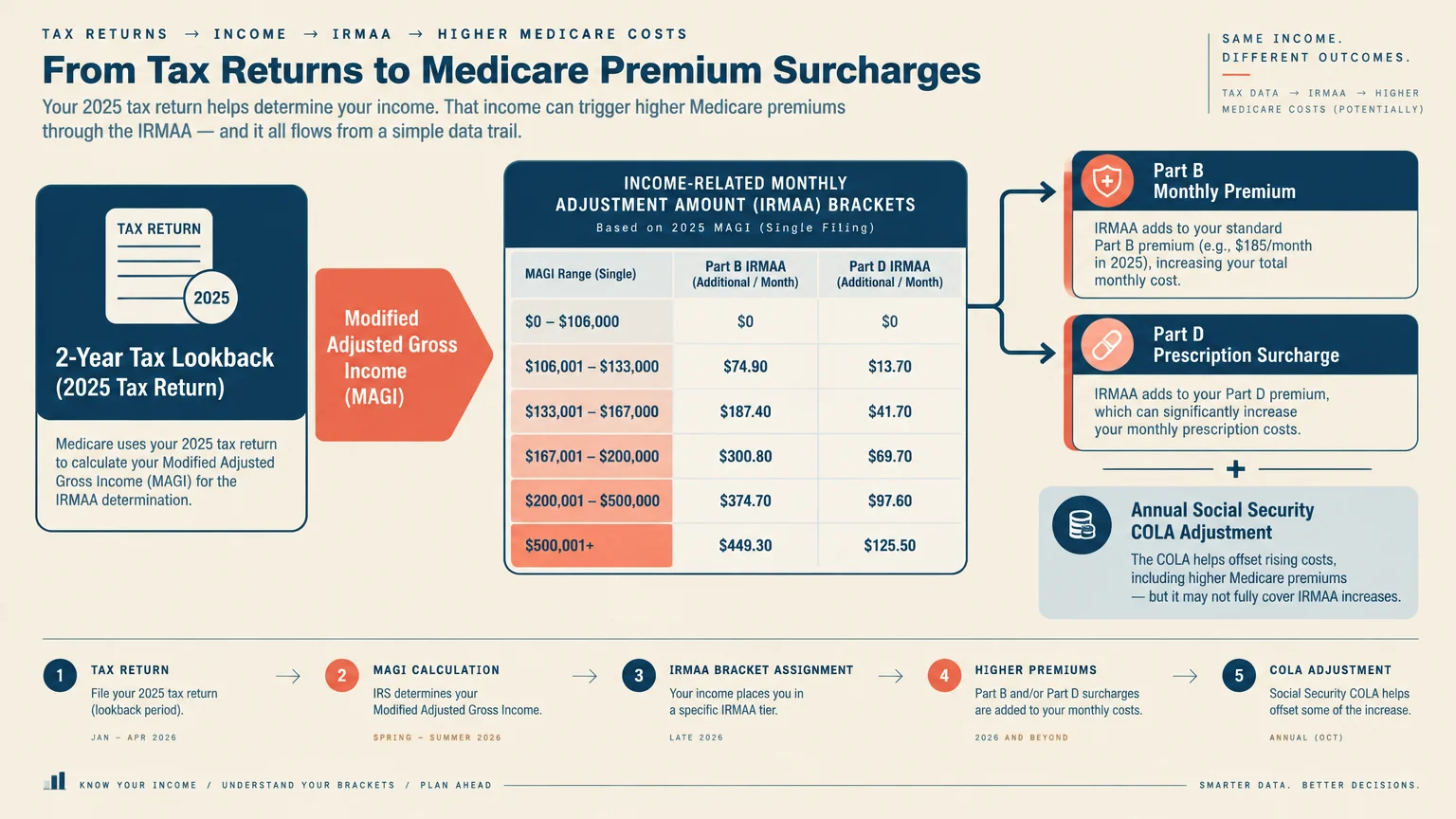
Beneficiaries with higher incomes also receive an Income-Related Monthly Adjustment Amount (IRMAA) notice in December 2026. You can view this determination online in late November 2026 if you set up your account by November 18, 2026.
The government calculates your 2027 IRMAA surcharge based on your modified adjusted gross income from your 2025 federal tax return. Higher earners pay significant surcharges on top of standard Part B and Part D premiums.
If your income dropped sharply in 2026 due to retirement, marriage, divorce, or job loss, you do not have to accept this surcharge. You can file Form SSA-44 to request a formal IRMAA reduction based on life-changing events.
“Retirement healthcare isn’t a fixed expense—it shifts every single year, and staying on top of your plan details is the only way to protect your nest egg.” — Jean Chatzky, Financial Journalist
6. Medicare Summary Notice (MSN) or Explanation of Benefits (EOB)
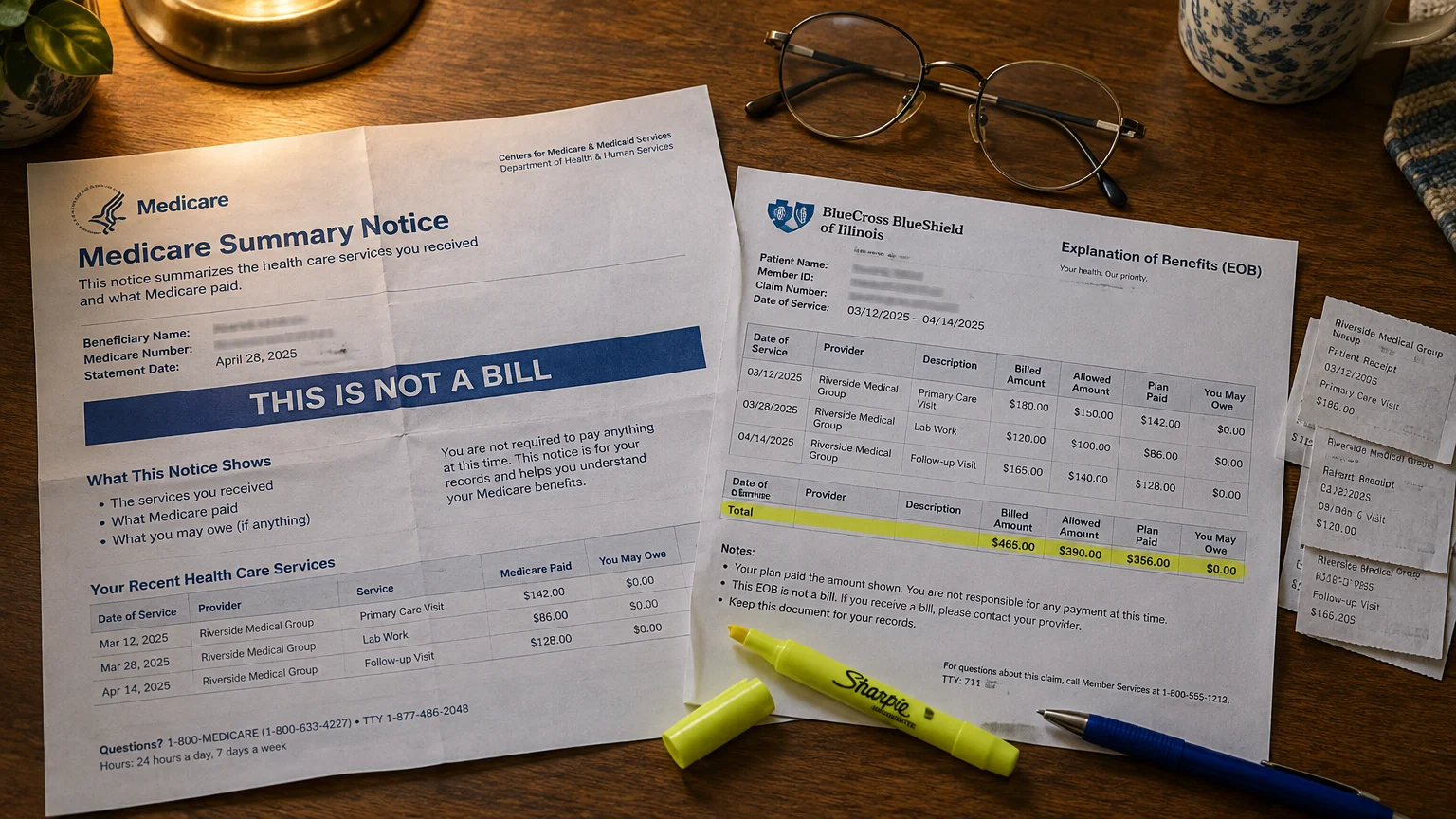
Beneficiaries enrolled in Original Medicare receive a Medicare Summary Notice every three months. If you enroll in Medicare Advantage, your private insurer sends a monthly or quarterly Explanation of Benefits instead.
Many seniors mistake these regular updates for medical invoices and worry about unpaid balances. An MSN or EOB is never a bill; it is an itemized accounting of all services billed to Medicare on your behalf.
Reading this notice carefully protects your wallet and helps prevent healthcare fraud. The statement shows the amount billed by the doctor, the amount Medicare paid, and your maximum personal financial liability.
Compare every item listed on your MSN or EOB against your personal appointment calendar and medical receipts. Look closely for charges involving medical appointments you never attended or equipment you never ordered.
Phantom billing remains a widespread problem across both Original Medicare and private Medicare Advantage networks. The Consumer Financial Protection Bureau encourages older adults to monitor insurance statements to safeguard their identity and credit.
If you identify incorrect billing codes or duplicate procedures, contact your doctor’s billing office directly. If you suspect intentional billing fraud, report the suspicious activity immediately by calling 1-800-MEDICARE.

7. The Official Medicare & You 2027 Handbook
The Centers for Medicare & Medicaid Services mails the comprehensive Medicare & You 2027 handbook in late September 2026. CMS releases digital copies online at the beginning of October.
This extensive guide outlines baseline Medicare rules, preventive care benefits, rights, and plan options available in your local zip code. It serves as the national standard reference for all Medicare beneficiaries.
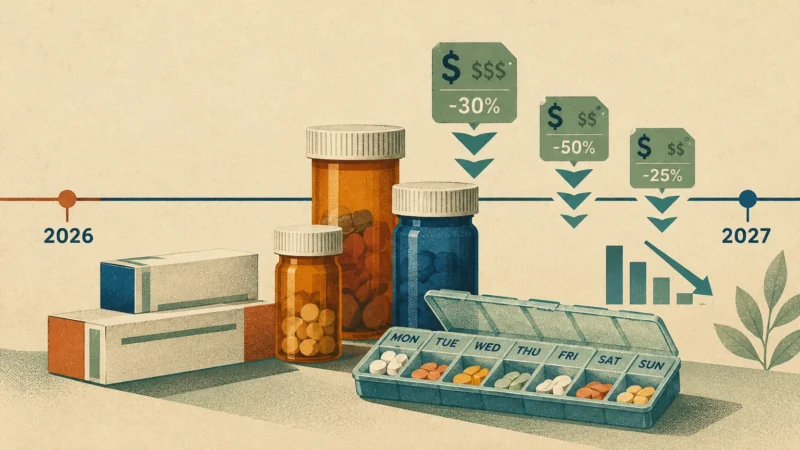
The 2027 edition highlights crucial drug pricing reforms taking effect on January 1, 2027. Under federal law, Medicare-negotiated lower prices take effect for 15 additional high-cost Part D prescription drugs.
These 15 negotiated drugs follow the first group of 10 medications whose price discounts took effect in January 2026. If you take any of these common medications, your out-of-pocket pharmacy bills should decline sharply.
The handbook also features the new Medicare GLP-1 Bridge program. This specialized federal initiative allows eligible Part D enrollees to access selected weight-management and cardiovascular GLP-1 medications for a $50 monthly copay.
Furthermore, the 2027 guide covers the ACCESS chronic care support model for Original Medicare enrollees. It also introduces TrumpRx.gov, a federal prescription discount portal designed to lower cash prices for non-covered drugs.
Remember that purchases made through third-party discount portals like TrumpRx.gov do not count toward your Part D deductible or out-of-pocket maximum. The handbook clearly differentiates between insurance claims and discount programs.
Comparing Your Essential 2026–2027 Medicare Notices
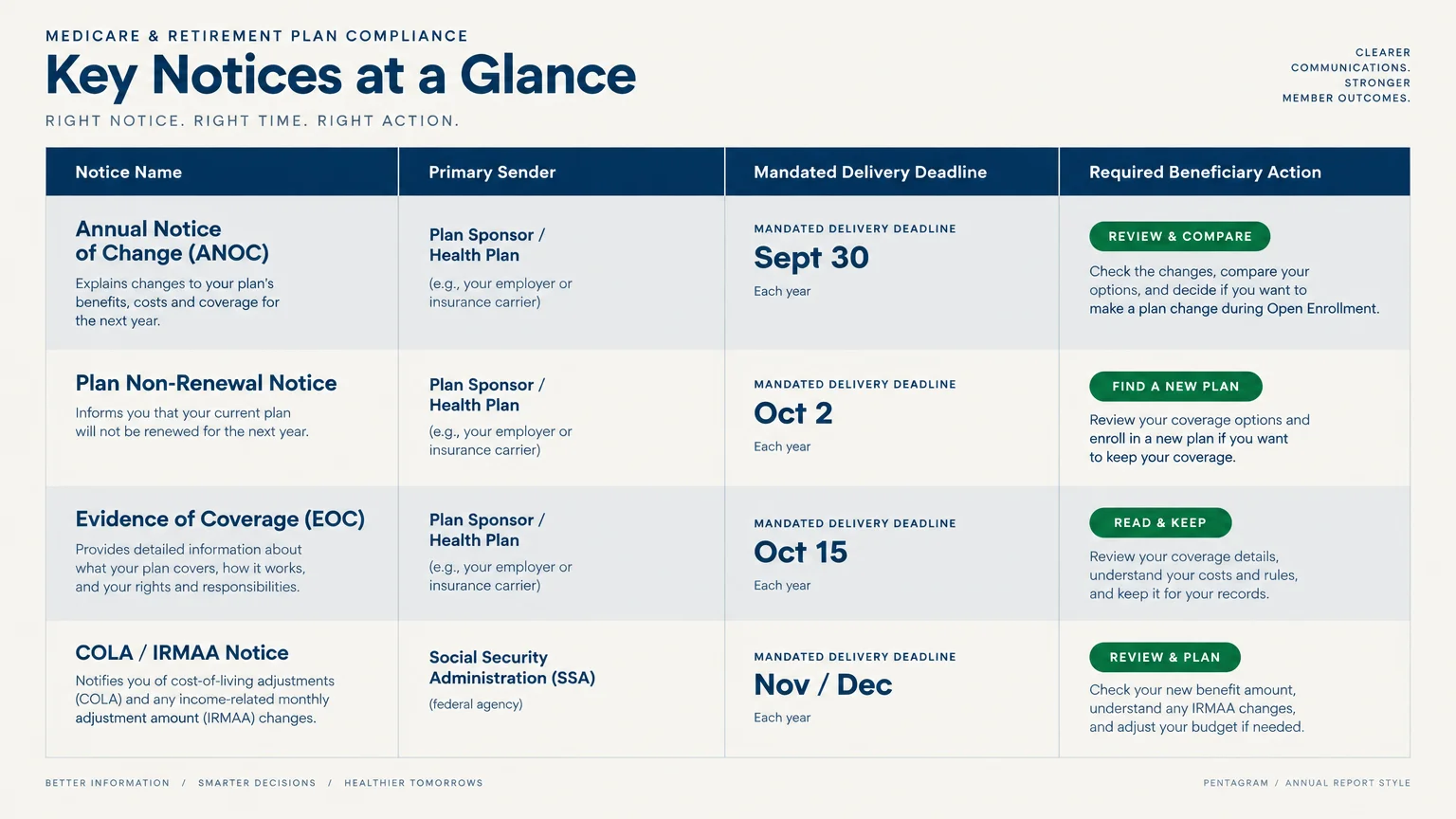
Managing multiple envelopes can feel confusing during the busy fall season. Use this reference table to identify each document, understand its purpose, and take timely action.
| Notice Title | Sender | Expected Arrival | Key Action Required |
|---|---|---|---|
| Annual Notice of Change (ANOC) | Medicare Advantage or Part D Plan | By September 30, 2026 | Compare 2027 premiums, copays, provider networks, and drug tiers against your current plan. |
| Plan Non-Renewal Notice | Terminating Insurance Plan | By October 2, 2026 | Select a new plan during AEP or use your Special Enrollment Period and Medigap guaranteed-issue rights. |
| Medicare & You 2027 Handbook | Centers for Medicare & Medicaid Services | Late September 2026 | Review new 2027 rules, the 15 newly negotiated drug prices, and regional plan comparisons. |
| Evidence of Coverage (EOC) | Medicare Advantage or Part D Plan | By October 15, 2026 | Review legal coverage rules, prior authorization updates, and formal appeals procedures. |
| Notice of Creditable Coverage | Employer or Union Benefits Plan | Before October 15, 2026 | Save this statement to prove continuous drug coverage and prevent lifetime Part D late penalties. |
| Social Security COLA & IRMAA Notice | Social Security Administration | November / December 2026 | Check your net monthly benefit after Part B deductions; file Form SSA-44 if eligible to appeal IRMAA. |
| Medicare Summary Notice (MSN) | CMS or Private Carrier (EOB) | Quarterly / Monthly | Cross-reference all billed services with personal records to detect fraudulent or erroneous claims. |
Common Mistakes to Avoid with Medicare Mail
Every year, thousands of older adults face avoidable expenses because of simple administrative oversights. Avoiding these frequent missteps protects your healthcare budget throughout 2027.
- Assuming unchanged coverage: Many enrollees assume their plan remains identical if the monthly premium stays flat. Insurers often offset frozen premiums by increasing specialist copays, raising deductibles, or altering drug formularies.
- Ignoring plan cancellation notices: Discarding a non-renewal notice leaves you without private plan coverage on January 1. You risk falling into default Original Medicare without standalone prescription drug coverage or supplemental protection.
- Throwing away employer coverage proofs: Losing a Notice of Creditable Coverage can cost you hundreds of dollars later. When you transition to Part D, Medicare assesses permanent monthly penalties unless you produce written proof of creditable coverage.
- Confusing an MSN or EOB with an invoice: Paying amounts shown on an Explanation of Benefits without receiving a genuine doctor’s bill leads to double payments. Always wait for your healthcare provider’s final invoice before sending money.
Reviewing notices immediately upon arrival eliminates these costly pitfalls. It allows you to address problems weeks before open enrollment deadlines close.
Frequently Asked Questions About 2027 Medicare Notices
What should I do if my doctor is no longer in my plan network for 2027?
If your ANOC shows your doctor is leaving your network, you have two primary options during Open Enrollment. You can switch to another Medicare Advantage plan that includes your physician, or you can return to Original Medicare.
Can my plan increase my prescription drug deductible to $700?
Yes, federal regulations allow Part D plans to set their standard annual deductible up to $700 in 2027. Your ANOC states whether your specific carrier adopted this maximum deductible or established a lower threshold.
What happens if I miss the December 7 Open Enrollment deadline?
Missing the December 7, 2026 deadline generally locks in your plan choices for all of 2027. However, enrollees who receive a plan non-renewal notice have a Special Enrollment Period through February 2027 to switch plans.
How do I appeal an IRMAA surcharge if my income dropped?
To contest an income surcharge, download Form SSA-44 from the Social Security Administration website. Submit the completed form along with documentation of your life-changing event, such as a retirement letter or tax transcript.
Next Steps for Securing Your 2027 Healthcare Coverage
Healthcare planning requires deliberate attention, especially as major drug payment caps and coverage models shift in 2027. Organize your incoming correspondence, examine your annual changes, and mark key deadlines on your personal calendar.
Consult resources from advocacy groups like the National Council on Aging if you need unbiased counseling during your enrollment journey. Taking action today guarantees that your Medicare plan continues to protect both your health and your retirement savings.
The information in this guide is meant for educational purposes. Your specific circumstances—including income, benefits, tax situation, and health needs—may require different approaches. When in doubt, consult a licensed financial advisor or tax professional.
Last updated: February 2026. Benefit amounts, tax rules, and program details change annually—verify current figures with official government sources.








Leave a Reply