

You can use money from your Health Savings Account to pay your Medicare premiums completely tax-free once you turn 65. This simple strategy provides an immediate, valuable discount on your essential healthcare costs throughout retirement.
Most retirees do not realize that their HSA covers Medicare Part B, Part D, and Medicare Advantage plans. Mastering these health savings account rules helps you protect your hard-earned nest egg.
In this guide, you will discover exactly how to execute tax-free Medicare payments and avoid costly tax penalties.

The Essentials: HSA and Medicare at a Glance
Your Health Savings Account changes roles when you reach age 65. It shifts from a growth-oriented medical account into a flexible retirement healthcare fund.
Here is what you need to know about using your HSA for Medicare:
- Tax-Free Premium Coverage: You can pay Medicare Parts A, B, C, and D premiums using pretax HSA dollars.
- Medigap Exclusion: You cannot use HSA funds to pay Medicare Supplement (Medigap) premiums tax-free.
- Reimbursement Flexibility: You can reimburse yourself tax-free for premiums deducted directly from your Social Security check.
- Contribution Freeze: You must stop contributing new money to your HSA once you enroll in any part of Medicare.
Understanding these fundamentals keeps your money safe from unexpected IRS penalties.
Which Medicare Premiums Qualify for Tax-Free HSA Payments
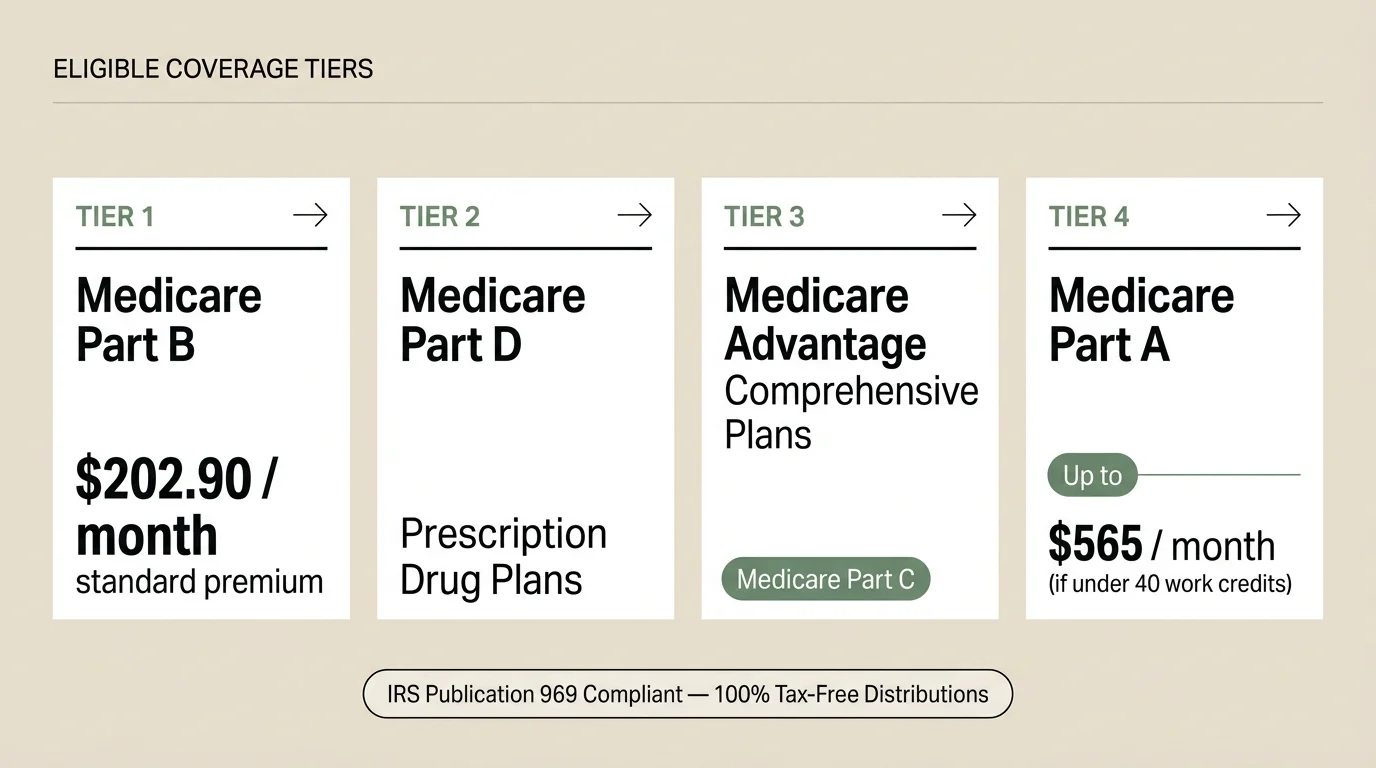
According to IRS Publication 969, you can use your HSA funds tax-free for specific Medicare premiums once you turn 65. This rule applies whether you pay bills directly or reimburse yourself later.
Here is a breakdown of the eligible coverage categories you can pay with your HSA:
Medicare Part B (Medical Insurance): According to Medicare.gov, the standard Part B premium is $202.90 per month in 2026. You can pay this entire amount using HSA distributions.
Medicare Part D (Prescription Drug Coverage): Monthly premiums for stand-alone prescription drug plans qualify fully as tax-free HSA expenses. This includes both basic plans and enhanced drug coverage.
Medicare Part C (Medicare Advantage): If you choose a private Medicare Advantage plan instead of Original Medicare, your monthly plan premiums are completely eligible.
Medicare Part A (Hospital Insurance): Most seniors receive Part A premium-free. If you lack the required 40 work credits, you may pay up to $565 per month in 2026 tax-free from your HSA.
IRMAA Surcharges: High-income retirees who pay an Income-Related Monthly Adjustment Amount on Part B or Part D can cover those extra surcharges with HSA funds.

Medicare Expense Eligibility Comparison
Knowing which expenses qualify ensures you never trigger unwanted tax audits. The table below outlines how the IRS treats common retirement healthcare costs.
| Expense Category | Eligible for Tax-Free HSA Funds? | Notes and Rules |
|---|---|---|
| Medicare Part B Premiums | Yes | Standard rate is $202.90 per month in 2026. |
| Medicare Part D Premiums | Yes | Includes all approved private prescription drug plans. |
| Medicare Advantage (Part C) | Yes | Covers private plan monthly premiums. |
| Part B Annual Deductible | Yes | The Part B deductible is $283 in 2026. |
| Medicare Supplement (Medigap) | No | Explicitly excluded by IRS rules; withdrawals are taxable. |
| Qualified Out-of-Pocket Medical | Yes | Includes copayments, dental care, vision care, and hearing aids. |
Keep accurate records for every expense you pay from your account. Receipts serve as your official proof during tax season.
The Critical Medigap Exception You Must Know
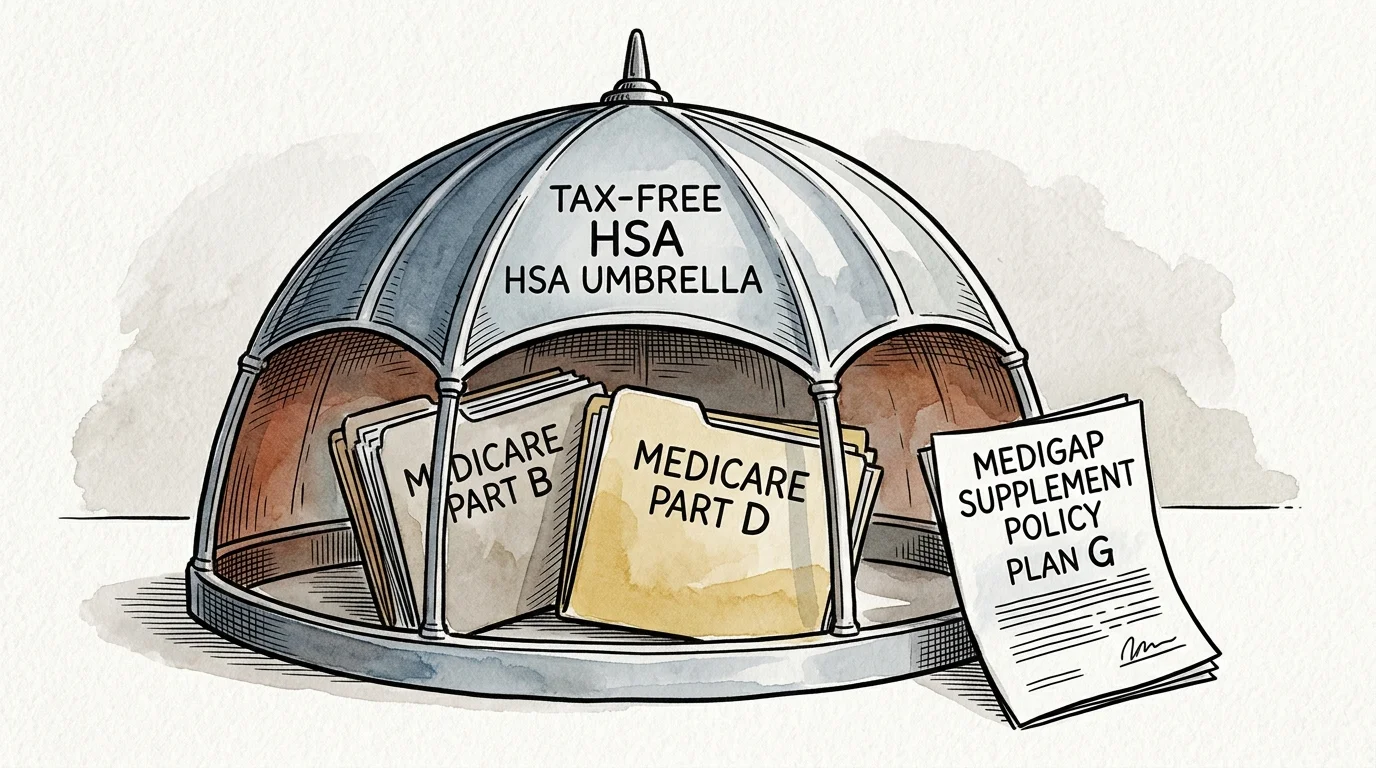
While the IRS allows HSA withdrawals for most Medicare premiums, Medicare Supplement Insurance is a strict exception. You cannot use HSA funds to pay Medigap premiums tax-free.
Federal tax law explicitly excludes supplemental policies from qualified medical expense status. If you pay Medigap premiums with your HSA, the IRS considers it a non-qualified withdrawal.
If you are 65 or older, you will owe ordinary income tax on any HSA funds spent on Medigap. Fortunately, you will not owe the 20% early withdrawal penalty.
“The HSA is the ultimate retirement savings vehicle because it is triple tax-free. When you use it for medical expenses in retirement, you never pay tax on that money.” — Ed Slott, CPA and Retirement Distribution Expert
To manage Medigap costs wisely, pay those premiums from a standard checking account or taxable savings account instead.

How to Pay or Reimburse Medicare Premiums from Your HSA
Most retirees have their Part B premiums automatically deducted from their monthly Social Security benefit checks. You cannot link your HSA directly to the Social Security Administration for automatic payments.
Instead, you use a simple reimbursement strategy to capture your tax savings.
- Let Social Security Deduct the Premium: Your net Social Security deposit reflects the monthly deduction for Part B and any Part D premiums.
- Initiate an HSA Distribution: Transfer funds electronically from your HSA provider directly into your regular personal checking account.
- Label the Transfer Properly: Select “Normal Distribution” or “Qualified Medical Expense” when your HSA custodian prompts you online.
- Save Your Annual Statements: Download your Form SSA-1099 and annual Medicare statements as proof of the premium deductions.
You can reimburse yourself monthly, quarterly, or once a year in a single lump sum. The IRS sets no deadline for when you must complete a qualified reimbursement.
As long as you established your HSA before you incurred the Medicare expense, you can withdraw the money years later tax-free.

Rules for Paying a Spouse’s Medicare Premiums
You can use your HSA funds to pay your spouse’s qualified Medicare premiums if you meet specific age criteria. You must be at least 65 years old, and your spouse must also be enrolled in Medicare.
IRS rules allow you to cover medical expenses for your legal spouse even if your spouse is not an account beneficiary. Both spouses must meet the eligibility requirements for the specific premium type.
However, if you are under age 65, you cannot use your HSA to pay your 65-year-old spouse’s Medicare premiums tax-free. The account owner must reach age 65 first.
“Healthcare is often a retiree’s single biggest unpredictable cost. Using tax-advantaged accounts to handle fixed premiums gives you predictable control over your cash flow.” — Jean Chatzky, Financial Journalist and Author
Planning ahead for both spouses helps maximize household tax savings and reduces retirement healthcare stress.
HSA Withdrawal Rules After Age 65
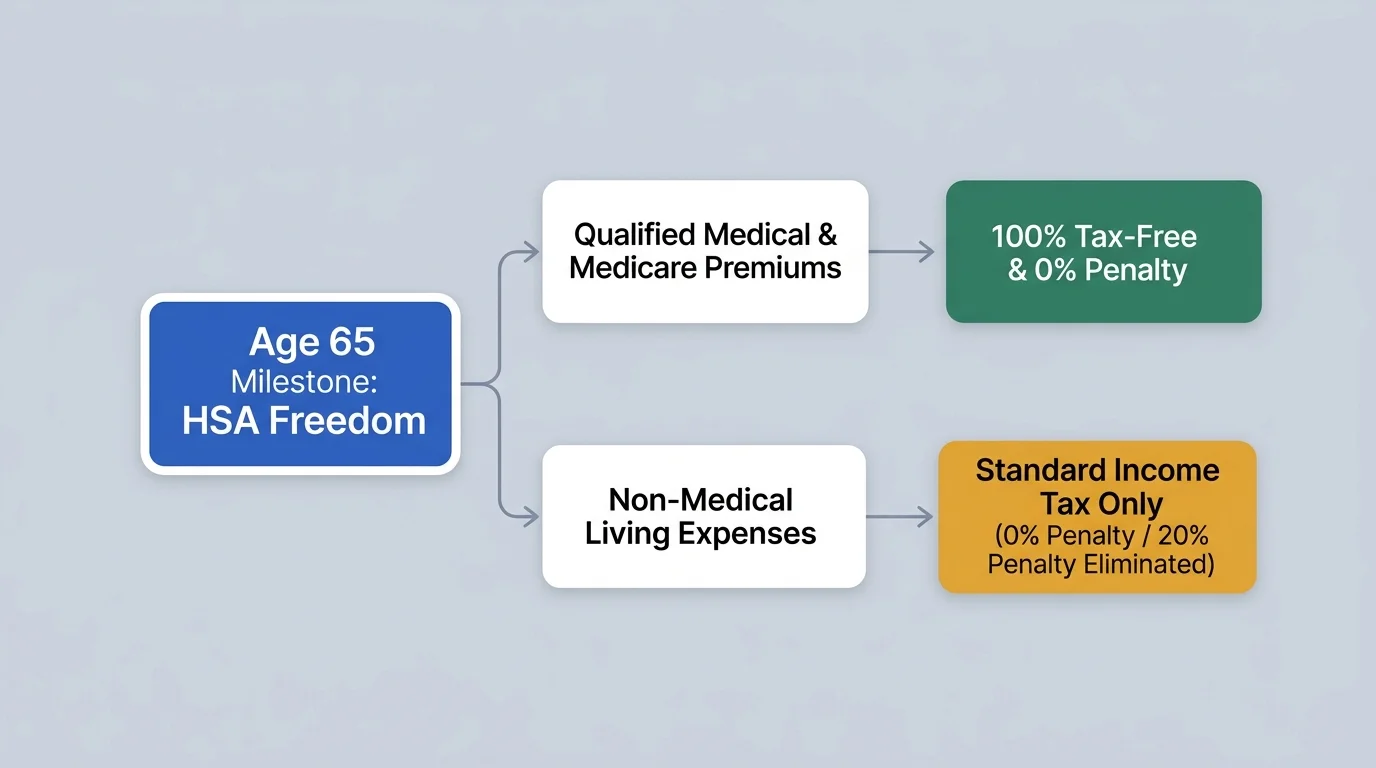
Turning 65 unlocks substantial new flexibility for your Health Savings Account. The strict 20% penalty on non-medical withdrawals disappears permanently.
If you withdraw HSA funds for non-medical reasons after age 65, you only pay ordinary income tax. In this scenario, your HSA functions exactly like a traditional IRA.
When you spend HSA dollars on qualified Medicare premiums and medical out-of-pocket costs, withdrawals remain 100% tax-free. No other retirement account offers this level of tax efficiency.
Additionally, HSAs carry no Required Minimum Distributions (RMDs). You can let your money grow untouched until you actually need it for medical expenses.
What Can Go Wrong: 4 Costly Mistakes to Avoid
Navigating the intersection of Medicare and HSAs requires careful attention to IRS guidelines. Avoiding common pitfalls protects your retirement funds from unnecessary penalties.
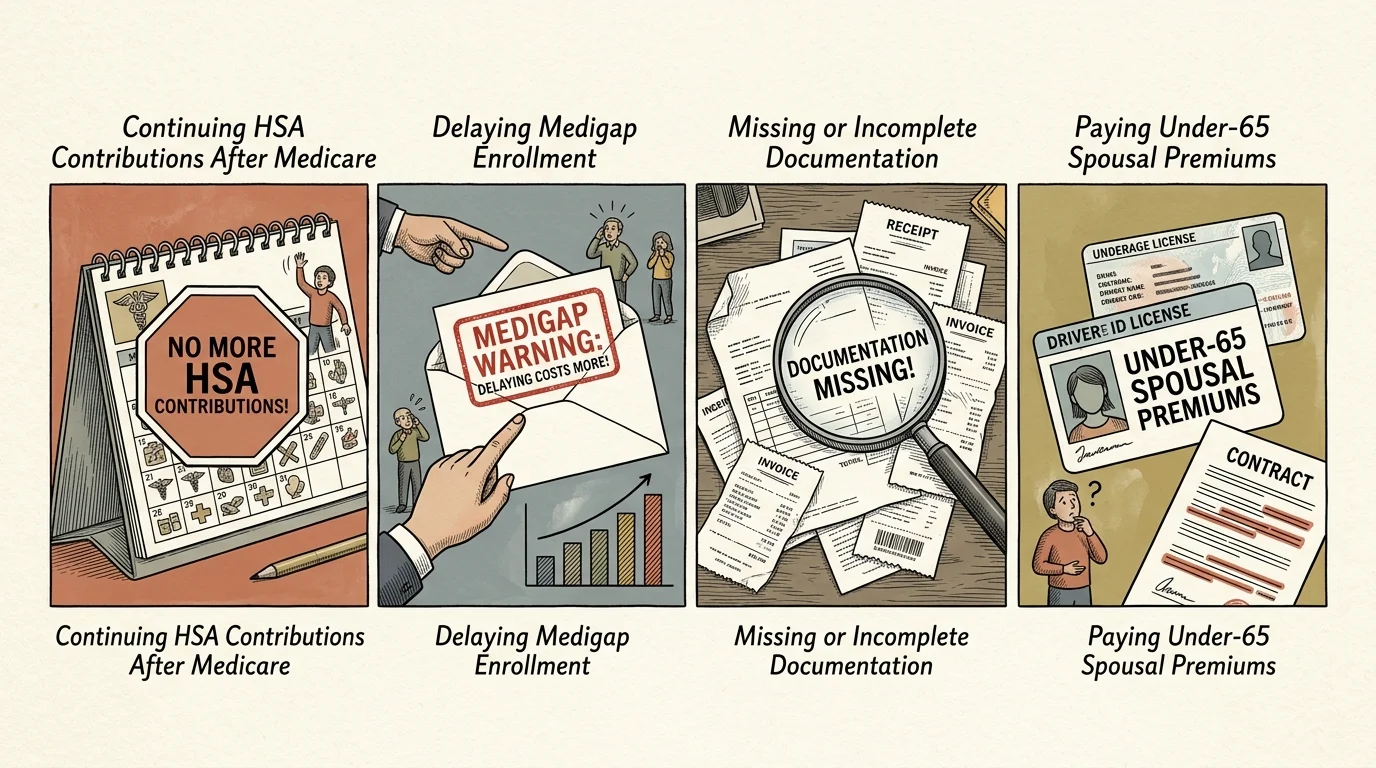
Watch out for these four frequent mistakes retirees make:
1. Paying Medigap Premiums with HSA Money: Many retirees mistakenly believe all Medicare-related plans qualify. Using HSA dollars for Medigap triggers income taxes on the distributed amount.
2. Contributing to an HSA While on Medicare: Enrolling in any part of Medicare ends your HSA contribution eligibility. Even free Part A coverage stops your ability to add new money.
3. Overlooking the 6-Month Lookback Rule: If you delay Medicare past age 65, your Part A coverage backdates up to six months when you finally apply. You must stop HSA contributions six months prior to enrollment.
4. Inadequate Record-Keeping: The IRS requires documentation for every tax-free reimbursement. Failing to keep SSA-1099 forms and billing statements can lead to penalties during an audit.
Consult resources from the Consumer Financial Protection Bureau to build healthy financial record-keeping habits.

When to Consult a Professional
While managing your HSA is straightforward for most retirees, certain complex situations warrant expert guidance. A qualified financial planner or CPA can prevent costly tax errors.
Consider speaking with a professional if you encounter any of these scenarios:
- Working Past Age 65: You need help coordinating employer high-deductible health plan contributions with delayed Medicare enrollment dates.
- Excess Contribution Corrections: You accidentally contributed to your HSA while covered by Medicare and need to remove excess funds before the 6% excise tax applies.
- IRMAA Surcharge Planning: You want to structure retirement withdrawals to avoid crossing income thresholds that trigger higher Part B and Part D premiums.
- Comprehensive Estate Planning: You want to name a beneficiary for your HSA to prevent hefty taxes for non-spouse heirs upon your death.
Professional advice provides peace of mind and protects your long-term retirement security.
Frequently Asked Questions About HSA and Medicare
Can I pay my Medicare Part B premium directly from my HSA debit card?
If you receive paper bills from Medicare instead of Social Security deductions, you can use your HSA debit card directly. Otherwise, reimburse yourself from your HSA.
Can I use my HSA for dental and vision premiums under Medicare?
You cannot use HSA funds for stand-alone dental or vision insurance premiums. However, you can use HSA dollars tax-free for direct out-of-pocket dental and vision care costs.
How long do I have to reimburse myself for Medicare expenses?
There is no time limit under IRS regulations. You can reimburse yourself years later as long as the expense occurred after you established your HSA.
What is the penalty for making HSA contributions while enrolled in Medicare?
The IRS imposes a 6% excise tax on excess contributions for each year the money remains in the account. You must withdraw excess contributions promptly to avoid penalties.
Next Steps for Managing Your Healthcare Costs
Using your HSA for Medicare premiums is one of the most effective ways to lower your living expenses in retirement. Set up a simple system to track your premium deductions and process reimbursements.
Take time today to review your current Medicare statements and calculate your potential tax savings for the upcoming year.
This article provides general financial education and information only. Everyone’s financial situation is unique—what works for others may not work for you.
For personalized advice tailored to your retirement needs, consider consulting a qualified financial professional such as a CFP or CPA.
Last updated: February 2026. Benefit amounts, tax rules, and program details change annually—verify current figures with official government sources.









Leave a Reply