

Fall Medicare open enrollment brings a flood of deceptive sales pitches right to your doorstep and phone. Recognizing these new schemes immediately protects your healthcare coverage and your hard-earned retirement savings.
The federal government estimates that Medicare loses roughly $60 billion every year to fraud, waste, and abusive billing practices. Sophisticated con artists use the fall enrollment window to trick unsuspecting seniors into surrendering vital benefits.
Knowing what legitimate Medicare officials will never do keeps your benefits secure this season. This senior Medicare scam alert reveals the latest deceptive tactics circulating before the December 7 deadline.

The High Stakes of Medicare Open Enrollment Fraud
Between October 15 and December 7, beneficiaries evaluate changes to their Medicare Advantage and Part D plans. Unscrupulous scammers target this annual window because coverage adjustments create natural uncertainty.
Medicare open enrollment fraud has grown increasingly sophisticated in recent years; predatory groups now run coordinated digital and phone campaigns. These operations aim to steal your Medicare Beneficiary Identifier (MBI) or enroll you in unwanted plans.
Losing control of your Medicare number can disrupt ongoing treatments and cause unexpected out-of-pocket costs. Staying proactive shields your retirement health plan from predatory marketing tactics.
The Plastic Chip Card Scam
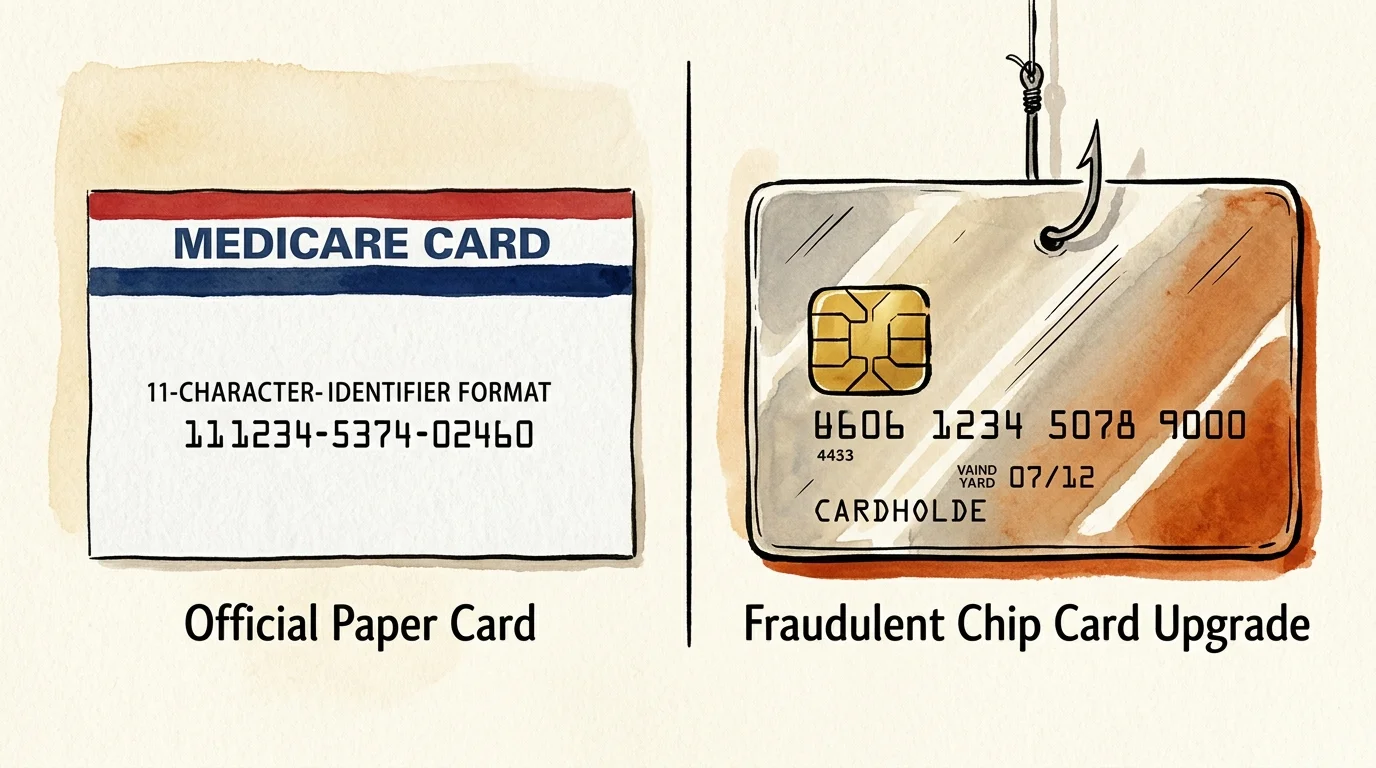
One widespread scheme involves callers claiming that Medicare is replacing traditional paper cards with new plastic or metal chip cards. The caller insists that you must upgrade immediately to maintain your health coverage.
To send the supposed new card, the caller demands your 11-character Medicare number or your checking account details. Some operators even claim you must pay a small processing fee.
Official Medicare cards are strictly issued on paper, never on plastic or metal. The Centers for Medicare & Medicaid Services will never call you unprompted to demand financial details or replacement card fees.

The Fake Flex Card Grocery Trap
Television commercials and automated robocalls frequently promise free government flex cards loaded with $1,500 to $3,000 for groceries and utilities. These flashy advertisements target seniors who want extra help managing household expenses.
The federal Medicare program does not distribute general grocery cards or flex cards to beneficiaries. These offers represent deceptive lead-generation schemes run by third-party marketing organizations.
While certain private Medicare Advantage plans offer specific supplemental debit benefits, these plans enforce strict qualifying criteria. Promoters who promise guaranteed grocery cash across the board are misleading you to earn insurance sales commissions.

Unauthorized Plan Switching: The Hidden Broker Threat
Thousands of seniors experience unauthorized plan changes each year when rogue insurance brokers forge plan enrollments. Beneficiaries often only discover the switch when their local pharmacy rejects their regular prescriptions.
Under federal regulations enforced by Medicare.gov, private insurance agents cannot contact you without prior consent. Brokers cannot legally make cold calls, send unsolicited text messages, or visit your home uninvited.
If a telephone representative asks to verify your identity to explain local plan options, end the conversation immediately. Disclosing your MBI provides bad actors with the single detail they need to execute an unauthorized enrollment.

Fake Threats of Coverage Cancellation
Scammers routinely use fear tactics to force seniors into fast, irrational decisions over the phone. Callers claim that your existing Medicare benefits face immediate termination unless you re-verify your personal details before the enrollment deadline.
Genuine Medicare officials will never contact you by phone threatening to cancel your coverage. When legitimate administrative changes occur, the government delivers official written documentation directly to your mailbox.
Whenever a caller uses high-pressure tactics or demands immediate compliance, recognize this behavior as a blatant scam. Simply hanging up the telephone remains your best and safest defense.

Legitimate Communications vs. Medicare Fraud Red Flags
Distinguishing legitimate outreach from criminal solicitations protects your coverage during the busy open enrollment window. Review these critical differences to identify Medicare fraud red flags instantly.
| Communication Feature | Legitimate Medicare Outreach | Fraudulent Scam Approach |
|---|---|---|
| Initial Phone Contact | Medicare only calls if you previously requested a callback; never cold-calls. | Robocalls, uninvited outreach, and spoofed telephone numbers. |
| Card Material | Issues official paper cards by mail at no charge. | Demands money or personal data for plastic, metal, or smart-chip cards. |
| Flex Card Offers | Explains specific plan allowances through official plan documentation. | Promises thousands of dollars in guaranteed grocery or bill money. |
| Enrollment Urgency | Sends clear written mailings well ahead of statutory deadlines. | Threatens that your healthcare benefits will be canceled today. |
| Information Requests | Already holds your account data; never asks for bank details over the phone. | Pressures you to disclose your full MBI, Social Security number, or bank routing data. |
This comparison reveals how fraudulent organizations rely on artificial urgency and deceptive promises. Official programs prioritize transparency and provide written verification for every adjustment.
Common Mistakes to Avoid
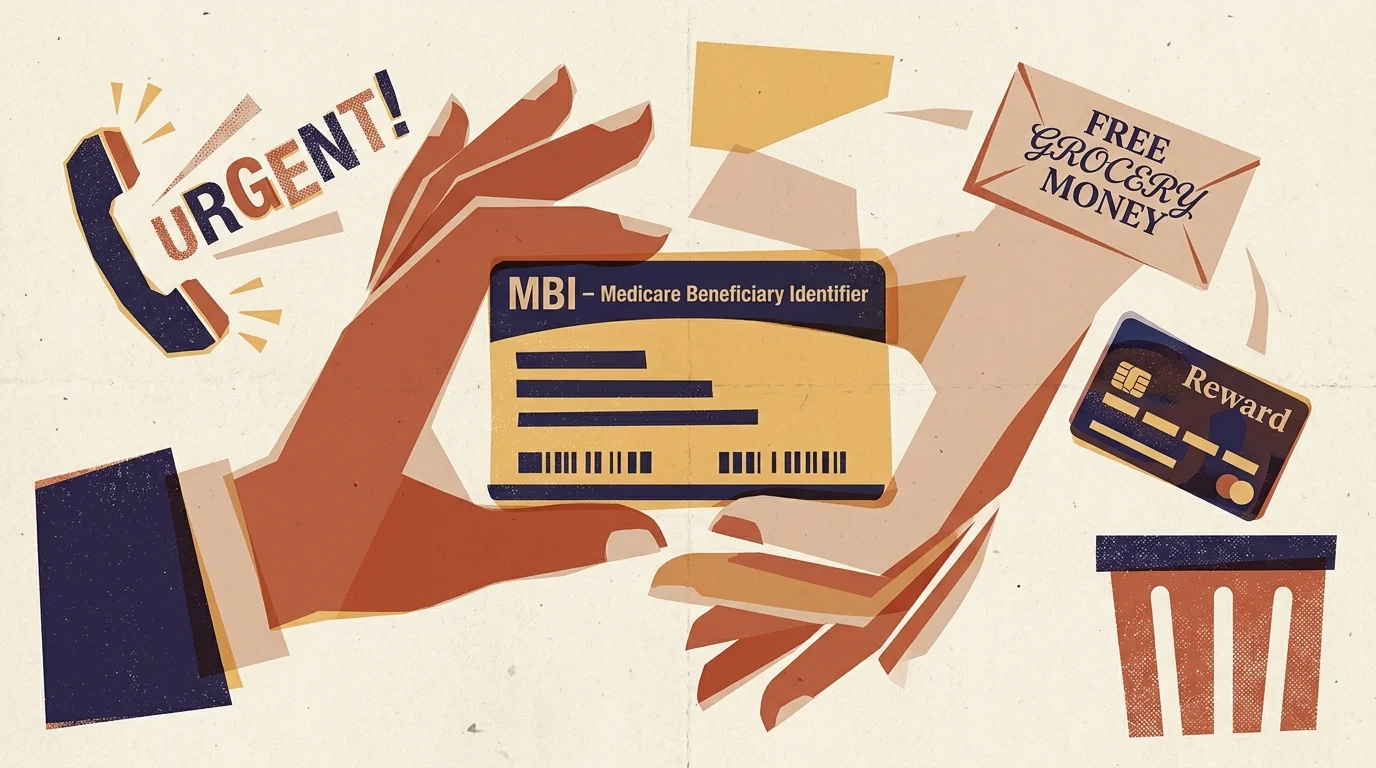
Even vigilant seniors can stumble when facing sophisticated sales pitches and deceptive digital advertising. Avoiding these four common errors will preserve your healthcare benefits and personal privacy.
Believing caller ID displays: Modern technology lets scammers manipulate caller ID screens to display official government names. Always verify callers by dialing official agency numbers yourself rather than trusting your phone screen.
Trusting television celebrity endorsements: Paid celebrity pitchmen promote private lead-generation brokerages, not the federal Medicare program. These commercials frequently exaggerate plan benefits to harvest senior phone numbers.
Ignoring your Medicare Summary Notices: Set aside time each quarter to review your official statements for unrendered medical procedures. Unexplained charges signal that someone is misusing your Medicare identifier.
Sharing numbers during routine surveys: Con artists often disguise identity theft attempts as innocent senior health opinion polls. Never disclose your personal identifiers to participate in an unsolicited telephone survey.

Expert Advice on Safeguarding Your Healthcare Identity
Guarding your healthcare information is just as vital as protecting your personal bank accounts. Establishing firm personal boundaries prevents con artists from exploiting your hard-earned benefits.
“You have to stand in your truth and protect what you have earned. Never let fear or false promises push you into handing over your personal financial power.” — Suze Orman, Personal Finance Expert
Adopting this mindset empowers you to reject aggressive sales representatives without hesitation or guilt. Remember that you control your healthcare enrollment decisions, not high-pressure telephone marketers.

How to Avoid Medicare Scams
Following proven protective habits ensures your open enrollment experience remains stress-free and secure. Implement these practical actions whenever you research healthcare options this fall.
- Seek unbiased local guidance: Consult free advisors through the National Council on Aging or your local State Health Insurance Assistance Program (SHIP) before switching plans.
- Inspect provider networks carefully: Confirm directly with your doctors and pharmacy that they participate in any new plan network before enrolling.
- Monitor official federal updates: Review consumer advisories published by the Consumer Financial Protection Bureau and the Administration for Community Living.
- Report fraudulent activity promptly: Contact the federal fraud hotline at 1-800-HHS-TIPS (1-800-447-8477) or call 1-800-MEDICARE (1-800-633-4227) immediately if your plan changes without your permission.
Taking control of your healthcare research eliminates reliance on predatory telemarketers. Objective counseling programs ensure you find suitable coverage while keeping your private data secure.
Learning key Medicare scam warning signs gives you the upper hand against deceptive operators. If an encounter feels suspicious, hang up the telephone and report the incident right away.
Frequently Asked Questions About Medicare Enrollment Scams
Beneficiaries often have specific concerns about incoming calls and sales offers during open enrollment. Here are clear answers to common questions about enrollment fraud.
Will Medicare ever call me directly to update my benefits?
Medicare representatives will never initiate uninvited calls to request your personal details or update your account. Official personnel only call beneficiaries in limited instances after you submit a formal inquiry.
What should I do if an agent switched my plan without my consent?
Call 1-800-MEDICARE immediately to explain that an agent executed an unauthorized plan switch. Federal representatives can process a retroactive disenrollment and restore your previous coverage.
Are flex cards with thousands of dollars for groceries real?
Original Medicare never provides general grocery or flex debit cards to beneficiaries. While select Medicare Advantage plans include limited supplemental wellness cards, advertisements promising thousands of dollars in unrestricted cash are fraudulent.
Can an insurance agent charge me an enrollment fee?
Legitimate insurance brokers never charge beneficiaries a fee to review plans or process enrollments. Insurance companies compensate licensed agents directly through regulated commissions.
Empowering Your Healthcare Decisions
Navigating fall open enrollment becomes straightforward when you understand your rights under federal law. Guard your Medicare number carefully, question suspicious offers, and review your coverage through trusted channels.
This is educational content based on general financial principles for seniors. Individual results vary based on your situation. Always verify current benefit amounts, tax rules, and program eligibility with official government sources.
Last updated: February 2026. Benefit amounts, tax rules, and program details change annually—verify current figures with official government sources.









Leave a Reply