

Updating your retirement plan ensures your money lasts as long as you do, especially as market fluctuations, new tax laws, and healthcare costs reshape your financial future. Leaving a strategy on autopilot often leads to unexpected tax bills, missed income opportunities, and reduced purchasing power during your golden years. A comprehensive retirement plan checkup reveals hidden weaknesses before they disrupt your lifestyle, letting you adjust withdrawal rates, reallocate investments, and capture maximum benefits. Spotting early retirement planning red flags gives you total control over your financial security, whether you plan to retire next month or already enjoy your post-career life.

Why a Regular Retirement Plan Checkup Matters
Financial markets, federal tax codes, and personal health needs never stay static. A strategy that served you well at age 55 could create severe tax bottlenecks or unnecessary market exposure by the time you reach 65 or 70. Performing a periodic retirement plan checkup helps you shift smoothly from building wealth during your working years to preserving capital and generating sustainable income in retirement.
When you conduct a systematic review, you protect your portfolio against sudden economic downturns while aligning your spending strategy with current regulatory updates. Recognizing key retirement plan review signs early allows you to make subtle course corrections rather than drastic, stressful sacrifices down the road.
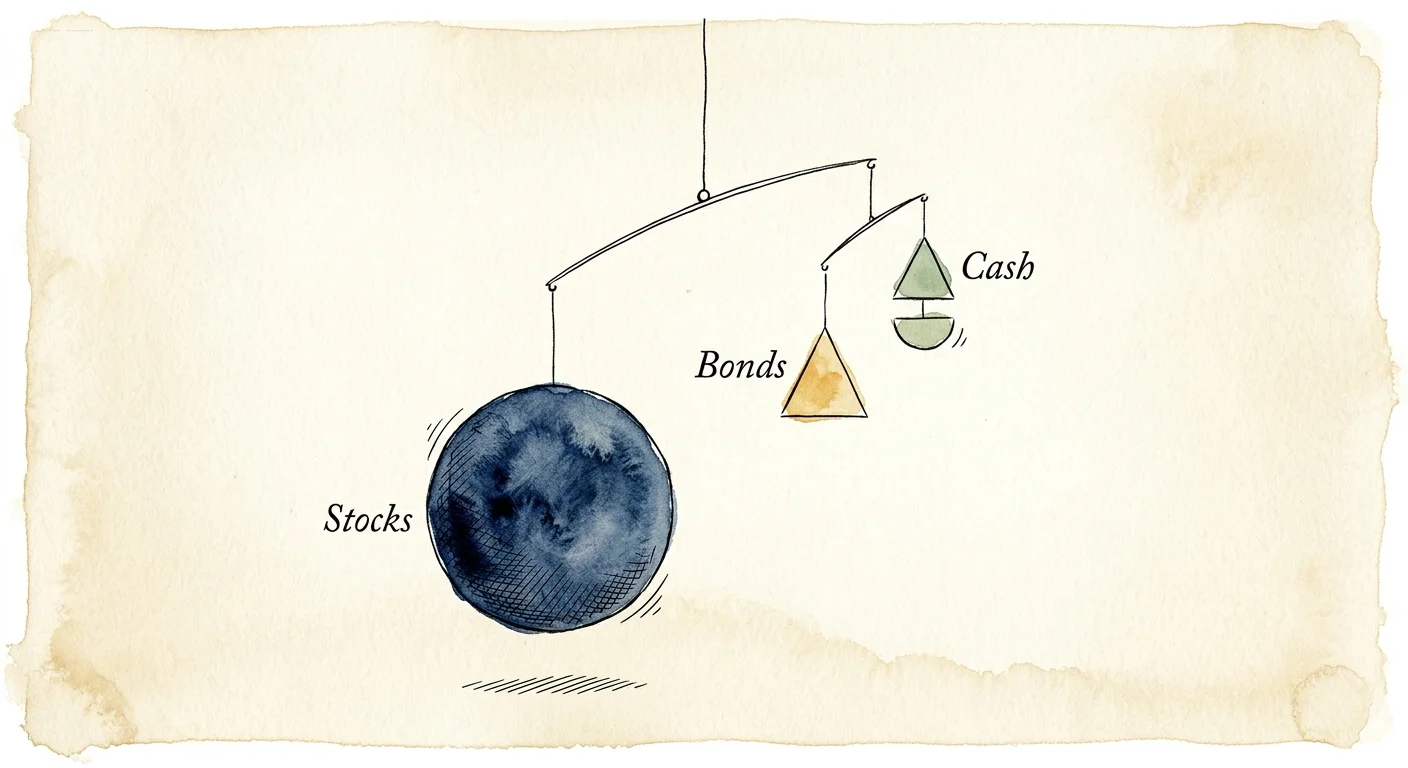
1. Your Portfolio Has Drifted Away From Your Target Asset Allocation
Strong market performance in specific sectors often disrupts your intended balance between stocks, bonds, and cash. If you established a balanced 60/40 growth-and-income portfolio several years ago, an extended equity bull market may have pushed your stock exposure up to 75% or 80%. While growth boosts your bottom line during good years, excessive exposure to equities leaves you vulnerable to sudden market downturns when you can least afford them.
Conversely, keeping too much money in cash or low-yielding fixed-income accounts creates a subtle but dangerous drag on your long-term purchasing power. Selling high-performing stock assets and redeploying those gains into defensive instruments allows you to lock in earnings while restoring your risk profile. Educational guidelines on portfolio management from Investor.gov recommend reviewing your asset mix at least once every twelve months to maintain control over risk exposure.

2. Major Tax Law Updates Have Changed the Rules
Federal tax laws governing retirement accounts evolve constantly, and failing to keep pace can cost you thousands of dollars in avoidable penalties or lost growth. The implementation of the SECURE 2.0 Act reshaped several fundamental rules surrounding mandatory distributions and retirement savings options:
- Required Minimum Distribution (RMD) Age Changes: Under current rules, the starting age for mandatory withdrawals is 73 for individuals born between 1951 and 1959. This threshold rises to age 75 in 2033 for those born in 1960 or later.
- Reduced RMD Penalties: If you accidentally miss an RMD deadline, federal law lowered the excise tax penalty from 50% down to 25% of the unwithdrawn amount, with a further reduction to 10% if you correct the error within a two-year window.
- Pre-Death RMD Exemptions for Workplace Roth Accounts: Designated Roth 401(k) and Roth 403(b) plans no longer require pre-death minimum distributions, placing them on equal footing with standard Roth IRAs.
- Enhanced Catch-Up Limits: Workers aged 60 through 63 can take advantage of expanded “super catch-up” contribution limits in workplace plans, providing an accelerated savings runway right before retirement.
- Mandatory Roth Catch-Ups for High Earners: High-wage earners making over $145,000 to $150,000 must direct age 50+ catch-up contributions into after-tax Roth accounts rather than traditional tax-deferred options.
Ignoring these statutory shifts represents one of the primary retirement planning red flags that require immediate attention. Verifying your current standing with the Internal Revenue Service (IRS) ensures your withdrawal and savings choices remain fully compliant while maximizing tax efficiency.
“The biggest mistake people make with their IRAs is not having a plan for distributions before mandatory taxes kick in.” — Ed Slott, CPA and IRA Expert

3. Life Changes Have Altered Your Income or Expense Needs
Personal life events alter your financial landscape faster than external market forces. Major transitions—such as paying off your primary mortgage, welcoming grandchildren, experiencing a divorce, losing a spouse, or relocating to a state with lower income taxes—change your monthly cash flow requirements.
If your budget experiences a permanent shift, your retirement income plan must reflect that reality immediately. Downsizing your home might unlock hundreds of thousands of dollars in home equity that you can reallocate into income-producing assets; conversely, helping family members with medical or educational expenses increases your monthly draw rate. Evaluating when to revise retirement plan assumptions keeps your ongoing distributions aligned with actual household spending.

4. Inflation and Cost-of-Living Adjustments Are Eroding Purchasing Power
Cumulative inflation silently reduces what your saved dollars can purchase over a multi-decade retirement. Even modest annual price increases compound significantly over fifteen or twenty years, eroding your ability to cover groceries, utilities, property taxes, and daily living costs.
While Social Security provides annual relief through Cost-of-Living Adjustments (COLA)—including a 2.5% increase in 2025 and a 2.8% increase in 2026—these adjustments may not match your personal spending reality. For instance, if your baseline Social Security check is $1,900 per month, a 2.8% COLA adds approximately $53 each month. However, if your medical bills or home insurance premiums jump by 10% in that same year, your net purchasing power still shrinks. Reviewing your plan ensures that your total portfolio generates enough rising income to offset real-world cost inflation.
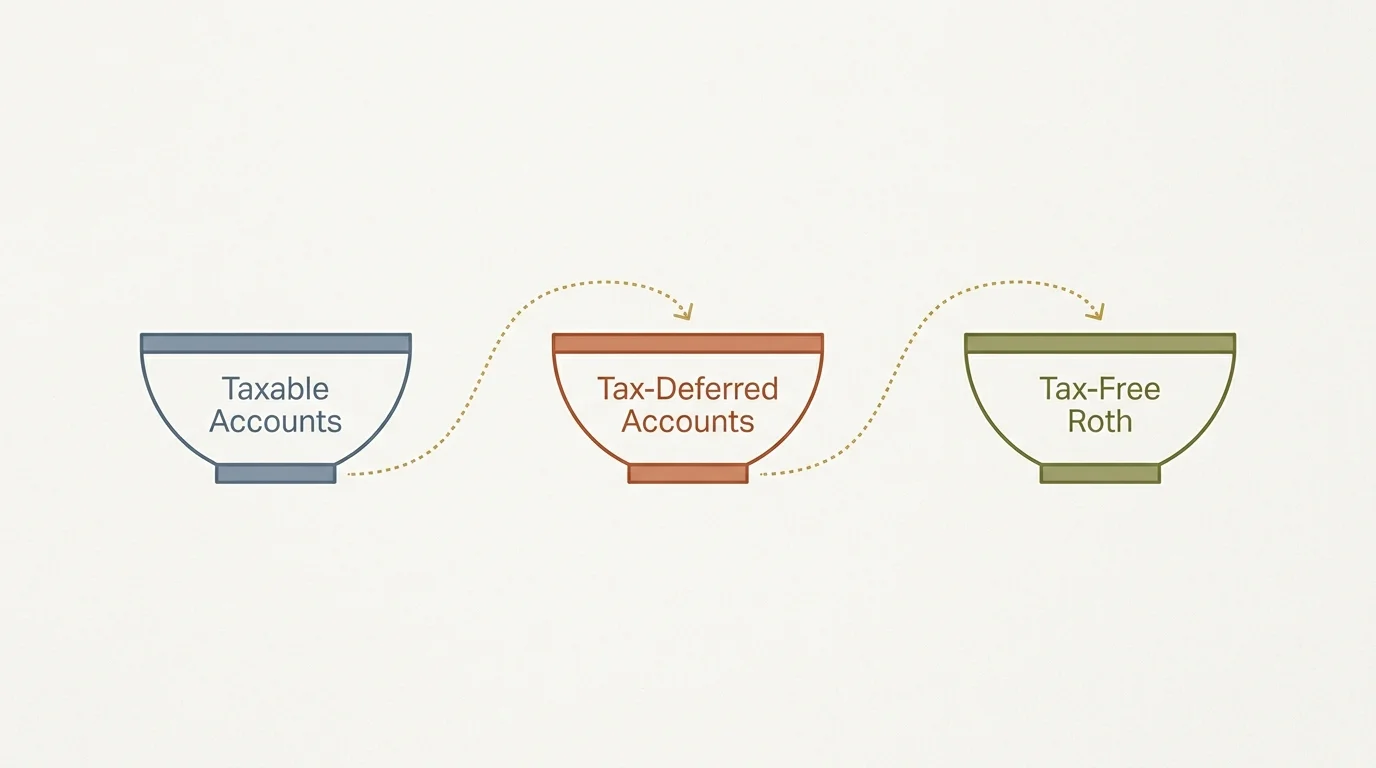
5. You Do Not Have an Explicit Withdrawal Tax Strategy
Accumulating wealth requires disciplined saving, but spending that wealth efficiently requires a tax-aware distribution strategy. Pulling money randomly from your accounts can accidentally push you into higher federal tax brackets, increase your capital gains rates, or trigger higher Medicare premiums.
A structured withdrawal strategy draws strategically from taxable investment accounts, tax-deferred accounts (like traditional IRAs and 401(k)s), and tax-free accounts (like Roth IRAs). Furthermore, if you are 70½ or older, utilizing Qualified Charitable Distributions (QCDs) allows you to transfer up to $108,000 tax-free directly from a traditional IRA to qualified charities, rising to $111,000 in 2026. This move satisfies your required withdrawal amounts without inflating your adjusted gross income.

6. Healthcare Costs and Medicare Coverage Are Unaccounted For
Healthcare spending represents one of the largest single expenditures you will face throughout retirement. Medical costs frequently rise faster than general inflation, and baseline Medicare coverage does not pay for everything. Out-of-pocket costs for prescription drugs, deductibles, dental care, vision care, and potential long-term care services require dedicated funding streams.
Failing to account for health-related expenses can force you to make unexpected, large taxable withdrawals from your retirement accounts during a health emergency. Reviewing your health insurance options on Medicare.gov each year during Open Enrollment lets you compare Part D prescription plans and Supplemental or Advantage coverage. Additionally, consulting senior care guidance through the National Council on Aging (NCOA) can help you integrate long-term care support into your overarching financial blueprint.

7. Your Estate Plans and Primary Beneficiary Designations Are Outdated
Many seniors mistakenly assume that a primary living trust or last will and testament dictates who inherits their retirement accounts. In reality, legal beneficiary designations attached directly to your IRAs, 401(k)s, annuities, and life insurance policies override instructions left in a legal will.
If you named an ex-spouse, a deceased relative, or an estate as a primary beneficiary decades ago, those assets will pass to those listed entities regardless of what your current will states. Additionally, the SECURE Act eliminated the traditional “stretch IRA” for most non-spouse beneficiaries, forcing many heirs to withdraw inherited traditional IRA funds within ten years. Updating beneficiary forms ensures your wealth passes smoothly to your intended heirs while minimizing their tax burdens.

8. Your Risk Tolerance Has Shifted Near or During Retirement
As you transition from working full-time to relying on your savings, your tolerance for market volatility naturally changes. Losing 20% of your account value at age 40 allows you decades to recover through ongoing payroll contributions; experiencing that same loss at age 67 directly damages your retirement income security—a risk known as “sequence of returns risk.”
If market downturns cause you persistent anxiety or keep you awake at night, your current investment portfolio carries too much equity risk for your psychological comfort. Updating your financial plan lets you establish dedicated short-term liquidity buckets—such as cash equivalents or short-term Treasuries—to fund two to three years of living expenses, shielding you from having to sell stocks during temporary market dips.
“The most important quality for an investor is temperament, not intellect.” — Warren Buffett, Chairman and CEO of Berkshire Hathaway

Comparing Key Retirement Rules and Account Limits
Staying informed about shifting federal contribution thresholds and distribution milestones allows you to optimize your annual savings and distribution plans. The table below outlines core retirement figures and operational thresholds across recent years:
| Financial Milestone / Provision | 2025 Rules & Limits | 2026 Rules & Limits |
|---|---|---|
| 401(k) / 403(b) Base Contribution Limit | $23,500 | $24,500 |
| Standard 401(k) Catch-Up (Age 50+) | $7,500 | $8,000 |
| Enhanced “Super Catch-Up” (Ages 60–63) | $11,250 | $11,250 |
| Traditional & Roth IRA Annual Limit | $7,000 | $7,500 |
| IRA Catch-Up Limit (Age 50+) | $1,000 | $1,100 |
| Social Security COLA Adjustment | 2.5% | 2.8% |
| Qualified Charitable Distribution (QCD) Max | $108,000 | $111,000 |
| Required Minimum Distribution (RMD) Age | Age 73 (born 1951–1959) | Age 73 (rising to 75 in 2033) |
Common Mistakes to Avoid When Updating Your Plan
When you sit down to adjust your financial arrangements, avoiding critical missteps is just as important as implementing new strategies. Seniors frequently make several key mistakes during their plan reviews:
- Focusing Exclusively on Investment Returns: Overlooking tax management, Medicare premium thresholds, and fee structures while pursuing higher investment yields often reduces your overall net income.
- Retaining Too Much Low-Yield Cash: Holding excessive cash reserves in zero-interest checking accounts exposes your capital to rapid purchasing power loss through inflation.
- Overlooking Transfer-on-Death (TOD) Designations: Forgetting to place TOD or POD (Payable on Death) instructions on standard non-retirement brokerage and checking accounts leaves those assets tied up in probate court.
- Claiming Social Security Spontaneously: Locking in early Social Security benefits at age 62 without analyzing spousal protection, tax impacts, or long-term breakeven points reduces your lifetime guaranteed income floor. Verify your official projected earnings directly through the Social Security Administration (SSA) before finalizing your claim date.

Finding the Right Advisor for Your Financial Review
While self-directed planning works for some, coordinating legal rules, dynamic tax brackets, and investment strategies often warrants professional guidance. Depending on your personal situation, targeted professional support can add tremendous value:
- Complex Tax Scenarios: Work with a Certified Public Accountant (CPA) or Enrolled Agent (EA) who specializes in decumulation tax strategies if you hold substantial assets in taxable, tax-deferred, and Roth accounts simultaneously.
- Fiduciary Portfolio Management: Choose an independent, fee-only Certified Financial Planner (CFP) bound by a legal fiduciary duty to review your asset allocation without selling high-commission products.
- Estate and Legacy Restructuring: Engage a qualified elder law or estate planning attorney if your family structure includes blended households, special needs dependents, or real estate holdings in multiple states.
Frequently Asked Questions
How often should I conduct a retirement plan checkup?
You should review your overarching retirement strategy at least once per year. Additionally, schedule an immediate checkup whenever major life events occur—such as retiring, inheriting money, experiencing a change in marital status, or following major federal tax law changes.
What happens if I forget to take my Required Minimum Distribution (RMD)?
If you miss taking your RMD by the December 31 deadline, the IRS imposes an excise tax penalty equal to 25% of the unwithdrawn required amount. If you correct the error promptly and submit the proper paperwork within a two-year window, the penalty drops down to 10%.
How do Qualified Charitable Distributions (QCDs) help lower my taxes?
A QCD allows individuals aged 70½ or older to send up to $108,000 (in 2025) or $111,000 (in 2026) directly from a traditional IRA to an eligible 501(c)(3) charity. The distributed amount counts toward your annual RMD requirement but is completely excluded from your adjusted gross income, preventing unexpected tax bracket bumps.
Are Roth 401(k) accounts subject to mandatory RMDs during my lifetime?
No. Thanks to provisions in the SECURE 2.0 Act, pre-death Required Minimum Distributions from designated workplace Roth accounts—such as Roth 401(k)s and Roth 403(b)s—were completely eliminated starting in tax year 2024.
Taking Action on Your Retirement Plan
Updating your retirement plan is an ongoing process that grants you continuous control over your financial freedom. Gather your recent account statements, review your legal beneficiary forms, check your Social Security earnings records, and recalculate your household spending goals today. Small, timely adjustments protect your hard-earned wealth and ensure your retirement years remain comfortable, secure, and rewarding.
This is educational content based on general financial principles for seniors. Individual results vary based on your situation. Always verify current benefit amounts, tax rules, and program eligibility with official government sources.
Last updated: February 2026. Benefit amounts, tax rules, and program details change annually—verify current figures with official government sources.









Leave a Reply