

Moving to a new state in retirement can significantly stretch your hard-earned nest egg, especially if your current home state heavily taxes your income, investments, or retirement distributions. While many seniors focus entirely on warmer weather, the financial payoff of changing your legal residency often provides far greater long-term comfort. By relocating from a high-tax jurisdiction to a tax-friendly state, you can eliminate state income taxes on pension payouts, save thousands on Social Security taxation, and avoid costly state-level estate taxes. Recognizing the key warning signs that you are overpaying state taxes allows you to strategically relocate and protect your lifetime savings.
The Essentials: Key State Tax Takeaways
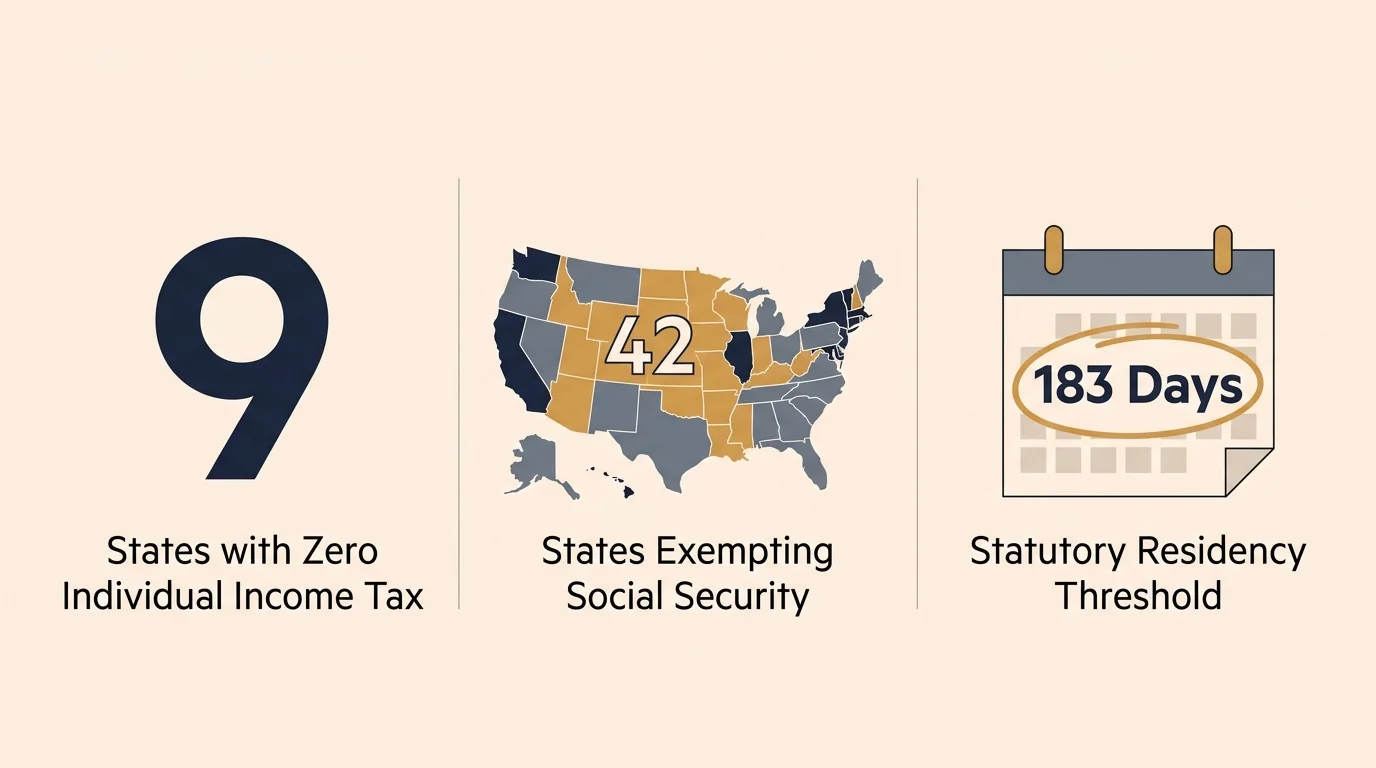
- Nine states impose zero individual income tax: Alaska, Florida, Nevada, New Hampshire, South Dakota, Tennessee, Texas, Washington, and Wyoming offer major tax savings on earned income and retirement withdrawals.
- Social Security taxation varies widely: Only eight states continue to tax Social Security benefits in 2026, meaning 42 states plus Washington, D.C. leave your monthly checks completely untaxed at the state level.
- Establishing domicile requires actual intent: Spending 183 days in a new state is only part of the equation; state tax auditors look at primary housing, voting records, vehicle registrations, and financial connections.
- State estate taxes hit lower wealth thresholds: While the federal estate tax exemption reaches $15.0 million per individual in 2026, twelve states and Washington, D.C. enforce state-level estate taxes with thresholds as low as $1 million.
Understanding Domicile Versus Temporary Residency
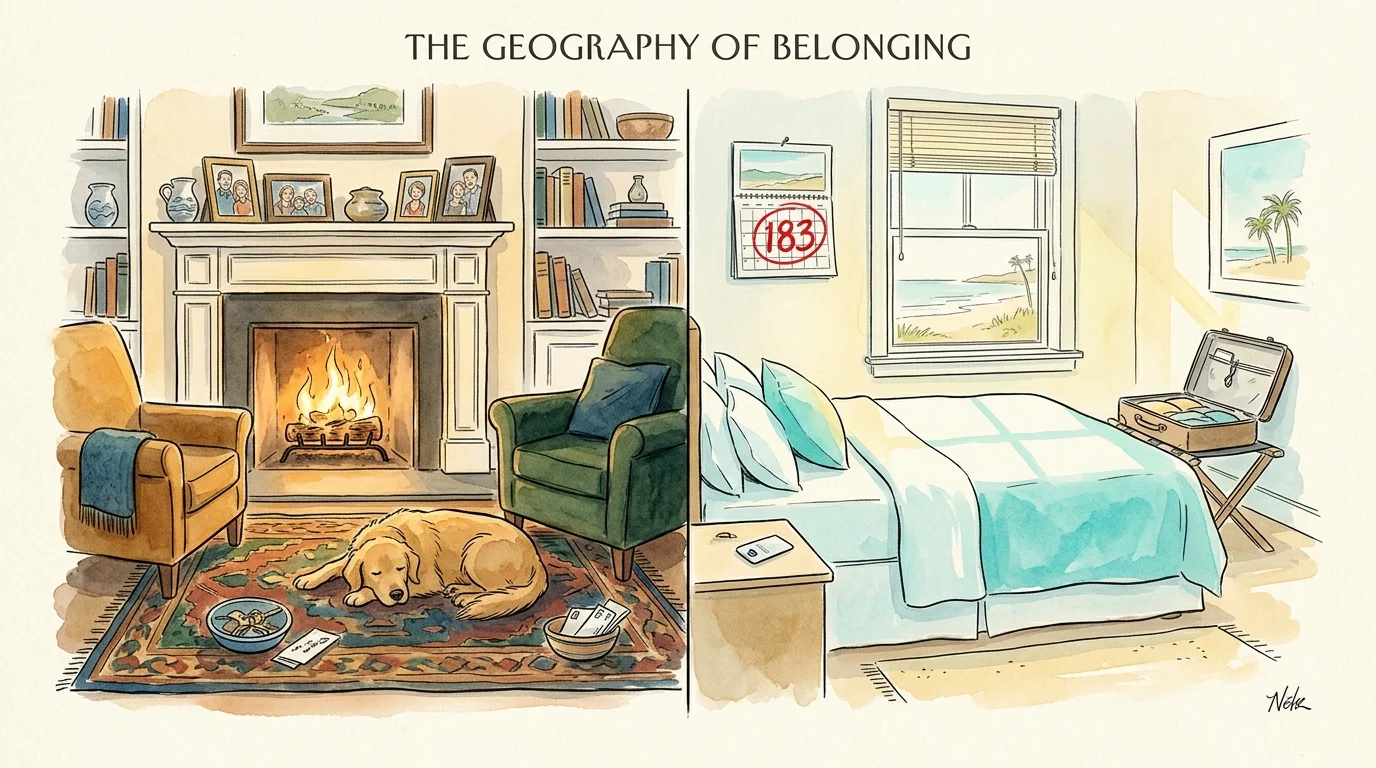
Before evaluating whether a move will lower your tax liability, you must understand how state tax departments define where you live. Simply buying a second home or spending winters in a warmer climate does not automatically change your tax residency; state tax authorities distinguish between temporary residence and legal domicile. Your legal domicile is your true, fixed, and permanent home—the place you intend to return to whenever you are away.
Most state tax taxing agencies utilize the statutory residency test, commonly known as the 183-day rule. Under this guideline, if you maintain a permanent place of abode in a state and spend more than 183 days there during a calendar year, that state considers you a statutory resident for tax purposes. However, high-tax states like New York, California, and Illinois look beyond simple day counting when auditing taxpayers who move away. State auditors conduct qualitative reviews, evaluating primary family connections, business operations, physical locations of personal heirlooms, and active medical providers to determine whether you genuinely abandoned your old domicile.

8 Signs Changing Your State Residency Could Lower Your Taxes
1. You Live in One of the Eight States That Tax Social Security Benefits
If you live in Colorado, Connecticut, Minnesota, Montana, New Mexico, Rhode Island, Utah, or Vermont, your state government claims a portion of your monthly Social Security income. While federal tax rules apply to higher-income beneficiaries across the country according to the Social Security Administration, forty-two states and Washington, D.C. fully exempt Social Security benefits from state income taxation. States like West Virginia completed multi-year phaseouts to reach 100% state tax exemptions for Social Security starting in tax year 2026, joining states like Missouri, Kansas, and Nebraska that enacted full exemptions in 2024.
Consider a retired couple drawing $48,000 annually in combined Social Security benefits alongside modest pension income. In a state taxing Social Security benefits at effective rates around 4% to 5%, that couple surrenders $1,920 to $2,400 every year solely on their federal benefits. Relocating to a zero-income-tax state—or to one of the 33 other states that exempt Social Security—instantly keeps that cash in their personal bank account.
2. State Income Taxes Eat Up Your Traditional IRA and 401(k) Distributions
When you take taxable distributions from traditional IRAs, 401(k) accounts, or classic employer pensions, high-tax states treat those withdrawals as ordinary income. Top marginal state income tax rates can exceed 8% to 13% in jurisdictions such as California, New York, New Jersey, and Hawaii. If you plan to withdraw substantial funds from pre-tax retirement accounts, high state tax brackets rapidly erode your purchasing power.
Nine states charge zero state income tax on individual retirement distributions: Alaska, Florida, Nevada, New Hampshire, South Dakota, Tennessee, Texas, Washington, and Wyoming. New Hampshire fully repealed its Interest and Dividends Tax effective January 1, 2025, rendering it completely tax-free on individual personal income. If you draw $75,000 annually from a tax-deferred traditional IRA, living in a state with a 6% average tax rate costs you $4,500 every single year—totaling $45,000 over a decade of retirement.
3. High Property Taxes Undermine Your Fixed Retirement Budget
Income tax isn’t the only leverage state and local governments use to collect revenue. Certain states with moderate or zero income taxes offset their budgets by levying elevated property taxes on real estate. New Jersey, Illinois, Connecticut, and Vermont lead the nation with effective property tax rates frequently exceeding 1.8% to 2.2% of assessed home value. On a $500,000 home, an annual property tax bill can easily reach $9,000 to $11,000 or more.
Relocating to states like Alabama, South Carolina, Nevada, or Tennessee—where effective property tax rates often stay well below 0.6% to 0.7%—can cut your housing overhead dramatically. Additionally, many tax-friendly states offer generous homestead exemptions and property tax freezes specifically designed for seniors aged 65 and older.
4. Your Current State Enforces Its Own Estate or Inheritance Tax
While the federal estate tax exemption sits at $15.0 million per individual ($30.0 million for married couples) for tax year 2026 according to guidelines from the Internal Revenue Service, state-level death taxes catch many families completely unprepared. Twelve states plus Washington, D.C. collect a state-level estate tax, often with thresholds dramatically lower than federal limits. Oregon, for instance, taxes estates valued over $1.0 million, with marginal tax rates climbing up to 16%.
Furthermore, five states enforce an inheritance tax levied directly on the beneficiaries receiving assets: Pennsylvania, New Jersey, Maryland, Kentucky, and Nebraska. Iowa officially eliminated its inheritance tax as of January 1, 2025, relieving heirs of that burden. Maryland remains the only state in the nation enforcing both an estate tax and an inheritance tax. Moving your domicile to one of the 38 states without death taxes ensures your heirs receive their full intended legacy without state intervention.
“Never let taxes dictate every single decision in retirement, but ignoring state tax burdens is like leaving your vault door wide open when simple planning could lock in your savings.” — Ed Slott, CPA and IRA Expert
5. You Rely Heavily on Taxable Investment Dividends and Capital Gains
If a substantial portion of your retirement spending comes from taxable brokerage accounts, capital gains, and stock dividends, state tax treatment becomes vital. States like California tax long-term capital gains and qualified dividends at the same high rates as ordinary salary income, top rates hitting up to 13.3% or more depending on brackets.
By contrast, relocating to zero-income-tax states shields your interest, dividend yields, and equity growth from state taxation completely. It is important to review specific rules before moving; for instance, Washington State imposes zero tax on wages and traditional retirement account distributions, but maintains a 7% state tax on long-term capital gains exceeding $278,000 for tax year 2026.
6. You Plan to Sell a Business, Portfolio, or Primary Home
If you anticipate selling a closely held family business, a heavily appreciated investment property, or a primary home that exceeds federal tax exclusion limits, timing your residency change before the sale can yield massive tax relief. Under federal tax law, homeowners can exclude up to $250,000 in capital gains ($500,000 for married couples filing jointly) on the sale of a primary residence. However, gains above those thresholds are exposed to state tax rates in high-tax jurisdictions.
Selling a private business or appreciated asset that generates a $1.0 million capital gain in a high-tax state could trigger $80,000 to $130,000 in state income taxes alone. Establishing physical residency and legal domicile in a tax-friendly state well in advance of closing the transaction legally shelters those gains from former state tax claims.
7. Combined Sales Taxes Bite Into Your Consumer Purchasing Power
Seniors living on fixed budgets spend a significant percentage of their monthly income on retail goods, dining, vehicles, and home maintenance services. Combined state and local sales tax rates in places like Louisiana, Tennessee, Arkansas, and Washington state regularly exceed 9% to 10%. On $30,000 of annual taxable consumer spending, a 9.5% sales tax consumes $2,850 each year.
Five states—Delaware, Montana, New Hampshire, Oregon, and Alaska—charge zero statewide sales tax. Moving to or near states with lower consumer tax burdens expands your daily purchasing power and stretches your monthly retirement check.
8. You Spend Months in a Second Home Without Shifting Legal Domicile
Many retirees spend four to five months every winter living in sunbelt states like Florida, Arizona, or Texas, while keeping their legal domicile in high-tax northern states. If you already spend a significant portion of the year in a tax-friendly destination, maintaining primary tax residency in your original state forces you to pay top-tier state taxes unnecessarily.
If you adjust your calendar to spend at least 183 days in your tax-friendly winter destination and fulfill formal domicile requirements, you can legally claim that state as your primary home. Changing your primary address on paper aligns your tax structure with your physical lifestyle.
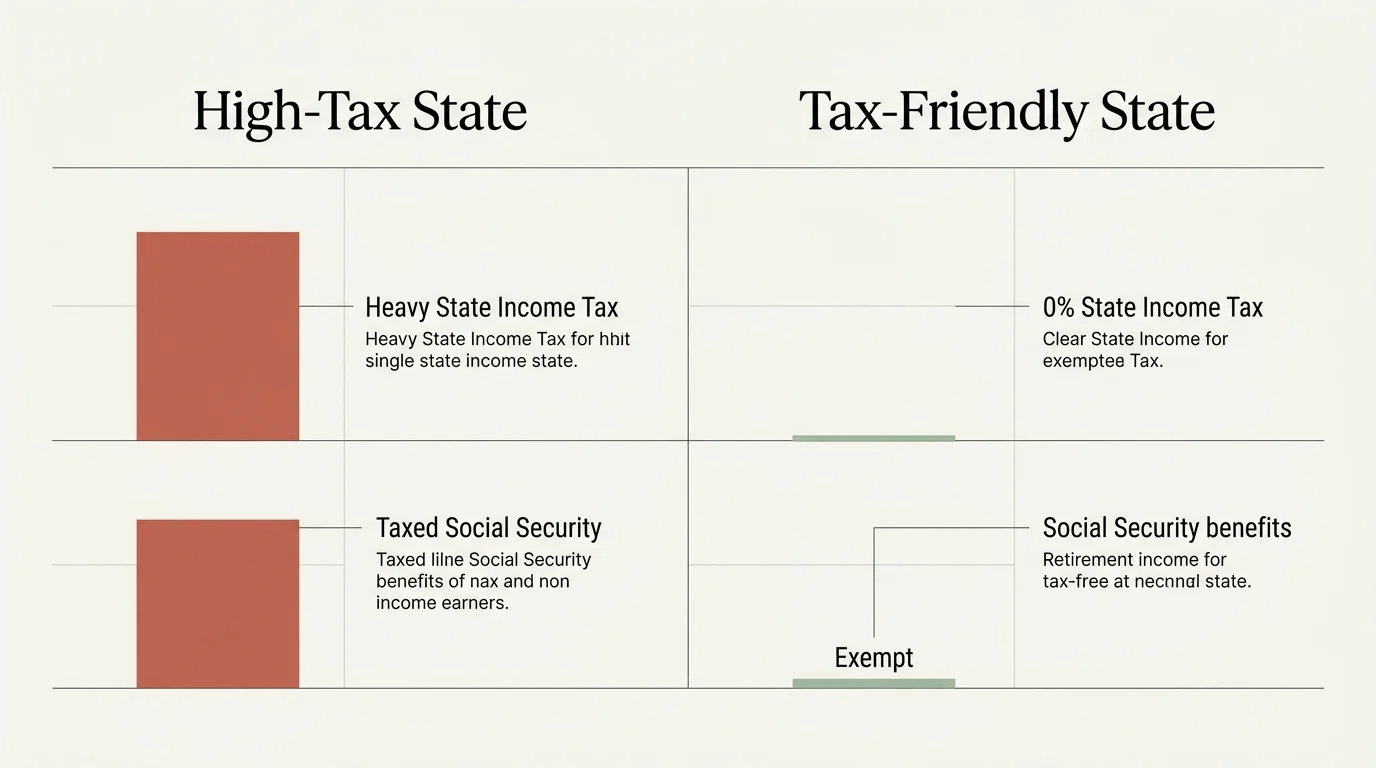
Comparing State Tax Profiles for Retirees
To see how states stack up across income, Social Security, estate, and sales tax rules, review the comparison table below for popular retirement destinations in 2026:
| State | State Income Tax | Social Security Taxed? | State Estate/Inheritance Tax? | State Sales Tax Rate |
|---|---|---|---|---|
| Florida | 0.0% | No | No | 6.0% (plus local additions) |
| Texas | 0.0% | No | No | 6.25% (plus local additions) |
| Pennsylvania | 3.07% (Flat rate) | No | Inheritance Tax (4.5% to 15%) | 6.0% (plus local additions) |
| Minnesota | 5.35% to 9.85% | Yes (Limited exemptions) | Estate Tax ($3.0M threshold) | 6.875% (plus local additions) |
| Oregon | 4.75% to 9.90% | No | Estate Tax ($1.0M threshold) | 0.0% |
| California | 1.0% to 13.3% | No | No | 7.25% (plus local additions) |

Costly Errors to Sidestep
Relocating to lower your tax liability offers dramatic benefits, but simple mistakes can trigger aggressive state tax audits, unexpected back taxes, and penalties. Avoid these four frequent oversights:
- Failing the “Teddy Bear” Test: State tax auditors look far beyond simple travel calendars. They evaluate qualitative factors such as where you keep prized personal belongings, where your family pet resides, where your primary doctors practice, and where you attend religious or social clubs. Leaving core personal belongings in your old home signals to auditors that your true domicile never shifted.
- Executing Asset Sales Too Quickly: If you sell a business, real estate property, or large stock portfolio immediately before establishing legal residency in a new state, your former state will argue the income was earned while you were still a resident. Establish your new domicile thoroughly before executing major asset sales.
- Ignoring Total Cost of Living Differences: A state with zero income tax may impose higher local property taxes, steep vehicle registration fees, or high home insurance premiums. Always calculate your total overall living costs alongside state income tax savings.
- Leaving Primary Records Unchanged: Failing to obtain a new driver’s license, register your vehicles, register to vote, and update primary banking accounts within 30 to 60 days of moving gives former state auditors strong evidence to claim you never left.

When DIY Isn’t Enough
While shifting residency appears straightforward, individual financial circumstances often require professional guidance. Consider working with a Certified Financial Planner (CFP) or CPA specializing in multi-state tax planning under these scenarios:
First, if you retain primary real estate or vacation rental properties in your former state, that state can still tax income generated by those local assets. Second, if you own or operate an active business entity with operations spanning multiple state lines, shifting personal residency requires careful corporate tax restructuring. Third, if your personal net worth approaches or exceeds state-level estate tax exemptions ($1 million to $3 million in states like Oregon, Massachusetts, or Maryland), structural estate planning tools such as irrevocable trusts become necessary to protect heirs. You can research regulatory protections through the Consumer Financial Protection Bureau and educational resources from AARP.
Frequently Asked Questions
How long must I live in a new state to establish residency for tax purposes?
Most states require you to spend at least 183 days (more than six months) physically within the state during a tax year to meet statutory residency definitions. However, physical presence alone is insufficient; you must also demonstrate legal intent to abandon your former primary domicile by taking formal steps like buying or leasing a primary home, obtaining a driver’s license, and registering to vote.
Will my former home state tax my pension if I move away?
No. Under federal law (the Source Tax Act of 1996), states are legally prohibited from taxing retirement distributions, traditional IRA payouts, or employer pensions received by non-residents, even if you earned that pension while living and working in your former state.
What happens if two states claim I am a resident in the same year?
If two states claim you as a resident during an audit, you face potential dual taxation on the same income. You must present clear physical logs, credit card statements, utility bills, and legal documentation demonstrating the exact date you abandoned your former domicile and established your new permanent home.
Does moving to a tax-friendly state affect my federal tax status?
Changing your state residency changes your state and local tax obligations, but it does not change federal income tax brackets, federal capital gains tax rates, or federal Social Security taxation rules enforced by the Internal Revenue Service.
Taking Your Next Steps
Relocating to a tax-friendly state offers one of the most effective strategies for preserving your wealth, stretching your retirement checking account, and leaving a larger inheritance to your family. Start by comparing your current state tax burdens—including income tax, property tax, sales tax, and death taxes—against potential destination states. Gather documentation, create a practical checklist for establishing domicile, and keep meticulous records of your physical travel days.
This article provides general financial education and information only. Everyone’s financial situation is unique—what works for others may not work for you. For personalized advice tailored to your retirement needs, consider consulting a qualified financial professional such as a CFP or CPA.
Last updated: February 2026. Benefit amounts, tax rules, and program details change annually—verify current figures with official government sources.






Leave a Reply