

Staying socially active protects your emotional health and safeguards your retirement budget. Joining local social clubs for seniors gives you affordable ways to build genuine friendships and discover rewarding hobbies.
Finding the right circle can feel daunting if you do not know where to look. Many senior clubs offer community access at zero out-of-pocket cost through existing Medicare benefits and civic programs.
This guide highlights ten exceptional social groups retirees can join today to meet people over 60, learn new skills, and stay actively engaged without straining your fixed income.
Why Social Connection Matters for Your Health and Finances
Social isolation carries serious financial and medical implications for older Americans. Maintaining a vibrant network directly influences your physical well-being, healthcare expenses, and cognitive longevity.
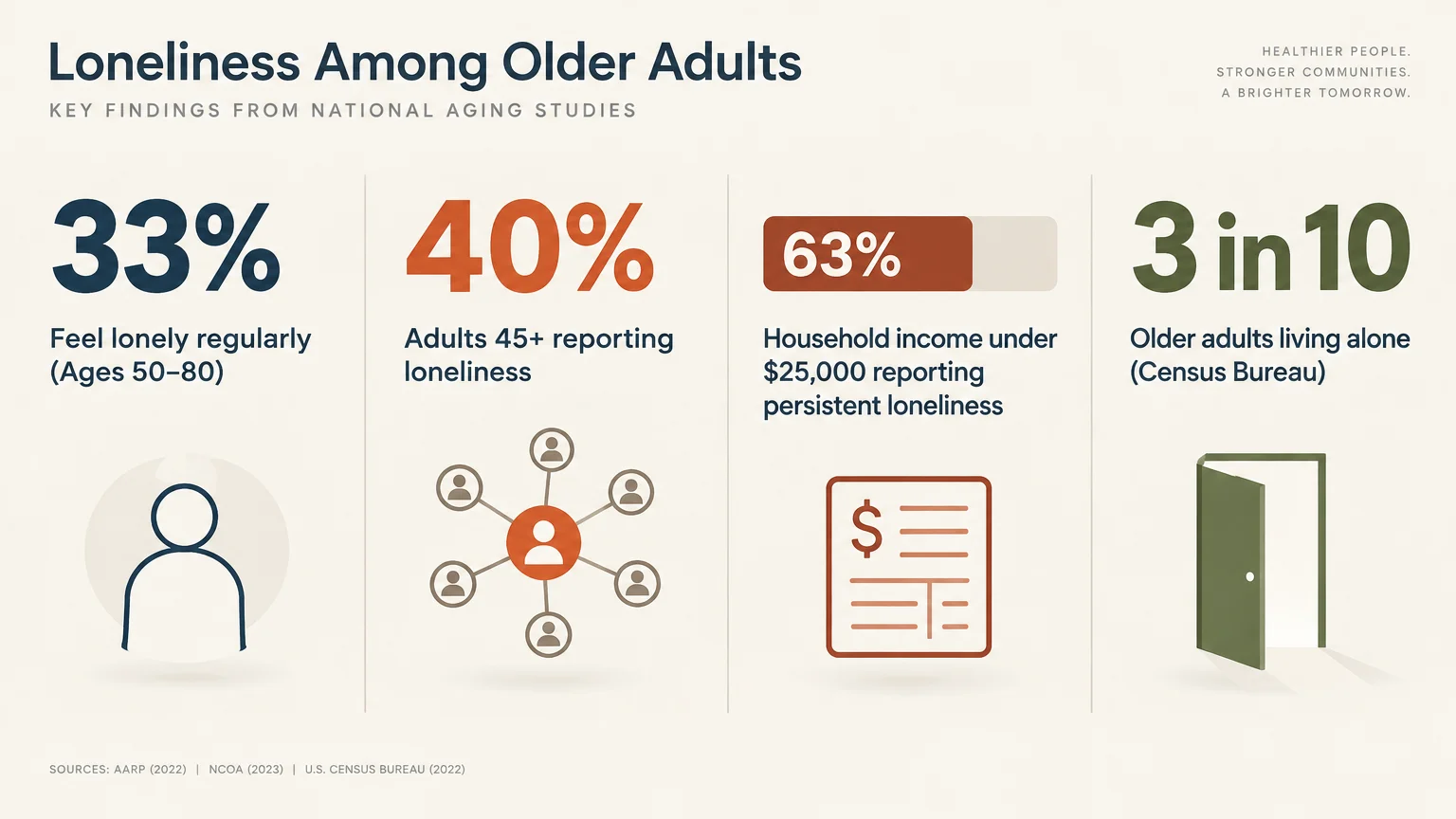
According to the University of Michigan National Poll on Healthy Aging (2024), 33% of adults aged 50 to 80 report feeling lonely some of the time or often. Furthermore, 29% of older adults in that study report feeling socially isolated from others.
These feelings escalate dramatically among those dealing with emotional challenges. The same study reveals that 75% of seniors reporting fair or poor mental health lack regular companionship.
Data from an AARP Loneliness Study (2025) underscores this growing challenge across the nation. That report shows that 40% of adults aged 45 and older qualify as lonely, rising from 35% in 2018.
Financial strain magnifies this trend; 63% of adults 45 and older with household incomes under $25,000 report persistent loneliness. Staying connected helps seniors share resources and combat isolation affordably.
Living arrangements also play a significant role in day-to-day engagement. A 2024 report from the U.S. Census Bureau found that nearly 3 in 10 older adults live alone, including 43% of women aged 75 and older.
Joining structured groups prevents depression, improves mobility, and lowers emergency healthcare expenses. Regular senior activities keep your mind sharp and your weekly schedule fulfilling.

1. SilverSneakers and Renew Active Fitness Communities
Physical fitness groups provide some of the easiest ways to meet peers while boosting daily mobility. These programs transform routine gym visits into welcoming social hubs.
SilverSneakers is a $0 fitness and social benefit included in many Medicare Advantage (Part C) plans and select Medigap policies. Original Medicare Parts A and B do not cover gym memberships or fitness classes.
You can check your plan options directly on Medicare.gov to see if your coverage includes this perk. SilverSneakers grants you free access to more than 17,000 participating gym and community locations nationwide.
Many facilities host dedicated walking clubs, gentle yoga classes, and water aerobics sessions for members. These groups frequently gather for coffee, conversation, and breakfast socials after workouts.
If you carry a UnitedHealthcare Medicare Advantage plan, you likely have access to Renew Active instead. Renew Active offers free admission to over 25,000 fitness locations across the country.
Both programs provide specialized group exercise classes taught by instructors certified in older-adult fitness. You will strengthen your balance while forging lasting bonds with regular workout partners.

2. Osher Lifelong Learning Institutes (OLLI)
Intellectual stimulation and social camaraderie come together seamlessly at Osher Lifelong Learning Institutes. Designed specifically for adults aged 50 and older, OLLI programs operate on more than 120 college campuses nationwide.
These institutes eliminate academic pressure entirely. You attend engaging lectures on history, literature, science, and current events without tests, grades, or mandatory homework.
The fee structure remains remarkably affordable compared to standard university courses. Annual base memberships generally range from $55 to $150 depending on the host college or university.
Individual course tuition or term fees typically run between $15 and $125 per session. If you prefer learning from home, nationwide “Osher Online” classes cost $60 per course.
OLLI members frequently form self-directed special interest groups outside the lecture hall. You can join campus walking clubs, foreign language conversation tables, and monthly lunch groups with fellow curious minds.
Campus membership often unlocks additional university perks. You may receive discounted tickets to performing arts events, university library access, and student union dining privileges.

3. Senior Planet from AARP
Senior Planet proves that digital technology can build warm, human-centered friendships. Operated by Older Adults Technology Services (OATS), this initiative helps older adults navigate modern digital life.
A standard AARP membership costs $20 per year, or $15 for the first year with automatic renewal. Multi-year plans run $55 for three years or $79 for five years.
However, you do not need an AARP membership to participate in Senior Planet programs. Senior Planet offers all of its online and in-person classes, discussion groups, and wellness events completely free of charge.
Their community calendar features daily interactive gatherings on Zoom. You can join morning fitness sessions, smart home technology workshops, creative writing circles, and open social hours.
If you live near an in-person tech center—such as those in New York City, Denver, or Miami—you can attend free community events. Friendly tech coaches guide you through every lesson at a comfortable, patient pace.
Senior Planet removes the intimidation from modern devices. It turns learning how to video call your family into a shared social adventure with other seniors.

4. The Red Hat Society
The Red Hat Society focuses on joy, friendship, and lighthearted fun for women. The organization originated to encourage women to embrace aging with humor, playfulness, and self-confidence.
Members stand out through their signature colorful dress code. Women aged 50 and older wear distinctive red hats with purple outfits, while members under 50 wear pink hats and lavender clothing.
An individual Supporting Membership costs $30 per year. If you want to start a local chapter in your neighborhood, registering as a Chapter Queen costs $49 per year, which includes the $30 membership plus a $19 charter fee.
Local chapters meet regularly for afternoon tea, restaurant lunches, museum outings, and theater performances. The environment avoids formal business rules and focuses purely on recreation and mutual encouragement.
Chapters participate in annual conventions, regional slumber parties, and community parades. Joining a chapter gives you an immediate circle of uplifting friends who celebrate life together.

5. AmeriCorps Seniors RSVP
Volunteering with peers provides a powerful antidote to isolation while strengthening your local community. AmeriCorps Seniors RSVP (Retired and Senior Volunteer Program) stands as one of the largest senior volunteer networks in the United States.
The program is completely free to join and open to all adults aged 55 and older. It pairs your professional background and personal passions with impactful community needs.
RSVP volunteers tutor struggling elementary school students, assist at community food pantries, and mentor young adults. Other members help fellow seniors manage independent living by providing grocery deliveries and companionship check-ins.
Time commitments remain exceptionally flexible. You can volunteer for two hours a month or up to 40 hours per week depending on your schedule.
The program includes supplemental accident insurance while on duty, ensuring peace of mind. Working alongside other dedicated older adults creates deep, mission-driven bonds that last for decades.
6. Local Senior Center Activity Clubs
Your local municipal senior center offers some of the most accessible and budget-friendly social groups retirees can find. These community facilities operate in nearly every county across the country.
Many centers receive funding support through the Older Americans Act, managed by the federal Administration for Community Living (ACL). You can locate accredited centers near your home using the Eldercare Locator directory.
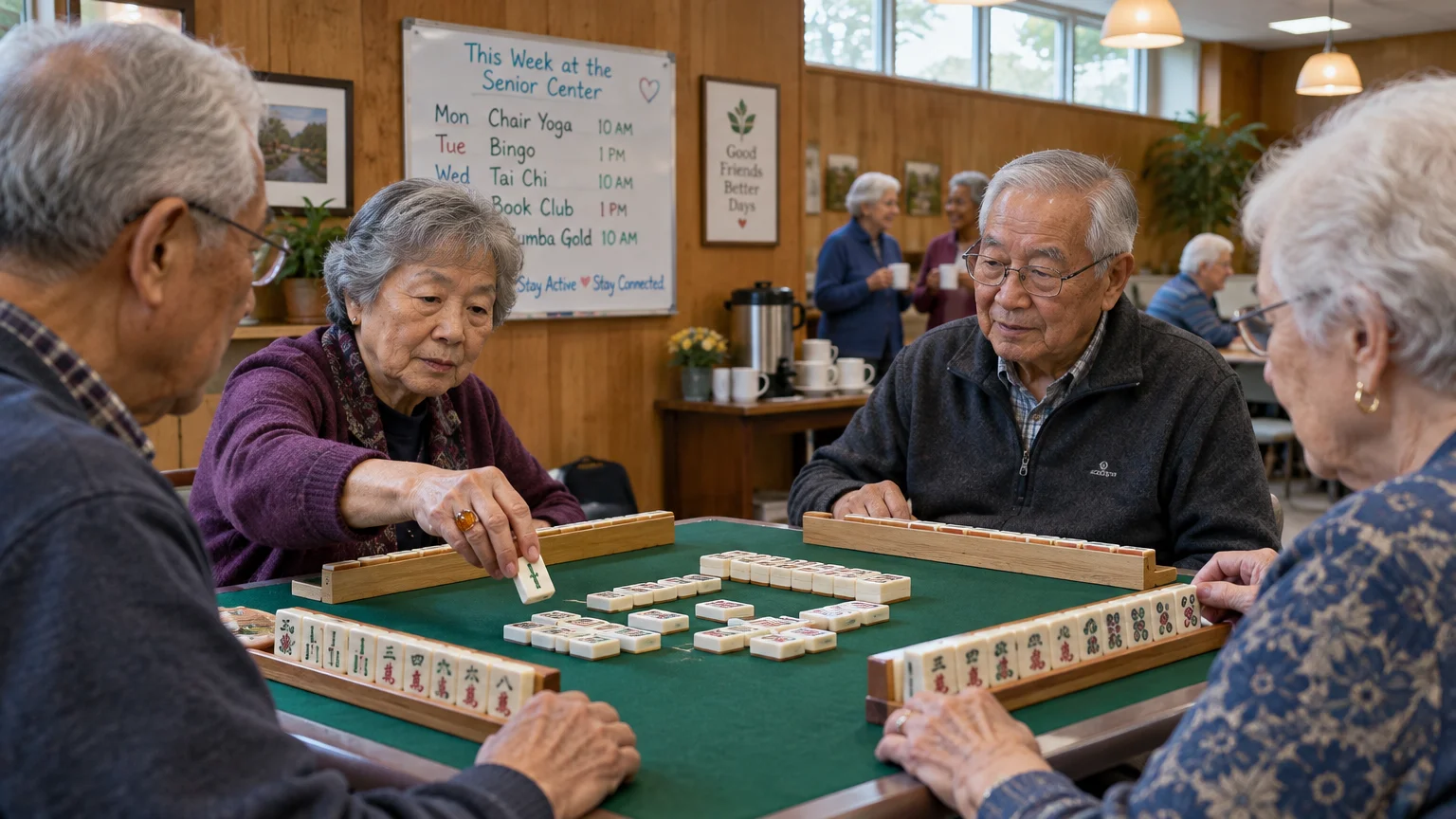
Senior centers host daily social clubs organized around games and personal hobbies. You will find active bridge clubs, mahjong circles, billiards leagues, bingo sessions, and craft workshops.
Annual dues are minimal, often ranging from zero to $30 per year for residents. Non-resident fees rarely exceed $50 annually.
Centers also serve nutritious hot lunches in group settings for a small suggested donation, typically between $2 and $5. Sharing a meal in the dining room provides daily routine and consistent companionship.

7. Road Scholar Educational Travel Groups
Traveling with peers offers an unmatched way to make lifelong friends while discovering new destinations. Road Scholar, founded in 1975 as Elderhostel, operates as a premier nonprofit educational travel organization for adults 50 and older.
There is no membership fee required to join the Road Scholar organization or browse their itineraries. You can join online discussion groups and travel forums at zero cost.
While multi-week international expeditions cost several thousand dollars, Road Scholar maintains a dedicated “Budget” collection. These domestic learning adventures are priced at $1,500 and under, covering lodging, meals, and guided field trips.
The organization also offers free “Road Scholar At Home” virtual lectures. These online multi-day courses let you interact with expert instructors and fellow travelers without leaving your home.
To keep travel accessible, Road Scholar awards over 300 financial aid scholarships every year. They also offer Caregiver Grants to help full-time caregivers take a much-needed educational retreat.
The organization matches solo travelers with same-gender roommates to eliminate single-supplement charges. This policy makes group travel both affordable and socially rewarding for seniors living alone.

8. Meetup Groups for Seniors and Retirees
Meetup.com serves as a flexible platform for finding hyper-local hobby groups tailored to your interests. Thousands of independent organizers run groups specifically designed to help people meet people over 60.
Creating an account and attending events as an individual member is completely free. Group organizers sometimes collect voluntary dues or small event fees through Stripe to cover venue rental or refreshments.
If you cannot find a group that fits your hobbies, you can start your own club. Meetup provides a free “Starter” tier, which allows one group with up to two events per month and a maximum of 10 attendees per event.
Larger clubs utilize standard organizer subscriptions, which cost $29.99 to $44.99 per month, or $174.99 to $299.99 annually. Members frequently chip in small dollar contributions to help their organizer offset these platform costs.
Popular retiree Meetup groups include weekday morning walking clubs, weekend brunch circles, and investment discussion clubs. You can read organizer reviews and attendee counts before deciding to join any local gathering.

9. Community Garden and Master Gardener Clubs
Gardening clubs combine light outdoor exercise, healthy nutrition, and community collaboration. Local community gardens allow you to rent an individual raised bed or share in communal plot maintenance.
Plot fees typically run between $20 and $60 per season, which usually covers water usage, shared compost, and access to communal tools. Working the soil alongside neighboring gardeners fosters effortless conversation.
Many seniors take their interest further by joining the Master Gardener program through their county university extension office. Extension services train volunteers in horticulture, soil health, and pest management.
Once trained, Master Gardeners volunteer together at public demonstration gardens, farmers markets, and school workshops. The program provides structured social interaction around a shared, productive purpose.
Community gardening also trims your grocery bill by yielding fresh herbs, tomatoes, and greens. Swapping seeds and sharing surplus produce creates an enduring sense of community generosity.

10. Public Library Book and Creative Circles
Your local public library functions as a welcoming community center with zero financial barrier to entry. Modern libraries host an extensive schedule of adult clubs that welcome seniors warmly.
Senior-focused book clubs read everything from historical fiction to contemporary biographies. Libraries provide free loaner copies of the selected books in regular print, large print, and audiobook formats.
Creative groups frequently gather in library meeting rooms for needlework, knitting, quilting, and watercolor painting. Experienced crafters gladly share patterns and mentor newcomers in a relaxed, quiet environment.
Many library branches also host local history roundtables, genealogy clubs, and chess tournaments. You can explore complex family research using free library subscriptions to genealogy databases alongside fellow enthusiasts.
Attending library clubs requires no membership dues or equipment purchases. It offers an easy, low-stress starting point for seniors who want to re-enter social life gradually.
Comparison of Top Social Clubs for Seniors
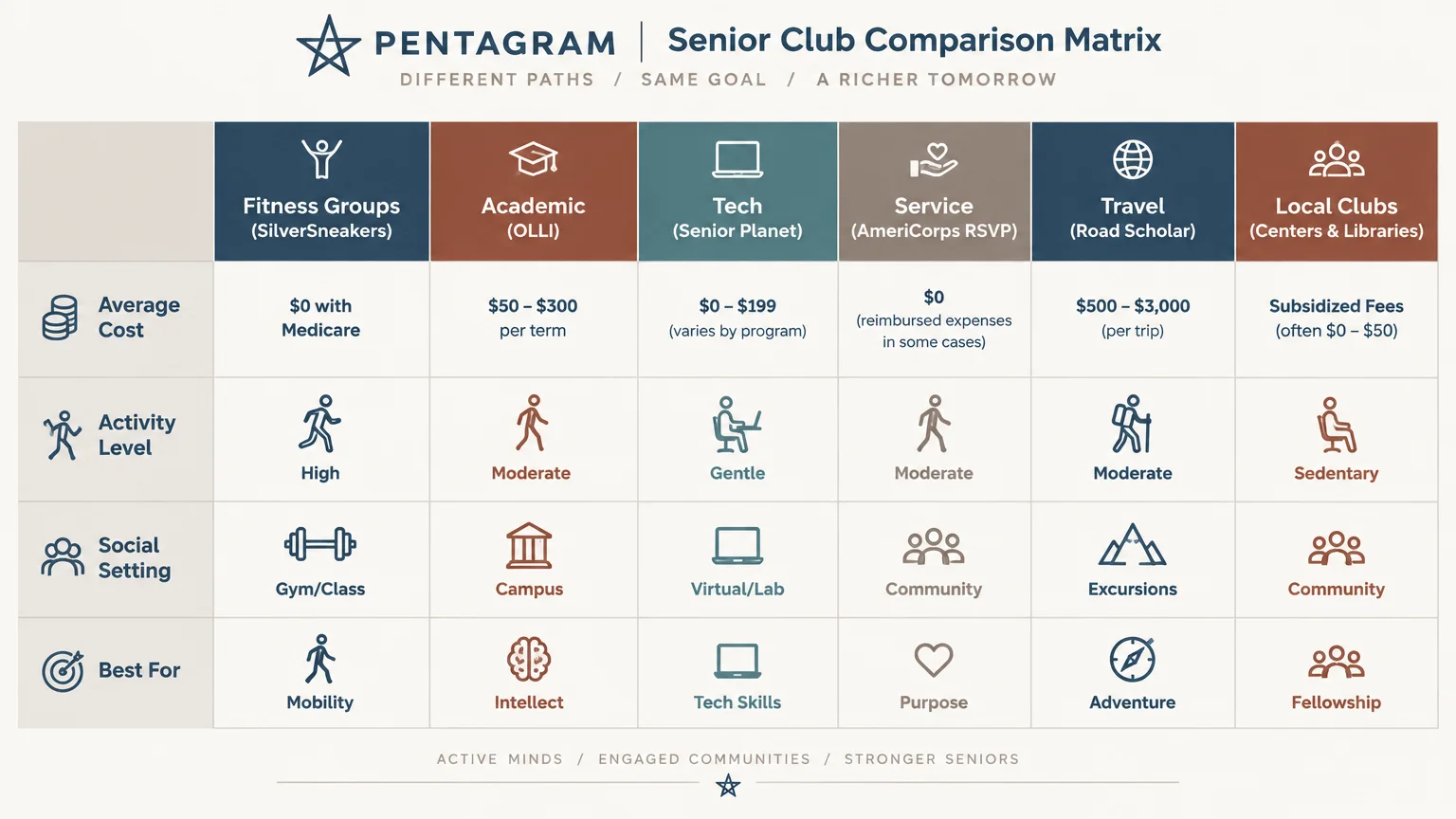
Choosing the right club depends on your budget, physical energy, and personal interests. The comparison table below outlines annual costs, primary activities, and eligibility for each option.
| Club Name | Primary Focus | Annual Membership Cost | Eligibility Requirements |
|---|---|---|---|
| SilverSneakers | Fitness & Walking Groups | $0 (Included with select Medicare plans) | Eligible Medicare Advantage or Medigap plan |
| Renew Active | Gym Access & Brain Health | $0 (Included with plan) | UnitedHealthcare Medicare Advantage |
| OLLI (Osher Institutes) | Non-Credit Academic Courses | $55 to $150 base dues (Classes $15 to $125) | Adults aged 50 and older |
| Senior Planet | Tech Education & Wellness | $0 (Completely free) | All adults aged 60 and older |
| The Red Hat Society | Recreation, Dining & Friendship | $30 (Supporting) / $49 (Chapter Queen) | Women of all ages (Red hats for 50+) |
| AmeriCorps Seniors RSVP | Community Volunteering | $0 (Completely free) | Adults aged 55 and older |
| Local Senior Centers | Cards, Games & Congregate Meals | $0 to $30 typical municipal fee | Adults aged 55 or 60 and older |
| Road Scholar | Educational Travel & Lectures | $0 membership (Trips from under $1,500) | Adults aged 50 and older |
| Meetup Groups | Local Hobbies, Dining & Hiking | Free to join ($0 Starter tier to organize) | Open to all adults |
| Public Library Circles | Book Clubs, Genealogy & Crafts | $0 (Completely free) | Open to all community residents |

Smart Ways to Budget for Senior Club Activities
Participating in social activities should enrich your life without creating financial stress. A few strategic choices will help you stretch your retirement funds while staying fully engaged.
Review your annual Medicare plan materials during the Open Enrollment period each autumn. Switching to a Medicare Advantage plan that includes fitness benefits can save you hundreds of dollars in gym fees.
Resources from the National Council on Aging (NCOA) can help you identify community benefits that offset basic household expenses. Freeing up cash for utilities or groceries makes paying modest club dues much easier.
Do not hesitate to inquire about fee waivers and sliding-scale arrangements. Organizations like OLLI branches and community gardens routinely offer confidential financial aid to seniors on fixed incomes.
Carpool with other members to meetings and dining events. Sharing rides reduces gasoline expenses, lowers vehicle wear, and turns the commute into an enjoyable pre-event conversation.
“Retirement is not the end of the road; it is the beginning of the open highway, and the company you keep along the way defines the journey.” — Jean Chatzky, Financial Journalist and Author
Common Mistakes to Avoid When Joining Senior Clubs
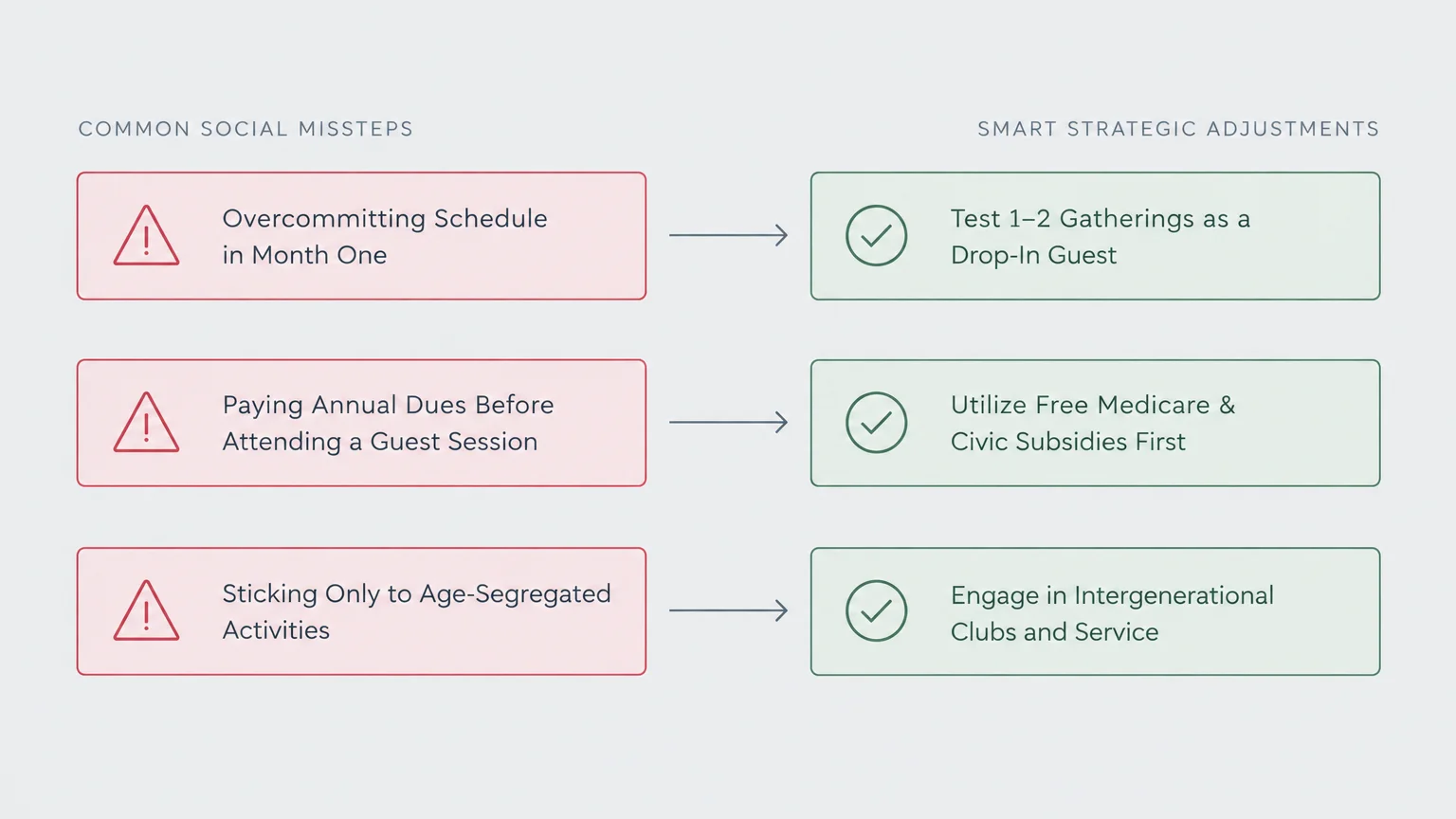
Joining new groups should be an enjoyable experience, but common missteps can lead to frustration or wasted money. Keep these four common mistakes in mind as you explore new opportunities.
Paying Out-of-Pocket for Gym Memberships Covered by Medicare
Many seniors pay standard monthly gym fees without realizing their Medicare Advantage or supplement plan already includes a fitness benefit. Check your insurance card or call your provider before signing any commercial gym contract.
Overcommitting Your Weekly Schedule Too Fast
Excitement can tempt you to join multiple clubs in the same month. Rushing into four or five weekly commitments leads to physical exhaustion and social burnout. Start with one club, attend three meetings consistently, and evaluate how it fits your routine before adding another.
Overlooking Hidden Expenses for Dining and Travel
Some clubs charge minimal annual membership dues but meet exclusively at upscale restaurants or require costly event tickets. Ask current members about the typical out-of-pocket spending per gathering before submitting your application dues.
Relying Solely on Virtual Interactions
Online discussion groups provide fantastic convenience, especially during bad weather or mobility flare-ups. However, virtual interactions cannot fully replace the physical and emotional benefits of in-person touchpoints. Aim to balance your virtual classes with at least one weekly in-person activity in your neighborhood.
Frequently Asked Questions
How can I find transportation if I do not drive anymore?
Many municipal senior centers operate door-to-door shuttle vans for local residents. Additionally, volunteer drivers with AmeriCorps RSVP or local faith-based coalitions often provide free transportation to club meetings and medical appointments.
Will joining a club require long-term contracts?
Most senior social clubs operate on month-to-month or annual renewal schedules without restrictive contracts. Programs like Senior Planet, public library circles, and RSVP require no financial commitment whatsoever.
What should I do if I feel anxious attending my first meeting alone?
Contact the club organizer or chapter leader before attending your first event. Ask them to introduce you to an experienced member who can act as a welcoming buddy during the gathering.
Can I participate if I use a walker or wheelchair?
Public library groups, senior centers, and OLLI campus facilities comply strictly with the Americans with Disabilities Act (ADA). Group organizers prioritize accessible spaces, flat walking trails, and inclusive seating arrangements for all members.
Take Your First Step Toward a More Connected Retirement
Building a rewarding social network takes time, but the personal and emotional rewards are immense. Choose one group from this list that matches your current budget and schedule, and make plans to attend an introductory session this month.
A connected retirement protects your mental clarity, enhances your physical vitality, and brings genuine joy to your everyday life. Taking that first small step into a welcoming room of peers can transform your retirement years.
This is educational content based on general financial principles for seniors. Individual results vary based on your situation. Always verify current benefit amounts, tax rules, and program eligibility with official government sources.
Last updated: October 2026. Benefit amounts, tax rules, and program details change annually—verify current figures with official government sources.









Leave a Reply