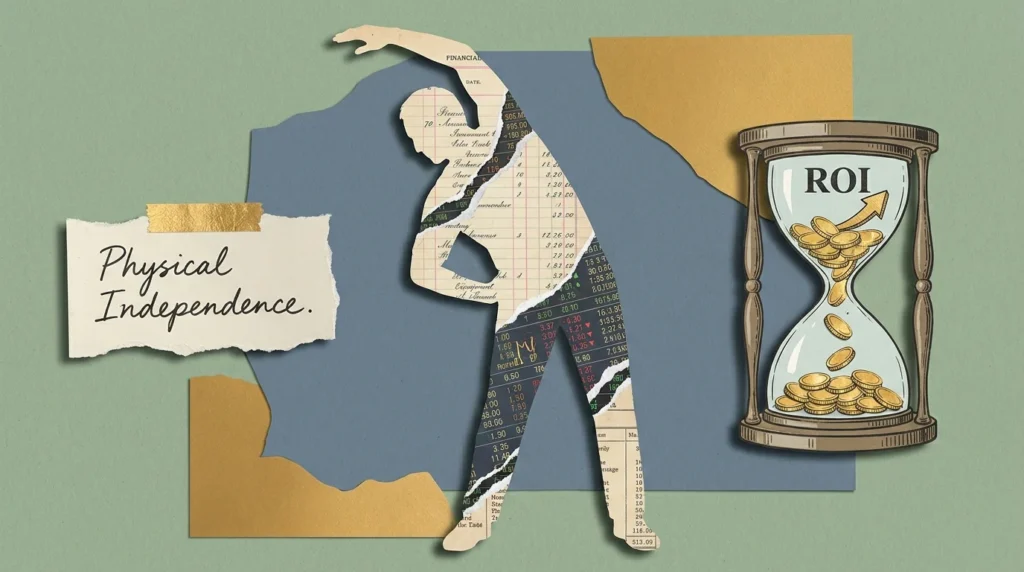
Falls represent one of the greatest threats to both your physical independence and your retirement savings, costing seniors billions in out-of-pocket medical expenses each year. Building strength and stability before a crisis occurs protects your health and your hard-earned nest egg. You do not need expensive gym memberships or complex equipment to improve your stability right at home. By integrating simple, targeted movements into your daily routine, you can significantly reduce your risk of debilitating injuries. Let’s look at seven practical, doctor-approved balance exercises that build a sturdy foundation for healthy aging, ensuring you stay active, confident, and financially secure throughout your golden years.

The Hidden Financial Toll of Falling
While you might think of balance exercises purely in terms of physical fitness, they serve as a critical defense strategy for your retirement wealth. According to the Centers for Disease Control and Prevention (CDC), non-fatal falls among community-dwelling older adults generated an estimated $80 billion in healthcare spending in 2020 alone, with the vast majority paid by Medicare. However, Medicare does not cover everything. The out-of-pocket costs—including deductibles, copayments, extended rehabilitation, and necessary home modifications—can severely disrupt your long-term financial plan.
To put this into perspective, consider the reality of a fixed income. In 2025, a 2.5% Cost-of-Living Adjustment (COLA) brought the average monthly benefit to roughly $1,850, according to the Social Security Administration (2025). An unexpected fall resulting in a fractured hip can easily result in thousands of dollars in uncovered medical bills, effectively wiping out months of your Social Security income in a single day. Prioritizing your physical stability is just as important as balancing your checkbook.
“You can have all the money in the world. You can be a multi-billionaire, but if you do not have your health it means nothing. Your health is the No. 1 important thing in your life.” — Suze Orman, Personal Finance Expert
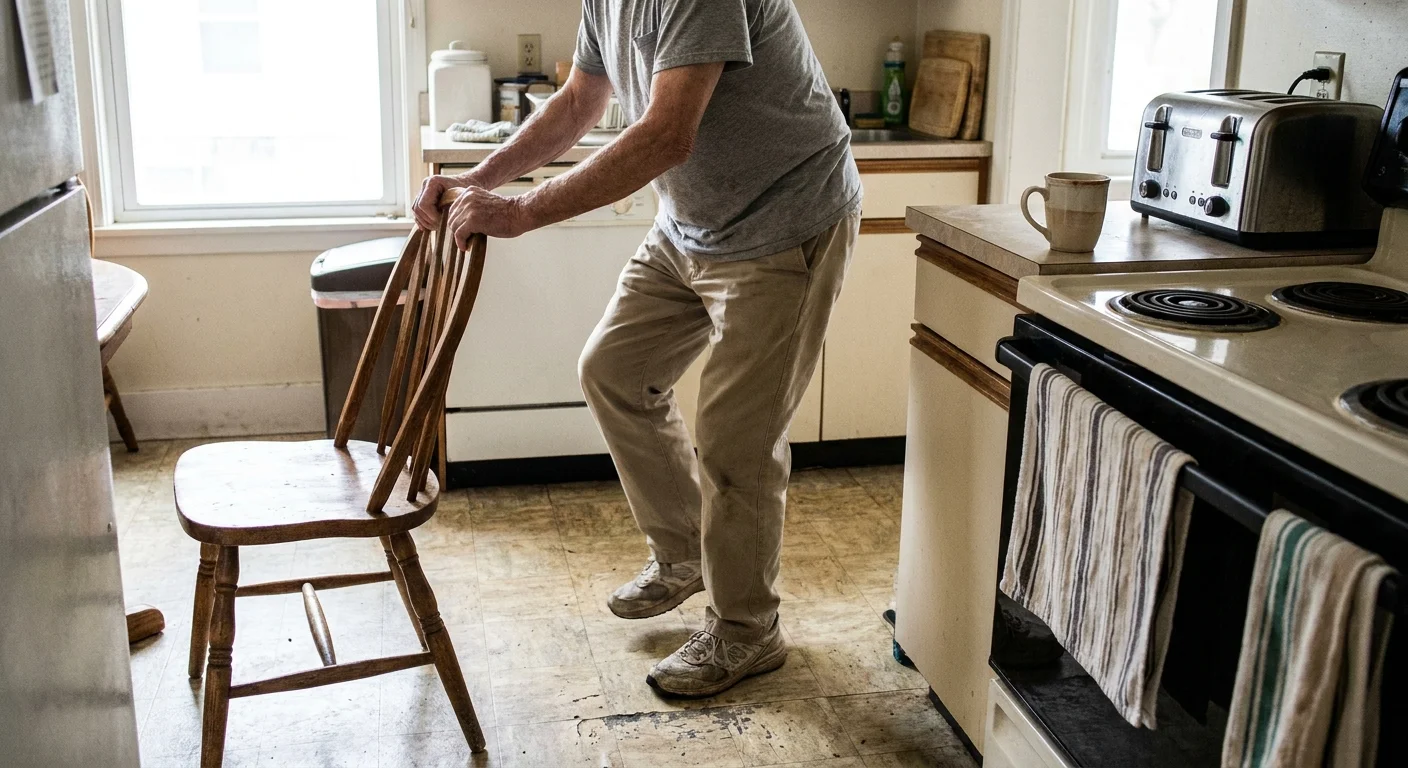
1. The Single-Leg Stand
This foundational movement is one of the most effective ways to gauge and improve your current stability. By forcing your body to balance on a smaller base of support, you engage your core and strengthen the stabilizing muscles located in your hips and ankles.
How to do it:
- Stand behind a sturdy, unmoving chair and grip the backrest firmly with both hands.
- Keep your feet hip-width apart and maintain a tall, straight posture.
- Slowly shift your body weight entirely onto your left leg.
- Lift your right foot a few inches off the ground, bending slightly at the knee.
- Hold this position for 10 to 15 seconds, focusing your eyes on a fixed point ahead of you to help maintain balance.
- Carefully lower your foot back to the floor, then repeat the process on your right leg.
Progression tip: Once you master this exercise with both hands on the chair, try supporting yourself using only one hand. Over time, try hovering your hands just a few inches above the chair back so you can grab it instantly if needed.
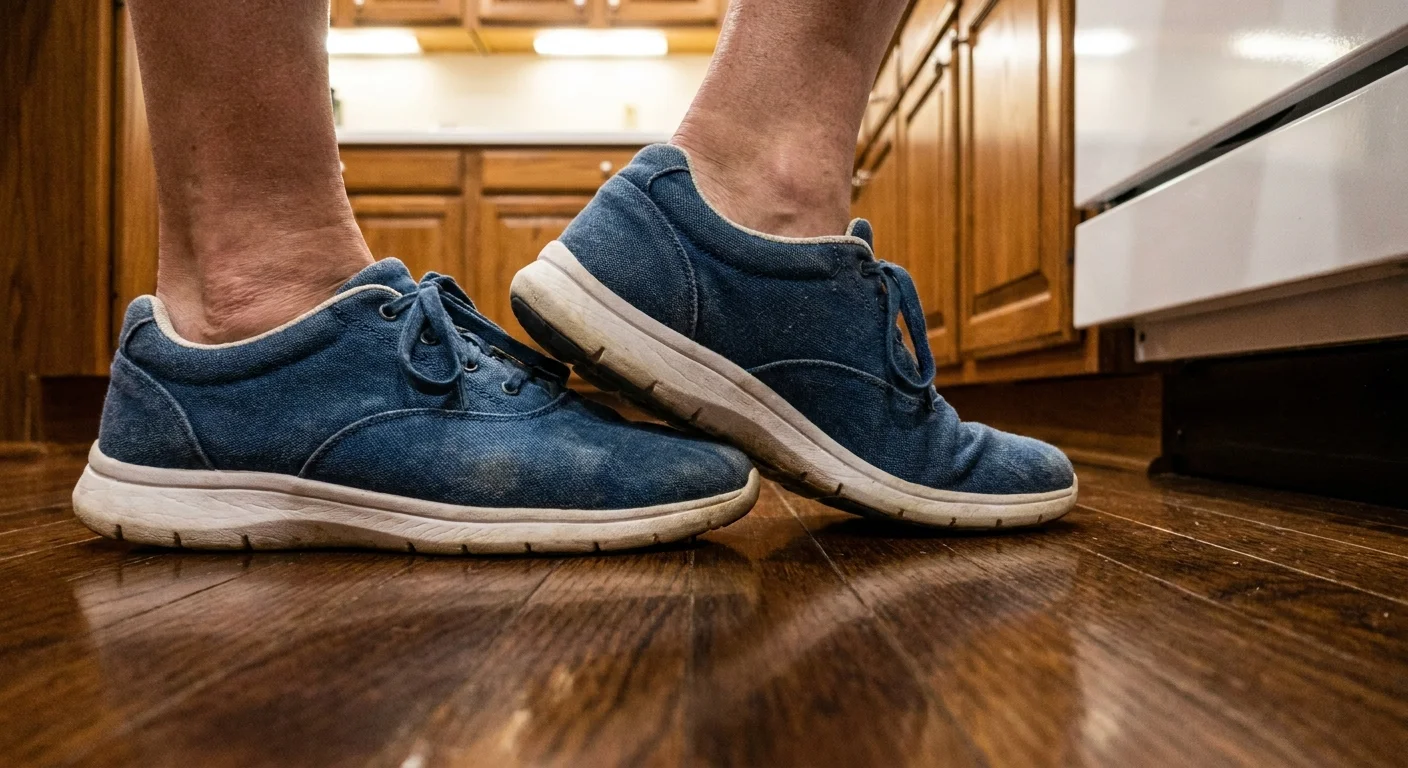
2. The Heel-to-Toe Walk (Tightrope Walk)
Often referred to as the tightrope walk, this exercise forces your brain and muscles to adapt to a narrow center of gravity. It significantly improves the coordination necessary for navigating narrow hallways, crowded grocery store aisles, and uneven sidewalks.
How to do it:
- Position yourself next to a long wall or a kitchen counter for safety.
- Place your right foot directly in front of your left foot, so the heel of your right foot touches the top of your left toes.
- Focus your gaze straight ahead rather than looking down at your feet.
- Step forward with your left foot, placing the heel directly against the toes of your right foot.
- Continue this heel-to-toe pattern for 15 to 20 steps.
Progression tip: If walking forward becomes too easy, try performing the heel-to-toe walk backward, ensuring you keep one hand lightly touching the wall for orientation and support.
3. Rock the Boat
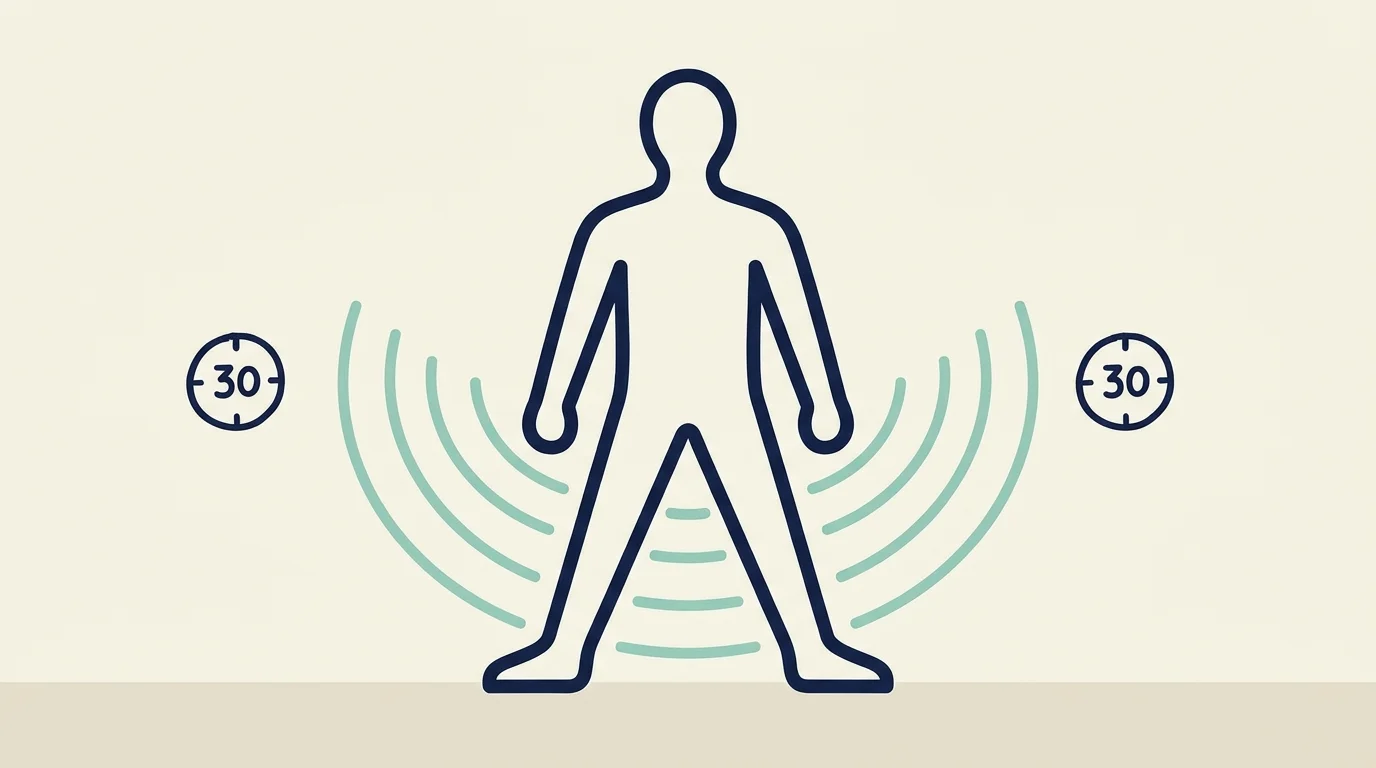
This exercise gently challenges your weight-shifting ability, which is a crucial skill for walking securely on unpredictable surfaces like gravel driveways, thick carpeting, or grassy lawns.
How to perform it:
- Stand with your feet spaced shoulder-width apart, ensuring your weight is evenly distributed.
- Rest your hands lightly on the back of a sturdy chair or a clear countertop.
- Slowly shift your entire body weight over to your right leg, lifting your left foot entirely off the floor.
- Hold your left foot up for three to five seconds.
- Slowly lower the left foot back to the starting position and shift your weight back to the center.
- Repeat the movement, shifting your weight onto your left leg and lifting the right foot.
- Complete 10 repetitions on each side.
Progression tip: As you grow more confident, try lifting your foot slightly higher off the ground or holding the one-legged stance for up to ten seconds per side.
4. Chair Sit-to-Stands
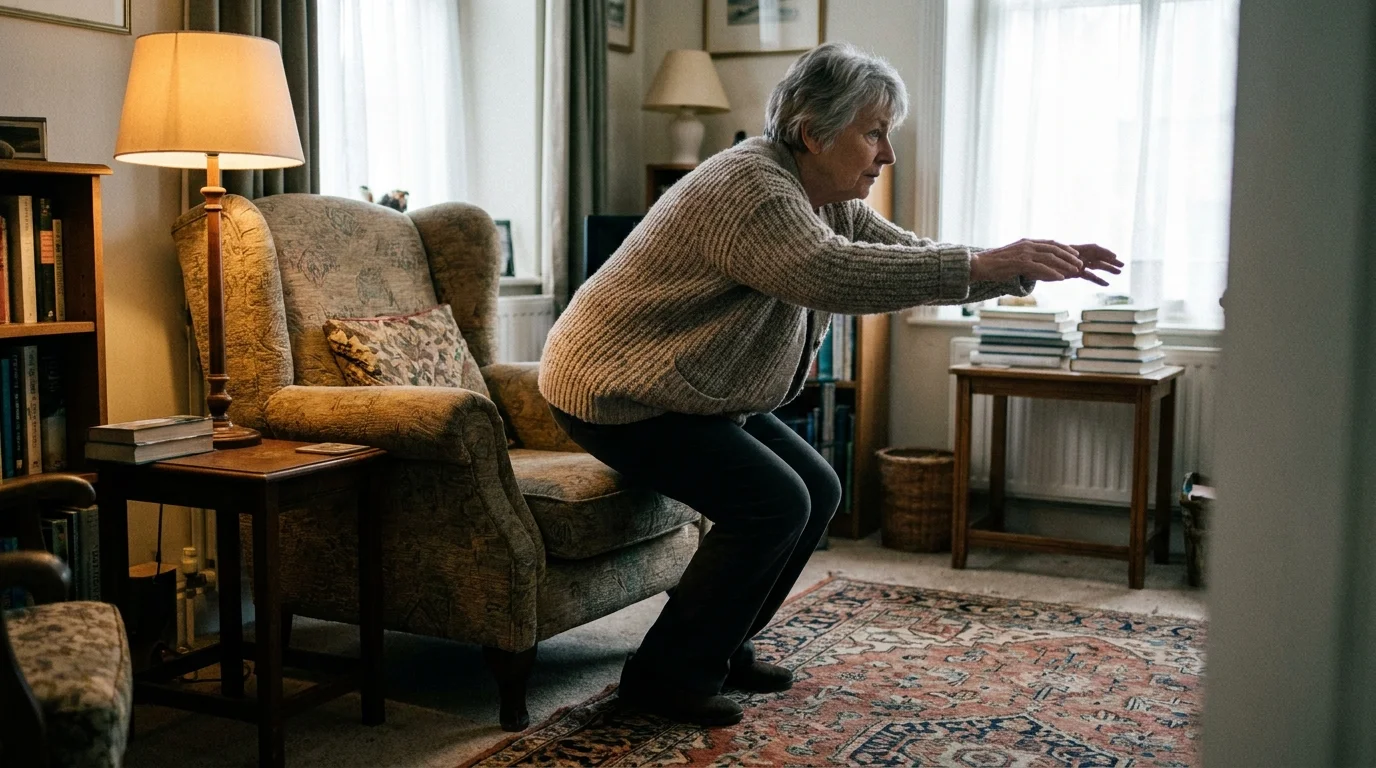
You might view sitting down and standing up as a mundane daily task, but it is actually one of the most vital indicators of lower body strength and senior fitness. Chair squats strengthen the quadriceps and glutes—the powerful muscles that catch your weight if you start to stumble backward.
How to perform it:
- Sit near the front edge of a sturdy, armless chair. Avoid chairs with wheels or soft, sinking cushions.
- Keep your feet flat on the floor, spaced shoulder-width apart.
- Lean your chest forward slightly over your toes, keeping your spine completely straight.
- Without using your hands for momentum, push through your heels and stand up smoothly.
- Pause at the top to establish your balance.
- Slowly and with control, bend your knees and push your hips back to return to a seated position. Never simply drop back into the chair.
- Aim for a set of 10 to 15 repetitions.
Progression tip: If standing without using your hands is too challenging at first, place your hands lightly on your thighs for a slight assist. Eventually, try crossing your arms over your chest to force your leg muscles to do all the heavy lifting.
5. Seated Toe Taps
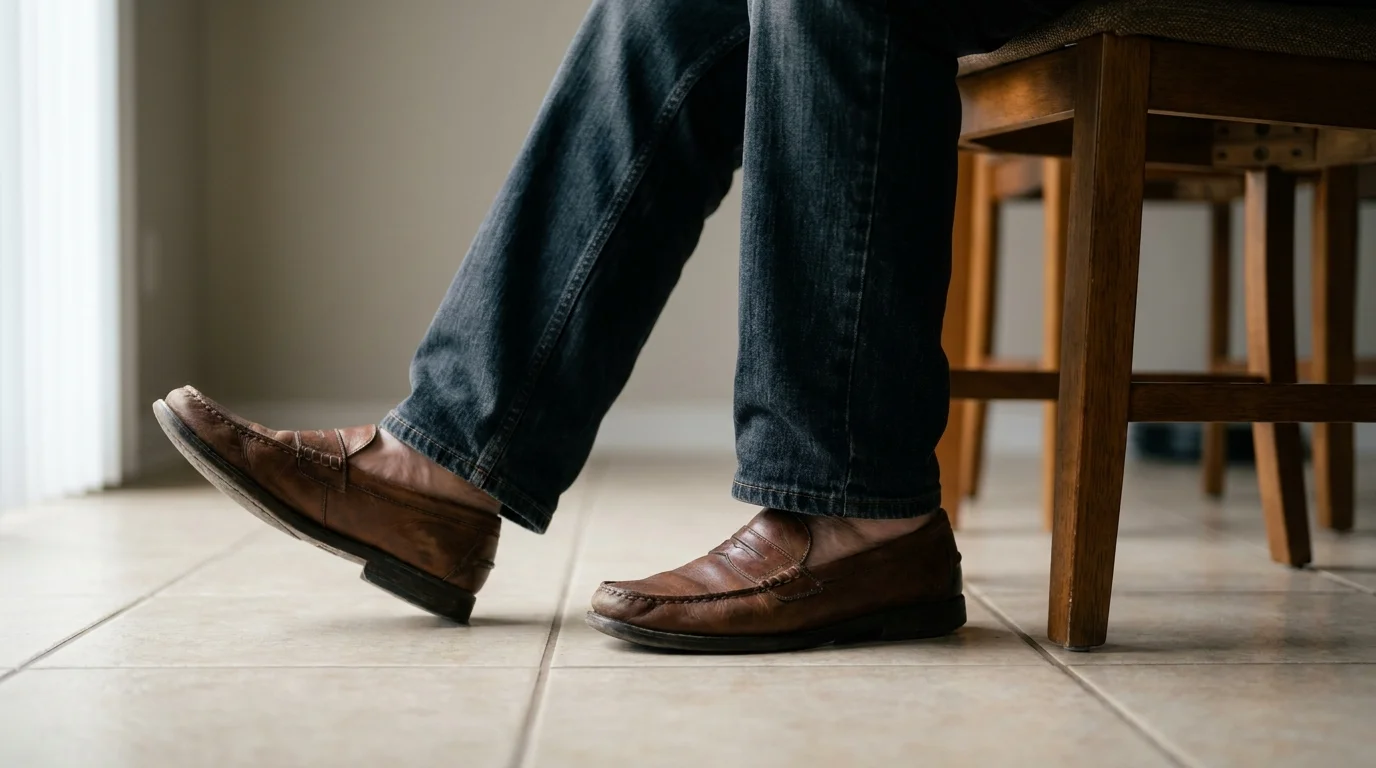
Fall prevention requires more than just raw leg strength; it also demands nimble, flexible joints. Seated toe taps improve ankle mobility and enhance the mind-muscle connection in your lower legs, which helps prevent you from tripping over area rugs, electrical cords, or cracked pavement.
How to perform it:
- Sit comfortably in a supportive chair with your back straight and your feet flat on the floor.
- Extend your right leg straight out in front of you, resting your heel firmly on the ground.
- Point your toes directly forward, stretching them away from your body, and hold the stretch for two seconds.
- Flex your foot, pointing your toes back toward the ceiling, and hold for another two seconds.
- Perform 15 taps with your right foot, then switch to your left leg.
Progression tip: To challenge your mental coordination, try alternating between pointing the toe of one foot while flexing the other, switching them rhythmically.
6. Marching in Place
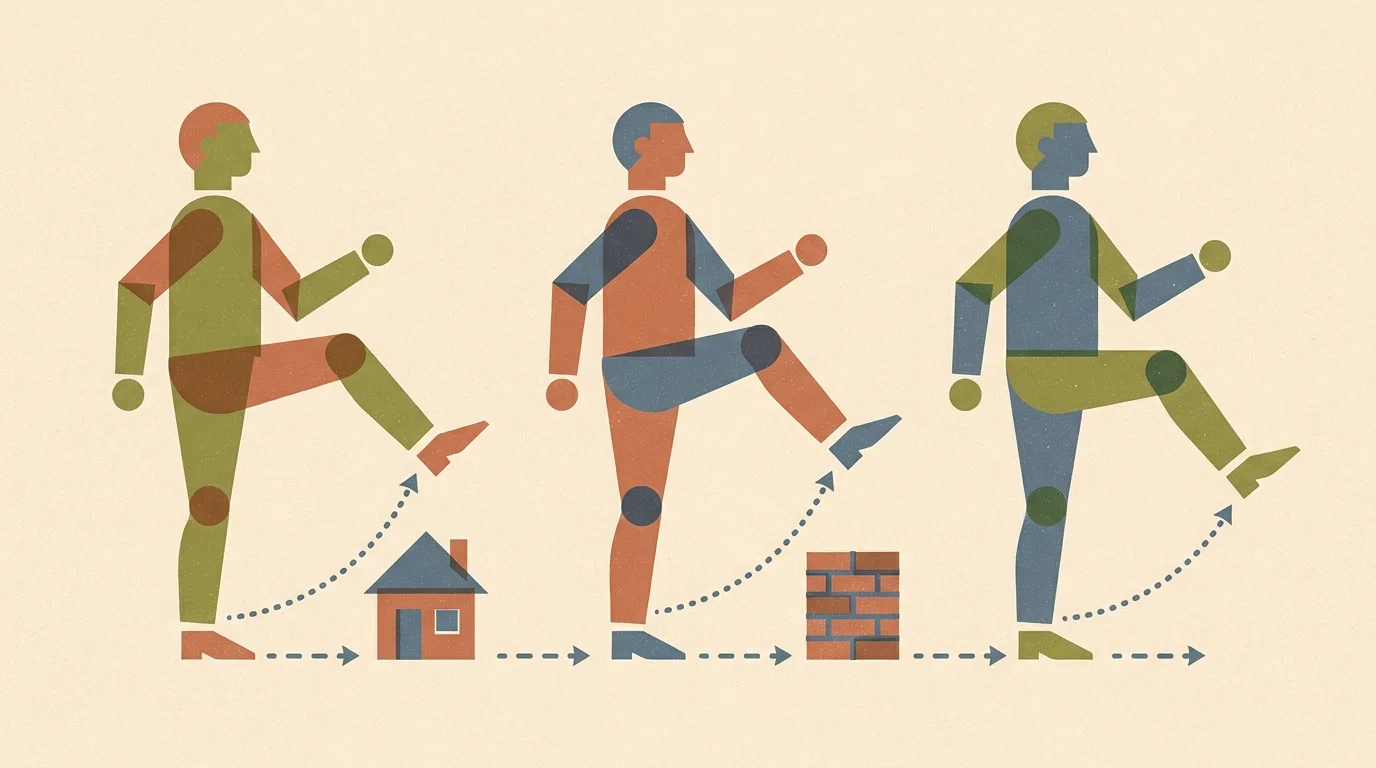
Marching in place is an excellent, low-impact way to improve both cardiovascular endurance and dynamic balance—meaning your ability to remain stable while your body is actively in motion.
How to perform it:
- Stand beside a countertop or near a wall so you can easily touch it if you need support.
- Stand tall, keeping your shoulders relaxed and your core lightly engaged.
- Lift your right knee as high as you comfortably can; aim for hip level if your flexibility allows.
- Lower the right foot with control, then immediately lift your left knee.
- Continue marching at a steady, rhythmic pace for one to two minutes.
Progression tip: Once you feel completely stable, try letting go of your support surface and pumping your arms naturally as you march, simulating a brisk walk down the street.
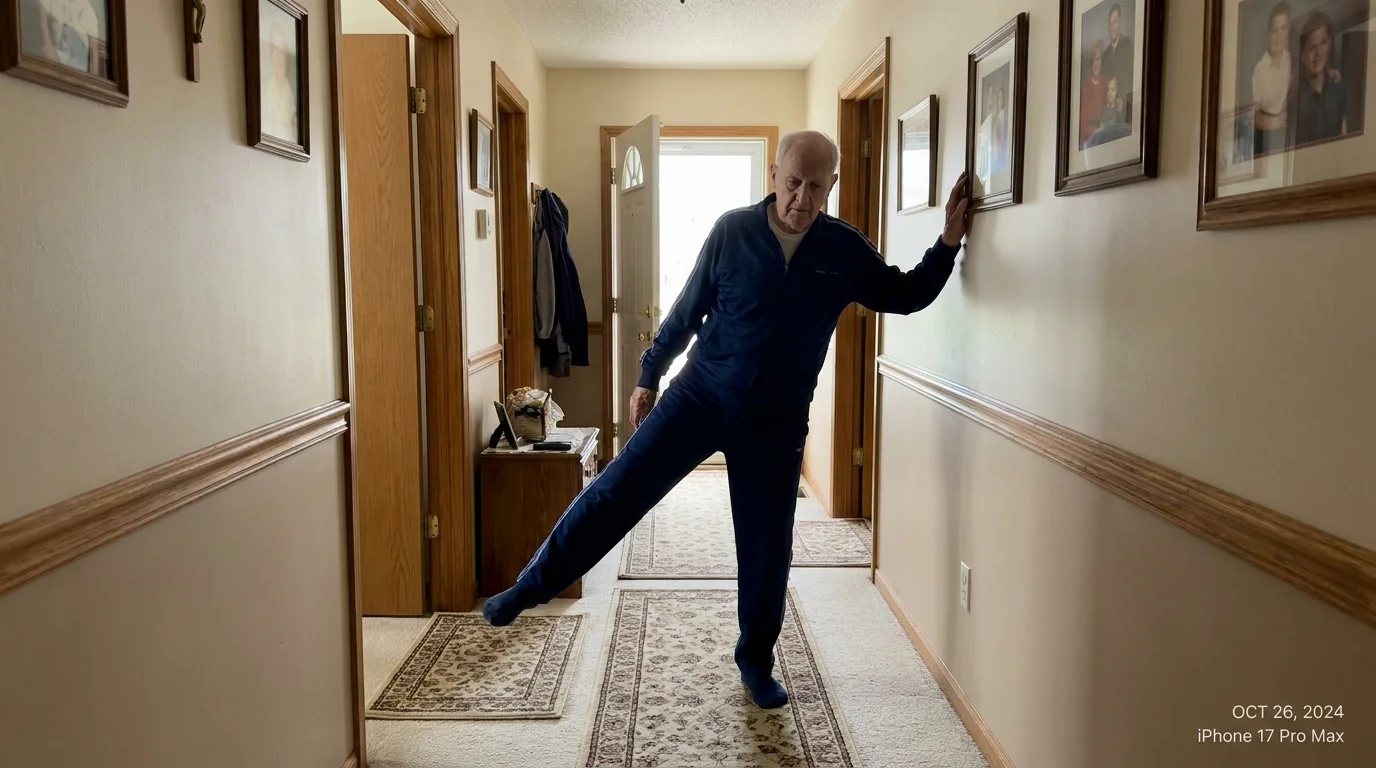
7. Side Leg Raises
Strong hip muscles are essential for lateral stability. When you stumble or slip, your hip abductors are the crucial muscles that allow you to quickly step to the side and catch your balance.
How to do it:
- Stand behind your chair, holding the backrest for support.
- Keep your feet slightly apart and your back perfectly straight.
- Slowly lift your right leg straight out to the side. Keep your toes facing forward, not pointing outward.
- Hold the raised position for two seconds, then lower the leg slowly.
- Perform 10 to 15 repetitions, then switch to your left leg.
Progression tip: Ensure you are not leaning your torso in the opposite direction to compensate for the weight. Your upper body should remain completely stationary throughout the movement.
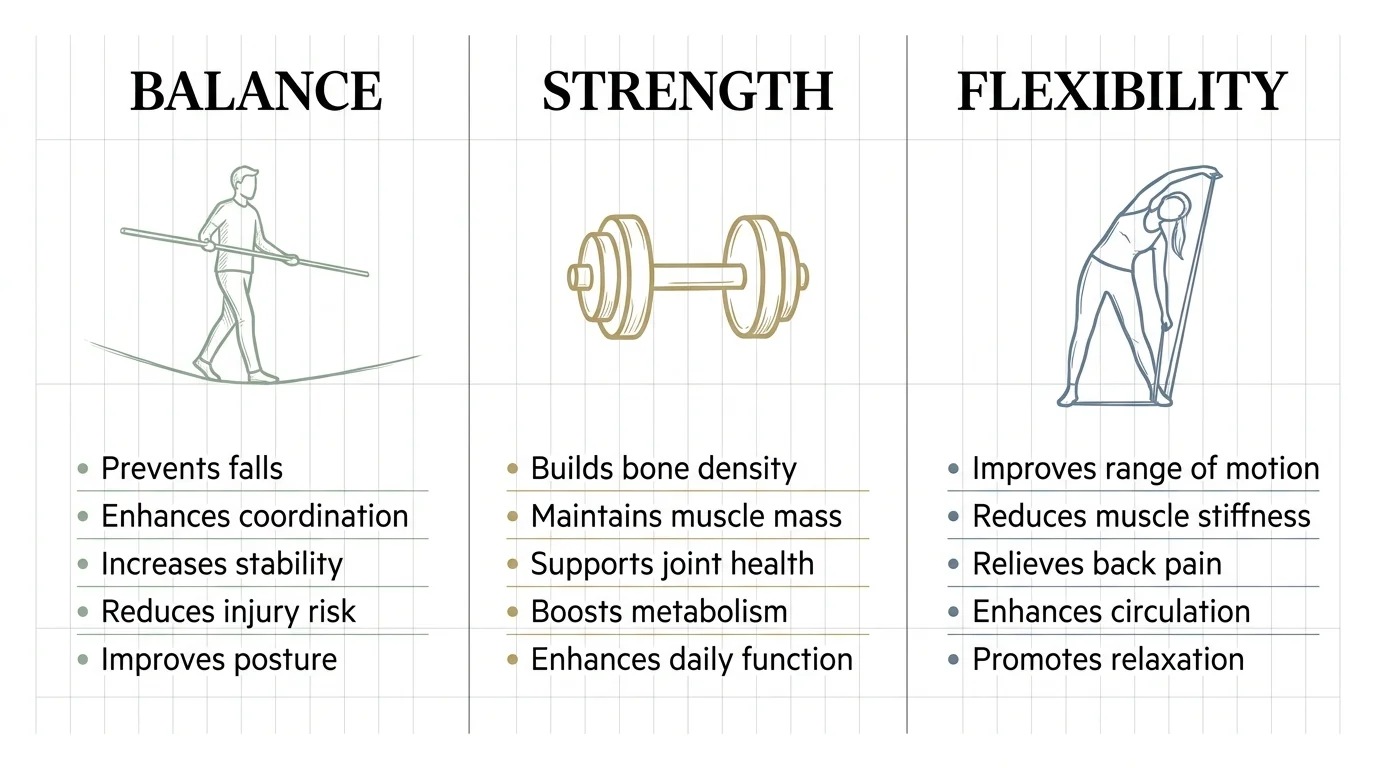
Comparing Routine Types: Balance vs. Strength vs. Flexibility
To maintain full functional mobility, you need a holistic approach to fitness. While the exercises above focus heavily on stability, they yield the best results when combined with other forms of physical activity. The table below breaks down the differences and benefits of each routine type to help you build a well-rounded schedule.
| Exercise Type | Primary Goal | Common Examples | Recommended Frequency |
|---|---|---|---|
| Balance Training | Prevent falls, enhance spatial awareness, and improve reaction times. | Single-leg stands, heel-to-toe walking, Tai Chi. | Daily, or at least 3-4 days a week. |
| Strength Training | Build muscle mass to support aging joints and increase bone density. | Chair squats, resistance band pulls, light dumbbell presses. | 2-3 non-consecutive days a week. |
| Flexibility & Stretching | Increase range of motion, reduce stiffness, and prevent muscle strains. | Calf stretches, gentle yoga, seated hamstring stretches. | Daily, ideally after gently warming up the muscles. |
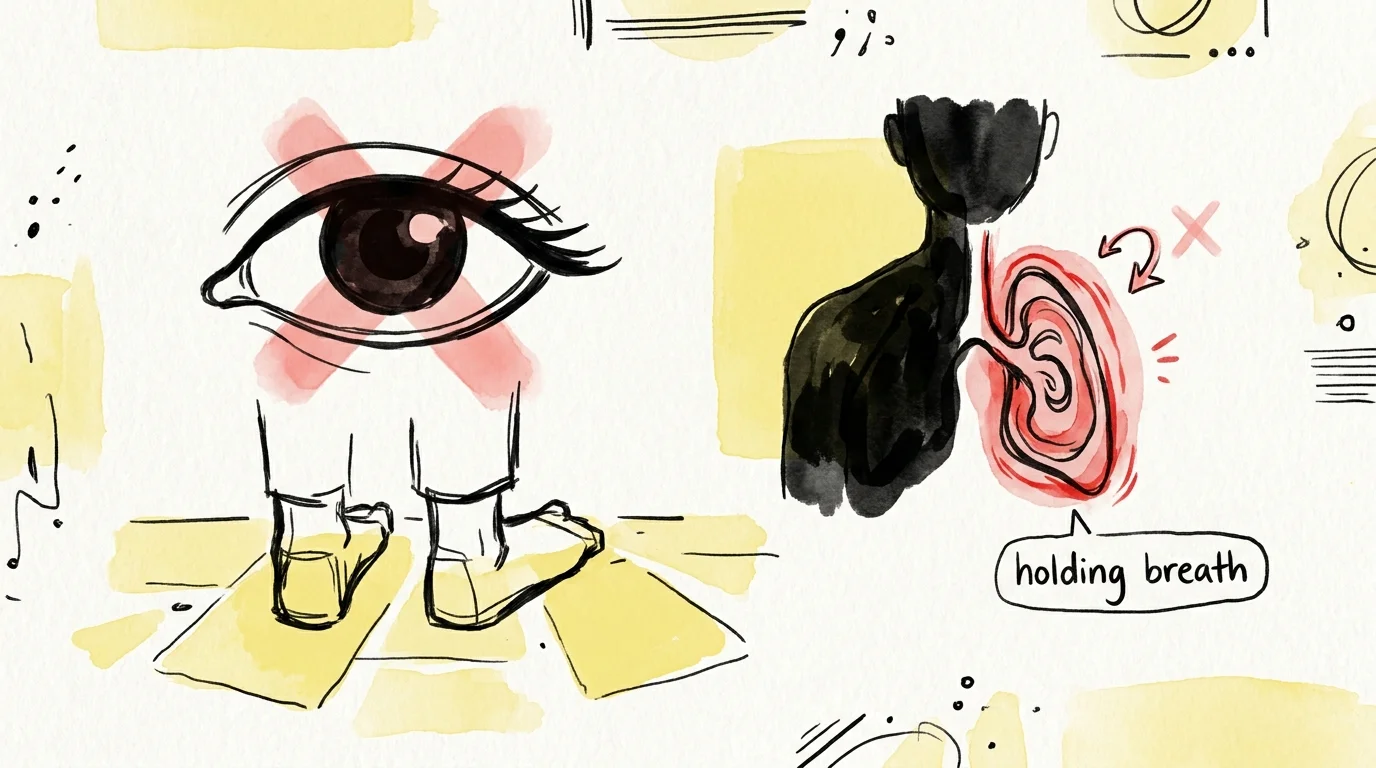
Pitfalls to Watch For: Common Mistakes Seniors Make
When you decide to take charge of your senior fitness strategy, enthusiasm is your best friend. However, jumping in without a thoughtful plan can sometimes do more harm than good. Watch out for these common mistakes to ensure your exercise routine remains safe and effective:
- Rushing the Movements: Balance is about control, not speed. Performing exercises too quickly relies on momentum rather than genuine muscle engagement. Move deliberately, and hold your stable positions for the full recommended time.
- Skipping the Warm-Up: Cold muscles are tight and far more prone to straining. Before starting your balance routine, spend three to five minutes doing light cardiovascular movement, such as walking around the house or marching gently in place.
- Wearing Improper Footwear: Attempting these movements in slippery socks or loose-fitting slippers is a recipe for disaster. Wear supportive, rubber-soled athletic shoes that securely grip the floor, or perform the exercises barefoot on a non-slip yoga mat if your doctor approves.
- Neglecting Safety Supports: Never overestimate your current stability. Always perform balance exercises near a sturdy chair, a heavy piece of furniture, or a countertop. You want something solid to grab instantly if you feel yourself swaying.
- Holding Your Breath: It is entirely natural to tense up and hold your breath when concentrating on staying upright, but this restricts oxygen flow and can cause dizziness. Focus on breathing evenly—inhale through your nose and exhale through your mouth throughout each movement.

Getting Expert Help: When to See a Physical Therapist
If you experience frequent dizziness, have a history of falling, or find these exercises excessively difficult, it is time to seek professional guidance. A licensed physical therapist can perform a comprehensive fall-risk assessment and design a customized mobility program tailored strictly to your physical capabilities.
Fortunately, Medicare Part B robustly covers medically necessary outpatient physical therapy. If you are worried about the out-of-pocket costs of extensive rehabilitation, understanding current Medicare rules can provide immense peace of mind. For 2026, Medicare maintains an annual outpatient therapy threshold of $2,480 for physical therapy and speech-language pathology services combined, according to the Centers for Medicare & Medicaid Services (2026).
It is crucial to understand that this $2,480 figure is not a hard cap that cuts off your benefits. Once your therapy costs exceed this limit, your provider simply must append a specific billing code (the KX modifier) to your claims to verify that continued therapy remains medically necessary. At the $3,000 mark, claims may be subject to a targeted medical review, but coverage legally continues as long as the care is justified. By utilizing your Medicare benefits proactively, you can correct minor balance deficits with a professional before they escalate into a financially devastating emergency room visit.
Frequently Asked Questions
Does Medicare pay for balance or fall prevention classes?
Original Medicare generally does not cover standard gym memberships or general fitness classes. However, if a doctor prescribes physical therapy to treat a specific balance issue or condition, Medicare Part B covers those medically necessary services. Additionally, many Medicare Advantage (Part C) plans include fitness benefits like SilverSneakers, which provide free access to balance, mobility, and strength training classes at local gyms.
How often should seniors perform balance exercises?
For the absolute best results, aim to incorporate balance exercises into your routine at least three to four times a week. Many simple movements, like the single-leg stand or seated toe taps, can easily be done daily while performing normal household tasks like washing dishes or watching television. Consistency is far more important than high intensity.
Can balance realistically improve after age 70?
Absolutely. The human body retains the remarkable ability to build muscle tone and improve neural pathways at any age. With consistent, targeted practice, seniors well into their 70s, 80s, and 90s can significantly improve their stability, increase their reaction times, and dramatically reduce their risk of experiencing a severe fall.
Taking proactive steps to safeguard your mobility is one of the most powerful investments you can make in your retirement. By dedicating just a few minutes each day to these simple, practical balance exercises, you build the physical strength and mental confidence needed to navigate your home and community safely. Do not wait for a sudden scare or a painful injury to start taking your physical stability seriously—protect your health and your wealth today.
This is educational content based on general financial principles for seniors. Individual results vary based on your situation. Always verify current benefit amounts, tax rules, and program eligibility with official government sources.