
Giving up your car in retirement might sound limiting, but choosing the right walkable city unlocks massive financial freedom. Without auto loan payments, insurance, fuel, and repair costs, you can redirect thousands of dollars annually toward travel, hobbies, and peace of mind. Small cities are emerging as the ultimate retirement hack because they offer the walkability of a major metropolis without the crushing cost of living. By relocating to a pedestrian-friendly community with reliable senior transit, you automatically insulate your budget from inflation and unpredictable expenses. You will discover exactly which small cities offer the perfect blend of safe sidewalks, robust public transportation, and favorable tax laws to help your retirement savings stretch further.
The Financial Payoff of Giving Up Your Keys
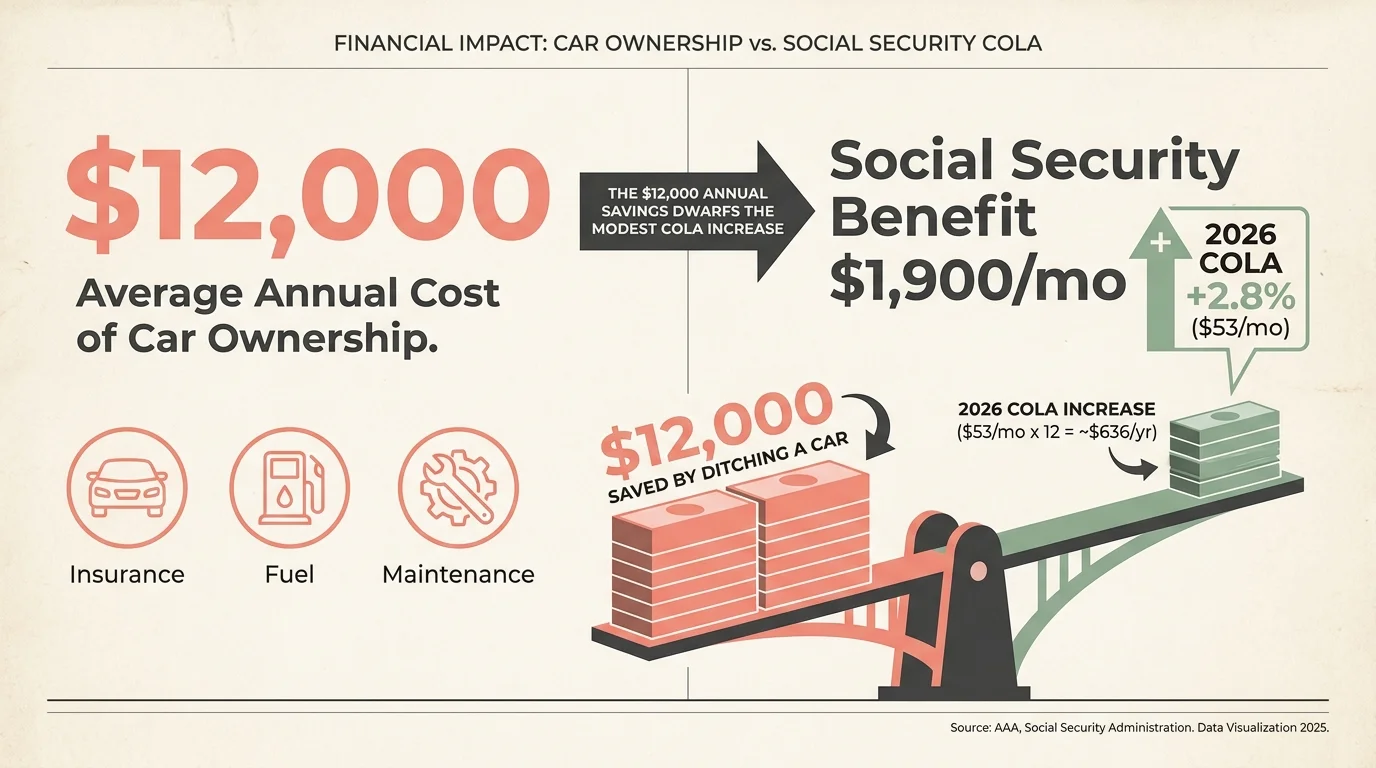
According to AAA, owning and operating a new vehicle costs an average of over $12,000 per year. For a retiree on a fixed income, that is a staggering expense to maintain just to buy groceries or visit the doctor. If your monthly Social Security Administration (SSA) benefit is $1,900, the 2026 Cost of Living Adjustment (COLA) of 2.8% adds about $53 a month. That modest increase is hardly enough to cover surging auto insurance premiums and maintenance costs.
When you eliminate a vehicle, you essentially give yourself a tax-free raise. The savings can be profound, but you must replace your car with reliable infrastructure. That means finding a city with a high walkability rating, safe pedestrian pathways, and highly accessible amenities. Furthermore, relying on public transit requires a community that actually values and funds its bus networks.
“If you want to stretch your retirement dollars, look closely at your fixed costs. Housing and transportation are the two largest line items in almost every budget.” — Jean Chatzky, Financial Expert

1. Lancaster, Pennsylvania
With an impressive Walk Score of 81, Lancaster’s historic downtown is a haven for pedestrians. You will find centralized markets—like the famous Lancaster Central Market—alongside pharmacies and cafes seamlessly integrated into residential neighborhoods. The city provides a robust local bus system that makes navigating without a car incredibly simple.
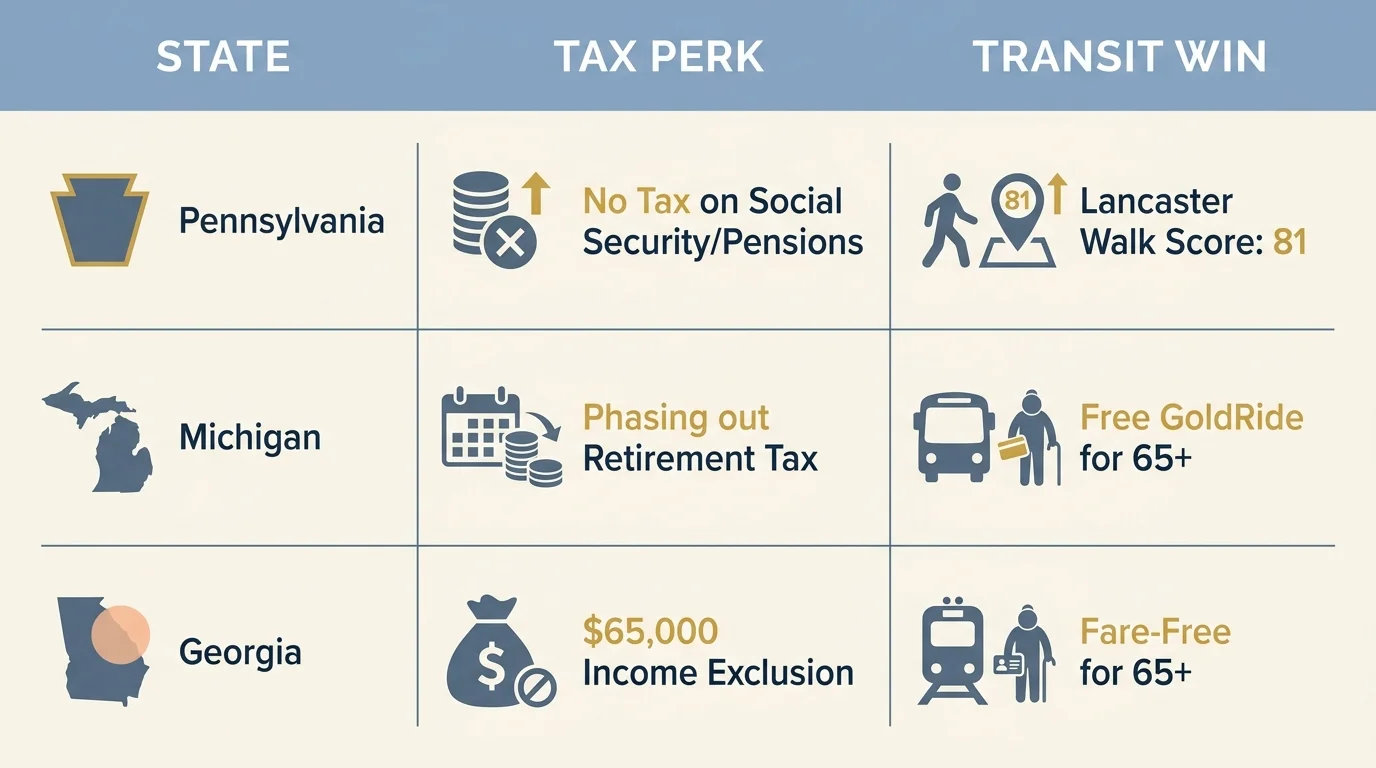
From a financial standpoint, Pennsylvania’s tax laws heavily favor retirees. The state does not tax Social Security benefits, nor does it tax eligible pension and retirement plan income for residents aged 59½ and older. This means the money you save by ditching your car stays entirely in your pocket.
2. Ann Arbor, Michigan
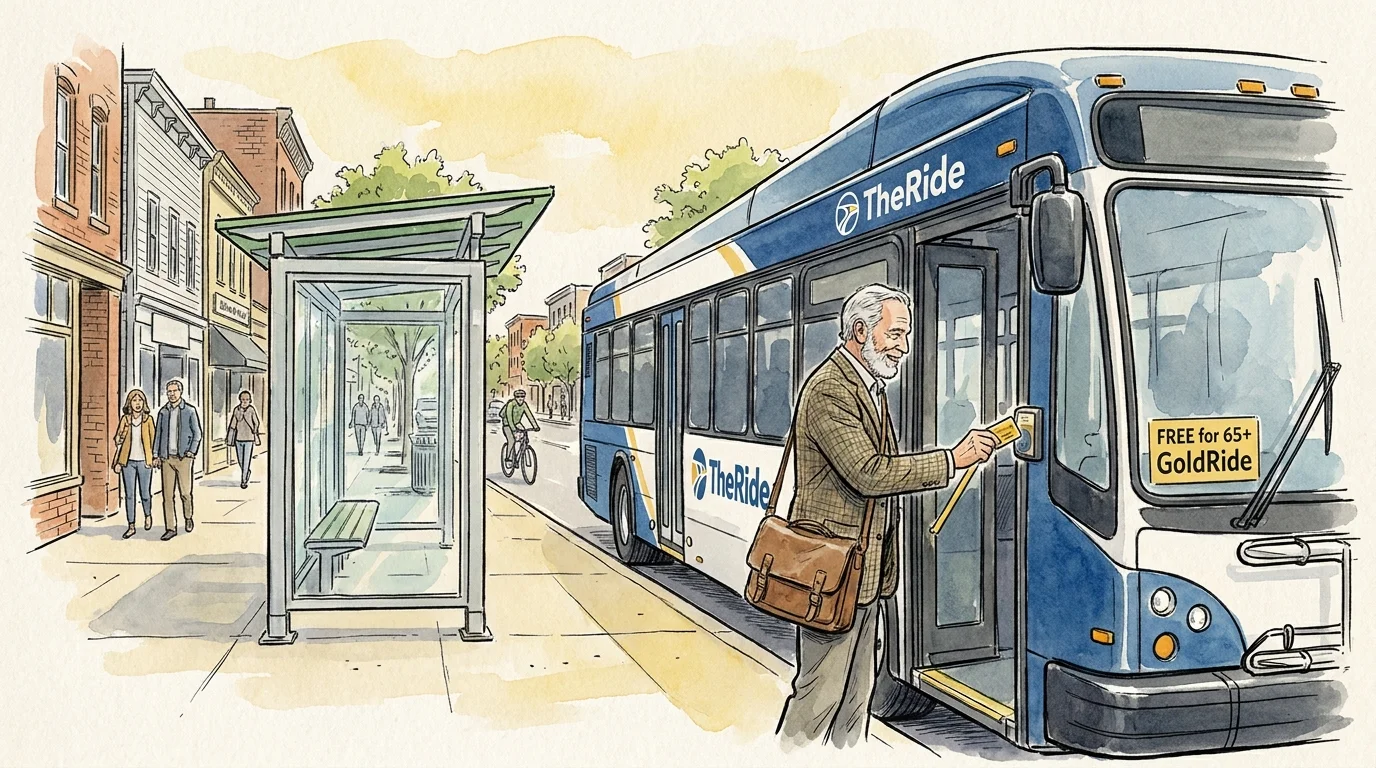
Known primarily as a bustling college town, Ann Arbor offers incredible amenities for older adults. The downtown area and the Kerrytown district are highly walkable, featuring flat sidewalks and dense commercial zones. The local transit authority, TheRide, operates a highly beneficial GoldRide program; eligible seniors aged 65 and older travel completely free on any regular fixed route.
Michigan also provides a favorable tax environment for retirees. Recent state tax code overhauls have phased out the “retirement tax,” moving to fully exempt public and private pensions up to certain limits by 2026. Living car-free in Ann Arbor allows you to leverage these tax breaks effectively.
3. Athens, Georgia
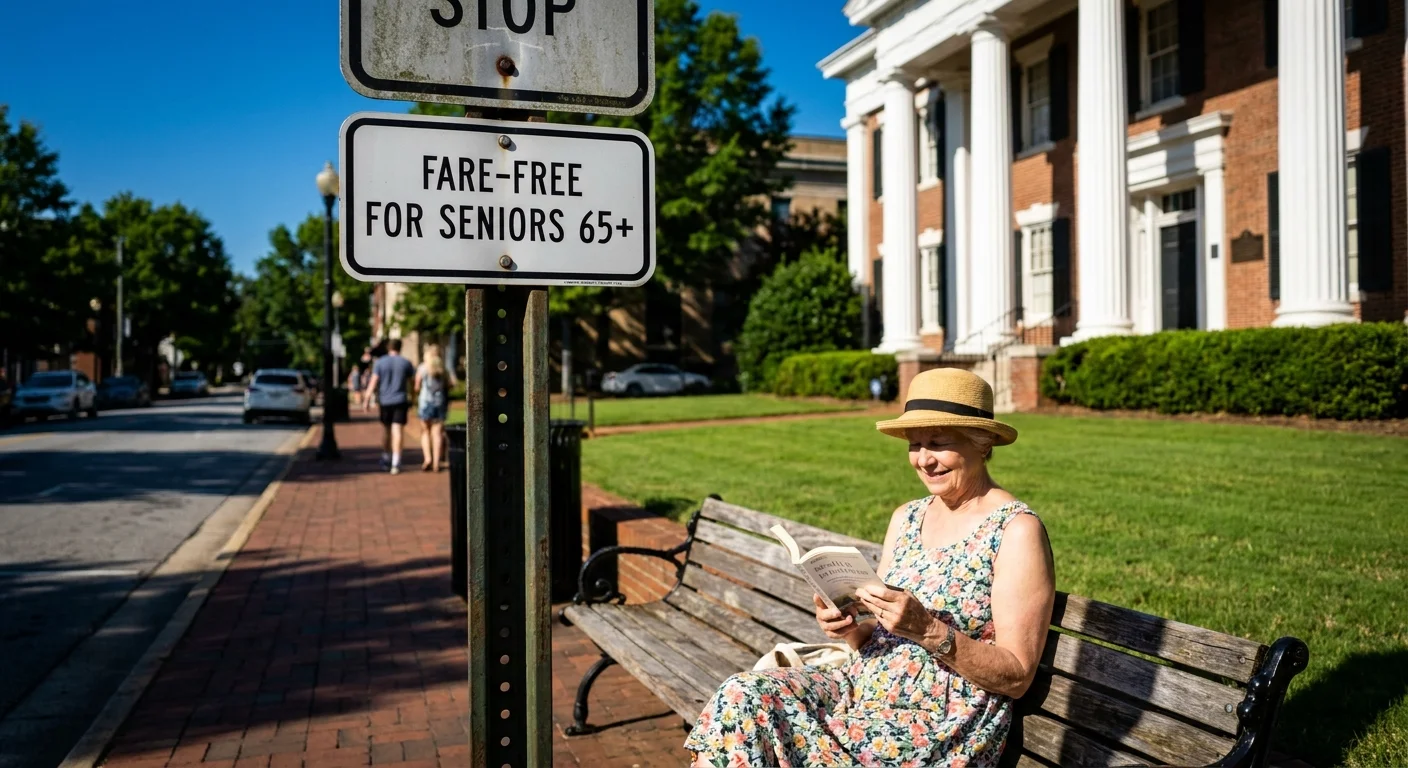
Athens proves that Southern charm and pedestrian-friendly infrastructure can go hand in hand. The city features a vibrant, walkable center, but the real draw is its commitment to public transportation. Athens Transit went entirely fare-free for seniors aged 65 and older, meaning you can navigate the city’s extensive routes without ever opening your wallet.
Furthermore, Georgia is exceptionally tax-friendly for older adults. The state offers a massive $65,000 retirement income exclusion per person for residents aged 65 and over. Combining zero-cost transit with massive tax exclusions makes Athens a financial powerhouse for retirees.

4. Iowa City, Iowa
Iowa City blends affordable housing with excellent transit infrastructure. The median home values fall below the national average, leaving more room in your budget for leisure and travel. The local transit system serves the entire university town, ensuring you can easily reach medical appointments and grocery stores without owning a vehicle.
In a major legislative shift, Iowa eliminated state income taxes on retirement income—including pensions, annuities, and IRA distributions—starting in 2023. This comprehensive tax relief makes every dollar you save on transportation stretch even further.

5. Santa Fe, New Mexico
For retirees seeking a dry, mild climate, Santa Fe offers a compact, walkable plaza area surrounded by world-class art galleries, restaurants, and historical sites. The Santa Fe Trails bus system is highly accessible, and the Santa Fe Ride paratransit service provides curb-to-curb transportation for seniors aged 60 and older for just $5 a trip; qualifying senior veterans ride completely free.
New Mexico also implemented substantial tax breaks for seniors, exempting Social Security benefits from state income tax for single filers earning under $100,000 and married couples earning under $150,000. This combination of affordable transit and tax relief makes the high-desert lifestyle highly attainable.

6. Ithaca, New York
Ranked as a “Walker’s Paradise” with a downtown Walk Score of 95, Ithaca is a phenomenal choice for a car-free lifestyle. Tompkins Consolidated Area Transit (TCAT) operates a widespread, award-winning bus network, and Gadabout provides specialized, door-to-door transportation for older and disabled residents.
New York state does not tax Social Security benefits, and it offers an exemption of up to $20,000 for eligible pension and annuity income for residents over 59½. If you can handle the snowy winters, Ithaca provides an incredibly supportive environment for aging in place without a vehicle.

7. Portland, Maine
Portland offers stunning coastal views alongside a pedestrian-friendly downtown filled with top-tier healthcare facilities. The Greater Portland Metro provides discounted fares for seniors, and the city’s compact layout makes walking to local markets and medical centers a breeze.
From a financial perspective, Maine provides a highly generous pension income deduction. For the 2025 tax year (filed in 2026), the maximum deduction reached $48,216. Coupled with the new federal $6,000 senior tax deduction under the 2025 OBBBA tax legislation—which you can verify at the Internal Revenue Service (IRS)—a car-free life in Portland is highly optimized for wealth preservation.
8. Burlington, Vermont
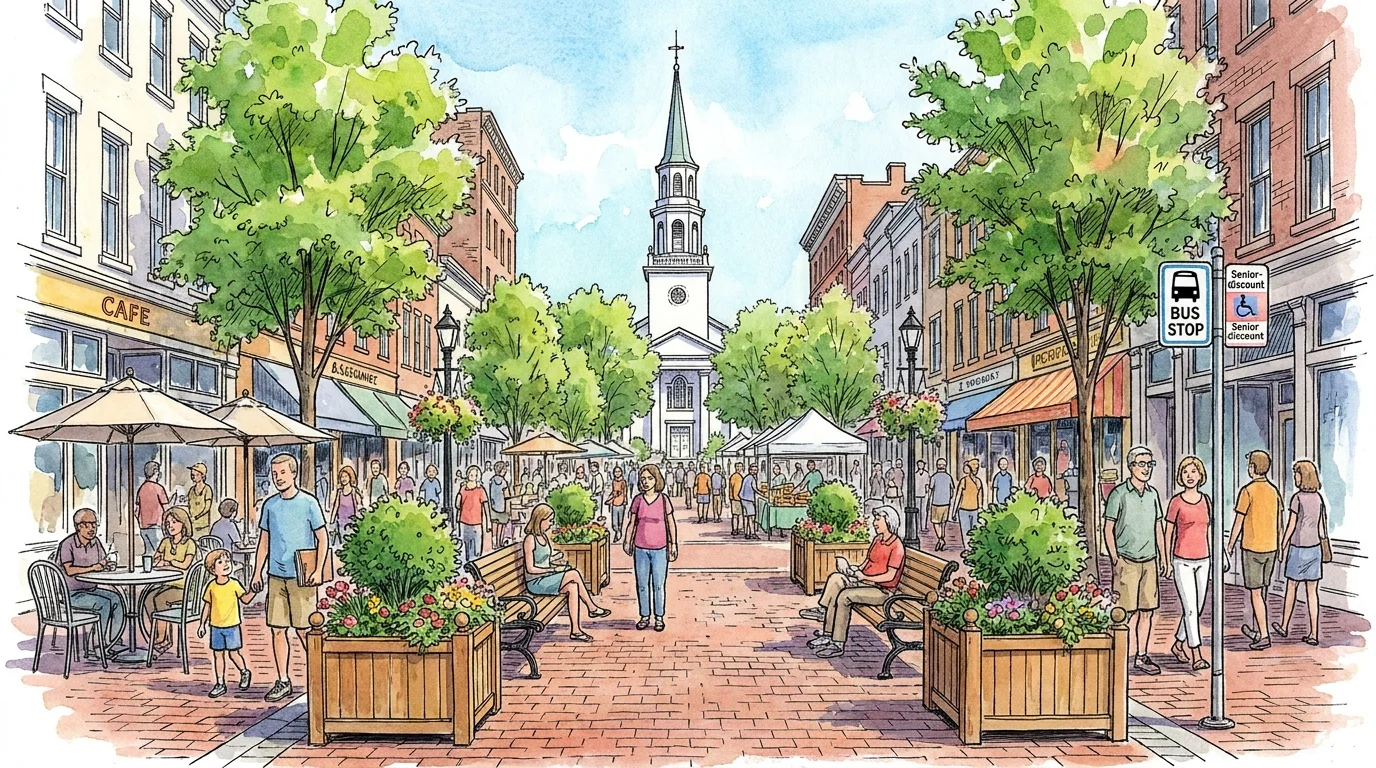
Burlington features the Church Street Marketplace, a renowned four-block pedestrian-only zone that serves as the heart of the city. Green Mountain Transit provides extensive bus routes to help you navigate comfortably beyond the downtown core without needing a steering wheel.
While Vermont does tax Social Security, the state recently updated its laws to expand its exemptions. For the 2025 tax year, Social Security benefits are fully exempt for single filers with an adjusted gross income up to $55,000 and joint filers up to $70,000. This legislation successfully shields middle-income retirees from excess state taxation.
9. Winchester, Virginia
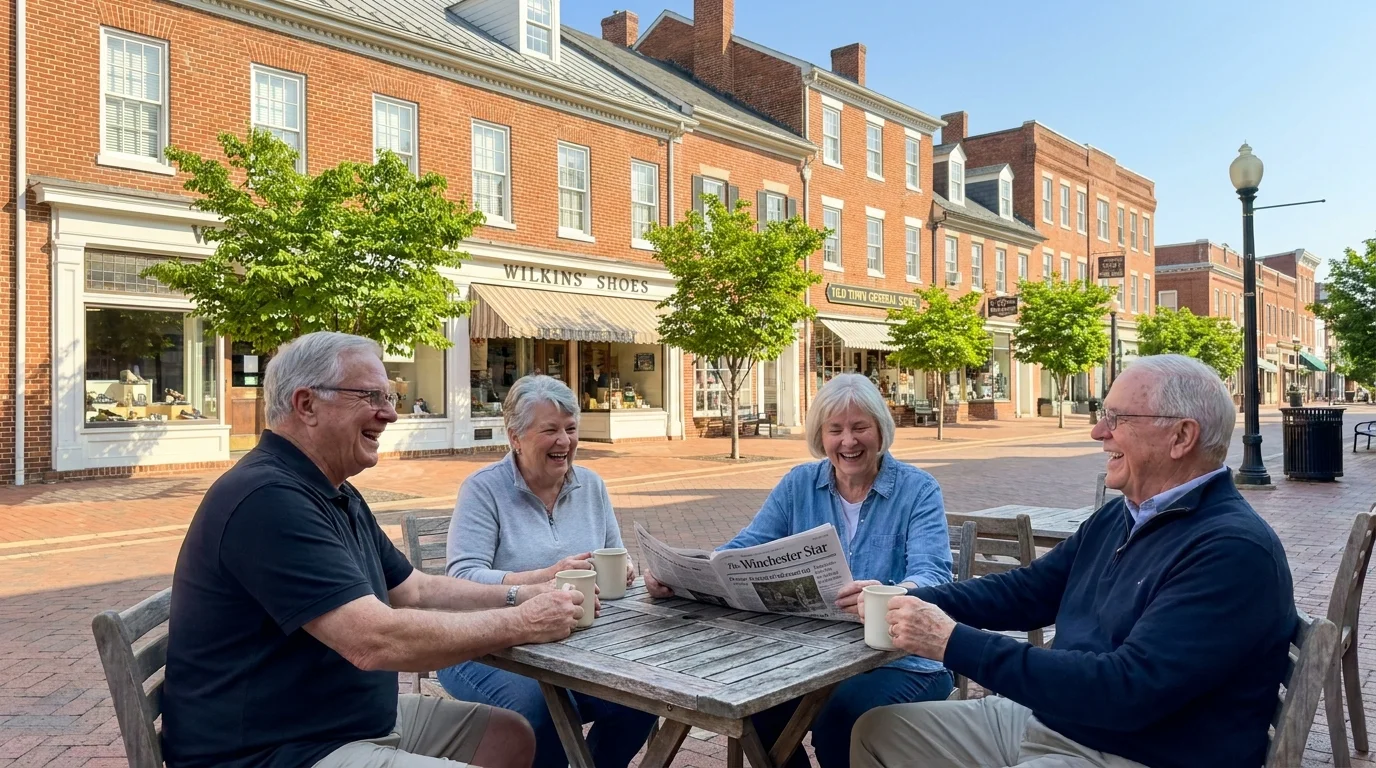
Winchester boasts a beautiful Old Town walking mall, allowing residents to stroll past historic architecture, boutiques, and dining without competing with vehicle traffic. The Winchester Transit system offers reliable routes connecting residential areas directly to local medical centers.
Virginia is notably tax-friendly for retirees. The state does not tax Social Security benefits and provides a specialized age deduction of up to $12,000 for qualifying seniors. This allows you to retain more of your fixed income while enjoying a high quality of life on foot.
At a Glance: State Taxes and Transit Perks
Reviewing transit and tax benefits side-by-side helps clarify which city aligns best with your retirement income sources:
| City | Key Senior Transit Perk | Notable State Tax Benefit |
|---|---|---|
| Lancaster, PA | Extensive local bus network | No tax on Social Security or eligible pensions |
| Ann Arbor, MI | GoldRide program (Free fixed routes for 65+) | Phased out “retirement tax” on pensions |
| Athens, GA | Athens Transit (Fare-free for 65+) | $65,000 retirement income exclusion per person |
| Iowa City, IA | Comprehensive university-town transit | Zero state income tax on retirement income |
| Santa Fe, NM | Santa Fe Ride ($5 curb-to-curb, free for veterans) | Social Security exempt for middle-income earners |
| Ithaca, NY | TCAT network & Gadabout paratransit | $20,000 pension/annuity exemption |
| Portland, ME | Greater Portland Metro senior discounts | Up to $48,216 pension deduction (2025) |
| Burlington, VT | Green Mountain Transit system | SS exempt up to $55k (Single) / $70k (Joint) |
| Winchester, VA | Winchester Transit connectivity | Up to $12,000 age deduction for seniors |

What Can Go Wrong: 3 Mistakes When Retiring Without a Car
Transitioning to a pedestrian lifestyle requires careful planning. Avoid these common pitfalls when selecting your new city:
- Forgetting About Winter Weather: A walkability score of 95 sounds perfect in July, but it means very little in January if the city fails to plow its sidewalks. Before committing to a Northern city like Ithaca or Portland, research the municipality’s snow removal policies and check if local grocery stores offer affordable winter delivery.
- Miscalculating Paratransit Boundaries: If you eventually need specialized door-to-door transportation, you must understand the rules of the Americans with Disabilities Act (ADA). ADA paratransit services typically only operate within a three-quarter-mile radius of fixed bus routes. Moving to the outskirts of a walkable city could leave you stranded.
- Ignoring Access to Specialized Healthcare: You might be able to easily walk to a general practitioner, but what happens if you need a cardiologist or a physical therapy center? Ensure your chosen neighborhood has direct, single-bus transit lines to major medical centers to avoid exhausting multi-hour transfers.

When to Consult a Professional
Relocating for retirement involves significant financial and legal moving parts. Consider seeking professional guidance in these specific scenarios:
- When Navigating State Domicile Laws: Moving across state lines triggers complex tax consequences. A Certified Public Accountant (CPA) can help you establish legal residency correctly so you actually qualify for your new state’s retirement tax exemptions.
- When Analyzing Your Overall Cash Flow: If you plan to redirect your transportation budget into higher housing costs or travel, a Certified Financial Planner (CFP®) can run a detailed retirement projection to ensure your new spending rate is sustainable over a 30-year horizon.
- Understanding Medicare Implications: Relocating means you may need to switch your Medicare Advantage or Part D plan. Check with Medicare.gov or a licensed broker to verify that your new city’s healthcare network accepts your coverage without exorbitant out-of-network fees.
Making the Move
Transitioning to a car-free retirement is an empowering financial decision. By selecting a small, walkable city, you eliminate the daily stress of traffic, the burden of vehicle maintenance, and the risk of unpredictable auto expenses. The National Council on Aging (NCOA) recommends testing a city’s public transit system before finalizing your relocation. Take the time to visit these communities, ride their local buses, and walk their neighborhoods to ensure the pace of life matches your retirement vision.
This article provides general financial education and information only. Everyone’s financial situation is unique—what works for others may not work for you. For personalized advice tailored to your retirement needs, consider consulting a qualified financial professional such as a CFP or CPA.
Last updated: May 2026. Benefit amounts, tax rules, and program details change annually—verify current figures with official government sources.